
Keeping a wood cutting board sanitary protects your food, extends the board’s life, and reduces cross‑contamination. This guide gives practical, experience‑based routines for everyday cleaning, disinfecting after high‑risk foods, deep restoration, conditioning, storage, and deciding when to repair or replace a board. Use the step‑by‑step checklists below and the linked official food‑safety resources for broader guidance from USDA and CDC.
Quick overview — What you’ll learn
- 2–3 minute daily routine to keep wood boards safe
- How to disinfect after raw meat, poultry, or seafood
- Deep‑cleaning and stain removal that preserves wood
- How to oil and condition for longevity and hygiene
- When to sand, repair, or replace a board
For official food‑safety context, consult USDA food safety guidance and CDC advice on preventing foodborne illness.
Daily cleaning: a reliable 2–3 minute routine
Follow this every time you finish preparing food.
- Scrape (30–45 seconds)
- Use a bench scraper or stiff spatula to remove food particles and crumbs. This reduces surface soil before washing.
- Wash with hot, soapy water (45–60 seconds)
- Use a dedicated sponge or brush and dish soap. Scrub both faces, edges, and any juice grooves. Aim for soap, warm water, and mechanical action rather than long soak time.
- Rinse and dry (30–60 seconds)
- Rinse thoroughly with warm running water. Towel‑dry both sides, then stand the board upright or lean it on edge to finish drying with airflow.
Practical note: in practice, the biggest hygiene failure is skipping drying. Wood left flat and damp retains moisture, softens fibers, and invites mold. Always towel‑dry and stand upright.
Disinfecting: methods, contact times, and trade‑offs
After washing, decide whether you need routine deodorizing or true disinfection (e.g., after raw animal proteins). Below are safe options and practical trade‑offs.
Hydrogen peroxide (3%)
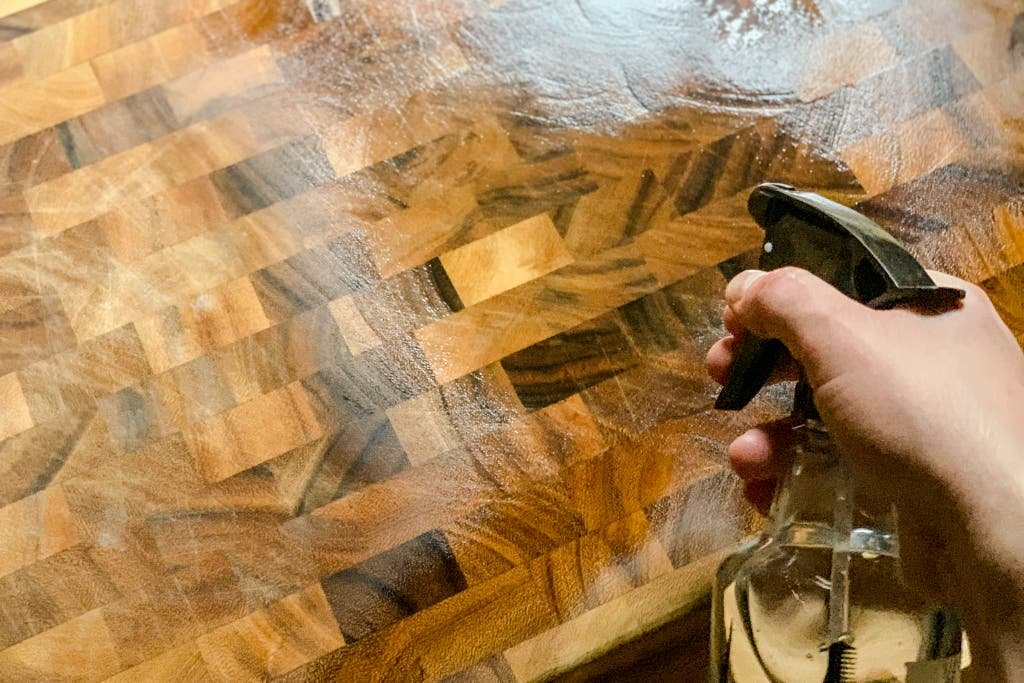
- Use: Pour or spray 3% hydrogen peroxide across the surface after washing.
- Contact time: let sit 1–5 minutes, then rinse and dry.
- Pros: breaks down into water and oxygen; effective against many surface microbes.
- Cons: may lighten wood slightly over time with repeated use.
Diluted household bleach (sodium hypochlorite)
- Use: only for higher‑risk incidents (raw poultry contamination or known contamination).
- Mix: 1 tablespoon (15 ml) unscented household bleach per gallon (3.8 L) of water. Apply, leave 1–2 minutes, rinse thoroughly, and dry.
- Safety: use in a well‑ventilated area; never mix bleach with ammonia or other cleaners. Frequent use can dry or discolor wood.
Commercial food‑contact sanitizers
- Use products labeled for food‑contact surfaces; follow manufacturer contact times and rinse instructions.
- Pros: designed for safe use in kitchens and often easier to apply consistently.
White vinegar (5–8% acetic acid)
- Use: deodorizing and light surface cleaning.
- Limitations: vinegar is not a validated broad‑spectrum disinfectant for raw meat contamination; use it for odors and routine surface refresh, not as sole treatment after high‑risk foods.
A common mistake is relying on a single household remedy for all risks. Match the disinfectant to the contamination level: mild deodorizing for produce, peroxide or sanitizer for routine disinfection, and occasional bleach for higher‑risk incidents.
Sanitizing after raw meat, poultry, or seafood — exact steps
Follow these steps immediately after handling raw animal proteins:
- Wash with hot, soapy water and scrub thoroughly.
- Choose a disinfectant:
- Option A (preferred for routine): 3% hydrogen peroxide — spray, wait 1–5 minutes, rinse, dry.
- Option B (when higher‑level sanitation is needed): diluted bleach — apply 1 tbsp bleach per gallon of water, wait 1–2 minutes, rinse thoroughly, dry.
- Finish: towel dry, then stand upright to air dry completely.
In practice, reserve bleach for occasional heavy contamination; repeated bleach exposure will degrade the wood faster than peroxide or commercial sanitizers.
Deep cleaning & stain removal (monthly or as needed)
Do this monthly, after heavy use, or when odors/stains persist.
- Salt + lemon scrub (gentle abrasive)
- Sprinkle coarse kosher salt on the board. Use half a lemon (cut side down) to scrub the salt into the grain in circular motions for 1–2 minutes. Rinse and dry.
- This lifts stains and reduces odors without aggressive chemicals.
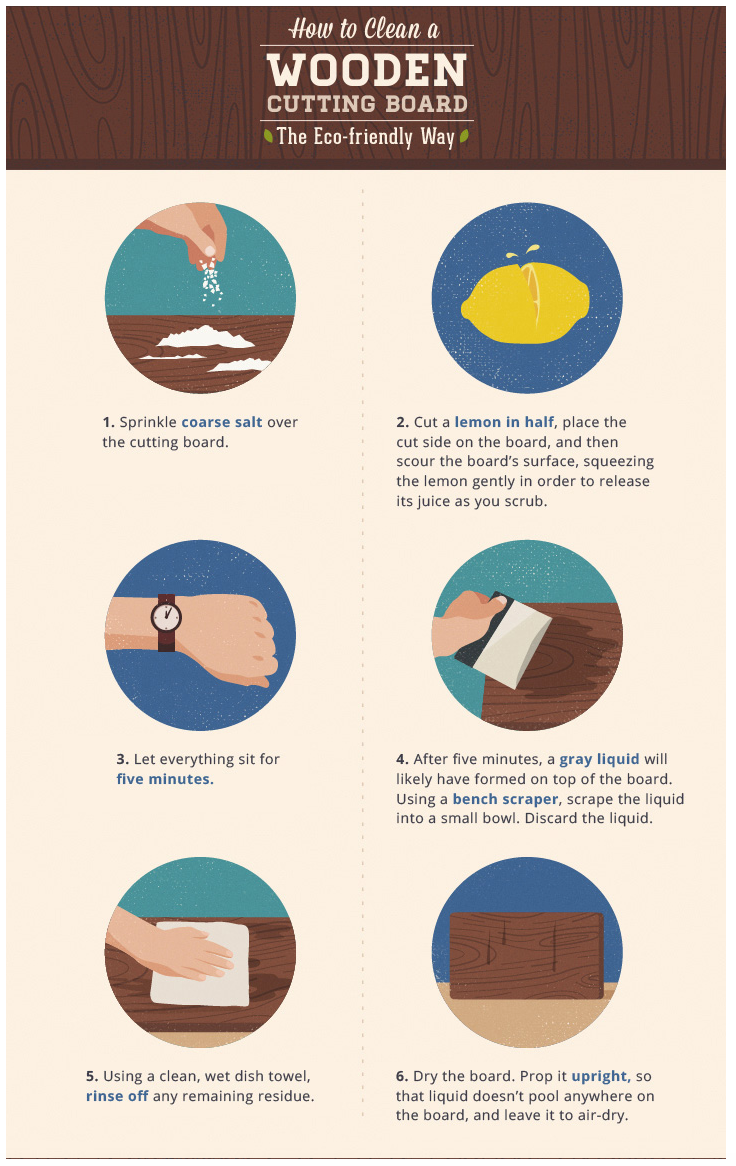 Lemon and coarse salt scrub for stain and odor removal.
Credit: www.adirondackkitchen.com
Lemon and coarse salt scrub for stain and odor removal.
Credit: www.adirondackkitchen.com
Baking soda paste for stubborn stains
- Make a paste (baking soda + a few drops of water). Apply to the stain, scrub with a brush, rinse, and dry. Baking soda is mildly abrasive and deodorizing.
Sanding deeply scored boards
- When knife gouges trap food: sand the surface with 120–180 grit sandpaper until grooves are removed, then finish with finer grit for a smooth surface. Clean off dust, then recondition with oil (see conditioning). Only sand enough to restore a clean surface — don’t thin the board excessively.
Mold or persistent discoloration
- If mold is surface‑bound, clean with soap and degreaser, then sanitize with hydrogen peroxide or diluted bleach. If mold is embedded in deep cracks or repeatedly returns after cleaning, replace the board.
Oiling and conditioning: maintain a sanitary surface
Oiling is maintenance, not a cleaning substitute. A well‑conditioned board is easier to clean and less likely to develop deep, bacteria‑harboring grooves.
- What to use
- Food‑grade mineral oil or a board oil made for cutting boards (mineral oil + beeswax blends). Fractionated coconut oil is acceptable, but whole vegetable oils (olive, canola) can go rancid and should be avoided.
- How often
- Daily users: monthly. Occasional users: every 2–3 months. After sanding or heavy use: oil immediately.
- How to apply
- Apply 1–2 tablespoons (more for large or end‑grain boards). Rub in with a lint‑free cloth, let sit at least one hour (overnight is fine), then wipe off excess.
- In practice
- A conditioned board dries faster and resists deep water penetration, reducing microbial habitat. Don’t over‑oil — excess oil leaves sticky residue that attracts soil.
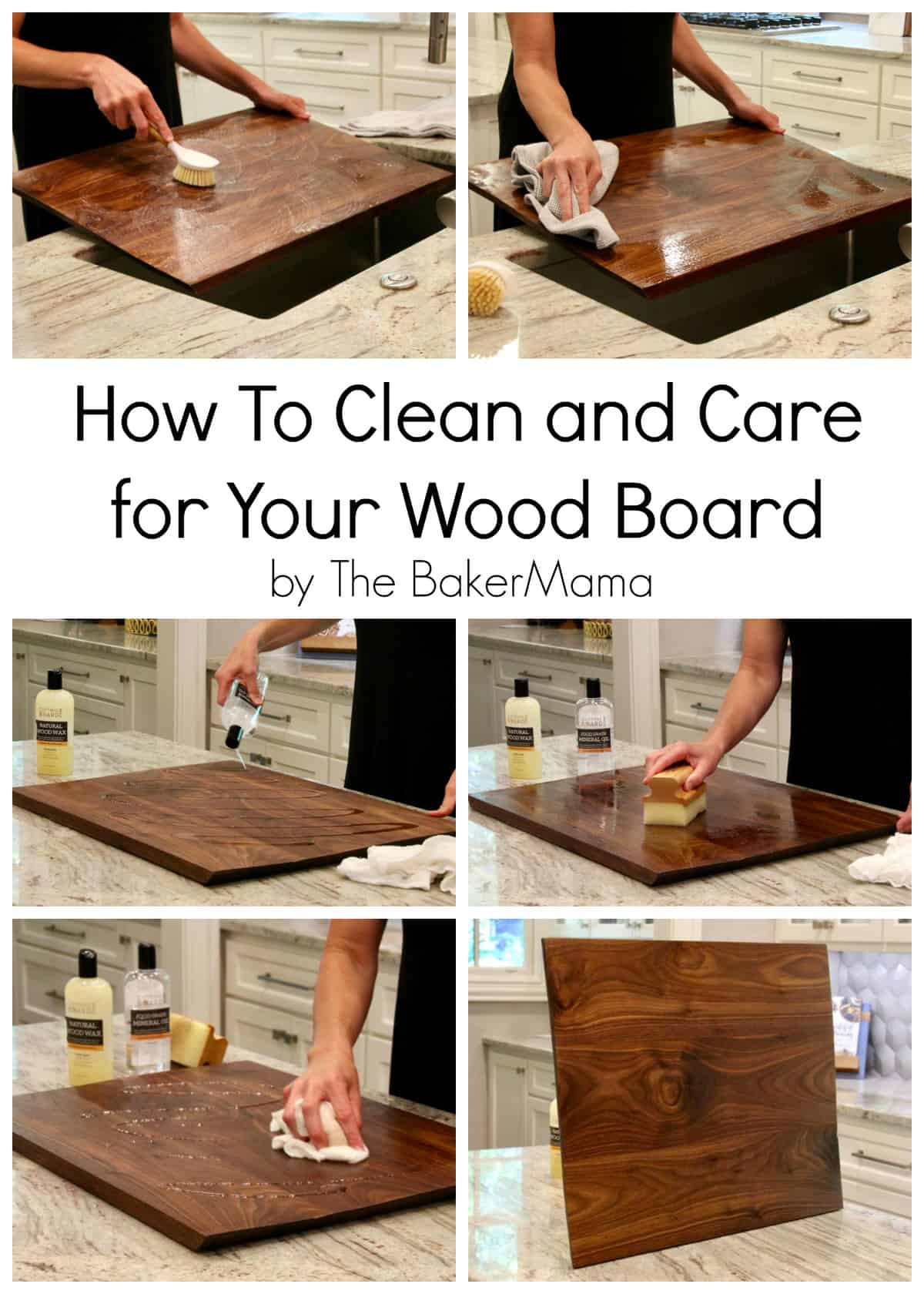 Rubbing food‑grade mineral oil into the board for protection.
Credit: thebakermama.com
Rubbing food‑grade mineral oil into the board for protection.
Credit: thebakermama.com
Storage, drying, and airflow
Proper drying and storage prevent mold, warping, and cracking.
- Always dry completely before storing. Stand boards upright or on edge so both faces get air.
- Avoid stacking wet boards or storing them flat while damp.
- Keep boards away from direct heat and prolonged sunlight, which dry and warp wood unevenly.
- Do not store in a sealed plastic sleeve while still damp — trapped moisture encourages mold growth.
:max_bytes(150000):strip_icc()/clean-wooden-cutting-board-4772583_05-6782ac2cc4784073ab3769537ed1da34.jpg) Boards drying upright to allow airflow and prevent moisture buildup.
Credit: www.thespruce.com
Boards drying upright to allow airflow and prevent moisture buildup.
Credit: www.thespruce.com
When to repair or replace a wood board
Assess your board regularly using these criteria.
Repair (sanding and oiling) if:
- Gouges are shallow and can be sanded out without making the board too thin.
- Surface stains and odors respond to deep cleaning and sanding.
Replace if:
- Knife cuts are deep enough to hide a fingernail — these trap bacteria and are hard to sanitize.
- The board is warped, cracked through, or dangerously thin after sanding.
- There is persistent or embedded mold that returns after several cleanings.
A practical rule: when restoration requires removing so much material that the board becomes too thin or structurally weak, replace it.
Common mistakes and how to avoid them
- Putting wood boards in the dishwasher: heat and standing water warp and split wood; never do this.
- Soaking boards: avoid prolonged submersion.
- Using vegetable or olive oil for conditioning: they can go rancid.
- Relying on vinegar alone after raw meat: vinegar deodorizes but is not a reliable disinfectant for high‑risk contamination.
- Skipping drying: always towel‑dry and stand boards upright.
- Failing to separate raw and ready‑to‑eat food: use color‑coded boards or separate boards for proteins and produce.
Quick decision flow — pick the right method
- Daily (produce, bread): soap + hot water → rinse → dry.
- Strong odors/stains: salt + lemon or baking soda paste → rinse → dry.
- Raw meat/poultry/fish: soap + hot water → disinfect (3% hydrogen peroxide or diluted bleach for high risk) → rinse → dry.
- Deep gouges/persistent odor: sand → oil.
FAQ
Q: Are wooden cutting boards sanitary compared to plastic? A: Yes, when properly maintained. Wood’s dense cellular structure and correct drying reduce bacterial survival; the deciding factor is cleaning and maintenance, not material alone.
Q: Can I use the dishwasher? A: No. Dishwashers expose wood to heat and long water cycles, causing warping and splitting.
Q: Is vinegar enough to disinfect after raw meat? A: No. Vinegar helps deodorize but is not a broad‑spectrum disinfectant for high‑risk raw meats. Use 3% hydrogen peroxide or an appropriate bleach dilution when necessary.
Q: How often should I oil my board? A: Monthly for heavy users, every 2–3 months for occasional users, and anytime the board looks dry or dull.
Q: What concentration of hydrogen peroxide should I use? A: Use standard 3% hydrogen peroxide. Apply after washing, allow 1–5 minutes of contact time, then rinse and dry.
Practical checklist you can follow tonight
- After dinner: scrape → wash with hot, soapy water → rinse → towel‑dry → stand upright.
- If you handled raw poultry: follow the sanitize steps above with peroxide or diluted bleach.
- If it’s been a month: do a 10–15 minute deep clean (salt + lemon or baking soda), inspect for deep gouges, then oil.
Call to action: Make this a habit—start tonight with the 2–3 minute routine and schedule a monthly deep‑clean on your calendar to keep your board safe and long‑lasting.
Conclusion
Sanitizing a wood cutting board is straightforward when you match the method to the risk. Clean and dry every time, disinfect appropriately after raw animal proteins, deep‑clean and sand when necessary, and keep the board conditioned with food‑grade oil. These steps preserve the wood and reduce food‑safety risks so your cutting board can serve reliably for years.
For broader food‑safety recommendations and foodborne illness prevention, see USDA guidance and CDC prevention resources.

Hi, I’m Daniel Brooks—a food lover and kitchen gear enthusiast. I enjoy testing cookware, utensils, and gadgets to see what really works in everyday cooking. At PlugChef.com, I share honest reviews, comparisons, and simple guides to help you choose the best tools for a safer, smarter, and more enjoyable kitchen.
Related posts:
 How to Make a Fruit Basket for a Gift: Easy DIY Guide
 Do You Need a Basket? Essential Guide for Air Fryers
 How to Choose Kitchen Appliances: Expert Tips Revealed
 Kitchen Cabinets With Black Stainless Steel Appliances: Modern Elegance
 White Kitchen Cabinets Stainless Steel Appliances: Timeless Elegance
 Top 10 Best Non-Toxic Cooking Utensils – Safe & Durable Choices for Healthy Homes

