
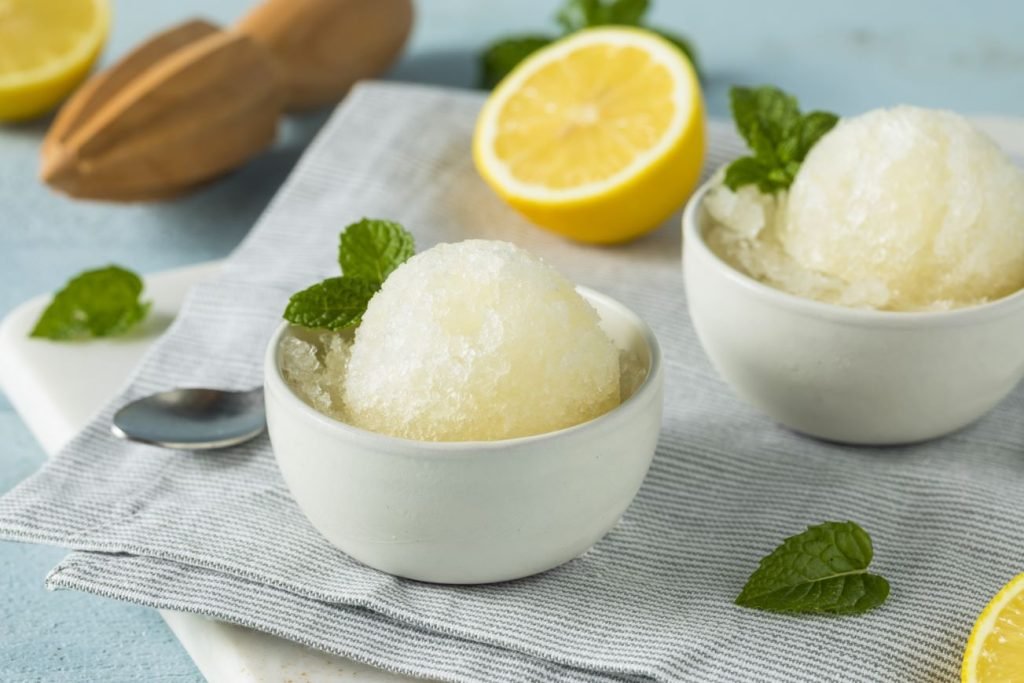
There’s nothing quite like a bright, tangy scoop of homemade lemon sorbet on a hot summer day — no artificial flavors, no weird textures, just pure, refreshing citrus perfection. But if you’ve ever tried making sorbet without a dedicated machine, you know the result is often icy, grainy, or stuck to the side of your freezer container.
A purpose-built lemon sorbet ice cream machine solves those problems by controlling temperature and churning speed to incorporate just the right amount of air (called overrun) while keeping ice crystals tiny. This guide covers everything you need to know to pick the right machine, master the base recipe, troubleshoot common issues, and serve picture-perfect sorbet every time. If you’re looking for more tested home cooking tips, browse our full library of tested kitchen tips and recipes for guides to every meal and snack you’ll want to make this year.
 Credit: zhangcatherine.com
A compact countertop sorbet maker sits next to fresh lemons and a small mixing bowl on a light wood kitchen counter
Credit: zhangcatherine.com
A compact countertop sorbet maker sits next to fresh lemons and a small mixing bowl on a light wood kitchen counter
How Lemon Sorbet Machines Differ from Standard Ice Cream Makers
While you can use a standard ice cream machine to make sorbet, models marketed specifically for citrus or sorbet often have features tailored to the unique properties of fruit-based, dairy-free mixtures. Lemon sorbet has a lower fat content and higher water content than dairy ice cream, which means it freezes faster and is more prone to ice crystal formation if not churned correctly.
Dedicated sorbet machines often have faster churning speeds and more precise temperature controls to handle this difference, resulting in a smoother, brighter final product. Many also include citrus-specific attachments like reamers for fresh lemon juice, which cut down on prep time. If you already own a standard ice cream maker, you can absolutely use it for sorbet — just adjust your churning time and base recipe to account for the faster freezing speed.
Key Differences at a Glance
| Feature | Standard Ice Cream Machine | Dedicated Sorbet/Citrus Machine |
|---|---|---|
| Churning Speed | Moderate, optimized for high-fat dairy mixtures | Faster, designed for low-fat, high-water fruit bases |
| Temperature Control | Basic, often only 2-3 settings | Precise, to prevent over-freezing and ice crystals |
| Attachments | Standard paddle | Optional citrus reamer, finer mesh strainer for pulp-free sorbet |
| Best For | Mixed use (dairy ice cream, sorbet, frozen yogurt) | Frequent sorbet makers who prioritize perfect texture |
Choosing the Right Lemon Sorbet Machine for Your Kitchen
Picking the right machine depends on how often you plan to make sorbet, how much freezer space you have, and your budget. There are three main types to choose from, each with clear trade-offs:
| Machine Type | Pre-Freezing Required | Average 2026 Price Point | Best For | Pros | Cons |
|---|---|---|---|---|---|
| Manual Hand-Crank | No (ice and salt required) | $15–$40 | Casual, occasional use, kids’ activities | No electricity needed, ultra-portable, low cost | High effort, inconsistent texture, requires ice and salt restocking |
| Electric Freezer-Bowl | Yes (12–24 hours in freezer) | $50–$150 | Home cooks who make sorbet 1–2 times per month | Affordable, easy to use, compact storage | Requires advance planning, bowl takes up freezer space, limited batch size (usually 1–1.5 quarts) |
| Compressor Built-In | No | $200–$500 | Frequent sorbet makers, small-space living | No pre-freezing needed, larger batch sizes (up to 2 quarts), faster results (20–30 minutes total) | Higher upfront cost, larger footprint, slightly noisier than freezer-bowl models |
A common mistake first-time buyers make is prioritizing price over fit: a $30 manual model will work for a single summer of occasional use, but if you plan to make sorbet weekly, the $100 freezer-bowl model will save you far more frustration (and wrist strain) in the long run. If you have a small kitchen with limited freezer space, the compressor model is worth the extra investment, as you won’t need to store a frozen bowl when not in use.
Non-Negotiable Features for Smooth Sorbet
Beyond machine type, these features will make your sorbet-making process far easier and your results more consistent:
- Capacity: Most home machines make 1–2 quarts per batch, which is enough for 4–6 servings. If you host frequent gatherings, opt for a 2-quart model to avoid making multiple batches.
- Easy-to-Disassemble Parts: Look for machines with a removable paddle and bowl that are dishwasher-safe. Sorbet base is sticky with sugar and lemon residue, so hard-to-clean nooks will lead to buildup and off-flavors over time. For tough stuck-on residue, use a soft brush from a reliable set of kitchen cleaning tools to avoid scratching plastic components.
- Quiet Motor: If you have an open-plan home or like to make treats while guests are over, look for models rated under 60 decibels (about the noise level of a normal conversation). Compressor models are typically louder than freezer-bowl models, so check customer reviews for real-world noise reports if this is a priority.
- Overrun Control: Some higher-end models let you adjust how much air is incorporated into the sorbet. Lower overrun (less air) creates a denser, more intense lemon flavor, while higher overrun makes a lighter, fluffier texture. For sorbet, 20–30% overrun is ideal to balance richness and brightness.
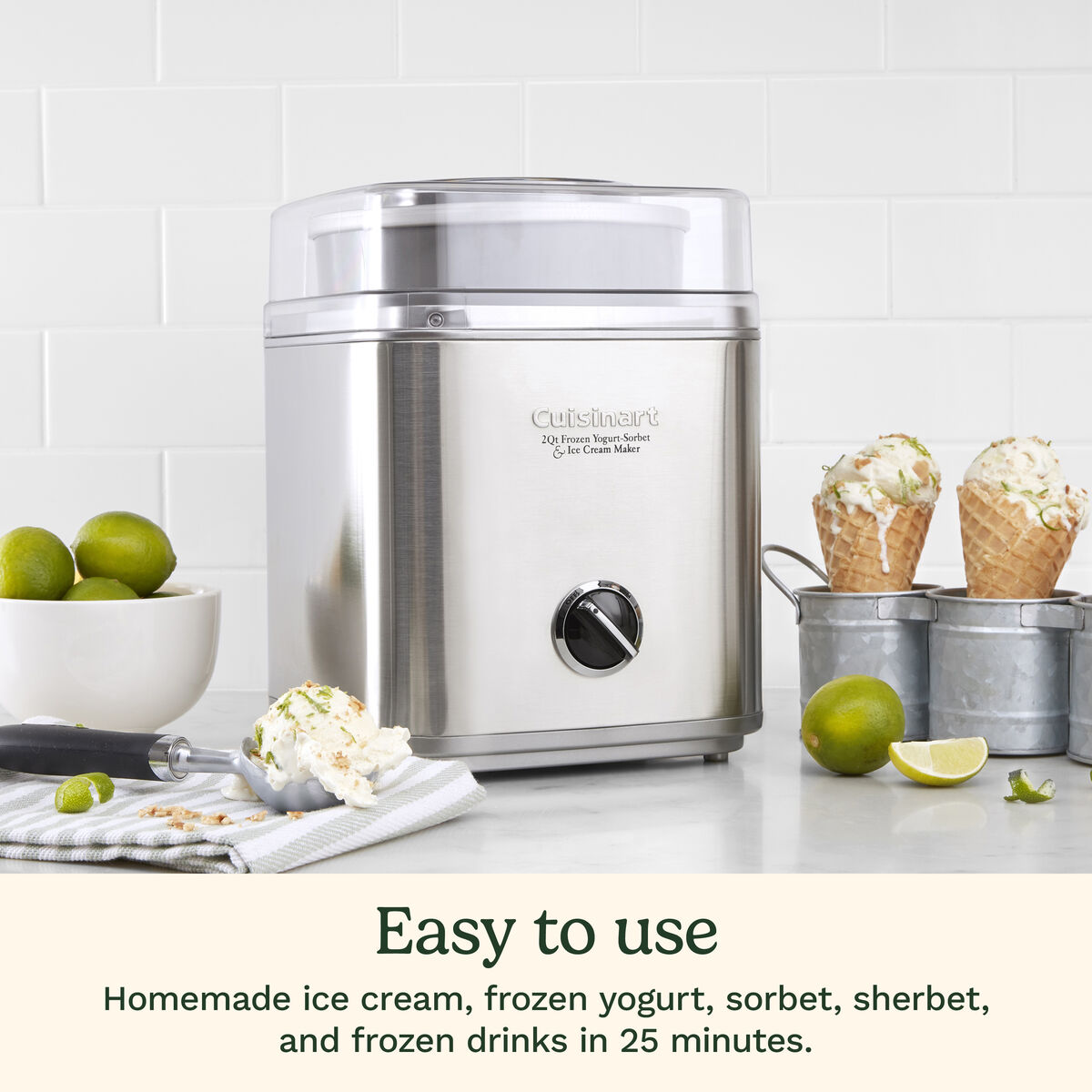 Credit: www.cuisinart.com
Infographic comparing the components of freezer-bowl and compressor ice cream machines
Credit: www.cuisinart.com
Infographic comparing the components of freezer-bowl and compressor ice cream machines
Essential Ingredients for Bright, Smooth Lemon Sorbet
The base for lemon sorbet is deceptively simple, but small tweaks to ingredients make the difference between a bright, creamy scoop and a tart, icy mess. The core ratio for foolproof sorbet is 1 part fresh lemon juice, ¾ part simple syrup, and ¼ part water, plus a pinch of fine sea salt to amplify the citrus flavor.
Fresh Lemons vs. Bottled Lemon Juice
Fresh lemons are non-negotiable for the best flavor: bottled lemon juice often contains preservatives and pasteurization that dulls the bright, zesty notes of fresh citrus, and it lacks the aromatic oils from lemon zest that make homemade sorbet taste vibrant. For a single 1-quart batch, you’ll need 4–6 large, thin-skinned lemons (like Eureka or Lisbon varieties) to get 1 cup of juice.
If you’re short on time, 100% cold-pressed bottled lemon juice with no added sugars or preservatives works in a pinch, but expect a slightly flatter flavor. Always zest your lemons before juicing them: the zest (just the yellow outer layer, avoid the bitter white pith) adds a huge boost of citrus aroma without extra sourness.
Balancing Sweetness and Tartness
Sugar does more than sweeten sorbet: it lowers the freezing point of the mixture, which prevents large ice crystals from forming and keeps the texture smooth. The ¾ cup simple syrup ratio above is a great starting point for most palates, but adjust to taste: if you prefer a more tart, palate-cleansing sorbet, reduce the syrup to ½ cup, and if you like a sweeter dessert, add up to 1 cup.
A common mistake is adding granulated sugar directly to the lemon juice: it won’t dissolve fully, leading to gritty texture. Always make simple syrup first by heating equal parts granulated sugar and water in a small saucepan until the sugar dissolves, then let it cool completely before mixing with lemon juice and water. Taste the base before churning: it should taste slightly too tart and sweet, as freezing dulls flavor perception.
Step-by-Step Lemon Sorbet Base Preparation
A well-made base is the foundation of perfect sorbet, and it only takes 15 minutes of active prep time. Follow these steps to avoid grainy texture and off-flavors:
- Make the simple syrup: Combine ¾ cup granulated sugar and ¾ cup water in a small saucepan over medium heat. Stir until the sugar is fully dissolved, then remove from heat and let cool completely (at least 30 minutes). Do not add warm syrup to the lemon juice, as this can cook the citrus and create a bitter flavor.
- Juice and zest lemons: Zest 2 of your lemons first, then juice all 4–6 lemons to get 1 cup of juice. Strain the juice through a fine-mesh sieve to remove seeds and excess pulp, unless you prefer a pulpy texture.
- Mix the base: Combine the cooled simple syrup, lemon juice, lemon zest, 1 cup cold water, and a pinch of fine sea salt in a large bowl. Stir until fully combined.
- Chill the base: Cover the bowl and refrigerate for at least 2 hours, or up to 24 hours. This step is non-negotiable: a cold base churns faster, incorporates air more evenly, and produces far fewer ice crystals than a room-temperature mixture. A common mistake is skipping this step, which leads to a grainy, icy final product.
Operating Your Sorbet Machine for Perfect Texture Every Time
Even the best machine will produce subpar sorbet if operated incorrectly. Follow these steps to get consistent, smooth results every time, and prioritize safety to avoid accidents in the kitchen.
Pre-Chill Your Bowl (For Freezer-Bowl Models)
If you own a freezer-bowl model, place the bowl in the coldest part of your freezer (not the door, where temperature fluctuates when opened) for at least 12 hours, ideally 24 hours, before use. To test if it’s cold enough, drop a small cube of ice in the bowl: if it sticks to the side within 10 seconds, it’s ready. Keep a second bowl in the freezer if you make sorbet frequently, so you can make back-to-back batches without waiting.
If you have young children in the home, keep the frozen bowl out of reach when not in use, and use no-drill childproof locks for your freezer and cabinet doors to prevent accidental access to frozen treats or small machine parts. This is a small step that prevents both freezer burn and potential choking hazards for little ones.
Pouring the Base Correctly
Always pour your fully chilled base into the pre-frozen bowl before turning the machine on. Never overfill the bowl: most models have a maximum fill line marked on the side, and overfilling by even ¼ cup will cause the mixture to spill out during churning as it expands. Leave at least 1 inch of space at the top of the bowl to allow for expansion.
Churning and Testing for Doneness
Turn the machine on and let it churn for 20–30 minutes, depending on your model. The sorbet is done when it looks like thick, soft-serve ice cream and holds its shape when you scoop a small amount with a spoon. Do not churn for longer than 35 minutes, as this can make the sorbet too hard and icy.
For compressor models that don’t require pre-freezing, the churning time will be slightly shorter (15–25 minutes) since the machine cools the base as it churns. Once done, transfer the sorbet to an airtight container and freeze for 1–2 hours to firm up before serving.
When operating the machine, keep it on a stable, flat countertop away from the edge to avoid accidental spills. Never leave the machine running unattended, especially around young children: use childproofing measures for your kitchen to keep kids from touching the controls or pulling on the power cord.
Serving, Storing, and Food Safety Best Practices
Proper serving and storage will keep your lemon sorbet tasting fresh for up to 2 weeks, and following basic food safety guidelines will prevent spoilage and foodborne illness.
Ideal Serving Temperature
Lemon sorbet tastes best when served at -10°C to -15°C (14°F to 5°F). At this temperature, it’s firm enough to hold its shape in a scoop but soft enough to melt smoothly on your tongue. If you’ve stored it in the freezer for more than a few hours, take it out 5 minutes before serving to let it soften slightly — serving it straight from the freezer at -18°C (0°F) will mute its bright lemon flavor and make it hard to scoop.
Creative Serving and Pairing Ideas
Lemon sorbet’s bright, tangy flavor makes it incredibly versatile for pairing with other desserts or serving on its own. For a simple, elegant presentation, serve scoops in chilled glass bowls or hollowed-out lemon halves, topped with fresh mint leaves, a sprinkle of lemon zest, or a drizzle of honey. For summer gatherings, pair it with fresh berries, a crisp fruit tart, or a rich chocolate cake for a balance of sweet and tart. For a more savory spread, serve it alongside a fresh charcuterie and cheese board as a refreshing palate cleanser between rich, salty bites.
 Credit: colorfulsuperfoodie.com
Bright yellow lemon sorbet scoops served in chilled glasses with mint garnish and lemon slices
Credit: colorfulsuperfoodie.com
Bright yellow lemon sorbet scoops served in chilled glasses with mint garnish and lemon slices
Storage and Food Safety
Store leftover sorbet in an airtight, freezer-safe container lined with parchment paper pressed directly on the surface of the sorbet. This prevents ice crystals from forming and stops the sorbet from absorbing odors from other foods in your freezer. Store it in the coldest part of your freezer (not the door, where temperatures fluctuate) for up to 2 weeks.
Never refreeze melted sorbet: when sorbet thaws, the sugar and water separate, and refreezing will create large, icy crystals and a flat, watery texture. If your sorbet does melt accidentally, it’s best to discard it. For more guidance on safely storing homemade frozen desserts, refer to USDA food safety recommendations for frozen treats.
If your stored sorbet becomes too hard to scoop, let it sit at room temperature for 5–7 minutes before serving — never use a knife or hot water to soften it, as this will melt the surface and ruin the texture.
Advanced Tips to Customize Your Lemon Sorbet
Once you’ve mastered the basic 3-ingredient lemon sorbet recipe, small add-ins and tweaks can take your treats to the next level. The key is to add ingredients sparingly, so you don’t overpower the bright lemon flavor:
- Herbs: Add 1–2 tablespoons of finely chopped fresh mint, basil, or thyme to the base before churning for a subtle, fresh twist. Mint pairs especially well with a splash of lime juice for a citrus-forward summer sorbet.
- Spices: A pinch of ground ginger, cardamom, or black pepper adds warm depth that balances the tartness of the lemon. Start with ¼ teaspoon per batch and adjust to taste.
- Texture add-ins: Fold ½ cup of fresh blueberries, raspberries, or diced watermelon into the sorbet during the last 2 minutes of churning for bursts of fresh fruit. For a creamy, dairy-free option, stir in ¼ cup of full-fat coconut milk during the mixing step for a richer, smoother texture.
- Seasonal variations: In winter, add a splash of cranberry juice and a pinch of cinnamon for a festive holiday sorbet. In fall, mix in roasted pumpkin puree and pumpkin spice for a cozy autumnal twist.
Troubleshooting Common Texture and Machine Issues
Even experienced sorbet makers run into occasional issues. Here’s how to fix the most common problems:
- Sorbet is icy or grainy: This is almost always caused by a base that wasn’t chilled enough, or churning for too long. Next time, chill the base for at least 2 hours, and stop churning as soon as the sorbet reaches soft-serve consistency. Adding 1 teaspoon of light corn syrup or vodka to the base before churning also lowers the freezing point and reduces ice crystal formation.
- Sorbet is too soft and won’t firm up in the freezer: Your base has too much sugar or water. Next time, reduce the simple syrup by ¼ cup, or add 1 tablespoon of cornstarch mixed with 2 tablespoons of water to the base before heating to thicken it.
- Machine won’t turn on: First, check that it’s plugged in and the outlet is working. If the motor is overheating, unplug it and let it cool for 30 minutes before restarting. If the problem persists, check the user manual for error codes, and contact the manufacturer if it’s still under warranty.
- Sorbet spills out of the bowl during churning: You overfilled the bowl. Always leave at least 1 inch of space at the top to account for expansion as the mixture churns and incorporates air.
- Machine is louder than expected: Freezer-bowl models can be noisy when the bowl is very cold. If the noise is excessive, check that the machine is on a stable, flat surface — wobbling will increase vibration and noise. For compressor models, loud noise is often a sign of a mechanical issue, so contact the manufacturer if it’s unusually loud.
- Stuck-on residue on machine parts: For plastic bowls and paddles, avoid abrasive scouring pads that can scratch the surface and harbor bacteria. Use a soft heavy-duty kitchen cleaning brush paired with warm, soapy water to remove stuck-on lemon or sugar residue without damage.
Frequently Asked Questions
What makes a lemon sorbet machine different from a regular ice cream maker?
Dedicated sorbet machines have faster churning speeds and more precise temperature controls to handle the lower fat, higher water content of fruit-based sorbet, which prevents ice crystals and produces a smoother texture than standard ice cream makers. Many also include citrus-specific attachments like reamers to cut down on prep time.
How long does it take to make lemon sorbet from start to finish?
For a freezer-bowl model, plan for 15 minutes of active prep time, 2+ hours of chilling the base, 20–30 minutes of churning, and 1–2 hours of firming in the freezer — total time is around 4 hours, with only 15 minutes of hands-on work. For a compressor model, you can skip the base chilling step (though we still recommend it for best results) and cut total time to around 2.5 hours.
Can I make other flavors in a lemon sorbet machine?
Absolutely. Any fruit-based sorbet (mango, raspberry, lime, strawberry) works perfectly in a sorbet machine. You can also make dairy-based ice cream, frozen yogurt, and even granita in most models — just adjust the churning time and recipe for the specific dessert type.
How do I clean my lemon sorbet machine properly?
After each use, unplug the machine and disassemble all removable parts (bowl, paddle, lid). Wash them with warm, soapy water, or place them in the top rack of the dishwasher if they’re labeled dishwasher-safe. For stuck-on sugar or lemon residue, use a soft brush from a heavy-duty kitchen cleaning brush set to avoid scratching plastic components. Wipe the machine’s exterior with a damp cloth, and dry all parts thoroughly before reassembling to prevent mold or mildew buildup.
Why is my lemon sorbet so tart, and how can I fix it?
If your sorbet is too tart after churning, it’s because the base wasn’t sweet enough before freezing. Next time, increase the simple syrup by ¼ cup, or add a teaspoon of honey or agave syrup to the base for a more rounded sweetness. If you’ve already made the sorbet, serve it with a drizzle of honey or a side of sweet fruit to balance the tartness.
Can I use a lemon sorbet machine for dairy-based ice cream?
Yes, most sorbet machines work perfectly for dairy ice cream. Just adjust your recipe to account for the higher fat content: dairy ice cream typically needs a longer churning time (25–40 minutes) and may benefit from a lower overrun setting to avoid an icy texture.
Final Thoughts
A lemon sorbet ice cream machine is one of the most versatile, low-effort tools you can add to your summer kitchen arsenal. It lets you control every ingredient, avoid artificial additives, and create a refreshing dessert that’s perfect for everything from casual weeknight snacks to backyard barbecues and formal dinner parties.
While the upfront cost may seem steep for casual bakers, the ability to make custom sorbet flavors, avoid the high price of store-bought artisanal sorbet, and create treats tailored to your taste preferences makes it a worthwhile investment for anyone who loves frozen desserts. If you’re new to sorbet making, start with the basic 3-ingredient recipe, master the churning process, then experiment with add-ins and flavor twists once you’re comfortable.
Ready to make your first batch? Pick a machine that fits your budget and usage frequency, stock up on fresh lemons, and follow our step-by-step guide for perfect, tangy sorbet ready in under 4 hours of total time. Your taste buds (and your summer guests) will thank you.

I’m Abby Lu, a passionate home cook who loves simplifying everyday meals. At PlugChef.com, I share product reviews and cooking guides to help you find the best tools for your kitchen.
Related posts:
 Seville Expandable Cabinet And Pantry Organizer: Space Savior
 Glideware Pull Out Cabinet Organizer for Pots & Pans: Space Saver
 Small 3-Tier Shelf Organizer: Maximize Space Effortlessly
 Trader Joe’S Spicy Lentil Wrap: Delicious, Healthy, and Quick Meal!
 Easy Way to Peel Pumpkin: Quick Tips for Effortless Prep
 How Long Do Grapes Last: Ultimate Freshness Guide Revealed

