
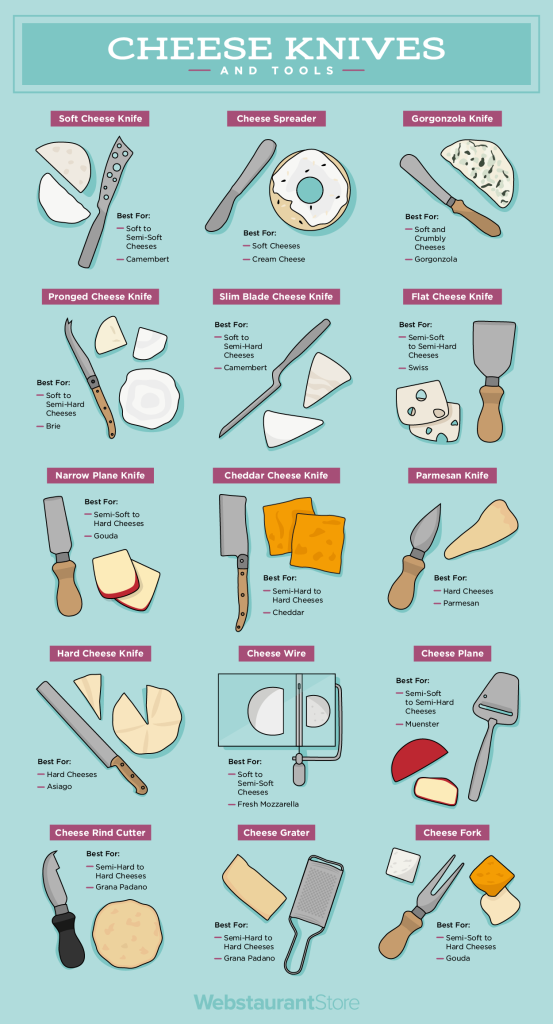
Cheese cutting is part technique, part tool choice—and entirely worth mastering. The right tool, correct temperature, and a few simple habits will yield clean slices, tidy platters, and better tasting cheese. This guide gives step‑by‑step instructions, real‑world troubleshooting, maintenance advice, presentation tips, and brief buying guidance so you can cut with confidence.
Ready to upgrade one skill tonight? Pick a single tool (a wire cutter or plane) and practice on a familiar cheese—results come fast.
Essential cheese cutting tools and when to use them
Below are the core tools every home cheeseboard enthusiast should know, with what they do and when to reach for them.
- Cheese knife (soft/clean‑cut): Thin blade, often with holes or nonstick coating. Best for soft-ripened and semi-soft cheeses that stick.
- Cheese plane (flat, slightly curved): Shaves thin, elegant slices from semi‑hard to hard cheeses.
- Wire cutter / cheese harp: Produces clean slices for soft to semi‑hard cheeses without crushing them.
- Cleaver / hard‑cheese knife: Short, sturdy blade for breaking or chopping very hard cheeses (Parmesan, aged Pecorino).
- Spreader / soft‑cheese knife: Rounded or narrow blade for spreading fresh cheeses and soft spreads.
- Grater / microplane: For finishing and garnish (Parmesan shards, zest).
- Forked serving knife: Picks up slices without touching them and stabilizes wedges while cutting.
Tool selection table (quick reference)
| Tool | Best for | Practical tip |
|---|---|---|
| Wire cutter | Brie, Camembert, Gouda (semi-soft) | Use a taut wire and pull straight down for even slices |
| Cheese plane | Cheddar, Gruyère, aged cheeses | Hold blade at shallow angle for thin ribbons |
| Cleaver | Aged, very hard cheeses | Tap-and-cut or saw gently along natural cracks |
| Soft‑knife (holes) | Fromage à pâte molle | Holes reduce suction and sticking |
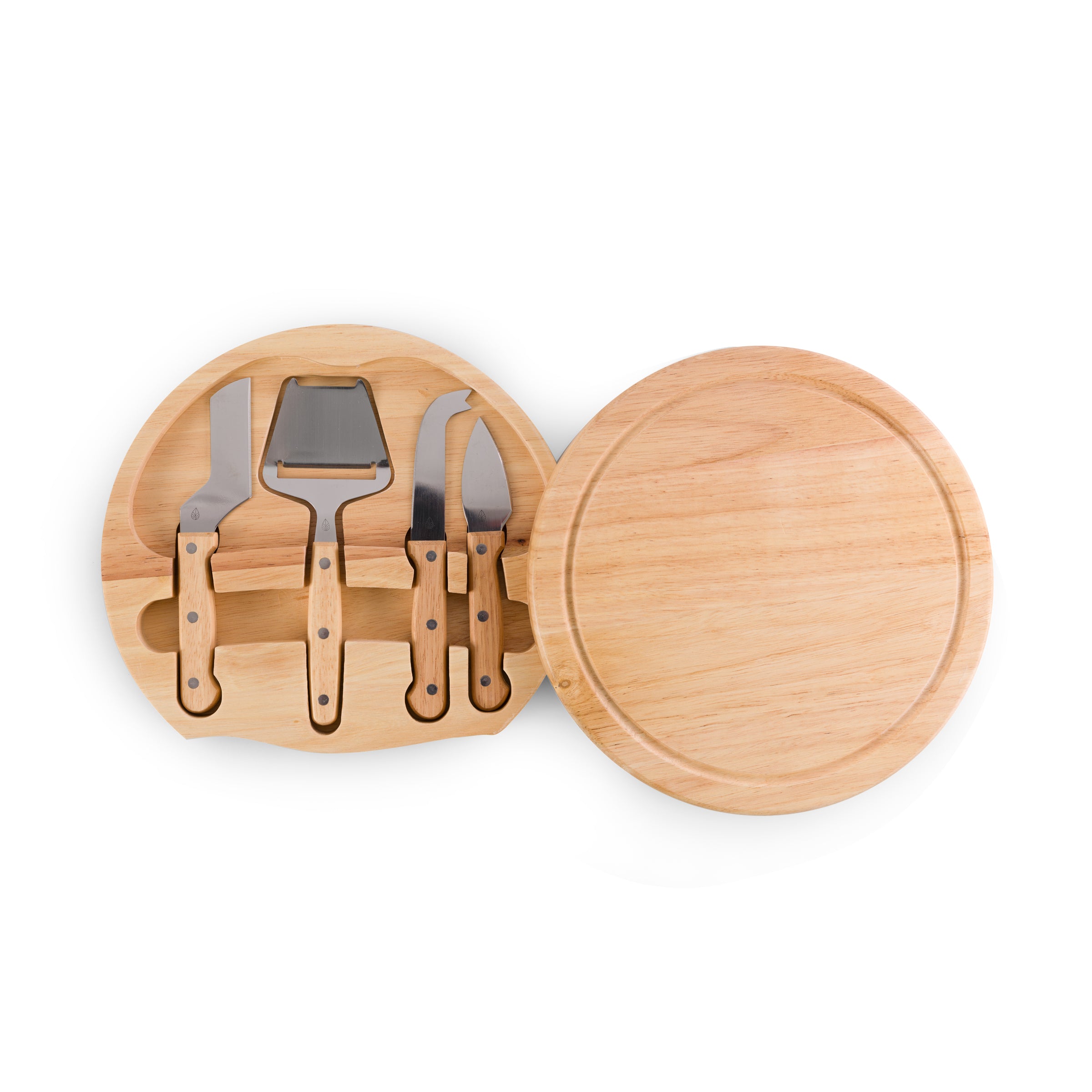
 Common home cheese tools: knives, plane, and wire cutter.
Credit: www.amazon.com
Common home cheese tools: knives, plane, and wire cutter.
Credit: www.amazon.com
Temperature, prep, and food-safety basics
Temperature dramatically affects texture and cutting behavior.
- Chill vs. room temperature: In practice, hard and aged cheeses are easier to shave or grate when cooler; soft and bloomy‑rind cheeses cut cleaner when slightly warmed to room temperature. A short rest at room temperature (often 15–30 minutes) makes soft cheeses less gummy and more flavorful—try this before serving.
- Stabilize the cheese: Use a flat cutting board and hold cheese steady with a fork or towel to prevent slips.
- Food safety: Keep perishable cheeses refrigerated until shortly before serving and return leftovers promptly. For current storage and safety guidance consult the USDA's food safety resources and your local extension service such as the University of Minnesota Extension for safe handling and storage practices (USDA, extension.umn.edu).
Practical checklist before cutting:
- Choose the right board (non‑slip, nonreactive).
- Wipe surface and tools dry—no wet knife/glassiness.
- Rest soft cheeses briefly at room temperature.
- Keep a clean towel and serving fork handy.
How to cut by cheese category — step‑by‑step
Hard (aged, crystalline): Parmigiano‑Reggiano, aged Manchego
- Use a cleaver or sturdy knife. Work with wedges or break into chunks along natural cracks.
- Technique: Place cheese flat, apply steady pressure, and use short controlled cuts. For shaving, use a plane held at a low angle.
Semi‑hard (Cheddar, Gouda, Gruyère)
- Use a plane for thin slices or a chef’s knife for wedges.
- Technique: Slice from the center outward so wedge portions keep their rind for presentation.
Semi‑soft (Havarti, Fontina, young Gouda)
- Use wire cutter or thin-blade knife to avoid compressing.
- Technique: Pull the wire straight down rather than sawing; support cheese to prevent collapse.
Soft‑ripened (Brie, Camembert)
- Use a soft‑cheese knife with holes or a thin wire.
- Technique: Cut with a gentle downward motion; for wedges, remove rind on serving slices if guests prefer.
Fresh/crumbly (Feta, chèvre)
- Crumble or cut with a fork‑tipped knife. For uniform cubes, chill briefly to firm up.
- Technique: Use a serrated or fork‑tipped knife and lift pieces with the prongs.
Common mistake: Using a large heavy knife on soft cheeses—this crushes texture. In practice, one clean downward pull with the right tool is better than multiple sawing motions.
Presentation and portioning tips
Thoughtful cutting helps a platter look intentional.
- Variety rule: Offer different textures (soft, semi‑hard, hard), two or three flavors (mild, tangy, aged), and 3–5 varieties for a small gathering.
- Serving shapes: Wedges (good for aged cheeses), slices (plane for semi-hard), cubes (party-friendly), shards/grated (for garnishes).
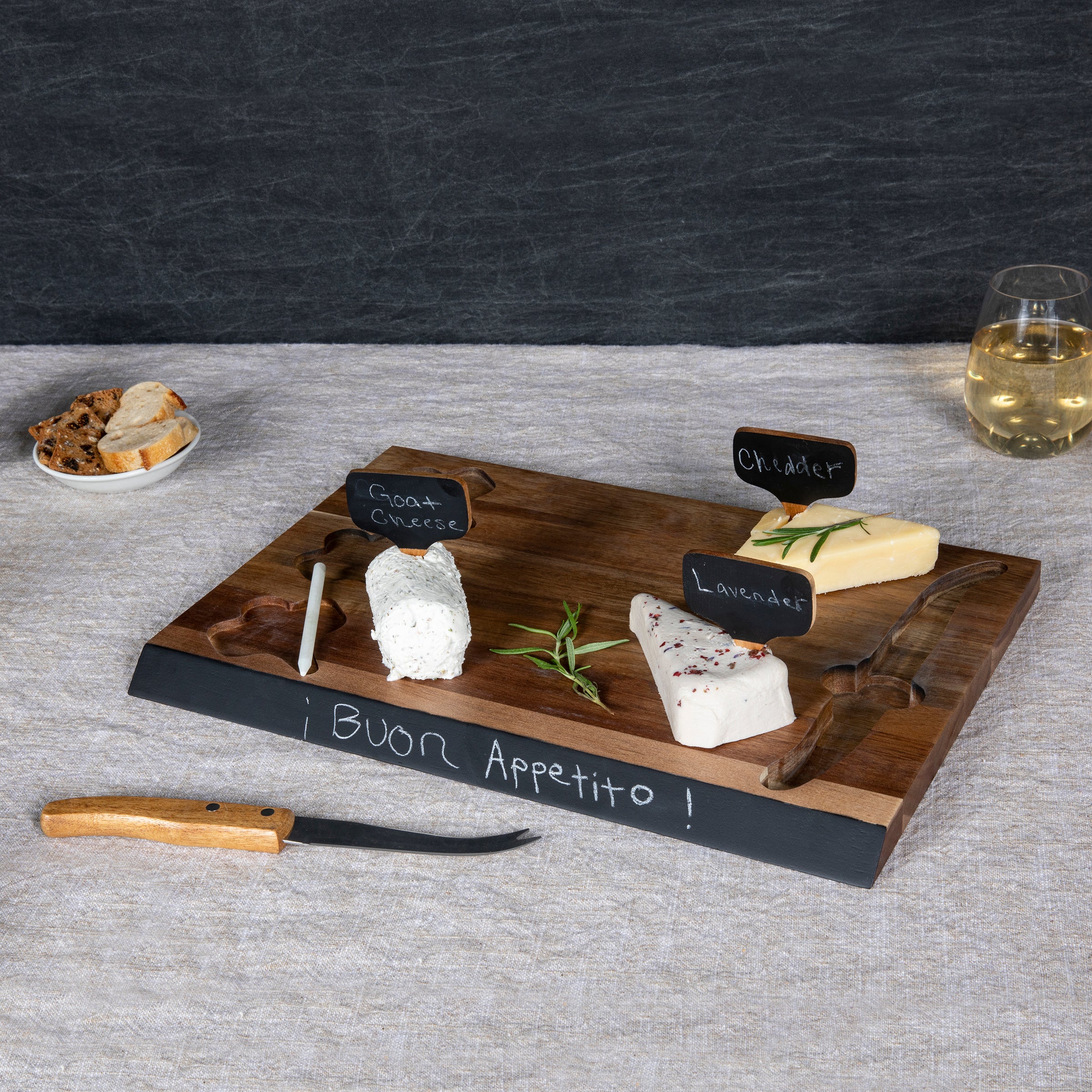
- Label and group: Place like cheeses together and include small labels for name and milk type (cow/goat/sheep).
- Accompaniments: Pair with breads/crackers, fruit, nuts, and a neutral spread. Use small bowls for sticky items to keep the board tidy.
Presentation tip: Arrange from mildest to strongest clockwise to guide tasters through flavor progression.
 Example arrangement: wedges, cubes, and accompaniments.
Credit: www.picnictime.com
Example arrangement: wedges, cubes, and accompaniments.
Credit: www.picnictime.com
Tool care: cleaning, sharpening, and replacement
Proper care extends tool life and preserves performance.
- Cleaning: Most knife blades and planes are hand wash only—warm water, mild detergent, rinse and dry immediately. Wire cutters often have removable wires; rinse and dry wires thoroughly to prevent corrosion.
- Dishwasher caution: Avoid the dishwasher for wooden handles, carbon steel, and delicate coatings—dishwashers can warp and dull blades.
- Sharpening: Keep plane blades and knives sharp for cleaner cuts. Use a honing steel or whetstone per manufacturer guidance. In practice, a quick hone before a gathering makes a noticeable difference.
- Wire replacement: Wire cutters require periodic replacement of the wire. Replace when you see fraying or when cuts become uneven; many wires are inexpensive and simple to swap.
- Storage: Store knives in a block or magnetic strip; keep wires stored taut and protected—avoid tossing them loose in drawers.
Quick maintenance checklist:
- Dry every tool completely after washing.
- Oil carbon steel blades lightly with food‑safe oil to prevent rust.
- Replace wires at first sign of wear.
Safety and troubleshooting
- Grip and posture: Keep fingers behind the cutting edge and use a fork or towel to steady smaller pieces.
- Avoid sawing soft cheeses: If slices drag, switch to a wire or chill the cheese briefly.
- Sticky cheeses: Wipe the blade between cuts or dip blade in warm water (and dry) to reduce sticking. For very sticky cheeses, use a wire for the cleanest result.
- Dull tools: Dull blades require more force and increase slip risk—sharpen or replace before a party.
Buying guide: what to prioritize
If you’re building a starter kit, prioritize versatility and durability:
- Materials: Stainless steel resists corrosion; carbon steel holds a better edge but needs care. Choose comfortable handles.
- Start set: wire cutter, cheese plane, soft cheese knife, and one sturdy cleaver or hard‑cheese knife covers most needs.
- Budget vs. value: Mid‑range tools from reputable makers often deliver the best blend of performance and longevity.
Ready to upgrade? Start with one versatile tool (a plane or wire cutter), practice cutting two or three cheeses this weekend, and add tools as your tasting style grows.
 Set with plane, knife, and serving fork ready for use.
Credit: www.picnictime.com
Set with plane, knife, and serving fork ready for use.
Credit: www.picnictime.com
Frequently asked questions
Q: Why do some cheese knives have holes?
- Holes reduce the surface area of the blade so soft cheeses are less likely to stick; this produces cleaner slices.
Q: What are the prongs on a cheese knife for?
- Prongs act as a serving fork to lift and transfer slices without touching them.
Q: How do I clean a cheese wire?
- Remove the wire if possible, rinse under warm water, scrub gently with mild soap, dry fully, and replace if frayed.
Q: Can I use a regular kitchen knife?
- Yes, for many tasks a sharp chef’s knife works, but specialized tools (wire, plane, soft‑knife) will give cleaner results and better presentation.
Q: How long should cheese sit before serving?
- Short resting at room temperature generally improves flavor and cutting texture. Adjust by cheese type—soft cheeses benefit most from a bit of warming, while very hard cheeses can be served cooler.
Conclusion
Using the right cheese cutting tool and technique transforms both the look and the taste of your cheese board. Focus on matching tool to cheese, prepping the cheese temperature appropriately, and maintaining your tools. Start small—add one tool to your kitchen and practice clean cuts; you’ll notice better texture, easier serving, and happier guests. Want an immediate win? Try a wire cutter on semi‑soft cheese tonight—prepare fewer, cleaner slices and enjoy the difference.

I’m Abby Lu, a passionate home cook who loves simplifying everyday meals. At PlugChef.com, I share product reviews and cooking guides to help you find the best tools for your kitchen.
Related posts:
 How to Make a Fruit Basket for a Gift: Easy DIY Guide
 Do You Need a Basket? Essential Guide for Air Fryers
 How to Choose Kitchen Appliances: Expert Tips Revealed
 Kitchen Cabinets With Black Stainless Steel Appliances: Modern Elegance
 White Kitchen Cabinets Stainless Steel Appliances: Timeless Elegance
 Top 10 Best Non-Toxic Cooking Utensils – Safe & Durable Choices for Healthy Homes

