
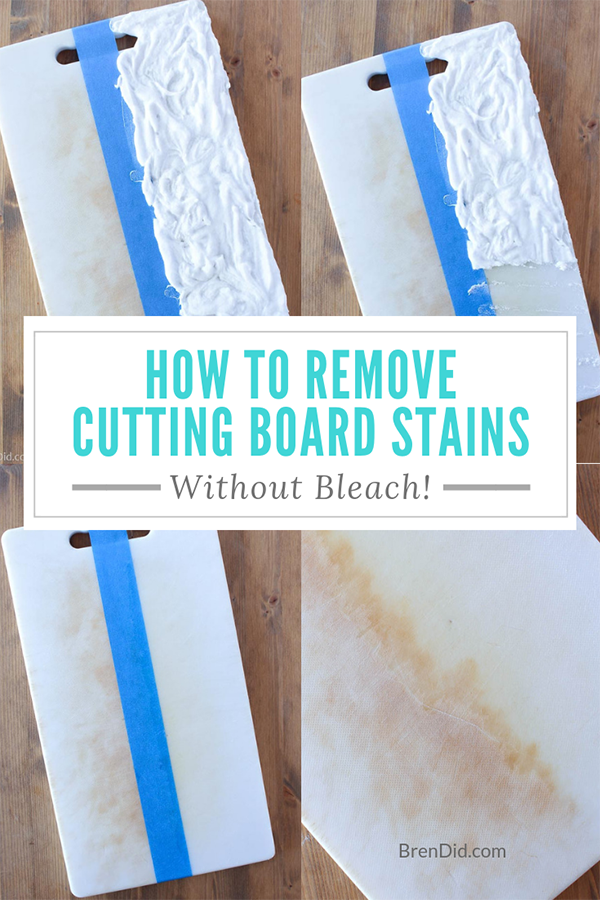
Keeping plastic cutting boards sanitary prevents foodborne illness, reduces cross-contamination, and extends the board’s usable life. This practical guide gives clear, step-by-step cleaning and sanitizing methods you can use today, plus safety notes, stain-removal tactics, storage tips, and when to replace a board.
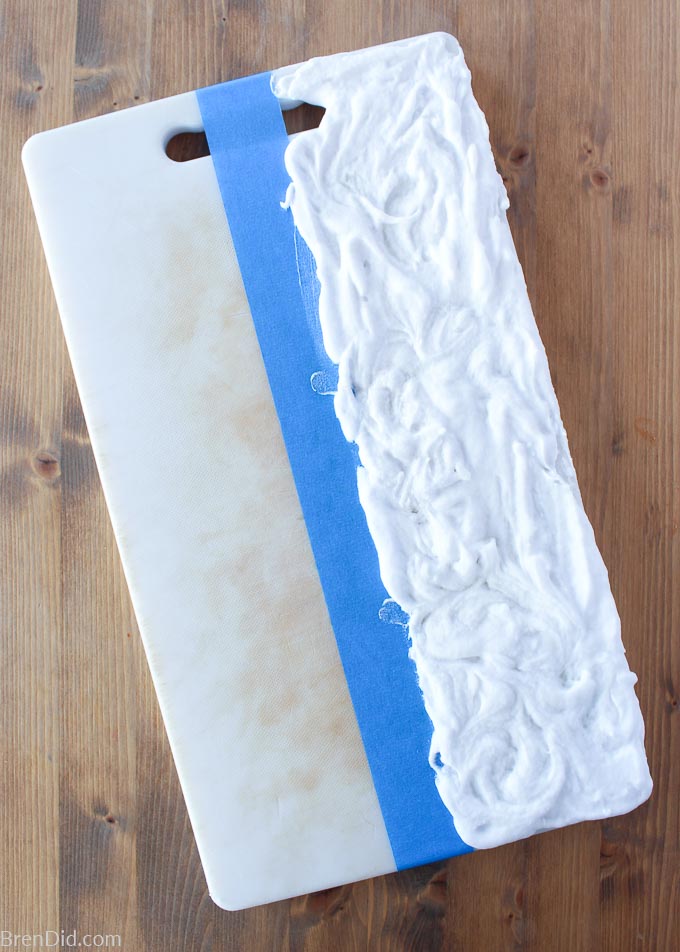
Credit: brendid.com
Why sanitize (not just clean)?
- Cleaning removes visible food, grease and debris. Sanitizing reduces microbes to safer levels after cleaning.
- For routine veggie prep, cleaning alone is often enough. After raw meat, poultry, seafood, or when someone in the home is immunocompromised, sanitize the board.
- In practice: wash every time you use a board; sanitize after raw proteins and deep-clean weekly for heavily used boards.
For official food-safety basics, follow guidance from national authorities such as the CDC and the USDA.
Quick checklist: what you’ll need
- Dish soap and the hottest safe water you can handle
- Stiff nylon brush or non-abrasive scrub pad
- Unscented household bleach (for disinfecting) OR 3% hydrogen peroxide
- White vinegar and baking soda (for stains and odors)
- Dishwasher with a sanitize cycle (if board is dishwasher-safe)
- Clean drying rack or upright storage place
- Gloves if you have sensitive skin or are using chemicals
Everyday cleaning — step by step (2–5 minutes)
- Scrape: Remove food scraps into the trash or compost. Grooves trap particles—get them out first.
- Wash: Scrub both faces, edges and corners with dish soap and hot water using a brush. Spend extra time on cuts and grooves.
- Rinse: Rinse under running water until all soap and loose debris are gone.
- Dry: Stand the board upright to air-dry or towel-dry with a clean towel.
Tip: a common mistake is skipping the edge and underside—bacteria hide there. Scrub the edges and any recessed areas.
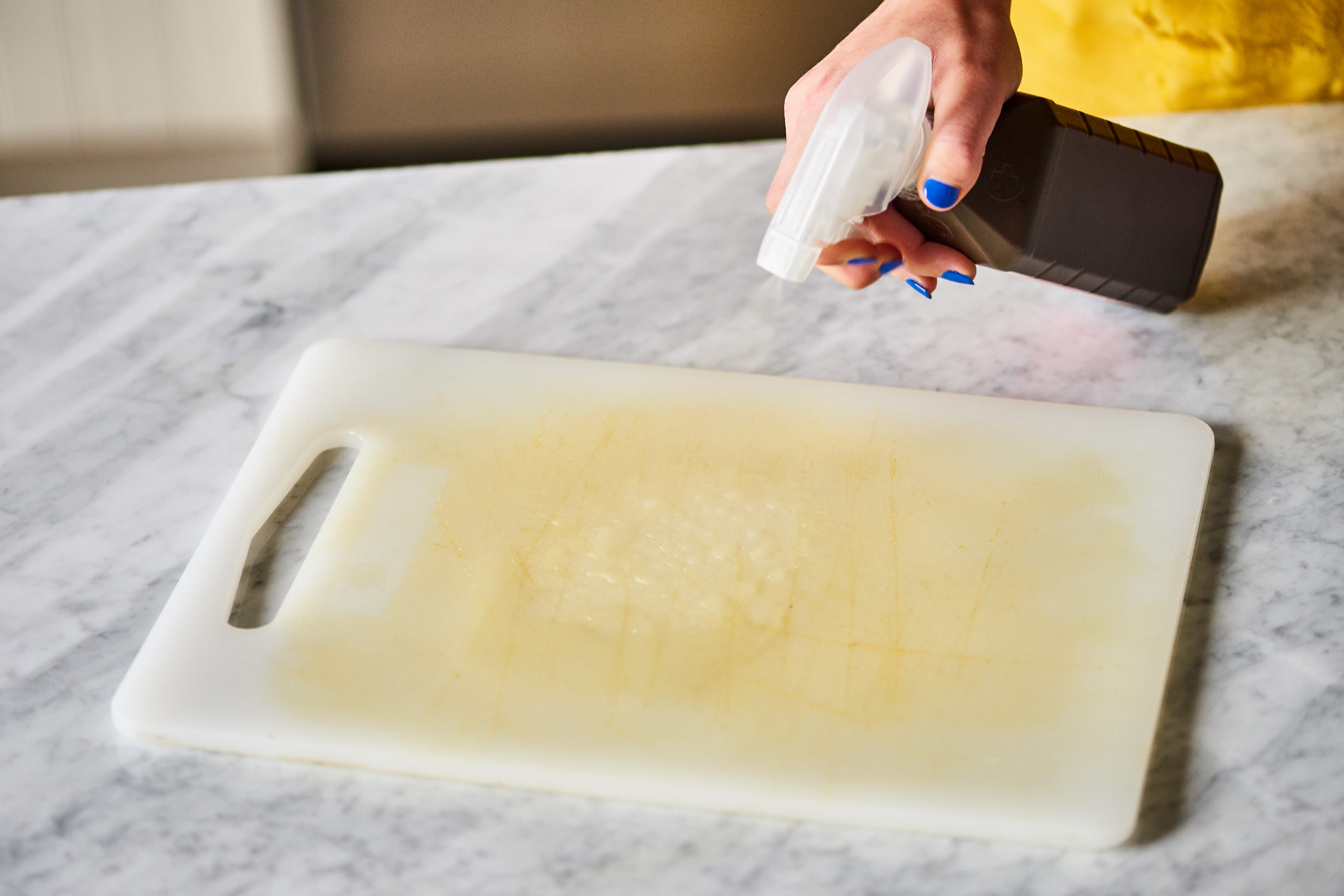
Credit: www.thekitchn.com
Scrub both faces, edges and grooves to remove trapped food.
Effective sanitizing methods (ranked for ease and reliability)
Below are practical options with application steps, pros and cons.
1) Dishwasher sanitize cycle — easiest and hands-off
- Place the board upright on the rack or on the top rack if it fits. Use the sanitize cycle or the hottest wash available.
- Why it works: prolonged high-heat rinses and detergent reduce microbial load without chemicals.
- Caution: thin or flexible boards may warp. Check manufacturer guidance.
Pros: fast, consistent; good for routine sanitizing.
Cons: may not be suitable for every plastic board.
2) Bleach solution — strongest non-commercial disinfectant
- Make the solution: 1 tablespoon (15 mL) unscented household bleach per 1 gallon (3.8 L) of water.
- Apply: Submerge or pour the solution over the board so the surface stays wet.
- Contact time: let stand about 1 minute, then rinse thoroughly with water and air-dry upright.
- Safety: use in a ventilated area, never mix bleach with vinegar or ammonia, and wear gloves if necessary.
Pros: inexpensive, EPA-registered for nonporous surfaces.
Cons: strong odor, can be corrosive over time to some plastics if overused.
3) 3% Hydrogen peroxide — good chlorine-free alternative
- Apply full-strength 3% hydrogen peroxide to the cleaned board until wet.
- Let sit 1–5 minutes, then rinse and dry.
- It breaks down into water and oxygen, leaving no chlorine residue.
Pros: milder odor, effective against many microbes.
Cons: may take slightly longer than bleach for some pathogens.
4) White vinegar + baking soda — stain removal and mild antimicrobial
- Sprinkle baking soda, scrub to remove stains and odors. Spray undiluted white vinegar, let sit about 5 minutes, then rinse.
- Note: vinegar is a weak antimicrobial and is not as broad-spectrum as bleach or a dishwasher sanitize cycle.
Pros: good for everyday deodorizing and stains; non-toxic.
Cons: not recommended as the only sanitizer after raw meat.
Comparison highlights:
- Soap + hot water: required first step for any method.
- Dishwasher sanitize: reliable, hands-off.
- Bleach solution: strongest for disinfection of nonporous surfaces.
- Hydrogen peroxide: useful alternative without chlorine.
- Vinegar: best for odors/stains, not heavy-duty sanitizing.
Contact times and concentration — practical guidance
- Bleach: 1 tbsp per gallon; keep surface wet for ~1 minute; rinse well. (Common household guidance used by many sanitation resources.)
- Hydrogen peroxide: 3% full-strength; 1–5 minutes; rinse.
- Dishwasher: run sanitize/high-heat cycle per appliance instructions.
- Vinegar: 5 minutes as deodorizer/stain aid, not a substitute for stronger disinfectants after raw proteins.
If you need validated concentrations for commercial settings, consult your local food safety authority or regulatory guidance.
Special situations & tips
- Cross-contamination: either sanitize between uses when switching from raw meat to ready-to-eat foods, or use color-coded boards (red for raw meat, green for produce).
- Delicate plastics: avoid repeated prolonged bleach exposure and hot water soaks that can warp or bleach-colored boards.
- Heat-sensitive boards: if a board warps in the dishwasher, mark it “hand wash only” and use another dishwasher-safe board for sanitizing.
- Immunocompromised households: sanitize more often and consider replacing boards sooner.
Drying and storage (prevent recontamination)
- Air-dry boards standing upright so both faces get airflow; avoid stacking wet boards.
- Keep boards in a clean, dry cabinet or on an open rack.
- Store raw-food boards separately or label them clearly to prevent accidental reuse on produce.
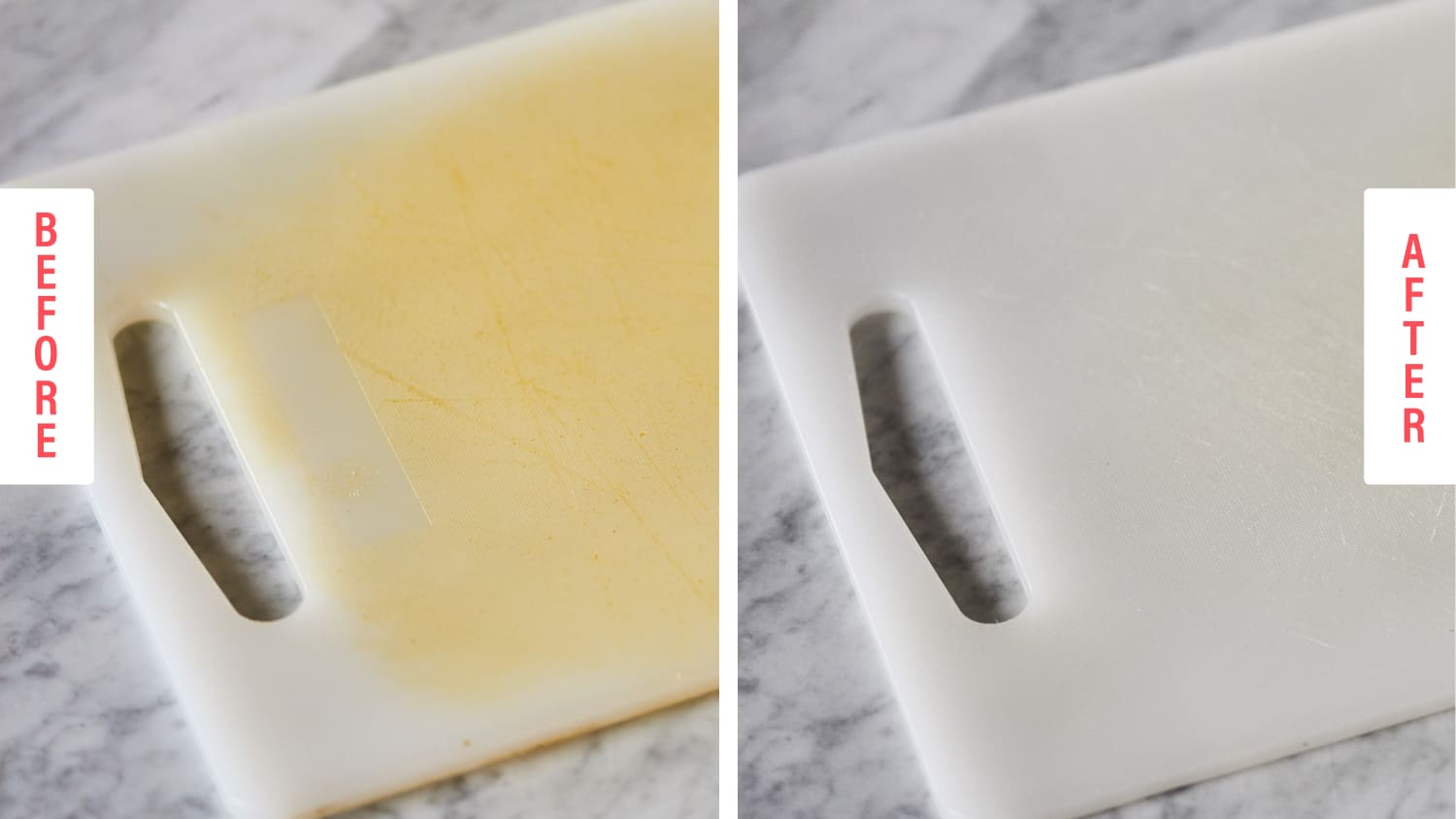
Credit: www.thekitchn.com
Example of upright drying to prevent trapped moisture.
Stain and odor removal — detailed steps
Tomato, beet or red stains:
- Make a paste of baking soda and water.
- Rub paste into the stain and let sit 5–15 minutes.
- Scrub and rinse; if needed, follow with a short hydrogen peroxide soak (10–15 minutes), then rinse.
Garlic, fish odors:
- Sprinkle baking soda, rub in and let sit at least 30 minutes or overnight.
- Rinse and air-dry in sunlight if possible (UV helps reduce odors).
Persistent dyes (turmeric): repeated baking soda scrubs and brief hydrogen peroxide soaks work better than vinegar; prolonged bleach may lighten colors or degrade the plastic over time.
Caution: test any strong cleaner on a small area first to check for discoloration.
When to replace a plastic cutting board
Replace the board when any of these apply:
- Knife grooves or cracks where your fingernail catches and scrubbing won’t remove trapped food.
- Warping, delamination, or separation of layers.
- Persistent odors or discoloration after proper cleaning and sanitizing.
In practice, heavy home cooks often replace boards every 1–3 years; occasional cooks may get longer life. Inspect boards regularly rather than relying on a fixed schedule.
Safety notes for chemicals
- Always use unscented household bleach (no added fragrances or cleaners).
- Never mix bleach with ammonia, vinegar, or other household chemicals—dangerous gases can form.
- Rinse thoroughly after chemical sanitizers to avoid residue on food-contact surfaces.
- Store cleaners out of reach of children and pets.
Troubleshooting — common mistakes and fixes
- Mistake: disinfecting a visibly dirty board. Fix: always clean first—organic matter reduces disinfectant effectiveness.
- Mistake: using metal scouring pads. Fix: use nylon brushes; metal pads deepen grooves and trap bacteria.
- Mistake: stacking wet boards. Fix: dry upright, separate to allow airflow.
- Mistake: assuming vinegar replaces sanitizer after raw meat. Fix: use dishwasher/bleach/peroxide after raw proteins.
FAQ — short answers to common questions
Q: Can bacteria survive on a plastic cutting board?
A: Yes—bacteria can survive in grooves and under residue. Regular cleaning and periodic sanitizing prevent buildup.
Q: Does the dishwasher sanitize plastic boards?
A: A dishwasher’s sanitize or hottest cycle reduces bacteria effectively for dishwasher-safe boards. Check your dishwasher settings.
Q: Is household bleach safe on plastic boards?
A: Yes, when diluted properly (about 1 tbsp per gallon), used briefly, then rinsed. Repeated heavy use can fade or weaken some plastics.
Q: Can I boil a plastic board to sanitize it?
A: No—most plastics will deform or warp at boiling temperatures. Use the dishwasher or chemical sanitizers instead.
Q: How often should I deep-sanitize my board?
A: Sanitize after any raw meat contact and do a weekly deep-sanitize for heavily used boards.
Conclusion — simple routine to keep boards safe
- Clean every time: scrape then wash with hot, soapy water and scrub edges/grooves.
- Sanitize when needed: dishwasher sanitize cycle, bleach solution (1 tbsp/gallon, ~1 minute), or 3% hydrogen peroxide (1–5 minutes).
- Dry upright and store dry.
- Replace boards with deep grooves, cracks, persistent odors, or warping.
Action step: choose one color-coded board for raw meat and set a weekly phone reminder to deep-sanitize your most-used board — small habits prevent food-safety problems and save time.
Want an easy next step? Pick a rigid, dishwasher-safe plastic board and keep unscented bleach or 3% hydrogen peroxide on hand for periodic disinfection — it’s a small investment for safer meals.

Hi, I’m Daniel Brooks—a food lover and kitchen gear enthusiast. I enjoy testing cookware, utensils, and gadgets to see what really works in everyday cooking. At PlugChef.com, I share honest reviews, comparisons, and simple guides to help you choose the best tools for a safer, smarter, and more enjoyable kitchen.
Related posts:
 How to Make a Fruit Basket for a Gift: Easy DIY Guide
 Do You Need a Basket? Essential Guide for Air Fryers
 How to Choose Kitchen Appliances: Expert Tips Revealed
 Kitchen Cabinets With Black Stainless Steel Appliances: Modern Elegance
 White Kitchen Cabinets Stainless Steel Appliances: Timeless Elegance
 Top 10 Best Non-Toxic Cooking Utensils – Safe & Durable Choices for Healthy Homes

