
There’s a reason weekend brunch menus always save a spot for French toast — but swapping standard sandwich bread for rich, eggy challah takes this classic dish from ordinary to unforgettable. After testing this recipe dozens of times for family gatherings, the one consistent game-changer is challah’s unique braided structure and subtle sweetness, which creates a custardy, fluffy interior and crisp, golden exterior without extra effort. In this guide, you’ll learn exactly why challah outperforms other breads for French toast, how to avoid common sogginess mistakes, and how to customize it for sweet or savory cravings.
Why Challah Bread Is The Ultimate French Toast Base
Challah’s unique composition makes it far better suited for French toast than brioche, sourdough, or standard white bread. Its dense yet airy crumb, mild sweetness, and sturdy braided shape solve the most common French toast pitfalls: sogginess, falling apart during cooking, and a one-note flavor profile.
Unique Braided Structure For Structural Integrity
Unlike soft, airy sandwich bread that collapses when soaked, challah’s tight braided crumb holds its shape even after absorbing a full custard mixture. This structure prevents the slices from falling apart in the pan, and creates a satisfying contrast between the crisp, browned exterior and the soft, pillowy interior. The slight chew of the bread also adds texture that cheaper breads can’t match.
Subtle Sweetness That Complements Custard
Challah is leavened with eggs and sweetened lightly with sugar or honey in the dough, giving it a delicate, buttery sweetness that amplifies the flavor of your custard without overpowering it. Unlike brioche, which has a rich, almost dessert-like flavor, challah’s neutral base lets your chosen toppings — from maple syrup to smoked salmon — shine through.
Superior Custard Absorption Without Sogginess
Challah’s porous crumb soaks custard deeply and evenly, so every bite is moist and flavorful, not dry in the center or mushy on the outside. Slightly stale challah (1-2 days old, left uncovered on a counter) works even better for this, as the firmer crumb absorbs liquid without disintegrating — a trick that eliminates the sogginess that plagues so many homemade French toast recipes.
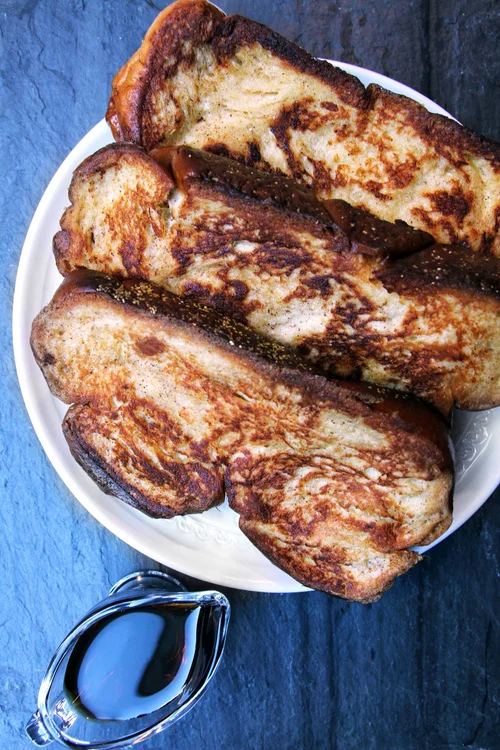
 Freshly cooked challah French toast, crisp on the outside and fluffy custardy on the inside, ready to serve
Credit: food52.com
Freshly cooked challah French toast, crisp on the outside and fluffy custardy on the inside, ready to serve
Credit: food52.com
Ingredients You’ll Need
This recipe uses simple, pantry-staple ingredients, with precise measurements to ensure consistent, fluffy results every time. We’ve included substitution notes for common dietary restrictions, so you can adapt it to your needs without sacrificing texture.
Base Custard Ingredients
- 1 loaf challah (12 slices, ¾-inch thick)
- 6 large eggs, room temperature
- 1 cup whole milk (or oat milk for dairy-free)
- 2 tbsp granulated sugar
- 1 tsp pure vanilla extract (avoid imitation for the best flavor)
- ½ tsp ground cinnamon
- ¼ tsp freshly grated nutmeg
- Pinch of fine sea salt
- 1 tbsp unsalted butter (for cooking, plus more as needed)
Optional Flavor Boosters
- 1 tsp orange zest for bright citrus notes
- ½ tsp ground ginger for warm, spicy depth
- ¼ cup grated parmesan for a savory twist
- Toasted nuts, granola, or chia seeds for crunch
Substitutions For Dietary Restrictions
For dairy-free diets, unsweetened oat milk works best, as its creamy texture mimics whole milk; avoid thin almond milk, which can lead to a watery custard. For egg-free diets, use ¾ cup of commercial egg replacer per 2 eggs, though the final texture will be slightly denser. Gluten-free challah works as a 1:1 swap for standard challah, though it may cook 1-2 minutes faster.
To ensure accurate measurements for all ingredients, use a well-maintained kitchen cleaning brush set to clear residue from measuring cups and bowls.
Preparing The Challah Bread
Proper prep is the first step to avoiding mushy, undercooked French toast. The thickness of your slices and the freshness of your bread will make or break the final texture.
Selecting The Right Bread Freshness
Freshly baked challah is soft and will absorb custard quickly, which works if you’re cooking immediately, but slightly stale challah (1-2 days old) is ideal for most home cooks. The firmer, drier crumb of stale challah holds up during soaking, so you won’t end up with slices that fall apart in the custard. If you only have fresh challah, leave the slices uncovered on a wire rack for 30 minutes before use to dry out the surface slightly.
Slicing For Even Cooking
Cut challah into uniform ¾-inch thick slices using a sharp serrated knife. Thinner slices will cook too quickly and turn mushy, while thicker slices may not cook through to the center. Press down gently when slicing to avoid compressing the crumb, which will create dense, uneven spots.
 Uniformly sliced challah ensures even custard absorption and consistent cooking
Credit: patcooks.com
Uniformly sliced challah ensures even custard absorption and consistent cooking
Credit: patcooks.com
Making The Custard Mixture
A well-balanced custard is the secret to fluffy, flavorful French toast. The key is to blend the ingredients until smooth, then taste and adjust sweetness before soaking the bread.
Balancing Sweetness And Spice
Whisk all custard ingredients together in a large, shallow bowl (a 9×13 baking dish works best for even soaking) until completely smooth, with no streaks of egg white. Avoid over-whisking, which can incorporate excess air and lead to airy, gummy pockets in the cooked French toast. Taste the custard before soaking: if you prefer sweeter French toast, add an extra 1 tsp of sugar, or use honey for a more complex sweetness.
Because this recipe uses raw eggs in the custard, it’s important to follow safe food handling practices to avoid risk of Salmonella. The USDA recommends using fresh, refrigerated eggs and cooking the French toast to an internal temperature of 160°F (71°C) to kill any harmful bacteria USDA Egg Safety Guidelines.
Using Vanilla And Cinnamon
Pure vanilla extract adds a fragrant, warm note that cuts through the richness of the eggs and milk, while cinnamon adds cozy, earthy depth that pairs perfectly with challah’s subtle sweetness. If you don’t have freshly grated nutmeg, pre-ground works in a pinch, but freshly grated has a far more vibrant, aromatic flavor.
Cooking The French Toast
The right pan temperature and cooking time are critical to getting a crispy exterior and fully cooked, fluffy interior.
Soaking Time For Perfect Absorption
Working in batches of 2-3 slices, submerge each slice in the custard for 20-30 seconds per side. Gently press the center of each slice with a spatula to push out air bubbles and ensure full saturation. A common mistake is over-soaking bread, which causes the crumb to break apart and leads to a gummy texture: if your challah is extra fresh and soft, reduce soaking time to 15 seconds per side to avoid this.
Ideal Pan Temperature
Heat a cast iron or non-stick skillet over medium heat for 2-3 minutes before adding fat. To test the temperature, sprinkle a few drops of water on the pan: they should sizzle gently, not evaporate instantly. Too high heat will burn the exterior before the interior cooks through, while too low heat will dry out the bread and prevent browning.
Butter Vs. Oil For Cooking
Butter adds rich, toasty flavor and promotes even browning, but it burns at high temperatures. For the best results, use a mix of 1 part butter to 1 part neutral oil (like canola or avocado oil) to get the buttery flavor without burning. Add enough fat to coat the pan fully, and replenish it between batches to prevent sticking.
Cook slices for 3-4 minutes per side, until golden brown and the center is set (no liquid egg will ooze out if you press the edge of the slice with a spatula). Work in batches to avoid overcrowding the pan, which drops the temperature and leads to soggy bread.
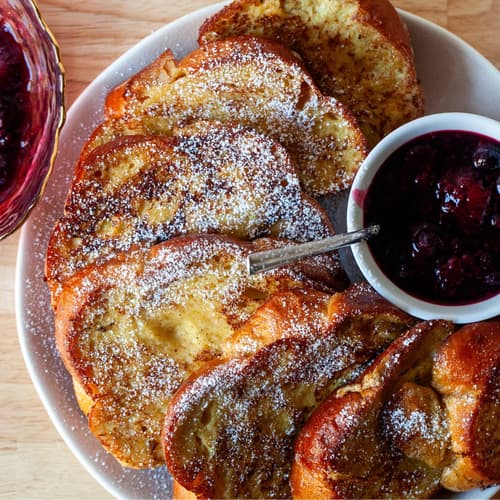 Finished French toast dusted with powdered sugar, ready for toppings
Credit: www.punchfork.com
Finished French toast dusted with powdered sugar, ready for toppings
Credit: www.punchfork.com
Serving & Topping Ideas
Challah French toast’s mild sweetness makes it a versatile base for both sweet and savory toppings. For a full weekend brunch spread, serve your French toast alongside a curated charcuterie board — our guide to perfect cheese slices for charcuterie will help you prep picture-perfect cheese slices to pair with your meal.
Sweet Topping Combinations
- Drizzle with warm maple syrup, honey, or agave, and dust with powdered sugar
- Top with fresh berries, sliced banana, or sautéed cinnamon apples
- Add a dollop of Greek yogurt, whipped cream, or vanilla ice cream
- Sprinkle with toasted nuts, granola, or a dash of cinnamon sugar
Savory Twists For A Hearty Meal
- Top with crispy bacon, breakfast sausage, or smoked salmon
- Add a spread of herbed cream cheese or avocado
- Sprinkle with fresh chives, a pinch of red pepper flakes, or a drizzle of hot sauce
- Serve alongside a side of sautéed mushrooms or caramelized onions
For a personalized touch, serve your French toast on a custom engraved wooden board — our guide to engraving a custom wooden board walks you through creating a durable, food-safe design for special occasions.
| Sweet Toppings | Savory Toppings |
|---|---|
| Warm maple syrup, honey, agave | Crispy bacon, breakfast sausage, smoked salmon |
| Fresh berries, sliced banana, sautéed apples | Herbed cream cheese, avocado, fried eggs |
| Toasted nuts, granola, chia seeds | Sautéed mushrooms, caramelized onions, hot sauce |
| Whipped cream, vanilla ice cream, Greek yogurt | Fresh chives, parmesan, cracked black pepper |
Make-Ahead, Storage & Reheating
This recipe is perfect for meal prep and hosting, as it holds up beautifully in the fridge and freezer.
Prepping Ahead
You can assemble the French toast in a 9×13 baking dish, pour the custard over the slices, cover, and refrigerate overnight for a no-fuss brunch option. When ready to serve, bake at 375°F (190°C) for 25 minutes, flipping halfway through, for a hands-off, crowd-friendly version.
Storing Cooked French Toast
Cool cooked slices completely before storing. Layer slices between sheets of parchment paper in an airtight container, and refrigerate for up to 3 days, or freeze for up to 1 month.
Reheating Without Losing Texture
Reheat refrigerated slices in a toaster oven or conventional oven preheated to 350°F (175°C) for 5-7 minutes, until warm and crisp. For frozen slices, thaw in the refrigerator overnight before reheating. Avoid microwaving, as it will make the exterior soggy.
Once you’ve finished cooking, wipe down your stovetop and skillet with a heavy-duty kitchen scrub brush to remove stuck-on butter and custard without scratching non-stick surfaces.
If you’re prepping this recipe for a family brunch with kids around, secure childproof cabinet latches to keep cleaning supplies and sharp utensils out of reach.
Pro Tips For Perfect Results Every Time
- If your French toast comes out soggy in the center, your pan was likely too low heat, or you soaked the bread for too long. Next time, reduce soaking time by 5 seconds and increase the pan temperature slightly.
- For an extra crispy crust, make sure your pan is fully preheated before adding the butter and oil, and don’t move the slices for the first 2 minutes of cooking to let a crust form.
- For a richer, more decadent French toast, replace ½ cup of the milk with half-and-half or heavy cream.
Frequently Asked Questions
What makes challah better for French toast than other breads?
Challah’s dense, eggy crumb holds its shape when soaked in custard, so it won’t fall apart or turn mushy like softer sandwich bread. Its subtle sweetness amplifies the flavor of the custard and toppings without overpowering them, unlike brioche’s rich, buttery taste.
Can I use frozen challah for French toast?
Yes, thaw frozen challah in the refrigerator overnight, then leave it uncovered on a wire rack for 1 hour to dry out the surface before slicing and soaking. Frozen challah works just as well as stale fresh challah for this recipe.
How long should challah soak in the custard?
For standard ¾-inch thick slices, soak for 20-30 seconds per side. Adjust based on freshness: fresh, soft challah only needs 15 seconds per side, while very stale challah can soak for up to 45 seconds per side.
Can I make this recipe vegan?
Yes, use a flax egg replacement (1 tbsp ground flaxseed + 3 tbsp water per egg) and unsweetened oat milk for the custard. Note that the final texture will be slightly denser than the traditional version, and you may need to cook it 1-2 minutes longer per side.
Can I make French toast with egg-free challah?
Yes, use any egg-free challah as a 1:1 swap for standard challah. The only adjustment needed is to reduce soaking time by 5 seconds per side, as egg-free challah tends to be softer and absorbs custard faster.
Conclusion
French toast made with challah bread is the perfect balance of sweet, fluffy, and crispy, and it works for every occasion from busy weekday mornings to holiday brunch gatherings. The slight sweetness of the bread means you don’t need to add excessive sugar to the custard, making it a balanced breakfast option when paired with fresh fruit and a side of yogurt. Ready to upgrade your breakfast routine? This recipe comes together in under 30 minutes, and the leftovers reheat beautifully for a quick weekday treat. Bookmark this recipe for your next brunch, and let us know how you customize your toppings in the comments below!

I’m Abby Lu, a passionate home cook who loves simplifying everyday meals. At PlugChef.com, I share product reviews and cooking guides to help you find the best tools for your kitchen.
Related posts:
 How to Make a Fruit Basket for a Gift: Easy DIY Guide
 Do You Need a Basket? Essential Guide for Air Fryers
 What Blenders Do Tropical Smoothie Use: Expert Insights
Stainless Steel Vs White Kitchen Appliances: Ultimate Showdown
What Blenders Do Tropical Smoothie Use: Expert Insights
Stainless Steel Vs White Kitchen Appliances: Ultimate Showdown
 Kitchen Appliances for Wedding Registry: Must-Have Essentials
 Top 10 Best Non-Toxic Cooking Utensils – Safe & Durable Choices for Healthy Homes

