
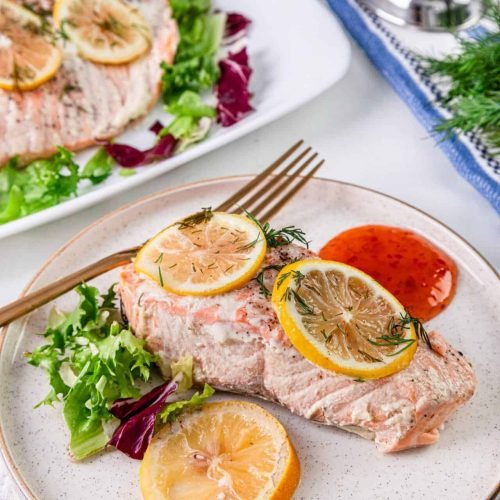
There’s nothing worse than coming home exhausted after a long day, only to spend an hour fighting with a hot oven and ending up with dry, overcooked salmon. Slow cooker salmon solves that problem entirely: set it and forget it for a hands-off, nutrient-dense meal that’s ready the second you walk through the door. Unlike high-heat cooking methods that can zap salmon’s delicate omega-3 fatty acids, the low, steady heat of a slow cooker keeps fish moist, flaky, and packed with flavor, with zero babysitting required. This guide covers everything from selecting the right cut of salmon to troubleshooting common mistakes, so you can master this healthy weeknight staple on your first try.
Why Slow Cooker Salmon Is a Weeknight Game-Changer
For busy home cooks, slow cooker salmon eliminates the stress of timing a finicky protein. Unlike pan-seared or baked salmon, which can go from perfectly cooked to dry in 2 minutes flat, slow cooker salmon cooks evenly at a consistent 190–200°F on the low setting, so you don’t have to hover over the stove. The gentle heat also locks in moisture far better than high-heat methods: the enclosed slow cooker environment traps steam, preventing the fish from drying out, while allowing seasonings and added liquids to infuse every bite. Nutritionally, this method preserves more of salmon’s heat-sensitive omega-3 fatty acids than searing or grilling at high temperatures, making it a smarter choice for heart and brain health. It’s also incredibly flexible: you can add vegetables, grains, or sauces directly to the slow cooker for a full one-pot meal, cutting down on cleanup time, and even use secure cabinet locks if you have young kids in the home to keep cleaning supplies and sharp utensils out of reach while you cook.
How to Choose the Best Salmon for Slow Cooking
The cut and type of salmon you pick will make or break your slow cooker dish, as different varieties hold up differently to long, gentle heat.
Wild vs. Farmed Salmon: Which Is Better for Slow Cookers?
Wild salmon, which swims in natural oceans and eats a natural diet of krill and smaller fish, has a firmer, more robust, earthy flavor and a lower fat content (typically 5–8% fat) than farmed options. It’s ideal for short cook times (1–1.5 hours on low) and holds its shape well, but can turn mushy or dry if cooked for longer than 2 hours, making it a better pick for experienced cooks who can monitor doneness closely. Farmed salmon, raised in controlled aquaculture systems, has a higher fat content (10–15% fat) that makes it far more forgiving for longer cook times. Its milder, buttery flavor also pairs well with a wide range of sauces and seasonings, and it’s available year-round at a lower price point than wild salmon. For first-time slow cooker salmon cooks, farmed salmon is the more reliable, fail-safe option.
Freshness and Quality Checks
Fresh, high-quality salmon is non-negotiable for a great-tasting dish. When buying fillets, look for flesh that is firm to the touch and springs back when gently pressed, with a mild, clean ocean smell (never sour, ammonia-like, or overly fishy). Avoid any fillets with brown spots, dry edges, or a dull, grayish tint, as these are signs of age or improper storage. If buying whole salmon, look for bright, clear eyes and shiny, metallic skin. Ask your fishmonger when the salmon was delivered to the store to confirm it’s less than 3 days old, as freshness degrades quickly after catch.
Portion Size and Slow Cooker Fit
Overcrowding your slow cooker leads to uneven cooking and mushy, steamed fish instead of tender, flaky fillets. Plan for 6–8 ounces of salmon per person, and leave at least 1 inch of space between each fillet for heat to circulate. A 4-quart slow cooker fits 1–2 6-oz fillets comfortably, while a 6-quart model fits 2–3 fillets. If cooking for a larger crowd, batch cook salmon in multiple rounds rather than stacking pieces, which will cause the bottom fillets to overcook.
Essential Ingredients and Tools for No-Fuss Cooking
You don’t need a fully stocked gourmet kitchen to make amazing slow cooker salmon: a few staple ingredients and basic tools are all you need for consistent results.
Non-Negotiable Tools
First, invest in a reliable digital food thermometer: for official food safety guidance on safe fish cooking temperatures, refer to USDA’s safe food handling chart. Slow cooker heat output varies widely by model, so a thermometer is the only way to confirm your salmon is cooked through without overcooking. Opt for a slow cooker with a removable ceramic insert, which is non-stick, easy to clean, and retains heat evenly. A transparent lid is also helpful for checking doneness without lifting the lid and losing heat (a common mistake that drops internal temperature by 10–15°F and extends cook time). When prepping salmon on a decorative cutting board, take care to pat fillets dry thoroughly to avoid water damage to the surface.
Flavor-Building Staples
You only need 5 core ingredients to make perfectly seasoned slow cooker salmon: fresh salmon fillets, salt, black pepper, a source of acid (lemon juice, lime juice, or white wine), and a fat source (olive oil, melted butter, or sesame oil). From there, you can customize with herbs, spices, or sauces to match your taste preferences. A common mistake home cooks make is rubbing seasonings only on top of the fillets, which leads to uneven flavor. Instead, pat the salmon dry, then rub salt, pepper, and any dry spices directly into the flesh before placing it in the slow cooker.
Foolproof Basic Slow Cooker Salmon Recipe
This no-fuss recipe works for both beginners and experienced cooks, and takes 10 minutes of active prep time. Always start with salmon that has been stored at 40°F or below, and never leave raw salmon at room temperature for more than 2 hours before cooking.
Step-by-Step Preparation
- Pat 1–2 lbs of salmon fillets (skin-on or skinless, 1-inch thick) thoroughly dry with paper towels to remove excess moisture, which prevents a bland, steamed texture.
- In a small bowl, mix 1 tsp salt, 1/2 tsp black pepper, 1 tsp dried dill (or 1 tbsp fresh), 2 cloves minced garlic, and 1 tbsp olive oil.
- Rub the seasoning mixture directly onto all sides of the salmon fillets, then top each fillet with a slice of fresh lemon.
- Lightly grease the slow cooker insert with cooking spray or olive oil, then arrange the salmon fillets in a single layer, skin-side down if using skin-on.
- Pour 1/4 cup of low-sodium vegetable broth or white wine into the bottom of the slow cooker to create steam and prevent sticking.
Cooking Times and Temperature Guide
| Slow Cooker Setting | Cook Time (1-inch thick fillets) | Internal Temperature |
|---|---|---|
| Low | 1.5 to 2 hours | 145°F (63°C) for USDA safety; 125–130°F (52–54°C) for medium-rare previously frozen farmed salmon |
| High | 45 minutes to 1 hour | Same as above |
| Frozen (thawed first) | Add 30–45 minutes to low time | Same as above |
How to Tell It’s Done
Insert a digital food thermometer into the thickest part of the fillet to confirm it has reached your desired internal temperature. The flesh should be opaque throughout (no translucent or raw parts in the center) and separate easily with a gentle press of a fork, with no resistance.
Serving Suggestions
Serve the salmon as-is, or drizzle with extra lemon juice, melted butter, or your favorite sauce. It pairs perfectly with roasted vegetables, grains, or fresh salads for a balanced meal. Leftovers can be stored in an airtight container in the refrigerator for up to 3 days, or used in salads, sandwiches, or sushi bowls.
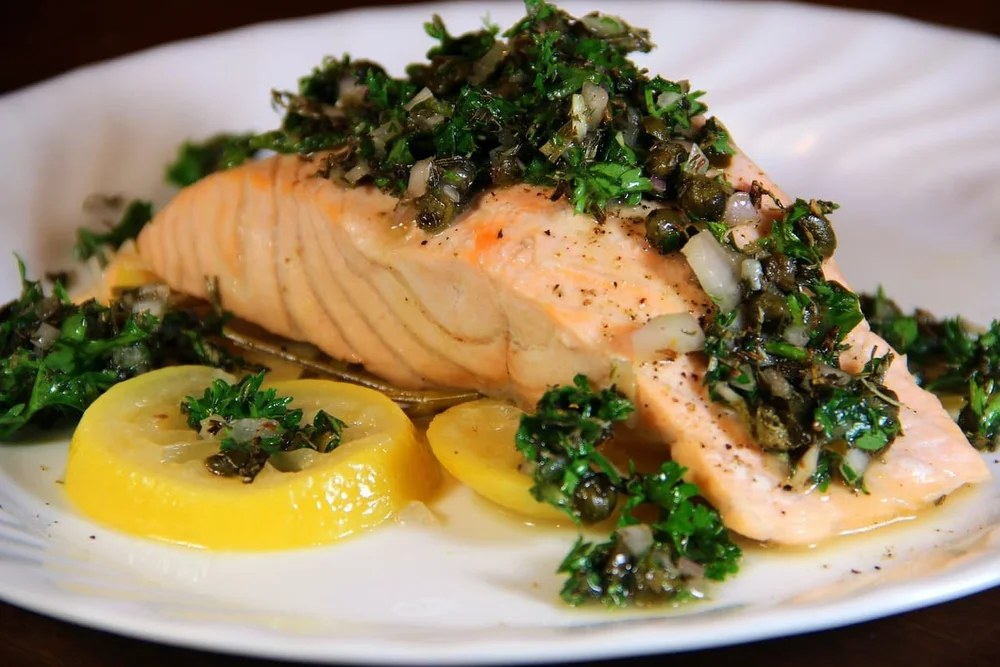 Poached slow cooker salmon fillets, moist and flaky, ready to serve
Credit: smartslowcooker.com
Poached slow cooker salmon fillets, moist and flaky, ready to serve
Credit: smartslowcooker.com
Flavor Variation Recipes to Mix Up Your Meals
Once you’ve mastered the basic recipe, try these tested flavor blends to keep your meals interesting. All ratios are per 1 lb of salmon:
Lemon Garlic Herb
Mix 2 tbsp fresh lemon juice, 1 tbsp olive oil, 2 cloves minced garlic, 1 tsp dried dill, 1/4 tsp black pepper, and 1 tsp lemon zest. Rub the mixture onto the salmon before cooking, and top each fillet with a lemon slice.
Soy-Ginger Glaze
Whisk together 3 tbsp low-sodium soy sauce, 1 tbsp honey, 1 tsp grated fresh ginger, 1 clove minced garlic, and 1 tsp sesame oil. Brush the glaze onto the salmon during the last 30 minutes of cooking to avoid burning.
Creamy Dill Mustard
Stir 2 tbsp plain Greek yogurt, 1 tbsp Dijon mustard, 1 tsp dried dill, 1 tsp lemon zest, and a pinch of salt until smooth. Spread the mixture over the salmon before cooking for a rich, tangy finish.
Spicy Chipotle Lime
Combine 1 tbsp minced chipotle in adobo, 1 tbsp fresh lime juice, 1 tsp ground cumin, 1/4 tsp smoked paprika, and 1/4 tsp salt. Rub the blend into the salmon for a smoky, spicy kick that pairs perfectly with cauliflower rice.
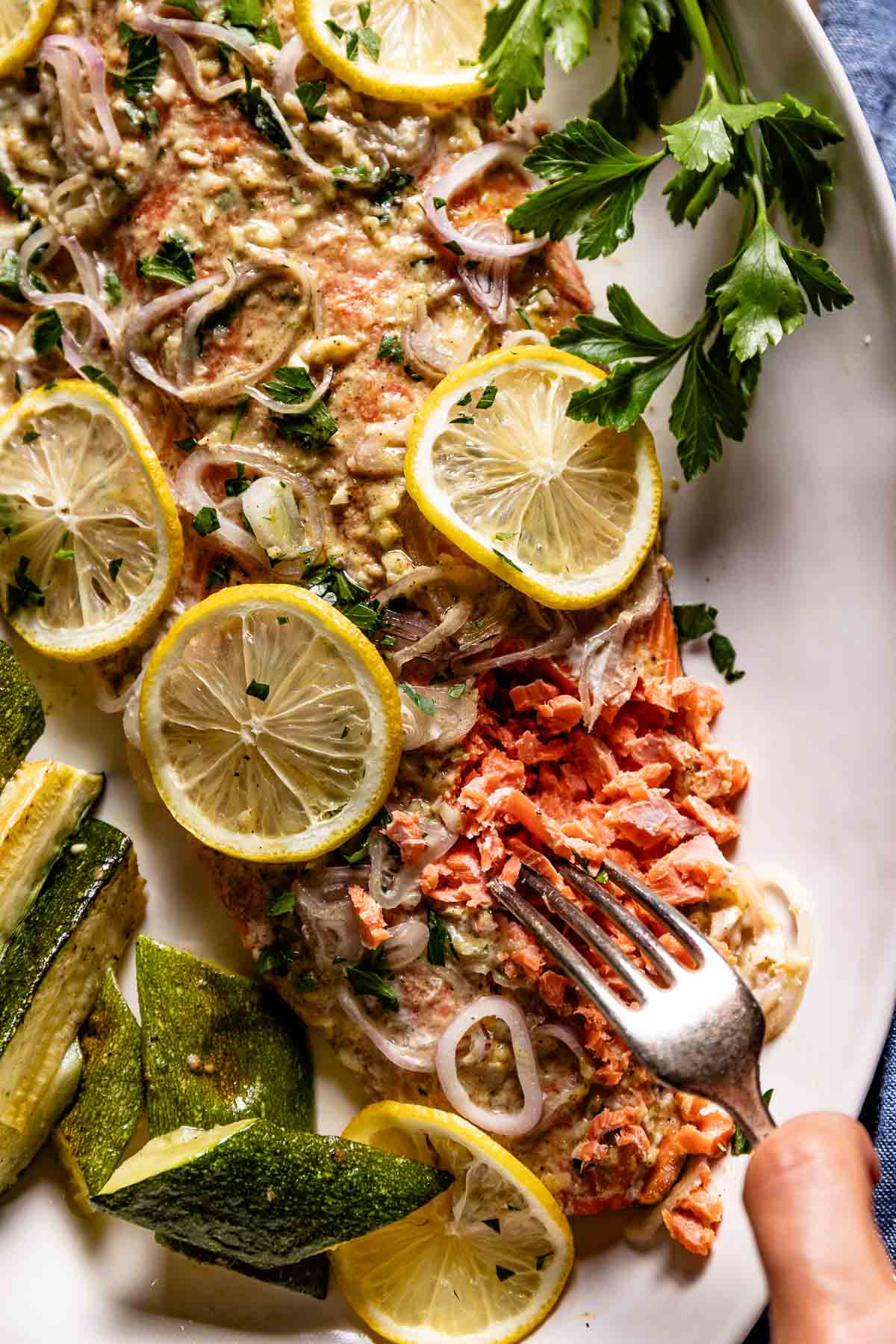 Soy-ginger glazed slow cooker salmon with a caramelized, savory finish
Credit: foolproofliving.com
Soy-ginger glazed slow cooker salmon with a caramelized, savory finish
Credit: foolproofliving.com
Healthy Side Dishes to Complete Your Meal
Since slow cooker salmon releases flavorful, omega-3 rich juices as it cooks, you can cut down on cleanup by cooking vegetables directly in the slow cooker alongside the fish. Place firmer vegetables like carrots, potatoes, and bell peppers on the bottom of the slow cooker under the salmon, where they’ll absorb the fish’s juices and cook to tender perfection. Add softer vegetables like cherry tomatoes, spinach, or zucchini in the last 30 minutes of cooking to avoid mushiness. For sides that don’t go in the slow cooker, opt for options that balance the richness of the salmon with bright, fresh flavors:
- Roasted vegetables: Toss carrots, broccoli, Brussels sprouts, or asparagus with olive oil, salt, and pepper, and roast at 400°F for 20–25 minutes for a crispy, caramelized contrast to the tender salmon.
- Whole grains: Quinoa, brown rice, or wild rice blends add fiber and protein to your meal, and absorb excess salmon juices for extra flavor. For a low-carb option, use riced cauliflower.
- Fresh salads: A simple mix of leafy greens, cucumber, cherry tomatoes, and avocado with a light lemon vinaigrette cuts through the richness of the salmon and adds extra vitamins and minerals. Leftover slow cooker salmon works perfectly on a charcuterie spread alongside cheese, crackers, and fresh fruit for a quick no-cook lunch.
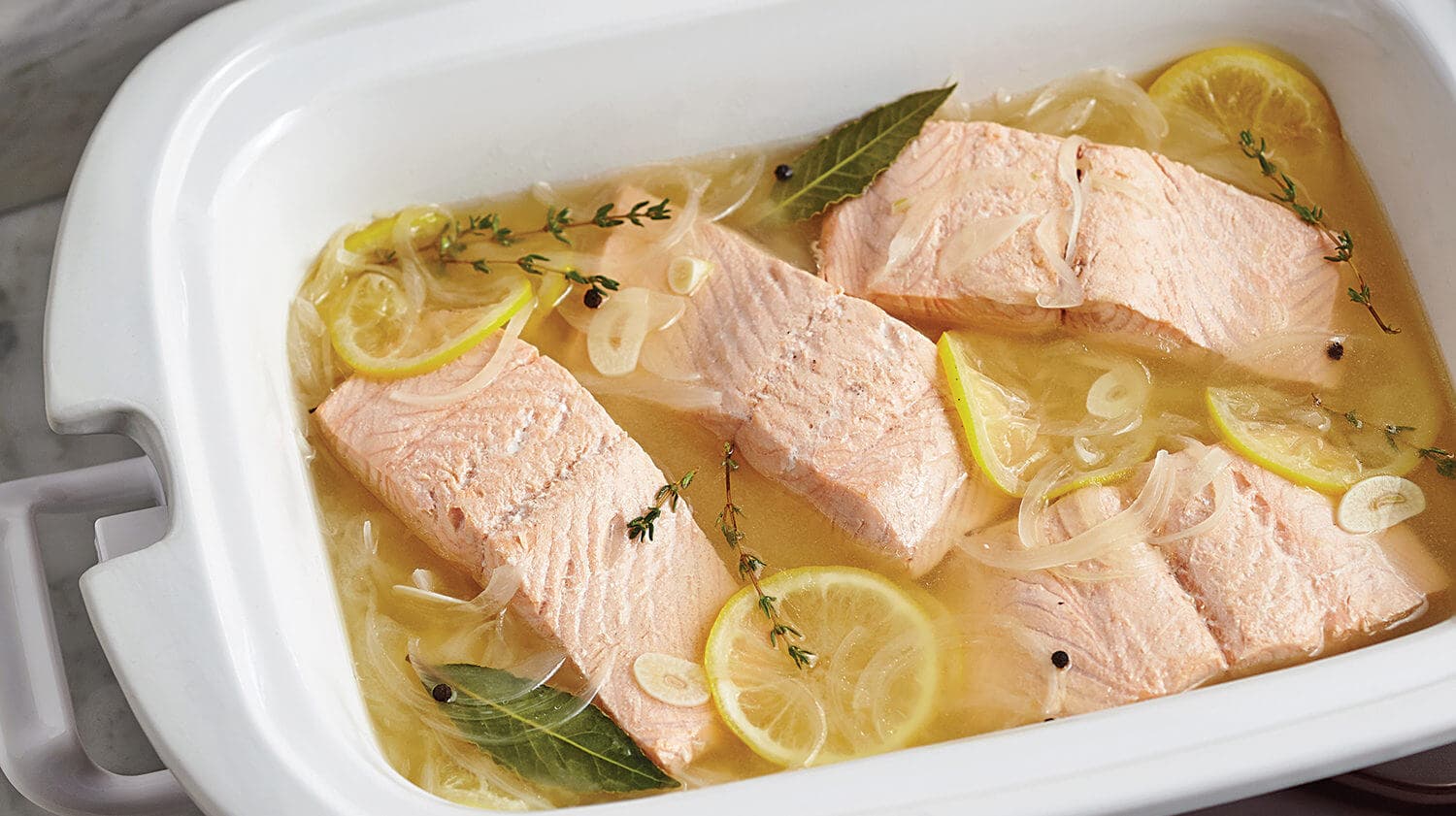 Poached slow cooker salmon served with fresh lemon slices and dill garnish
Credit: www.sobeys.com
Poached slow cooker salmon served with fresh lemon slices and dill garnish
Credit: www.sobeys.com
Pro Tips to Avoid Common Slow Cooker Salmon Mistakes
Even experienced cooks run into issues with slow cooker salmon, but these tips will help you avoid the most common pitfalls:
- Don’t lift the lid repeatedly: Every time you lift the slow cooker lid, the internal temperature drops by 10–15°F, extending cook time and leading to dry, overcooked salmon. Only lift the lid to check for doneness in the final 15 minutes of cooking.
- Season directly on the fish: Rubbing seasonings into the salmon flesh instead of just placing them on top of the slow cooker ensures even, flavorful results.
- Don’t overcook: Salmon continues to cook slightly after being removed from the slow cooker (called carryover cooking). Pull it out 5 minutes before it reaches your desired internal temperature to avoid drying it out.
- Add a crispy finish if desired: If you prefer a slightly seared top, place the cooked salmon under the broiler for 1–2 minutes after slow cooking for a caramelized, restaurant-quality finish.
- Clean promptly to avoid odors: After cooking salmon, clean your slow cooker insert right away to avoid lingering fish smells. Soak it with warm water and a splash of white vinegar, then scrub with a heavy-duty cleaning brush to remove stuck-on bits without scratching the surface. For deep cleaning after multiple fish cooks, a heavy-duty scrub brush will cut through grease and odor-causing residue. For general kitchen cleanup, a sturdy handle brush works well for scrubbing countertops and utensil surfaces.
Food Safety Guidelines for Slow Cooker Salmon
Slow cooker salmon is completely safe when following basic food safety rules:
- Always start with salmon that has been stored at 40°F or below, and never leave raw salmon at room temperature for more than 2 hours before cooking.
- Use a digital food thermometer to confirm the salmon reaches an internal temperature of 145°F (as recommended by the USDA) before serving. If you prefer medium-rare salmon, only do so with previously frozen farmed salmon, which has been treated to kill parasites, and cook to a minimum of 125°F.
- Never leave cooked salmon in the slow cooker on the “warm” setting for more than 2 hours, as it can enter the bacterial danger zone (40–140°F) where bacteria multiply rapidly.
- Store leftover salmon in an airtight container in the refrigerator for up to 3 days, and reheat to an internal temperature of 165°F before serving.
Frequently Asked Questions
How long should I cook salmon in a slow cooker?
Cook salmon in a slow cooker for 1 to 2 hours on low heat, or 45 minutes to 1 hour on high, depending on the thickness of your fillets. Exact cook time varies by slow cooker model, so always check for doneness with a food thermometer rather than relying solely on time. The fish is done when it flakes easily with a fork and reaches an internal temperature of 145°F.
Can I cook frozen salmon in a slow cooker?
Yes, you can cook frozen salmon directly in a slow cooker without thawing it first. Add 30 to 45 minutes to the standard low-heat cook time, and ensure the salmon reaches an internal temperature of 145°F before serving. Avoid cooking frozen salmon on high heat, as the outside may overcook before the inside thaws fully.
What seasonings work best for slow cooker salmon?
Salt and black pepper are non-negotiable base seasonings that amplify the salmon’s natural flavor. For bright, fresh flavor, pair with lemon zest, fresh dill, or parsley. For bold, savory notes, use garlic, ginger, soy sauce, or smoked paprika. Avoid overly sweet or heavy spice blends, as they can overpower the fish’s delicate taste.
Is it safe to cook salmon in a slow cooker?
Yes, cooking salmon in a slow cooker is completely safe when following proper food safety guidelines. Always cook to an internal temperature of 145°F, as recommended by the USDA, and avoid leaving cooked salmon in the slow cooker on the warm setting for more than 2 hours to prevent bacterial growth. Never leave raw salmon at room temperature for more than 2 hours before cooking.
Can I cook vegetables with the salmon in the slow cooker?
Yes! Firm, slow-cooking vegetables like carrots, potatoes, bell peppers, and onions work best when placed on the bottom of the slow cooker under the salmon, where they can absorb the fish’s juices and cook through evenly. Add softer vegetables like cherry tomatoes, spinach, or zucchini in the last 30 minutes of cooking to avoid mushiness.
What should I do if my slow cooker salmon turns out dry?
Dry salmon is almost always the result of overcooking. If you notice the fish is getting dry before it reaches your desired doneness, add a splash of low-sodium broth or lemon juice to the bottom of the slow cooker to add moisture, and reduce the remaining cook time by 15 minutes. For future batches, use farmed salmon (which has a higher fat content) or cut the cook time by 10 minutes.
Conclusion
Slow cooker salmon is the ultimate hands-off, healthy weeknight meal: it requires minimal prep, delivers consistently tender, flavorful results, and can be customized to match any taste preference. Whether you’re a beginner cook or a seasoned home chef, this method takes the stress out of cooking a finicky protein like salmon, and leaves you with more time to spend with family or tackle other to-dos. Start with the basic lemon garlic recipe to master the technique, then experiment with bold flavor variations like soy-ginger or spicy chipotle to keep your meals interesting. If you’re looking for more quick, healthy, tested weeknight recipes to cut down on cooking time, browse our full tested recipe collection for hundreds of meals ready in 30 minutes or less.

I’m Abby Lu, a passionate home cook who loves simplifying everyday meals. At PlugChef.com, I share product reviews and cooking guides to help you find the best tools for your kitchen.
Related posts:
 How to Make a Fruit Basket for a Gift: Easy DIY Guide
 Do You Need a Basket? Essential Guide for Air Fryers
 What Blenders Do Tropical Smoothie Use: Expert Insights
Stainless Steel Vs White Kitchen Appliances: Ultimate Showdown
What Blenders Do Tropical Smoothie Use: Expert Insights
Stainless Steel Vs White Kitchen Appliances: Ultimate Showdown
 Kitchen Appliances for Wedding Registry: Must-Have Essentials
 Top 10 Best Non-Toxic Cooking Utensils – Safe & Durable Choices for Healthy Homes

