
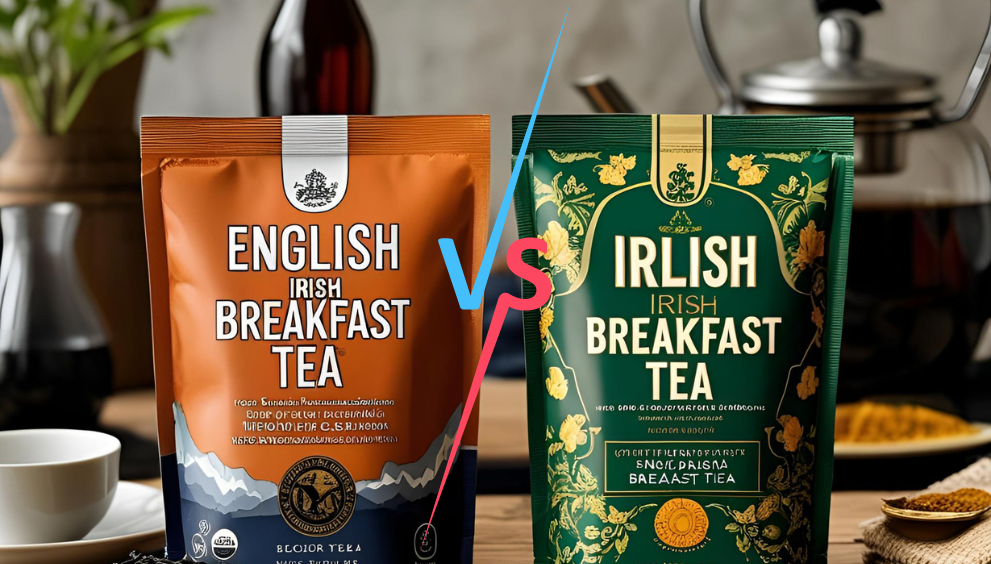
If you’ve ever stood in the tea aisle debating between a pack of Irish Breakfast and English Breakfast, you’re not alone. Many casual drinkers assume all black tea is interchangeable, but the differences between Irish and English tea go far beyond strength: they span centuries of distinct cultural traditions, unique blend compositions, and even conflicting brewing rituals that produce wildly different cups. Whether you’re a daily tea drinker looking to level up your brew, or a curious foodie exploring global food traditions, this showdown breaks down every key difference to help you find your perfect match. We’ll cover flavor profiles, brewing best practices, cultural context, food pairing tips, and common mistakes to avoid, all based on long-standing tea industry standards and first-hand brewing observations.
 Dried black tea leaves, the base for both Irish and English breakfast blends
Image source: teauniverses.com
Dried black tea leaves, the base for both Irish and English breakfast blends
Image source: teauniverses.com
Origins & Historical Context
Tea holds a deeply ingrained role in both Irish and English culture, but its path to becoming a daily staple took very different routes in each country, shaped by colonial trade, class dynamics, and local climate.
History of Irish Tea Culture
Tea first arrived in Ireland in the early 18th century, imported by British traders from China and later India. Initially a luxury for the wealthy upper class, it quickly became accessible to working-class families by the mid-1700s, thanks to reduced import taxes and widespread smuggling of untaxed tea. By the 19th century, Ireland had one of the highest per-capita tea consumption rates in Europe, a trend that persists today, with tea remaining a central part of daily life for most households. The Irish preference for strong, malty brews dates back to this era, when tea was a cheap, calorie-free source of warmth during long hours of manual labor in cold, damp weather. Unlike English tea, which developed formalized social rituals around afternoon tea, Irish tea culture centers on casual, frequent cups shared with family, friends, and coworkers throughout the day. For households with young children, storing tea bags and loose leaf blends out of reach is critical to avoid accidental ingestion or burns from hot kettles; drill-free cabinet locks provide a simple, no-drill way to secure kitchen storage.
Roots of English Tea Traditions
Tea was introduced to England in the 1600s by the East India Company, and quickly became a status symbol for the upper class. The formal tradition of afternoon tea was popularized in the 1840s by Anna, Duchess of Bedford, who began serving tea with light snacks in the late afternoon to curb hunger between lunch and dinner. This ritual evolved into the elaborate, etiquette-focused practice known today, complete with tiered serving stands, finger sandwiches, scones, and pastries. English tea blends are far more varied than Irish blends, a product of the British Empire’s access to tea-growing regions across India, Sri Lanka (formerly Ceylon), and Kenya, which allowed blenders to create a wide range of flavor profiles for different occasions and preferences.
Core Blend Composition & Key Varieties
The biggest functional difference between Irish and English tea lies in their blend composition. Irish tea is almost universally built around robust, malty Assam leaves from the Assam region of India, chosen for their bold flavor and ability to stand up to milk. English blends, by contrast, mix leaves from multiple growing regions to create a wide range of flavor profiles, from light and floral to strong and malty. Below are the most popular commercial blends from each country as of 2026.
Popular Irish Tea Blends
- Barry's Tea: A family-owned brand founded in 1901 in Cork, Barry's is the most popular Irish tea brand, known for its rich, full-bodied Assam-heavy blend and smooth, malty finish. It is a staple in most Irish households.
- Bewley's Tea: Founded in Dublin in 1834, Bewley's offers a range of black tea blends, including its signature strong, malty Breakfast blend and milder afternoon options. The brand is also famous for its tearooms across Ireland.
- Lyons Tea: Originally part of the Irish food and hospitality empire, Lyons Tea is known for its smooth, well-balanced blend that is slightly less intense than Barry's or Bewley's, making it a popular choice for newer tea drinkers.
- Gold Blend: A premium mix of Assam and Kenyan black teas, offering a balanced, rich flavor with a hint of sweetness, often marketed as a step up from standard Irish Breakfast blends.
Common English Tea Types
- English Breakfast: A robust blend of Assam, Ceylon, and Kenyan black teas, full-bodied and malty, designed to stand up to milk and sugar. It is the most popular everyday tea in England.
- Earl Grey: Aromatic black tea infused with oil from the bergamot orange, a citrus fruit grown primarily in Calabria, Italy. It has a bright, floral, slightly citrusy flavor, and is often served plain or with a splash of milk.
- Darjeeling: Grown in the Darjeeling region of India, this light, floral black tea is known as the "champagne of teas" for its delicate, muscatel flavor notes. It is typically served plain, without milk, to preserve its subtle taste.
- English Afternoon: A milder, smoother blend of black teas, often including Ceylon and Kenyan leaves, designed for sipping later in the day without the intense caffeine kick of English Breakfast.
- Standalone Assam: While often used in blends, standalone Assam tea is popular in England for its strong, malty, earthy flavor, similar to Irish tea but with a slightly more pronounced tannin profile.
Flavor Profile Showdown
To make the flavor differences clear, we’ve broken down the core attributes of each tea style in the comparison table below, followed by detailed tasting notes for each.
| Attribute | Irish Tea | English Tea |
|---|---|---|
| Base Blend | 90-100% Assam black tea | Mix of Assam, Ceylon, Kenyan, and/or Darjeeling black tea |
| Flavor Notes | Malty, robust, high tannin, rich | Ranges from bright, floral (Darjeeling) to citrusy (Earl Grey) to smooth, malty (English Breakfast) |
| Caffeine Content (8oz cup) | 40-70mg | 20-50mg (varies by blend) |
| Typical Color | Deep amber to dark brown | Light amber to golden brown |
| Best Served With | Generous whole milk, optional sugar | Milk, lemon, or plain; sweetener to taste |
Tasting Notes of Irish Tea
Irish tea is defined by its bold, unapologetic intensity. The high proportion of Assam leaves gives it a deep, malty, slightly earthy base, with noticeable tannins that create a pleasant astringency when brewed correctly. When served with a splash of whole milk, the tannins mellow, creating a creamy, rich cup with a smooth finish. A common mistake when brewing Irish tea is using water that’s only simmering, not at a full rolling boil, which results in a weak, underdeveloped flavor that can’t stand up to milk. Overbrewing for more than 5 minutes will produce an overly bitter, astringent cup, so timing is key. In practice, a well-brewed Irish tea has a deep amber to dark brown color, with a robust aroma that fills the room as soon as the bag is removed.
Tasting Notes of English Tea
English tea’s flavor profile varies wildly by blend, but most share a balanced, approachable taste. English Breakfast is the closest in intensity to Irish tea, but has a slightly smoother, less tannic finish thanks to the inclusion of Ceylon and Kenyan leaves. Earl Grey is the most distinct English blend, with bright, citrusy bergamot notes that cut through the malty black tea base, making it a popular choice for those who prefer a more aromatic cup. Delicate blends like Darjeeling have light, floral, almost fruity notes, with a crisp, clean finish that is best enjoyed plain. A common mistake when brewing English tea is using boiling water for delicate blends like Darjeeling or Earl Grey, which scalds the fragile leaves and bergamot oil, producing a bitter, flat flavor. For these blends, water heated to 90-95°C (194-203°F) is ideal.
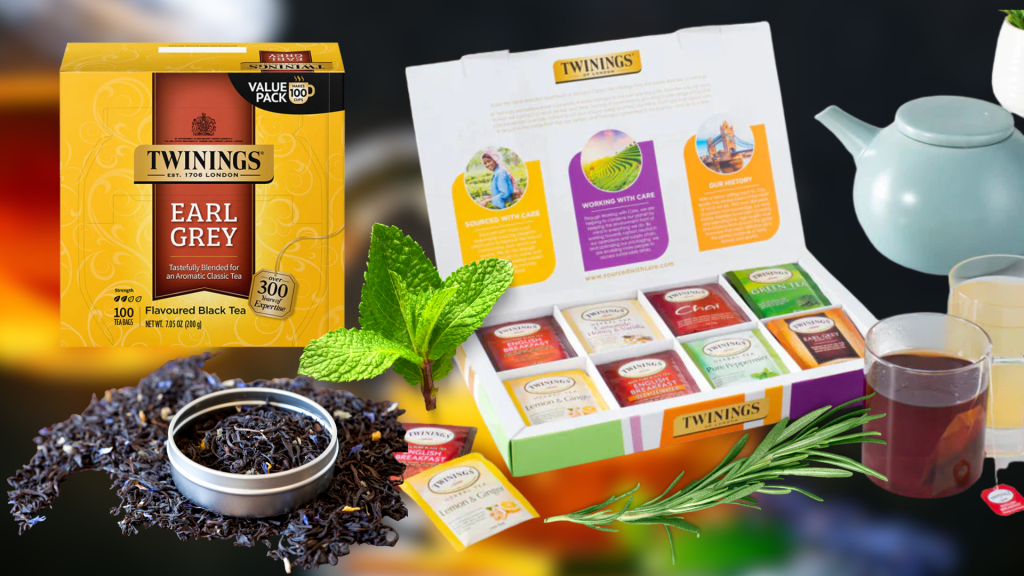 Irish breakfast tea (left) has a deep amber color and bold flavor, while English Earl Grey (right) is lighter with distinct citrus notes
Image source: www.latfusa.com
Irish breakfast tea (left) has a deep amber color and bold flavor, while English Earl Grey (right) is lighter with distinct citrus notes
Image source: www.latfusa.com
Brewing Rituals & Common Mistakes
Brewing technique is just as important as blend quality when it comes to getting the perfect cup, and Irish and English rituals differ significantly to match their unique flavor profiles. Below are step-by-step guides for each, plus common pitfalls to avoid.
Irish Brewing Methods
- Start with fresh, cold water—reheated water will have lost oxygen, leading to a flat-tasting brew.
- Bring the water to a full, rolling boil (100°C / 212°F).
- Add 1 tea bag or 1 teaspoon of loose leaf Irish Breakfast blend per 8oz cup to your mug or teapot.
- Steep for 3–5 minutes, depending on how strong you prefer your tea. For an extra-bold brew, steep for the full 5 minutes.
- If using loose leaf, strain the leaves out before adding milk.
- Add 1–2 tablespoons of whole milk to taste, stirring gently to combine. Sugar is optional, but most modern Irish drinkers skip it in favor of the tea’s natural malty sweetness.
English Brewing Rituals
- Use fresh, cold water, and heat to 90–95°C (194–203°F) for delicate blends like Earl Grey or Darjeeling; use a full rolling boil for robust blends like English Breakfast.
- Add 1 tea bag or 1 teaspoon of loose leaf tea per 8oz cup to a teapot (using a teapot allows the leaves to unfurl fully and release more flavor).
- Steep for 2–3 minutes for delicate blends, 3–4 minutes for robust blends, to avoid bitterness.
- Pour the tea into cups through a strainer if using loose leaf.
- Add milk, lemon, or sweetener to taste, depending on the blend and preference. For Earl Grey, many drinkers skip milk to preserve the citrus notes. If you use a cast iron or ceramic teapot for daily brews, limescale from hard water can build up over time; a heavy-duty scrubbing brush makes scrubbing out residue fast and easy.
Common Brewing Mistakes To Avoid
- Using stale water: Reheating water or using water that’s been sitting out for hours reduces oxygen content, leading to a flat, dull brew. Always use fresh, cold water.
- Oversteeping: Steeping black tea for more than 5 minutes extracts too many tannins, resulting in a bitter, astringent cup that masks the tea’s natural flavor.
- Adding milk before steeping: While a traditional English rule for fine porcelain, adding milk first cools the water too much, preventing the tea leaves from fully extracting their flavor. This is especially problematic for strong Irish blends.
- Squeezing tea bags: Squeezing the tea bag against the side of the mug releases excess tannins, making the tea bitter. Instead, remove the bag after steeping and let it drip naturally.
Milk, Sweetener & Serving Customs
How you serve your tea is just as important as how you brew it, and Irish and English customs differ sharply here, shaped by cultural history and modern dietary trends as of 2026.
Milk & Sweetener Preferences in Ireland
Irish tea is almost universally served with a generous splash of whole milk, added after brewing to control the creaminess of the cup. The milk softens the strong tannins of the Assam-heavy blend, creating a smooth, rich, creamy texture that is iconic to Irish tea culture. Sugar is less common than it was in the mid-20th century, with most modern Irish drinkers opting for the tea’s natural malty sweetness. A small number of households still heat the milk before adding it to the tea, a tradition that dates back to the days when milk was delivered warm from local farms. Plant-based milks like oat and almond have become increasingly popular in Ireland in recent years, with oat milk being the most common substitute due to its creamy texture that mimics whole milk.
Serving Customs in England
English tea serving customs vary widely by blend and occasion. For everyday English Breakfast, many drinkers add a splash of semi-skimmed or whole milk, similar to Irish tea, though the amount is usually smaller to avoid masking the blend’s balanced flavor. Earl Grey and other aromatic blends are most often served plain or with a slice of lemon, to preserve their delicate citrus notes. Sugar is still common, though many younger English drinkers opt for natural sweeteners like honey or stevia. Formal afternoon tea follows strict etiquette: tea is poured from a pot into cups, then milk and sugar are added to taste, and the tea is served with a tiered stand of finger sandwiches, scones with clotted cream and jam, and small pastries. As of 2026, casual café afternoon tea has become increasingly popular, with many establishments offering affordable, low-fuss versions of the formal tradition for groups and families.
Cultural Significance & Modern Rituals
Tea is far more than a beverage in both Ireland and England—it’s a core part of social life, work culture, and daily routine, with distinct customs that have evolved over centuries.
Tea’s Role in Irish Daily Life
In Ireland, tea is the default offering for guests, with the vast majority of Irish households reporting they offer tea to visitors within 5 minutes of their arrival. Tea breaks are built into the workday for most office and manual labor jobs, with designated "tea break" times in the morning and afternoon. The phrase "sure you will have a cup of tea?" is one of the most common greetings in Ireland, reflecting the role of tea as a symbol of warmth, hospitality, and community. Unlike the formal English afternoon tea, Irish tea is almost always served in casual, everyday settings, with no formal etiquette required. Even in the busiest households, a pot of strong tea is almost always on hand for family, friends, and unexpected visitors.
English Tea Time Traditions
Formal afternoon tea remains a beloved tradition in England, though it has evolved significantly since its 19th century origins. While traditional afternoon tea is still served in luxury hotels and tearooms, casual "cream tea" (served with just scones, clotted cream, and jam) has become a popular, affordable option for families and groups. Tea is also a core part of the "full English breakfast," a hearty morning meal that includes eggs, sausages, bacon, baked beans, and toast, all paired with a strong mug of English Breakfast tea. As of 2026, specialty loose-leaf tea shops have seen a significant rise in popularity across the UK over the last decade, with many younger drinkers opting for organic, fair-trade, and flavored English blends over standard mass-market options.
Health Benefits & Effects
Both Irish and English tea are made from the same core ingredient—black tea leaves—so they share many of the same health benefits, though slight differences in blend and brewing can impact their nutritional profile. Research from the Harvard T.H. Chan School of Public Health has found that regular black tea consumption is linked to improved cardiovascular health, reduced inflammation, and better cognitive function, thanks to its high concentration of catechins and theaflavins, powerful antioxidants that protect cells from free radical damage. Peer-reviewed nutrition studies also note that black tea’s moderate caffeine content can improve alertness and focus without the jitters associated with coffee, making it a popular choice for sustained energy throughout the day.
The longer steep time used for Irish tea extracts slightly more antioxidants than the shorter steep time used for most English blends, though the difference is minimal for most casual drinkers. Adding milk to either tea does not significantly reduce antioxidant absorption, contrary to popular myth, though it does add small amounts of calcium and vitamin D to the cup. As with any caffeinated beverage, moderation is key: most adults can safely consume 3-4 cups of black tea per day without negative side effects, though those sensitive to caffeine may want to opt for lower-caffeine English blends like Darjeeling. For stubborn tannin stains on white mugs or ceramic teapots, a stain-lifting scrub brush with stiff, non-scratch bristles will lift discoloration without damaging surfaces. Commercial black tea blends sold in both countries adhere to strict quality and safety standards set by international trade organizations to ensure consistent flavor and purity across batches.
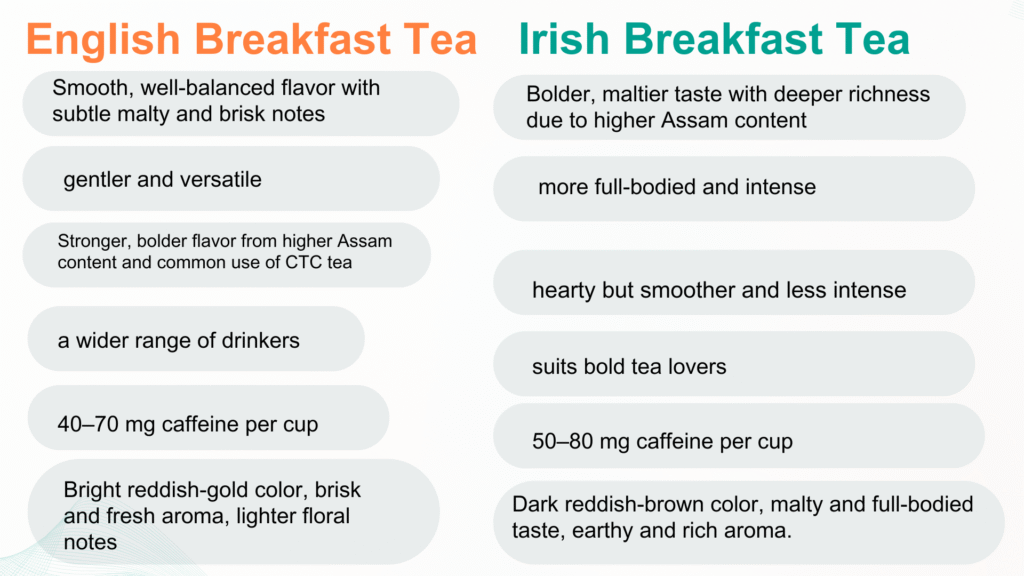 Key differences in blend, flavor, brewing, and cultural context between the two tea styles
Image source: teauniverses.com
Key differences in blend, flavor, brewing, and cultural context between the two tea styles
Image source: teauniverses.com
Food Pairing Guide
The right food pairing can elevate both the tea and the dish, highlighting complementary flavor notes and balancing richness. Irish and English teas pair best with foods that match their unique flavor profiles, as outlined below.
Irish Tea Food Pairings
Irish tea’s bold, malty, slightly tannic flavor pairs best with hearty, savory, and salty foods that can stand up to its intensity. Ideal pairings include:
- Full Irish breakfast (sausages, bacon, eggs, black and white pudding)
- Irish soda bread with salted butter
- Cheddar or other sharp, aged Irish cheeses
- Smoked salmon on brown bread
- Hearty beef or lamb stew
- Salted butter cookies or shortbread Avoid pairing Irish tea with delicate, sweet desserts, as its strong flavor will overpower subtle treats. After serving sandwiches and scones for an English afternoon tea spread, a quick wipe down with a multi-piece cleaning set will lift crumbs and spills from tabletops in seconds.
English Tea Food Pairings
English tea’s wide range of blends means pairing options vary by type:
- English Breakfast: Pairs well with hearty savory foods like a full English breakfast, sausage rolls, and cheese sandwiches, as its robust flavor can stand up to rich ingredients.
- Earl Grey: Complements sweet, citrusy, and buttery treats like lemon shortbread, vanilla scones, and orange blossom cake, as its bergamot notes enhance citrus and vanilla flavors.
- Darjeeling: Best paired with light, delicate foods like cucumber sandwiches, fresh fruit, and vanilla cupcakes, as its subtle floral notes are easily overpowered by heavy, savory dishes.
Pairing Mistakes To Avoid
- Pairing Irish tea with light, sweet desserts: The strong, tannic flavor will overpower subtle sweets, leaving a bitter aftertaste.
- Adding lemon to Earl Grey: While lemon is a popular addition to plain black tea, it clashes with the bergamot oil in Earl Grey, creating a bitter, unbalanced flavor.
- Serving overbrewed tea with any food: Bitter, astringent tea will clash with almost any dish, so always steep for the recommended time for your blend.
Which Tea Suits Your Lifestyle?
With so many differences between the two, choosing the right tea comes down to your personal taste preferences, daily routine, and how you plan to use it. Below are key factors to consider when making your choice.
Choose Based On Flavor Preference
If you love bold, malty, energizing brews that stand up to milk, Irish tea is the clear pick. Its high caffeine content and rich flavor make it ideal for morning coffee replacements or post-meal digestifs. If you prefer lighter, more nuanced flavors, or enjoy experimenting with different aromas and notes, English tea offers far more variety, with blends ranging from bright and citrusy to smooth and floral. Many drinkers also prefer English tea if they are sensitive to caffeine, as most blends have 10-30mg less caffeine per cup than standard Irish Breakfast.
Choose Based On Routine
If you value speed and convenience, Irish tea is easier to brew correctly: it only requires boiling water and a 3-5 minute steep, with no need to monitor water temperature. English tea requires a bit more attention for delicate blends, but its versatility makes it a better pick if you want a single tea that works for both morning and afternoon use. For formal gatherings or special occasions, English afternoon tea is the obvious choice, as it pairs seamlessly with a range of sweet and savory snacks.
Accessibility & Availability
As of 2026, both Irish and English tea blends are widely available in grocery stores and online retailers across the globe. Irish tea brands like Barry's and Bewley's are sold in most major supermarkets in the US, EU, and UK, while English blends like Twinings and Yorkshire Tea have even wider global distribution. If you prefer specialty loose-leaf blends, English tea offers a far wider range of options, including single-estate Darjeelings and organic Earl Grey, while Irish loose-leaf options are more limited, with most brands focusing on pre-packaged tea bags. If you keep loose leaf blends in kitchen drawers to keep them fresh, childproof drawer latches add an extra layer of security for curious little ones.
Frequently Asked Questions
What Are The Main Differences Between Irish Tea And English Tea?
The core differences come down to blend composition, flavor intensity, and serving customs. Irish tea is almost exclusively a strong, Assam-heavy black blend, brewed for 3-5 minutes and served with generous milk for a rich, malty cup. English tea covers a far wider range of blends, from light, floral Darjeeling to citrusy Earl Grey to robust English Breakfast, with milder flavor profiles and more flexible serving rules (milk, lemon, or plain). Irish tea also typically has 10-20mg more caffeine per 8oz cup than standard English Breakfast, due to its higher Assam content and longer steep time.
How Is Irish Tea Traditionally Prepared?
Traditional Irish preparation starts with cold, fresh water brought to a full rolling boil. Tea bags (or 1 teaspoon of loose leaf per cup) are added to the mug or teapot, steeped for 3-5 minutes for a strong brew, then strained if using loose leaf. A splash of whole milk (roughly 1-2 tablespoons per cup) is added to soften the tannins, with sugar to taste if preferred. A common mistake is adding milk before steeping, which can cool the water too much and prevent the tea from developing its full robust flavor. Tea is typically served in large mugs, rather than small formal cups, reflecting its casual, everyday role in Irish culture.
What Makes English Tea Unique Compared To Irish Tea?
English tea’s uniqueness comes from its diverse range of blends, shaped by centuries of access to tea-growing regions across the former British Empire, including India, Sri Lanka (formerly Ceylon), and Kenya. Unlike Irish tea’s nearly universal strong, malty profile, English blends range from the bright, floral notes of Darjeeling to the citrusy, bergamot-infused profile of Earl Grey. English tea is also more commonly served plain or with lemon, rather than the generous milk typical of Irish brews. Formal afternoon tea, with its tiered serving stands and accompanying snacks, is a uniquely English tradition that has no direct Irish equivalent.
Why Do Irish People Prefer Stronger Tea?
The Irish preference for strong, malty tea dates back to the 19th century, when tea was an affordable, shelf-stable source of warmth and comfort for working-class families during long hours of manual labor and cold, damp weather. By the late 1800s, tea had become a staple across all social classes in Ireland, and the preference for strong brews persisted as a cultural norm. The strong flavor also pairs well with the rich, hearty foods common in Irish cuisine, such as soda bread, stew, and fried breakfasts. Today, tea remains a central part of daily Irish life for most households, with strong black blends the most popular option.
Conclusion
When it comes to the Irish tea vs English tea showdown, there’s no universal winner—only the perfect cup for your taste and routine. Irish tea delivers the bold, malty kick and creamy richness that makes it a beloved morning staple for those who want a hearty, energizing brew. English tea offers unmatched versatility, with blends ranging from bright and floral to smooth and robust, ideal for everything from a quick morning pick-me-up to a formal afternoon tea with friends. The best way to decide? Brew both side by side, adjust the milk and steep time to your preference, and see which one earns a permanent spot in your kitchen cabinet. No matter which you choose, a warm cup of tea is one of life’s simplest, most satisfying pleasures.
Ready to test both brews side by side? Grab a pack of Irish Breakfast and English Earl Grey this week, and run your own flavor showdown to find your perfect daily cup. For fast post-tea cleanups, a top-rated scrub brush can scrub out mugs in seconds before the next brew.

I’m Abby Lu, a passionate home cook who loves simplifying everyday meals. At PlugChef.com, I share product reviews and cooking guides to help you find the best tools for your kitchen.
Related posts:
 Seville Expandable Cabinet And Pantry Organizer: Space Savior
 Glideware Pull Out Cabinet Organizer for Pots & Pans: Space Saver
 Small 3-Tier Shelf Organizer: Maximize Space Effortlessly
 Trader Joe’S Spicy Lentil Wrap: Delicious, Healthy, and Quick Meal!
 Easy Way to Peel Pumpkin: Quick Tips for Effortless Prep
 How Long Do Grapes Last: Ultimate Freshness Guide Revealed

