
A colander is one of the simplest—and most useful—tools in the kitchen. Used properly it saves time, prevents mess, and improves the texture and safety of many dishes. This guide gives clear, practical steps for choosing, using, and caring for a colander so you get perfect straining every time: from pasta and rice to salad greens, canned beans and broths.
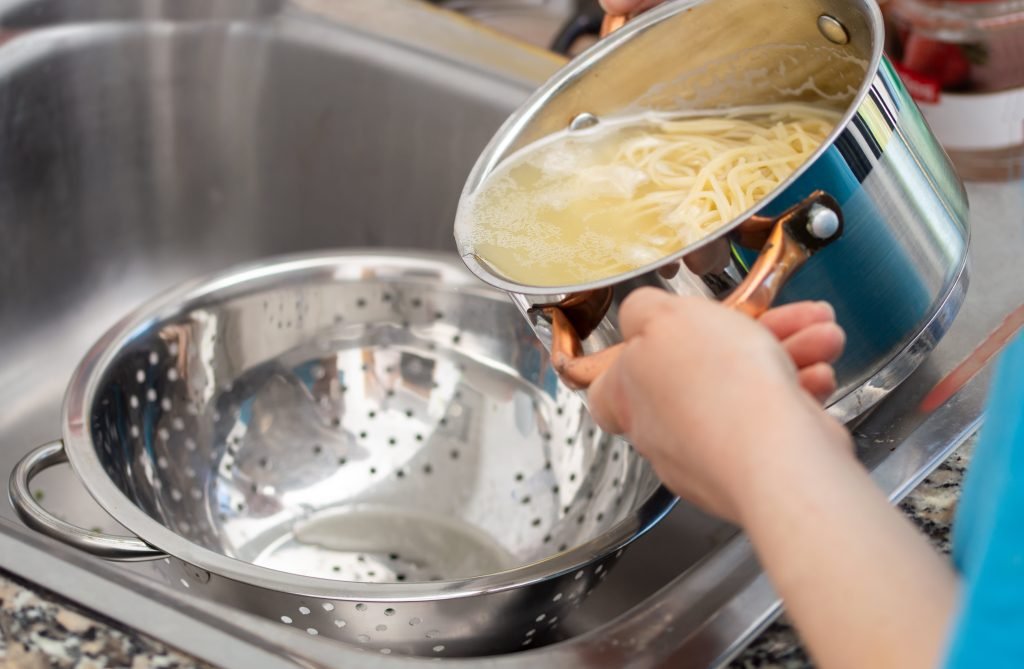
 Pouring cooked pasta into a large colander set in the sink.
Credit: nypost.com
Pouring cooked pasta into a large colander set in the sink.
Credit: nypost.com
Quick overview: when to use a colander
- Drain high-volume foods: pasta, boiled potatoes, blanched vegetables.
- Rinse produce and canned goods before serving (the FDA recommends washing fresh fruits and vegetables under running water).
- Transfer and rinse grains or legumes (use fine mesh for small grains).
- Strain coarse solids from stocks and broths (line with cheesecloth for clarity).
Choosing the right colander
Selecting the correct colander depends on what you cook and how often. Here’s how to match features to tasks.
Material: pros and cons
- Stainless steel: durable, heat-resistant, often dishwasher-safe; best for heavy use and hot liquids. In practice, stainless lasts longest if you dry it after washing.
- Plastic: lightweight, affordable, colorful—good for quick rinses and delicate produce. Avoid with very hot liquids unless rated heat-safe.
- Silicone/collapsible: excellent for tight storage spaces and light duty; not ideal for heavy pots of boiling water.
Trade-off: stainless will cost more but resists warping and bacterial hotspots; plastic is cheaper but can stain or retain odors.
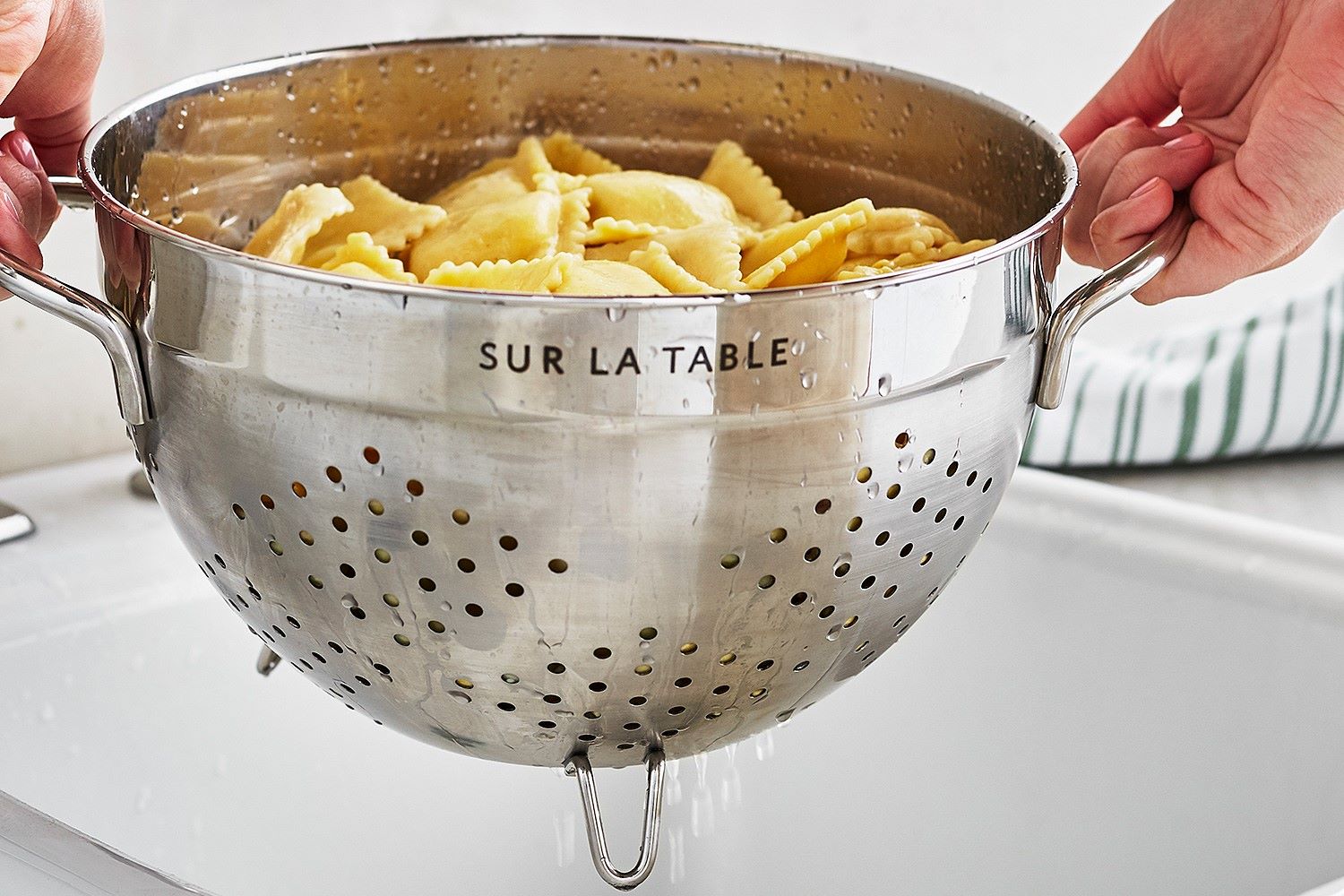 Example of a stainless steel perforated colander.
Credit: learn.surlatable.com
Example of a stainless steel perforated colander.
Credit: learn.surlatable.com
Hole size and mesh
- Large perforations: fast drainage for pasta and potatoes; not suitable for small grains or quinoa.
- Fine mesh or sieve: needed for rice, quinoa, couscous, and tiny seeds.
- Combination designs: perforated bowl with a fine-mesh insert gives flexibility.
Tip: if you cook a lot of small grains, keep a fine-mesh sieve in the drawer—regular colander holes will lose food.
Size, shape and stability
- Choose a size that handles your regular batch: 3–5 quarts for 1–2 people, 5+ quarts for families or entertaining.
- Wide base or feet improves stability in the sink; look for non-slip handles if you move hot contents.
- Consider a colander with a resting rim that sits across the sink to reduce hand-holding.
Preparing a colander for use
A few small steps up front make every straining safer and cleaner.
- Inspect and clean: rinse or wash the colander before use if it’s been stored. Small dried-on bits paste into holes quickly.
- Position for stability: place the colander inside the sink or on a damp towel on the counter. If using with boiling water, keep it in the sink.
- Tools at hand: have oven mitts, tongs, or a pasta fork ready; a heatproof bowl under the colander helps when catching stock or reserving liquids.
Common prep mistake: trying to balance a heavy pot on one hand while pouring into an unsteady colander—use a lid as a guide and keep both hands protected.
Proper straining techniques (step-by-step)
Below are step-by-step methods for the most common tasks, plus practical tips and common mistakes to avoid.
Draining pasta (and reserving pasta water)
- Turn off the heat and set the pot handle away from you.
- Place the colander in the sink and, if possible, leave the pot on the counter—don’t lift and pour while holding the pot above your head.
- Pour the pasta and water into the colander slowly. Use a pot lid pressed slightly against the pot rim to steady the flow if needed.
- Shake the colander once or twice to release trapped water.
- Reserve 1/4–1/2 cup of pasta water (if your recipe asks) by ladling or using a heatproof cup before dumping all the water into the sink. That starchy water helps emulsify sauces.
In practice: never rinse hot pasta unless a recipe specifies (e.g., cold pasta salad). Rinsing removes surface starch that helps sauces cling.
Rinsing fruits and vegetables
- Rinse under cold running water and agitate produce with your hands. For leafy greens, a gentle soak followed by lift-and-drain in the colander reduces grit.
- The FDA recommends washing fresh produce under running water to reduce dirt and surface microbes.
- For delicate berries, place them in a colander and rinse briefly—avoid soaking, which can make berries waterlogged.
Tip: for firm produce (potatoes, apples) use a vegetable brush while rinsing.
Rinsing canned beans and lentils
- Pour beans into a fine-mesh colander and run cool water while stirring to remove brine and excess sodium.
- Shake gently to drain. This improves flavor and reduces sodium content.
Draining rice, quinoa and small grains
- Use a fine-mesh sieve to prevent grain loss.
- Rinse briefly until runoff is clear (helps remove dust or bitter saponins from quinoa).
- For some rice types (e.g., risotto), don’t rinse—follow the recipe.
Straining broths, stocks and sauces
- For coarse straining: pour stock through a perforated colander into a large bowl to remove bones and large solids.
- For a clear broth: line the colander with cheesecloth or use a fine-mesh strainer to catch finer particles and fat.
- To refine sauces: press through a fine-mesh sieve or chinois for a silky texture.
Technique note: pour slowly and let gravity do the work—forcing too quickly causes splashes and re-suspension of particles.
Using a colander as a steamer
- In a pinch, place a metal colander over a pot of simmering water, cover with a lid, and steam vegetables. Ensure the colander rim clears the water and the pot is stable.
- Use a colander with a heat-resistant material (metal preferably) for this hack.
Safety: handling hot liquids and heavy loads
- Use oven mitts and long sleeves when pouring boiling water into a colander; steam can cause burns.
- Keep children and pets away from the sink area when working with hot pots.
- If the colander must be lifted with hot contents, use both hands and transfer in small portions rather than one large, heavy pour.
- For high-risk food safety questions or safe handling guidance, consult general food-safety resources such as the USDA for best practices.
Common mistake: holding the colander by one small handle while it’s full—this increases tip and burn risk. Use a stable base or two-handed grip.
Maintenance and care: clean, dry, store
Keeping your colander clean extends its life and prevents off-flavors and bacteria.
- Rinse promptly after use to remove trapped food. For mesh colanders, rinse both inside and outside.
- For stuck-on bits: soak in warm soapy water for 10–15 minutes, then scrub with a soft brush or an old toothbrush to clear holes.
- Deep clean options: soak with a paste of baking soda and water or a vinegar-water soak to remove mineral deposits and odors.
- Dishwasher: most stainless steel and many plastics are dishwasher-safe—check the manufacturer’s instructions.
- Drying and storage: dry thoroughly to prevent rust. Store where it won’t be crushed; hanging by handles is space-efficient.
Troubleshooting: If tiny holes are repeatedly clogged, use a toothpick or skewer to clear them, then wash. Replace plastic colanders that crack or develop greasy residue that won’t rinse away.
Common mistakes and fixes
- Overfilling the colander: fix by draining in batches or using a larger colander.
- Using the wrong hole size: switch to fine mesh for small grains and sieves for sauces.
- Pouring too quickly: pour slowly and steadily to avoid splashes and boil-overs.
- Rinsing when you shouldn’t: don’t rinse starchy foods like hot pasta unless the recipe calls for it.
- Storing wet: always dry your colander completely before storing to avoid rust and odors.
In practice, the two most frequent errors are overfilling and poor support—both are easily prevented by planning and good positioning.
Frequently Asked Questions
Q: Should I rinse pasta after draining?
A: Generally no. Rinsing removes the starch that helps sauces cling. Rinse only when the recipe specifies (e.g., cold pasta salads).
Q: Can I pour boiling water directly into a plastic colander?
A: Only if the plastic is rated heat-safe. When in doubt, use stainless steel to avoid warping or melting.
Q: How do I make broth crystal clear with a colander?
A: First strain through a perforated colander to remove large solids, then through a cheesecloth-lined colander or a fine-mesh sieve to remove fine particles and fat.
Q: Is it okay to wash a colander in the dishwasher?
A: Most stainless steel and many plastics are dishwasher-safe. Check the manufacturer instructions; mesh colanders sometimes trap debris that the dishwasher won’t remove.
Q: How do I remove stuck food from colander holes?
A: Soak in warm soapy water, then scrub with a soft brush or toothpick. For mineral buildup, use a vinegar soak.
Q: Can a colander be used to steam vegetables?
A: Yes—metal colanders can serve as a steam basket over simmering water if they sit securely and don’t touch the water.
Conclusion
A colander is deceptively simple but essential. Choose the right material and hole size for your cooking, set it up safely, and use the correct technique for each food to avoid sogginess, waste, and burns. Regular cleaning and correct storage keep it hygienic and long-lasting.
Try one practical change today: next time you drain pasta, reserve a small cup of pasta water before you dump it—it's a small step that transforms sauces.

Hi, I’m Daniel Brooks—a food lover and kitchen gear enthusiast. I enjoy testing cookware, utensils, and gadgets to see what really works in everyday cooking. At PlugChef.com, I share honest reviews, comparisons, and simple guides to help you choose the best tools for a safer, smarter, and more enjoyable kitchen.
Related posts:
 How to Make a Fruit Basket for a Gift: Easy DIY Guide
 Do You Need a Basket? Essential Guide for Air Fryers
 How to Choose Kitchen Appliances: Expert Tips Revealed
 Kitchen Cabinets With Black Stainless Steel Appliances: Modern Elegance
 White Kitchen Cabinets Stainless Steel Appliances: Timeless Elegance
 Top 10 Best Non-Toxic Cooking Utensils – Safe & Durable Choices for Healthy Homes

