
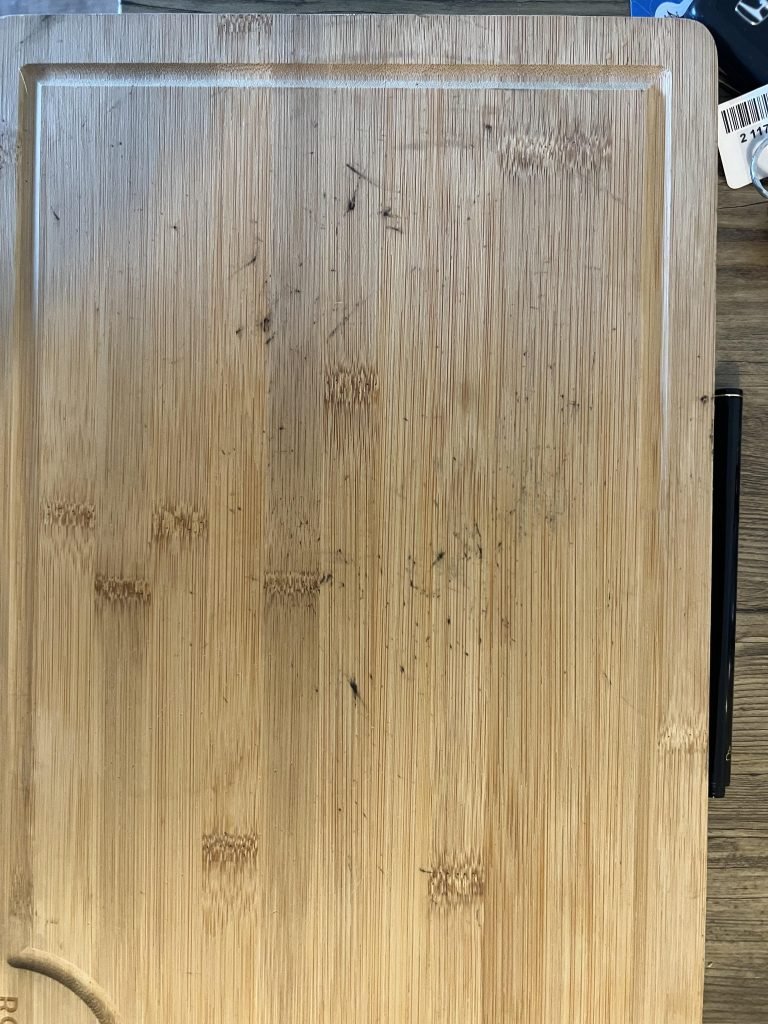
Mold on a wooden cutting board is common, removable in many cases, and preventable with the right routine. This guide gives clear, experience‑based steps for identifying mold, safe cleaning methods that protect the wood, when to sand or replace a board, and proven prevention habits. For general household mold safety, refer to the CDC’s guidance on mold and dampness when assessing health risk and cleanup choices: CDC.
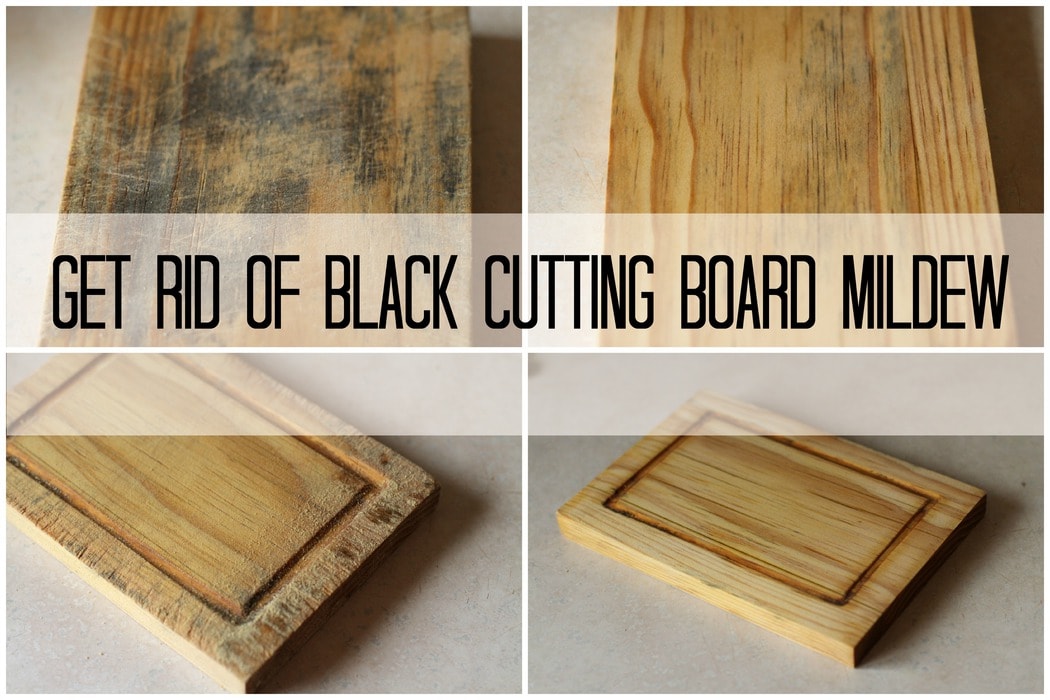
Credit: www.thefrugalgirl.com
This cutting board shows typical surface mold near the edge.
Quick identification: is it mold, stain, or mineral discoloration?
Mold often appears as fuzzy or powdery growth, but it can also be flat and pigmented. Key clues:
- Texture: mold is usually soft, fuzzy, or powdery; stains are flat and don’t lift with light brushing.
- Location: mold favors knife grooves, the underside, and edges where moisture collects.
- Smell: a musty odor that lingers after washing is a strong indicator of mold.
- Reaction test: outdoors, dry‑brush a small area. If the material flakes off into spores, it’s likely mold. If it smears and doesn’t lift, it may be a stain or tannin.
A common mistake: assuming dark knife marks are mold. In practice, many dark streaks are food stains or oxidized tannins that sanding will remove but do not pose a biological hazard.
Safety and precautions before you start
- Personal protection: wear nitrile or rubber gloves and, for heavy contamination, an N95 respirator to avoid inhaling spores. Eye protection is recommended.
- Work outdoors or in a well‑ventilated space to prevent airborne spores inside the house.
- Contain debris: collect dry‑brushed material and discard it in a sealed plastic bag. Wash or discard cleaning rags used on mold.
- Do not put wooden boards in the dishwasher—high heat and prolonged soaking warp and split wood.
- Never mix cleaning chemicals (for example, avoid mixing vinegar and bleach). For food safety context about cleaning surfaces, see the FDA’s food safety resources: FDA.
If anyone in the household is severely immunocompromised, err on the side of replacement rather than salvaging.
Credit: www.youtube.com
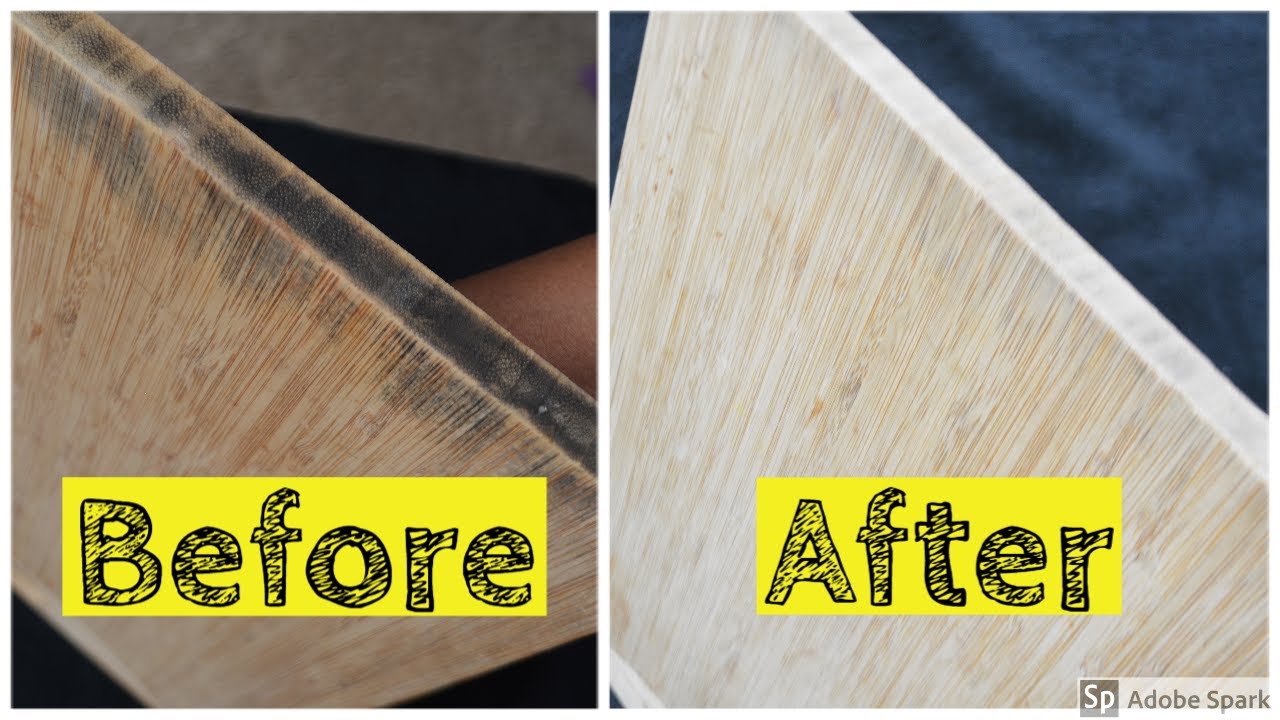
Close view of fuzzy mold growing in surface scratches.
What to use — supplies and why they work
Essential supplies
- White distilled vinegar (5–6% acetic acid): antifungal at full strength for short contact times.
- Baking soda (sodium bicarbonate): mild abrasive and deodorizer.
- 3% hydrogen peroxide: oxidizing disinfectant for porous surfaces.
- Soft-bristle scrub brush or nylon scouring pad; avoid metal scouring that gouges wood.
- Clean lint‑free towels; disposable paper towels for final wipe if preferred.
- Food‑grade mineral oil and, optionally, a wax/oil board conditioner.
- Sandpaper: coarse/medium (80–120 grit) to remove contaminated layers, fine (180–220) to finish.
- Optional: vacuum with brush attachment and a tack cloth to remove sanding dust.
Why not bleach as first choice? Sodium hypochlorite (common bleach) can whiten and dry wood, and may not penetrate to all embedded spores. Use bleach only as a last resort for nonporous surfaces; on boards it often does more harm than good.
Step‑by‑step: Remove surface mold (best for boards with visible, shallow mold)
Use this method when mold is limited to surface areas or shallow grooves.
- Move outdoors or to a well‑ventilated area. Put on gloves and a mask.
- Dry‑brush loose mold off the board outdoors using a stiff brush. Seal and discard debris in a plastic bag.
- Apply undiluted white vinegar to the moldy area (spray or pour). Let sit 10–20 minutes; the acid helps reduce fungal viability.
- Sprinkle baking soda over the vinegar area and scrub gently with a soft brush, moving with the grain. Baking soda provides abrasion and neutralizes odors.
- Rinse with warm water and wipe with a clean towel. If residue remains, repeat the vinegar + baking soda scrub once.
- For added disinfection on stubborn spots, apply 3% hydrogen peroxide, let it sit 5–10 minutes (it will bubble slightly), then rinse. Avoid combining peroxide and vinegar at the same time — apply sequentially and rinse between.
- Dry the board completely by standing it upright with airflow around both faces. In dry, warm conditions this can take 6–24 hours. Do not store until fully dry.
After the board is dry, lightly sand any remaining stains (see sanding section), clean again if needed, and then apply a thin coat of food‑grade mineral oil. Let the oil penetrate for 15–30 minutes and wipe off excess. Mineral oil repels water and reduces future mold risk.
Practical note: in practice, vinegar + baking soda plus thorough drying resolves most household surface mold issues. If mold recurs within days despite correct drying, proceed to deep‑clean or replace.
Deep contamination: sanding and restoration
When mold penetrates deep grooves or persists after surface cleaning:
- Clean and dry the board following the surface‑clean method.
- Sand with the grain starting with medium grit (80–120) until the discolored/contaminated layer is removed. Replace sandpaper when it loads with debris.
- Smooth with fine grit (180–220). Use a vacuum and a tack cloth to remove dust.
- Wipe the sanded surface with a cloth dampened with vinegar or 3% hydrogen peroxide; allow to air dry.
- Oil the board lightly with food‑grade mineral oil and optionally a wax conditioner to restore finish.
Notes and trade‑offs:
- Sanding shortens the board’s life; repeated heavy sanding reduces thickness significantly.
- Sanding is more effective on edge‑grain and face‑grain boards; end‑grain boards take more sanding to remove deep contamination.
- After sanding, inspect for cracks that could shelter new growth—if present, replacement is safer.
Credit: en.chefstudio.vn
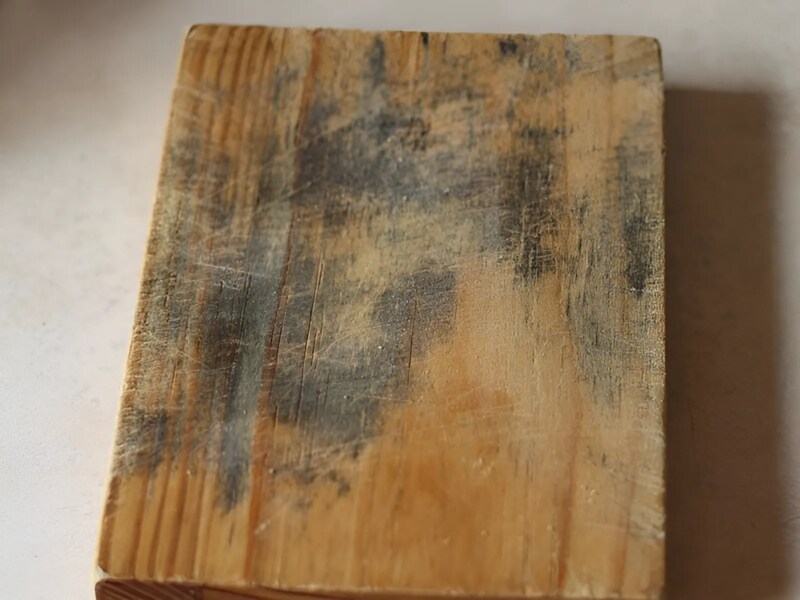
Close-up showing mold in wood grain and grooves.
When to replace a board (use this decision checklist)
Replace the board if any of the following apply:
- Mold returns repeatedly after proper cleaning and drying.
- The wood is soft, spongy, warped, or has structural splits.
- Numerous deep knife gouges that cannot be sanded out without reducing the board below a safe thickness.
- Persistent musty odor after multiple cleanings and sanding.
- You or household members have severe allergies or immunosuppression — replacement reduces risk.
A good rule: if you would not feel confident preparing raw foods on the board after cleaning, replace it.
Quick comparison: common treatments (pros and cons)
- Vinegar: safe, easy, low cost. Works well on surfaces but limited penetration.
- Baking soda: non‑toxic abrasive; helps remove stains and odors.
- Hydrogen peroxide (3%): disinfects and oxidizes; suitable for food surfaces when rinsed.
- Bleach: strong disinfectant on nonporous surfaces; can bleach and damage wood—use only as last resort and rinse thoroughly.
- Sanding: removes embedded contamination but reduces board life.
- Dishwasher: not suitable for wood—causes warping and cracking.
Prevent mold: daily and monthly habits that work
Daily
- Wash promptly with hot soapy water; rinse and dry immediately. Do not soak.
- Stand boards upright to dry with airflow on all sides. Avoid closed, damp cabinets.
- Use separate boards for raw meat and ready‑to‑eat foods to reduce heavy soiling.
Weekly / Monthly
- Oil your board with food‑grade mineral oil when water no longer beads on the surface (monthly for frequent use). Apply oil, let absorb, then wipe off excess.
- Inspect for deep cuts; sand and re‑oil small damaged areas promptly.
- Replace dish towels and sponges often; contaminated cloths can reintroduce mold.
Storage tips
- Store boards standing vertically on their edge in a ventilated area.
- Avoid storing near the dishwasher or under a sink where humidity is higher.
In practice, most recurring mold problems come from inadequate drying or storing the board while still damp.
Common mistakes and expert tips
- Mistake: letting the board air‑dry flat on the counter. Tip: stand it upright.
- Mistake: using cooking oils (olive, vegetable) to condition wood — they can go rancid and smell. Tip: use food‑grade mineral oil or a commercially formulated board conditioner.
- Mistake: sanding against the grain leads to a rough surface that traps debris. Tip: always sand with the grain.
- Tip: after oiling, wipe off excess so the surface is not tacky—too much oil attracts dust and grime.
- Tip: keep one inexpensive plastic board for raw meats; it’s cheap to replace if gouged and can be washed in the dishwasher.
FAQs
Q: Can bleach kill mold on a wooden cutting board?
A: Bleach will kill surface mold on nonporous materials, but on porous wood it may not penetrate to all spores and can bleach/dry the wood. Use bleach only as a last resort and always rinse thoroughly.
Q: Is a board safe to use after cleaning?
A: If you removed visible mold, disinfected (vinegar or 3% hydrogen peroxide), rinsed, dried completely, and the board has no lingering odor, it is generally safe. When in doubt, replace—especially for raw‑food prep.
Q: How long should a cleaned board dry?
A: Drying time varies by climate. Expect 6–24 hours in a warm, ventilated spot. It must be bone‑dry before storing.
Q: Can sunlight alone kill board mold?
A: Sunlight (UV) can reduce mold viability but is not a reliable standalone treatment. Use sunlight as an adjunct to cleaning and drying.
Q: Which oil should I use to maintain the board?
A: Use food‑grade mineral oil or a formulated board conditioner. Avoid vegetable or olive oils that can go rancid.
Conclusion
Removing mold from a wood cutting board is feasible when contamination is surface‑level and you follow safe cleaning, thorough drying, and proper restoration. Start with dry‑brushing, then use vinegar + baking soda and optional 3% hydrogen peroxide, sand only when necessary, and always dry and oil the board. Replace boards that repeatedly mold, are structurally compromised, or if household health concerns demand it. For broader household mold and cleaning guidance, consult authoritative public health resources such as the CDC and FDA. Inspect your board now and follow the steps above—if you’re unsure, replacement is the safest option.

I’m Abby Lu, a passionate home cook who loves simplifying everyday meals. At PlugChef.com, I share product reviews and cooking guides to help you find the best tools for your kitchen.
Related posts:
 How to Make a Fruit Basket for a Gift: Easy DIY Guide
 Do You Need a Basket? Essential Guide for Air Fryers
 How to Choose Kitchen Appliances: Expert Tips Revealed
 Kitchen Cabinets With Black Stainless Steel Appliances: Modern Elegance
 White Kitchen Cabinets Stainless Steel Appliances: Timeless Elegance
 Top 10 Best Non-Toxic Cooking Utensils – Safe & Durable Choices for Healthy Homes

