Airtight Containers for Long Term Food Storage: Ultimate Preservation Solution
Rising food costs, supply chain volatility, and growing interest in emergency preparedness have made long-term food storage a priority for households across the U.S. as of 2026. While many people focus on what food to stock, the container you choose is the single most impactful factor in whether your supplies stay fresh for 1 year or 25. Airtight containers for long term food storage eliminate the four primary drivers of spoilage—oxygen, moisture, light, and pests—making them the ultimate preservation solution for dry staples, dehydrated goods, and even freeze-dried meals. This guide breaks down how these containers work, what features to prioritize, and how to use them correctly to maximize your food’s shelf life, no matter your storage goals.
Why Airtight Containers Are the Gold Standard for Long-Term Food Storage
Ordinary food storage bags, pantry jars, and reusable plastic containers leave food exposed to small amounts of air, light, and moisture over time, accelerating spoilage. Even small gaps in seals let in pests like weevils, moths, and rodents that can ruin an entire stockpile of dry goods in weeks. USDA food safety guidance confirms that eliminating these four factors can extend the shelf life of dry staples like wheat, beans, rice, and dried corn by decades, with many items remaining safe to eat for 25 years or longer when stored correctly. Airtight containers create a fully sealed, controlled internal environment that stops spoilage before it starts, reducing food waste and saving households hundreds of dollars a year on wasted groceries.
How Airtight Containers Preserve Food: The Science Behind the Seal
All high-quality airtight containers work by blocking the four core spoilage triggers:
- Oxygen: Feeds mold, yeast, and bacteria that cause rot, as well as oxidation that breaks down fats and vitamins in food, leading to rancidity.
- Moisture: Causes clumping, mold growth, and nutrient degradation, even in seemingly dry staples like flour and pasta.
- Light: Breaks down vitamins, fats, and pigments in food, reducing nutritional value and altering flavor over time.
- Pests: Rodents and insects can chew through thin plastic and paper packaging, but thick, sealed airtight containers are virtually impenetrable.
Many airtight storage setups pair containers with oxygen absorbers—small packets that bind free oxygen inside the storage space—to further extend shelf life. A common mistake is relying on oxygen absorbers alone with a compromised seal; absorbers only remove existing oxygen, and a loose seal will let new air in, rendering them useless within weeks.
Key Features to Look for in High-Quality Long-Term Airtight Containers
Not all containers marketed as "airtight" meet the standards needed for multi-year storage. Prioritize these features to ensure your investment lasts:
Food-Grade, BPA-Free Materials
Food-grade materials are certified safe for direct, long-term contact with consumables, with no risk of chemical leaching. FDA food contact material safety standards require all food storage containers to meet strict leaching limits to protect consumer health, so always verify that your chosen container is explicitly labeled food-grade and BPA-free. HDPE plastic is the industry standard for long-term storage buckets, as it is durable, chemical-resistant, and approved for direct food contact.
Airtight Seal Type
The seal is the most critical component of any airtight container:
- Gamma seal screw-top lids: A two-part design with a locking outer ring and gasketed inner lid, these maintain an airtight fit even with repeated opening and closing, making them ideal for frequently accessed storage. They cost 2–3x more than standard bucket lids but are worth the investment for regular use.
- Heat-sealable Mylar bags: The most reliable option for 10+ year storage, these require a heat sealer to create a permanent, fully airtight closure. Zip-lock Mylar bags work for 1–3 year storage but are less reliable for ultra-long-term use.
- Standard screw-top or locking lids: Suitable for short-term pantry storage, but often lose their airtight fit over time as gaskets degrade.
Material Thickness and Durability
Thickness is measured in mils (1 mil = 0.001 inches):
- For Mylar bags, opt for 10+ mil thickness for long-term storage to resist punctures and tears. Thinner 4–7 mil bags are better for short-term use.
- For HDPE buckets, 90 mil thickness is the industry standard for long-term use, resisting cracking, stacking weight, and impact even when dropped.
UV and Temperature Resistance
If storing in a garage, shed, or other space with sunlight exposure, UV-resistant containers prevent light from degrading food nutrients and fats. Containers that can withstand temperature swings (from freezing to 100°F) are also better for unconditioned spaces, as extreme heat can warp seals and cause chemical leaching.
Size and Stackability
5-gallon buckets are the standard for bulk staples, holding 30–35 lbs of rice, beans, or wheat, and stacking easily to save space. Smaller 1–2 gallon containers are better for portioned storage, while rigid plastic containers work well for weekly-use pantry staples.
Top Airtight Container Types for Different Long-Term Storage Needs
No single container works for every use case. Choose the type that aligns with your storage goals, access frequency, and space constraints:
| Container Type | Best Use Case | Expected Shelf Life (with proper sealing) | Pros | Cons |
|---|---|---|---|---|
| 5-Gallon HDPE Bucket | Bulk dry staples (rice, beans, wheat) for emergency prep | 25+ years | Rodent-proof, stackable, durable, reusable | Heavy when full, requires dedicated storage space |
| Mylar Bag + Oxygen Absorber | Portioned or ultra-long-term storage of dry goods | 10–25 years | Blocks all light/air, lightweight, space-efficient | Vulnerable to punctures, requires heat sealer for max shelf life |
| Rigid Airtight Plastic Container | Frequently accessed pantry staples (flour, sugar, cereal) | 1–3 years | Clear for easy identification, easy to open, stackable | Not rodent-proof, less durable for long-term outdoor storage |
5-Gallon Food-Grade HDPE Buckets
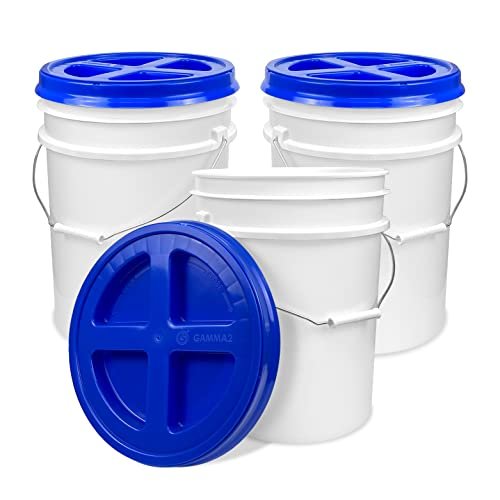
The go-to choice for preppers and bulk buyers, these thick, rodent-proof buckets are built for stationary, long-term storage of large quantities of dry goods. Look for models with gamma seal lids for easy, repeated access without losing their airtight fit. For a durable, made-in-USA option built for frequent access, the ePackageSupply 5 Gallon White Bucket with Gamma Seal Screw On Airtight Lid is a reliable pick for bulk grain and legume storage. Color-coded gamma lids (green for grains, red for legumes, blue for pasta) make it easy to distinguish between different stored staples without opening containers. The only downsides are weight (a full 5-gallon bucket of rice weighs ~35 lbs) and bulk, so they are best for dedicated storage spaces like basements or closets.
 Heavy-duty 5-gallon HDPE buckets are ideal for bulk dry goods storage.
 Color-coded lids help distinguish between different stored food types.
For a more compact option for smaller bulk purchases, the ePackageSupply 3.5 Gallon White Bucket with Red Gamma Screw On Lid works well for storing smaller quantities of specialty ingredients or dehydrated meals. For bulk purchases, 6-packs of 5-gallon buckets offer significant cost savings for large-scale storage projects.
Color-coded lids help distinguish between different stored food types.
For a more compact option for smaller bulk purchases, the ePackageSupply 3.5 Gallon White Bucket with Red Gamma Screw On Lid works well for storing smaller quantities of specialty ingredients or dehydrated meals. For bulk purchases, 6-packs of 5-gallon buckets offer significant cost savings for large-scale storage projects.
 Smaller 3.5-gallon buckets work well for smaller bulk purchases or specialized ingredients.
 Bulk bucket packs are cost-effective for large-scale long-term storage projects.
Mylar Bags with Oxygen Absorbers
Mylar bags are the top choice for ultra-long-term, space-efficient storage. The polyester film blocks 100% of light, moisture, and air, and when paired with correctly sized oxygen absorbers, can keep dry goods fresh for 10–25 years. They are lightweight, easy to label, and can be portioned into individual family-sized servings for convenient use. For 1-gallon portioned storage, the 100pcs Mylar Bags With 400cc Oxygen Absorbers offer a durable, resealable option for grains, beans, and dehydrated snacks. For bulk 5-gallon storage, the 10pcs 5 Gallon Mylar Bags For Food Storage with 2500cc oxygen absorbers are built to resist punctures and hold large quantities of staples. For extra protection against rodents, store Mylar bags inside a rigid HDPE bucket.
 Mylar bags block light, moisture, and air for extended shelf life.
 Large-format Mylar bags are perfect for bulk grain and legume storage.
Rigid Airtight Plastic Containers
For staples you access regularly (flour, sugar, cereal, baking supplies), rigid clear airtight containers are the most convenient option. They are easy to open, stackable, and their clear design lets you identify contents at a glance, reducing the need to open multiple containers to find what you need. The Rubbermaid Brilliance 16-cup Airtight Food Storage Container With Lid features a locking airtight seal that prevents clumping and spoilage for flour and sugar, while the White Feather Supplies 2 Pc Extra Large Airtight Food Storage Containers offer 8.5L of storage for bulk baking supplies, reducing the need for frequent restocking. These are best for indoor pantry storage, as they are not rodent-proof.
 Rigid clear containers are ideal for frequently accessed pantry staples like flour and sugar.
 Extra-large airtight containers reduce the need for frequent restocking of bulk items.
Step-by-Step Guide to Using Airtight Containers for Maximum Shelf Life
Even the highest-quality container will fail if used incorrectly. Follow these steps to get the longest possible shelf life from your stored food:
- Clean and dry containers thoroughly: Before filling new containers, wash them with a heavy-duty kitchen cleaning brush set to remove manufacturing dust, plastic residues, or leftover debris. Air dry completely—any moisture inside the container will cause mold and spoilage, even with an airtight seal. A common mistake is skipping this step, leading to ruined supplies within months.
- Add oxygen absorbers (if applicable): For Mylar bags, add the correctly sized oxygen absorber for the bag volume (400cc for 1-gallon, 2500cc for 5-gallon). For buckets, 1–2 2000cc absorbers add extra protection but are not required if the seal is tight. Use absorbers within 30 minutes of opening their packaging, as they activate on contact with air.
- Fill and seal properly: For buckets, fill to 1–2 inches below the rim to allow for lid gasket compression. Screw the gamma seal lid on tightly, locking the ring in place to ensure a full seal. For Mylar bags, press out as much air as possible before sealing, then use a heat sealer to melt the top closed for a permanent airtight seal, or zip-lock for short-term use.
- Label clearly: Write the contents and storage date on the container or bag with a permanent marker. For Mylar bags, place a label inside the bag before sealing so it does not fade over time.
- Store in a cool, dark, dry place: Ideal storage temperatures are 50–70°F, away from direct sunlight, garages, attics, or basements with high humidity. Temperature swings cause condensation inside containers, leading to spoilage even with a tight seal.
Common Mistakes to Avoid with Long-Term Airtight Storage
Even experienced preppers make these costly errors:
- Using non-food-grade containers: Never use buckets or containers that held chemicals, paint, or other non-food items, even if they are airtight, as residues can leach into food over time.
- Skipping gasket inspections: For containers with rubber gaskets (like gamma seal lids), inspect the gasket annually for cracks or brittleness. A damaged gasket will not seal properly, letting in air and moisture. To keep gaskets clean and free of debris that could compromise the seal, use a soap-dispensing dish brush for quick, thorough cleaning after each use.
- Overfilling containers: Leave 1–2 inches of headspace for gasket compression, and 2–3 inches of space at the top of Mylar bags to seal properly.
- Storing food in unconditioned spaces: Garages and attics can reach 120°F in summer and freezing in winter, accelerating spoilage and causing condensation inside containers.
- Forgetting child safety: If you store containers in lower cabinets or drawers accessible to kids, add drawer and cabinet safety latches or no-drill childproof drawer locks to keep stored staples out of reach.
Frequently Asked Questions
What Are Airtight Containers Used For?
Airtight containers are designed to block exposure to oxygen, moisture, light, and pests, the four primary causes of food spoilage. They are used for long-term storage of dry staple foods (rice, beans, wheat, pasta), dehydrated or freeze-dried meals, baking supplies (flour, sugar), and even emergency rations. Unlike regular storage containers, they maintain a consistent internal environment, preserving nutrients, flavor, and texture for years. For households with young children, pairing airtight storage with child safety locks for kitchen cabinets ensures stored staples stay out of reach.
How Do Gamma Seal Lids Work?
Gamma seal lids use a two-part design to create a reliable airtight seal: an outer locking ring snaps onto the rim of a 5-gallon HDPE bucket, and a gasketed inner lid screws onto the ring. As you tighten the lid, the rubber gasket compresses against the bucket rim to create an airtight barrier that blocks air, moisture, and pests. Unlike standard bucket lids that can pop off or lose their seal over time, gamma seals maintain their airtight fit even with repeated opening and closing, making them ideal for frequently accessed storage.
Are Mylar Bags Effective For Food Storage?
Yes, Mylar bags are one of the most effective options for ultra-long-term food storage. The polyester film blocks 100% of ultraviolet light, moisture, and air, preventing the nutrient degradation and spoilage that occurs with standard plastic bags. When paired with correctly sized oxygen absorbers, Mylar bags can keep dry goods fresh for 10–25 years. They are particularly popular with preppers and bulk buyers, as they are lightweight, space-efficient, and can be portioned into individual servings. For extra protection against rodents, store Mylar bags inside a rigid HDPE bucket.
Why Choose BPA-Free Storage Containers?
BPA (bisphenol A) is a chemical used in some plastics that can leach into food, especially when containers are exposed to high temperatures or acidic foods. Long-term storage increases the risk of leaching, as food is in contact with the container for months or years. BPA-free containers are made from alternative, food-safe materials that meet FDA safety standards, eliminating the risk of chemical contamination. This is especially important for storing staples that will be used for family meals over time.
What Size Container Is Best For Bulk Storage?
For bulk dry staple storage, 5-gallon HDPE buckets are the most versatile option, holding 30–35 lbs of rice, beans, or wheat, and stacking easily to save space. For smaller households or portioned storage, 1–2 gallon Mylar bags or 16-cup rigid plastic containers work well. If you are storing large quantities of multiple staples, color-coded gamma seal lids (e.g., green for grains, red for legumes, blue for pasta) make it easy to identify contents without opening containers.
How Long Can Food Last in Airtight Containers?
Shelf life varies by container type and food type, but with proper sealing and storage: dry staples like white rice, dry beans, and wheat can last 25+ years in 5-gallon HDPE buckets with tight gamma seals; Mylar bags with oxygen absorbers can keep these staples fresh for 10–25 years; rigid plastic containers are best for 1–3 year storage of frequently accessed items like flour, sugar, and cereal. Per USDA guidance, all stored food should be inspected annually for signs of spoilage, such as off odors, discoloration, or pest activity.
Final Thoughts
Airtight containers are the non-negotiable foundation of any successful long-term food storage plan, whether you are building an emergency pantry, organizing bulk baking supplies, or preserving a harvest of dehydrated goods. By choosing the right container type for your use case, following proper sealing and storage best practices, and pairing your setup with basic home safety measures, you can keep your food fresh, safe, and accessible for decades. For more practical home storage and safety tips, explore our full library of practical home storage guides to build a fully organized, secure household storage system.

I’m Abby Lu, a passionate home cook who loves simplifying everyday meals. At PlugChef.com, I share product reviews and cooking guides to help you find the best tools for your kitchen.
Similar Posts