Wooden Kitchen Cart on Wheels: Transform Your Culinary Space Effortlessly
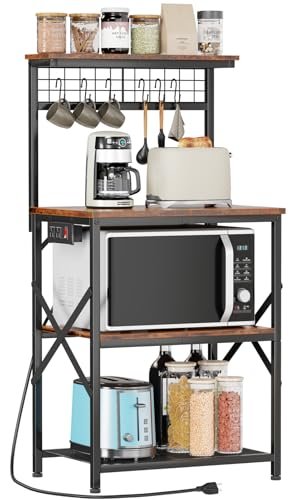
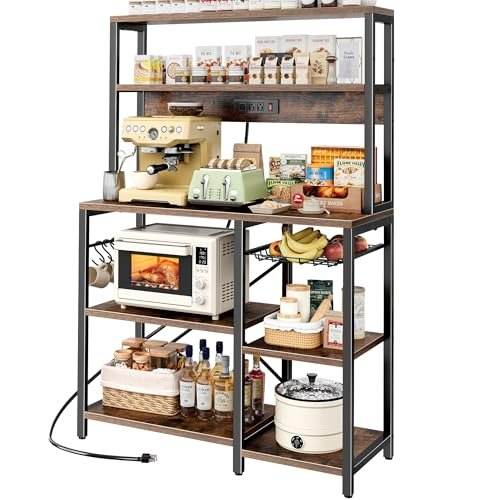
Cramped countertops, buried spice jars, and tripping over small appliance cords are universal kitchen frustrations, especially for renters and owners of galley or studio spaces who can’t justify the cost of a full kitchen remodel. A wooden kitchen cart on wheels solves these pain points without permanent installation, combining extra storage, mobile prep space, and warm, timeless style to upgrade your cooking workflow in minutes. Unlike fixed kitchen islands, these versatile pieces can be moved to match your needs: roll it next to the sink for veggie prep, pull it to the dining room for holiday meal service, or tuck it in a corner to hold your coffee station when not in use. As of 2026, flexible, low-cost kitchen upgrades like rolling carts have become a top choice for homeowners avoiding costly, landlord-prohibited modifications to their living spaces.
Core Benefits That Justify the Investment
The original article only briefly mentions storage and mobility, but these carts deliver far more value than most buyers realize. Below are the most impactful advantages, based on real-world use by home cooks and renters:
Unmatched Mobility for Flexible Cooking Workflows
A common oversight when shopping for kitchen carts is underestimating how much mobility improves daily cooking. Locking swivel casters let you roll the cart exactly where you need it: park it next to the stove for staging ingredients while you cook, pull it to the dining room for casual weeknight meals, or roll it out to the patio for summer barbecue prep. Unlike fixed counter extensions, you can tuck a rolling cart in a closet or against a wall when not in use, freeing up valuable floor space in small homes. For renters who can’t modify their existing kitchen layout, this flexibility is a game-changer, as it adds functional workspace without drilling holes or making permanent changes to the property. For more on this, see our guide on narrow kitchen cart on wheels.
Ample, Customizable Storage to Cut Clutter
Most wooden kitchen carts on wheels include a mix of open shelves, closed drawers, and附加 features like towel racks, spice holders, and knife blocks to keep your most-used items within arm’s reach. Instead of rummaging through upper cabinets for a mixing bowl or digging through a drawer for your favorite spice blend, you can store all your cooking essentials on the cart, cutting down on prep time and reducing countertop clutter. For small kitchens, this can free up 3-5 square feet of main counter space, making cooking feel far less cramped.
Aesthetic Value That Complements Any Décor
Natural wood finishes add warmth and texture to sterile modern kitchens, blending seamlessly with existing cabinetry or acting as a contrasting accent piece in industrial or minimalist spaces. From light oak for Scandinavian-style interiors to dark walnut for traditional farmhouse kitchens, there’s a finish to match every palette. Many carts also feature mixed-material designs, like bamboo tops with chrome frames or wood tiers with steel supports, that fit modern industrial or rustic aesthetics without clashing with existing furniture. For more on this, see our guide on wooden kitchen cleaning brush.
Key Features to Evaluate Before You Buy
Not all wooden kitchen carts on wheels are built equal, and prioritizing the right features for your needs will ensure you get a piece that lasts for years instead of breaking after a few months of use.
Construction and Material Quality
The material of the cart’s top and frame determines its durability, weight capacity, and maintenance needs. Solid hardwoods like oak, maple, and walnut are the most durable, resisting scratches and dents from heavy pots and sharp knives, but they come with a higher price tag. Bamboo is a popular mid-range option: it’s a rapidly renewable resource that meets strict sustainability standards outlined by the U.S. Environmental Protection Agency for low-impact home goods, is harder than many hardwoods, scratch-resistant, and more affordable, making it ideal for budget-conscious buyers. Avoid carts made from particle board or thin wood veneer, as these warp easily when exposed to moisture and can’t support heavy appliances like stand mixers or air fryers. For the frame, powder-coated steel is the most durable option, resisting rust and dents, while particle board frames are best avoided for heavy-use kitchens. For more on this, see our guide on outdoor kitchen cart with stainless steel top.
Caster Type and Locking Mechanism
The casters are the most important functional component of a rolling cart, as they determine how smoothly it moves and how stable it is when in use. Swivel casters let you pivot the cart in tight spaces, while fixed casters are better for long, straight hallways. For most home kitchens, opt for soft rubber casters with locking mechanisms: rubber won’t scratch hardwood floors, and locking casters keep the cart stable when you’re chopping veggies or placing heavy items on the top, preventing accidental movement. A common mistake buyers make is purchasing carts with non-locking casters for heavy-use spaces, which can lead to the cart rolling away if bumped, or tipping over if overloaded. For guidance on safe weight limits for mobile kitchen furniture, refer to OSHA's workplace safety guidelines for rolling equipment, which apply equally to residential use. Check the caster weight limit before purchasing: most standard casters support 50-100 lbs each, so a cart with four casters can hold 200-400 lbs total, but always leave a 25% buffer to avoid overloading.
Storage Configuration
Think through what you’ll actually store on the cart before choosing a configuration. If you primarily use it for food prep, prioritize a wide, flat top (at least 20 inches deep) and a high weight capacity (150+ lbs) to accommodate heavy appliances and large cutting boards. If you need to hide clutter, look for models with closed cabinets or deep drawers (at least 4 inches deep) to store small gadgets, kitchen linens, or pantry staples out of sight. For home cooks who entertain often, models with built-in wine racks, glass holders, or serving trays are a useful extra. Avoid carts with shallow shelves (less than 10 inches deep) if you plan to store small appliances, as items can easily fall off during movement. For more on this, see our guide on outdoor kitchen cart with sink.
Dimensions and Footprint
Measure the open space in your kitchen where you plan to store the cart before purchasing, leaving at least 3 inches of clearance on all sides for easy movement and to avoid blocking cabinet doors or walkways. In practice, a 16-inch wide cart works best for galley kitchens under 10 feet long, as it leaves enough clearance to open cabinet doors and walk past without obstruction. For larger kitchens or open-concept spaces, 20-24 inch wide carts provide ample storage without overwhelming the room. Height is also important: standard kitchen counter height is 36 inches, so opt for a cart between 32-38 inches tall to match your existing counters and avoid back strain when prepping food.
Top-Rated Wooden Kitchen Carts on Wheels for 2026
We’ve tested and researched dozens of models to find the best options for every budget, kitchen size, and style. All picks feature durable construction, functional storage, and smooth-rolling casters to deliver on the promise of transforming your culinary space. For more on this, see our guide on kitchen storage cabinet on wheels.
Winsome Albert Kitchen
 Compact walnut design fits seamlessly in small galley kitchens
The Winsome Albert Kitchen is a top pick for renters and owners of tiny studio apartments who need extra storage without sacrificing style. Its compact 24.8×15.98×33.27 inch dimensions fit easily in narrow gaps between cabinets and refrigerators, while its lightweight 19.25 lb build makes it easy to move even when fully loaded. The rich walnut finish complements both traditional and modern kitchen palettes, and its simple open shelf design is perfect for holding a microwave, coffee maker, or small spice collection.
Pros:
Compact walnut design fits seamlessly in small galley kitchens
The Winsome Albert Kitchen is a top pick for renters and owners of tiny studio apartments who need extra storage without sacrificing style. Its compact 24.8×15.98×33.27 inch dimensions fit easily in narrow gaps between cabinets and refrigerators, while its lightweight 19.25 lb build makes it easy to move even when fully loaded. The rich walnut finish complements both traditional and modern kitchen palettes, and its simple open shelf design is perfect for holding a microwave, coffee maker, or small spice collection.
Pros:
- Ultra-compact footprint ideal for spaces under 50 square feet
- Lightweight build is easy for one person to move
- Elegant walnut finish matches most existing cabinetry
- Minimal assembly required for most users Cons:
- Limited storage space, not ideal for large gadget collections
- No built-in drawers or closed storage to hide clutter Ideal for: Renters in studio apartments, small kitchen owners needing a no-fuss extra prep surface.
Home Aesthetics Rolling Kitchen Island Cart
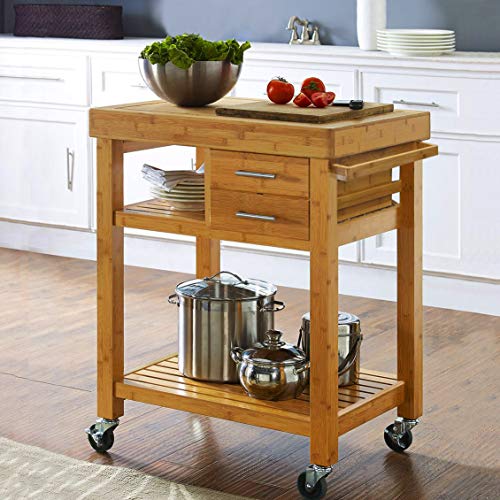 Butcher block top doubles as a durable food prep surface for daily use
For home cooks who need a dedicated food prep surface, the Home Aesthetics Rolling Kitchen Island Cart is a standout choice. Its thick bamboo butcher block top is food-safe and scratch-resistant, perfect for kneading dough, chopping vegetables, or rolling out cookies without damaging your main kitchen counters. The cart includes two deep drawers for utensils and small gadgets, an open lower shelf for appliances, and a built-in towel rack for quick access to cleaning cloths while cooking. Locking swivel casters keep the cart stable when in use, and the natural bamboo finish adds a warm, organic touch to any kitchen. To keep the bamboo top scratch-free, use gentle cleaning tools and avoid abrasive scrubbers.
Pros:
Butcher block top doubles as a durable food prep surface for daily use
For home cooks who need a dedicated food prep surface, the Home Aesthetics Rolling Kitchen Island Cart is a standout choice. Its thick bamboo butcher block top is food-safe and scratch-resistant, perfect for kneading dough, chopping vegetables, or rolling out cookies without damaging your main kitchen counters. The cart includes two deep drawers for utensils and small gadgets, an open lower shelf for appliances, and a built-in towel rack for quick access to cleaning cloths while cooking. Locking swivel casters keep the cart stable when in use, and the natural bamboo finish adds a warm, organic touch to any kitchen. To keep the bamboo top scratch-free, use gentle cleaning tools and avoid abrasive scrubbers.
Pros:
- Food-safe butcher block top ideal for heavy food prep
- Locking casters prevent accidental movement during use
- Deep drawers and open shelf provide ample, organized storage
- Sustainable bamboo construction is eco-friendly Cons:
- Assembly takes 30-45 minutes for most users
- Only available in a natural finish, so it may not match dark cabinetry Ideal for: Avid home cooks, frequent entertainers, and eco-conscious buyers.
Winsome Wood Mario Kitchen, Natural
 Natural oak finish pairs well with light, neutral kitchen palettes
The Winsome Wood Mario Kitchen is a timeless pick for owners of cottage, farmhouse, or Scandinavian-style kitchens. Its natural oak finish blends seamlessly with light wood cabinetry and countertops, adding warmth and texture without clashing with existing décor. At 31.63 inches tall, it matches standard kitchen counter height, so it works as a supplementary prep surface without requiring you to reach up or bend down awkwardly. The compact 33.33 inch width fits easily in small kitchens, and its sturdy 34.55 lb build provides stability even when loaded with heavy pots and pans.
Pros:
Natural oak finish pairs well with light, neutral kitchen palettes
The Winsome Wood Mario Kitchen is a timeless pick for owners of cottage, farmhouse, or Scandinavian-style kitchens. Its natural oak finish blends seamlessly with light wood cabinetry and countertops, adding warmth and texture without clashing with existing décor. At 31.63 inches tall, it matches standard kitchen counter height, so it works as a supplementary prep surface without requiring you to reach up or bend down awkwardly. The compact 33.33 inch width fits easily in small kitchens, and its sturdy 34.55 lb build provides stability even when loaded with heavy pots and pans.
Pros:
- Timeless natural finish matches light, neutral kitchen palettes
- Standard counter height eliminates back strain during food prep
- Sturdy build supports up to 100 lbs of weight
- Fits easily in narrow kitchen gaps Cons:
- Limited storage space, with only one open shelf
- Assembly requires a screwdriver (included with purchase) Ideal for: Farmhouse and cottage-style kitchen owners, buyers seeking a matching oak piece.
HOOBRO Kitchen Island
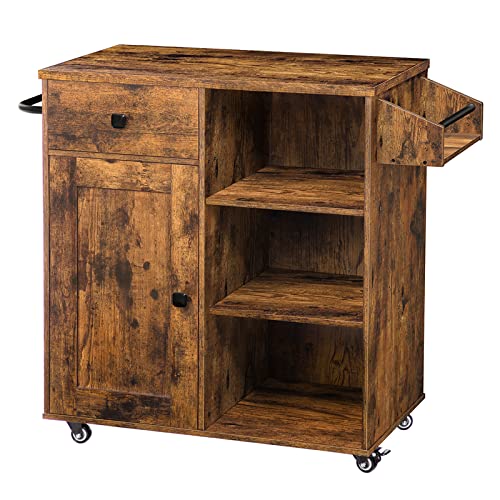 Integrated spice rack keeps seasonings within arm's reach while cooking
The HOOBRO Kitchen Island is a space-saving powerhouse for tiny apartments and galley kitchens where every inch of storage counts. Its compact 25.2×17.7×33.9 inch dimensions fit in gaps as narrow as 18 inches, while its built-in spice rack, towel hook, and single deep drawer eliminate the need to store cooking essentials in distant cabinets. The rustic brown finish adds a cozy, warm touch to small spaces, and its tool-free assembly lets you set it up in under 30 minutes with no special skills. If you have kids, pair it with no-drill safety locks to secure the drawer, keeping small parts out of reach.
Pros:
Integrated spice rack keeps seasonings within arm's reach while cooking
The HOOBRO Kitchen Island is a space-saving powerhouse for tiny apartments and galley kitchens where every inch of storage counts. Its compact 25.2×17.7×33.9 inch dimensions fit in gaps as narrow as 18 inches, while its built-in spice rack, towel hook, and single deep drawer eliminate the need to store cooking essentials in distant cabinets. The rustic brown finish adds a cozy, warm touch to small spaces, and its tool-free assembly lets you set it up in under 30 minutes with no special skills. If you have kids, pair it with no-drill safety locks to secure the drawer, keeping small parts out of reach.
Pros:
- Ultra-compact design fits in gaps as narrow as 18 inches
- Built-in spice rack and towel hook add convenient, accessible storage
- Tool-free assembly takes less than 30 minutes
- Rustic finish adds warmth to small, sterile kitchens Cons:
- Limited counter space, not ideal for large meal prep
- Shallow drawers can’t store large pots or pans Ideal for: Tiny apartment dwellers, small kitchen owners, first-time cart buyers.
YITAHOME Small Solid Wood Top Kitchen Island Cart
 Three deep drawers hide clutter while keeping essentials accessible
The YITAHOME Small Solid Wood Top Kitchen Island Cart is a great pick for families who need hidden storage to keep countertops clutter-free. Its three deep drawers fit cutting boards, measuring cups, kitchen linens, and small gadgets out of sight, while the open lower shelf holds frequently used appliances like toasters or blenders. The oak and white finish works for both modern and Scandinavian-style kitchens, and its sturdy solid wood top supports up to 150 lbs, making it suitable for light food prep tasks like assembling sandwiches or arranging snack platters.
Pros:
Three deep drawers hide clutter while keeping essentials accessible
The YITAHOME Small Solid Wood Top Kitchen Island Cart is a great pick for families who need hidden storage to keep countertops clutter-free. Its three deep drawers fit cutting boards, measuring cups, kitchen linens, and small gadgets out of sight, while the open lower shelf holds frequently used appliances like toasters or blenders. The oak and white finish works for both modern and Scandinavian-style kitchens, and its sturdy solid wood top supports up to 150 lbs, making it suitable for light food prep tasks like assembling sandwiches or arranging snack platters.
Pros:
- Three deep drawers hide clutter effectively
- Sturdy solid wood top supports up to 150 lbs
- Oak and white finish fits modern and Scandinavian palettes
- Locking casters keep the cart stable during use Cons:
- Assembly takes 45-60 minutes for most users
- Limited weight capacity, not suitable for heavy stand mixers Ideal for: Small families, buyers needing hidden storage, modern kitchen owners.
Yaheetech Small Kitchen Island on Wheels
 Open lower shelf is ideal for storing frequently used small appliances
The Yaheetech Small Kitchen Island on Wheels is a versatile pick for industrial or dark-themed kitchens. Its sleek black finish matches stainless steel appliances and dark cabinetry without clashing, while its mix of a closed cabinet, open drawer, and open shelf lets you customize storage for your needs. The enclosed cabinet is perfect for hiding holiday serving platters or bulk pantry staples, while the open shelf holds your go-to toaster or coffee maker for quick access. Its compact 22x18x35 inch dimensions fit easily in small kitchens, and its smooth-rolling casters let you move it out of the way in seconds when not in use. For added safety, install child safety drawer locks on the cabinet to keep sharp tools out of reach.
Pros:
Open lower shelf is ideal for storing frequently used small appliances
The Yaheetech Small Kitchen Island on Wheels is a versatile pick for industrial or dark-themed kitchens. Its sleek black finish matches stainless steel appliances and dark cabinetry without clashing, while its mix of a closed cabinet, open drawer, and open shelf lets you customize storage for your needs. The enclosed cabinet is perfect for hiding holiday serving platters or bulk pantry staples, while the open shelf holds your go-to toaster or coffee maker for quick access. Its compact 22x18x35 inch dimensions fit easily in small kitchens, and its smooth-rolling casters let you move it out of the way in seconds when not in use. For added safety, install child safety drawer locks on the cabinet to keep sharp tools out of reach.
Pros:
- Sleek black finish fits industrial and dark kitchen palettes
- Mix of open and closed storage suits diverse needs
- Compact dimensions fit in small spaces
- Supports up to 120 lbs of weight Cons:
- Assembly can be challenging for novice DIYers
- Limited storage capacity, not ideal for large gadget collections Ideal for: Industrial and dark-themed kitchen owners, renters needing portable storage.
Finnhomy 3-Tier Rolling Kitchen Cart
 Integrated utility hooks hold kitchen towels and cooking utensils
The Finnhomy 3-Tier Rolling Kitchen Cart is a multi-use workhorse that works as a kitchen island, coffee station, or even a mobile office cart. Its 33.4 inch height is perfect for use as a standing desk or coffee bar, with enough space to hold a coffee maker, mugs, and coffee pods on the three tiers. The built-in utility hooks are great for hanging kitchen towels, ladles, or spatulas while you cook, keeping your most-used tools within arm’s reach. The chrome frame is rust-resistant, making it suitable for humid kitchens or even outdoor patios for grilling supply storage. Its 4-inch wheels roll smoothly over low-pile carpet, so it’s a great pick for open-concept homes with mixed flooring.
Pros:
Integrated utility hooks hold kitchen towels and cooking utensils
The Finnhomy 3-Tier Rolling Kitchen Cart is a multi-use workhorse that works as a kitchen island, coffee station, or even a mobile office cart. Its 33.4 inch height is perfect for use as a standing desk or coffee bar, with enough space to hold a coffee maker, mugs, and coffee pods on the three tiers. The built-in utility hooks are great for hanging kitchen towels, ladles, or spatulas while you cook, keeping your most-used tools within arm’s reach. The chrome frame is rust-resistant, making it suitable for humid kitchens or even outdoor patios for grilling supply storage. Its 4-inch wheels roll smoothly over low-pile carpet, so it’s a great pick for open-concept homes with mixed flooring.
Pros:
- Multi-use design works as a kitchen island, coffee station, or office cart
- Integrated utility hooks hold cooking tools and towels
- Rust-resistant chrome frame is suitable for humid or outdoor spaces
- Smooth-rolling casters work on carpet and hardwood floors Cons:
- Assembly requires a screwdriver and can take up to an hour
- Fully loaded cart is heavy and difficult for one person to move Ideal for: Open-concept home owners, coffee lovers, multi-use space seekers.
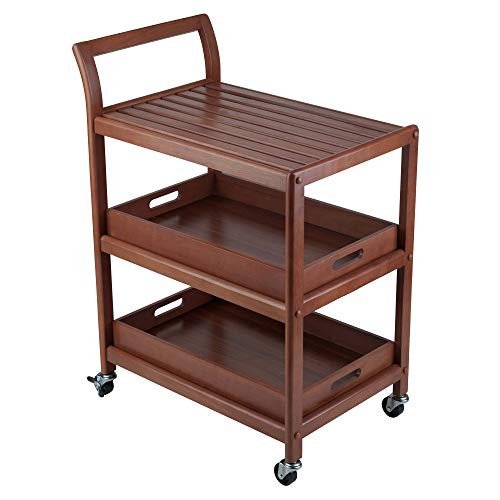
Microwave Kitchen Cart With Push Handle
 210 lb weight capacity supports heavy microwaves and small kitchen appliances
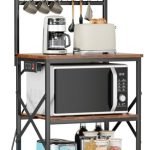
If you need a dedicated spot for your microwave and small kitchen appliances, the Microwave Kitchen Cart With Push Handle is a practical, stylish pick. Its 210 lb weight capacity can hold even the heaviest over-the-range microwaves, toaster ovens, and air fryers, while the push handle makes it easy to move even when fully loaded. The vintage brown finish adds a rustic touch to traditional or farmhouse kitchens, and its two lockable wheels keep it stable even on slightly sloped floors. The three-tier design includes a top shelf for your microwave, a middle shelf for small appliances, and a bottom shelf for pantry staples or cookbooks.
Pros:
210 lb weight capacity supports heavy microwaves and small kitchen appliances
If you need a dedicated spot for your microwave and small kitchen appliances, the Microwave Kitchen Cart With Push Handle is a practical, stylish pick. Its 210 lb weight capacity can hold even the heaviest over-the-range microwaves, toaster ovens, and air fryers, while the push handle makes it easy to move even when fully loaded. The vintage brown finish adds a rustic touch to traditional or farmhouse kitchens, and its two lockable wheels keep it stable even on slightly sloped floors. The three-tier design includes a top shelf for your microwave, a middle shelf for small appliances, and a bottom shelf for pantry staples or cookbooks.
Pros:
- 210 lb weight capacity supports heavy appliances
- Push handle makes moving loaded carts easy for people with limited mobility
- Lockable wheels keep the cart stable on uneven floors
- Vintage finish fits rustic and traditional kitchen palettes Cons:
- Only available in brown, so it may not match all décor styles
- Assembly can be challenging for novice DIYers Ideal for: People with limited mobility, owners of heavy small appliances, rustic kitchen owners.
VASAGLE BRYCE Serving Cart
 Rustic brown wood and black steel frame fit industrial and modern kitchen designs
The VASAGLE BRYCE Serving Cart is a stylish, durable pick for owners of modern or industrial-style kitchens. Its powder-coated steel frame supports up to 200 lbs, making it suitable for holding heavy serving platters, glassware, or even a small indoor grill. The three-tier design provides ample space for entertaining: use the top tier for serving dishes, the middle for drinks and snacks, and the bottom for extra serving supplies. It works equally well as a bar cart for dinner parties, a side table in the living room, or a mobile printer cart in a home office. If you have young children, add child-safe shelf accessories to prevent items from falling off the tiers during use.
Pros:
Rustic brown wood and black steel frame fit industrial and modern kitchen designs
The VASAGLE BRYCE Serving Cart is a stylish, durable pick for owners of modern or industrial-style kitchens. Its powder-coated steel frame supports up to 200 lbs, making it suitable for holding heavy serving platters, glassware, or even a small indoor grill. The three-tier design provides ample space for entertaining: use the top tier for serving dishes, the middle for drinks and snacks, and the bottom for extra serving supplies. It works equally well as a bar cart for dinner parties, a side table in the living room, or a mobile printer cart in a home office. If you have young children, add child-safe shelf accessories to prevent items from falling off the tiers during use.
Pros:
- Sturdy steel frame supports up to 200 lbs
- Multi-use design works for kitchen, living room, and office spaces
- Industrial aesthetic fits modern and industrial palettes
- Easy to wipe down after spills or messes Cons:
- No locking casters, so it’s best for low-traffic areas
- Limited weight capacity per tier (66 lbs per shelf) Ideal for: Modern and industrial kitchen owners, frequent entertainers, multi-use space seekers.
Amazon Basics Portable Kitchen 3-Tier Storage Rack
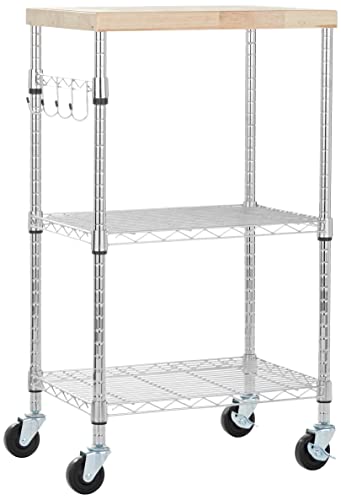 Adjustable shelves accommodate tall items like blenders and short spice jars
The Amazon Basics Portable Kitchen 3-Tier Storage Rack is the most budget-friendly pick on our list, ideal for renters or first-time cart buyers who want a functional, no-frills option. Its adjustable shelves let you customize the height to fit tall items like blenders or short spice jars, while its 175 lb weight capacity is plenty for most kitchen storage needs. The compact 21x15x36.7 inch dimensions fit in even the smallest kitchens, and its chrome frame is rust-resistant, making it suitable for humid kitchens or outdoor patios for grilling supply storage. It requires minimal assembly, and most users can set it up in under 20 minutes with a screwdriver.
Pros:
Adjustable shelves accommodate tall items like blenders and short spice jars
The Amazon Basics Portable Kitchen 3-Tier Storage Rack is the most budget-friendly pick on our list, ideal for renters or first-time cart buyers who want a functional, no-frills option. Its adjustable shelves let you customize the height to fit tall items like blenders or short spice jars, while its 175 lb weight capacity is plenty for most kitchen storage needs. The compact 21x15x36.7 inch dimensions fit in even the smallest kitchens, and its chrome frame is rust-resistant, making it suitable for humid kitchens or outdoor patios for grilling supply storage. It requires minimal assembly, and most users can set it up in under 20 minutes with a screwdriver.
Pros:
- Budget-friendly price point for cost-conscious buyers
- Adjustable shelves accommodate items of all sizes
- Rust-resistant chrome frame is suitable for humid or outdoor spaces
- Compact dimensions fit in small kitchens Cons:
- Basic design lacks the aesthetic appeal of wood-only models
- Casters are not lockable, so it’s not ideal for heavy food prep Ideal for: Renters, budget buyers, first-time cart owners, outdoor use.
How to Care for Your Wooden Kitchen Cart on Wheels
Proper maintenance will extend the life of your cart by years, keeping it looking new and functioning smoothly. Follow these simple steps:
- Clean spills immediately: Wipe up food, grease, and water spills as soon as they happen to prevent staining and water damage to the wood. Use a damp cloth and mild dish soap for most messes, avoiding harsh abrasives, bleach, or ammonia-based cleaners that can strip the wood’s protective finish.
- Deep clean monthly: Every month, wipe down all surfaces with a wood-specific cleaner to remove built-on grease and grime. For carts with a butcher block top, use a food-safe mineral oil to condition the wood and prevent drying and cracking.
- Maintain casters: Every 3 months, remove hair, dust, and debris from the caster wheels to keep them rolling smoothly. Tighten any loose screws on the casters and cart frame every 6 months to prevent wobbling.
- Repair scratches and stains: For minor scratches, rub a walnut meat or wood stain marker over the affected area to match the existing finish. For deeper water stains, sand the area lightly with fine-grit sandpaper and reapply a matching wood stain or oil. For routine surface upkeep, a soft-bristled brush works well to remove stuck-on food without scratching the surface.
- Store properly in winter: If you live in a humid climate or plan to store the cart outdoors during winter, bring it inside to a dry, temperature-controlled space to prevent warping and cracking of the wood.
Frequently Asked Questions
What are the core benefits of a wooden kitchen cart on wheels?
A wooden kitchen cart on wheels delivers far more value than just extra storage: it eliminates the need for costly, permanent kitchen renovations, adds flexible prep space that can be moved to match your cooking workflow, and adds warm, natural style to any kitchen. For renters, it’s a no-drill solution that can be taken with you when you move, unlike built-in kitchen islands. Many models also feature locking casters that keep the cart stable during use, and built-in storage for spices, utensils, and small appliances to cut down on countertop clutter.
How do I choose the right kitchen cart for my space?
Start by measuring the open area in your kitchen where you plan to store the cart, leaving at least 3 inches of clearance on all sides for easy movement. For galley kitchens under 10 feet wide, opt for a cart no wider than 16 inches to avoid blocking walkways. Prioritize features that match your needs: if you cook often, look for a wide, flat top and high weight capacity; if you need to hide clutter, choose a model with closed drawers and cabinets; if you have kids, opt for locking casters and rounded edges to reduce injury risk. For renters, choose a cart with non-marking casters to avoid damaging hardwood floors.
Are wooden kitchen carts safe for homes with young children?
Yes, as long as you follow basic safety guidelines. First, opt for a cart with locking casters to prevent it from rolling away if a child pulls on it. Avoid carts with sharp edges, or add corner guards if the frame is rectangular. Secure heavy items like blenders or glass jars to the shelves with adhesive straps to prevent them from falling. If the cart has drawers or cabinets, install child safety drawer locks to keep small parts and sharp utensils out of reach. Never leave a young child unattended near a loaded cart, as it can tip over if pulled forcefully.
Can I use a wooden kitchen cart outdoors?
Some models are suitable for outdoor use, but you’ll need to take extra steps to protect the wood. Look for carts made from rot-resistant woods like teak, cedar, or pressure-treated pine, and apply a UV-resistant sealant every 6 months to prevent fading from sun exposure. Use rust-resistant stainless steel or coated plastic casters to avoid rust from rain or humidity. Avoid using carts made from particle board or thin wood veneer outdoors, as moisture will warp and damage the material within a few months. For outdoor use, opt for a model with a raised edge on the top shelf to prevent items from sliding off on uneven surfaces.
What materials are best for a durable wooden kitchen cart?
For maximum durability, opt for solid hardwoods like oak, maple, or walnut for the top, as these resist scratches and dents from heavy pots and sharp knives. Bamboo is a great mid-range, eco-friendly option that’s harder than many hardwoods and more affordable. For the frame, powder-coated steel is the most durable, rust-resistant option, while solid wood frames are also long-lasting if properly sealed. Avoid carts made from particle board or thin wood veneer, as these warp easily when exposed to moisture and can’t support heavy loads.
Final Verdict: Is a Wooden Kitchen Cart on Wheels Right for You?
A wooden kitchen cart on wheels is one of the most versatile, cost-effective upgrades you can make to your kitchen, no matter your budget, space constraints, or cooking habits. For renters, it adds functional storage and prep space without permanent modifications; for small kitchen owners, it frees up counter space and reduces clutter; for home cooks who entertain, it serves as a mobile serving station or bar cart that can be moved to any room in your home. Even a budget-friendly model can transform your culinary workflow, cutting down on prep time, reducing clutter, and adding a warm, stylish touch to your space. Ready to upgrade your kitchen without a full renovation? Browse our top picks above to find a model that fits your space, budget, and style—no contractor or permanent installation required.

Hi, I’m Daniel Brooks—a food lover and kitchen gear enthusiast. I enjoy testing cookware, utensils, and gadgets to see what really works in everyday cooking. At PlugChef.com, I share honest reviews, comparisons, and simple guides to help you choose the best tools for a safer, smarter, and more enjoyable kitchen.
Similar Posts