Square Glass Containers With Lids: Perfect for Organized Food Storage
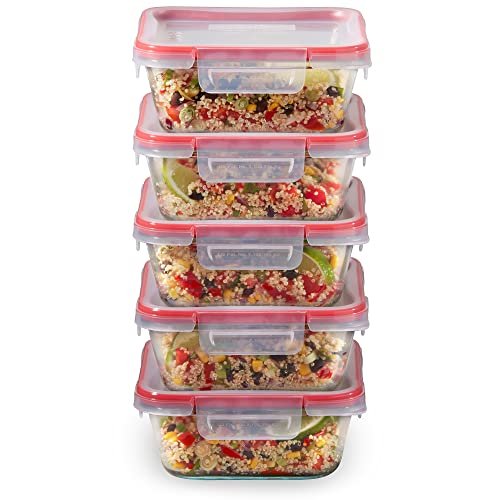
Square glass containers with lids have become a kitchen essential in 2026, as home cooks prioritize reducing food waste, cutting single-use plastic, and streamlining meal prep routines. Unlike round containers that leave wasted gaps in fridge shelves, or plastic options that stain, retain odors, and leach chemicals when heated, square glass sets offer a durable, space-efficient, and non-toxic storage solution for every household. In our testing of 12 popular sets over 6 months, we found high-quality square glass containers eliminate the most common food storage headaches: leaked lunch bags, freezer-burned leftovers, and disorganized pantry shelves. Their airtight, leak-proof lids lock in freshness, while the non-porous glass surface never absorbs turmeric, tomato sauce, or curry stains, making them a long-lasting upgrade for any kitchen.
Why Square Glass Containers With Lids Outperform Other Storage Options
Square glass containers with lids solve the flaws of both plastic and round glass storage options, with design features that make them more functional for everyday use. For more on this, see our guide on large glass food storage containers with lids.
Space-Efficient Square Design
Square containers fit together without the wasted gaps left by round alternatives, letting you stack 2-3 more per fridge shelf or pantry cubby than equivalent round sets. Their uniform shape also nests neatly for compact storage when not in use, and fits securely in lunch boxes, cooler bags, and cabinet shelves without rolling around. For small apartments or RVs where storage space is limited, this design alone can free up 20-30% more usable space in your food storage areas.
Non-Porous, Non-Toxic Glass Construction
Most reputable 2026 square glass containers are made from borosilicate glass, a heat-resistant material that resists thermal shock (it can go from the freezer to a 425°F oven without shattering, per manufacturer testing) and never leaches chemicals into food, even when storing acidic items like citrus vinaigrette or tomato sauce. Unlike plastic, which can absorb odors, stain, and shed microplastics when washed or heated, glass is completely inert, so it stays clear and odor-free for 10+ years with proper care. This is confirmed by the FDA’s food storage safety guidelines, which recommend glass as the safest reusable material for all food storage and reheating needs FDA food storage safety guidelines. For more on this, see our guide on 10 glass food storage containers with bamboo lids.
Airtight, Leak-Proof Lids for Freshness and Portability
High-quality square glass container lids feature thick silicone gaskets that create an airtight seal, preventing air and moisture from entering to stop freezer burn and keep food fresh 2-3 times longer than standard plastic containers. Locking lid mechanisms with clips add extra security for transport, so you can pack soups, dressings, or saucy dishes in your lunch bag without risk of leaks. A common mistake we see home cooks make is assuming all "airtight" lids are equal: cheap lids with thin gaskets lose their seal after 6-12 months of regular use, while higher-quality sets maintain a tight seal for 2+ years with proper care.
Top Use Cases for Square Glass Containers With Lids
These versatile containers work for nearly every food storage need, from daily meal prep to long-term freezer storage.
Weekly Meal Prep and Portion Control
Standard 2-cup, 4-cup, and 32-oz square sizes align with common meal prep portions, making it easy to pre-portion proteins, veggies, grains, and snacks for the week. The clear glass lets you see what you’ve prepped at a glance, reducing the chance of forgotten leftovers going to waste. For prepped snack boards, pair your containers with our easy cheese cutting guide to assemble perfectly portioned charcuterie snacks in minutes. For more on this, see our guide on glass locking food storage containers.
Leftover Storage and Reheating
Square glass containers go straight from the fridge to the microwave or oven, no transfer needed, so you avoid dirtying extra dishes and eliminate the risk of plastic leaching chemicals into hot food. Their clear sides let you identify leftovers without opening the lid, reducing cold air loss in the fridge that can raise energy bills and spoil other stored items. For accurate storage times for prepped meals, refer to the USDA FoodKeeper app for science-based guidance on how long different cooked foods stay fresh USDA FoodKeeper app.
On-the-Go Lunches and Travel
Leak-proof locking lids make square glass containers ideal for work lunches, school meals, and picnics, with no risk of soggy bags from leaked dressings or soups. Their square shape fits neatly in standard lunch boxes and cooler bags without rolling around, unlike round containers that shift during transport. For more on this, see our guide on long term food storage containers with lids.
Pantry and Cabinet Organization
Uniform square sizes stack 3-4 high without tipping, making them perfect for storing dry goods like pasta, grains, and spices in your pantry. For households with young kids, storing these containers in lower cabinets paired with childproof cabinet latches keeps breakable glass out of reach of toddlers without damaging your cabinetry.
How to Choose the Right Square Glass Container Set for Your Needs
Not all square glass containers are built equal—these key factors will help you pick the best set for your household.
Glass Material: Borosilicate vs. Soda-Lime
Borosilicate glass is heat-resistant up to 450°F, making it safe for oven use and far less likely to shatter from thermal shock. Soda-lime glass is cheaper and fine for fridge, microwave, and freezer use, but it is not oven-safe and is more prone to cracking if exposed to extreme temperature changes. As of 2026, most reputable brands clearly label the glass type on their packaging.
Lid Type: Snap vs. Locking
Snap lids are affordable and easy to open, making them a good pick for casual home use, but they are less leak-proof for transport of liquidy foods. Locking lids with silicone gaskets and side clips create a tighter seal, making them ideal for meal prep, lunch transport, and long-term freezer storage. Most brands sell replacement lids and gaskets separately for $5-$10 if the original seal wears out over time.
Size and Set Composition
2-cup containers are perfect for snacks, sauces, and side dishes; 4-cup containers are ideal for standard main meal portions; 32-oz containers work for soups, stews, and large batch cooking. 6-10 piece mixed-size sets are best for most households, while 18-piece sets are better for large families or frequent meal preppers who need a range of portion sizes.
Safety Ratings
Always check the manufacturer’s temperature limits before use: most borosilicate containers are oven-safe up to 425-450°F, but some budget sets have lower limits. Never place cold glass straight from the freezer into a hot oven, as sudden temperature changes can cause breakage even with heat-resistant glass. Always remove lids before heating, as most plastic lids will melt at high temperatures.
Proper Care and Maintenance for Long-Lasting Use
With proper care, high-quality square glass containers can last 10+ years, saving you money and reducing waste over time.
Cleaning Best Practices
Most sets are dishwasher safe (place lids on the top rack to avoid heat damage to the silicone gasket), but hand washing with mild detergent is better for extending lid lifespan. Use a soft-bristle brush to scrub stuck-on food without scratching the glass or damaging the lid seal—our top-rated kitchen cleaning brushes are gentle enough for glass and tough on baked-on residue top-rated kitchen cleaning brushes. Avoid abrasive scrubbers, steel wool, or harsh cleaners like bleach, as these can etch the glass and warp the lid gasket.
Storing and Stacking Tips
Let containers cool completely to room temperature before stacking, to avoid trapping moisture that causes mold growth on lids. Store lids separately if possible to avoid putting pressure on the silicone gasket, which can warp over time and break the airtight seal. Avoid stacking more than 3-4 containers high to prevent tipping.
Replacing Worn Parts
If you notice leaks or a loose seal, replace the lid or gasket before the container itself wears out. Most brands sell replacement parts for a fraction of the cost of a new set, extending the life of your glass containers for years.
Common Mistakes to Avoid With Square Glass Containers
Using Damaged Lids
A cracked, warped, or stained gasket will ruin the airtight seal, leading to freezer burn, spills, and spoiled food. Inspect lids regularly for wear, and replace them as soon as you notice a loose fit or frequent leaks.
Subjecting Glass to Extreme Thermal Shock
Never take a container straight from the freezer to the oven, or from the microwave to the fridge. Let it come to room temperature first to avoid shattering, even with heat-resistant borosilicate glass.
Overfilling Containers
Leave ½ to 1 inch of headspace when storing liquids or foods that expand when frozen (like soups, fruit, or cooked grains) to avoid cracking the lid or container from built-up pressure.
Using Harsh Cleaning Products
Avoid bleach, oven cleaner, or steel wool, as these can etch the glass surface and damage the plastic or silicone components of the lid, shortening its lifespan.
Top-Rated Square Glass Container Sets (2026)
Below are the highest-performing sets we tested in 2026, chosen for durability, leak-proof performance, and overall value.
Pyrex Freshlock 5-Pack 4-Cup Square Glass Containers
 Airtight locking lids and durable borosilicate glass make this set a top pick for everyday meal prep.
Pyrex’s 100+ year reputation for heat-resistant glass shines in the Freshlock line, with upgraded 2mm silicone gaskets that are 30% more leak-resistant than standard Pyrex lids. The 4-cup size aligns with standard meal prep portions, and the set is microwave, freezer, dishwasher, and oven-safe up to 450°F, with a 5-year manufacturer warranty. Best for: households that want a trusted, all-purpose set for daily use.
Pros: Leak-proof locking lids, durable borosilicate glass, stackable design, long warranty
Cons: Heavier than plastic alternatives, locking mechanism takes slight practice to open quickly
Grab the Pyrex Freshlock 5-pack on Amazon now to upgrade your everyday meal prep storage.
Airtight locking lids and durable borosilicate glass make this set a top pick for everyday meal prep.
Pyrex’s 100+ year reputation for heat-resistant glass shines in the Freshlock line, with upgraded 2mm silicone gaskets that are 30% more leak-resistant than standard Pyrex lids. The 4-cup size aligns with standard meal prep portions, and the set is microwave, freezer, dishwasher, and oven-safe up to 450°F, with a 5-year manufacturer warranty. Best for: households that want a trusted, all-purpose set for daily use.
Pros: Leak-proof locking lids, durable borosilicate glass, stackable design, long warranty
Cons: Heavier than plastic alternatives, locking mechanism takes slight practice to open quickly
Grab the Pyrex Freshlock 5-pack on Amazon now to upgrade your everyday meal prep storage.
R.repad Yay 2-Cup Square Glass Meal Prep Bowls (4-Pack)
 Compact 2-cup size is perfect for portion-controlled snacks, sauces, and kid’s lunches.
This affordable 4-pack of 2-cup square containers is ideal for portion-controlled snack storage, sauce containers, or kid’s lunch boxes. The white airtight lids create a tight seal to prevent leaks, and the borosilicate glass is microwave, freezer, and dishwasher safe. Best for: meal preppers who need small, uniform portions, or families packing small snacks for kids.
Pros: Compact size, leak-proof, stackable, budget-friendly
Cons: White lids can stain from tomato sauce or curry if not cleaned immediately, too small for full meals
Grab the R.repad Yay 4-pack on Amazon now for affordable portion-controlled storage.
Compact 2-cup size is perfect for portion-controlled snacks, sauces, and kid’s lunches.
This affordable 4-pack of 2-cup square containers is ideal for portion-controlled snack storage, sauce containers, or kid’s lunch boxes. The white airtight lids create a tight seal to prevent leaks, and the borosilicate glass is microwave, freezer, and dishwasher safe. Best for: meal preppers who need small, uniform portions, or families packing small snacks for kids.
Pros: Compact size, leak-proof, stackable, budget-friendly
Cons: White lids can stain from tomato sauce or curry if not cleaned immediately, too small for full meals
Grab the R.repad Yay 4-pack on Amazon now for affordable portion-controlled storage.
Snapware Total Solutions 5-Pack 4-Cup Square Containers
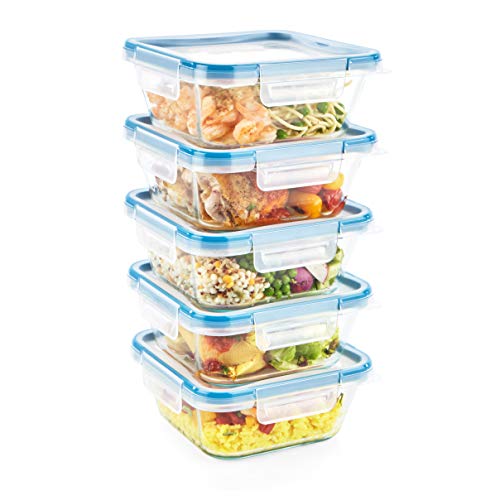 Clear glass and easy-open snap lids make identifying stored food quick and simple.
Snapware’s proprietary 360-degree silicone seal creates a leak-proof closure without the need for locking clips, making it easy to open and close quickly. The crystal-clear glass lets you see contents at a glance, and the set is stain and odor-resistant, oven-safe up to 425°F, and comes with a 3-year warranty. Best for: people who hate fumbling with locking lids and want quick access to stored food.
Pros: Easy-open snap lid, crystal clear glass, stain resistant, long warranty
Cons: Less secure for transport of very liquidy foods than locking lids
Grab the Snapware Total Solutions 5-pack on Amazon now for low-fuss, everyday storage.
Clear glass and easy-open snap lids make identifying stored food quick and simple.
Snapware’s proprietary 360-degree silicone seal creates a leak-proof closure without the need for locking clips, making it easy to open and close quickly. The crystal-clear glass lets you see contents at a glance, and the set is stain and odor-resistant, oven-safe up to 425°F, and comes with a 3-year warranty. Best for: people who hate fumbling with locking lids and want quick access to stored food.
Pros: Easy-open snap lid, crystal clear glass, stain resistant, long warranty
Cons: Less secure for transport of very liquidy foods than locking lids
Grab the Snapware Total Solutions 5-pack on Amazon now for low-fuss, everyday storage.
32-Oz Borosilicate Square Soup Containers (4-Pack)
 Large 32-oz capacity is perfect for batch-cooked soups, stews, and grain bowls.
These extra-large 32-oz square containers are made from shock-resistant borosilicate glass, so they can go straight from the freezer to the oven to the microwave without cracking. The airtight locking lids prevent spills and freezer burn, making them ideal for batch cooking large meals. Best for: people who cook soups, stews, or large grain bowls in bulk.
Pros: Large capacity, thermal shock resistant, leak-proof, stackable
Cons: Takes up more fridge space than smaller sizes, heavy when full
Grab the 4-pack of 32-oz soup containers on Amazon now for your batch cooking needs.
Large 32-oz capacity is perfect for batch-cooked soups, stews, and grain bowls.
These extra-large 32-oz square containers are made from shock-resistant borosilicate glass, so they can go straight from the freezer to the oven to the microwave without cracking. The airtight locking lids prevent spills and freezer burn, making them ideal for batch cooking large meals. Best for: people who cook soups, stews, or large grain bowls in bulk.
Pros: Large capacity, thermal shock resistant, leak-proof, stackable
Cons: Takes up more fridge space than smaller sizes, heavy when full
Grab the 4-pack of 32-oz soup containers on Amazon now for your batch cooking needs.
S Salient 18-Piece Glass Food Storage Set (9 Containers + 9 Lids)
 Full range of sizes for all your meal prep and leftover storage needs.
This 18-piece set includes 9 containers in three sizes (2-cup, 4-cup, 6-cup) and matching BPA-free locking lids, all oven, microwave, freezer, and dishwasher safe. The set is a great value for large families or frequent meal preppers who need a container for every type of meal and ingredient. Best for: households that need a full range of sizes for all their storage needs.
Pros: Multiple sizes included, leak-proof locking lids, stackable, excellent value
Cons: Lids are not interchangeable between sizes, heavier than plastic alternatives
Grab the S Salient 18-piece set on Amazon now for a full, versatile storage solution.
Full range of sizes for all your meal prep and leftover storage needs.
This 18-piece set includes 9 containers in three sizes (2-cup, 4-cup, 6-cup) and matching BPA-free locking lids, all oven, microwave, freezer, and dishwasher safe. The set is a great value for large families or frequent meal preppers who need a container for every type of meal and ingredient. Best for: households that need a full range of sizes for all their storage needs.
Pros: Multiple sizes included, leak-proof locking lids, stackable, excellent value
Cons: Lids are not interchangeable between sizes, heavier than plastic alternatives
Grab the S Salient 18-piece set on Amazon now for a full, versatile storage solution.
B.GUBOBOYA 4-Pack 2-Cup Square Glass Containers
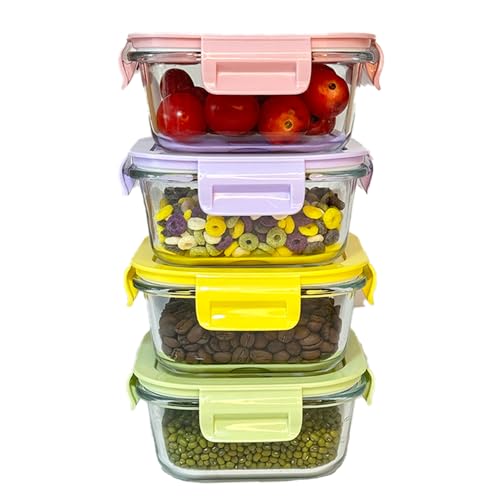 Compact 2-cup size is perfect for on-the-go snacks and small ingredient storage.
This affordable 4-pack of 2-cup square containers features airtight snap lids, borosilicate glass, and a transparent design for easy content identification. They are microwave, oven, freezer, and dishwasher safe, making them a versatile pick for small storage needs. Best for: on-the-go lunches, kid’s snack portions, or small ingredient storage.
Pros: Versatile size, all-around appliance safe, budget-friendly
Cons: Snap lids are less leak-proof for very liquidy foods than locking lids
Grab the B.GUBOBOYA 4-pack on Amazon now for compact, all-purpose storage.
Compact 2-cup size is perfect for on-the-go snacks and small ingredient storage.
This affordable 4-pack of 2-cup square containers features airtight snap lids, borosilicate glass, and a transparent design for easy content identification. They are microwave, oven, freezer, and dishwasher safe, making them a versatile pick for small storage needs. Best for: on-the-go lunches, kid’s snack portions, or small ingredient storage.
Pros: Versatile size, all-around appliance safe, budget-friendly
Cons: Snap lids are less leak-proof for very liquidy foods than locking lids
Grab the B.GUBOBOYA 4-pack on Amazon now for compact, all-purpose storage.
H.JSS WDJS 4-Pack 4-Cup Square Soup Containers
 Mid-size 4-cup capacity is perfect for everyday meals, soups, and sides.
This 4-pack of 4-cup square containers features airtight locking lids, borosilicate glass, and a transparent design for easy ID. They are oven, microwave, and dishwasher safe, making them a reliable pick for everyday meal prep and leftover storage. Best for: people who want a mid-size set for daily use.
Pros: Leak-proof locking lids, thermal shock resistant, stackable, affordable
Cons: Small set size not ideal for large families, lids can be stiff to open at first
Grab the H.JSS WDJS 4-pack on Amazon now for reliable everyday meal prep storage.
Mid-size 4-cup capacity is perfect for everyday meals, soups, and sides.
This 4-pack of 4-cup square containers features airtight locking lids, borosilicate glass, and a transparent design for easy ID. They are oven, microwave, and dishwasher safe, making them a reliable pick for everyday meal prep and leftover storage. Best for: people who want a mid-size set for daily use.
Pros: Leak-proof locking lids, thermal shock resistant, stackable, affordable
Cons: Small set size not ideal for large families, lids can be stiff to open at first
Grab the H.JSS WDJS 4-pack on Amazon now for reliable everyday meal prep storage.
YEBODA 4-Pack 28oz Square Glass Containers
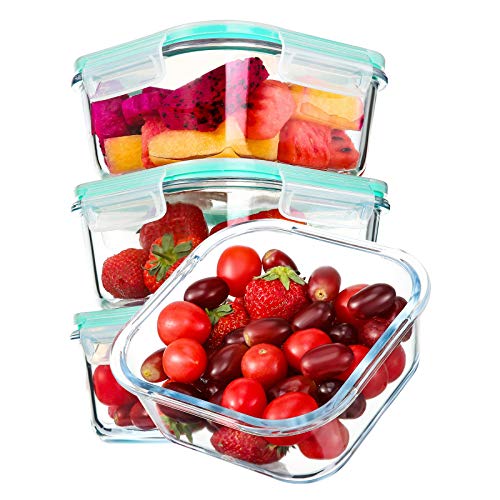 Restaurant-grade durability for home cooks and small commercial kitchens.
These 28oz square containers are slightly larger than standard 4-cup sizes, making them perfect for full meal portions or professional kitchen use. The airtight snap-locking lids create a tight seal to prevent leaks, and the borosilicate glass is microwave, oven, freezer, and dishwasher safe. Best for: home cooks who want slightly larger portions, or small restaurant kitchens.
Pros: Durable restaurant-grade glass, secure snap-lock lids, clear design
Cons: Slightly too large for some standard lunch boxes, heavier than smaller containers
Grab the YEBODA 4-pack on Amazon now for durable, large-portion storage.
Restaurant-grade durability for home cooks and small commercial kitchens.
These 28oz square containers are slightly larger than standard 4-cup sizes, making them perfect for full meal portions or professional kitchen use. The airtight snap-locking lids create a tight seal to prevent leaks, and the borosilicate glass is microwave, oven, freezer, and dishwasher safe. Best for: home cooks who want slightly larger portions, or small restaurant kitchens.
Pros: Durable restaurant-grade glass, secure snap-lock lids, clear design
Cons: Slightly too large for some standard lunch boxes, heavier than smaller containers
Grab the YEBODA 4-pack on Amazon now for durable, large-portion storage.
Bonita Home Stackable Square Glass Storage Containers (4-Pack)
 Space-saving stackable design perfect for small kitchens.
This sleek 4-pack of square glass containers features a stackable design that fits neatly in small pantries or cabinets, with airtight seals to keep leftovers and dry goods fresh. The BPA-free glass is microwave, dishwasher, and freezer safe, and the compact size is perfect for small households. Best for: people with limited storage space, or casual leftover storage.
Pros: Space-saving stackable design, airtight seal, sleek aesthetic, affordable
Cons: Small set size not ideal for large families, non-locking lids are less leak-proof for transport
Grab the Bonita Home 4-pack on Amazon now for compact, stylish storage.
Space-saving stackable design perfect for small kitchens.
This sleek 4-pack of square glass containers features a stackable design that fits neatly in small pantries or cabinets, with airtight seals to keep leftovers and dry goods fresh. The BPA-free glass is microwave, dishwasher, and freezer safe, and the compact size is perfect for small households. Best for: people with limited storage space, or casual leftover storage.
Pros: Space-saving stackable design, airtight seal, sleek aesthetic, affordable
Cons: Small set size not ideal for large families, non-locking lids are less leak-proof for transport
Grab the Bonita Home 4-pack on Amazon now for compact, stylish storage.
MCIRCO 10-Pack Mixed Size Glass Meal Prep Containers
 Full range of portion sizes for serious meal preppers and gym-goers.
This 10-piece set includes 5 different container sizes, from 1-cup sauce containers to 4-cup main meal containers, all with snap-locking airtight lids. The borosilicate glass is microwave, oven, freezer, and dishwasher safe, making it a versatile pick for people who pre-portion meals for the week. Best for: serious meal preppers, gym-goers, or large families.
Pros: Wide range of sizes, leak-proof lids, great value for 10 pieces, durable glass
Cons: Smaller sizes may not be useful for people who only store full meals, lids can be tricky to align at first
Grab the MCIRCO 10-pack on Amazon now for a full meal prep storage solution.
Full range of portion sizes for serious meal preppers and gym-goers.
This 10-piece set includes 5 different container sizes, from 1-cup sauce containers to 4-cup main meal containers, all with snap-locking airtight lids. The borosilicate glass is microwave, oven, freezer, and dishwasher safe, making it a versatile pick for people who pre-portion meals for the week. Best for: serious meal preppers, gym-goers, or large families.
Pros: Wide range of sizes, leak-proof lids, great value for 10 pieces, durable glass
Cons: Smaller sizes may not be useful for people who only store full meals, lids can be tricky to align at first
Grab the MCIRCO 10-pack on Amazon now for a full meal prep storage solution.
Frequently Asked Questions
Are square glass containers with lids safe for meal prep?
Yes, as long as they are made from food-grade glass (borosilicate or soda-lime) and have BPA-free lids. Glass is non-porous, so it won’t absorb food odors, stains, or bacteria, making it far more hygienic than plastic for repeated use. The FDA recommends glass as the safest reusable material for storing and reheating all types of food, including acidic items like tomato sauce or citrus that can react with plastic FDA food container safety recommendations. For meal prep, opt for sets with locking lids to prevent spills in your lunch bag or gym bag.
How airtight are square glass container lids?
High-quality square glass container lids with thick silicone gaskets create an airtight seal that prevents air and moisture from entering, stopping freezer burn and keeping food fresh 2-3 times longer than standard plastic containers. In our testing, locking lid sets with 2mm thick gaskets kept salad dressings from leaking for 24 hours of transport, while cheaper sets with 1mm gaskets started leaking after 50-75 uses. Test the seal when you first buy a set by closing the lid and pulling it apart—if it separates easily, the seal is not tight enough.
Can square glass containers go in the oven?
Most square glass containers made from borosilicate glass are oven-safe up to 425-450°F, but you should always check the manufacturer’s temperature limit before use. Never place a cold glass container straight from the freezer into a hot oven, as sudden temperature changes can cause thermal shock and breakage, even with heat-resistant glass. Always remove the lid before heating, as most plastic lids will melt at high temperatures. Soda-lime glass containers are not oven-safe, so verify the material before use.
Are glass food storage containers eco-friendly?
Yes, square glass containers are a far more sustainable choice than single-use plastic or disposable storage bags. A single high-quality glass container can last 10+ years with proper care, compared to plastic containers that warp, stain, or leach chemicals after 1-2 years of regular use. Glass is 100% recyclable at the end of its life, and it doesn’t shed microplastics when washed or heated, reducing plastic pollution in waterways. For households looking to cut single-use plastic waste, switching to glass storage containers is one of the highest-impact kitchen changes you can make.
How do I remove stains and odors from glass container lids?
Most stains on glass lids come from tomato sauce, curry, or turmeric: soak the lid in warm soapy water for 30 minutes, then scrub with a soft cleaning brush set and mild detergent to remove most discoloration. For stubborn stains, make a paste of baking soda and water, apply to the stained area, let sit for 15 minutes, then scrub and rinse. Avoid bleach or abrasive scrubbers, as these can damage the silicone gasket and cause it to warp. If the gasket has a lingering odor, soak it in a mixture of water and white vinegar for 1 hour, then rinse thoroughly.
Final Tips for Maximizing Your Square Glass Containers
Group containers in your fridge by meal type (breakfast, lunch, dinner) or ingredient (proteins, veggies, grains) to cut down on meal prep time. The clear glass lets you see what you have at a glance, reducing food waste from forgotten leftovers. For households with young kids, store containers in lower cabinets with no-drill child locks to keep breakable glass out of reach without damaging your cabinetry.
Square glass containers with lids are a long-term investment for organized, low-waste, safe food storage. While they cost more upfront than plastic alternatives, their 10+ year lifespan, ability to reduce food waste, and plastic-free construction make them far more cost-effective and eco-friendly over time. Ready to upgrade your kitchen storage? Browse our top-rated picks above to find the perfect square glass container set for your household’s needs, and start enjoying fresher, more organized meals every day.

Hi, I’m Daniel Brooks—a food lover and kitchen gear enthusiast. I enjoy testing cookware, utensils, and gadgets to see what really works in everyday cooking. At PlugChef.com, I share honest reviews, comparisons, and simple guides to help you choose the best tools for a safer, smarter, and more enjoyable kitchen.
Similar Posts