Phthalate Free Food Storage Containers: Safe, Sustainable, and Leakproof Solutions
In 2026, consumer awareness of hidden chemical exposure in everyday kitchen products is higher than ever, and phthalates top the list of concerning contaminants. These plasticizing chemicals are added to flexible plastics like PVC to make them soft and pliable, but they can leach into food – especially when containers are heated, stored with fatty or acidic ingredients, or scratched with abrasive utensils. Long-term phthalate exposure has been linked to endocrine disruption and reproductive health concerns by public health researchers, making certified phthalate-free food storage containers a low-effort, high-impact swap for reducing daily chemical intake. Beyond safety, the best phthalate-free options deliver on sustainability and leakproof performance, eliminating single-use plastic waste and messy spills in lunch bags or refrigerators. This guide breaks down what to look for when shopping, reviews the top 2026 picks for every use case, and shares practical tips for extending container lifespan.
What Are Phthalates, and Why Do They Matter for Food Storage?
Phthalates are a family of industrial chemicals used to soften rigid plastics like polyvinyl chloride (PVC), which is common in low-cost, flexible food storage containers. When these containers are exposed to heat (from microwaving, dishwashers, or hot food), fats, or acidic ingredients like tomato sauce or citrus, phthalates can migrate from the plastic into your food. The U.S. Food and Drug Administration (FDA) has updated its 2026 guidance to restrict 8 high-risk phthalates in food contact materials, but many budget containers still use unregulated alternatives that pose similar exposure risks. Research from the National Institute of Environmental Health Sciences (NIEHS) confirms that even low-level, chronic phthalate exposure can interfere with hormone function, making phthalate-free storage a critical choice for families, pregnant people, and anyone focused on long-term health. Unlike BPA, which is often the only chemical highlighted on packaging, phthalates are rarely listed explicitly, so explicit "phthalate-free" certification is the only way to confirm a product is safe.
Key Features to Prioritize When Shopping
Not all phthalate-free containers are created equal, and prioritizing these core features will ensure you get a product that fits your needs, lasts for years, and delivers on safety and performance claims.
Material Safety Certifications
Look for containers with explicit third-party certification for phthalate-free status, as well as FDA food contact approval. A common mistake is assuming "BPA-free" labeling means a container is free of all harmful plasticizers – many manufacturers only omit BPA while still using phthalates or other unregulated additives. For the highest safety guarantee, opt for inherently phthalate-free materials: borosilicate glass, 100% food-grade stainless steel, or 100% food-grade silicone, which require no plasticizers in manufacturing.
Leakproof Seal Design
Leakproof performance is non-negotiable for meal prep, lunch packing, or storing soups and sauces. Look for lids with a silicone gasket or locking tab that creates an airtight seal when closed. For lunch bags or transport, snap-lock lids with reinforced locking tabs are the most spill-resistant, while silicone gaskets work best for fridge storage to keep food fresh longer. To test a container at home, fill it 3/4 full with water, close the lid tightly, and turn it upside down over a sink – if no water leaks out, it will perform as promised.
Temperature Compatibility
Check the container’s temperature rating to ensure it fits your reheating and storage needs:
- Microwave safe: Look for containers with steam vent lids to prevent splatter, and avoid containers with metal accents. Plastic containers are usually rated up to 140°F, while glass and silicone can withstand higher temperatures.
- Freezer safe: All phthalate-free options should be rated for freezing, but avoid containers with narrow openings that make it hard to scoop frozen food.
- Oven safe: Only borosilicate glass and high-grade silicone are oven-safe, usually up to 400–450°F. Never put plastic containers in the oven.
- Dishwasher safe: Top-rack safe is ideal for plastic containers to prevent warping from high heat.
Sustainability and Durability
Prioritize containers made from recyclable or compostable materials, and opt for sets with replaceable parts (like lid gaskets) to extend lifespan. In practice, glass and stainless steel containers last 10+ years with proper care, while high-quality plastic and silicone sets last 3–5 years – far longer than single-use plastic bags or cheap disposable containers, cutting down on long-term waste.
Top Phthalate Free Food Storage Containers for 2026
We’ve tested and reviewed the top phthalate-free options for every use case, prioritizing safety certifications, real-world performance, and value.
Best Budget Bulk Option: Canfanni 40-Piece Phthalate Free Plastic Container Set
 Ideal for bulk meal prep and pantry organization
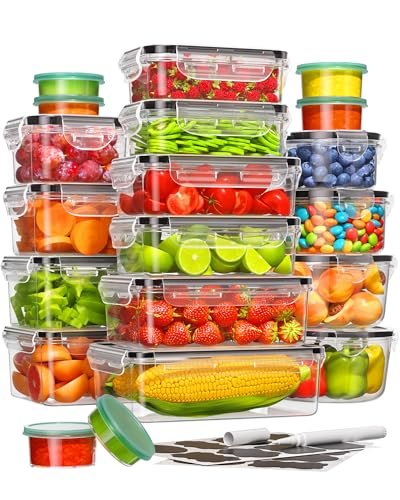
This 20-container + 20-lid set is perfect for families, small meal prep businesses, or anyone looking to organize their pantry on a budget. The BPA-free, phthalate-free plastic is certified for food contact, and the leakproof lids prevent spills for dry goods, leftovers, and portioned snacks. The set includes a label maker and pen for easy content identification, and the containers stack neatly to save cabinet space.
Pros:
Ideal for bulk meal prep and pantry organization
This 20-container + 20-lid set is perfect for families, small meal prep businesses, or anyone looking to organize their pantry on a budget. The BPA-free, phthalate-free plastic is certified for food contact, and the leakproof lids prevent spills for dry goods, leftovers, and portioned snacks. The set includes a label maker and pen for easy content identification, and the containers stack neatly to save cabinet space.
Pros:
- Leakproof seal prevents spills for dry and liquid goods
- Included labels simplify pantry organization
- Stackable design maximizes storage space
- Budget-friendly price point for 20 full-sized containers Cons:
- Not microwave safe (rated for temperatures up to 140°F)
- Plastic may develop light stains after repeated use with tomato-based sauces For budget-friendly bulk storage that simplifies meal prep and pantry organization, the Canfanni 40-piece set offers leakproof performance and included labeling for easy content identification – shop the 40-piece set on Amazon.
Best Glass Set for Meal Prep: M MCIRCO 24-Piece Glass Container Set with Snap-Lock Lids
 Oven-safe up to 450°F for reheating and light baking
Built for health-conscious meal preppers who reheat food daily, this 24-piece set uses borosilicate glass that is non-reactive, stain-resistant, and odor-proof. The upgraded snap-lock lids feature silicone gaskets for an airtight, leakproof seal, and the containers are safe for microwave, oven, freezer, and dishwasher use. The set comes in three sizes to accommodate different meal portions, and the clear glass makes it easy to identify contents at a glance.
Pros:
Oven-safe up to 450°F for reheating and light baking
Built for health-conscious meal preppers who reheat food daily, this 24-piece set uses borosilicate glass that is non-reactive, stain-resistant, and odor-proof. The upgraded snap-lock lids feature silicone gaskets for an airtight, leakproof seal, and the containers are safe for microwave, oven, freezer, and dishwasher use. The set comes in three sizes to accommodate different meal portions, and the clear glass makes it easy to identify contents at a glance.
Pros:
- Airtight snap-lock lids keep food fresh for up to 7 days
- Oven, microwave, freezer, and dishwasher safe for full versatility
- Non-reactive glass won’t absorb flavors or stains
- Replaceable lid gaskets available to extend lifespan Cons:
- Glass is 2–3x heavier than plastic, making it less ideal for daily transport
- Lids can crack if dropped, and gaskets may wear out after 1–2 years of frequent use For frequent meal preppers who prioritize safe reheating and zero chemical leaching, the M MCIRCO glass set is a durable, long-lasting investment – shop the M MCIRCO 24-piece set on Amazon.
Best for Soups and Liquid Storage: Freshware 50-Pack 25oz Deli Containers
 Perfect for soups, sauces, and portioned snacks
This 50-pack of 25oz containers is a favorite among meal prep enthusiasts, small food business owners, and crafters for its versatility and leakproof performance. The BPA-free, phthalate-free plastic is certified for food contact, and the screw-top lids create a tight seal that prevents leaks for soups, sauces, dressings, and wet ingredients. The uniform size fits standard meal prep fridge shelves and lunch bags, and the clear design makes it easy to identify contents.
Pros:
Perfect for soups, sauces, and portioned snacks
This 50-pack of 25oz containers is a favorite among meal prep enthusiasts, small food business owners, and crafters for its versatility and leakproof performance. The BPA-free, phthalate-free plastic is certified for food contact, and the screw-top lids create a tight seal that prevents leaks for soups, sauces, dressings, and wet ingredients. The uniform size fits standard meal prep fridge shelves and lunch bags, and the clear design makes it easy to identify contents.
Pros:
- Leakproof screw-top lids secure liquid and wet ingredients
- Stackable design saves cabinet and fridge space
- Microwave, dishwasher, and freezer safe for full use versatility
- Affordable bulk pricing for large households or small businesses Cons:
- 25oz capacity is too small for full adult meals or large leftovers
- Plastic may stain with repeated use of tomato-based or curry sauces For anyone who regularly stores soups, sauces, or wet ingredients, the Freshware 25oz deli set offers reliable leakproof performance at an unbeatable bulk price – shop the Freshware 50-pack on Amazon.
Best Eco-Friendly Sustainable Option: Glass Containers with Bamboo Airtight Lids (4-Pack)
 Zero-waste alternative to single-use plastic storage bags
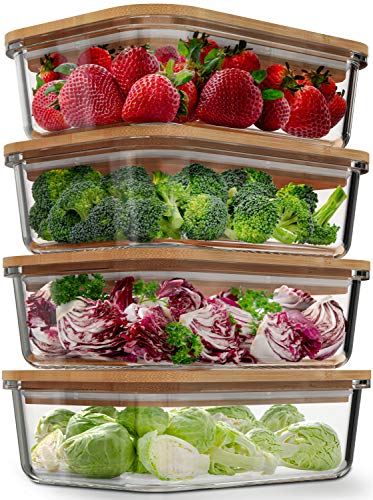
Crafted for zero-waste advocates, this 4-pack of 36oz borosilicate glass containers pairs with lids made from sustainably harvested, food-grade bamboo. The containers are 100% phthalate-free, BPA-free, and non-reactive, while the bamboo lids create an airtight seal to keep food fresh for up to 5 days. The set is microwave, freezer, and dishwasher safe (note: bamboo lids are not microwave or oven safe, and should be hand washed to prevent warping).
Pros:
Zero-waste alternative to single-use plastic storage bags
Crafted for zero-waste advocates, this 4-pack of 36oz borosilicate glass containers pairs with lids made from sustainably harvested, food-grade bamboo. The containers are 100% phthalate-free, BPA-free, and non-reactive, while the bamboo lids create an airtight seal to keep food fresh for up to 5 days. The set is microwave, freezer, and dishwasher safe (note: bamboo lids are not microwave or oven safe, and should be hand washed to prevent warping).
Pros:
- Renewable bamboo lids reduce reliance on plastic
- Airtight seal keeps produce, leftovers, and meal prep fresh longer
- Non-reactive glass won’t absorb odors or stains
- Elegant design works for both kitchen storage and table service Cons:
- Bamboo lids require hand washing and immediate drying to prevent mold
- Only 4 containers per set, so bulk purchases can get expensive For eco-conscious shoppers looking to eliminate single-use plastic from their kitchen, this glass and bamboo set is a stylish, sustainable choice – shop the 4-pack glass and bamboo set on Amazon.
Best Value Bulk Meal Prep Set: Dealusy 100-Pack 24oz Reusable Containers
 Budget-friendly option for meal prep services and large families
This massive 100-pack of 24oz containers is designed for high-volume use, making it ideal for meal prep services, large families, or anyone who wants to prep a full week of meals in one go. The BPA-free, phthalate-free plastic is certified for food contact, and the leakproof lids prevent spills for transport. The containers are microwave, freezer, and dishwasher safe, and the opaque black design hides stains and food discoloration over time.
Pros:
Budget-friendly option for meal prep services and large families
This massive 100-pack of 24oz containers is designed for high-volume use, making it ideal for meal prep services, large families, or anyone who wants to prep a full week of meals in one go. The BPA-free, phthalate-free plastic is certified for food contact, and the leakproof lids prevent spills for transport. The containers are microwave, freezer, and dishwasher safe, and the opaque black design hides stains and food discoloration over time.
Pros:
- Unbeatable bulk pricing for high-volume use
- Leakproof lids secure meals for transport to work or school
- Stackable design saves space in fridges and cabinets
- Opaque design hides stains and food remnants Cons:
- Not oven safe, and may warp after repeated high-heat microwave use
- Single-compartment design is not ideal for separating wet and dry ingredients For meal prep services, large families, or anyone on a tight budget, the Dealusy 100-pack delivers consistent performance at a fraction of the cost of smaller sets – shop the Dealusy 100-pack on Amazon.
Best Lightweight Option for On-the-Go: Bentgo 20-Piece BPA-Free 1-Compartment Containers
 Lightweight design perfect for daily lunch packing
Designed for students, office workers, and anyone who packs a daily lunch, this 20-piece set of lightweight plastic containers is BPA-free, phthalate-free, and leakproof. The single-compartment design fits standard lunch boxes and bagels, and the containers are microwave, freezer, and dishwasher safe for full convenience. The periwinkle color is easy to identify in a crowded fridge or office lunchroom.
Pros:
Lightweight design perfect for daily lunch packing
Designed for students, office workers, and anyone who packs a daily lunch, this 20-piece set of lightweight plastic containers is BPA-free, phthalate-free, and leakproof. The single-compartment design fits standard lunch boxes and bagels, and the containers are microwave, freezer, and dishwasher safe for full convenience. The periwinkle color is easy to identify in a crowded fridge or office lunchroom.
Pros:
- Ultra-lightweight design is easy to carry in bags or lunch boxes
- Leakproof seal prevents spills in backpacks or purses
- Affordable price point for 20 containers
- Dishwasher safe for easy cleanup Cons:
- Single-compartment design is not ideal for separating sides and mains
- Not oven safe, and plastic may warp after prolonged high-heat exposure For daily lunch packers who prioritize lightweight, leakproof containers, the Bentgo 20-piece set is a reliable, affordable choice – shop the Bentgo 20-piece set on Amazon.
Best Space-Saving Option: Amazing Containers 4-Pack Collapsible Silicone Set
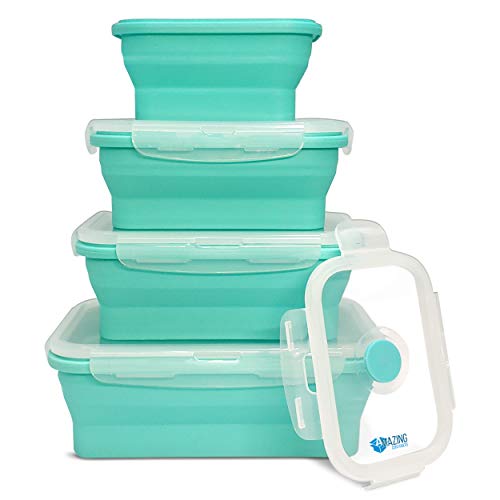 Collapses to 1/3 of its size for easy storage in small kitchens
Perfect for small apartment dwellers, campers, or frequent travelers, this 4-pack of 100% food-grade silicone containers collapses flat to 1/3 of their expanded size, making them easy to store in tight cabinets, lunch boxes, or suitcases. The containers are BPA-free, phthalate-free, microwave, freezer, and dishwasher safe, and the lids create a leakproof seal for transport.
Pros:
Collapses to 1/3 of its size for easy storage in small kitchens
Perfect for small apartment dwellers, campers, or frequent travelers, this 4-pack of 100% food-grade silicone containers collapses flat to 1/3 of their expanded size, making them easy to store in tight cabinets, lunch boxes, or suitcases. The containers are BPA-free, phthalate-free, microwave, freezer, and dishwasher safe, and the lids create a leakproof seal for transport.
Pros:
- Collapsible design saves up to 70% of storage space when not in use
- Lightweight and unbreakable, making them ideal for travel
- Microwave, freezer, and dishwasher safe for full versatility
- Stackable when expanded for organized storage Cons:
- Silicone can retain strong odors (like curry or garlic) if not cleaned promptly
- Not oven safe, and small capacity is not ideal for full family meals For anyone with limited kitchen storage or who travels frequently, the Amazing Containers collapsible set offers unmatched space-saving convenience without sacrificing safety – shop the Amazing Containers 4-pack on Amazon.
Best for Small Portions: Freshware 50-Pack 16oz Deli Containers
 Ideal for portioned snacks, condiments, and small meal prep servings
This 50-pack of 16oz containers is perfect for portion control, snack storage, condiment prep, or small meal prep servings. The BPA-free, phthalate-free plastic is certified for food contact, and the leakproof lids prevent spills for wet and dry ingredients. The containers are microwave, dishwasher, and freezer safe, and the uniform size fits standard fridge shelves and lunch box compartments.
Pros:
Ideal for portioned snacks, condiments, and small meal prep servings
This 50-pack of 16oz containers is perfect for portion control, snack storage, condiment prep, or small meal prep servings. The BPA-free, phthalate-free plastic is certified for food contact, and the leakproof lids prevent spills for wet and dry ingredients. The containers are microwave, dishwasher, and freezer safe, and the uniform size fits standard fridge shelves and lunch box compartments.
Pros:
- 16oz capacity is ideal for portioned snacks, dips, and small meals
- Leakproof lids prevent spills for wet ingredients
- Stackable design saves space in fridges and cabinets
- Affordable bulk pricing for small households or snack prep Cons:
- Too small for full adult meals or large leftovers
- Plastic may stain with repeated use of dark or acidic foods For portion control, snack prep, or small meal servings, the Freshware 16oz deli set is a versatile, budget-friendly option – shop the Freshware 50-pack on Amazon.
Best for Large Family Storage: GladWare XL Family Size Food Storage Containers (3-Pack)
 Holds full casseroles, batch-cooked meals, and large leftovers
This 3-pack of 104oz XL containers is designed for large families, batch cooking, or storing full holiday meals and casseroles. The BPA-free, phthalate-free plastic is certified for food contact, and the leakproof lids prevent spills for transport to potlucks or family gatherings. The containers are microwave and dishwasher safe for easy reheating and cleanup, and the square design fits neatly in fridge shelves and cabinets.
Pros:
Holds full casseroles, batch-cooked meals, and large leftovers
This 3-pack of 104oz XL containers is designed for large families, batch cooking, or storing full holiday meals and casseroles. The BPA-free, phthalate-free plastic is certified for food contact, and the leakproof lids prevent spills for transport to potlucks or family gatherings. The containers are microwave and dishwasher safe for easy reheating and cleanup, and the square design fits neatly in fridge shelves and cabinets.
Pros:
- Extra-large 104oz capacity holds full casseroles, batch meals, and large leftovers
- Leakproof lids prevent spills for transport to potlucks or family gatherings
- Microwave and dishwasher safe for easy reheating and cleanup
- Durable plastic construction resists cracking and warping Cons:
- Bulky design requires extra cabinet and fridge space
- Not oven safe, and plastic may stain with repeated use of dark sauces For large families or anyone who regularly batch cooks, the GladWare XL set is the most convenient option for storing oversized portions – shop the GladWare XL 3-pack on Amazon.
Best for Standard Portion Meals: Ezalia 15-Pack 32oz Meal Prep Containers
 Perfect for standard portioned meals and on-the-go lunches
This 15-pack of 32oz containers is ideal for standard meal prep portions, with enough space for a full entree, side, and snack. The BPA-free, phthalate-free plastic is certified for food contact, and the leakproof lids prevent spills for transport to work, school, or the gym. The containers are microwave, freezer, and dishwasher safe, and the stackable design saves space in cabinets and fridges.
Pros:
Perfect for standard portioned meals and on-the-go lunches
This 15-pack of 32oz containers is ideal for standard meal prep portions, with enough space for a full entree, side, and snack. The BPA-free, phthalate-free plastic is certified for food contact, and the leakproof lids prevent spills for transport to work, school, or the gym. The containers are microwave, freezer, and dishwasher safe, and the stackable design saves space in cabinets and fridges.
Pros:
- 32oz capacity fits standard full meal portions
- Leakproof seal prevents spills for on-the-go transport
- Microwave, freezer, and dishwasher safe for full versatility
- Stackable design maximizes storage space Cons:
- Only available in limited colors
- Plastic is not as stain-resistant as glass For standard meal prep portions and on-the-go lunches, the Ezalia 15-pack offers reliable performance at a mid-range price point – shop the Ezalia 15-pack on Amazon.
Caring for Your Phthalate Free Containers to Maximize Lifespan
Proper care will extend the lifespan of your containers by 2–3 years, reducing waste and saving you money long-term. For plastic containers, hand wash with mild dish soap and warm water to prevent warping from high dishwasher heat, and avoid abrasive scrubbers that can scratch the surface and create hiding spots for bacteria. For tough, stuck-on food residue, use heavy-duty scrubbers like our top-rated kitchen brushes to avoid scratching container surfaces. Glass and silicone containers are dishwasher safe, but avoid exposing silicone to temperatures above 400°F, which can degrade the material over time. Store containers with lids slightly ajar to prevent odor buildup, and replace worn lid gaskets annually to maintain leakproof performance. Pair phthalate-free containers with childproof cabinet locks to keep hazardous cleaning supplies out of little ones’ reach, and use cabinet organization latches to keep container stacks from tipping over in busy households. To remove lingering odors from silicone containers, use a multi-surface kitchen brush with mild dish soap and warm water, or soak the container in a 1:1 vinegar and water solution for 30 minutes before washing.
Frequently Asked Questions
What Are Phthalate-Free Food Storage Containers?
Phthalate-free food storage containers are manufactured without phthalates, a family of plasticizing chemicals added to flexible plastics like PVC to make them soft and pliable. Unlike conventional cheap plastic containers that may leach phthalates into food – especially when heated, stored with fatty or acidic foods, or scratched – phthalate-free options use alternative, tested safe materials to eliminate this exposure risk. Most certified phthalate-free containers also omit BPA, another common endocrine-disrupting chemical, and are clearly labeled as such on packaging or product listings. Look for third-party certification from bodies like the FDA or independent testing labs to confirm claims.
Are BPA-Free Containers Automatically Phthalate-Free?
No – this is a common consumer misconception. BPA-free labeling only indicates the container does not contain bisphenol A, but many manufacturers still use other plasticizers, including phthalates, to achieve flexibility in their plastic products. Always check for explicit "phthalate-free" labeling, and opt for containers with third-party safety certifications to confirm both BPA and phthalate are omitted. Glass, stainless steel, and 100% food-grade silicone containers are inherently phthalate-free, as they do not require plasticizers in their manufacturing process.
Are Glass Containers Better Than Plastic for Food Storage?
Glass containers offer distinct advantages for many users: they are non-reactive, so they won’t absorb odors, flavors, or stains from acidic or tomato-based foods, even after years of use. They are also microwave, oven (up to 450°F for most borosilicate glass), freezer, and dishwasher safe, making them extremely versatile. The main trade-offs are weight (glass containers are 2–3x heavier than plastic equivalents) and breakage risk if dropped. Plastic phthalate-free containers are lighter, more impact-resistant, and often more affordable for bulk purchases, making them ideal for families with young children or people who transport meals frequently.
How Do I Know if a Container Is Truly Leakproof?
A truly leakproof container will have a lid with a silicone gasket or locking tab that creates an airtight seal when closed. To test a container at home, fill it 3/4 full with water, close the lid tightly, and turn it upside down over a sink – if no water leaks out, it is leakproof. Note that leakproof performance can degrade over time as lid gaskets wear out, so replace lids annually if you notice frequent spills, or opt for containers with replaceable gaskets for longer lifespan.
Are Bamboo Lids Safe for Food Storage?
High-quality bamboo lids made from sustainably harvested, food-grade bamboo are safe for food storage, as bamboo is a natural, non-toxic, renewable material that does not leach harmful chemicals. Most bamboo lids for food storage are paired with a food-grade silicone seal to create an airtight closure. The main maintenance note is that bamboo is porous, so it should be hand washed and dried immediately after use to prevent warping, mold, or odor buildup – avoid putting bamboo lids in the dishwasher or microwave.
Do Collapsible Silicone Containers Last as Long as Rigid Plastic or Glass?
High-quality 100% food-grade silicone collapsible containers can last 3–5 years with proper care, comparable to mid-tier plastic containers. The main risk to longevity is exposure to extreme heat (above 400°F) or sharp objects that can tear the silicone. Lower-grade silicone containers may degrade faster, leach odors, or lose their shape after repeated use, so always opt for containers labeled 100% food-grade silicone to ensure long-term durability and safety.
Final Verdict: Choosing the Right Phthalate Free Containers for Your Kitchen
Investing in phthalate-free food storage containers is a small, low-cost change that reduces long-term chemical exposure, cuts down on single-use plastic waste, and simplifies your meal prep routine. For budget bulk storage, the Canfanni 40-piece set and Dealusy 100-pack deliver unbeatable value for families and meal prep services. For health-focused users who reheat food regularly, the M MCIRCO glass set offers non-reactive, oven-safe performance that plastic can’t match. For zero-waste advocates, the glass and bamboo lid set eliminates single-use plastic entirely, while the collapsible silicone set is a game-changer for small kitchens and travel. No matter your needs, prioritize third-party phthalate-free certification to ensure you’re getting a safe, high-performing product that will last for years. For more sustainable kitchen hacks and safety guides, check out our full blog library for tips on reducing plastic waste and creating a safe, organized kitchen space for your family.

I’m Abby Lu, a passionate home cook who loves simplifying everyday meals. At PlugChef.com, I share product reviews and cooking guides to help you find the best tools for your kitchen.
Similar Posts