Kitchen Electrical Outlets Under Cabinets: Enhance Efficiency with Smart Lighting Solutions
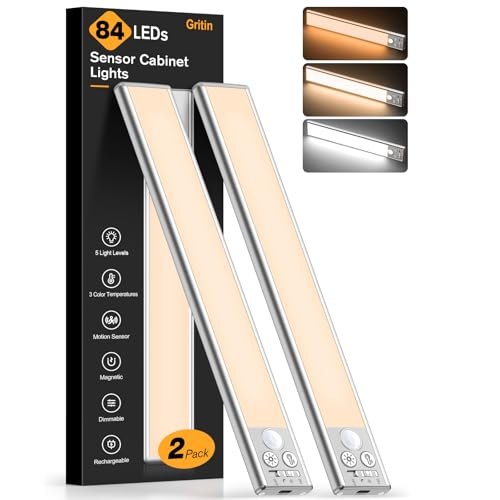
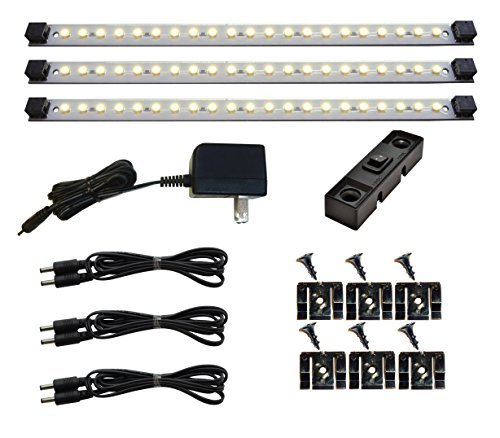
Under-cabinet electrical outlets have evolved from a simple power access hack into a core design element for modern kitchens. Whether you're charging a phone while meal-prepping, running a stand mixer without hunting for a distant wall receptacle, or syncing under-cabinet task lighting with your smart home ecosystem, the space beneath your cabinets holds outsized potential. Pair that with today's dimmable LED fixtures—complete with integrated USB ports, Type-C fast charging, and voice-controlled dimming—and you have a workspace upgrade that pays dividends every time you open the fridge.
This guide breaks down how to choose, plan, and install under-cabinet outlets and smart lighting that actually work in practice: not just the marketing claims, but real-world reliability, code compliance, and aesthetic integration with your cabinetry. For more on this, see our guide on kitchen storage cabinets for small spaces.
Why Under-Cabinet Outlets Deserve More Attention Than They Get
Walk into most kitchens and you'll find a familiar problem: the wall outlets are on the opposite side of the counter from where your hands naturally reach. You either drag an extension cord across the backsplash or lean your entire body sideways to plug in something simple. Under-cabinet outlets solve this ergonomics failure completely.
The practical benefits extend beyond convenience:
- Counter real estate freed up. No more power strips, tangled extension cords, or outlet-adjacent appliance staging zones.
- Reduced cord fatigue. Small appliances like a toaster, coffee maker, or food processor don't need six feet of cord to reach their power source.
- Safety improvement. Shorter, straighter cords reduce tripping hazards and eliminate the risk of water contacting a wall outlet by the sink.
- Consistent lighting without ceiling changes. Integrated under-cabinet lights eliminate dark shadows cast by cabinets onto the countertop—a problem that plagues kitchens relying only on overhead ceiling lights.
In practice, one of the most noticeable improvements after installation is the end of "shadow cooking." When you stand at the counter and cast a shadow directly onto your cutting board, under-cabinet lights fix that problem by placing illumination within inches of your work surface. This isn't just about brightness—it's about color accuracy for tasks like reading recipes or judging dough hydration. For more on this, see our guide on best blenders for smoothies under 100.
Planning Your Under-Cabinet Outlet and Lighting Layout
Before buying a single fixture, plan the layout using a simple walkthrough approach. Load up your phone's flashlight, turn off every light in the kitchen, and walk through the tasks you actually do there: prep work, cleaning, coffee brewing, phone charging, reading recipes. Note every spot where a dark corner or a power-starved workstation frustrates you. Those are your installation targets.
Key planning dimensions:
| Planning Factor | Why It Matters | Typical Spec |
|---|---|---|
| Cabinet depth | Must clear the cabinet underside with room for fixture height | 2–3 inches minimum clearance |
| Cabinet width per span | Determines how many fixtures or track segments you need | Measure each span individually |
| Existing circuit capacity | Adding outlets draws from your kitchen circuit | Consult a licensed electrician |
| GFCI requirement | Wet-adjacent outlets need ground-fault protection | Required within 6 ft of sinks per NEC |
| Cord length & routing | Power strip or hardwired options have different routing needs | Use shortest practical path |
A common mistake is assuming that every cabinet span is the same width. They rarely are. Measure each one separately before ordering fixtures. Most under-cabinet LED strips and bars come in standard lengths—12, 18, and 24 inches—and you'll want to avoid a fixture that's shorter than the span (creating a dark gap) or longer than the span (creating an awkward overhang). For more on this, see our guide on kitchen hood cleaning certification online.
Electrical Code Requirements You Need to Know
Installing outlets under cabinets isn't just a matter of plugging in a power strip and walking away. The National Electrical Code (NEC), maintained and updated by the National Fire Protection Association, governs every aspect of residential wiring. Ignoring these rules can create fire hazards and void your home insurance.
Critical code compliance points for under-cabinet installations:
- GFCI protection. Any outlet within 6 feet of a sink, dishwasher, or other moisture source requires GFCI (Ground-Fault Circuit Interrupter) protection. This isn't optional in most jurisdictions—your local electrical inspector will enforce it.
- Circuit capacity. Each 15-amp circuit can typically handle only so many outlets and lighting loads combined. Adding multiple under-cabinet outlets on an already loaded kitchen circuit can trip breakers. A licensed electrician should verify your load calculation before you wire anything.
- Proper junction boxes. The wiring that connects fixtures must terminate in an approved junction box—not loose inside the cabinet void. Code-approved boxes are required even in hidden spaces.
- Grounding. Every outlet and fixture must be properly grounded. Ungrounded installations are a leading cause of electrical shock in residential settings.
- Fixture clearance. Fixtures and outlets should maintain adequate clearance from cabinet surfaces and other combustible materials. Most modern LED fixtures meet UL listing standards for temperature limits, but verify yours.
If you're hiring a professional, ask them directly about GFCI placement and circuit load before they pull wire. A reputable electrician will walk you through this; one who pushes to just "run a quick line" should make you reconsider who you're hiring. For more on this, see our guide on kitchen brushes for cleaning.
Top Under-Cabinet Outlets and Smart Lighting Products
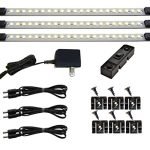
Hikaproligt 18-Inch Plug-In Under Cabinet Lighting

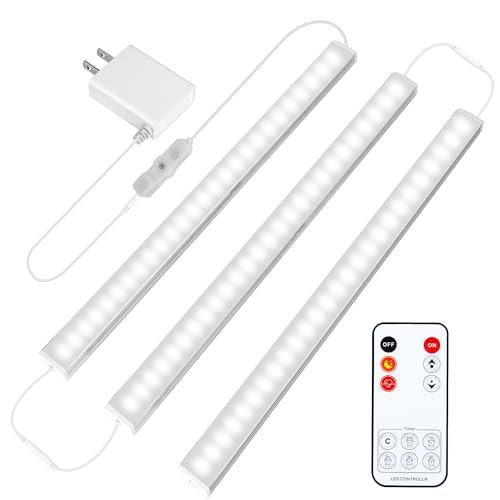
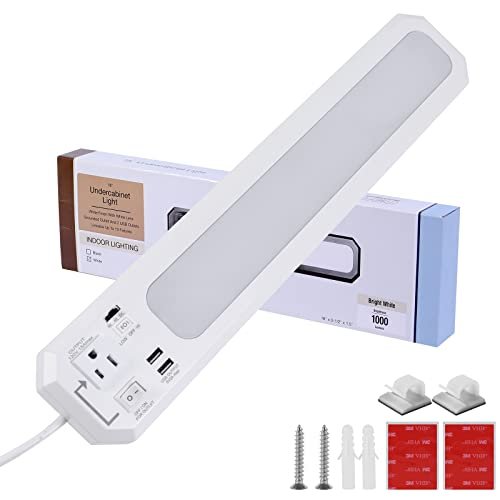
The Hikaproligt 18-inch bar combines dimmable lighting with a built-in outlet and dual USB ports in a single unit.
The Hikaproligt 18-inch Plug-In Under Cabinet Lighting is designed for someone who wants a single fixture that handles lighting, outlet access, and device charging without running separate products. It operates at 120V and offers three color temperature settings—3000K (warm white), 4000K (neutral white), and 5000K (cool white)—each of which can be dimmed to your preferred brightness.
The inclusion of two USB ports is a practical touch. In practice, this eliminates the need for a phone charger adapter on your countertop, and the short 5-foot power cord means you're not routing a long cord through cabinet space or down the wall. The plug-in design means you're not committed to hardwiring, so if you move or remodel, the fixture comes with you. For more on this, see our guide on commercial kitchen hood cleaner.
Where this shines: The color temperature flexibility is a genuine differentiator. Using 3000K for ambient evening lighting and switching to 5000K for detailed prep work is something you can't do with a single-temperature fixture without buying new bulbs or strips.
Trade-off to consider: The plug-in design means the power cord is still visible unless you hide it inside the cabinet. If a completely clean look is your priority, a hardwired option is worth the extra effort.
Get the Hikaproligt 18-Inch Under Cabinet Lighting
Task Lighting Under-Cabinet Angled Power Strip Track

This 48-inch angled power strip mounts directly under cabinets, offering five outlets in a bronze finish.
The Task Lighting Under-Cabinet Angled Power Strip Track is built for kitchens where power demand exceeds what a single outlet can handle. Its 48-inch length covers a significant portion of cabinetry, and the five angled outlets are positioned to minimize cord overlap and allow multiple devices to plug in simultaneously without crowding.
The angled receptacle design isn't cosmetic—it's functional. Standard front-facing outlets force cords to exit perpendicular to the cabinet, which means they wrap around and can press against the backsplash. Angled outlets route the cord at a downward angle, reducing strain on both the plug and the wire.
At 1.5 inches tall and 1.69 inches wide, this track sits low enough under most cabinets without looking intrusive. The bronze finish is available for kitchens that lean into a warmer, artisanal aesthetic, though it won't suit every design palette.
Where this shines: If your kitchen involves multiple simultaneous small appliances—a toaster, kettle, and food processor—the five-outlet layout handles that load in one location.
Trade-off to consider: The bronze finish may not blend with white or modern stainless-steel kitchens. If your cabinetry is minimalist or high-gloss, look for a silver or white alternative instead.
Get the Task Lighting Angled Power Strip Track
14-Inch Plug-In Under Cabinet Lighting

This compact 14-inch fixture offers hardwired installation with dimmable lighting and Type-C charging.
The 14-Inch Plug-In Under Cabinet Lighting is designed for narrower cabinet spans where an 18- or 24-inch fixture would overhang. It delivers two color temperature options—3000K and 6000K—with dimmable brightness control, plus integrated outlets and both USB and Type-C ports.
The Type-C port inclusion is a meaningful upgrade over USB-A-only fixtures. USB-C supports faster charging protocols that benefit modern smartphones and laptops, making this fixture more future-proof than many competitors that rely exclusively on the older USB-A standard.
The 5-foot hardwired connection route keeps the cord short and contained. The hardwired option is preferable for permanent installations where a plug-and-play solution might look unfinished or be inconvenient to relocate.
Where this shines: The dual-temperature, dimmable setup works for kitchens used both for functional cooking tasks and ambient evening lighting. The Type-C port gives you fast charging without an adapter.
Trade-off to consider: Hardwired installation typically requires turning off the circuit and terminating wires into a junction box. If you're not comfortable with that process, the hardwired route calls for a professional.
Get the 14-Inch Plug-In Under Cabinet Lighting
ASD LED Under Cabinet Lighting

This 24-inch ETL-certified fixture combines three color temperatures with a built-in power receptacle in a white finish.
The ASD LED Under Cabinet Lighting is a hardwired, 24-inch fixture designed for kitchens that want a permanent, invisible installation. At 12 watts and 822 lumens, it draws modest power while delivering enough output for task lighting on a standard counter depth. The three color temperature options—3000K, 4000K, and 5000K—let you adjust the atmosphere without changing bulbs.
ETL certification means this fixture has been independently tested and listed for safety compliance, a detail that matters more than it might seem on the surface. ETL-listed products meet the same safety standards as UL-listed products for residential applications, and they're typically the most recognizable listing in the consumer market for lighting fixtures.
The integrated power outlet is positioned within the fixture body, meaning you don't need a separate receptacle mounted elsewhere under the cabinet. This consolidates power and lighting into one unit, reducing visual clutter.
Where this shines: The white finish blends cleanly with most standard kitchen cabinetry, and the hardwired design eliminates the visible power cord entirely.
Trade-off to consider: The absence of a built-in on/off switch means you'll need a separate wall switch or smart controller to toggle the light. If you want independent control of the outlet versus the light, factor that into your switch plan before installation.
Get the ASD LED Under Cabinet Lighting
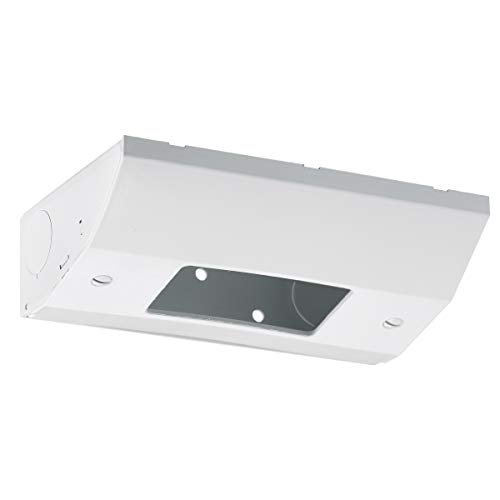
Under Cabinet White Electrical Box (10-Pack)

A pack of ten code-compliant white junction boxes, ideal for professional or large-scale under-cabinet wiring projects.
The Under Cabinet White Electrical Box 10-Pack from Hubbell is the unglamorous but essential component that turns an under-cabinet lighting project into a code-compliant installation. These are the junction boxes where wiring terminations occur inside the cabinet void, keeping connections organized, accessible, and compliant with electrical code.
Hubbell is a long-standing manufacturer in electrical products, and that reputation carries weight. These boxes aren't just plastic enclosures—they're rated for specific electrical loads and environmental conditions, and using unlisted boxes in a residential installation can fail an inspection.
The 10-pack format is particularly useful for kitchens with multiple cabinet spans. Installing outlets under each span means you need a junction box for each set of wire terminations, and buying individual boxes at the hardware store adds cost and trip frequency.
Where this shines: For electricians or DIYers tackling a whole-cabinet installation, having the correct boxes on hand prevents the common problem of running out mid-install and leaving incomplete terminations.
Trade-off to consider: White boxes are the most common option, but if your cabinetry is a dark stain or paint, the white interior of the box may not matter because the box is concealed. Don't purchase based on exterior aesthetics—concealed boxes should be rated for code compliance first.
Get the Under Cabinet White Electrical Box 10-Pack
Legrand Adorne Under-Cabinet Control Box with Paddle Dimmer and 15A GFCI

This modular control box combines a paddle dimmer and 15A GFCI outlet in a single under-cabinet unit.
The Legrand Adorne Under-Cabinet Control Box is a purpose-built solution for kitchens that need both dimmable lighting control and GFCI-protected power in the same compact space. The paddle dimmer provides a smooth, continuous dimming range for under-cabinet lights, while the integrated 15-amp GFCI receptacle handles small appliance power with ground-fault protection built in.
Legrand is a globally recognized manufacturer in electrical solutions, and the Adorne line is specifically designed for architectural integration—meaning the control box is sized and styled to sit flush or semi-flush under a cabinet rather than protruding awkwardly.
The modular design means you can add or remove components (dimmer module, GFCI module) as your kitchen setup changes, rather than replacing the entire unit. This is a meaningful longevity benefit compared to monolithic, non-modular control boxes.
Where this shines: If you're replacing an aging cabinet-underside outlet or adding outlets where none existed, this unit handles lighting control and power delivery in one code-compliant package.
Trade-off to consider: The price is higher than a basic junction box or standard outlet, and the modular system is best suited to people who plan to expand their kitchen's under-cabinet ecosystem. For a single, simple outlet, a standard GFCI receptacle is less expensive.
Get the Legrand Adorne Under-Cabinet Control Box
Satco 63/513 CounterQUICK Under Cabinet LED Junction Box

A compact white plastic junction box rated for under-cabinet LED fixture wiring, measuring approximately 1 x 1.75 x 4 inches.
The Satco 63/513 CounterQUICK Under Cabinet LED Junction Box is purpose-built for terminating the wiring of low-voltage and line-voltage LED under-cabinet fixtures. At approximately 1.0 inch in height, 1.75 inches in width, and 4.0 inches in length, it fits in the tight vertical space most under-cabinet installations allow.
Satco is a lighting-focused manufacturer, and this box is designed specifically for LED fixture wiring rather than general-purpose residential junction boxes. The dimensions are optimized for the wire gauges and connector types common in low-profile lighting installations.
The white plastic construction is durable for typical residential use, and the box can be mounted directly to the cabinet underside without requiring complex framing modifications.
Where this shines: If you're connecting multiple LED strips or fixtures under cabinets, this box organizes the terminations cleanly and keeps them code-accessible without consuming more vertical space than necessary.
Trade-off to consider: The dimensions are relatively small, which limits the number of wire connections you can terminate in a single box. If you're running multiple circuits or fixtures that require a larger box, verify the cubic-inch capacity of your total wire load before purchasing.
Get the Satco 63/513 CounterQUICK Junction Box
Adorne Legrand Under-Cabinet 12-Inch Modular Track (Titanium)

This 12-inch titanium-finish modular track mounts under cabinets and accepts additional outlet or light modules.
The Adorne Legrand Under-Cabinet 12-Inch Modular Track is designed for kitchens that want a coordinated under-cabinet power and lighting ecosystem. The titanium finish pairs well with stainless-steel hardware, matte metallic cabinetry, and contemporary kitchen aesthetics that lean away from warm wood tones.
The modular system means you can start with a 12-inch track and expand it with additional modules—additional outlet sections, dedicated lighting modules, or USB modules—depending on how your kitchen's needs evolve. This is a meaningful advantage over fixed, single-function fixtures that can't be expanded without replacing the entire unit.
The direct wire connector design simplifies the installation process by eliminating the need for separate wire terminations at each module. Power is fed through the track itself, and each module draws from that central line.
Where this shines: If you're building or renovating a kitchen from scratch and want a system that can be configured at each stage, this track is a strong foundation. It scales with your needs rather than locking you into a specific setup.
Trade-off to consider: Modular systems are generally more expensive upfront than single fixtures, and the installation complexity is higher because each connection point must be verified. The investment pays off over time if you anticipate adding more under-cabinet power points, but for a kitchen with stable needs, a simpler fixture may be more cost-effective.
Get the Adorne Legrand 12-Inch Modular Track in Titanium
Adorne Legrand Under-Cabinet 12-Inch Modular Track (Second Configuration)

A second configuration of the Adorne Legrand modular track, showing the direct wire connector and compatible modules.
This variant of the Adorne Legrand Under-Cabinet Modular Track showcases the direct wire connector system in action. The connector system is the defining feature of Legrand's modular ecosystem: rather than terminations being required at each individual module, power runs continuously through the track and each module simply draws from that shared line.
The titanium finish is consistent across this track family, ensuring visual continuity if you're extending a track system across multiple cabinet spans. The 12-inch module size fits standard base cabinet widths in most kitchen configurations.
Legrand's modular approach also means that if you need to replace a single module—say, a damaged outlet receptacle—you don't replace the entire track. You swap the module, and the track remains intact.
Where this shines: Kitchens with mixed appliance needs benefit from the ability to mix different module types along a single track—outlet modules for small appliances, light modules for task lighting, and USB modules for device charging.
Trade-off to consider: The modular system requires planning to avoid overloading the track. Each module draws power from the shared line, and exceeding the track's rated capacity is a safety concern. Confirm the total amperage draw of all your modules before finalizing your layout.
Get the Adorne Legrand 12-Inch Modular Track
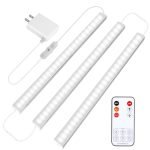
Feit Electric Under Cabinet Lighting 20-Inch LED Light Fixture
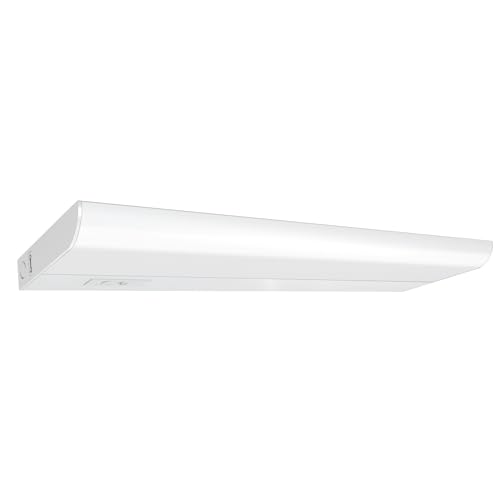
This smart under-cabinet light fixture outputs 1500 lumens and works with Alexa and Google Home for voice control.
The Feit Electric Under Cabinet Lighting 20-Inch LED Light Fixture is engineered for tech-forward kitchens that want voice-controlled under-cabinet illumination integrated with their existing smart home system. It connects directly to Alexa and Google Home, allowing you to adjust brightness, change color temperature, and toggle lights by voice—no smart plug or external hub required.
At 1500 lumens output from a 20-watt fixture, this is among the brightest single under-cabinet units available. The 90 Color Rendering Index (CRI) rating means colors appear accurate under this light—important for reading recipe ingredients, judging food doneness, or doing anything visual on the counter.
The linkable feature allows up to 8 fixtures to be grouped together, meaning you can control all under-cabinet lights in a long kitchen as a single zone or split them into independent zones if your space calls for it. The frost lens diffuses the LED light evenly, eliminating the hotspot effect common with unfiltered LED sources.
Where this shines: Kitchens with an existing Alexa or Google Home setup can control this fixture without adding a new platform. The 90 CRI is particularly useful if you cook often or do color-sensitive work at the counter.
Trade-off to consider: The linkable feature requires an initial setup that ties all fixtures to the same smart home account. If you have a mixed smart home ecosystem with different platforms for different devices, check compatibility with your specific hub before purchasing.
Get the Feit Electric Under Cabinet Lighting 20-Inch Fixture
Smart Lighting Integration: Hub Options and Voice Control
Smart under-cabinet lighting goes beyond toggling a light on and off from your phone. The real value is in the integration layer—how your lighting interacts with your kitchen workflow, your other smart devices, and your daily routines.
Common smart lighting protocols and their implications:
- Wi-Fi direct connection. Fixtures like the Feit Electric model above connect directly to your home Wi-Fi network and talk to Alexa or Google Home without a separate hub. This is the simplest setup—no extra hardware required—but it depends on your Wi-Fi signal reaching the cabinet underside reliably.
- Zigbee. Some under-cabinet LED strips and outlets use Zigbee, a low-power mesh network protocol. Zigbee devices work best with a hub like the Amazon Echo Dot with Hub, Samsung SmartThings, or a dedicated Zigbee coordinator. The mesh network means each additional Zigbee device strengthens the network for all others.
- Matter. Matter is the newer, cross-platform smart home protocol designed to unify device ecosystems. As of 2026, Matter support is expanding across under-cabinet lighting products. If you plan to use multiple smart home platforms or don't want to lock into a single vendor ecosystem, prioritize Matter-compatible fixtures.
A practical routing tip: Under-cabinet cabinets often sit above areas where Wi-Fi signal is weak—the cabinet itself blocks the signal, and kitchens tend to have dense appliance counts that create interference. If you're using Wi-Fi-based fixtures and experiencing connection drops, test signal strength in the cabinet space before purchasing. A USB Wi-Fi extender or a dedicated smart home hub placed in an accessible location can resolve this.
For kitchens where lighting control matters—morning routines that adjust brightness over time, or a "go to bed" scene that dims under-cabinet lights alongside other room lighting—voice assistants with routine automation features provide real value. A single voice command like "Alexa, start my morning routine" can dim under-cabinet lights gradually while your coffee brews.
Installation Tips: DIY vs. Professional
Under-cabinet outlets and lighting range from genuinely accessible for DIYers to requiring a licensed electrician. Knowing where to draw the line is one of the most important decisions you'll make before installation.
Installations That Most DIYers Can Handle
- Plug-in under-cabinet lights. If the fixture has a power cord and plug that connects to an existing wall outlet or a power strip, installation is limited to mounting the fixture under the cabinet and routing the cord. No electrical wiring is required.
- Battery-powered or low-voltage under-cabinet strips. These operate on standard low-voltage power or rechargeable batteries and don't require any hardwiring into your home's electrical system.
- Smart plug retrofits. Existing under-cabinet lighting can be made smart by placing a smart plug between the fixture and the wall outlet—no wiring changes needed.
Installations That Require a Professional
- Hardwired under-cabinet outlets. Any installation that requires pulling wire into the home's electrical system—connecting to a circuit, running wire through wall cavities, or terminating in junction boxes—should be handled by a licensed electrician.
- Adding outlets where none existed before. This involves routing new wire from the nearest circuit panel or junction point, which is a regulated and code-inspected process.
- GFCI installations and conversions. Converting an existing outlet to GFCI protection requires understanding the GFCI's relationship to downstream outlets and ensuring the circuit is properly designed for the protection type required.
A common DIY mistake is assuming that because an under-cabinet outlet "just plugs in," no electrical consideration is needed. In reality, the power source that outlet plugs into matters—using a single wall outlet to power a full under-cabinet ecosystem of lights, outlets, and chargers can overload that circuit.
If you're in the gray zone—comfortable with basic electrical work but unsure about circuit loading—pay a licensed electrician for a consultation visit (typically $75–$150 in most markets as of 2026) rather than attempting a full installation yourself. They can assess your circuit capacity, confirm code compliance, and tell you exactly which installations are safe for you to complete versus which need to be done by a pro.
Safety Considerations: GFCI, Heat, and Moisture
Kitchen environments are uniquely demanding for electrical installations. They combine heat from cooking appliances, moisture from dishwashing and food preparation, and frequent human traffic that increases the odds of accidental water contact with power sources.
GFCI placement rules (per NEC):
- Within 6 feet of a sink. Any outlet—including under-cabinet outlets—within 6 feet of a kitchen sink requires GFCI protection. This is one of the most common inspection failures on residential kitchen circuits.
- Dishwasher adjacent outlets. Outlets within the dishwasher's reach also require GFCI protection, even if the dishwasher itself is properly installed.
- Upstream protection. A properly installed GFCI can protect downstream outlets on the same circuit, but each protected zone must be verified with the GFCI's built-in test button during installation.
Heat considerations:
- LED fixtures generate less heat than incandescent or halogen alternatives, but they still emit enough heat that mounting them directly against wood cabinetry without clearance can degrade the wood's finish over time.
- Most under-cabinet LED fixtures are rated for specific ambient temperatures. Verify your fixture's maximum operating ambient temperature against the typical temperature of your cabinet interior, particularly if it's near a range hood, vent fan, or other heat source.
- Do not use aluminum or other heat-conductive mounting brackets in close proximity to high-wattage fixtures without confirming the fixture's compatibility with that mounting method.
Moisture considerations:
- Even under-cabinet outlets far from the sink can encounter moisture from window condensation, steam from cooking, or accidental water spills. Wipe down outlets periodically and keep the area around them clear of standing water.
- Some fixtures are rated for damp locations, others only for dry locations. If your cabinet is near a window that fogs in cold weather, or if you do a lot of stovetop cooking with minimal venting, specify damp-rated fixtures for that zone.
The U.S. Department of Energy maintains resources on residential electrical safety and energy-efficient lighting that provide additional context for these considerations: energy.gov/electricity.
Frequently Asked Questions
What are under-cabinet electrical outlets and how do they differ from standard outlets?
Under-cabinet electrical outlets are receptacles mounted beneath kitchen cabinets, designed to deliver power to appliances and lighting within the immediate countertop workspace. They differ from standard wall-mounted outlets in their placement and typically their form factor—many under-cabinet outlets are integrated into modular track systems, built-in lighting fixtures, or compact junction boxes rather than being standalone receptacles. They're positioned within arm's reach of your working surface, eliminating the need to stretch across the counter to reach a wall outlet.
How do I choose the right under-cabinet lighting for my kitchen?
Start with the task at hand. Kitchens used heavily for food preparation benefit from higher lumen output (1000+ lumens per 20-inch fixture) and higher CRI ratings (80+) for accurate color rendering. Kitchens used primarily for dining or socializing can prioritize ambient warmth—lower color temperature (2700–3000K) and dimmable control. Measure each cabinet span before purchasing, confirm your circuit has capacity, and consider whether you want smart controls or a simple wall switch. For kitchens with frequent small-appliance use, look for fixtures that integrate power outlets directly.
Are under-cabinet outlets safe for kitchen use?
Yes, when installed in compliance with local electrical codes. The two most important safety requirements are GFCI protection (mandatory within 6 feet of moisture sources like sinks) and proper junction box usage (all wire terminations must occur in a code-approved box, not loose in the cabinet void). Using UL- or ETL-listed fixtures ensures they've been independently tested for residential electrical safety. When in doubt about circuit capacity or installation method, consult a licensed electrician before proceeding.
Can I install under-cabinet outlets and lighting myself?
Plug-in under-cabinet lights and low-voltage fixtures are generally straightforward for DIYers with basic drilling and mounting skills—no electrical wiring is required. Hardwired installations, GFCI conversions, and new circuit runs require a licensed electrician. A practical middle ground is to hire an electrician for a one-time consultation to confirm your circuit loading and code compliance, then handle the physical mounting of plug-in or low-voltage fixtures yourself.
What features should I prioritize in under-cabinet outlets?
For most kitchens, the priority features are GFCI protection (mandatory near sinks), adequate ampacity for your appliance load (15A minimum, 20A for higher-demand kitchens), USB or USB-C ports for device charging (if you use a phone or tablet at the counter), dimmable lighting with adjustable color temperature (for flexibility between task lighting and ambient lighting), and smart home compatibility if you use voice assistants or automation routines. Modular systems offer the most long-term flexibility but require more upfront planning and investment.
What's the difference between hardwired and plug-in under-cabinet fixtures?
Hardwired fixtures connect directly into your home's electrical system through dedicated wiring and junction boxes, eliminating visible power cords and providing a permanent, code-compliant installation. Plug-in fixtures connect to existing wall outlets or power strips via their own cords, which may require routing through the cabinet or along the backsplash. Hardwired installations are more expensive and typically require a professional, but they look cleaner and are more reliable for permanent kitchens. Plug-in installations are faster and cheaper to install but leave cords visible unless you invest in cord management.
How much do under-cabinet electrical outlets and lighting cost?
Basic plug-in under-cabinet LED strips range from approximately $30 to $80 per unit. Hardwired under-cabinet fixtures with integrated outlets typically range from $60 to $150 per unit before installation labor. Modular track systems from manufacturers like Legrand can cost $100 to $200+ per 12-inch module, with additional modules for outlets, lights, and USB ports adding to that total. Professional installation labor for hardwired outlets typically runs $150 to $300 per circuit, depending on your local electrician's rates and the complexity of the installation. Always budget for both fixtures and labor when planning a whole-cabinet project.
Do under-cabinet outlets work with smart home systems?
Many modern under-cabinet fixtures and outlets are designed with smart home compatibility in mind. Fixtures like the Feit Electric 20-inch model connect directly to Alexa and Google Home over Wi-Fi, allowing voice control and routine automation without a separate hub. Other systems use Zigbee or Matter protocols, which integrate with platforms like Amazon Echo Hub, Samsung SmartThings, or Apple HomeKit. If you don't want to invest in smart fixtures, you can retrofit existing plug-in under-cabinet lighting with smart plugs—simple, inexpensive, and effective for basic on/off and scheduling control.
Conclusion
Under-cabinet electrical outlets and smart lighting are among the most practical upgrades a kitchen can receive. They solve a persistent ergonomics problem—the gap between where your hands work and where your power reaches—while simultaneously improving visibility, reducing counter clutter, and (in the case of smart fixtures) integrating seamlessly into your daily automation routines.
The best approach starts with measurement and planning: map your cabinet spans, assess your circuit capacity, and identify which tasks in your kitchen need the most power and light. From there, choose between plug-in fixtures for accessible, lower-cost installation or hardwired solutions for a cleaner, more permanent result. Either way, prioritize GFCI compliance near moisture sources, verify your fixture is UL- or ETL-listed, and avoid overloading your circuit.
If you're ready to move forward, start by measuring your longest countertop span and ordering a single plug-in under-cabinet light with an integrated outlet. That one unit will tell you whether the system improves your kitchen's workflow enough to justify a larger installation across all cabinet spans. A small test installation is the lowest-risk path to the highest-impact kitchen upgrade available.

Hi, I’m Daniel Brooks—a food lover and kitchen gear enthusiast. I enjoy testing cookware, utensils, and gadgets to see what really works in everyday cooking. At PlugChef.com, I share honest reviews, comparisons, and simple guides to help you choose the best tools for a safer, smarter, and more enjoyable kitchen.
Similar Posts