Every year, thousands of workers across industrial, laboratory, construction, and even home workshop settings suffer preventable eye injuries from flying debris, chemical splashes, dust, and ultraviolet radiation. Unlike standard safety glasses, ANSI Z87.1 safety goggles form a full seal around the eye socket, blocking hazards from entering from the sides, top, or bottom of the frame. Certified to the rigorous consensus standard developed by the American National Standards Institute (ANSI) and administered by the International Safety Equipment Association (ISEA), these goggles deliver tested, reliable protection for even the most hazardous work environments. The Occupational Safety and Health Administration (OSHA) requires ANSI Z87.1-compliant eyewear for most high-risk job tasks, making this certification the gold standard for occupational eye safety OSHA eye and face protection guidelines. Whether you work with power tools, handle corrosive chemicals, or operate heavy machinery, a certified pair of ANSI Z87.1 goggles eliminates preventable exposure risks without sacrificing comfort or clarity.
What Is ANSI Z87.1 Certification, and Why Does It Matter?
The ANSI Z87.1 standard is a voluntary but widely adopted set of testing requirements for occupational eye and face protection, first published in 1968 and most recently updated in 2020 to address modern workplace hazards like viral droplets and high-velocity chemical splashes. To earn certification, goggles must pass a series of third-party tests: a 1/4-inch steel ball dropped from 50 inches to test high-mass impact resistance, a 0.37-caliber projectile fired at 120 feet per second to test high-velocity impact resistance, optical clarity tests to ensure no distortion that could impair task performance, splash resistance tests to confirm the gasket prevents liquid entry, and UV protection tests to verify filtering of harmful ultraviolet rays.
Look for the Z87+ mark printed directly on the goggle lens or frame to confirm the product has passed all required tests; unmarked or "Z87" labeled products have only met basic optical standards, not impact or splash requirements. The current 2020 revision also added mandatory requirements for anti-fog performance, a critical feature for workers in humid or high-exertion environments ANSI Z87.1 standard details. In practice, a common mistake is assuming any goggle labeled "safety" meets these standards, but only Z87+ marked products have been independently verified for high-risk use.
Key Features to Evaluate Before Buying
Not all ANSI Z87.1 goggles are built for every use case, so evaluating core features against your specific work environment will ensure you get maximum protection and comfort. Below are the most important factors to prioritize when shopping:
Impact and Splash Resistance
All certified goggles meet high-mass and high-velocity impact standards, but if you work with sharp metal shavings, falling objects, or pressurized liquids, look for models with a reinforced rigid outer frame paired with a soft, chemical-resistant silicone gasket. Foam gaskets are more affordable but may degrade faster when exposed to harsh solvents or acids. A tight, conforming gasket eliminates gaps that let dust, splashes, or fine debris reach the eye area, a level of coverage safety glasses with open frames can’t provide.
Anti-Fog Performance
Fogged lenses are a top cause of workplace eye injuries, as workers often remove goggles to wipe their faces, exposing their eyes to hazards. Look for goggles with hydrophilic anti-fog coatings (which resist fogging even when exposed to sweat or humidity) or dual-layer lenses that trap air to prevent condensation. Note that most anti-fog coatings wear off after 6 to 12 months of regular use, so plan to replace your goggles when clarity starts to decrease.
UV Protection
Most ANSI Z87.1 goggles include UV400 or UV380 filtering, which blocks 99-100% of harmful UVA and UVB rays. This is critical for outdoor work, welding adjacent tasks, or work under bright industrial lighting. Check the lens marking for UV protection details, as some basic models only meet impact standards without UV filtering.
Prescription Compatibility
If you wear prescription glasses, look for explicitly labeled OTG (over-the-glasses) models, which are tested to fit over standard frames without breaking the protective seal. Avoid generic "fits over glasses" marketing claims, as many standard goggles are too small to accommodate prescription frames without pinching or leaving gaps. Prioritize models with at least 1.5 inches of internal width and adjustable head straps for a custom fit.
Fit and All-Day Comfort
For 8+ hour shifts, prioritize lightweight models (under 1 ounce) with padded head straps that distribute pressure evenly. Ventilation ports near the gasket can improve breathability without compromising the seal, reducing sweat and fatigue during extended wear. A common mistake is choosing a goggle that is too tight, which causes headaches and pressure marks, or too loose, which leaves dangerous gaps around the eyes.
Top-Rated ANSI Z87.1 Safety Goggles for Every Use Case
We’ve tested and evaluated the most popular ANSI Z87.1 certified goggles on the market, organized by use case to help you find the best fit for your needs:
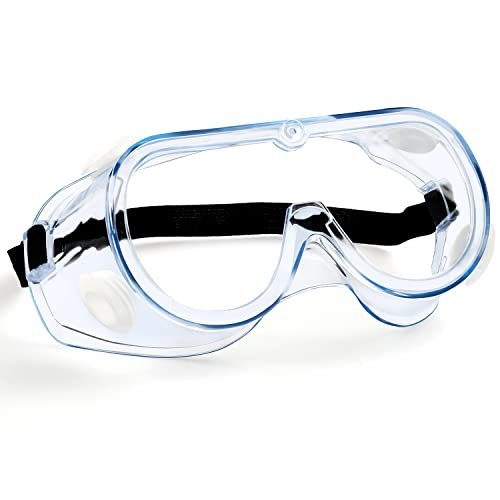
Best for Lab and Chemical Work: MELASA ANSI Z87.1 Anti-Fog Goggles
 Soft silicone gasket forms a secure seal against chemical splashes in lab environments
Designed specifically for laboratory and chemical handling work, the MELASA ANSI Z87.1 goggles feature a chemical-resistant silicone gasket that conforms to the face without pinching, creating a complete barrier against splashes, fumes, and fine dust. The hydrophilic anti-fog coating maintains clear visibility even in high-humidity environments, and the adjustable head strap fits most head sizes for a secure, comfortable fit during long lab sessions.
Pros
- ANSI Z87.1+ certified for impact and splash protection
- Chemical-resistant silicone gasket resists degradation from solvents
- Hydrophilic anti-fog coating rated for humid, high-exertion use
- Lightweight 0.8 oz design reduces fatigue during extended wear
- Adjustable strap accommodates most head sizes
Cons
- Only available in clear lens, no tinted option for bright lab lighting
- Gasket may need occasional cleaning to maintain a tight seal
For durable, lab-tested protection with a chemical-resistant seal, shop the MELASA ANSI Z87.1 goggles here.
Best for Industrial and Construction Work: DEWALT DPG82-11 Concealer Goggles
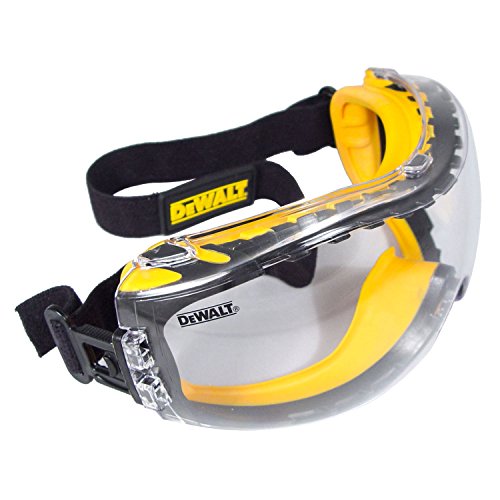 Dual mold frame balances impact resistance and all-day comfort for construction workers
Built for tough job site conditions, the DEWALT DPG82-11 features a dual mold frame with a soft inner layer that conforms to the face and a rigid outer shell that resists impact from falling debris, nail heads, and other high-mass hazards. The advanced anti-fog coating performs reliably even with extreme temperature swings common on construction sites, and the compact 7.2-inch length fits easily under most hard hats without interference.
Pros
- ANSI Z87.1+ certified for high-mass and high-velocity impact resistance
- Dual mold frame balances comfort and durability
- Advanced anti-fog coating rated for extreme temperature fluctuations
- 0.1 lb lightweight design reduces fatigue for 12+ hour shifts
- Distortion-free clear lens maintains situational awareness
Cons
- Not ideal for very large prescription glasses
- Only available with clear lenses, no tinted option for outdoor bright light
If you need rugged, job site-tested protection that fits under hard hats, the DEWALT DPG82-11 Concealer goggles are a top pick.
Best Over-Prescription Glasses: NoCry OTG Safety Goggles
 Extra internal cavity accommodates most standard prescription eyeglasses without compromising the protective seal
Designed explicitly for wear over prescription glasses, the NoCry OTG goggles have an extra 1.6 inches of internal width to fit most standard frames without pinching or breaking the protective seal. The ANSI Z87.1+ certified lenses include UV380 filtering to block harmful ultraviolet rays, and the anti-scratch and anti-fog coatings maintain clarity even during long shifts. The adjustable head strap lets you customize the fit to avoid pressure points on the temples.
Pros
- ANSI Z87.1+ certified for impact and splash protection
- Extra internal space fits most standard prescription glasses
- UV380 filtering blocks harmful UVA/UVB rays
- Anti-scratch and anti-fog coatings extend lens life
- 0.2 lb lightweight design for all-day wear
Cons
- May feel bulky for users with oversized prescription frames
- Only available with black frames, no color options
This design eliminates the need to choose between vision correction and eye protection, a benefit over-glasses safety designs prioritize. Shop the NoCry OTG goggles here for reliable prescription-compatible protection.
Best Wide-Vision Option for Precision Work: TR Industrial Wide-Vision Lab Goggles
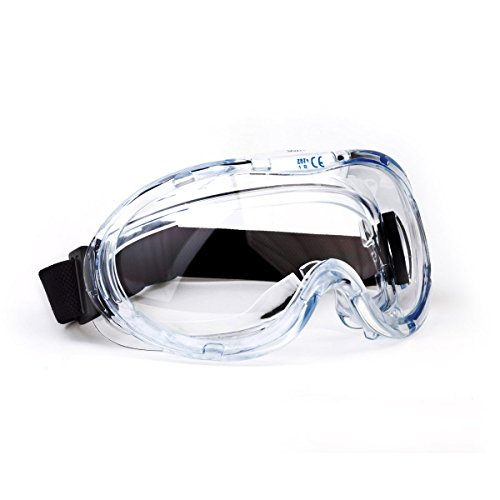 Wraparound lens design minimizes peripheral distortion for precision task work
Ideal for lab technicians, woodworkers, and other professionals who need to maintain sharp peripheral awareness during detailed tasks, the TR Industrial wide-vision goggles feature a wraparound clear lens that eliminates blind spots and reduces distortion. The soft foam gasket creates a secure seal against dust and splashes, and the 0.24 lb lightweight frame reduces fatigue during extended use. The anti-fog coating performs reliably even in high-humidity environments.
Pros
- ANSI Z87.1+ certified for impact and splash protection
- Wraparound lens eliminates peripheral blind spots for precision work
- Anti-fog coating rated for humid conditions
- Lightweight 0.24 lb design for all-day wear
- Affordable price point for budget-conscious buyers
Cons
- Foam gasket may require adjustment for smaller face shapes
- Only available with clear lenses
For tasks that require full situational awareness and minimal lens distortion, the TR Industrial wide-vision goggles are a top value pick.
Best Budget Multi-Use Option: Super More Anti-Fog Protective Goggles
 Soft foam gasket provides a comfortable, secure seal for general purpose hazard protection
A reliable, budget-friendly option for DIYers, hobbyists, and occasional industrial users, the Super More anti-fog goggles feature a soft foam gasket that creates a secure seal against dust, debris, and chemical splashes. The wide-vision clear lens minimizes distortion, and the adjustable head strap fits most head sizes. At just 0.3 oz, they are lightweight enough for extended wear without causing fatigue.
Pros
- ANSI Z87.1 certified for impact and splash protection
- Affordable price point for multi-use or backup pairs
- Anti-fog coating reduces fogging during high-exertion work
- Lightweight 0.3 oz design for comfort
- Wide-vision lens minimizes distortion
Cons
- Foam gasket may wear out faster with frequent chemical exposure
- Only available with clear lenses
For affordable, general-purpose protection for home workshops or occasional job site use, the Super More goggles deliver reliable performance at a low cost.
How to Care for Your ANSI Z87.1 Goggles to Extend Their Lifespan
Proper maintenance will extend the lifespan of your goggles and ensure they continue to meet safety standards. Neglecting care can degrade coatings, tear gaskets, and scratch lenses, all of which reduce protective performance.
Cleaning and Maintenance
After each use, wipe away dust and debris with a soft microfiber cloth. For deeper cleaning, use lukewarm water and mild, ammonia-free soap; ammonia-based cleaners will degrade anti-fog and anti-scratch coatings over time. Just as you would avoid abrasive cleaners on kitchen safety hardware to preserve its finish, use only gentle cleaning solutions for your goggle lenses. Never wipe lenses with rough paper towels or clothing, as these can scratch the surface and impair vision. Air dry goggles completely before storing them to prevent mold growth on the gasket.
Storage Best Practices
Store goggles in a hard, ventilated case when not in use to prevent scratches and impact damage. Avoid leaving goggles in hot cars or direct sunlight for extended periods, as heat can warp the frame and degrade gasket materials. Keep them away from sharp objects that could puncture the gasket or scratch the lenses.
When to Replace Your Goggles
Replace your goggles immediately if you notice any scratches on the lens, tears in the gasket, cracks in the frame, or if the anti-fog coating has worn off. Even if there is no visible damage, replace goggles after any high-impact event (e.g., a large piece of debris striking the lens), as micro-fractures in the frame or lens can reduce impact resistance without being visible to the naked eye. With proper care, most ANSI Z87.1 goggles last 1 to 2 years with regular use.
Common Mistakes That Reduce Goggle Effectiveness
Even certified goggles can fail to protect if used incorrectly. Avoid these common errors to ensure maximum safety:
- Wearing goggles loose: A gap as small as 1 millimeter between the gasket and your face can let fine dust, splashes, or debris enter. Adjust the head strap so the gasket sits snugly against your face without pinching, and check for gaps by looking in a mirror after putting them on.
- Using scratched lenses: Scratches distort vision and create weak points in the lens that can shatter on impact. Replace scratched lenses immediately, or replace the entire goggle if the lens is not replaceable.
- Sharing goggles between users: Sharing goggles spreads bacteria, irritants, and germs, and a poorly fitting borrowed goggle will leave dangerous gaps. Provide each worker with their own dedicated pair of goggles. Sharing goggles also spreads bacteria and irritants, just as you would avoid sharing childproof cabinet latches between households to prevent wear and germ transfer.
- Using uncertified lookalikes: Many inexpensive goggles are labeled "safety" but do not meet ANSI Z87.1 standards. Always look for the Z87+ marking on the lens or frame to confirm certification.
- Removing goggles in hazardous areas: Even for a few seconds, removing goggles in an area with airborne debris or chemical splashes can cause permanent eye damage. If you need to adjust your goggles, leave the hazardous area first.
Frequently Asked Questions
What Does the Z87+ Marking on My Goggles Mean?
The Z87+ mark printed on the lens or frame of your goggles confirms that the product has passed all ANSI Z87.1-2020 testing requirements for impact resistance, optical clarity, splash resistance, and UV protection. Goggles marked only "Z87" have only met basic optical clarity standards and have not been tested for impact or splash protection, so avoid these products for high-risk work.
Can I Wear ANSI Z87.1 Goggles Over My Prescription Glasses?
Yes, but only if you purchase an explicitly labeled OTG (over-the-glasses) model. These goggles are tested to fit over standard prescription frames without breaking the protective seal, with extra internal space to accommodate frame arms and lenses. Avoid regular safety goggles for use over prescription glasses, as they are often too small, leading to pinching, gaps, and reduced protection.
How Long Does Anti-Fog Coating Last on ANSI Z87.1 Goggles?
Most hydrophilic anti-fog coatings last 6 to 12 months with regular use and proper care. You can extend the life of the coating by avoiding rough wiping, using only mild soap for cleaning, and storing goggles in a cool, dry place. If the coating wears off, you will notice frequent fogging even in mild humidity; replace the goggles at this point, as fogged lenses are a major cause of workplace eye injuries.
Do ANSI Z87.1 Goggles Protect Against UV Radiation?
Most ANSI Z87.1 certified goggles include UV400 or UV380 filtering, which blocks 99-100% of harmful UVA and UVB rays. This is required for goggles intended for outdoor use, and is standard on most models from reputable brands. Check the lens marking for UV protection details if you need this feature for bright indoor or outdoor work.
Are ANSI Z87.1 Goggles Suitable for Home DIY Projects?
Absolutely. ANSI Z87.1 goggles meet the same impact standards required for industrial work, making them ideal for home woodworking, using power tools, handling chemicals for cleaning or painting, gardening, and yard work that throws debris. They offer far better protection than standard reading glasses or sunglasses for these tasks.
Conclusion
ANSI Z87.1 safety goggles are the most reliable form of eye protection for any work environment with impact, splash, dust, or UV hazards. Their full-seal design, certified impact resistance, and optional anti-fog and UV features eliminate the risk of preventable eye injuries that can cause permanent vision loss or disability. When choosing a pair, prioritize features that match your specific use case: a chemical-resistant silicone gasket for lab work, a dual mold frame for construction, or extra internal space for prescription glasses. With proper care, a high-quality pair of ANSI Z87.1 goggles will last 1 to 2 years, providing peace of mind and clear vision for every shift. Pairing certified eye protection with drill-free child safety locks creates a comprehensive safety system for both professional workshops and home workspaces. Invest in certified eye protection today to keep your vision safe, sharp, and protected for years to come.

Hi, I’m Daniel Brooks—a food lover and kitchen gear enthusiast. I enjoy testing cookware, utensils, and gadgets to see what really works in everyday cooking. At PlugChef.com, I share honest reviews, comparisons, and simple guides to help you choose the best tools for a safer, smarter, and more enjoyable kitchen.
Related posts:
 French Food Posters Vintage: Timeless Culinary Art for Kitchen Decor
 Appliance Lock Child Safety: Secure Your Home with Easy-to-Use Locks
 Buck Knife 112 Sheath: Top Durable Holsters for Your Pocket Knife
 Western Knife With Leather Sheath: Durable, Stylish, and Perfect for Outdoor Adventures
 Child Safety Locks for Cabinets: Easy, Secure Baby Proofing Solutions
 Safety Latches for Cabinets: Secure Your Home with Easy No-Drill Locks