Oven Cleaner on Cast Iron: Safe Tips to Restore Your Cookware
Cast iron cookware is a kitchen workhorse, prized for its durability and natural non-stick surface when properly seasoned. But when baked-on grease, burnt food, or years of neglect leave your pan looking dull and grimy, it’s tempting to reach for a heavy-duty oven cleaner for a fast fix. The problem? Standard oven cleaners are formulated for metal oven interiors, not the delicate polymerized seasoning layer that makes cast iron special. If used incorrectly, these harsh chemicals can strip your pan’s seasoning, cause pitting, and even ruin irreplaceable heirloom cookware. That said, there are safe, controlled ways to use oven cleaner on cast iron for severely neglected pieces, plus gentler alternatives that work for 90% of cleaning needs. Below, we break down the risks, safe protocols, and long-term care tips to restore your cast iron without damage.
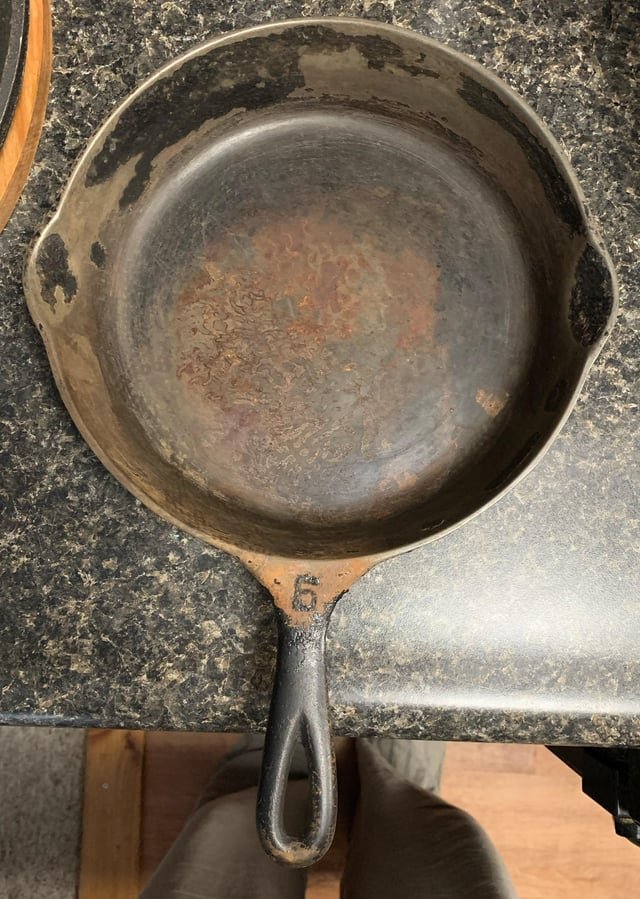
 This neglected cast iron skillet has layers of baked-on grease and food residue that may require deep cleaning.
Is Oven Cleaner Safe for Cast Iron Cookware?
How Oven Cleaner Damages Cast Iron Seasoning
Cast iron’s signature non-stick surface is called seasoning: a layer of polymerized oil (typically flaxseed, canola, or vegetable oil) that is baked into the porous iron surface at high heat. This layer prevents food from sticking and protects the metal from rust. Most standard heavy-duty oven cleaners contain sodium hydroxide (also known as lye), a strong alkali designed to dissolve baked-on grease and food. Lye does not discriminate between old food grime and your pan’s polymerized seasoning layer: it saponifies the oil, breaking it down and stripping it entirely from the iron surface. Once the seasoning is removed, the bare iron is exposed to moisture and oxygen, leading to rapid rust formation and a sticky, uneven cooking surface. In practice, even a 10-minute exposure to standard oven cleaner can remove months of carefully built-up seasoning, requiring hours of work to re-season the pan fully.
 Standard heavy-duty oven cleaners often contain lye, which can strip cast iron seasoning if not used carefully.
Long-Term Risks to Cast Iron Metal
Beyond stripping seasoning, prolonged or repeated exposure to oven cleaner chemicals can cause physical damage to the cast iron itself. Lye and harsh solvents can etch the porous iron surface, creating tiny pits that hold food residue and make it harder to build a durable seasoning layer over time. Vintage cast iron (pre-1960s) is especially vulnerable, as its more porous surface absorbs chemicals more quickly than modern, smoother cast iron. A common mistake many home cooks make is assuming a second round of oven cleaner will remove remaining grime, but this often accelerates pitting and can leave the pan with a rough, uneven texture that no amount of re-seasoning can fix.
| Common Oven Cleaner Ingredient | Impact on Cast Iron |
|---|---|
| Sodium hydroxide (lye) | Strips polymerized seasoning, causes pitting with prolonged exposure |
| Surfactants/solvents | Can leave residues that interfere with future seasoning bonding |
| Fragrances/additives | May cause off-flavors if not fully rinsed, can degrade seasoning over time |
When Oven Cleaner Is a Last-Resort Option
Oven cleaner should only be considered for cast iron that has been severely neglected for years, with layers of hardened, baked-on grease that cannot be removed with boiling water, salt scrubs, or baking soda paste. For pans with minor stuck-on food or light discoloration, gentler methods will always be safer and more effective. If you do choose to use oven cleaner, only use a lye-free, cookware-safe formula explicitly labeled for use on cookware surfaces, and follow the strict steps outlined later in this guide to minimize damage.
Safer, Non-Toxic Cleaning Methods for Most Situations
Gentle Daily Cleaning That Preserves Seasoning
For 90% of cast iron cleaning needs, you won’t need harsh chemicals at all. According to University of Minnesota Extension guidance, mild dish soap is perfectly safe for cast iron cleaning, as it does not damage the polymerized seasoning layer when used sparingly. Follow these steps for daily cleaning:
- While the pan is still warm (not hot) after cooking, rinse it under warm water.
- Use a soft soft-handled scrub brush or non-abrasive sponge to scrub off food residue.
- If food is stuck on, sprinkle 2 tablespoons of coarse kosher salt into the pan, add 1 teaspoon of neutral oil, and scrub with a stiff-bristled kitchen cleaning brush to lift grime without scratching the seasoning.
- Rinse thoroughly, dry immediately with a clean towel, then heat the pan on low stove heat for 2-3 minutes to evaporate all remaining moisture. This routine takes 2 minutes and will keep your pan’s seasoning intact for decades.
Non-Toxic Deep Cleaning for Severely Neglected Pans
If your pan has stubborn, baked-on grime that won’t come off with daily cleaning, try these non-toxic methods first:
- Boiling water soak: Fill the pan with 2 cups of water, bring to a boil on the stove, and let simmer for 5 minutes. Use a wooden spatula to scrape off loosened grime while the water is still hot.
- Baking soda paste: Mix 1 part baking soda with 1 part water to form a thick paste, spread it over the grimy areas, let sit for 30 minutes, then scrub with a soft brush and rinse.
- Lye-free cookware cleaner: If you prefer a commercial product, opt for a lye-free formula explicitly labeled safe for cast iron, and follow the manufacturer’s timing instructions exactly. Avoid leaving any cleaner on the pan for longer than 5 minutes.
How to Remove Rust Without Harsh Chemicals
Rust is a sign that your pan’s seasoning has been compromised and moisture has reached the bare iron. To remove rust safely:
- Mix 1 part white vinegar with 4 parts warm water (never use full-strength vinegar, as it can pit the iron if left on too long).
- Submerge the pan in the solution for no more than 30 minutes — set a timer to avoid over-soaking, a common mistake that causes irreversible pitting.
- Scrub the rust off with a stiff-bristled multi-surface kitchen brush or fine steel wool.
- Rinse thoroughly, dry immediately, and re-season the pan as outlined below to prevent rust from returning.
Step-by-Step: Safe Oven Cleaner Use for Hopeless Cases
Pre-Clean Prep to Minimize Damage
Before using any oven cleaner on cast iron, take these prep steps to reduce the risk of damage:
- Remove all loose debris and food scraps from the pan with a dry paper towel or brush.
- Wash the pan with warm, soapy water and dry thoroughly to remove surface grease that would block the cleaner from reaching baked-on grime.
- Test the cleaner on a small, inconspicuous area first (such as the underside of the handle) by spraying a small amount, leaving it for 5 minutes, then rinsing. If you notice any discoloration, pitting, or rough texture after rinsing, do not use the cleaner on the rest of the pan.
- Lay down a protective layer of newspaper or cardboard on your work surface to catch drips, and open windows or run an exhaust fan to ventilate the area.
Application and Timing Rules That Protect Your Pan
When applying oven cleaner, follow these strict rules to avoid damaging your pan:
- Wear nitrile gloves to protect your skin from chemical exposure, and keep children and pets out of the room during cleaning. To keep household chemicals out of reach of curious kids and pets, consider adding no-drill cabinet locks to lower storage cabinets.
- Only use a lye-free, cookware-safe oven cleaner — never use standard heavy-duty oven cleaner formulated for oven interiors.
- Spray a thin, even layer of cleaner only on the cooking surface of the pan, avoiding the handle and any seasoned exterior surfaces.
- Set a timer for 5 minutes maximum — never leave the cleaner on for longer than this, as extended exposure will strip seasoning and cause pitting.
- After 5 minutes, scrub the pan gently with a non-metal brush to lift loosened grime.
- Rinse the pan thoroughly under hot running water 2-3 times to remove all traces of cleaner.
- Dry the pan immediately with a clean towel, then heat it on low stove heat for 2-3 minutes to evaporate all remaining moisture.
Non-Negotiable Post-Clean Seasoning Restoration
Even if you use oven cleaner correctly, it will strip at least part of your pan’s seasoning layer, so re-seasoning is required to restore its non-stick surface and protect it from rust. Follow these steps for a durable, even seasoning:
- While the pan is still warm (not hot) after drying, apply a very thin, even coat of a high-smoke-point oil (flaxseed, grapeseed, or canola oil work best; avoid olive oil, which has a low smoke point and will turn sticky).
- Rub the oil into the entire surface of the pan, including the handle and underside, with a paper towel, then wipe off all excess oil — the pan should look almost dry, with no visible pooling of oil. Too much oil is the most common cause of sticky, uneven seasoning.
- Place the pan upside down on the middle rack of an oven preheated to 450°F (232°C), and place a sheet of aluminum foil on the rack below to catch any drips.
- Bake for 1 hour, then turn off the oven and let the pan cool completely inside. This slow cooling helps the seasoning bond to the iron.
- Repeat the oiling and baking process 2-3 times for a strong, durable non-stick layer that will last for years with proper care.
 A fully restored vintage cast iron skillet with a smooth, non-stick seasoning layer after safe deep cleaning and re-seasoning.
Common Cast Iron Cleaning Mistakes to Avoid
- Leaving cleaner on for longer than recommended: Even lye-free cookware cleaner can strip seasoning if left on for more than 5 minutes. Always set a timer to avoid over-exposure.
- Skipping the thorough rinse: Residual cleaner or soap will cause rust and off-flavors in food. Rinse your pan 2-3 times after cleaning, and heat it to evaporate all moisture.
- Using metal scrubbers or steel wool on a regularly seasoned pan: These will scratch the seasoning layer and remove it over time. Reserve steel wool only for removing rust from a stripped pan.
- Storing the pan while damp: Even a small amount of moisture will cause rust to form within hours. Always dry your pan completely after cleaning, and store it in a dry, well-ventilated area.
- Using too much oil when re-seasoning: Excess oil will pool and turn sticky instead of polymerizing into a hard, non-stick layer. Wipe off all visible oil before baking.
Long-Term Care to Keep Your Cast Iron Seasoned for Decades
Post-Use Cleaning Routine
The best way to avoid needing harsh cleaners is to build a consistent post-use cleaning routine:
- After cooking, wipe out excess food scraps while the pan is still warm.
- Rinse under warm water with a soft brush and a drop of mild dish soap if needed.
- Dry immediately with a towel, then heat on low stove heat for 2 minutes to remove all moisture.
- If you won’t use the pan for more than a week, apply a thin coat of neutral oil to the surface to protect it from rust. For more comprehensive kitchen tips to keep all your cookware in top shape, browse our full guide library.
Proper Storage Tips
Store your cast iron in a cool, dry, well-ventilated area. If you stack multiple pans, place a paper towel or cloth between them to absorb moisture and prevent scratching. For Dutch ovens with lids, leave the lid slightly ajar to allow air circulation and prevent moisture from building up inside. Avoid storing cast iron in a closed cabinet with other damp cookware, as this will accelerate rust formation. Opt for a heavy-duty scrub brush stored nearby for quick touch-ups when needed.
Frequently Asked Questions
Can I use standard oven cleaner on cast iron skillets?
No. Most standard heavy-duty oven cleaners contain sodium hydroxide (lye), a strong alkali that will strip the polymerized seasoning layer from your cast iron, leaving it vulnerable to rust and pitting. If you must use an oven cleaner for severely neglected cookware, only use a lye-free, cookware-safe formula, and follow the strict timing and rinsing steps outlined above.
How do I fix cast iron that was damaged by oven cleaner?
If your pan’s seasoning is stripped but the metal is not pitted, you can fully restore it by re-seasoning 2-3 times. If you notice pitting or rough spots, scrub the affected areas with fine steel wool, then re-season as normal. For severe rust, soak the pan in a 1:4 white vinegar and water solution for no more than 30 minutes, scrub, dry completely, then re-season.
Will oven cleaner leave harmful residue on my cast iron?
Yes, if not rinsed thoroughly. Residual lye or solvents from oven cleaner can cause off-flavors in food, accelerate rust, and interfere with future seasoning bonding. Always rinse your pan 2-3 times with hot water after using any cleaner, then dry and heat it on the stove for 2-3 minutes to evaporate all remaining moisture.
What is the fastest way to clean severely gunked cast iron without oven cleaner?
For baked-on grime that won’t budge with salt scrubs, boil 2 cups of water in the pan for 5 minutes, then scrape with a wooden spatula while the water is still hot. For rust, use a vinegar soak (max 30 minutes) followed by a salt and oil scrub. These methods take a bit more elbow grease but carry zero risk of damaging your pan’s seasoning.
Conclusion
Cast iron cookware is a lifelong investment that can last for generations if cared for properly. While oven cleaner can be used as a last resort for severely neglected pans, it carries real risks of stripping seasoning and damaging the metal if used incorrectly. In most cases, gentle, non-toxic cleaning methods will handle even tough grime without putting your pan at risk. By building a consistent cleaning and maintenance routine, you can keep your cast iron’s seasoning intact, avoid the need for harsh chemicals, and enjoy perfectly non-stick cooking for decades. If you do need to use oven cleaner, follow the strict timing and rinsing steps outlined above, and always re-season your pan fully afterward to restore its protective layer. With a little care, your cast iron will only get better with age. For more expert guides on cast iron care, kitchen safety, and cookware maintenance, browse our full resource library to keep your kitchen running smoothly for years to come.

I’m Abby Lu, a passionate home cook who loves simplifying everyday meals. At PlugChef.com, I share product reviews and cooking guides to help you find the best tools for your kitchen.
Similar Posts