Small waste bins are a staple of modern homes, offices, dorm rooms, RVs, and cars, but standard plastic liners often create more problems than they solve. They bunch up inside narrow bins, generate unnecessary excess plastic waste, and are almost always contaminated with food or bathroom waste, making them unrecyclable. Small compostable trash bags fix these issues: they fit snugly in tiny bins, break down naturally in composting systems, and let you reduce your plastic footprint without sacrificing convenience. This guide covers everything you need to know to pick the right certified, durable small compostable bags for your use case, plus top 2026 picks and proper disposal guidance.
For more guidance on sustainable home swaps, explore our home sustainability blog for actionable tips.
Why Small Compostable Trash Bags Are a Game-Changer for Tiny Bins
Unlike regular plastic liners, small compostable bags are designed to fit the exact dimensions of compact bins, eliminating messy overhang and slippage. They are made from plant-based materials like polylactic acid (PLA) derived from corn starch, which break down into organic matter in as little as 90 days in commercial composting facilities, with no microplastic residue left behind.
As of 2026, a growing number of municipalities have banned single-use plastic liners for small waste streams as part of local zero-waste initiatives, making compostable bags a practical compliance step for households and businesses. They are ideal for a huge range of use cases: 1.2 gallon sizes fit 5L bathroom wastebaskets and desktop office bins, 2.6 gallon sizes fit 8-10L countertop kitchen compost caddies, and 4 gallon sizes fit larger small utility or dorm room bins. For a quick overview of size options, check out our small bin compostable bag guide.
Key Features to Evaluate When Buying Small Compostable Bags
Not all compostable bags are created equal, and cutting corners on key features will lead to leaks, tears, or bags that fail to break down as promised. Prioritize these criteria when shopping:
Third-Party Compostability Certification
Certification is non-negotiable for true eco-friendly performance. Look for marks from the Biodegradable Products Institute (BPI), which confirms the bag will break down in a commercial composting facility in 180 days or less with no toxic residues, or ASTM D6400, the U.S. standard for compostable plastics. For home compost use, seek out OK Compost HOME certification, which verifies the bag will break down in a typical backyard pile with regular turning and moisture. Un-certified "biodegradable" claims are often greenwashing: these bags only break into small plastic fragments, not full organic matter. For a verified list of certified products and local drop-off facilities, refer to the Biodegradable Products Institute directory.
Thickness and Tear Resistance
Small compostable bags typically range from 0.6 to 0.8 mil in thickness. Thin 0.6 mil options work well for dry waste like office paper or bathroom tissues, but 0.7 mil or higher is required for wet kitchen food scraps, which can tear thin liners. A common mistake is overfilling bags: fill them only 2/3 full to avoid stress on the material, especially when disposing of heavy or sharp waste like fruit pits or coffee grounds.
Exact Size Compatibility
Small compostable bags come in four standard sizes to match common bin dimensions:
- 1.2 gallon: fits 5L/1gal bathroom, desktop, or RV bins
- 2.6 gallon: fits 8-10L countertop compost caddies
- 3 gallon: fits small under-sink kitchen bins
- 4 gallon: fits larger small utility or office bins
Always measure your bin’s interior height, width, and depth before purchasing, as a 2.6 gallon bag that fits one brand’s caddy may be too narrow for another. Look for drawstring or handle-tie closures to make tying full bags easier, especially for food scrap liners where you want to avoid touching waste.
Odor and Leak Prevention
Many small compostable bags designed for food scraps include a thin odor-blocking layer that traps smells while letting moisture escape. Avoid bags with added artificial fragrances, as these can leave residual chemicals in your compost pile. Leak-proof heat-sealed edges are also critical for wet waste, preventing messy countertop spills from food scrap liquid.
Pair your compost bin with a bathroom and kitchen cleaning brush to wipe away any small leaks or residue between liner changes.
Top-Rated Small Compostable Trash Bags for 2026
We evaluated dozens of small compostable bags based on certification, durability, fit, and value to pick the best options for every use case:
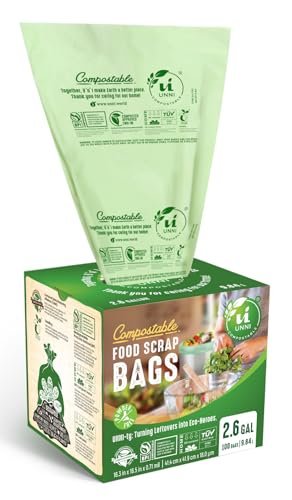
UNNI Compostable Liner Bags, 2.6 Gallon (100 Count)
 A top pick for countertop food scrap collection
These extra-thick 0.71 mil liners are certified to ASTM D6400, BPI, CMA, and OK Compost HOME standards, so they work for both home and commercial composting. The 2.6 gallon size fits most standard countertop compost caddies perfectly, with no slippage or overhang. The 100-count pack lasts most households 3-4 months of daily use, making them a cost-effective choice for regular food scrap collection.
Pros:
- Multi-certified for home and industrial compost compatibility
- 0.71 mil thickness resists tears and leaks from wet food waste
- Snug 2.6 gallon fit for standard countertop caddies
- 100-count pack offers long-term value
Cons:
- Higher upfront cost than standard plastic liners
- Smaller size does not work for larger under-sink bins
These liners are a great pick for anyone exploring sustainable kitchen cleaning tips to reduce their household plastic use. Pair these liners with a durable best kitchen cleaning brush to wipe down your compost caddy between changes for a mess-free routine.
Shop UNNI Compostable Liner Bags on Amazon
AYOTEE Mini Compostable Bags, 1.2 Gallon
 Ideal for tight bathroom and desktop bins
These compact 1.2 gallon bags are designed to fit standard 5L bathroom wastebaskets, desktop office bins, and dorm room mini trash cans perfectly, with no excess material bunching at the edges. They are made from certified compostable plant-based material, and are available in both clear and green options to match your decor. The 0.675 mil thickness is strong enough for dry bathroom waste and light office trash, with no leaks or tears for typical use.
Pros:
- Perfect 1.2 gallon fit for 5L/1gal small bins
- Available in clear and green for aesthetic flexibility
- Leak-resistant for damp bathroom waste
- Lightweight and easy to store in bulk
Cons:
- Too thin for heavy wet food scrap waste
- Smaller size requires more frequent changes for high-use areas
If you need larger liners for bigger bins, check out our guide to large compostable bag options. Use these liners alongside a dedicated bathroom and kitchen cleaning brush to keep your wastebasket and surrounding surfaces spotless between changes.
Shop AYOTEE Mini Compostable Bags on Amazon
SUPERBIO 1.6 Gallon Handle-Tie Compostable Bags (50 Count)
 Best for easy, mess-free food scrap transport
These industrial-certified (BPI and OK Compost INDUSTRIAL) bags feature built-in handle ties that let you seal and carry full food scrap bags without touching waste, eliminating mess and odor transfer. The 1.6 gallon size fits most countertop compost caddies, and the 0.7 mil thickness resists leaks from wet produce scraps and coffee grounds. The 50-count pack is ideal for households that only need to swap liners 1-2 times per week.
Pros:
- BPI and OK Compost INDUSTRIAL certified for commercial compost compatibility
- Built-in handle ties for mess-free transport
- Leak-resistant for wet food waste
- Compact size fits most countertop caddies
Cons:
- Not certified for home compost, so will not break down in backyard piles
- Smaller pack size is less cost-effective for daily users
These industrial-certified bags are ideal if your local waste management offers kitchen waste management strategies for food scrap drop-off. After emptying your food scrap bag, use a durable kitchen cleaning scrub brush to scrub any leftover bits from your bin before adding a new liner.
Shop SUPERBIO Handle-Tie Compostable Bags on Amazon
GreFusion Leakproof Compostable Bags, 1.2 Gallon (125 Count)
 Best for under-sink kitchen compost bins with odor control
These BPI and ASTM D6400 certified bags feature a built-in odor-blocking layer that traps food scrap smells for up to 3 days, making them perfect for under-sink bins that are not emptied daily. The leak-proof heat-sealed edges contain liquid from wet produce, and the 1.2 gallon size fits most compact under-sink compost bins. The 125-count pack offers excellent value for regular users.
Pros:
- BPI and ASTM certified for reliable compostability
- Leak-proof and odor-blocking for under-sink storage
- 125-count pack offers long-term value
- Perfect 1.2 gallon fit for small under-sink bins
Cons:
- Odor control is less effective for bins stored for more than 3 days
- Thinner material may tear if overloaded with heavy waste
These bags work perfectly for kitchens following sustainable kitchen design tips to minimize waste. If you store your under-sink compost bin out of reach of young children, add child proof cabinet locks no drilling to keep curious kids from accessing food waste.
Shop GreFusion Compostable Bags on Amazon
Repurpose 3 Gallon Compostable Bags (100 Count)
 Best for small office and under-sink kitchen bins
These BPI-certified bags are also FDA approved for safe contact with food waste, with no risk of chemical leaching into your compost. The 3 gallon size fits small under-sink kitchen bins and office break room trash cans, and the leak-proof design contains spills from food or liquid waste. The packaging is fully recyclable, aligning with the brand’s zero-waste mission, and the 100-count pack is priced competitively with standard plastic liners.
Pros:
- BPI certified and FDA approved for food contact safety
- Leak-proof for wet waste
- Recyclable packaging for full lifecycle sustainability
- 3 gallon size fits small under-sink and office bins
Cons:
- Not suitable for heavy or sharp waste items
- Only available in green, which may not match all decor
For more tips on reducing household waste and building sustainable kitchen habits, browse our latest blog posts.
Shop Repurpose 3 Gallon Compostable Bags on Amazon
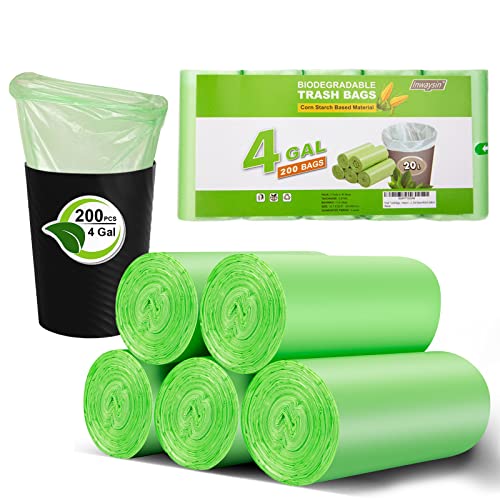
Inwaysin 4 Gallon Unscented Biodegradable Bags (200 Count)
 Best value bulk pick for small utility and office bins
These extra-strong 4 gallon bags are made from plant-based biodegradable material, and the unscented formula is ideal for sensitive environments like nurseries, medical offices, or homes with fragrance allergies. The 200-count pack offers the lowest per-bag cost of any option on our list, making them perfect for high-use areas like office break rooms or shared apartment spaces. The green color is discreet, and the bags resist tears even when filled with heavier waste like paper or plastic packaging.
Pros:
- 200-count bulk pack offers unbeatable value
- Unscented and hypoallergenic for sensitive spaces
- Extra-strong construction resists tears
- 4 gallon size fits larger small utility and office bins
Cons:
- Not certified for compostability, so will not break down in composting systems
- Thinner material may leak with heavy wet waste
For even higher capacity options, explore high-capacity compostable bags for larger small bins.
Shop Inwaysin 4 Gallon Biodegradable Bags on Amazon
How to Dispose of Small Compostable Bags Correctly
Proper disposal is critical to ensure your compostable bags deliver on their environmental promise. Bags labeled OK Compost HOME can be added directly to your backyard compost pile along with the food waste inside, and will break down in 6-12 months with regular turning and consistent moisture. Bags certified only for industrial composting (marked BPI or OK Compost INDUSTRIAL) require the high heat (55°C/131°F) and controlled conditions of a commercial composting facility to break down fully, which takes 90-180 days. Most cities offer drop-off points for industrial compostable bags at farmers markets, recycling centers, or through curbside organics collection programs.
The U.S. Environmental Protection Agency (EPA) emphasizes that compostable bags only deliver on their environmental promise when disposed of in appropriate composting streams, rather than landfills where they release methane as they break down anaerobically. Learn more on the EPA composting guide. Never put compostable bags in with regular plastic recycling, as they contaminate the plastic stream and send entire batches to landfill. For on-the-go waste like car or office trash, check if your city accepts compostable bags in its general waste organics program before disposing of them.
If you're looking for durable liners for on-the-go use, these are a great alternative to reusable kitchen essentials for car or office waste.
Frequently Asked Questions
What sizes are available for small compostable trash bags?
Small compostable trash bags most commonly come in 1.2 gallon (fits 5L/1gal desktop, bathroom, or RV bins), 2.6 gallon (fits 8-10L countertop compost caddies), 3 gallon (fits small under-sink kitchen bins), and 4 gallon (fits larger small utility or office bins). Always measure your bin's interior height, width, and depth before purchasing to ensure a snug fit without excess overhang that can catch on bin edges.
Are small compostable trash bags as durable as regular plastic liners?
High-quality small compostable bags made from plant-based materials like PLA and PBAT are just as durable as thin plastic liners for low-to-medium waste weight. Look for bags with a thickness of 0.7 mil or higher for wet food scraps, as thinner 0.6 mil options may tear if overloaded with heavy or sharp waste like fruit pits or glass shards. Avoid overfilling bags beyond 2/3 of their capacity to reduce the risk of leaks or tears.
Do small compostable bags require special composting conditions to break down?
It depends on their certification: bags labeled OK Compost HOME will break down in a typical backyard compost pile with regular turning and moisture, usually within 6-12 months. Bags certified only for industrial composting (marked BPI or OK Compost INDUSTRIAL) require the high heat (55°C/131°F) and controlled conditions of a commercial composting facility to break down fully, which takes 90-180 days. Never dispose of industrial-only compostable bags in home compost or regular trash, as they will not break down properly in either environment.
Can small compostable trash bags control odors from food waste?
Many small compostable bags designed for food scraps include a thin odor-blocking layer or are made with breathable material that lets moisture escape while trapping smells. For extra odor control, store your countertop compost bin in a cool, shaded spot, and empty it every 2-3 days to prevent food from spoiling and releasing strong smells. Avoid bags with added artificial fragrances, as these can leave residual chemicals in your compost pile.
Are small compostable bags more expensive than regular plastic liners?
On average, small compostable bags cost 10-30% more per bag than standard plastic liners, but bulk packs of 100-200 bags bring the per-bag cost down to nearly the same as plastic for regular users. The small upfront cost is offset by the environmental benefit of avoiding single-use plastic waste, and many cities offer discounts on compostable bags through their zero-waste programs to make them more accessible.
Conclusion
Small compostable trash bags are a low-effort, high-impact swap for anyone looking to reduce their single-use plastic waste, especially for compact bins where regular plastic liners are unnecessary and often end up contaminated. By prioritizing certified, properly sized options for your use case, you can enjoy the same convenience as plastic liners without the environmental harm. Whether you use them for bathroom waste, office trash, or kitchen food scraps, these bags make sustainable waste management accessible for every space.
Ready to make the switch? Stock up on certified small compostable bags that match your bin size and waste needs today to cut down on single-use plastic without sacrificing convenience.

I’m Abby Lu, a passionate home cook who loves simplifying everyday meals. At PlugChef.com, I share product reviews and cooking guides to help you find the best tools for your kitchen.
Related posts:
 Best Oil for Bamboo Cutting Boards: Top Food Grade Mineral Oils Reviewed
 Eco Friendly Kitchen Products Brands Transforming Your Cleaning Routine Naturally
 13 Gallon Compostable Trash Bags: Eco-Friendly, Heavy Duty Kitchen Liners
 Products Eco Friendly: Top Must-Have Sustainable Home Cleaning Essentials
 Reusable Straws Stainless Steel: Top Eco-Friendly Straws for Tumblers
 Granite Sink Cleaner: The Best Way to Keep Your Sink Clean