
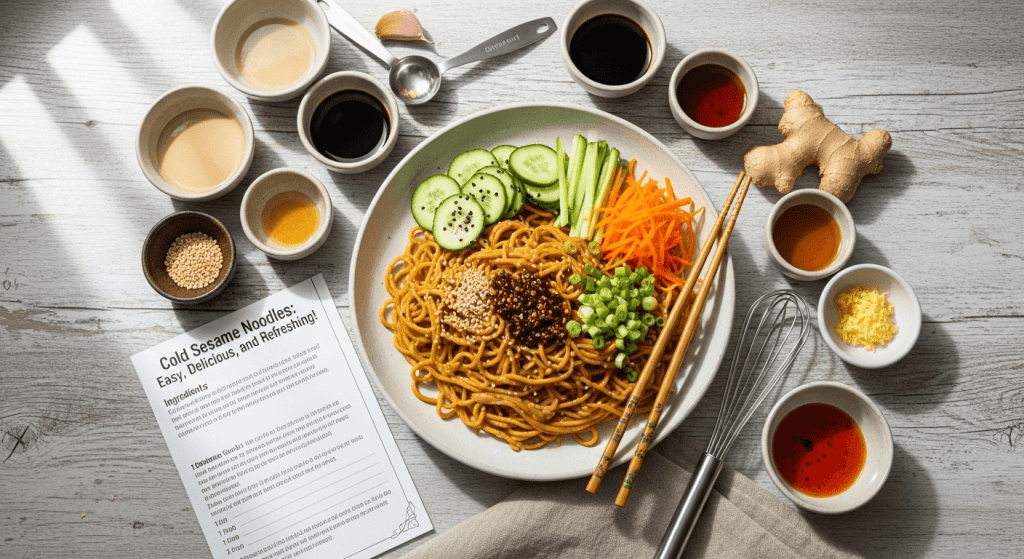
There’s nothing worse than craving a flavorful, satisfying meal on a hot day, only to dread turning on the stove to cook. Cold sesame noodles are the perfect solution: a creamy, nutty, tangy dish that comes together in 20 minutes of active prep, requires no cooking after the noodles are boiled, and is endlessly customizable for every diet and taste preference. A beloved staple across Chinese, Taiwanese, and Korean cuisine, this no-fuss recipe works as a quick weeknight lunch, light dinner, potluck side, or meal prep staple for the work week. With a foolproof sauce ratio and clear steps to avoid mushy noodles, even first-time cooks can pull off restaurant-quality results at home.
Why This Cold Sesame Noodle Recipe Stands Out
Many home recipes for cold sesame noodles fall short: the sauce is either too thick and pasty, too runny and watery, or overly salty, and noodles often turn mushy after chilling from improper cooling. This recipe is tested to deliver perfectly balanced, creamy sauce that clings to every strand, and foolproof steps to keep noodles firm and chewy even after 3 days of storage. It’s also vegan by default, easily adaptable for gluten-free, nut-free, and high-protein diets, and uses pantry staples you likely already have on hand.
Ingredients You’ll Need
This recipe serves 4 as a side, 2 as a main. All ingredients are easy to find at most grocery stores.
Noodles
The base of your dish, choose based on your dietary needs and flavor preference:
- 8 oz thin wheat noodles (Chinese egg noodles or spaghetti work best for traditional chewy texture)
- 8 oz soba noodles (for a nuttier, gluten-free option, ensure they are 100% buckwheat if avoiding gluten)
- 8 oz rice noodles (for a light, gluten-free alternative) Avoid thick udon noodles, as their dense texture doesn’t hold sauce as well.
Sesame Sauce
The creamy, savory backbone of the dish, with balanced sweet, salty, tangy, and nutty notes:
- ¼ cup smooth sesame paste (tahini for milder, creamier flavor; roasted Chinese sesame paste for deeper, more robust nuttiness)
- 3 tbsp low-sodium soy sauce (or tamari for gluten-free)
- 2 tbsp rice vinegar
- 1 tsp honey or maple syrup (maple syrup for vegan)
- 1 tsp grated fresh ginger
- 2 cloves minced garlic
- 1 tsp chili oil (adjust to taste for heat level)
- 1-2 tbsp cold water (to thin sauce to desired consistency)
Toppings & Garnishes
Crisp, fresh toppings cut through the rich sauce and add texture:
- ½ cup shredded cucumber
- ¼ cup shredded carrots
- 2 tbsp chopped scallions
- 1 tbsp toasted sesame seeds
- 1 tbsp crushed roasted peanuts
- Optional: cilantro leaves, lime wedges, extra chili flakes, sliced jalapeños A sharp precision cutting tool makes quick work of slicing cucumber into thin matchsticks and shredding carrots for even, consistent toppings.
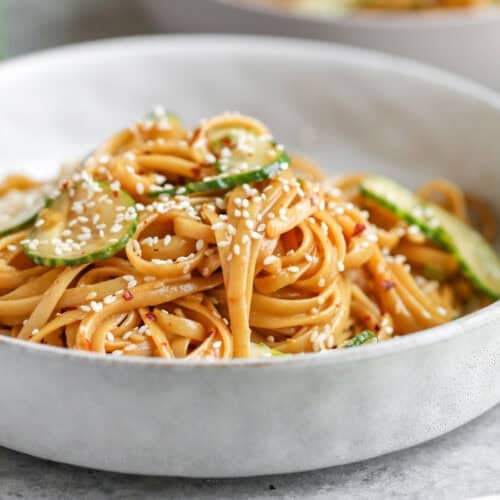 A vibrant, no-cook sesame noodle bowl ready to serve in under 20 minutes, perfect for hot summer days.
Step-by-Step Instructions
Follow these steps for perfect texture and flavor every time.
1. Cook & Chill the Noodles
Proper cooking and cooling is the #1 way to avoid mushy noodles. Bring 4 quarts of salted water to a rolling boil in a large pot. Add noodles and cook 1 minute less than package directions for al dente texture (usually 3-4 minutes for thin wheat noodles, 5-6 for soba). Drain immediately, then rinse under cold running water for 1-2 minutes, tossing with your hands to separate strands and stop cooking completely. Toss with 1 tsp sesame oil to prevent sticking, then set aside. Common mistake: Rinsing hot noodles with lukewarm water continues the cooking process, leading to soggy strands even after chilling.
2. Whip the Sesame Sauce
In a medium bowl, whisk together sesame paste, soy sauce, rice vinegar, honey, ginger, garlic, and chili oil until completely smooth. The sauce will look thick and pasty at first—add 1 tbsp cold water at a time, whisking until you reach a creamy, pourable consistency that coats the back of a spoon. Taste and adjust seasoning: add more soy sauce for saltiness, more vinegar for brightness, or more honey for sweetness. Pro tip: Over-thinning is easy to fix by adding a splash more sesame paste, so add water gradually.
3. Toss & Marinate
Add chilled noodles to the sauce, tossing gently with tongs or chopsticks until every strand is evenly coated. Cover and refrigerate for at least 30 minutes (up to 2 hours) to let flavors meld. If the noodles absorb excess sauce while chilling, stir in 1 tsp cold water before serving to loosen. Per the FDA’s safe food handling guidelines, cooked noodles should be chilled within 2 hours of cooking to prevent bacterial growth, making this recipe ideal for hot weather when you want to avoid turning on the stove.
4. Serve & Top
Divide noodles into bowls, top with your choice of toppings, and serve immediately. The dish can be served straight from the fridge for maximum refreshment, or left at room temperature for 20 minutes if you prefer slightly less cold noodles.
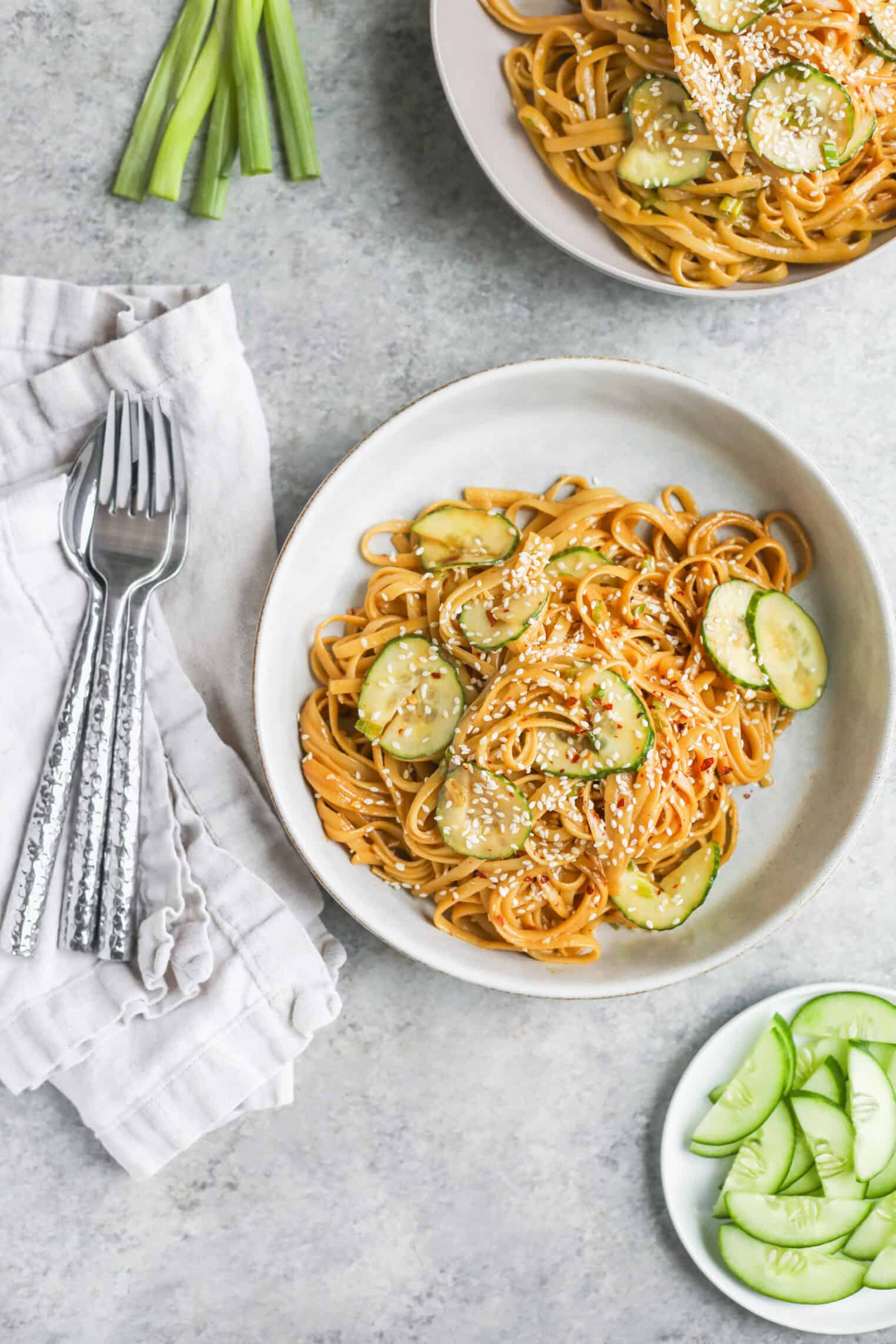 Creamy, nutty sesame sauce coats every noodle strand for even flavor in every bite
Customization Ideas
This recipe is incredibly flexible, so you can tweak it to match your tastes and dietary needs.
Dietary Swaps
- Gluten-free: Use tamari instead of soy sauce, and gluten-free soba or rice noodles.
- Vegan: Use maple syrup instead of honey, and skip animal-based toppings like eggs or meat.
- Nut-free: Swap sesame paste for sunflower seed butter for a similar creamy texture (note: flavor will be slightly more earthy).
Protein Add-Ins
Turn this side into a filling main by adding:
- 1 cup shredded rotisserie chicken, pan-seared tofu, or edamame
- 2 sliced hard-boiled eggs
- For a savory fusion twist, top with crispy protein-packed wings for a crunchy, hearty meal
Spice Level Tweaks
- Mild: Omit chili oil, add a pinch of white pepper for subtle warmth
- Medium: Use 1 tsp chili oil as written
- Spicy: Add ½ tsp crushed red pepper flakes, or drizzle with extra chili oil and top with sliced fresh jalapeños
- To cool down an overly spicy batch, stir in 1 extra tsp of honey or a splash of sesame oil to balance heat.
Meal Prep & Storage Tips
This recipe is ideal for meal prep, as the noodles hold up well in the fridge for several days when stored properly.
Storing Leftover Noodles
Store leftover noodles in an airtight container in the refrigerator for up to 3 days. If the noodles absorb excess sauce overnight, stir in 1 tsp cold water or sesame oil before serving to restore creamy consistency. Avoid freezing cold sesame noodles, as the sauce will separate and noodles will become mushy when thawed, altering the texture completely. For easy grab-and-go lunches, store prepped components in fresh produce storage to keep shredded veggies from wilting for up to 5 days.
Prepping Ahead for the Week
To cut down on weekday cooking time, cook and chill noodles, make the sauce, and shred veggies separately over the weekend. Store each component in its own airtight container, then assemble bowls in 2 minutes flat when you’re ready to eat. Sesame paste is a good source of healthy fats, calcium, and plant-based protein, per USDA FoodData Central records, making this dish a more nutritious alternative to standard creamy pasta salads.
Serving Suggestions & Pairings
This dish works as a standalone meal or as part of a larger spread.
Quick Side Pairings
- Warm steamed or pan-fried dumplings for a savory, warm contrast
- Fresh spring rolls for light, crisp freshness
- Simple cucumber salad dressed in rice vinegar to balance the rich sesame flavor
- Pickled vegetables for bright acidity and extra crunch
- Edamame pods for extra plant-based protein
Presentation Tips for Potlucks
For casual weeknight meals, toss everything together and serve straight from the bowl. For potlucks or picnics, arrange noodles in shallow bowls, top with extra toppings, and drizzle with a little extra chili oil and sesame seeds for a vibrant, crowd-pleasing presentation. If you’re serving this at a gathering, arrange it on a handmade decorative serving platter for a stunning, sturdy option that doubles as a gift for the host. Chilled sesame noodles hold up well for up to 2 hours at room temperature, making them perfect for outdoor events.
 Chilled sesame noodle bowl served with fresh veggie toppings for a bright, refreshing meal
Frequently Asked Questions
Can I use tahini instead of Chinese sesame paste?
Yes! Tahini (made from hulled, raw sesame seeds) has a milder, creamier flavor, while Chinese roasted sesame paste is made from unhulled seeds for a darker, more robust nutty taste. Both work perfectly, so choose based on your flavor preference and what you have on hand.
Can I make this recipe gluten-free?
Absolutely. Swap regular soy sauce for tamari, and use gluten-free soba (made from 100% buckwheat) or rice noodles instead of wheat noodles.
Is this recipe vegan by default?
Yes, as long as you use maple syrup instead of honey and skip any animal-based toppings like eggs or meat.
Can I add raw veggies to the noodles ahead of time?
It’s best to add crunchy toppings like cucumber and carrots right before serving, as they will release water and make the noodles soggy if left to sit for more than 30 minutes. Store pre-shredded veggies separately in airtight containers if prepping ahead.
What if my sauce is too thick?
Thin it with 1 tablespoon of cold water at a time, whisking until you reach your desired consistency. Avoid adding too much water at once, as it’s easy to over-thin the sauce.
Final Tips for Success
Prep all ingredients on a hygienic prep surface to avoid cross-contamination and keep your workspace safe. Don’t overcook the noodles: al dente noodles hold their texture much better after chilling than soft, mushy ones. Taste as you go: adjust seasoning after mixing the sauce and after chilling, as flavors will mellow slightly as they sit.
Conclusion
Cold sesame noodles are the perfect no-fuss meal for busy weeknights, hot summer days, or casual gatherings with friends. With a creamy, nutty sauce, crisp fresh toppings, and endless customization options, this recipe is sure to become a staple in your rotation. It’s ready in under an hour, stores beautifully for meal prep, and works for every diet with simple swaps. Give this recipe a try tonight, and enjoy a fresh, flavorful meal without the hassle of heavy cooking. For more quick, tested weeknight recipes that come together in 30 minutes or less, browse our full recipe archive for hundreds of ideas from pasta to appetizers.

Hi, I’m Daniel Brooks—a food lover and kitchen gear enthusiast. I enjoy testing cookware, utensils, and gadgets to see what really works in everyday cooking. At PlugChef.com, I share honest reviews, comparisons, and simple guides to help you choose the best tools for a safer, smarter, and more enjoyable kitchen.
Related posts:
 How to Make a Fruit Basket for a Gift: Easy DIY Guide
 Do You Need a Basket? Essential Guide for Air Fryers
 How to Adjust Syrup Dispenser Pressure: Expert Tips
 White Appliances in Kitchen Design: Elevate Your Space
 Kitchen Appliances Stainless Steel Vs White: Ultimate Showdown
 Kitchen Appliances Made in Usa: Quality and Innovation

