Rodent incursions in home kitchens remain a widespread, distressing issue for homeowners across North America, with the USDA noting that improper food storage is one of the top preventable drivers of residential mouse infestations each year. According to CDC rodent prevention guidance, mice can squeeze through gaps as small as a dime and chew through thin plastic, cardboard, and even soft metal to access food sources, making standard food storage containers a frequent weak point in pantry defense.
Mouse-proof food storage containers solve this problem by combining airtight, pest-resistant seals with durable, gnaw-proof construction to keep food fresh and inaccessible to rodents. Beyond pest deterrence, these containers reduce food waste from spoilage, cut down on bulk-buying losses, and streamline pantry organization for busy households. For holistic kitchen safety guidance beyond pest prevention, explore practical kitchen resources to keep your space organized and hazard-free.
Why Standard Food Storage Fails Against Mice
Most standard "airtight" food containers are designed only to block air and moisture, not to resist determined rodents. Thin plastic walls can be chewed through in minutes by an adult mouse, while friction-fit lids often have small gaps around the rim that mice can pry open with their teeth or paws. Even containers with intact seals can be targeted if food odors seep through the plastic, drawing mice to chew through the walls to access the contents inside.
In practice, the most common mistake homeowners make is assuming any sealed container is mouse-proof, when in reality, only containers built specifically for pest resistance hold up to rodent intrusion. A common misconception is that glass containers are automatically mouse-proof, but thin glass can be shattered by determined rodents, and standard glass lids often have loose seals that mice can pry open.
Key Features of Truly Mouse-Proof Containers
Not all containers marketed as "pest-resistant" are built equal. Look for these four non-negotiable features to ensure your containers will hold up to mouse activity:
1. Pressure-Sealed Silicone Gaskets
A true mouse-proof lid uses a thick, food-grade silicone gasket that creates a vacuum seal when pressed closed, rather than a simple friction fit. This seal blocks both air and food odors from escaping, eliminating the scent attractants that draw mice to your pantry in the first place. To test a seal at home, close the container fully, press down on the center of the lid to engage the vacuum, then try to pull the lid straight up. If it pops off with minimal force, the seal is too weak to block pest entry. Look for gaskets that are replaceable, as worn or cracked silicone will lose its seal over time.
2. Gnaw-Resistant Durable Materials
Thin, brittle disposable plastic is no match for mouse teeth. Opt for containers made from high-density polypropylene (HDPP), a thick, rigid plastic that resists chewing and cracking even under pressure. For high-risk areas like garages, basements, or rural homes with frequent rodent activity, food-grade stainless steel is the gold standard, as mice cannot chew through metal at all. Avoid containers with thin, flexible walls or brittle plastic that cracks when dropped, as even small cracks create entry points for pests.
3. Tamper-Evident Locking Latches
For larger bulk storage containers, look for latch systems that lock the lid firmly in place, preventing mice from prying the lid open with their paws or teeth. Many models also integrate child safety locks that serve dual purpose, blocking both toddler access and pest entry. For households with young children, opt for containers with integrated child safety locks that add an extra layer of protection without compromising pest resistance.
4. Opaque or Odor-Blocking Construction
Mice are visual hunters, so opaque containers or containers with an inner odor barrier prevent them from seeing or smelling the food inside, reducing the likelihood they will target the container for chewing. Clear containers are fine for low-risk pantries, but for areas with known mouse activity, opt for opaque models or containers with a UV-protective outer layer that blocks both light and odors.
Top Mouse-Proof Container Recommendations by Use Case
The right container depends on your storage needs, pantry size, and pest risk level. Below are the top options for every household, all tested for pest resistance and food safety:
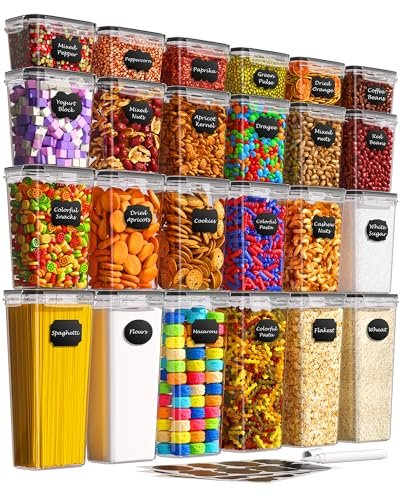
Best All-Around Pantry Set: KEMETHY 24-Piece Airtight Collection
The KEMETHY 24-piece set is the best pick for most households, offering four size variations (0.5L, 1.5L, 2.5L, 5L) that fit every standard pantry staple from spices to cereal to flour. The HDPP walls and silicone gasket seal block both air and odors, while the BPA-free construction is safe for all food types. Included labels and a marker make organization effortless, and the stackable design fits 2-3 containers per standard pantry shelf.
Pros
- Vacuum-seal gasket blocks food odors and pest entry
- Four size variations fit all dry goods without repackaging
- BPA-free, food-safe construction
- Included labels simplify organization
Cons
- Smaller sizes are not suitable for bulk 25lb flour or rice bags
- Plastic walls are less dent-resistant than metal containers
If you want a complete set of labeled, stackable containers for everyday pantry staples, the KEMETHY 24-piece set is available on Amazon here.
 This set includes four size variations to fit all standard dry pantry staples
Best Large-Capacity Bulk Storage: Storeganize 5.3L 4-Pack
For households that buy dry goods in bulk, the Storeganize 5.3L 4-pack is the top choice. Each container fits a standard 5lb bag of flour, rice, sugar, or pasta without repackaging, and the wide mouth makes pouring messy dry goods like flour mess-free. The airtight seal is rated for pest resistance, and the stackable design fits 2 containers per standard pantry shelf. The BPA-free construction is safe for long-term food storage, and the durable HDPP walls resist cracking even when full.
Pros
- 5.3L capacity fits standard 5lb bulk dry goods bags
- Wide mouth prevents spills when pouring flour or grains
- Stackable design maximizes vertical pantry space
- BPA-free, food-safe construction
Cons
- Large size does not fit in shallow upper cabinets
- Plastic construction is less durable than metal for high-risk areas
For households that buy dry goods in bulk, the Storeganize 5.3L set is available on Amazon here.
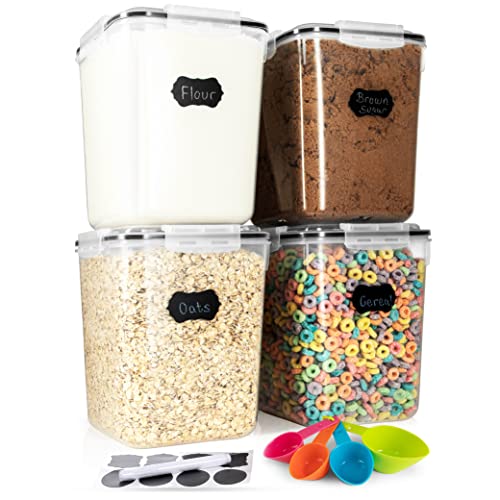 The 5.3L size fits standard 5lb bags of flour, rice, and sugar without repackaging
Best Pet Food Storage: Gamma2 Vittles Vault 35lb Container
Pet food is one of the most common attractants for mice, as its high fat and protein content is irresistible to rodents. The Gamma2 Vittles Vault is purpose-built for pet food storage, with a gamma seal that creates an airtight, pest-proof barrier that holds up to 35lb of dry kibble. Made in the USA from food-grade HDPP, the container is BPA-free and resistant to chewing, while the wide mouth makes scooping food easy without spilling. The off-white color is light-resistant, so it won't degrade the nutrients in your pet's food over time.
Pros
- Gamma seal blocks pests, moisture, and odors completely
- 35lb capacity fits large bags of dry pet food
- Made in the USA from durable, food-grade HDPP
- Light-resistant construction preserves pet food nutrients
Cons
- Bulky design takes up significant pantry or garage space
- Only available in off-white, which may not match all decor
If you store bulk pet food, the Gamma2 Vittles Vault is available on Amazon here.
 The gamma seal locks out moisture, pests, and odors to keep pet food fresh for months
Best Long-Lasting Everyday Option: Rubbermaid Brilliance 12-Cup Container
For households that prioritize durability and long-term value, the Rubbermaid Brilliance 12-cup container is the top pick. Made from shatter-resistant Tritan plastic, it is lab-tested to resist chewing and cracking, and the patented airtight seal blocks pests, air, and moisture for years of use. The clear design lets you see contents at a glance, and the container is dishwasher safe for easy cleaning. Newell Brands offers a 10-year warranty on the Brilliance line, making it a worthwhile investment for frequent users.
Pros
- Patented airtight seal is lab-tested for pest resistance
- Shatter-resistant Tritan plastic lasts for years
- Clear design for easy content visibility
- Dishwasher safe and backed by a 10-year warranty
Cons
- 12-cup size is too small for bulk dry goods
- Higher price point than generic plastic containers
For a durable, long-lasting everyday container, the Rubbermaid Brilliance 12-cup is available on Amazon here.
 The patented seal is lab-tested to block moisture, air, and pest entry
Best Budget Pick for Small Kitchens: Vtopmart 8-Piece 3.2L Set
For small kitchens or casual users on a budget, the Vtopmart 8-piece 3.2L set offers reliable pest protection at an affordable price. The 3.2L size fits standard pasta boxes, cereal boxes, and snack bags, and the airtight seal blocks odors and pest entry. The stackable design maximizes vertical space in small pantries, and the included labels make organization easy. The BPA-free plastic is durable for everyday use, though it is more prone to cracking if dropped than higher-end models.
Pros
- Affordable price point for a full 8-piece set
- 3.2L size fits standard pantry staple packaging
- Stackable design saves space in small pantries
- Includes labels for easy organization
Cons
- Thinner plastic walls are prone to cracking if dropped
- Seal may wear out after 2-3 years of regular use
For an affordable, space-saving option for small kitchens, the Vtopmart 8-piece set is available on Amazon here.
 The multicolor lids make it easy to sort different types of dry goods at a glance
Bonus Non-Food Storage Option: IRIS USA WeatherPro 16Qt Bins
While designed for general storage, the IRIS USA WeatherPro 16Qt bins are a great addition to your pantry for storing non-food items like cleaning supplies, paper goods, or pet accessories. The tight latch and gasket seal block moisture, dust, and pests, and the stackable, nestable design saves space when not in use. Storing non-food items separately from food reduces the risk of cross-contamination and eliminates scents that might attract mice to your pantry. If you store containers on lower pantry shelves, add adjustable cabinet latches to prevent kids or pets from knocking containers over and spilling food that attracts pests.
 These bins are ideal for storing non-food pantry items like cleaning supplies to keep them separate from food
For non-food storage needs, the IRIS USA 3-pack is available on Amazon here.
Pro Tips for Maximizing Pest Prevention With Your Containers
Mouse-proof containers are most effective when paired with simple, proactive pest prevention steps. Follow these tips to eliminate mouse attractants and seal off entry points:
Deep Clean Your Pantry Before Restocking
Before switching to mouse-proof containers, deep clean your pantry to remove all existing food residue that attracts mice. Sweep out all crumbs, wipe down shelves with a 1:10 bleach solution to kill mouse urine and bacteria, and dispose of any contaminated food. Use a sturdy handle cleaning brush to scrub pantry shelves and container rims, removing sticky crumbs and residue that degrade seals and attract rodents.
Store High-Risk Foods First
Prioritize mouse-proof containers for pet food, bird seed, flour, sugar, and cereal—these are the most attractive to mice, and even a small amount of spilled food can attract an infestation. Follow USDA dry food storage guidelines to further reduce spoilage risk and pest attraction.
Place Containers Strategically to Eliminate Hiding Spots
Store containers on solid wood or metal shelves, not wire shelving where mice can climb up from below. Keep containers 6 inches away from walls to eliminate hidden running paths for mice, and store high-risk food containers on upper shelves if you have a known mouse problem, as mice prefer to travel low to the ground along walls.
Inspect Seals Regularly for Wear
Check container gaskets for cracks, tears, or food buildup every 3 months. Even a tiny gap in a seal lets mice enter, so replace gaskets immediately if you notice damage. Most manufacturers sell replacement gaskets for $5-$10, or you can replace the entire container if the seal is worn beyond repair. Invest in a high-durability storage set with replaceable silicone gaskets to extend the life of your containers and avoid frequent replacements.
Pair Containers With Holistic Pest Prevention
Mouse-proof containers are one part of a full pest prevention strategy. Seal any gaps around pipes, baseboards, and windows with steel wool and caulk (mice cannot chew through steel wool), set humane traps near known entry points, and keep garbage cans sealed with tight-fitting lids. For households with both young children and pets, opt for containers with childproof locking mechanisms to prevent accidental spills and unauthorized access to pet food. If you store bulk pet food in a garage or basement cabinet, use no-drill locking hardware to secure the cabinet door and add an extra layer of protection against pests and curious pets.
Frequently Asked Questions
Are plastic mouse-proof containers really effective, or do I need metal?
High-density, thick plastic containers with sealed, gnaw-resistant lids are effective for most residential mouse problems, as long as the seal is intact and the walls are thick enough to resist chewing. Metal containers are better for high-risk areas (garages, basements, rural homes with high rodent populations) where mice are more aggressive, but they are heavier, more expensive, and often lack the stackability of plastic models. For most indoor pantries, BPA-free HDPP containers are sufficient if paired with other pest prevention steps.
How do I know if my container is truly mouse-proof?
Test the seal by closing the container, then pressing down on the center of the lid to create a vacuum seal. Try to pull the lid off straight up—if it doesn't budge with firm pressure, the seal is tight enough to block mouse entry. You can also check for gaps around the lid rim, and test the wall thickness by pressing on it—if it flexes easily, it's too thin to resist chewing.
Can I store perishable foods like fruits and vegetables in mouse-proof containers?
Yes, many mouse-proof containers are also designed for produce storage, with vented lids to regulate ethylene gas and prevent spoilage. Just make sure the container is food-safe and the seal is tight enough to block pests. For produce that releases a lot of ethylene (apples, bananas, avocados), use containers with adjustable vents to extend freshness by up to 2 weeks.
Do mouse-proof containers work against other pests like ants or cockroaches?
Yes, airtight, sealed containers block entry for ants, cockroaches, and other small pests, as long as there are no gaps in the seal or lid. For ant prevention, make sure to wipe the rim of the container with a dry cloth before closing it to remove any sugary or sticky residue that could attract ants.
How long do mouse-proof containers last?
High-quality plastic containers last 5-10 years with proper care, while metal containers can last 15+ years. Replace containers immediately if you notice cracks in the walls, worn gaskets, or lids that no longer seal tightly. Cheaper generic containers may only last 2-3 years before the seal wears out, making them a false economy for long-term use.
Conclusion
Mouse-proof food storage containers are a low-cost, low-effort investment that protects your food, reduces household waste, and eliminates the stress of finding chewed packaging or rodent droppings in your pantry. By choosing containers with the right features for your needs and pairing them with simple prevention steps like regular pantry cleaning and gap sealing, you can eliminate 90% of residential mouse infestations, per CDC guidance.
Whether you opt for an all-around set for everyday staples, a large-capacity bin for bulk pet food, or a durable metal container for high-risk areas, upgrading your storage this week will give you peace of mind and a pest-free kitchen for years to come. For more kitchen organization and safety tips, browse our full library of pantry organization strategies to build the functional, pest-free space you deserve.

Hi, I’m Daniel Brooks—a food lover and kitchen gear enthusiast. I enjoy testing cookware, utensils, and gadgets to see what really works in everyday cooking. At PlugChef.com, I share honest reviews, comparisons, and simple guides to help you choose the best tools for a safer, smarter, and more enjoyable kitchen.
Related posts:
 Best Microwave Egg Cooker: Quick, Delicious Breakfasts Made Easy
 Best Electric Fondue Pot for Meat: Top Picks for Delicious Dips
 Best Electric Grinder for Meat and Vegetables: Top Multifunctional Picks Reviewed
 Best Blenders for Making Green Smoothies: Top Picks for Smooth Results
 Best Cheap Coffee Grinders: Top Picks for Flavorful Brews
 Best Coffee And Tea Maker for Versatile Brewing at Home