
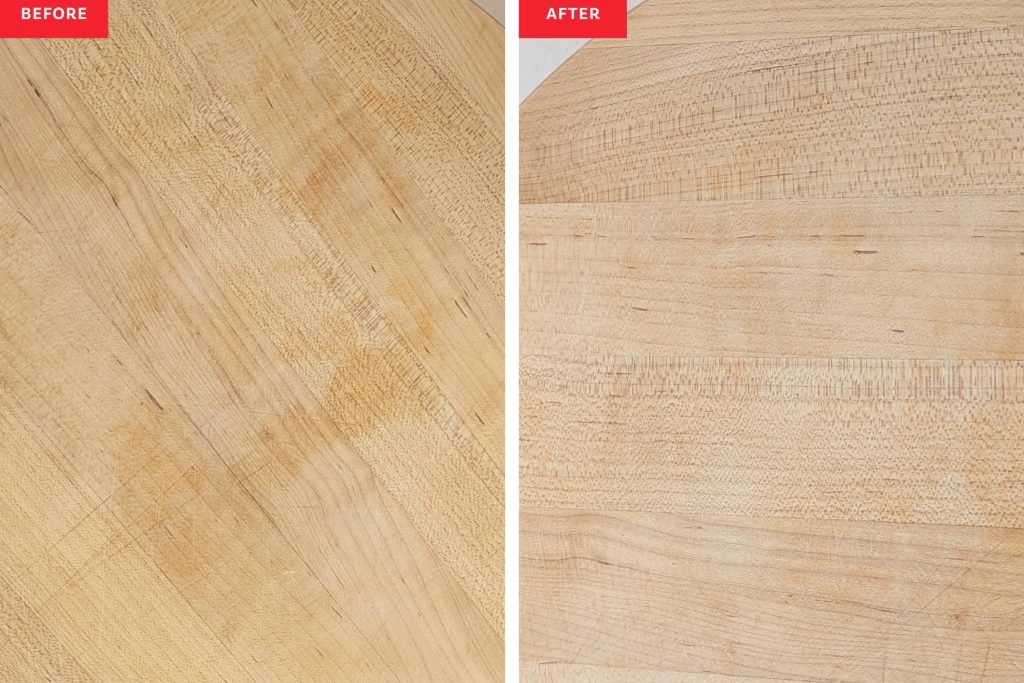
Few kitchen mishaps are as frustrating as prepping a vibrant beet salad or crushing fresh berries for a smoothie, only to notice a deep magenta or purple stain seared into your favorite cutting board. Stains aren’t just an eyesore: set-in pigments and the deep knife grooves they often settle into create hiding spots for harmful bacteria like E. coli and Salmonella, per USDA food safety standards for kitchen surfaces. The right cleaning method depends entirely on your board’s material, and with a few simple, food-safe hacks, you can erase even the most stubborn marks without damaging your tool.
Why Cutting Boards Get Stained (And Why It’s Not Just a Cosmetic Issue)
Cutting board stains form when deeply colored foods transfer their pigments to the board’s surface. Porous materials like wood, bamboo, and walnut absorb these pigments directly into their fibers, making stains harder to remove over time. Non-porous materials like plastic, glass, and composite hold surface stains that seep into micro-scratches created by repeated knife use. Common stain culprits include beets, turmeric, berries, pomegranate, tomato paste, and even synthetic food coloring from pre-packaged snacks. Left unaddressed, these stains can trap bacteria even after regular soap-and-water cleaning, increasing cross-contamination risk. Boards used for raw meat should be fully sanitized proper sterilization for raw meat contact after each use to eliminate pathogens. If you notice fuzzy black, green, or white spots instead of a flat stain, that signals active mold growth, which requires immediate disposal to avoid foodborne illness.
Material-Specific Stain Removal Hacks
No one-size-fits-all cleaning method works for all cutting boards. Follow these material-specific steps to lift stains without damaging your board.
Wood & Natural Fiber (Bamboo, Maple, Walnut)
Wood and bamboo boards are porous and require gentle cleaning to avoid warping or degrading the surface. For light stains (from citrus, onions, or mild produce):
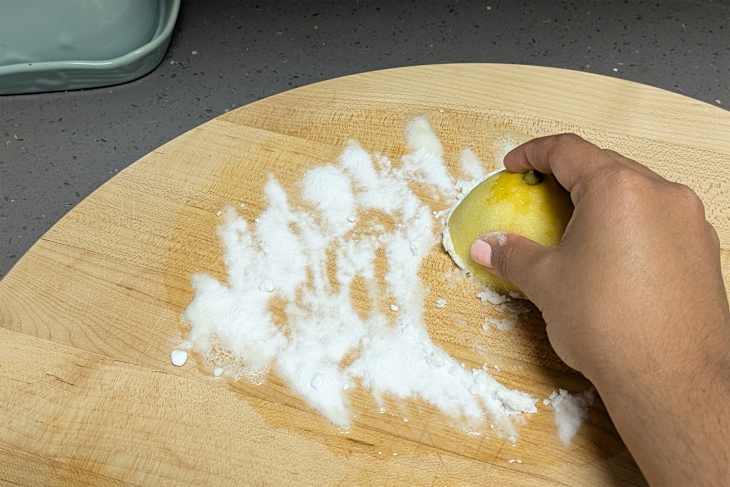
- Cut a fresh lemon in half and sprinkle coarse kosher salt over the stained area
- Scrub the surface with the cut side of the lemon in circular motions for 2 minutes
- Let the mixture sit for 5 minutes to break up pigments
- Rinse with warm water and dry immediately with a clean towel For medium stains (from turmeric, tomato, or light berry marks):
- Mix 2 parts baking soda with 1 part warm water to form a paste
- Spread the paste over the stain and let sit for 10 minutes
- Scrub with a soft-bristle brush (never steel wool, which gouges the surface)
- Rinse thoroughly and dry For deep, set-in stains:
- Dab 3% hydrogen peroxide directly on the stain (this is food-safe and leaves no toxic residue)
- Let sit for 30 minutes, then scrub with a soft brush
- Rinse completely and re-season the board with food-grade mineral oil to protect the surface For stubborn berry or pomegranate stains, follow these fruit-specific stain removal steps for best results. If staining is paired with persistent sour odors, the board may have absorbed bacteria deep in the pores, requiring a deeper clean or replacement. For natural fiber boards, avoid soaking them in water, a common mistake that causes warping and accelerates staining, per University of Minnesota Extension’s kitchen tool maintenance guidance.
Plastic Cutting Boards
Plastic boards are non-porous, so stains settle into micro-scratches rather than absorbing into the material. For light stains:
- Scrub with warm water, dish soap, and a non-abrasive sponge
- Rinse with hot water and dry immediately For medium stains (from curry, soy sauce, or food dye):
- Mix baking soda and warm water into a thick paste
- Spread over the stain and let sit for 15 minutes
- Scrub with a soft brush and rinse thoroughly For tough, set-in stains:
- Mix 1 part 3% hydrogen peroxide with 2 parts baking soda to form a paste
- Apply to the stain and let sit for 30 minutes
- Scrub and rinse completely Avoid using chlorine bleach on plastic boards unless you are disinfecting after raw meat contact: frequent bleach use degrades plastic and leaves chemical residues that can transfer to food. Never put plastic boards labeled "not dishwasher safe" in the dishwasher, as high heat warps the surface and makes it more prone to future staining. For extra-tough plastic board stains, these additional tested stain removal techniques work for even curry or food dye marks.
Glass & Composite Cutting Boards
Glass and composite boards are fully non-porous, so almost all stains are surface-level and easy to remove:
- Scrub with warm soapy water and a non-scratch sponge for light stains
- For stuck-on food marks, apply a baking soda paste, let sit for 10 minutes, then scrub
- For hard water stains (often mistaken for food stains), spray a 1:1 mix of white vinegar and water, let sit for 5 minutes, then wipe clean No oiling or special conditioning is needed for these materials. Note that glass boards dull knife edges quickly, so use a serrated or duller knife for produce, and avoid cutting hard foods like frozen meat or nuts on them to prevent chipping.
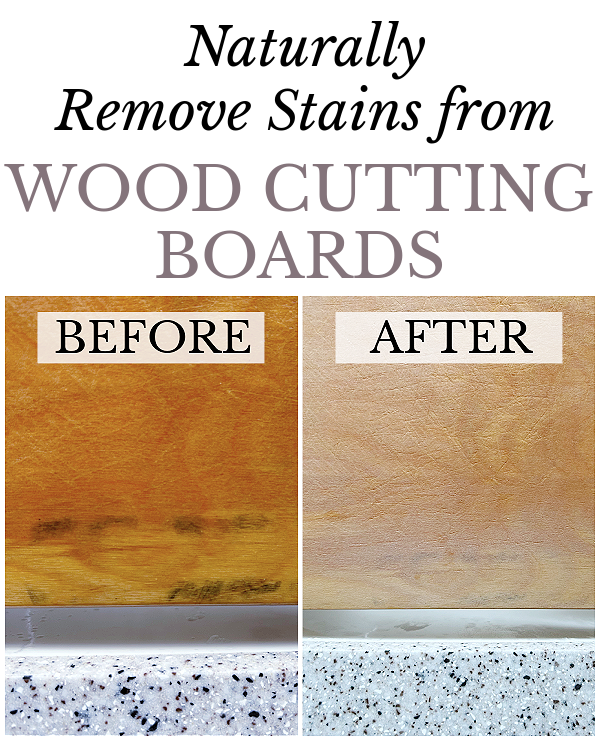 Common household staples like lemon, salt, and baking soda work for most cutting board stains.
Credit: www.lemonslavenderandlaundry.com
Common household staples like lemon, salt, and baking soda work for most cutting board stains.
Credit: www.lemonslavenderandlaundry.com
Proven Tips to Prevent Cutting Board Stains Long-Term
Preventing stains is far easier than removing set-in marks. Follow these simple habits to keep your boards looking new:
- Rinse boards within 5 minutes of use, especially after cutting colorful produce. Letting wet, pigmented food sit on the surface seeps stains into the material faster.
- Color-code your boards: use separate boards for raw meat, produce, and ready-to-eat foods to reduce cross-contamination and limit exposure to strong pigments.
- For wood and bamboo boards, maintain a consistent seasoning routine with food-grade mineral oil 1-2 times per month. This fills porous fibers so pigments can’t absorb as easily. Opt for a well-constructed solid wood board with end-grain construction, which is far more stain-resistant than edge-grain or low-quality composite options.
- Avoid harsh abrasives and bleach on all board types, as they damage the surface and make staining worse over time.
- Store boards in a dry, well-ventilated area, and never stack wet boards on top of each other, as trapped moisture causes warping and accelerates staining.
When to Replace Your Cutting Board Instead of Cleaning It
Even the best cleaning routine can’t salvage a damaged board. Replace your board immediately if you notice any of these signs:
- Deep knife scores deeper than 1/8 inch: these grooves trap bacteria and stains that no amount of scrubbing can remove, especially on plastic boards.
- Persistent odors that remain after thorough cleaning with vinegar or lemon: this signals bacteria has penetrated the porous surface of wood or bamboo boards.
- Warping, cracking, or chipping: damaged boards are unstable for cutting and create extra hiding spots for bacteria and stains.
- Active mold growth that won’t scrub off: mold is a serious food safety hazard and cannot be fully removed from porous board materials. On average, well-cared-for wooden boards last 5-10 years, plastic boards last 1-5 years (depending on use frequency), and glass/composite boards last 10+ years if not chipped.
Frequently Asked Questions
How do I remove old, set-in stains from a wooden cutting board?
For deep stains, make a paste of 2 parts baking soda and 1 part 3% hydrogen peroxide, apply to the stain, let sit for 30 minutes, scrub with a soft-bristle brush, rinse thoroughly, and re-season the board with food-grade mineral oil. For extremely stubborn marks, repeat the process 2-3 times, or sand the surface lightly with 120-grit sandpaper before re-seasoning.
Can I use vinegar to clean cutting board stains?
Yes, undiluted white vinegar works well for light stains and neutralizing odors on all board types. Spray or dab it on the stain, let sit for 5-10 minutes, scrub with a soft sponge, and rinse thoroughly. Avoid using vinegar on wooden boards too frequently, as it can break down wood fibers over time if not followed by oiling.
Is bleach safe to use on cutting boards?
Diluted bleach (1 tablespoon unscented bleach per 1 gallon of cool water) can be used to disinfect plastic boards after contact with raw meat, but it should be used sparingly. Rinse the board thoroughly after use to remove all bleach residue, and never use bleach on wooden or bamboo boards, as it will damage the porous surface and leave toxic residues.
Why do my cutting board stains keep coming back?
Stains usually return if the board has deep micro-scratches that trap pigments, or if wooden boards aren’t properly seasoned after cleaning. For plastic boards, deep scratches mean it’s time to replace the board, as stains will continue to settle in those grooves. For wooden boards, re-seasoning with food-grade mineral oil after deep cleaning fills the pores and prevents future staining.
Conclusion
Cleaning cutting board stains is simple once you match your method to your board’s material. For porous wood and bamboo, gentle, food-safe abrasives like lemon, salt, and baking soda lift stains without damage, while non-porous plastic and glass respond well to baking soda and hydrogen peroxide pastes. The best way to avoid stubborn stains is to prevent them in the first place with immediate post-use care, regular seasoning for natural fiber boards, and proper storage. If your board has deep scores, persistent odors, or mold, don’t risk food safety—replace it with a high-quality, well-maintained option. For more easy, tested kitchen hacks to simplify your cooking and cleaning routine, browse our full library of kitchen upkeep guides.

I’m Abby Lu, a passionate home cook who loves simplifying everyday meals. At PlugChef.com, I share product reviews and cooking guides to help you find the best tools for your kitchen.
Related posts:
 How to Organize a Corner Kitchen Cupboard: Expert Tips
 How to Grow Organic Kitchen Garden: Expert Tips
 How to Best Organize Kitchen Cabinets: Expert Tips
 How Can a Kitchen Renovation Boost Storage & Organization?
 What is Kitchen Plastic Wrapping Paper Made of: Unveiling Secrets
 How Should a Fridge Be Organized: Expert Tips

