
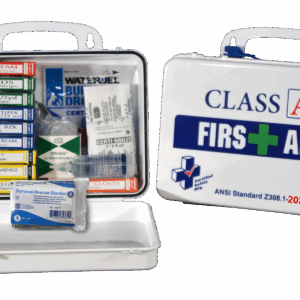
When an accident strikes, seconds count. A properly stocked Class A first aid kit can reduce the severity of minor injuries, prevent infections, and keep your team, family, or passengers safe until professional help arrives if needed. As of 2026, these streamlined, low-risk kits remain a core requirement for workplaces, homes, and vehicles alike, but many people still misunderstand what they include, who needs them, and how to maintain them for compliance and readiness.
In this guide, we’ll break down 2026 ANSI/ISEA standards for Class A kits, walk through required and optional supplies, cover legal requirements for U.S. and international workplaces, and share actionable tips for placement, maintenance, and training to get the most out of your investment.
What Are Class A First Aid Kits, and Who Needs Them?
Class A first aid kits are standardized, low-complexity kits designed to treat common, low-severity injuries including small cuts, scrapes, minor burns, sprains, and insect stings. Unlike higher-tier Class B kits built for high-risk industrial or medical environments, Class A kits prioritize portability, ease of use, and compliance with basic safety regulations for low-hazard spaces.
Per the ANSI/ISEA Z308.1 standard, the U.S. consensus standard for first aid kit performance and contents, Class A kits are intended for environments with 25 or fewer employees and minimal exposure to serious hazards. That makes them ideal for:
- Low-risk workplaces: Offices, retail stores, schools, and daycares
- Personal use: Homes, vehicles, and travel go-bags
- Small event spaces: Community centers, small meeting rooms, and pop-up shops
A common mistake we see in workplace safety audits is assuming Class A kits are only for formal workplaces – they are just as valuable for home and car emergency preparedness, as they cover the vast majority of everyday minor injuries people encounter outside of work.
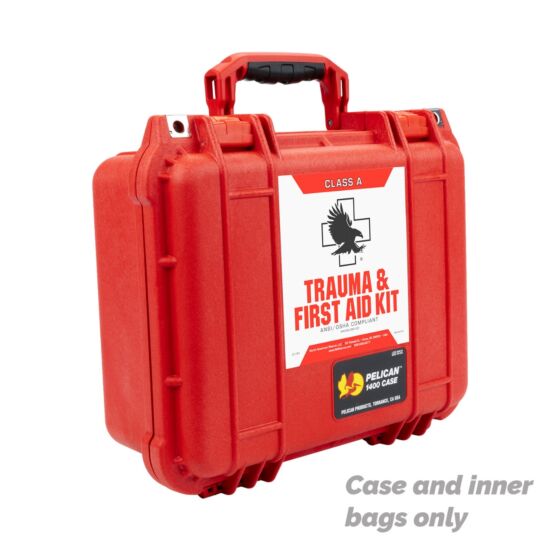
A fully stocked Class A first aid kit mounted in a workplace break room, compliant with 2026 ANSI/ISEA standards.
Credit: www.narescue.com
Mandatory Contents: What’s Inside a 2026-Compliant Class A Kit?
Class A kits are intentionally streamlined to avoid clutter, but they include every supply needed to treat common minor injuries effectively. The 2024 update to the ANSI/ISEA Z308.1 standard (current as of 2026) sets clear minimum requirements for kit contents, scaled to team size.
ANSI Z308.1 Minimum Required Contents
The table below outlines the baseline supplies required for Class A kits, with quantities adjusted for team size:
| Item | Quantity (1–25 employees) | Quantity (26–50 employees) |
|---|---|---|
| Adhesive bandages (various sizes) | 16 | 25 |
| Sterile gauze pads (2×2 in) | 4 | 6 |
| Sterile gauze pads (4×4 in) | 4 | 6 |
| Adhesive tape (1 in roll) | 1 | 2 |
| Antiseptic wipes | 10 | 16 |
| Antibiotic ointment packets | 5 | 10 |
| Disposable gloves (medium) | 2 pairs | 4 pairs |
| Scissors | 1 | 1 |
| Tweezers | 1 | 1 |
| Instant cold pack | 1 | 2 |
| Burn dressing (4×4 in) | 1 | 2 |
| CPR face shield | 1 | 1 |
| First aid instruction manual | 1 | 1 |
All supplies must be sterile, unexpired, and stored in a waterproof, impact-resistant case to protect them from damage in industrial or outdoor settings.
Common Add-Ons for Specific Environments
While the minimum required contents cover most low-risk scenarios, many organizations customize their Class A kits to address specific hazards in their space:
- Offices and retail spaces: Add extra cold packs for sprains from lifting boxes or falls, and extra adhesive bandages for paper cuts and minor lacerations
- Shared break rooms: Add extra burn cream and sterile gauze for minor cooking accidents, especially if your team uses high-quality kitchen knives for meal prep
- Outdoor worksites: Add insect sting relief, sunscreen, and extra gloves for thorns or rough terrain
- Homes with allergy sufferers: Add epinephrine auto-injectors (EpiPens) if prescribed, and antihistamine packets for allergic reactions

Standard Class A first aid kit contents laid out for inspection, including all ANSI-required items for small teams.
Credit: www.safetycompany.com
Legal and Compliance Requirements for 2026
Class A first aid kits are not just a safety best practice – they are a legal requirement in most regions for low-risk workplaces. Failing to comply can result in fines, increased liability in the event of an injury, and higher workers’ compensation costs.
U.S. OSHA Requirements
Per current OSHA workplace first aid requirements, all U.S. employers must ensure first aid kits are "readily available" and "adequate" for the size and risk profile of their workforce. While OSHA does not mandate specific brand or content requirements, it references the ANSI/ISEA Z308.1 standard as the benchmark for compliant kits. Employers must also ensure kits are accessible to all employees, including those with disabilities, and that staff are trained to use the supplies inside.
International Standards
- United Kingdom: The Health and Safety Executive (HSE) requires Class A kits for all low-risk workplaces, with specific content requirements for offices, retail, and education spaces
- European Union: All EU member states require first aid kits that meet the EN 15153 standard, which aligns closely with ANSI/ISEA Z308.1 for low-risk environments
- Canada: The Canadian Centre for Occupational Health and Safety (CCOHS) requires first aid kits that meet provincial standards, most of which reference ANSI or EN guidelines for low-risk spaces
Compliance Risks for Non-Compliant Kits
Beyond fines, non-compliant first aid kits increase liability for employers. If an employee is injured and a first aid kit is missing required supplies or is inaccessible, the employer may be found negligent in a workers’ compensation claim or personal injury lawsuit. Regular inspections and documentation of kit maintenance are the best ways to mitigate this risk.
How to Choose the Right Class A Kit for Your Space
Not all Class A kits are created equal. Choosing the right kit for your environment ensures you meet compliance requirements without paying for unnecessary supplies or sacrificing durability.
Key Selection Factors
When shopping for a Class A kit, prioritize these features:
- Compliance: Confirm the kit meets ANSI/ISEA Z308.1 2024 standards (current as of 2026) and any local regulatory requirements
- Durability: Choose a waterproof, impact-resistant case for outdoor, industrial, or vehicle use; a hard-shell case is ideal for workshops, while a soft-sided case works for offices and cars
- Size and capacity: Match the kit’s employee capacity to your team size – a 10-person kit is sufficient for small home offices, while a 50-person kit is required for larger low-risk workplaces
- Visibility: Opt for a brightly colored case (red or orange) with clear "First Aid" labeling to ensure it is easy to locate in an emergency
Matching Kits to Your Risk Profile
While Class A kits are designed for low-risk environments, you can adjust your selection based on your space’s unique hazards:
- Offices and retail: A standard wall-mount Class A kit is sufficient, placed in a break room or main hallway
- Homes and vehicles: A compact, portable Class A kit fits easily in a glove box, pantry, or bathroom cabinet
- Outdoor worksites: Choose a rugged, weatherproof Class A kit with extra cold packs and burn cream for sun exposure and minor outdoor injuries
Customization Tips for Unique Needs
You can add non-required supplies to your Class A kit without breaking compliance, as long as you keep all minimum required items on hand. Useful customizations include:
- Extra pain relievers (acetaminophen or ibuprofen) if allowed by your workplace health policy
- Emergency contact cards with local poison control, hospital, and emergency services numbers
- Instant ice packs and elastic bandages for sprains
- For shared pantries with small food storage containers for employee snacks, add extra antiseptic wipes to treat minor cuts from opening packaging or prepping food
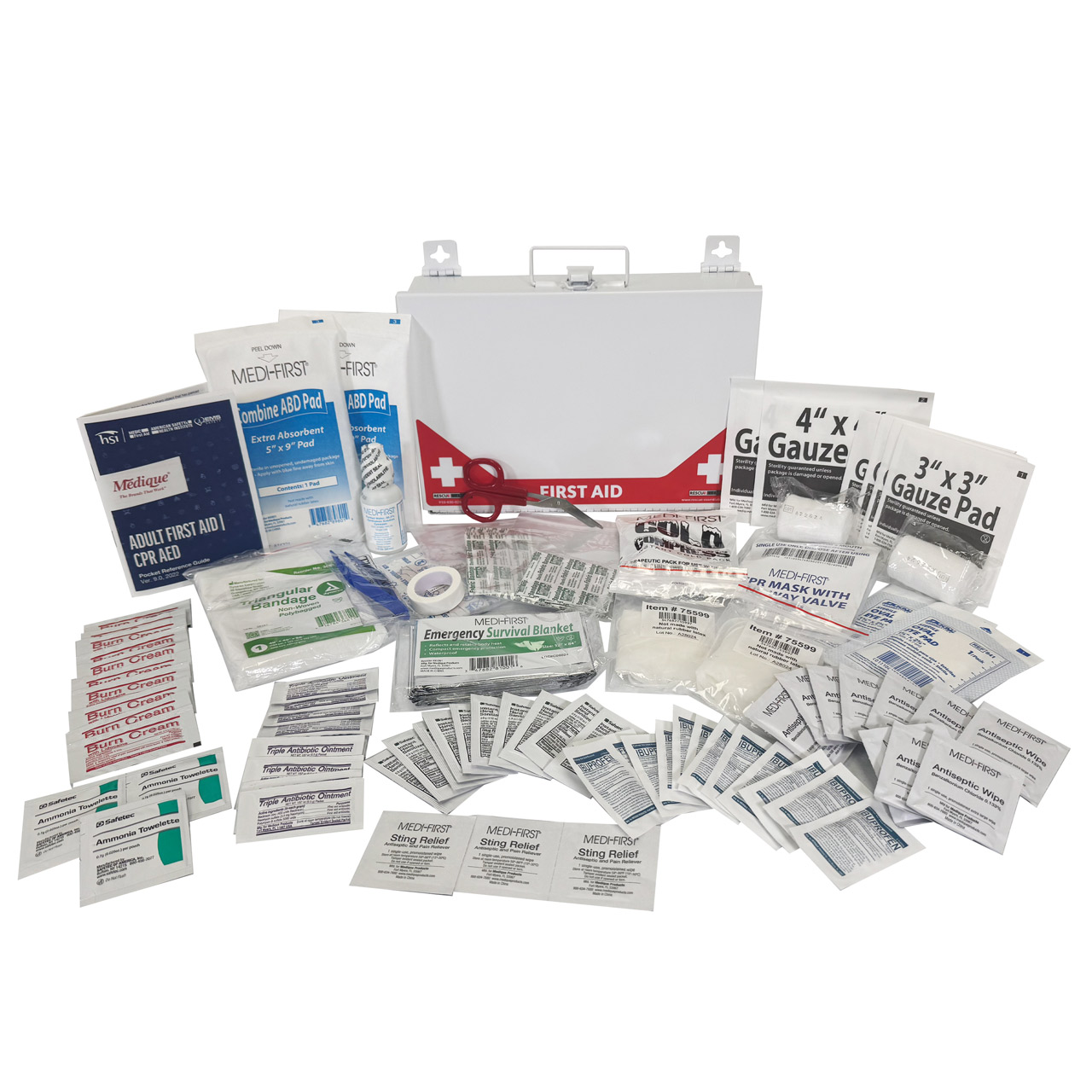
Open 25-person Class A first aid kit with clearly labeled compartments for fast access during emergencies.
Credit: rescue-essentials.com
Placement, Maintenance, and Accessibility Best Practices
A Class A first aid kit is only useful if it is accessible, well-maintained, and easy to find when an emergency strikes. Follow these best practices to ensure your kit is always ready for use.
Strategic Placement Guidelines
Place your kit in a clearly marked, unobstructed location that is accessible to all employees or household members:
- High-traffic areas: Main hallways, break rooms, and near main exits
- Near high-risk zones: For offices with shared kitchens, place the kit within 10 feet of the cooking area; for retail stock rooms, place it near the packing and lifting stations
- Avoid locked or hidden locations: Never store a first aid kit in a locked supply closet, locked cabinet, or out-of-sight location unless you have clearly posted signage with access instructions for all staff
- For large spaces: Place multiple kits on each floor or in each wing of a building to reduce response time. For break rooms with reusable break room food storage for employee meals, mount the kit on the wall directly adjacent to the food prep area for fast access to cooking-related cuts and burns.
Inspection and Restocking Schedules
Per OSHA and ANSI guidelines, inspect your Class A kit at least once per month to ensure all supplies are present, unexpired, and in good condition:
- Check expiration dates on all medications, antiseptic wipes, and sterile items, and replace anything that is past its date
- Restock any used supplies immediately after an incident is treated
- Keep a printed inspection checklist attached to the inside of the kit lid to track restocking dates and inspector initials
- For home kits stored in pantries with large bulk food storage, add a quarterly reminder to your calendar to inspect the kit, as home kits are often forgotten for months at a time
Accessibility for All Employees
Ensure your kit is accessible to all staff, including those with mobility impairments or limited English proficiency:
- Mount wall-mounted kits at a height of 48–60 inches from the floor to accommodate wheelchair users
- Include multilingual first aid instructions inside the kit, or post a translated emergency response guide next to the kit
- Use labeled compartment containers for shared break room kits to separate first aid supplies from food items, with clear text and icon labeling for all staff
Training Your Team to Use Class A Kits Effectively
Even a fully stocked, perfectly placed Class A kit is useless if no one on your team knows how to use its supplies correctly. Regular training builds confidence, reduces response time, and improves outcomes for minor injuries.
Essential First Aid Skills for All Staff
All employees should receive basic first aid training that covers:
- How to identify common injuries that can be treated with a Class A kit (minor cuts, scrapes, minor burns, sprains)
- Proper application of bandages, gauze, and cold packs
- How to use the CPR face shield for emergency breaths
- When to call 911 or seek professional medical care (for severe bleeding, difficulty breathing, chest pain, or loss of consciousness)
- Hands-on practice sessions held annually or after a workplace injury to keep skills fresh
Emergency Response Protocols Integration
Integrate first aid kit use into your existing workplace emergency response plan to reduce confusion during an incident:
- Assign a designated first aid officer for each shift to retrieve the kit and lead the initial response
- Post clear, step-by-step emergency response instructions next to every first aid kit, including local emergency services numbers and the location of the nearest hospital
- Document all first aid incidents in a log, including the date, time, type of injury, supplies used, and outcome, to track trends and identify opportunities to improve safety practices
- For remote work sites or car emergency kits paired with sealed food storage containers for extra supplies, include a printed copy of your organization’s emergency contact protocol inside the kit
Common Misconceptions About Class A First Aid Kits
Many people have outdated or incorrect assumptions about Class A kits that leave them underprepared. Let’s clear up the most common myths:
Myth 1: Class A kits are only for workplaces
Class A kits are just as useful for home, car, and travel use. The most common minor injuries people encounter outside of work – kitchen cuts, minor burns from cooking, scrapes from outdoor activities, and sprains from falls – are exactly the types of injuries Class A kits are designed to treat. A compact, portable Class A kit is a must-have for every vehicle, home, and travel bag.
Myth 2: One Class A kit fits all low-risk environments
While all Class A kits meet the same minimum content requirements, you should customize your kit for your space’s unique risks. A kit for a daycare will need extra burn cream and supplies for minor childhood injuries, while a kit for a retail stock room will need extra cold packs and gauze for lifting-related sprains and cuts. Customization does not violate ANSI or OSHA requirements, as long as you keep all minimum required supplies on hand.
Myth 3: Class A kits can treat serious injuries
Class A kits are designed exclusively for minor, low-severity injuries. They do not include tourniquets, chest seals, or other supplies needed to treat severe bleeding, fractures, or cardiac events. For life-threatening emergencies, call 911 immediately and use a Class B or higher trauma kit if one is available on site.
When to Upgrade to a Higher First Aid Kit Class
Class A kits are perfect for low-risk environments, but some worksites require more advanced supplies to address serious injury risks. If your workplace has any of the following hazards, you may need a Class B or higher first aid kit:
- Exposure to heavy machinery, sharp tools, or hazardous materials
- High risk of severe cuts, amputations, or crushing injuries
- Work at heights or in remote locations with delayed emergency response times
- Large team sizes (more than 50 employees) in low-risk environments
Class B kits include all Class A supplies, plus additional advanced items including larger quantities of gauze and bandages, splints, tourniquets, burn dressings, and eye wash supplies. Per ANSI/ISEA guidelines, Class B kits are required for all high-risk workplaces, including construction sites, manufacturing facilities, and landscaping crews.
Frequently Asked Questions
What is the difference between a Class A and Class B first aid kit?
Class A kits are designed for low-risk environments and include only the minimum supplies needed to treat minor, low-severity injuries. Class B kits include all Class A supplies, plus additional advanced trauma supplies for high-risk workplaces with a higher likelihood of serious injury. Class B kits are required for construction, manufacturing, and other high-hazard industries, while Class A kits are sufficient for offices, retail, schools, and home use.
Are Class A first aid kits required for home use?
No, Class A first aid kits are not legally required for home use in any U.S. state or territory. However, they are a low-cost, high-value investment for every household, as they cover the vast majority of common minor injuries people experience at home, from kitchen cuts and minor burns to scrapes and sprains.
How often should I restock my Class A first aid kit?
Inspect and restock your Class A kit at least once per month, replacing any expired, damaged, or used supplies immediately. For workplace kits, keep a signed inspection log to document compliance with OSHA and ANSI requirements. For home and vehicle kits, set a recurring quarterly reminder on your phone to inspect supplies and restock as needed.
Can I build my own Class A first aid kit instead of buying a pre-assembled one?
Yes, you can build a custom Class A kit as long as it includes all minimum required supplies outlined in the ANSI/ISEA Z308.1 standard, and all supplies are sterile, unexpired, and stored in a waterproof, impact-resistant case. Building your own kit allows you to customize supplies for your specific needs, but pre-assembled kits are often more cost-effective and guarantee compliance with all minimum requirements out of the box.
Conclusion
Class A first aid kits are a low-cost, high-impact safety tool for every low-risk environment, from small offices and retail stores to homes and vehicles. By selecting a 2026 ANSI-compliant kit, placing it in an accessible, clearly marked location, inspecting it monthly, and training your team on basic first aid response, you can reduce injury severity, meet legal requirements, and build a culture of safety for everyone on your premises.
Don’t wait for an accident to discover your kit is out of date or missing critical supplies. Conduct a full inspection of your Class A kit this week, restock any expired or used items, and share basic first aid guidelines with your team. For more preparation tips and safety guides, browse our full preparation tips and safety guides library today.

I’m Abby Lu, a passionate home cook who loves simplifying everyday meals. At PlugChef.com, I share product reviews and cooking guides to help you find the best tools for your kitchen.
Related posts:
 Traditional Chex Mix in Oven: Easy, Crispy, and Delicious Recipe
 Burnt Bottom of Dutch Oven: Easy Fixes to Save Your Cookware
 Kitchenista Mac And Cheese Recipe: Ultimate Comfort Food Delight
 Types of Cheese for Crackers: Ultimate Guide to Perfect Pairings
 Shelf Life of Dates Fruit: Ultimate Guide to Freshness & Storage
 Homemade Butter in a Blender: Easy, Quick & Creamy Recipe

