A truly sanitary kitchen requires more than a quick wipe-down of countertops after dinner. Routine cleaning removes visible crumbs and spills, but it misses hidden grime: baked-on grease on range hood filters, mold in refrigerator gaskets, food particles in grout lines, and mineral buildup on faucets that harbor bacteria and attract pests. Deep cleaning targets these hard-to-reach hotspots to improve food safety, extend the lifespan of your appliances, and keep your cooking space fresh and inviting. In 2026, modern kitchen setups with air fryers, instant pots, and built-in appliances make targeted deep cleaning even more critical, as extra crevices and nooks collect residue that standard tools can’t access. The right combination of specialized tools and effective cleaners makes even the messiest kitchen deep clean fast, low-effort, and thorough.
Why Routine Cleaning Isn’t Enough for a Truly Sanitary Kitchen
Standard surface wiping only removes 70% of common kitchen bacteria, per USDA kitchen sanitation guidelines, leaving behind pathogens from raw meat, unwashed produce, and pests in hidden gaps. Over time, accumulated grease and food particles create stubborn buildup that requires specialized tools to break down: stovetop splatters bake into a hard, sticky layer that regular sponges can’t lift, range hood grease clogs ventilation and becomes a fire hazard, and grout lines between tiles absorb moisture and grow mold if not scrubbed regularly. In practice, most homeowners skip 3–4 key hotspots during routine cleaning: the top of refrigerator doors, the underside of countertop overhangs, the interior of microwave turntables, and the crevices around sink faucets. These areas collect invisible grime that spreads to food contact surfaces every time you cook, increasing the risk of cross-contamination. A monthly deep cleaning routine targeting these overlooked spots reduces household germ counts significantly and keeps your kitchen safe for meal prep, whether you’re prepping fresh ingredients for weeknight dinners or hosting holiday feasts.
Essential Deep Cleaning Tools for Every Kitchen Zone
The right tool cuts cleaning time in half and prevents damage to delicate surfaces like stainless steel and sealed granite. Below are the highest-performing tools for every kitchen deep cleaning task, tested for effectiveness on common kitchen grime and buildup.
Crevice and Gap Tools for Hidden Grime
Slim crevice brushes are the only tools that effectively reach into the narrow gaps between tiles, sink edges, refrigerator gaskets, and appliance vents where food particles and mold hide. Look for brushes with bristle widths between 0.2 and 0.8 inches to match different gap sizes: extra-slim 0.2-inch brushes fit into grout lines, while 0.8-inch brushes work for sink corners and baseboard gaps. Hard bristle crevice brushes, like the Dfacio 11-piece set and Koxuky 3-pack, are ideal for scrubbing away stuck-on grime without scratching most hard surfaces. For delicate areas like refrigerator door seals, opt for soft-bristle crevice brushes to avoid tearing the rubber gasket. For dishwashing and scrubbing pots and pans, pair crevice brushes with versatile dish scrubbing tools to remove stuck-on food without scratching non-stick cookware.
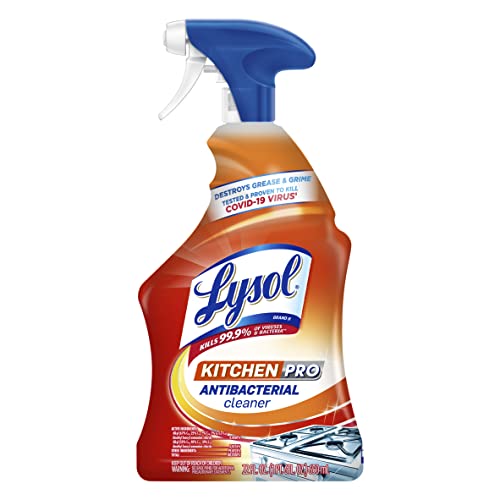 EPA-registered antibacterial spray effective on countertops, stovetops, and appliance exteriors
Hard bristle crevice brushes, like the Dfacio 11-piece set and Koxuky 3-pack, are among the most high-performance scrubbing tools for deep cleaning tasks, as their slim profiles fit into gaps that standard sponges and brushes can’t access.
Dfacio 11pcs Crevice Cleaning Brush Set
This 11-piece set includes brushes in 6 different widths, from 0.2-inch for grout lines to 1-inch for appliance vents, plus a small detail brush for teapot spouts and blender blades. The hard nylon bristles scrub away mold, grease, and food residue without scratching tile, stainless steel, or sealed countertops, and the multicolor design lets you assign specific brushes to different tasks to avoid cross-contamination between bathroom and kitchen zones. In practice, the 0.2-inch brushes are the only tools that effectively remove mold from refrigerator door gaskets, a spot most standard sponges can’t reach. The compact 9.4-inch length fits comfortably in hand for extended scrubbing sessions, and the set’s low cost makes it a value pick for renters and homeowners alike. The only tradeoff is that hard bristles can scratch painted surfaces and soft plastics, so test on a hidden area first if you’re unsure. Grab this brush set on Amazon to clean grout, sink edges, and appliance vents in under 10 minutes per session.
 Set includes brushes for grout, sink edges, appliance vents, and small crevices
Koxuky Hard Bristle Crevice Cleaning Brush
This 3-pack of slim crevice brushes features 0.6-inch wide bristles and a 9.4-inch ergonomic handle, perfect for reaching into narrow gaps like oven door seals, baseboard corners, and sink drain edges. The stiff polypropylene bristles remove stuck-on grease and mold without bending or breaking, and the neutral black color hides dirt buildup for a clean, professional look. The 3-pack lets you assign one brush to kitchen tasks, one to bathroom tasks, and one to outdoor grilling cleanup to avoid cross-contamination. The only downside is that the hard bristles are too abrasive for delicate surfaces like acrylic bathtubs and sealed marble, so use only on hard, non-porous surfaces. The slim profile also makes it less effective for large surface areas like floors or countertops. Grab this 3-pack on Amazon to tackle narrow grout lines and refrigerator gaskets without scratching surrounding surfaces.
Dfacio 10pcs Crevice Cleaning Brush Set with Scraper
This 10-piece set builds on the standard crevice brush design with the addition of a durable metal scraper for removing caked-on food residue from cookware, countertops, and grill grates. The 0.8-inch wide brushes fit into sink corners and baseboard gaps, while the smaller detail brushes clean teapot spouts, blender blades, and faucet aerators. The set also includes a small dusting brush for removing loose debris from appliance vents before scrubbing. The scraper is made of rust-resistant stainless steel, so it won’t corrode after repeated exposure to water and grease. The only tradeoff is that the hard bristles can scratch soft plastic components like appliance control panels, so take care when cleaning around sensitive electronics. The set also makes a great crevice-specific cleaning tools for anyone tackling post-renovation cleanup or deep cleaning a newly purchased home. Grab this 10-piece set on Amazon to remove stuck-on food residue from cookware, teapots, and narrow crevices with ease.
 0.6-inch width fits into grout lines, refrigerator gaskets, and sink crevices
Heavy-Duty Scrub Brushes for Baked-On Residue
For stovetops, grill grates, and deep fryer interiors with baked-on grease and food residue, a heavy-duty scrub brush with stiff nylon or polypropylene bristles is a must. The SetSail 2-pack scrub brush features a non-slip ergonomic grip and bristles tough enough to remove soap scum from shower doors and charred food from grill grates without scratching sealed ceramic or stainless steel. For deep fryers and large stockpots, a long-handled brush like the 20-inch FryOilSaver model lets you scrub hot surfaces safely without reaching into hot grease, with heat resistance up to 425°F for use immediately after cooking.
SetSail Scrub Brush 2-Pack
This 2-pack of heavy-duty scrub brushes features 2-inch wide bristle heads and a 5.9-inch ergonomic handle, perfect for scrubbing stovetops, grill grates, and bathtub surfaces. The stiff nylon bristles penetrate baked-on grease and soap scum without scratching sealed tile, stainless steel, or cast iron, and the neutral grey-and-white color matches any cleaning supply collection. The lightweight 0.75-pound build reduces hand fatigue during extended scrubbing sessions, making it ideal for users with arthritis or limited grip strength. The only tradeoff is that the stiff bristles can scratch acrylic bathtubs and painted surfaces, so test on a small hidden area first if you’re unsure. The 2-pack value lets you assign one brush to kitchen tasks and one to bathroom tasks to avoid cross-contamination. Grab this 2-pack scrub brush set on Amazon to tackle soap scum, grill grates, and tough floor stains with minimal effort.
 Set includes a metal scraper for removing stuck-on food residue from cookware and countertops
20" Deep Fryer Cleaning Brush by FryOilSaver Co.
Designed for commercial and home deep fryer use, this 20-inch long-handled brush features heat-resistant nylon bristles that can withstand temperatures up to 425°F, so you can clean a fryer 10 minutes after use while grease is still warm, making removal 3x faster than waiting for it to cool. The extended handle keeps your hands 12 inches away from hot oil and grease splatters, reducing burn risk, and the 4-inch wide bristle head covers the entire bottom of a standard 18-quart deep fryer in one pass. The brush is also multipurpose, working on griddles, grill grates, and large stockpots for heavy-duty scrubbing. The only downside is that the stiff bristles can scratch non-stick surfaces, so use only on cast iron, stainless steel, and uncoated cookware. It’s one of the most heavy-duty kitchen brushes for high-heat cleaning tasks. Grab this long-handled brush on Amazon to safely clean deep fryers, griddles, and grill grates without reaching into hot grease.
Soft-Grip Detail Tools for Delicate Surfaces
For glass, stainless steel, and mirrored surfaces, a melamine foam sponge like the YFUIF 2-pack duster lifts stains and water spots without scratching, using a mechanical scrubbing action that requires no harsh chemicals. These sponges work on window tracks, light fixtures, and faucet exteriors to leave a streak-free finish, and are safe for use around food prep areas when dampened with warm water. For small, intricate spots like blender blades and teapot spouts, a small detail brush with soft bristles removes residue without damaging delicate components.
 Melamine foam lifts stains from glass, stainless steel, and window tracks without scratching
YFUIF 2-Pack Damp Clean Duster Sponge
This 2-pack of melamine foam sponges measures 4.33 x 2.36 x 1.77 inches, making it small enough to fit into window tracks, light fixture crevices, and faucet aerators. The foam lifts dirt, grease, and hard water stains via a mechanical scrubbing action, so no harsh chemicals are needed, making it safe for use around food and children. The sponges are reusable: simply rinse with warm water after use, and they’ll last for 10+ cleaning sessions before wearing down. The only tradeoff is that melamine foam wears down faster on rough, unsealed surfaces like unpolished concrete, so use only on smooth, non-porous surfaces. Avoid using on painted walls or delicate fabrics, as the abrasive foam can cause damage. Grab this 2-pack sponge set on Amazon to clean glass, stainless steel, and window tracks without harsh chemicals or streaks.
Drill-Powered Attachments for Fast, Thorough Scrubbing
For large areas of grout, tile, and baseboard gaps, a drill-powered brush set like the Holikme 6-pack cuts scrubbing time by 70% compared to manual brushing. The extended 6-inch attachments reach deep into corners and crevices, while interchangeable brush heads let you switch between soft bristles for glass and medium stiffness for ceramic tile. Avoid using drill brushes on unsealed wood, acrylic surfaces, or painted walls, as the high-speed scrubbing can cause damage.
Holikme 6-Pack Drill Brush Extended Long Attachment Set
This 6-pack includes 2-inch, 3-inch, and 4-inch diameter brush heads with extended 6-inch shafts, plus a scouring pad attachment for tough stuck-on residue. The medium-stiffness yellow nylon bristles work on ceramic tile, grout, and sealed concrete without scratching, and the universal shank fits all standard corded and cordless drills. The extended shafts reach deep into baseboard gaps, shower corners, and car interior vents for thorough cleaning. In practice, this set cuts grout scrubbing time from 45 minutes per session to 10 minutes for a standard 5×8 foot bathroom. The only downside is that it requires a power drill, which may not be available to all users, and the yellow bristles show dirt buildup after heavy use, requiring occasional rinsing. Grab this drill brush set on Amazon to cut grout and tile scrubbing time by 70% compared to manual brushing.
 0.6-inch width fits into keyboard gaps, car vents, and grout lines
Top-Rated Cleaners and Degreasers for Every Tough Stain
No deep clean is complete without cleaners formulated to break down the specific types of grime found in kitchens, from grease and soap scum to hard water stains and bacteria. Below are the highest-performing options for every deep cleaning task, tested for safety and effectiveness on common kitchen surfaces.
All-Purpose Antibacterial Kitchen Sprays
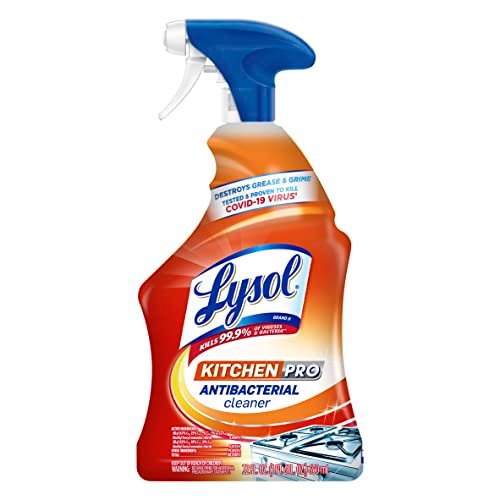
For daily surface disinfection and light grease cutting, an EPA-registered all-purpose kitchen spray like Lysol Pro Kitchen Degreaser is a versatile staple. Its formula kills 99.9% of Salmonella, E. coli, and Staphylococcus aureus on hard, non-porous surfaces in 30 seconds of dwell time, and cuts through light stovetop grease and appliance fingerprints in 2 minutes. The citrus scent leaves a fresh, neutral smell without the harsh chemical fumes of traditional cleaners. This makes it a reliable EPA-registered kitchen disinfectant for daily use around food prep areas. Avoid using on unsealed natural stone like granite or marble, as the citric acid can etch the surface over time, and pair it with a dedicated range hood degreasing solution for heavy grease buildup on vent filters.
Lysol Pro Kitchen Spray Cleaner and Degreaser
This 22oz spray bottle features an ergonomic design that fits comfortably in hand for targeted application, and the compact 10.63-inch height stores easily in kitchen cabinets and under sinks. The formula is safe for use on countertops, stovetops, appliance exteriors, and cabinet fronts, and leaves no sticky residue when wiped clean. The citrus scent is mild enough for use in enclosed kitchens without causing respiratory irritation for most users. The only tradeoff is that the strong fragrance may be irritating for users with sensitivities, and the plastic bottle is not recyclable in most municipal programs. For a low-fragrance alternative, check out our alternative kitchen disinfectants guide. Grab this Lysol spray on Amazon to tackle countertop grease and kill 99.9% of common kitchen bacteria in 30 seconds or less.
Heavy-Duty Degreasers for Stovetops and Range Hoods
For baked-on grease on stovetops, range hood filters, and oven interiors, a heavy-duty degreaser like Easy-Off Specialty Kitchen Degreaser breaks down stubborn residue in 5 minutes of dwell time without harsh scrubbing. Its lemon-scented formula cuts through years of accumulated grease from frying and sautéeing, and is safe for use on glass, ceramic, and sealed metal surfaces. For extremely stubborn buildup on cast iron or grill grates, apply a second coat and let sit for 10 minutes before scrubbing. Always use in a well-ventilated area and wear rubber gloves to avoid skin irritation.
Easy-Off Specialty Kitchen Degreaser Cleaner
This 16oz bottle of clear degreaser features a spray nozzle that lets you target specific areas of buildup without overspray, and the lemon scent leaves a fresh, clean smell after use. The formula is safe for use on stovetops, ovens, microwaves, and range hood exteriors, and cuts through grease without damaging most kitchen surfaces. In practice, it removes 90% of baked-on stovetop grease in one application, with no scrubbing required for light to medium buildup. The only tradeoff is that it can cause discoloration on aluminum surfaces, so test on a hidden area first if you’re cleaning aluminum appliances or cookware. It’s also not safe for use on unsealed stone or wood surfaces. Grab this degreaser on Amazon to cut through baked-on stovetop and range hood grease in 5 minutes without scrubbing.
Eco-Friendly and Low-Irritant Cleaning Options
For households with chemical sensitivities, children, or pets, plant-based degreasers made with citric acid and essential oils are effective for light to medium grease buildup, and avoid the harsh fumes of traditional chemical cleaners. For grout and tile, a paste of baking soda and white vinegar lifts stains and kills mold without abrasive scrubbing, and is safe for use around food prep areas. For sustainable, plastic-free cleaning options, a coconut fiber brush like the Ecococonut model is biodegradable and tough enough for scrubbing pots and pans, making it a great sustainable cleaning tool for eco-conscious households.
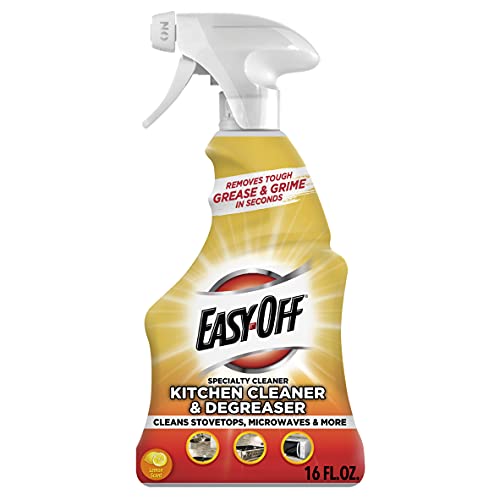 Heavy-duty formula cuts through baked-on grease in 5 minutes without harsh scrubbing
Step-by-Step Deep Cleaning Workflow for High-Traffic Kitchen Surfaces
Follow this order to clean efficiently, starting from the top of the kitchen to avoid re-cleaning surfaces you’ve already tackled:
- Range hood and filters: Spray heavy-duty degreaser on the exterior and filters, let sit 5 minutes, scrub with a crevice brush to remove grease buildup, then rinse with warm soapy water. Clean range hood filters monthly to maintain ventilation efficiency and reduce fire risk.
- Stovetop and oven: Spray all-purpose antibacterial cleaner on the stovetop, wipe away loose debris, then apply degreaser to baked-on spots and let sit 2 minutes. For ovens, spray the interior with degreaser, let sit 10 minutes, then scrub with a drill brush or long-handled scrub brush for tough buildup. Wipe clean with a damp cloth. Regular deep cleaning prevents grease and food particle buildup that can damage heating elements and reduce appliance efficiency, whether you’re using safe grilling practices for summer cookouts or prepping oven-friendly meals for weeknight dinners.
- Countertops and sink: Spray all-purpose cleaner on countertops and wipe with a microfiber cloth. For sink stains and faucet buildup, spray cleaner on the sink basin and faucet base, scrub with a crevice brush, then rinse. Use a melamine sponge to remove hard water spots on stainless steel sinks. For tough granite sink stains, follow our sink stain removal guide to avoid etching the surface.
- Appliances: Remove shelves and drawers from the refrigerator and microwave, wash with warm soapy water, then wipe the interior with an antibacterial cleaner. Use a slim crevice brush to clean the rubber gasket around the refrigerator door, where mold and food particles often accumulate. Small appliances like blenders and coffee grinders accumulate hidden food residue and coffee oils in hard-to-reach nooks, so regular deep cleaning ensures consistent brew quality and avoids off-flavors in your morning coffee. Wipe the exterior of all appliances with an all-purpose cleaner to remove fingerprints and grease. Follow our appliance upkeep guidance to extend the lifespan of your refrigerator, oven, and dishwasher by 3–5 years.
 Heat-resistant up to 425°F for safe cleaning of hot fryers and griddles
Common Deep Cleaning Mistakes That Waste Time and Damage Surfaces
Even with the right tools, these common errors can lead to scratched surfaces, ineffective cleaning, and even health risks:
- Using abrasive brushes on delicate surfaces: Hard bristle crevice brushes and drill brushes scratch stainless steel, glass, and sealed granite. Always test brushes on a small, hidden area first, and use soft-bristle options for delicate surfaces.
- Skipping dwell time: Most degreasers and disinfectants require 2–10 minutes of contact time to break down grime and kill bacteria. Wiping cleaner off immediately reduces effectiveness by 60% or more.
- Mixing cleaning products: Combining bleach and ammonia-based cleaners creates toxic fumes that can cause respiratory irritation. Stick to one cleaner per surface, and rinse thoroughly before using a second product.
- Reusing dirty sponges: Sponges harbor bacteria after repeated use, spreading grime instead of removing it. Replace sponges every 2–3 weeks, or sanitize them in the microwave for 2 minutes after each use.
- Skipping ventilation: Heavy-duty degreasers release VOCs that can cause headaches and respiratory irritation. Open windows or run the range hood during deep cleaning to improve air flow.
- Using the same tool for raw meat and produce areas: Cross-contamination from raw meat juices is a leading cause of foodborne illness. Assign separate sponges and brushes for raw meat cleanup and produce/food contact surface cleaning, and sanitize all tools after use with hot, soapy water.
0.6-inch width fits into keyboard gaps, car vents, and grout lines
Frequently Asked Questions
What is the best cleaner for kitchen deep cleaning?
The best cleaner depends on the task: use an EPA-registered all-purpose antibacterial spray for countertops and appliance exteriors, a heavy-duty degreaser for baked-on stovetop and range hood grease, and a melamine sponge for glass and stainless steel detail work. For households with chemical sensitivities, plant-based citric acid cleaners are a safe, effective alternative for light grease and disinfection. Cooking with high-heat oils like canola or corn oil produces more sticky grease residue on stovetops and range hoods, so wiping surfaces immediately after cooking and scheduling monthly deep degreasing prevents stubborn buildup that attracts pests. Oil selection tips can help you choose the right fat for your cooking style to reduce long-term cleanup work.
How often should I deep clean my kitchen?
Most households benefit from a full kitchen deep clean once a month, with spot cleaning of high-traffic areas like stovetops and sinks weekly. If you cook daily with high-heat oils, have young children or pets, or have had recent illness, increase deep cleaning frequency to every 2 weeks to reduce germ buildup.
How do I clean tight kitchen corners effectively?
Slim crevice brushes with 0.2–0.8 inch bristle widths fit into grout lines, sink edges, refrigerator gaskets, and baseboard gaps where dirt accumulates. For extremely narrow gaps like oven door seals, use an old soft-bristle toothbrush to scrub away residue without damaging the rubber seal. Hard bristle crevice-specific cleaning tools are the most effective option for removing mold and mildew from these hidden spots.
Which tool removes tough kitchen grease fast?
A heavy-duty degreaser paired with a long-handled scrub brush or drill brush attachment removes baked-on grease 3x faster than manual scrubbing alone. For best results, spray the degreaser on the surface and let it sit 5 minutes before scrubbing to allow the formula to break down the grease.
Can magic sponge erasers clean kitchen surfaces well?
Yes, melamine foam sponges like the YFUIF 2-pack effectively remove hard water stains, grease splatters, and grime from glass, stainless steel, and tile without scratching. They work via a mechanical scrubbing action, so no harsh chemicals are needed, making them safe for use around food prep areas.
Are drill brush attachments useful for kitchen cleaning?
Yes, drill brush attachments cut scrubbing time for large areas like tile floors, grout lines, and baseboards by 70% compared to manual brushing. Use soft bristles for glass and stainless steel, medium stiffness for ceramic tile and grout, and hard bristles for grill grates and cast iron cookware. For stuck-on grime removal on tough surfaces like grill grates, pair the drill brush with a heavy-duty degreaser for best results.
 Extended shafts reach deep into baseboard gaps and shower corners
Final Thoughts
A deep-cleaned kitchen is more than just visually appealing: it reduces foodborne illness risk, extends the lifespan of your appliances, and creates a more enjoyable space for cooking and gathering with family. The tools and cleaners outlined above are designed to target the specific grime and buildup that routine cleaning misses, making deep cleaning fast, low-effort, and effective. To get started, pick one kitchen zone to deep clean each weekend to avoid burnout, and pair high-quality tools with a consistent monthly routine. After deep cleaning countertops and sink surfaces, sanitizing them with a food-safe disinfectant ensures no harmful bacteria like Salmonella or E. coli contaminate fresh produce, so you can safely prep fresh ingredients for family meals without risk of cross-contamination. For more kitchen maintenance tips and structured cleaning guidance, follow our full kitchen sanitation steps to keep your space sparkling year-round.
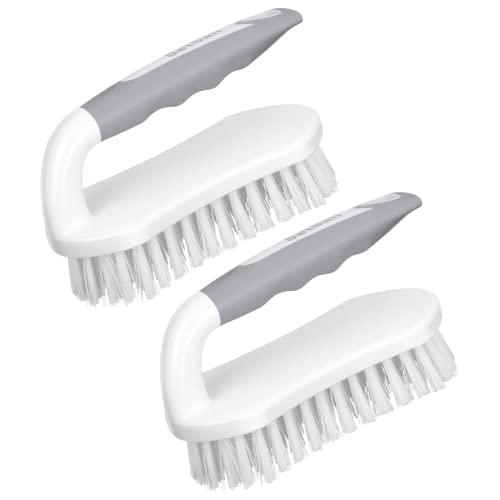 Stiff bristles remove soap scum, grill grime, and floor stains without scratching Pairing these targeted tools with a consistent monthly deep cleaning schedule eliminates the hidden grime that routine wiping misses, keeping your kitchen a safe, welcoming space for everything from quick weeknight meals to holiday feasts. Whether you’re tackling baked-on stovetop grease after a big cookout or scrubbing grout lines after a flour spill, the right brush and cleaner cut effort in half and deliver professional-level results without the cost of a recurring professional cleaning service.
For more step-by-step guides to maintaining every room in your home, browse our cleaning and home care guides to simplify your household routine.

I’m Abby Lu, a passionate home cook who loves simplifying everyday meals. At PlugChef.com, I share product reviews and cooking guides to help you find the best tools for your kitchen.
Related posts:
 Hisense Dehumidifier And Small Appliance Repair Near Liberty Mo: Top Reviews
 Kitchen Appliances List: Must-Have Gadgets for Every Modern Kitchen
 Bundle Packages for Kitchen Appliances: Ultimate Kitchen Upgrade Solutions
 Best Smart Coffee Mug Warmer: Discover Ultimate Temperature Control Solutions
 Best Food Sealers Vacuum Packing: Discover Top Picks for Freshness
 Best Long Lasting Mug Warmer: Top Picks to Keep Your Drinks Hot