
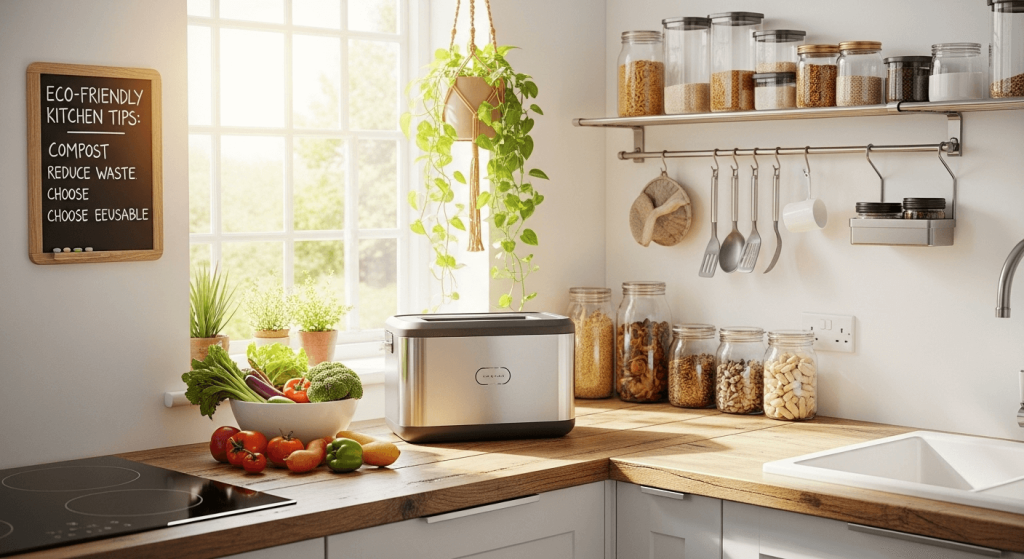
The average kitchen is one of the most resource-intensive spaces in any home: the U.S. Department of Energy estimates it accounts for roughly 30% of a household’s total energy use, while the U.S. Environmental Protection Agency finds more than 30% of all food produced in the U.S. goes to waste, much of it from residential kitchens. The good news is you don’t need a full, expensive remodel to make a meaningful impact. Small habit swaps, low-cost product upgrades, and mindful design choices can cut your kitchen’s waste and energy use by 25% or more, no matter your budget or space size. This guide covers actionable, practical ideas to turn your kitchen into a greener, more efficient space, with tips for renters, homeowners, and even commercial kitchen operators.
 A clearly labeled countertop compost bin makes separating food scraps from landfill waste effortless
1. Reduce Food and Packaging Waste
Food and single-use packaging make up the largest share of most households’ kitchen waste. Cutting this waste is the single highest-impact change you can make, as food waste in landfills produces methane, a greenhouse gas 25x more potent than carbon dioxide over a 100-year period, per U.S. Environmental Protection Agency food waste data.
Meal Planning and Leftover Optimization
The easiest way to cut food waste is to avoid overbuying in the first place. Before you shop, take inventory of what you already have in your fridge, pantry, and freezer, and plan 3-4 meals around those ingredients. Stick to a written list when shopping to avoid impulse buys of perishables you won’t use before they spoil. In practice, a common mistake is overstocking on fresh produce “just in case” — households that stick to a pre-planned list and inventory check cut avoidable perishable waste by roughly a quarter. Leftovers don’t have to be boring: repurpose roasted vegetables into frittatas or grain bowls, stale bread into croutons or breadcrumbs, and overripe fruit into smoothies or baked goods. Storing your compost caddy and reusable produce bags in dedicated drawer space for zero-waste tools eliminates the friction of digging them out from crowded cabinets, making the habit stick long-term.
Composting for Every Living Situation
Composting keeps food scraps out of landfills and turns them into nutrient-rich soil for houseplants or garden beds. Renters and small-space households have just as many options as homeowners with yards: countertop compost bins with activated carbon filters eliminate odors for under $20, and Bokashi fermentation systems break down all food waste (including meat, dairy, and citrus, which can’t go in standard backyard compost) in just 2 weeks with no outdoor space required. If your city offers municipal compost pickup, that’s the lowest-lift option: just scrape food scraps into your curbside bin each week. If you have outdoor space, a small backyard tumbler compost bin takes up less room than a standard trash can and produces usable compost in 3-6 months.
Ditch Single-Use Packaging
The average American family uses more than 500 plastic zipper bags and 300 feet of plastic wrap per year, per EPA estimates. Swapping these for reusable alternatives is a low-cost, high-impact change: use cotton or mesh produce bags when shopping for bulk dry goods, store leftovers in glass or stainless steel containers instead of plastic wrap, and choose products with minimal or recyclable packaging when possible. If you’re upgrading your storage, organized pot and pan storage frees up cabinet space to store bulk dry goods and reusable containers without clutter.
 Reusable glass containers and bamboo utensils replace single-use plastic wrap and disposable utensils
2. Cut Kitchen Energy Use
Energy use in kitchens comes from two main sources: appliances (refrigerators, ovens, dishwashers, etc.) and daily habits. Small upgrades and habit changes can cut your kitchen’s energy use by 20-30% with no loss of functionality.
Upgrade to High-Efficiency Appliances
When it’s time to replace an old appliance, opt for a model with the latest ENERGY STAR certification: 2026 standards are 10-15% stricter than 2020 models, meaning new certified refrigerators, dishwashers, and ovens use significantly less power for the same performance. If you’re in the market for a new cooktop, induction models use 5-10% less energy than electric coil cooktops and 30% less than gas, per U.S. Department of Energy kitchen energy guidance. If you prefer a classic aesthetic, many durable retro-inspired appliances now carry ENERGY STAR ratings, so you don’t have to sacrifice style for efficiency.
No-Cost Energy-Saving Habits
You don’t have to buy new appliances to cut energy use. These small habit changes add up fast:
- Air-dry dishes instead of using your dishwasher’s heat-dry cycle, cutting its energy use by 15%
- Keep your refrigerator and freezer coils clean (vacuum them every 6 months) to improve efficiency by up to 25%
- Use lids on pots when cooking on the stovetop to cut cooking time and energy use by 30%
- Unplug small appliances (toasters, coffee makers, blenders) when not in use to eliminate “phantom energy drain,” which accounts for 5-10% of a typical home’s electricity bill For meal prep, energy-efficient meal prep tools like high-performance blenders that cook soup directly in the jar eliminate the need to heat food on the stovetop, cutting energy use even further.
Lighting and Standby Power Savings
Swap incandescent bulbs for LED under-cabinet and overhead lights: LEDs use 75% less energy and last 25 times longer than traditional bulbs. Plug small appliances into a power strip and turn the strip off when you leave the kitchen to cut phantom power drain. Motion-sensor under-cabinet lights are a low-cost $20 upgrade that only turn on when you’re cooking, eliminating wasted energy from lights left on by mistake.
 Smart appliances with energy-tracking features help you identify and cut wasteful energy habits
3. Sustainable Kitchen Materials and Design
If you’re remodeling or updating your kitchen, choosing sustainable materials reduces your environmental impact and creates a healthier home environment. Even small design swaps can make a big difference.
Eco-Friendly Surfaces and Cabinets
For remodels, prioritize FSC-certified wood, which is harvested from responsibly managed forests, reclaimed wood from deconstructed buildings (which reduces demand for new logging), or bamboo (a fast-growing grass that matures in 3-5 years, vs 20+ years for traditional hardwood). For countertops, recycled glass composite, reclaimed wood butcher block, or quartz made with 10-30% recycled content are low-impact, durable options. Always choose low-VOC or zero-VOC finishes for cabinets and walls to avoid off-gassing harmful chemicals into your home air. If you’re keeping existing wooden surfaces, regular maintain wooden kitchenware with food-safe mineral oil extends their lifespan by years, avoiding the need for replacement and reducing waste.
Water-Saving Fixtures
Low-flow faucet aerators (which cost less than $10) reduce water use by 30% without impacting water pressure, saving the average household 3,000+ gallons of water per year, per the EPA. Dual-flush toilets reduce water use by 20% compared to standard models, and touchless faucets eliminate waste from accidentally left-running taps. Fixing a single dripping faucet can save up to 3,000 gallons of water annually, so address leaks as soon as you notice them.
Passive Design Upgrades
Maximize natural light with large windows or skylights to reduce the need for electric lighting during the day. Light-colored countertops and backsplashes reflect natural light, brightening the space without extra energy. Proper insulation around exterior kitchen walls reduces heating and cooling energy loss by 10-15% in most climates.
 Bamboo cabinetry and LED under-cabinet lighting cut both deforestation and energy use
4. Low-Waste Cleaning and Maintenance
Traditional kitchen cleaning products often contain harsh chemicals that harm waterways and indoor air quality, and single-use cleaning supplies create unnecessary waste. Simple swaps make your cleaning routine safer for your family and the planet.
Non-Toxic, Low-Waste Cleaning Supplies
Most kitchen messes can be cleaned with three staple, biodegradable ingredients: white vinegar, baking soda, and Castile soap. Use a 1:1 mix of vinegar and water for countertops and glass, baking soda paste for tough sink stains, and Castile soap for dishwashing. Skip single-use cleaning wipes, which are non-recyclable and often filled with harsh chemicals, and opt for reusable Swedish dishcloths instead of paper towels: one dishcloth replaces 17 rolls of paper towels over its lifespan. For tough sink grime, use natural sink cleaning methods that avoid harsh acids that damage metal fixtures and harm waterways.
Extend the Life of Your Kitchen Tools
The most sustainable kitchen tool is the one you already own. Hand-wash cast iron and wooden cutting boards to avoid damage from high heat and harsh detergents, sharpen knives regularly instead of replacing them, and repair small appliance parts (like blender jars or stand mixer attachments) instead of tossing the entire unit. If you love hosting, low-waste frozen treat makers let you make ice cream at home with reusable containers, avoiding the single-use plastic pint packaging from store-bought treats.
5. Grow Your Own Kitchen Herbs and Produce
Growing your own herbs and small produce cuts down on plastic packaging from store-bought items, reduces the carbon footprint of transported food, and eliminates waste from spoiled pre-packaged herbs. The average herb sprig travels 1,500 miles to reach a U.S. grocery store, per USDA data, so homegrown options have a far lower footprint.
No-Yard Herb Gardening
You don’t need a backyard to grow fresh herbs: a sunny south-facing windowsill can support basil, mint, cilantro, and parsley year-round in most climates. Potted herbs cost $2-$3 per plant and last for months with just weekly watering, cutting down on the $3-$4 plastic clamshells of pre-packaged herbs that often spoil before you can use them all.
Small-Space Vegetable Gardening
If you have a balcony or small yard, container-friendly vegetables like cherry tomatoes, peppers, lettuce, and strawberries are easy to grow for beginners. Use compost from your kitchen food scraps to fertilize plants, closing the waste loop and reducing the need for chemical fertilizers. Companion planting (pairing marigolds with tomatoes, for example) deters pests naturally without chemical pesticides.
 A sunny south-facing windowsill is all you need to grow fresh, plastic-free herbs year-round
Companion planting marigolds with vegetables deters pests naturally without chemical pesticides
6. Long-Term Sustainable Kitchen Upgrades
For homeowners planning a full remodel or major update, these upgrades deliver long-term waste and energy savings that pay for themselves over time.
Sustainable Cabinet and Remodel Choices
Refacing existing cabinets instead of full replacement cuts remodel waste by 60-70%, per the National Kitchen and Bath Association, and saves thousands of dollars compared to a full cabinet replacement. If you’re installing new cabinets, choose FSC-certified, reclaimed, or bamboo materials, and pair them with corner storage solutions to make the most of existing space, reducing the need for extra storage units that use more materials and take up floor space.
Invest in Durable, Multi-Use Tools
Avoid cheap, disposable kitchen tools that break after a few uses and end up in landfills. Instead, invest in high-quality, multi-purpose items: a cast iron Dutch oven can replace a stockpot, sauté pan, and bread baker, a sharp chef’s knife replaces 5+ specialty knives, and a set of stainless steel mixing bowls replaces disposable plastic or paper bowls. These tools last for decades with proper care, cutting long-term waste and saving you money on replacements.
Emerging 2026 Sustainable Kitchen Trends
The latest sustainable kitchen innovations make going green easier than ever: smart appliances with energy-tracking features alert you to wasteful habits, solar-powered small gadgets (like coffee makers and blenders) cut reliance on grid electricity, and compostable bioplastic kitchenware made from cornstarch or mushroom mycelium breaks down in home compost bins in 30 days, replacing single-use plastic items.
 Stainless steel and cast iron cookware last for decades, eliminating the waste of disposable non-stick pans
7. Sustainable Practices for Commercial Kitchens
Commercial kitchens face unique waste and energy challenges, but small operational changes can cut costs and environmental impact significantly. The EPA estimates food service establishments in the U.S. generate roughly 1.5 million tons of food waste annually.
Energy and Water Efficiency
Upgrade to commercial-grade ENERGY STAR refrigerators and dishwashers, which use 20-30% less energy and water than standard models. Low-flow pre-rinse spray valves cut dishwasher water use by 50%, and fixing leaky faucets can save 10,000+ gallons of water per year for a typical restaurant. Install motion-sensor lighting in walk-in coolers and storage areas to cut unnecessary energy use from lights left on 24/7.
Food Waste and Sourcing
Implement a standardized inventory system to track perishable stock and reduce over-ordering, which cuts food waste by 15-20% for most restaurants. Donate excess edible food to local food banks, protected under the Bill Emerson Good Samaritan Food Donation Act, and compost unavoidable food scraps via municipal commercial compost programs. Source ingredients from local, regenerative farms to cut transportation emissions, and switch to compostable or reusable packaging for takeout orders. A 2025 National Restaurant Association survey found 68% of diners are willing to pay more for meals from eco-friendly establishments, making sustainability a competitive advantage as well as an environmental choice.
Staff Training and Culture
Train kitchen staff on proper waste sorting, energy-saving habits (turning off equipment when not in use, using lids on pots to cut cooking time), and portion control to reduce plate waste. Posting clear signage near waste stations and running quarterly refresher training ensures sustainable practices become a consistent part of daily operations.
Frequently Asked Questions
What are the easiest zero-waste kitchen swaps for beginners?
Start with three low-friction changes that cost less than $50 total: keep a countertop compost bin for food scraps, swap plastic wrap for beeswax wraps or reusable silicone lids, and use reusable produce bags when shopping for bulk dry goods. These swaps cut household kitchen waste by 20% in the first month for most households.
Do energy-efficient appliances actually save money?
Yes. An ENERGY STAR-certified refrigerator uses 9-10% less energy than a standard model, saving the average household $100-$200 per year on electricity bills, per the U.S. Department of Energy. Over the 10-15 year lifespan of a typical fridge, that adds up to $1,000-$3,000 in savings, often offsetting the higher upfront cost of the efficient model.
Can I compost in an apartment with no outdoor space?
Absolutely. Countertop compost bins with activated carbon filters eliminate odors for under $20, and Bokashi fermentation systems break down all food waste (including meat and dairy) in 2 weeks with no outdoor space required. Many cities also offer free municipal compost pickup for apartment dwellers, so check with your local waste management department for options.
Are bamboo kitchen products actually sustainable?
Yes, when sourced from responsibly managed forests. Bamboo matures in 3-5 years (vs 20+ years for hardwood trees), requires no pesticides, and produces 35% more oxygen per acre than equivalent tree stands. Look for FSC-certified bamboo products to ensure they were harvested sustainably.
Conclusion
Creating an eco-friendly kitchen doesn’t require perfection or a huge upfront investment. Start with one small swap per week: add a compost bin this week, swap plastic wrap for beeswax wraps next, and upgrade to LED lights the week after. Small, consistent changes build habits that stick, and when multiplied across millions of households, they drive massive collective impact for the planet. Ready to start your journey? Check out our sustainable kitchen tools and maintenance tips to find durable, low-waste products and expert guidance to keep your green kitchen running smoothly for years to come.

I’m Abby Lu, a passionate home cook who loves simplifying everyday meals. At PlugChef.com, I share product reviews and cooking guides to help you find the best tools for your kitchen.
Related posts:
 Best Eco-Friendly Kitchen Cookware for Healthy Cooking
 How to Get Rid of Oils from Kitchen Counter Organically: Eco-Friendly Tips
 How to Design a Organic Minimalist Kitchen: Effortless Elegance
 How to Cut PCB Circuit Board: Easy Steps for Precise Results
 How Do You Make a Butcher Block Cutting Board: Easy DIY Guide
 Top 10 Best Non-Toxic Cooking Utensils – Safe & Durable Choices for Healthy Homes

