
Wooden cutting boards are a staple in both home and professional kitchens, prized for their durability, knife-friendly surface, and natural aesthetic. But their porous structure, designed to absorb small cuts from knife blades, also traps food particles, moisture, and odor-causing bacteria over time. Pungent ingredients like garlic, onions, raw fish, and aged cheese can leave behind strong, lingering smells that regular washing can’t eliminate. The good news is that most wooden cutting board odors are surface-level or trapped in the top layer of pores, and can be fixed with simple, non-toxic, at-home methods. This guide covers immediate deodorizing hacks, treatments for deep-set stubborn smells, and long-term prevention tips to keep your board fresh for years.
Why Do Wooden Cutting Boards Develop Odors?
Wood is a naturally porous material, with tiny channels in its fibers that absorb liquid and food particles when you cut and clean the board. When leftover food scraps are not fully removed, bacteria break them down, releasing pungent odor compounds that get trapped in the wood pores. Moisture is another common culprit: if a board is left damp after washing, stored in a dark, humid cabinet, or soaked in water for too long, mold and mildew can grow, leaving a sour, musty smell. End-grain cutting boards, which have exposed wood fibers at the cutting surface, absorb odors faster than edge-grain boards, but all wooden boards can develop smells with improper care. Identifying the source of the odor—food residue vs. mildew—will help you pick the most effective treatment. If you notice a sour smell coming from your kitchen sink alongside your board’s odor, you may have a mildew issue in your drain that you can eliminate drain odors safely with simple natural methods.
Immediate Deodorizing Methods for Common Odors
These quick, easy methods work for mild to moderate smells from everyday cooking ingredients, and take 15 minutes or less to complete.
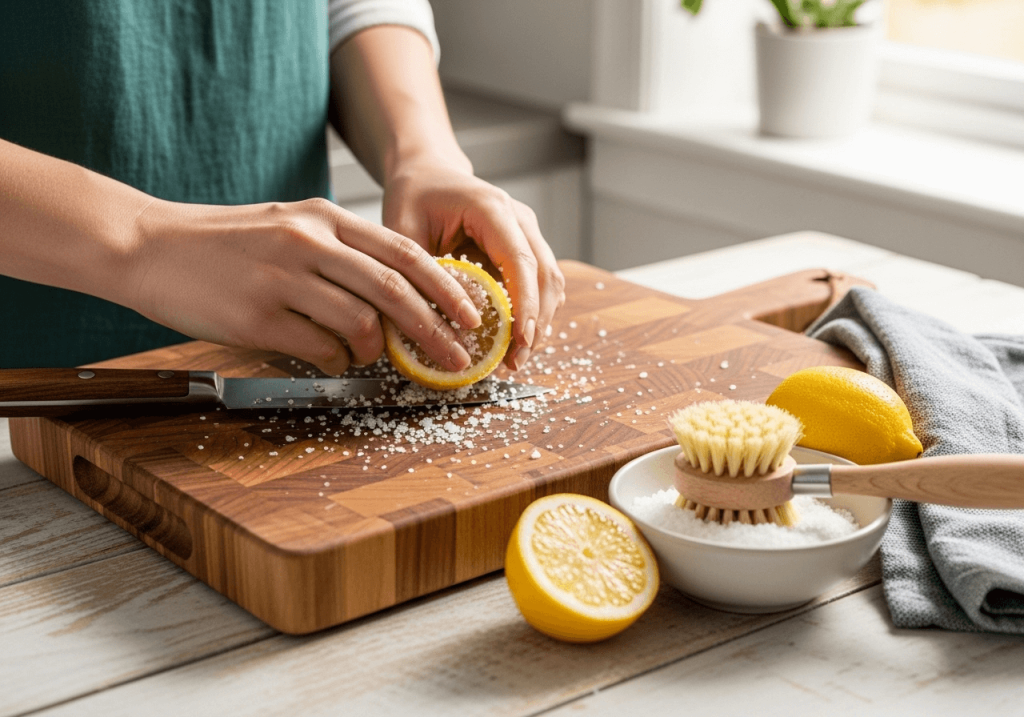
Lemon and Coarse Salt Scrub
Lemon’s citric acid breaks down odor-causing compounds and kills surface bacteria, while coarse salt acts as a mild abrasive to scrub trapped food residue out of the wood pores without scratching the surface. For best results, use coarse kosher salt or sea salt, as fine table salt dissolves too quickly to be effective.
- Cut a fresh lemon in half, and squeeze a small amount of juice directly onto the smelly areas of the board to saturate the surface.
- Sprinkle a generous layer of coarse salt (about ¼ cup for a standard 12×18 inch board) over the entire surface.
- Scrub the board with the cut side of the lemon in firm, circular motions for 1–2 minutes, focusing on areas with strong odors.
- Let the mixture sit for 5 minutes, then rinse thoroughly with warm water.
- Dry immediately with a clean, lint-free towel. This method is ideal for mild smells from onions, garlic, citrus, and light food residue. A common mistake is using too little salt or rinsing with cold water, which can cause the wood to warp.
Baking Soda Paste for Stubborn Food Odors
Baking soda is alkaline, which neutralizes acidic odor compounds, and absorbs grease and leftover food particles without damaging wood. It is safe for all wooden boards, even lightly colored or finished surfaces.
- Mix ½ cup of baking soda with 2–3 tablespoons of warm water to form a thick, spreadable paste (avoid making it runny, as excess water can damage the wood).
- Spread the paste evenly over the entire board, focusing on areas with strong smells.
- Let it sit for 15–20 minutes—do not leave it longer than 30 minutes, as prolonged moisture exposure can cause swelling.
- Scrub gently with a soft-bristled brush or non-scratch sponge, then rinse thoroughly with warm water.
- Dry completely with a clean towel. This method works well for strong smells from fish, curry, garlic, and faint mildew odors.
White Vinegar Solution for Deep Deodorizing
Undiluted white distilled vinegar is a natural disinfectant that breaks down odor-causing bacteria and neutralizes pungent smells without harsh chemicals. Avoid apple cider vinegar or colored vinegar, as these can stain the wood.
- For light odors, mix equal parts white vinegar and warm water; for strong, set-in smells, use undiluted vinegar.
- Dampen a clean cloth with the solution, wringing out excess liquid so it is not dripping wet.
- Wipe the entire board surface, including the sides and edges, then let it sit for 5–10 minutes.
- Rinse thoroughly with warm water, then dry immediately with a clean towel. Vinegar is the best first line of defense for sour, musty mildew smells. If you dislike the lingering vinegar scent, follow up with a lemon and salt scrub to remove it.
Hydrogen Peroxide for Mildew and Bacterial Odors
3% hydrogen peroxide (the standard household concentration) kills mold, mildew, and odor-causing bacteria that regular cleaners miss, and breaks down into water and oxygen so it leaves no harsh residue.
- Pour 2–3 tablespoons of 3% hydrogen peroxide directly onto the board, spreading it evenly with a clean cloth.
- Let it sit for 10–15 minutes—do not leave it longer than 20 minutes, as it can lighten the wood color with prolonged exposure.
- Rinse thoroughly with warm water, then dry completely. Test the solution on a small, inconspicuous area first if your board is very light-colored to avoid discoloration. This method is ideal for musty smells from mildew, or boards that have been left damp for extended periods.
 Citric acid from lemon and abrasive salt break down surface odor compounds without damaging wood.
Image: Wooden cutting board cleaning tips
Citric acid from lemon and abrasive salt break down surface odor compounds without damaging wood.
Image: Wooden cutting board cleaning tips
How to Treat Deep-Set, Stubborn Odors
If the above methods do not fully eliminate the smell, the odor is likely trapped deep in the wood pores or caused by long-term mildew growth. These targeted treatments will address even the most persistent smells.
Overnight Baking Soda Treatment
For set-in smells from aged cheese, raw meat, or long-term trapped grease, use a dry, long-form baking soda treatment to avoid excess moisture:
- Sprinkle a thick, even layer of coarse baking soda over the entire board.
- Cover the board loosely with a clean, dry cloth to keep it free of dust and debris.
- Leave it in a cool, dry place for 8–12 hours (overnight works best).
- The next day, brush off the baking soda, wipe the board with a slightly damp cloth, rinse, and dry thoroughly.
Sunlight and Air Exposure
UV rays from sunlight kill mold spores, and air circulation helps evaporate trapped moisture that causes odor. For musty, damp smells:
- Place the board in indirect, direct sunlight for 2–3 hours, flipping it halfway through to expose both sides evenly.
- Do not leave it in direct sun for longer than 3 hours, as prolonged exposure can dry out the wood, cause warping, or fade the board’s color.
- After sun exposure, condition the board with food-grade mineral oil to restore moisture lost during drying.
Tea Tree Oil Boost (For Mildew Odors)
Tea tree oil has natural antifungal and antibacterial properties that target mildew smells without harsh chemicals:
- Mix 10 drops of tea tree essential oil with 1 cup of warm water, and stir in 1 tablespoon of baking soda to help the mixture bind to the wood.
- Wipe the entire board with the mixture, let it sit for 10 minutes, then rinse thoroughly with warm water.
- Dry completely, then condition the board as usual. This method also leaves a mild, fresh scent and helps prevent mildew from returning. For visible mold spots on your board, follow a remove mold from wood surfaces guide to fully sanitize the wood before deodorizing.
 White distilled vinegar neutralizes strong food and mildew odors without leaving harsh chemical residue.
Image: Freshen up cutting board
White distilled vinegar neutralizes strong food and mildew odors without leaving harsh chemical residue.
Image: Freshen up cutting board
What to Avoid When Deodorizing Wooden Cutting Boards
Using the wrong cleaning methods can damage your board, cause warping, or leave harmful residues that transfer to food. Avoid these common mistakes:
- Don’t soak the board in water for more than 5 minutes: Wood absorbs water quickly, which causes swelling, warping, and cracks. Trapped moisture also leads to mildew smells long-term.
- Avoid harsh chemical cleaners: Bleach, ammonia, and abrasive scouring pads can damage the wood’s finish, leave toxic residues, and strip the natural oils that protect the board from odor absorption.
- Never put wooden cutting boards in the dishwasher: High heat and prolonged water exposure will warp the board, ruin its finish, and make it far more likely to absorb odors over time.
- Skip cooking oils for conditioning: Olive oil, vegetable oil, and other cooking oils go rancid over time, leading to a sour, off smell that can transfer to food. Use only food-grade mineral oil or a beeswax-based board conditioner instead. To keep your board in top shape, use condition bamboo and wood boards with the right products after every deep clean.
Long-Term Prevention to Keep Your Board Smelling Fresh
The easiest way to avoid odors is to build a consistent care routine that prevents food and moisture from seeping into the wood pores in the first place.
Proper Cleaning After Every Use
Clean your board immediately after each use to prevent food scraps from breaking down and causing odors:
- Scrape off leftover food bits with a bench scraper or dull knife.
- Wash with warm, mild soapy water and a soft sponge—avoid harsh antibacterial soaps that can leave residue.
- Rinse immediately with warm water, then dry with a clean towel.
- Stand the board upright in a well-ventilated area to air dry completely before storing. If you cut raw meat, fish, or poultry, sanitize the board after washing by wiping it with a 1:1 vinegar and water solution, per USDA cutting board safety guidelines to kill harmful bacteria that can cause foodborne illness and lingering odors.
Regular Conditioning to Seal the Pores
Unsealed or dry wood has open pores that absorb moisture and food odors. Condition your board every 3–4 weeks (or every 8–10 uses, whichever comes first) to seal the pores and protect the wood:
- Pour a generous amount of food-grade mineral oil or beeswax board conditioner onto the board.
- Rub it in with a clean cloth in circular motions, covering the entire surface, including the sides and edges.
- Let it sit for 1–2 hours (or overnight for very dry, cracked boards) so the wood can absorb the oil fully.
- Wipe off any excess oil with a clean cloth before storing. This practice is recommended by the University of Minnesota Extension cutting board care guide to extend the board’s lifespan and prevent odor absorption. Stick to a proper seasoning routine to keep the wood sealed and protected between conditioning sessions.
Store your board in a cool, dry spot with good air flow, such as a dedicated dry, organized storage area under your sink, rather than a dark, cramped cabinet where moisture can build up. A ventilated under-sink shelf keeps the board elevated off the cabinet floor, reducing exposure to pooled water and humidity. Keep your cutting board in a dedicated kitchen storage spot away from raw meat and produce to avoid cross-contamination that can lead to lingering odors. Avoid stacking wet dishes or utensils on top of the board, and use separate utensil organizers to keep it dry and scratch-free between uses. Stick to non-toxic cleaning alternatives like vinegar, lemon, and baking soda instead of harsh chemical cleaners that can damage the wood and leave harmful residues on food.
 Proper storage and regular oiling prevent moisture absorption and odor buildup over time.
Image: Tips to Keep Your Board Fresh
Proper storage and regular oiling prevent moisture absorption and odor buildup over time.
Image: Tips to Keep Your Board Fresh
Frequently Asked Questions
How long does it take to get a smell out of a wooden cutting board?
Mild odors from onions, garlic, or citrus can be removed in 10–15 minutes with a lemon and salt scrub. Stubborn smells from fish, curry, or raw meat may take 20–30 minutes with baking soda or vinegar, plus a full drying cycle. Deep-set mildew odors may require an overnight baking soda treatment or 2–3 hours of sun exposure, plus proper conditioning to seal the pores and prevent recurrence.
Can I use dish soap to deodorize my wooden cutting board?
Mild dish soap is safe for cleaning food residue and surface bacteria from your board during regular washing, but it will not neutralize trapped odor compounds in the wood pores. For deodorizing, pair soap washing with one of the acid or alkaline treatments listed above, such as lemon, vinegar, or baking soda, to break down odor-causing residues.
How do I know if my cutting board smell is mildew vs. food odor?
Food odors smell like the pungent ingredients you cut (garlic, fish, etc.) and are limited to the surface of the board. Mildew smells musty, sour, or earthy, similar to a damp basement or wet cloth, and is often accompanied by visible black, green, or white fuzzy spots. If you suspect mildew, use a vinegar or hydrogen peroxide treatment first, then dry the board completely in sunlight to kill remaining mold spores.
Will deodorizing treatments damage my wooden cutting board?
All the methods listed above are safe for wooden cutting boards when used correctly. Avoid soaking the board in any liquid for more than 5 minutes, and don’t leave cleaning treatments on the board for longer than the recommended time (30 minutes for baking soda, 15 minutes for hydrogen peroxide) to prevent water damage or discoloration. Regular conditioning after deodorizing will restore the wood’s protective finish.
Conclusion
Wooden cutting boards are a timeless, eco-friendly alternative to plastic boards, offering a durable, knife-friendly surface for all your meal prep needs. Their natural porosity is what makes them so effective, but it also means they can absorb odors from pungent ingredients if not cared for properly. The good news is that nearly all smells can be eliminated with simple, non-toxic deodorizing methods, and a consistent cleaning and conditioning routine will keep your board fresh for years. If your board is severely warped, cracked, or has deep-set mold that does not respond to any deodorizing treatment, it is best to replace it to avoid food safety risks. For a long-lasting, custom option, you can even build a custom cutting board from scratch with properly sealed, food-safe wood. Have you tried any of these deodorizing hacks? Share your go-to method in the comments, or browse our guides to sustainable kitchen storage and non-toxic cleaning tools to keep your entire kitchen smelling fresh and running smoothly.

I’m Abby Lu, a passionate home cook who loves simplifying everyday meals. At PlugChef.com, I share product reviews and cooking guides to help you find the best tools for your kitchen.
Related posts:
 How to Oil Cutting Board Bamboo: Ultimate Guide for Lasting Care
 How to Safely Clean Wooden Cutting Boards Using Vinegar: Expert Guide
 How to Restore a Cutting Board: Easy Steps for a Like‑New Look
 How to Get Stains Out of Cutting Board: Easy & Effective Tips
 Navy Bean And Ham Recipes: Delicious Comfort Food Ideas
 Cherry Pistachio Chocolate Ice Cream: Irresistible Summer Delight

