
Wooden cutting boards are a staple in most home kitchens: they’re durable, gentle on knife edges, and add a warm, natural aesthetic to your counter space. But without proper care, they can harbor harmful bacteria, develop stubborn stains and odors, and even crack or warp over time. Whether you purchased a new wooden board or built a custom cutting board, following a simple, consistent maintenance routine will keep it food safe for years of use. This guide covers expert-backed steps to clean, disinfect, condition, and care for your board, plus answers to common questions to avoid costly mistakes.
Why Food-Safe Wooden Cutting Boards Matter
Many home cooks assume plastic cutting boards are safer than wood, but research from the FDA confirms that properly maintained wooden cutting boards are just as safe, if not safer, than plastic options. Wood’s natural porous fibers trap and kill bacteria faster than plastic’s smooth surface, which can develop deep, unscrubbable scratches that hide germs. A well-cared-for wooden board can last 10+ years, saving you money and reducing waste, while also avoiding the plastic microtears that can end up in your food over time. If your board has deep, unremovable grooves, widespread mold, or large cracks that can’t be sanded out, it’s no longer safe to use and should be replaced entirely, as bacteria can hide in damaged wood that no cleaning routine can eliminate.
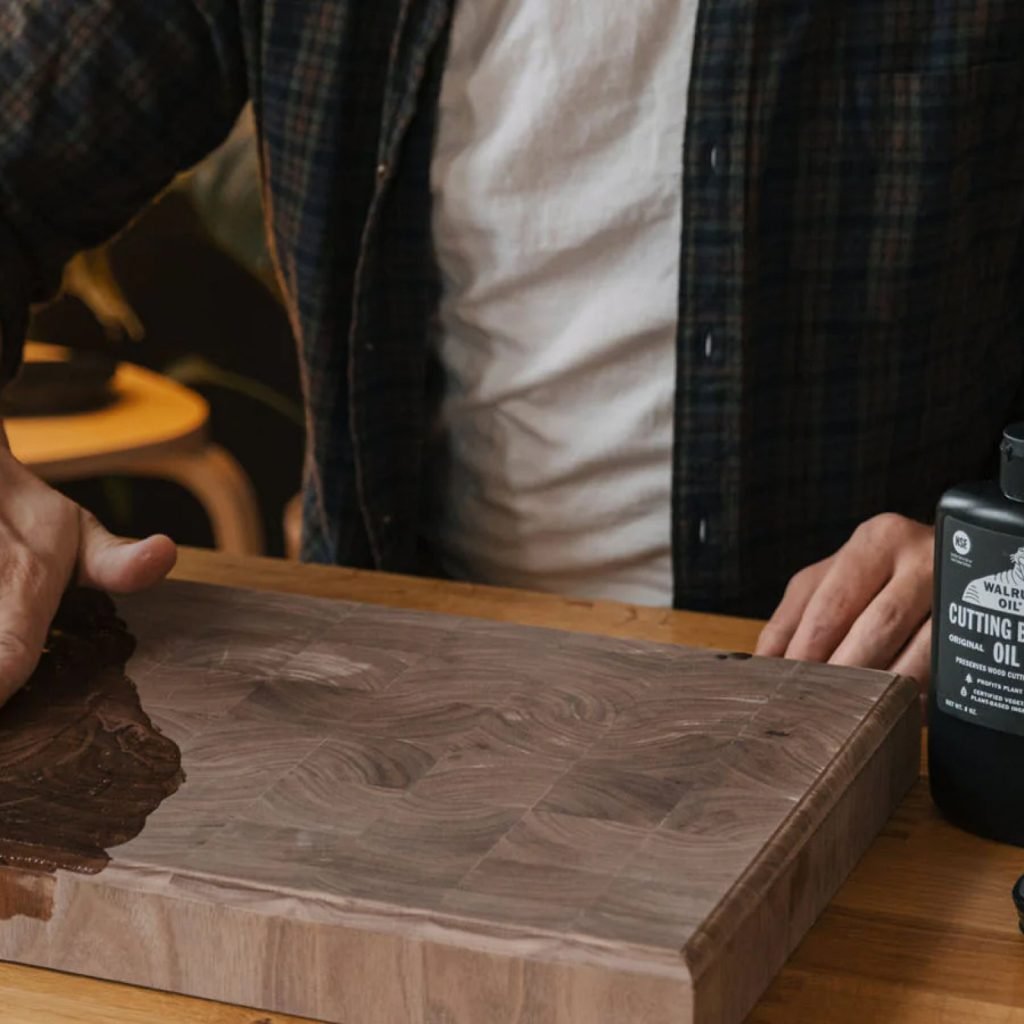
 A well-maintained wooden cutting board resists bacteria and lasts for decades with routine care.
Image source: www.amazon.ca
A well-maintained wooden cutting board resists bacteria and lasts for decades with routine care.
Image source: www.amazon.ca
Essential Prep: Supplies You’ll Need
You don’t need specialty products to make your cutting board food safe — most supplies are likely already in your kitchen. The key is to avoid harsh chemicals, abrasive tools, and oils that will damage the wood or go rancid over time.
| Safe for Wooden Cutting Boards | Unsafe for Wooden Cutting Boards |
|---|---|
| Warm water + mild, fragrance-free dish soap | Dishwashers or prolonged soaking |
| USP-grade food-safe mineral oil | Olive, vegetable, or coconut oil |
| White distilled vinegar (5% acidity) | Harsh antibacterial cleaners |
| Food-grade 3% hydrogen peroxide | Non-food-grade mineral oil (sold for tool use) |
| Soft-bristle scrub brush | Abrasive steel wool or scouring pads |
| Plastic food scraper | Metal scrapers or knives for cleaning |
Optional supplies include fresh lemons for deodorizing, baking soda for stain removal, and a beeswax-mineral oil blend for extra water resistance 1-2 times per year.
 All the supplies you need to make your cutting board food safe are likely already in your kitchen.
Image source: food52.com
All the supplies you need to make your cutting board food safe are likely already in your kitchen.
Image source: food52.com
Step-by-Step Guide to Food-Safe Cutting Board Care
Follow these steps in order for a full maintenance routine, or adjust the frequency based on how often you use your board.
Step 1: Deep Clean the Board After Every Use
Start by scraping off any large, stuck food debris with a plastic scraper (metal tools will gouge the wood surface, creating grooves where bacteria can hide). Wash the entire board — including edges, juice grooves, and the underside — with warm (not hot) water and a single drop of mild, fragrance-free dish soap. Use a soft sponge or soft-bristle brush to scrub the surface gently, then rinse thoroughly under running water. Common mistake: Soaking the board in the sink, which causes wood to swell, warp, and absorb excess moisture that encourages bacterial growth. Dry the board immediately with a clean, lint-free microfiber cloth, then stand it upright on its edge to air dry completely for 10-15 minutes before storing. Never put a wooden cutting board in the dishwasher, as high heat and harsh detergents will strip the wood’s natural finish and cause cracking.
Step 2: Disinfect to Kill Harmful Bacteria
Disinfect your board once a week, or immediately after cutting raw meat, poultry, seafood, or other high-risk foods, to kill lingering bacteria. Pour undiluted 5% white distilled vinegar evenly over the board surface, spread with a clean cloth, and let it sit for 5-7 minutes (do not let it dry completely, as this can damage the wood finish). For extra disinfection after contact with raw proteins, spray the board lightly with 3% food-grade hydrogen peroxide, let it bubble for 2-3 minutes, then wipe clean with a damp cloth. Important safety note: Never mix vinegar and hydrogen peroxide in the same application, as this creates peracetic acid, a corrosive substance that will damage the wood and irritate skin. If you used hydrogen peroxide, rinse the board with a small amount of warm water before drying thoroughly.
Step 3: Deodorize and Remove Stubborn Stains
For lingering odors from garlic, onions, fish, or other strong-smelling foods, or light surface stains from beets, berries, or turmeric, use natural deodorizing methods. Cut a fresh lemon in half and rub the cut side all over the board surface, let it sit for 3-5 minutes, then wipe clean with a damp cloth and dry immediately. For tougher stains, make a thick paste of 2 tablespoons baking soda and 1 tablespoon warm water, scrub gently into the stained area with a soft-bristle brush, let sit for 5 minutes, then rinse thoroughly with warm water and dry completely. Common mistake: Scrubbing too hard with baking soda or using steel wool, which will scratch the wood surface and create new grooves for bacteria to hide. For persistent stains that don’t lift with these methods, our guide to removing cutting board stains has step-by-step solutions for even the toughest discoloration. If you’re dealing with lingering, strong odors from garlic, fish, or onions that won’t come off with vinegar, our guide to eliminating cutting board smells covers advanced deodorizing methods for even the most stubborn scents.
Step 4: Condition the Wood to Prevent Damage
Conditioning is the most important step for long-term food safety, as it keeps the wood from drying out, cracking, and absorbing moisture and bacteria over time. Use only USP-grade food-safe mineral oil, which is refined, odorless, and free of additives that could leach into food (avoid "mineral oil" sold at hardware stores for tool maintenance, as it is not food-grade). Pour a small amount of oil directly onto the board surface — a thin, even layer is sufficient, no need to soak the wood. Use a clean, lint-free cloth to rub the oil into the entire surface, including sides, edges, and juice grooves. Let the board sit for 4-6 hours, or ideally overnight, so the wood can absorb the oil fully, then wipe off any excess oil with a dry cloth before storing. For extra water resistance, you can apply a beeswax-mineral oil blend (mix equal parts food-grade mineral oil and melted beeswax, cooled to a spreadable paste) 1-2 times per year, especially if you use the board frequently.
Critical Best Practices for Long-Term Safety
Small, consistent habits will extend your board’s lifespan and keep it food safe far longer than occasional deep cleans:
- Use separate boards for different food types: Designate one board exclusively for raw meat, poultry, and seafood, another for produce, and a third for ready-to-eat foods like bread or charcuterie. Using separate boards eliminates cross-contamination risk entirely, per USDA cutting board safety standards.
- Never soak the board: Prolonged water exposure causes warping and cracking. If the board gets very wet, dry it immediately and stand it upright to air dry fully.
- Store in a cool, dry place: Avoid storing the board near the dishwasher or sink where it can absorb excess moisture. Leave a small gap between the board and the wall if storing in a cabinet to allow air circulation.
- Avoid cutting very hard foods directly on the board: Frozen foods, bones, and hard squash can scratch and gouge the wood surface. Use a plastic cutting board mat under the board when cutting these items if needed.
- Resurface the board annually: If the board has minor surface scratches, sand it lightly with 220-grit sandpaper in the direction of the wood grain, then clean and re-oil it to remove damaged surface layers and restore a smooth, food-safe finish.
- Don’t use the board as a trivet: Hot pots and pans will dry out the wood and cause warping. Use a trivet or pot holder instead.
- Treat mold immediately: If you spot small areas of surface mold, you can treat it with a diluted bleach solution (1 tablespoon unscented bleach per 1 gallon of water), but if mold penetrates deep into the wood, the board is no longer safe to use and should be replaced. For safe treatment of mild mold cases, see our guide to removing mold from cutting boards.
Pairing regular board maintenance with other routine kitchen upkeep keeps your entire cooking space hygienic and free of pest or bacteria risks.
Cutting Board Maintenance Schedule
Sticking to a simple schedule takes the guesswork out of care and ensures your board stays food safe year-round:
| Maintenance Task | Frequency | When to Do It More Often |
|---|---|---|
| Clean with soap and water | After every use | After cutting smelly foods (fish, garlic) or raw proteins |
| Disinfect with vinegar/hydrogen peroxide | 1x per week | After contact with raw meat, poultry, or seafood |
| Deodorize/stain removal | As needed | When odors or stains appear |
| Condition with mineral oil | 1x per month | When the board looks dry, dull, or has small cracks forming |
If you use the board multiple times a day, wipe it down with a damp cloth between uses, but always do a full soap and water clean after each use to remove food particles and bacteria.
Frequently Asked Questions
How do I make my wooden cutting board food safe?
To make a wooden cutting board food safe, follow a consistent routine of cleaning, disinfecting, deodorizing as needed, and regular conditioning with food-grade mineral oil. Always dry the board thoroughly after each use to prevent moisture buildup that encourages bacterial growth, and replace the board if it has deep, unremovable grooves, widespread mold, or cracks that can’t be sanded out.
What oil is best for sealing wooden cutting boards?
USP-grade food-safe mineral oil is the gold standard for conditioning wooden cutting boards. It’s odorless, flavorless, and won’t go rancid over time. Avoid cooking oils like olive, vegetable, or coconut oil, as they will spoil and harbor bacteria. For extra water resistance, you can use a beeswax-mineral oil blend 1-2 times per year.
Can I use vegetable oil on my cutting board?
No, never use vegetable, olive, coconut, or nut oils on your cutting board. These oils are food-grade, but they oxidize and go rancid over time, leaving a stale, off smell and potentially harmful bacteria on the board surface that won’t come off with regular cleaning.
How often should I oil my wooden cutting board?
Oil your board every 3-4 weeks if you use it daily, or once a month for occasional use. You’ll know it needs oiling when the wood looks dull, dry, or has small, shallow cracks forming. Never use non-food-grade mineral oil sold at hardware stores for tool maintenance, as it contains additives that can leach into food and cause illness.
Can I use a wooden cutting board for raw meat?
Yes, as long as you follow strict cleaning and disinfection protocols after each use. Always disinfect the board with vinegar or hydrogen peroxide after cutting raw meat, poultry, or seafood, and consider using a separate board exclusively for raw proteins to eliminate cross-contamination risk entirely.
How do I know when my cutting board needs to be replaced?
Replace your board if it has deep, wide grooves that can’t be sanded out, widespread mold that penetrates the wood, large cracks that harbor bacteria, or if it continues to smell bad even after thorough cleaning and deodorizing. A damaged board can’t be made fully food safe, no matter how much you clean it.
Is end-grain wood safer than edge-grain for cutting boards?
End-grain boards are slightly more resistant to bacteria and knife dullness, as the wood fibers close back up around knife marks after cutting. However, both end-grain and edge-grain boards are equally food safe if properly maintained with regular cleaning and conditioning.
Final Thoughts
Maintaining a food-safe wooden cutting board requires only a small time investment each month, but the payoff is huge: a durable, hygienic kitchen tool that lasts for years, reduces waste, and keeps your family safe from foodborne illness. By avoiding common mistakes like using the wrong oil or soaking the board, you’ll keep your board in top condition for all your cooking needs. For more step-by-step kitchen care guides, from clearing sink drain blockages to prepping charcuterie ingredients, browse our full resource library to make every cooking task easier.

I’m Abby Lu, a passionate home cook who loves simplifying everyday meals. At PlugChef.com, I share product reviews and cooking guides to help you find the best tools for your kitchen.
Related posts:
 How to Restore a Wooden Cutting Board: Easy Steps for Lasting Shine
 How to Seal a Wooden Cutting Board: Easy Steps for Lasting Protection
 Unbleached Vs Bleached Parchment Paper: Which Is Safer & Better?
 Using Vinegar to Mop Floors: Ultimate Guide for a Sparkling Clean
 What Time Do Brunch Start: Ultimate Guide to Perfect Timing
 How Long Does Grapes Last: Ultimate Guide to Freshness & Storage

