
A well-cared-for cutting board is one of the hardest-working tools in your kitchen, handling everything from dicing onions to slicing bread for years. But neglect it, and you’ll end up with a warped, cracked, stained surface that harbors bacteria and dulls your knives. The good news? Maintaining your board is fast, cheap, and requires only one simple, food-safe product: mineral oil. This guide walks you through exactly how to apply mineral oil to a cutting board for lasting protection, plus pro tips to avoid common mistakes and extend your board’s lifespan for decades.
Why Mineral Oil Is the Top Choice for Wood & Bamboo Cutting Boards
Food-grade mineral oil is a highly refined, odorless, colorless byproduct of petroleum distillation, formulated specifically for direct food contact. Unlike plant-based oils (olive oil, coconut oil, vegetable oil) that go rancid within weeks and leave off-flavors on food, mineral oil stays stable indefinitely and won’t spoil. When applied to wood or bamboo boards, it penetrates deep into the porous fibers, replacing natural oils lost to washing, drying, and exposure to acidic foods like tomatoes and citrus. This creates a hydrophobic barrier that repels water, prevents swelling and warping, and stops cracks from forming at the board’s edges and corners. The FDA classifies food-grade mineral oil as safe for direct food contact when used as directed, with no harmful residues left on food surfaces.
Key Signs Your Cutting Board Needs Oiling
Many people stick to a rigid "once a month" schedule, but the best time to oil your board is when it shows clear signs of dryness:
- The wood looks dull, faded, or gray instead of its usual rich tone
- Water soaks into the surface immediately instead of beading on top
- The board feels rough or splintery to the touch
- You notice small cracks forming along the edges or corners
New boards need more frequent oiling at first: apply 3-4 coats in their first month to fully saturate the dry, new wood, then switch to a monthly schedule. Boards used frequently for acidic foods, or washed with hot water regularly, may need oiling every 2-3 weeks instead. End-grain boards absorb oil 2x faster than edge-grain boards, so adjust your schedule accordingly if you own an end-grain option.
Supplies You’ll Need (No Special Tools Required)
You don’t need any fancy equipment to oil your cutting board — just these four simple items:
- Food-grade USP mineral oil: Avoid "technical grade" or "industrial grade" mineral oil, which contains harmful additives not safe for food contact. A 16-ounce bottle costs less than $5 and will last for years of regular use.
- Lint-free cloth or paper towels: Terry cloth towels leave behind fibers that can stick to the board’s surface; a lint-free option ensures a smooth, even application.
- Clean, flat workspace: Work in a well-ventilated area, and lay down a towel or old newspaper to catch any drips.
- (Optional) Fine-grit sandpaper (220 grit) and rubber gloves: Sandpaper is useful for smoothing rough spots or surface stains before oiling, and gloves keep oil off your hands if you prefer.
Step-by-Step: How to Apply Mineral Oil to a Cutting Board
Follow these simple steps for a fully conditioned, protected board that will last for decades:
Step 1: Deep clean and fully dry the board
First, scrub the board with warm water and mild dish soap to remove all food residue, crumbs, and grease. Rinse thoroughly, then dry it completely with a clean towel. Let it air dry for 30 minutes in a well-ventilated area to ensure no trapped moisture remains under the oil — leftover water can lead to mold growth and warping over time.
Step 2: Apply a thin, even coat of oil
Pour 1-2 tablespoons of mineral oil onto the center of the board (use more for larger boards over 18 inches long). Spread the oil in a thin, even stream across the entire surface, rather than dumping a large pool in one spot, to avoid excess buildup.
Step 3: Spread oil across all surfaces
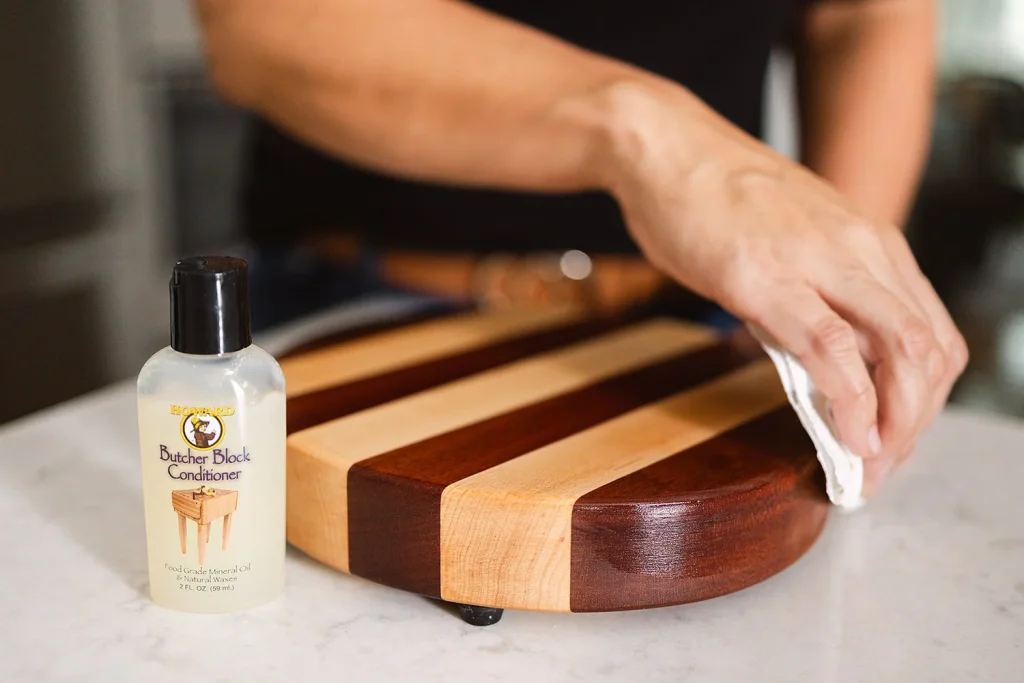
Use your lint-free cloth to rub the oil into the wood in small, circular motions. Don’t skip the board’s edges, underside, or handles (if it has them) — these areas are just as prone to drying and cracking as the top cutting surface. For end-grain boards, spend extra time rubbing oil into the exposed wood fibers to ensure full saturation.
Step 4: Let the oil soak into the wood
Let the board sit undisturbed for 1-2 hours, or overnight for deep conditioning. You’ll know the wood has absorbed as much oil as it can when the surface feels dry to the touch, with no visible wet spots. A common mistake is rushing this step: letting the oil soak fully ensures maximum protection against water damage.
Step 5: Wipe off all excess oil
Use a dry paper towel to buff the entire board, wiping away any oil that hasn’t soaked into the wood. The finished board should feel smooth and dry, not greasy or sticky. If you notice gummy residue, you left excess oil on the surface — wipe it off with a small amount of warm, soapy water, then reapply a thinner coat of oil.
Optional: Add a beeswax topcoat for extra water resistance
For boards that see heavy use, or if you frequently wash your board with large amounts of water, add a thin layer of food-grade beeswax or a pre-mixed mineral oil/beeswax balm after the oil has soaked in. Rub the wax over the entire surface, let it sit for 10 minutes, then buff off excess with a clean cloth. This creates a harder, more water-resistant barrier that repels stains and moisture even better than oil alone.
 Image source: www.reddit.com
A thin, even coat of oil penetrates wood fibers to lock in moisture and prevent cracking
Image source: www.reddit.com
A thin, even coat of oil penetrates wood fibers to lock in moisture and prevent cracking
Common Oiling Mistakes to Avoid
Even with simple steps, it’s easy to make errors that reduce the effectiveness of oiling or even damage your board. Avoid these common pitfalls:
- Using non-food-grade mineral oil: Technical or industrial-grade mineral oil contains additives that are toxic if ingested, so always check labels for "USP-grade" or "food-grade" certification before purchasing.
- Using plant-based oils: Olive, coconut, and vegetable oils go rancid within 2-4 weeks, leaving sour smells and tastes on food, and can encourage mold growth on the board’s surface.
- Oiling a wet board: Trapped moisture under the oil leads to swelling, warping, and mold. Always confirm your board is 100% dry before applying oil.
- Only oiling the top surface: The edges and underside of your board are just as likely to dry out and crack as the top, so don’t skip these areas during application.
- Leaving excess oil on the board: Over-oiling leads to a gummy, sticky surface that attracts dust and bacteria, and can make food slide around while you’re cutting. Always buff off all unabsorbed oil after the soaking period.
Caring for Different Cutting Board Materials
Not all cutting boards need mineral oil — the right care routine depends on the material your board is made from. Use this quick guide to choose the right maintenance approach:
| Board Material | Needs Mineral Oil? | Recommended Oiling Frequency | Extra Care Tips |
|---|---|---|---|
| Hardwood (maple, walnut, cherry) | Yes | Monthly, or every 2-3 weeks with frequent use/acidic foods | Sand lightly with 220-grit sandpaper if the surface feels rough; avoid prolonged water exposure |
| Bamboo | Yes (less often than hardwood) | Every 6-8 weeks | Bamboo is denser than hardwood and absorbs oil slower; over-oiling can soften its natural fibers, so use thin, even coats |
| Plastic/composite | No | N/A | Wash with hot, soapy water after each use; replace if deeply scratched, as scratches harbor hard-to-remove bacteria |
| Glass/stone | No | N/A | These non-porous materials don’t need oil, but they dull knife blades quickly; avoid cutting directly on them if possible |
For specific bamboo board upkeep tips, check out our dedicated guide to maintaining bamboo cutting boards. bamboo board upkeep
Extend Your Board’s Lifespan With These Simple Daily Habits
Oiling is just one part of cutting board care. Follow these daily habits to keep your board in top shape between oiling sessions:
- Hand-wash only: Never put wood or bamboo boards in the dishwasher, as high heat and harsh detergent will dry them out and cause warping.
- Dry immediately after washing: Wipe the board dry with a clean towel after washing, then stand it upright to air dry fully. Never leave it stacked against other dishes where air can’t circulate.
- Avoid prolonged water exposure: Don’t let the board sit in a sink full of water, and wipe up spills as soon as they happen to prevent water from seeping into the wood.
- Use separate boards for raw meat and produce: Always use a dedicated board for raw proteins to avoid cross-contamination; if you do use a board for raw meat, follow proper raw meat cleanup guidelines to sanitize it fully after use. proper raw meat cleanup guidelines
- Store in a cool, dry space: Keep your board away from heat sources like ovens and dishwashers, and store it in a spot with good air circulation, such as open kitchen storage with slotted racks, to prevent moisture buildup. open kitchen storage
- Sand out rough spots annually: Once a year, sand the board’s surface lightly with 220-grit sandpaper, following the direction of the wood grain, to remove stains and rough patches. Reapply a coat of mineral oil after sanding to restore the conditioned surface.
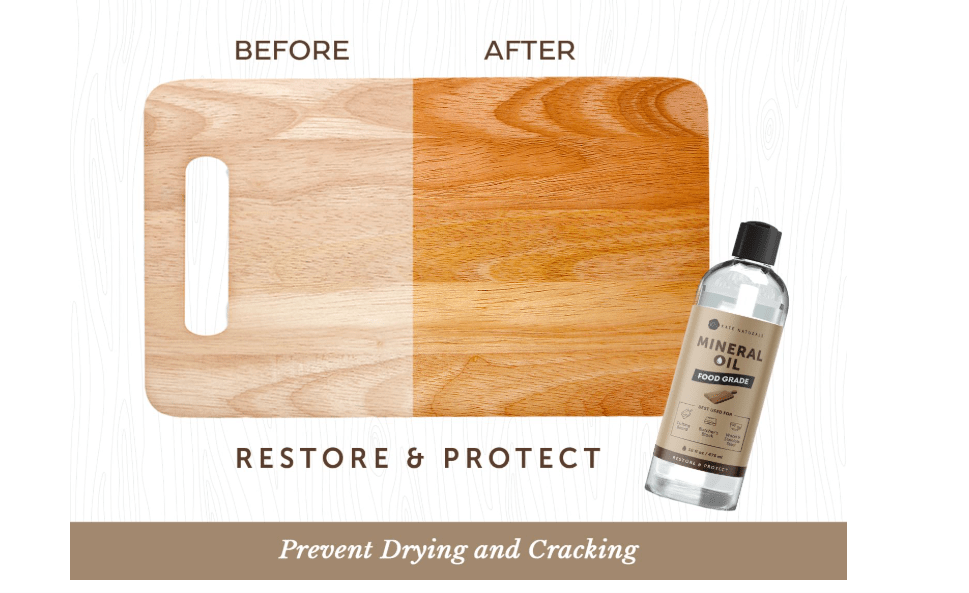 Image source: treecarezone.com
Regular oiling maintains the wood's natural luster and repels water to avoid warping
Image source: treecarezone.com
Regular oiling maintains the wood's natural luster and repels water to avoid warping
Frequently Asked Questions
How often should I apply mineral oil to a cutting board?
For most hardwood and bamboo boards, apply mineral oil once a month. New boards need 3-4 coats in their first month to fully saturate the wood, while boards used frequently for acidic foods or washed with hot water may need oiling every 2-3 weeks.
Can mineral oil prevent cutting board cracks?
Yes, regular oiling keeps wood fibers moist and flexible, preventing the dry, brittle wood that leads to cracks and splits. For existing small cracks, apply a thick layer of oil and let it sit for 24 hours to fill the gap and stop it from expanding.
Is mineral oil safe for food-contact surfaces?
Yes, as long as you use food-grade USP mineral oil. The FDA classifies this grade of mineral oil as safe for direct food contact, with no toxic residues left on food or the board’s surface.
How much mineral oil should I use on my board?
Start with 1-2 tablespoons for a standard 12×18 inch board, and add more only if the wood absorbs the first coat fully within 30 minutes. You only need enough oil to cover the surface in a thin, even layer — excess oil will not improve conditioning and will leave a gummy residue if not wiped off.
Can I use mineral oil on a plastic cutting board?
No, plastic and composite boards are non-porous and don’t absorb oil. Clean these boards with hot, soapy water after each use, and replace them if they become deeply scratched, as scratches can harbor harmful bacteria.
Conclusion
Applying mineral oil to your cutting board is one of the simplest, most cost-effective ways to keep this essential kitchen tool in top condition for decades. A well-oiled board resists water damage, prevents cracks and warping, stays smooth enough to protect your knife blades, and remains safe for all types of food prep. The entire process takes less than 10 minutes of active work, and a single $5 bottle of mineral oil will last for years of regular use.
A well-conditioned board is also ideal for prepping ingredients for charcuterie boards and slicing delicate produce like strawberries for parties and gatherings. charcuterie board prep tips
For more step-by-step kitchen maintenance guides to keep all your tools and appliances in top shape, visit our full blog for expert tips and tricks. step-by-step kitchen maintenance guides

I’m Abby Lu, a passionate home cook who loves simplifying everyday meals. At PlugChef.com, I share product reviews and cooking guides to help you find the best tools for your kitchen.
Related posts:
 How to Make a Fruit Basket for a Gift: Easy DIY Guide
 Do You Need a Basket? Essential Guide for Air Fryers
 How to Adjust Syrup Dispenser Pressure: Expert Tips
 White Appliances in Kitchen Design: Elevate Your Space
 Kitchen Appliances Stainless Steel Vs White: Ultimate Showdown
 Kitchen Appliances Made in Usa: Quality and Innovation

