
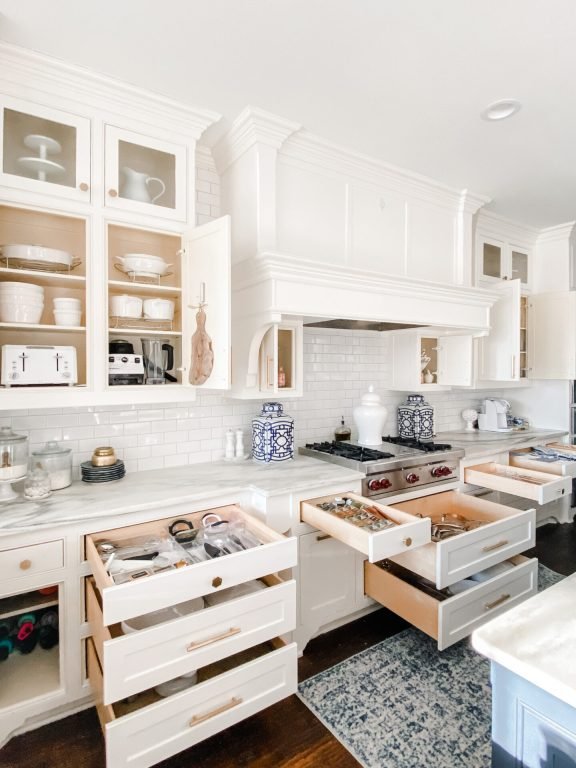
Opening a cluttered kitchen cabinet or drawer to hunt for a spatula, mismatched takeout container, or favorite mixing bowl is a universal frustration — and it adds unnecessary time to meal prep, which is already busy enough. The good news is that you don’t need professional help or expensive custom cabinetry to create a functional, easy-to-navigate kitchen storage system. With a few intentional, tested steps, you can turn chaotic cabinets and drawers into a space where every item has a clear home, saving you minutes of search time per meal.
These tips are drawn from real-world home kitchen organization projects, with advice tailored for small apartments, large family homes, and every layout in between. We’ll cover decluttering, zone-based sorting, space-maximizing tools, and long-term maintenance habits to keep your kitchen tidy for months to come.
Step 1: Declutter and Audit Your Current Storage
Before you buy any organizers or rearrange shelves, you need to clear out the clutter that’s already taking up space. Start by removing every item from your cabinets and drawers, then sort them into three piles: keep, donate/sell, and discard. A common mistake is holding onto broken gadgets, duplicate tools, or kitchenware you haven’t used in more than a year “just in case.” In practice, most households only use a small fraction of their kitchen tools regularly, so being ruthless here will cut down on clutter immediately. For food items, check expiration dates and toss anything past its prime — cluttered cabinets often hide expired goods, leading to unnecessary waste and even foodborne illness if perishables are stored too long. Once you’ve sorted your items, take note of what you use most often: these are the items you’ll want to store in the most accessible spots later.
How to Organize Kitchen Drawers for Maximum Efficiency
Drawers are often the most underutilized storage space in a kitchen, but when organized correctly, they cut down on meal prep time dramatically by keeping small, frequently used tools within arm’s reach. Follow these steps to turn chaotic drawers into a streamlined system:
Categorize Drawer Contents by Frequency of Use
Start by assigning each drawer a clear category based on how often you use the items inside:
- Top drawers (easiest to reach): Store daily-use items like everyday utensils, cooking spoons, and spatulas
- Middle drawers: Store weekly-use items like measuring cups, kitchen shears, and can openers
- Bottom or deep drawers: Store occasional-use items like specialty baking tools, grilling gadgets, and seasonal servingware This system eliminates the need to rummage through multiple drawers to find what you need, and makes tidying up faster for every member of the household.
Choose the Right Drawer Organizers for Your Needs
Drawer dividers are non-negotiable for keeping items separated, but the right type depends on your drawer size and contents:
- Adjustable bamboo or plastic dividers: Best for most standard drawers, as they can be resized if you rearrange your layout later
- Fixed cutlery trays: Ideal for silverware, with dedicated slots for forks, knives, and spoons to prevent tangling
- Expandable mesh organizers: Perfect for deep utility drawers, as they create multiple small compartments for small gadgets like peelers, garlic presses, and measuring spoons If you have very narrow junk drawers, slim stackable bins work well to keep small items like batteries, twist ties, and gift cards contained without sliding around.
Pro Tips for Deep and Narrow Drawers
Deep drawers often become “black holes” for small items that get lost at the back. If you have extra-deep utility drawers, these deep drawer organization hacks will help you avoid losing small items at the back of the drawer. For narrow drawers, use vertical utensil holders that stand upright to save horizontal space, and store longer tools like rolling pins or pasta servers vertically along the back of the drawer to free up front space for daily-use items.
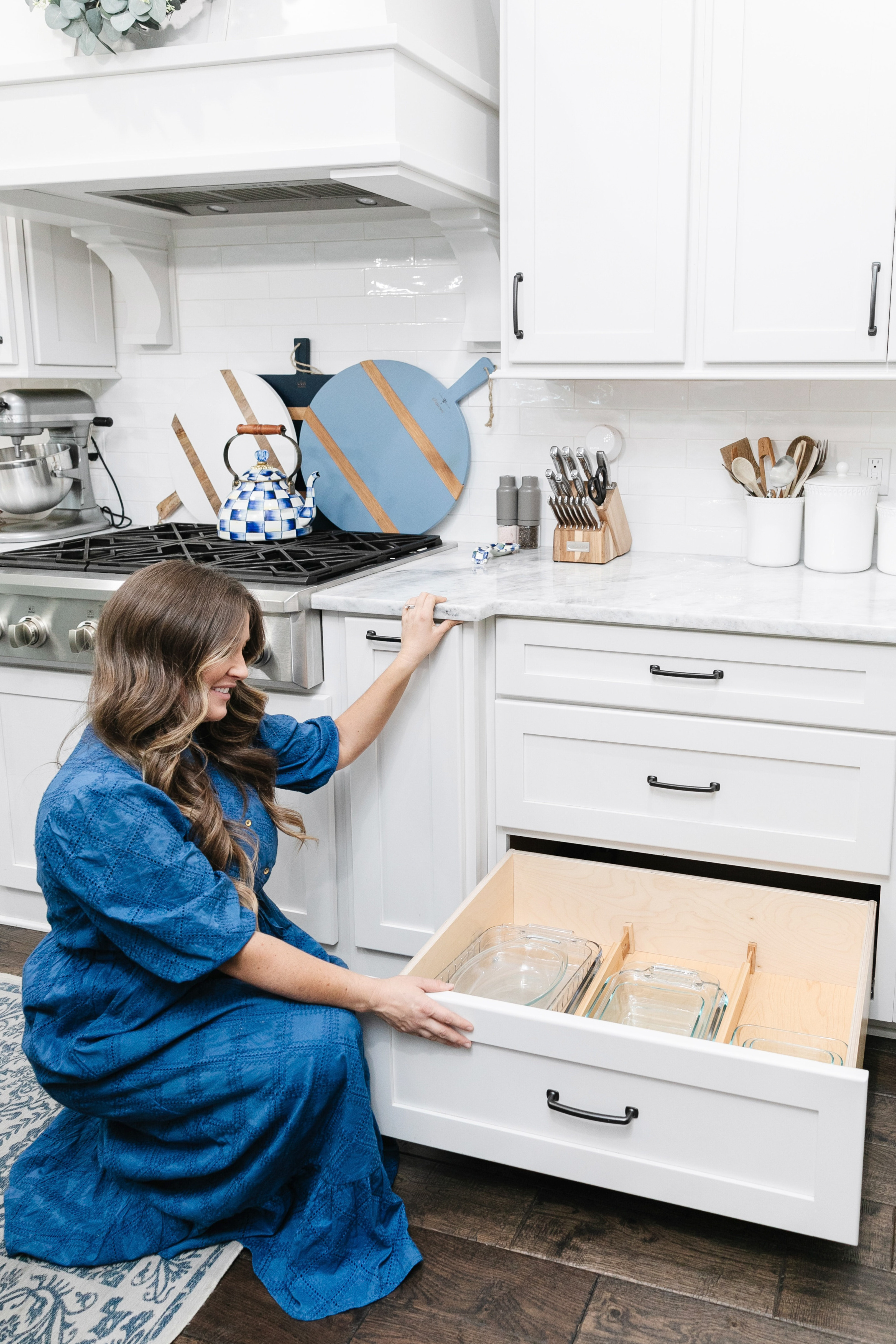 Labeled drawer dividers keep everyday utensils separate and easy to grab during meal prep, eliminating the need to rummage through clutter.
Credit: walkinginmemphisinhighheels.com
Labeled drawer dividers keep everyday utensils separate and easy to grab during meal prep, eliminating the need to rummage through clutter.
Credit: walkinginmemphisinhighheels.com
How to Organize Kitchen Cabinets (Upper, Lower, and Corner)
Cabinets hold heavier, bulkier items than drawers, so organization here focuses on safety, accessibility, and maximizing every inch of space. Follow these guidelines for upper, lower, and tricky corner cabinets:
Organize Cabinets by Cooking Zones for Intuitive Access
Instead of sorting by item type, sort your cabinets by the cooking task they support to reduce back-and-forth movement while you cook:
- Stove-adjacent lower cabinets: Store pots, pans, cooking oils, and spices within arm’s reach of the cooktop. For cookware that takes up too much space, nested pot and pan storage lets you stack pieces by size to free up significant extra cabinet shelf space.
- Prep-area upper cabinets: Store mixing bowls, measuring tools, and small appliances like blenders or toasters near your main prep surface.
- Pantry cabinets: Store dry goods, canned items, and snacks on easy-to-reach shelves, and place heavier items like flour bags on lower shelves to avoid injury from reaching overhead. When organizing upper cabinets for dry goods and canned items, follow FDA food safety storage recommendations to keep perishable items away from heat sources (like the oven or dishwasher) to avoid spoilage and cross-contamination.
Maximize Vertical and Hidden Cabinet Space
Most kitchens waste 20-30% of their cabinet space by leaving empty vertical room above stacked items. Fix this with simple, low-cost tools:
- Shelf risers: Double your cabinet shelf space by stacking plates above bowls, or mugs above saucers, without creating unstable towers
- Over-the-door hooks: Hang measuring spoons, pot holders, or reusable shopping bags on the inside of cabinet doors to free up shelf space
- Pull-out shelf organizers: Install these in lower cabinets to make items at the back of deep shelves accessible without pulling out the entire shelf
Tackle Tricky Corner and Lazy Susan Cabinets
Corner cabinets are notorious for being hard to access, with items getting lost in the back of deep, angled spaces. If you have a dead space corner cabinet, tricky corner cabinet solutions like pull-out Lazy Susans or tiered shelf organizers make every inch accessible. For small corner cabinets, use a small, angled shelf organizer to create two levels of storage without blocking access to the back of the cabinet.
Specialized Storage for Common Kitchen Items
General organization works for most kitchenware, but specialized items like spices, bakeware, and cutting boards need custom storage to stay functional and easy to access:
Spice Storage: Keep Flavors Fresh and Accessible
Spices lose their potency quickly when exposed to heat, light, and moisture, so store them away from the stove and dishwasher in a dedicated spice rack or pull-out cabinet organizer. Alphabetize spices for easy access, and use small clear jars with airtight lids to keep them fresh for longer. For small kitchens, a magnetic spice strip mounted on the inside of a cabinet door saves shelf space and keeps spices visible at a glance.
Bakeware and Pot/Pan Organization
Bakeware is often bulky and oddly shaped, so store it vertically in a dedicated lower cabinet or pantry shelf rather than stacking it horizontally, which makes it hard to pull out single pieces. For pots and pans, use a vertical pan organizer rack to store them upright like files in a filing cabinet, which eliminates the need to lift heavy stacks of pans to access the one you need.
Food Storage and Leftover Organization
Mismatched takeout containers and random food storage lids are a major source of cabinet clutter. To fix this, donate any containers that are missing lids, cracked, or stained, and invest in a matching set of stackable glass or BPA-free plastic containers with uniform lids. Store them nested together in a dedicated lower cabinet or drawer, and keep a small stack of reusable containers on the counter for easy access when packing leftovers.
Cutting Board Care and Storage
Wooden cutting boards are a kitchen staple, but they need proper storage to avoid warping, cracking, and bacterial growth. Store wooden cutting boards vertically or flat on a shelf, and follow keeping cutting boards food-safe practices to avoid bacterial growth from trapped moisture. For wooden boards, apply a thin coat of food-grade mineral oil every 1-2 months as part of regular mineral oil maintenance to prevent cracking and warping. Avoid storing wooden boards leaning against other kitchen items, as this can damage both the board and the item it’s leaning on.
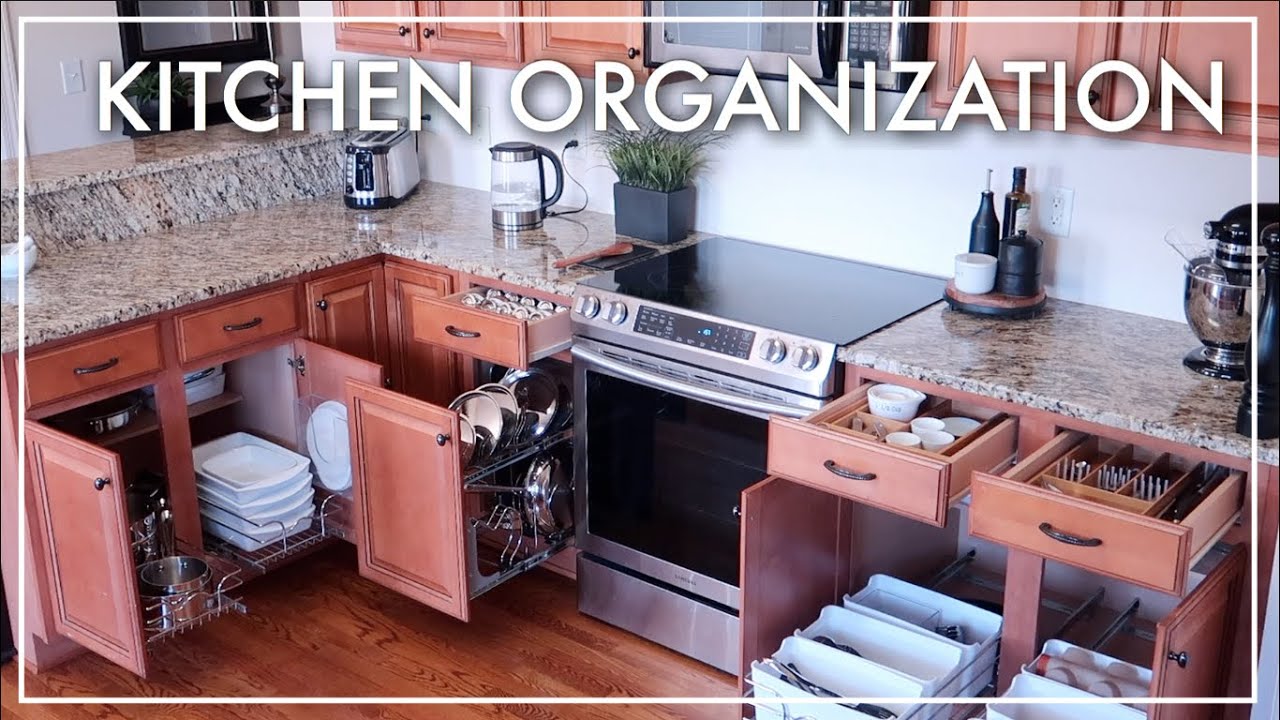 Adjustable dividers let you customize drawer sections for spatulas, tongs, whisks, and small gadgets to prevent clutter and save search time during cooking.
Credit: m.youtube.com
Adjustable dividers let you customize drawer sections for spatulas, tongs, whisks, and small gadgets to prevent clutter and save search time during cooking.
Credit: m.youtube.com
Maintenance Habits to Keep Your Kitchen Organized Long-Term
Organization only works if you maintain it, and the good news is that you don’t need to spend hours every week tidying up to keep your system running. Build these small habits into your routine to avoid clutter creep:
- 5-minute daily reset: Spend 5 minutes after dinner each night returning misplaced items to their designated homes, wiping down countertops, and straightening shelves. This takes far less time than a full deep clean every month.
- Weekly 10-minute audit: Check one drawer or cabinet each week for out-of-place items, expired food, or broken tools that need to be discarded.
- Seasonal purge: Every 3 months, go through your cabinets and drawers to remove items you haven’t used since the last purge, donate unused kitchenware, and reorganize any sections that have become cluttered. A common mistake is trying to organize the entire kitchen in one day, which leads to burnout and a quick reversion to clutter. Start with one small zone (like the utensil drawer) and work your way up to larger cabinets over a few weeks to build sustainable habits.
Frequently Asked Questions
How do I organize deep kitchen drawers efficiently?
Start by removing all items and sorting them by use case. Use expandable mesh dividers to create separate compartments for small gadgets, and store longer tools vertically along the back of the drawer to free up front space for daily-use items. Add a small non-slip mat at the bottom of the drawer to prevent items from sliding around when you open and close it.
How should kitchen cabinets be organized for small kitchens?
Focus on zone-based sorting and vertical space to make the most of limited square footage. Use shelf risers to double cabinet shelf space, store frequently used items on lower shelves to avoid dangerous overhead reaching, and use over-the-door organizers for spices and small gadgets to free up cabinet space. Avoid storing rarely used items (like holiday servingware) in your main kitchen cabinets — move them to a basement or closet to free up space for daily essentials.
What is the best way to organize spices so they don’t get lost?
Store spices in a dedicated pull-out cabinet organizer or on a magnetic wall strip to keep them visible and accessible. Alphabetize them for quick access, and store them away from heat sources (like the stove or oven) to preserve their flavor for longer. Discard any spices that have lost their scent or are more than 2 years old, as they won’t add much flavor to your cooking.
How often should I reorganize my kitchen cabinets and drawers?
You don’t need to do a full deep reorganization more than once a year, but do a quick 10-minute audit of one section per week to catch misplaced items, expired food, and clutter buildup early. If you notice a specific drawer or cabinet becoming messy again within a week of organizing, adjust your system — for example, if you’re constantly putting utensils back in the wrong spot, add labels to your drawer dividers to remind everyone where things belong.
Conclusion
Organizing kitchen cabinets and drawers doesn’t have to be an overwhelming, time-consuming project. By starting with a thorough declutter, sorting items by frequency of use and cooking zone, and building small maintenance habits into your routine, you can create a kitchen that saves you time, reduces stress, and makes meal prep feel far less like a chore. The biggest impact comes from small, consistent changes: spend 5 minutes resetting your drawers each night, and tackle one cabinet zone per weekend instead of trying to do everything at once. If you’re ready to tackle your entire kitchen, start with one small zone this weekend — you’ll be amazed at how much faster meal prep feels when everything has a clear, easy-to-find home.

I’m Abby Lu, a passionate home cook who loves simplifying everyday meals. At PlugChef.com, I share product reviews and cooking guides to help you find the best tools for your kitchen.
Related posts:
 How to Organize Kitchen Drawers: Expert Tips and Tricks
 How Do You Organize Small Appliances in a Small Kitchen: Expert Tips
 How to Completely Organize Your Kitchen: Expert Tips
 How to Cook Pan Squash: Easy, Delicious Recipes to Try Today
 Yogurt Instead of Sour Cream: Healthy Swaps You’ll Love
 How to Store Wild Mushrooms: Essential Tips for Freshness

