Chaotic pantries, stale flour, spilled cereal bags, and endless clutter are common frustrations for home cooks, bulk shoppers, and busy families. The right storage solution eliminates these headaches, and 2-gallon food storage containers hit the perfect sweet spot for most households: large enough to hold standard 5-pound bags of dry staples like flour, sugar, rice, and oats, but small enough to fit on standard 12-inch pantry shelves without overcrowding. Unlike smaller quart containers that require constant refills, or bulky 5-gallon buckets that dominate storage space, 2-gallon options balance capacity, accessibility, and space efficiency for everyday use.
In this guide, we break down the key features to prioritize when shopping, review top-rated options for every use case, share pro tips for maximizing container longevity, and answer common questions to help you build a clutter-free, functional kitchen.
Why 2 Gallons Is the Ideal Pantry Storage Size
Before diving into product recommendations, it’s helpful to understand why 2 gallons (approximately 7.6 liters) is the most versatile capacity for most home kitchens. A standard 5-pound bag of all-purpose flour, the most common bulk pantry staple, measures roughly 4.25 liters, meaning a 2-gallon container fits a full bag with 1–2 inches of extra headspace to seal out air and moisture without overfilling. The same goes for 5-pound bags of sugar, rice, oats, and dry pasta.
Smaller 1-gallon containers are practical for light users or small households, but they require frequent refills for families that buy in bulk. Larger 3–5 gallon containers are better suited for wholesale club shoppers or emergency preparedness, but they often don’t fit on standard pantry shelves and are too heavy to lift safely when full for many users. 2-gallon containers strike the right balance for everyone from solo cooks to families of four, and even work for non-food storage needs like gardening seeds, pet food, or camping supplies.
Key Features to Prioritize When Buying 2-Gallon Food Storage Containers
Not all 2-gallon containers are built equal. Focusing on these core features will ensure you pick a durable, safe option that meets your needs:
Airtight Seal Performance
The primary purpose of food storage containers is to keep contents fresh, so a high-quality airtight seal is non-negotiable. Look for containers with locking latches or screw-top lids that create a tight, consistent seal to block air, moisture, and pantry pests like moths and weevils. Flimsy snap-on lids often warp after repeated use, letting air in and causing dry goods to stale or spoil faster. For official guidance on safe food storage practices, the U.S. Food and Drug Administration (FDA) recommends using containers with secure seals for long-term dry goods storage to prevent chemical leaching and spoilage.
Material Safety
Opt for containers made from food-grade, BPA-free plastic or glass to avoid harmful chemicals leaching into your food. The USDA’s Food Safety and Inspection Service notes that food-grade materials are tested to ensure they do not react with acidic or oily ingredients, making them safe for long-term storage of all pantry staples. Avoid thin, flexible plastic containers, as they are more prone to cracking and may not meet food safety standards.
Stackability and Space Efficiency
For small pantries, stackable containers are a game-changer. Look for square or rectangular designs that nest neatly when stacked, rather than round containers that waste space between units. Some models also feature interlocking lids that prevent stacks from sliding off shelves, a useful feature for households with active kids or pets.
Transparency and Labeling
Clear containers let you see contents at a glance, eliminating the need to open multiple lids to find what you need. If you opt for opaque containers, look for models with smooth, writable lids that work with dry-erase markers for quick labeling of contents and storage dates.
Top 2-Gallon and Near-2-Gallon Food Storage Container Recommendations
Note: Some products below are marketed as "extra large" with capacities between 1.7–2.5 gallons, which are ideal for users with slightly different storage needs. We’ve included both true 2-gallon options and close alternatives to cover a full range of use cases.
House Naturals 2 Gallon Food Grade Bucket (3-Pack)
 Ideal for emergency prep, bulk dry goods, and gardening supply storage
The House Naturals 2-gallon bucket is one of the few true 2-gallon options on the market, made from food-grade, BPA-free plastic and manufactured in the USA to meet strict safety standards. Its screw-top lid creates an airtight, leakproof seal that outperforms most snap-on lids for long-term storage, making it a top pick for emergency preparedness kits, bulk grain storage, and even storing gardening seeds or soil amendments.
Ideal for emergency prep, bulk dry goods, and gardening supply storage
The House Naturals 2-gallon bucket is one of the few true 2-gallon options on the market, made from food-grade, BPA-free plastic and manufactured in the USA to meet strict safety standards. Its screw-top lid creates an airtight, leakproof seal that outperforms most snap-on lids for long-term storage, making it a top pick for emergency preparedness kits, bulk grain storage, and even storing gardening seeds or soil amendments.
Pros
- True 2-gallon capacity fits standard 5-pound pantry staples with room to spare
- Screw-top lid maintains a consistent airtight seal for up to 12 months of dry goods storage
- Made in the USA with food-grade, BPA-free materials
- Versatile design works for food and non-food storage needs
Cons
- White exterior shows stains from turmeric, tomato paste, or coffee grounds over time
- Weighs 2 pounds when empty, so full containers are heavy to lift for some users A common mistake users make is overfilling these buckets, which can break the airtight seal. Leave 1–2 inches of headspace when storing expandable items like grains or beans. For households with young children, pairing these buckets with cabinet safety latches prevents access to heavy, full containers that could cause injury if pulled down. Shop the 3-pack of House Naturals 2-gallon buckets on Amazon.
Shazo 2-Pack 9.5L (~2.5 Gallon) Extra Large Bulk Storage Containers
 Fits standard 10-pound flour or sugar bags with room to spare
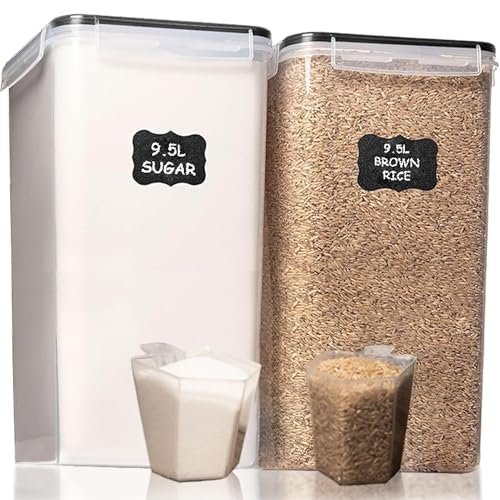
At 9.5 liters (roughly 2.5 gallons), these Shazo containers are ideal for bakers and bulk shoppers who regularly buy 10-pound bags of flour, sugar, or oats. Their airtight, leakproof lids keep moisture and pests out, and the BPA-free plastic is safe for direct food contact. The slim, rectangular design fits easily on most pantry shelves, and the clear sides let you see how much product you have left at a glance.
Fits standard 10-pound flour or sugar bags with room to spare
At 9.5 liters (roughly 2.5 gallons), these Shazo containers are ideal for bakers and bulk shoppers who regularly buy 10-pound bags of flour, sugar, or oats. Their airtight, leakproof lids keep moisture and pests out, and the BPA-free plastic is safe for direct food contact. The slim, rectangular design fits easily on most pantry shelves, and the clear sides let you see how much product you have left at a glance.
Pros
- Extra-large capacity fits 10-pound bags of bulk staples without overhang
- Locking airtight seal preserves freshness for up to 1 year
- BPA-free, food-grade plastic is safe for all food types
- Stackable design saves pantry space
Cons
- Opaque black exterior means you can’t see contents without opening the lid
- Larger size may not fit in narrow or shallow pantry shelves In practice, these containers are a favorite for avid bakers who go through large quantities of flour and sugar, as they eliminate the need to store half-used bags in messy original packaging. For stubborn residue from sticky baking ingredients, use a heavy-duty cleaning brush to scrub lids and sides without scratching the plastic. Shop the Shazo 2-pack extra large containers on Amazon.
Chef's Path 2-Pack 6.5L (~1.7 Gallon) Airtight Storage Containers
 Perfect for medium bulk storage of rice, pasta, and baking supplies
These Chef's Path containers are a great pick for small to medium households that buy 3–4 pound bags of dry goods. Their fully transparent design lets you see contents at a glance, and the airtight seal is tested to keep out pantry moths and weevils, a common issue for users in humid climates. The slim profile fits easily in narrow pantry gaps, and the durable plastic holds up to daily use without cracking.
Perfect for medium bulk storage of rice, pasta, and baking supplies
These Chef's Path containers are a great pick for small to medium households that buy 3–4 pound bags of dry goods. Their fully transparent design lets you see contents at a glance, and the airtight seal is tested to keep out pantry moths and weevils, a common issue for users in humid climates. The slim profile fits easily in narrow pantry gaps, and the durable plastic holds up to daily use without cracking.
Pros
- Fully transparent design eliminates guesswork when checking stock
- Airtight seal blocks moisture and pests for extended freshness
- Compact size fits in narrow pantry shelves and fridge doors
- BPA-free and dishwasher-safe for easy cleaning
Cons
- 6.5L capacity is too small for 10-pound bulk bags
- Latches can be stiff for users with limited hand strength For more budget-friendly pantry organization tips, our blog archive has step-by-step guides for maximizing small kitchen storage spaces. Shop the Chef's Path 2-pack airtight containers on Amazon.
PANTRYSTAR 3-Pack 5.2L (~1.4 Gallon) Airtight Canisters
 Great for storing baking supplies, snacks, and small bulk items
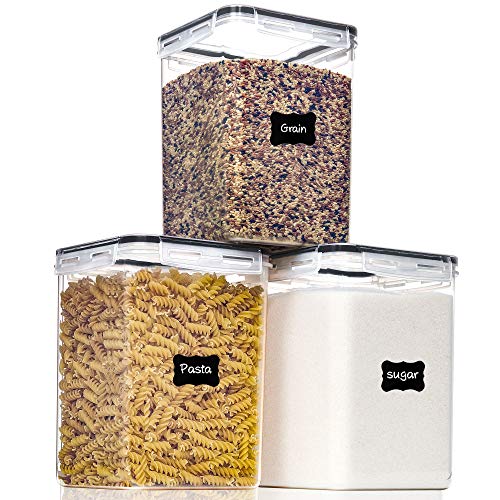
This 3-pack of PANTRYSTAR containers is perfect for users who want to organize multiple small bulk items without taking up too much space. The airtight lids keep snacks, baking supplies, and spices fresh, and the clear design makes it easy to find what you need fast. The set includes three identical containers, so you can create a uniform look in your pantry while sorting items by category.
Great for storing baking supplies, snacks, and small bulk items
This 3-pack of PANTRYSTAR containers is perfect for users who want to organize multiple small bulk items without taking up too much space. The airtight lids keep snacks, baking supplies, and spices fresh, and the clear design makes it easy to find what you need fast. The set includes three identical containers, so you can create a uniform look in your pantry while sorting items by category.
Pros
- Affordable 3-pack value for organizing multiple staple items
- Airtight seal preserves freshness for dry goods and snacks
- Clear design for quick content identification
- Stackable to save vertical space
Cons
- 5.2L capacity is too small for 5-pound bulk bags
- Thinner plastic construction is prone to cracking if dropped when full If you regularly store sticky baking ingredients like honey or maple syrup, pairing these containers with a dedicated cleaning scrub brush makes residue removal quick and easy. Shop the PANTRYSTAR 3-pack canister set on Amazon.
Sistema KLIP IT 5L (~1.3 Gallon) Airtight Container
 Stackable design saves space for small pantries and fridge storage
Sistema’s iconic KLIP IT container is a staple for home kitchens worldwide, and the 5L size is ideal for storing smaller bulk items like pasta, cereal, or snacks. Its patented airtight latch system creates a secure seal that’s both leakproof and easy to open and close, even for users with arthritis. The square, stackable design nests perfectly with other Sistema containers, making it easy to build a custom storage system that fits your space.
Stackable design saves space for small pantries and fridge storage
Sistema’s iconic KLIP IT container is a staple for home kitchens worldwide, and the 5L size is ideal for storing smaller bulk items like pasta, cereal, or snacks. Its patented airtight latch system creates a secure seal that’s both leakproof and easy to open and close, even for users with arthritis. The square, stackable design nests perfectly with other Sistema containers, making it easy to build a custom storage system that fits your space.
Pros
- Patented latch seal is leakproof and easy to operate
- Stackable design saves up to 40% more space than round containers
- BPA-free and microwave-safe for reheating leftovers
- Clear design for easy content identification
Cons
- 5L capacity is too small for 5-pound bulk bags
- Blue clips may not match all kitchen decor For households with toddlers, combining these containers with kid-safe kitchen locks adds an extra layer of protection against accidental spills or tip-overs. Shop the Sistema KLIP IT container on Amazon.
Smaller and Larger Alternatives for Specialized Use Cases
If 2-gallon containers don’t fit your specific needs, these smaller and larger options are worth considering:
Cambro 2-Pack 4 Quart (~1 Gallon) Food Storage Containers
 Perfect for fridge storage, meal prep, and leftovers
Cambro’s 4-quart containers are a favorite among home meal preppers and professional chefs for their durable, BPA-free construction and stackable design. The translucent sides let you see contents at a glance, and the lids create a secure, leakproof seal that’s safe for fridge and freezer use. They fit easily in most fridge doors and on pantry shelves, making them ideal for storing batch-cooked meals, leftovers, or prepped ingredients.
Perfect for fridge storage, meal prep, and leftovers
Cambro’s 4-quart containers are a favorite among home meal preppers and professional chefs for their durable, BPA-free construction and stackable design. The translucent sides let you see contents at a glance, and the lids create a secure, leakproof seal that’s safe for fridge and freezer use. They fit easily in most fridge doors and on pantry shelves, making them ideal for storing batch-cooked meals, leftovers, or prepped ingredients.
Pros
- Durable, crack-resistant construction holds up to daily use
- Leakproof lid prevents spills in the fridge or during transport
- Stackable design saves space
- Microwave and dishwasher safe
Cons
- 4-quart capacity is too small for bulk dry goods storage
- Translucent design is less clear than fully transparent containers Shop the Cambro 2-pack 4-quart containers on Amazon.
Rubbermaid Brilliance 12-Cup (~0.75 Gallon) Airtight Container
 Ideal for storing opened small ingredients and snacks
This compact Rubbermaid container is perfect for storing opened bags of chocolate chips, nuts, spices, or kid’s snacks that you use frequently. Its airtight seal keeps ingredients fresh for months, and the clear design lets you see how much you have left at a glance. The small size fits easily in pantry corners, fridge doors, or even on kitchen counters for quick access.
Ideal for storing opened small ingredients and snacks
This compact Rubbermaid container is perfect for storing opened bags of chocolate chips, nuts, spices, or kid’s snacks that you use frequently. Its airtight seal keeps ingredients fresh for months, and the clear design lets you see how much you have left at a glance. The small size fits easily in pantry corners, fridge doors, or even on kitchen counters for quick access.
Pros
- Airtight seal preserves freshness for small, frequently used items
- Clear design for easy content identification
- Stackable with other Rubbermaid Brilliance containers
- BPA-free and dishwasher safe
Cons
- 12-cup capacity is too small for bulk storage
- Plastic construction is less durable than glass alternatives Shop the Rubbermaid Brilliance 12-cup container on Amazon.
GladWare 3-Pack Family Size 104oz (~0.8 Gallon) Food Storage Containers
 Best for storing leftovers, batch-cooked meals, and saucy foods
GladWare’s family size containers are a budget-friendly pick for storing leftovers, batch-cooked soups, chili, or casseroles. Their leakproof lids prevent spills and cross-contamination of flavors in the fridge, and the square design fits neatly on most fridge shelves. The set of three containers is perfect for meal prepping for the week or storing leftovers from large family meals.
Best for storing leftovers, batch-cooked meals, and saucy foods
GladWare’s family size containers are a budget-friendly pick for storing leftovers, batch-cooked soups, chili, or casseroles. Their leakproof lids prevent spills and cross-contamination of flavors in the fridge, and the square design fits neatly on most fridge shelves. The set of three containers is perfect for meal prepping for the week or storing leftovers from large family meals.
Pros
- Affordable 3-pack value for everyday use
- Leakproof lid keeps liquids and saucy foods contained
- Stackable design saves fridge space
- BPA-free and microwave safe
Cons
- 104oz capacity is too small for bulk dry goods
- Plastic construction is not as durable as premium brands Shop the GladWare 3-pack family size containers on Amazon.
Rubbermaid 2-Pack Clear Food Storage Containers with Red Lids
 Great for large leftovers, party platters, and fridge storage
These large Rubbermaid containers are perfect for storing big batch meals, party leftovers, or prepped ingredients for a week’s worth of meals. Their clear design lets you see contents at a glance, and the red lids create a secure, leakproof seal that’s safe for fridge and freezer use. The set of two containers is ideal for families that cook in bulk or entertain frequently.
Great for large leftovers, party platters, and fridge storage
These large Rubbermaid containers are perfect for storing big batch meals, party leftovers, or prepped ingredients for a week’s worth of meals. Their clear design lets you see contents at a glance, and the red lids create a secure, leakproof seal that’s safe for fridge and freezer use. The set of two containers is ideal for families that cook in bulk or entertain frequently.
Pros
- Large capacity fits big batch meals and party platters
- Leakproof lid prevents spills in the fridge
- Clear design for easy content identification
- Stackable with other Rubbermaid containers
Cons
- Large size may not fit in small fridge shelves
- Red lid is not interchangeable with other Rubbermaid container lines Shop the Rubbermaid 2-pack large containers on Amazon.
Pro Tips for Maximizing 2-Gallon Container Longevity
With proper care, high-quality 2-gallon containers can last for 5–10 years or more. Follow these tips to get the most out of your investment:
- Label everything: Use a dry-erase marker on smooth plastic lids or add adhesive labels with the contents and storage date to avoid forgetting what’s inside and how long it’s been stored.
- Leave headspace: When storing liquids, grains, or expandable foods like beans or frozen meals, leave 1–2 inches of empty space at the top of the container to accommodate expansion and prevent the lid from cracking or the seal from breaking.
- Clean regularly: Wash containers and lids with warm, soapy water every 3–6 months, or immediately after storing strongly flavored or stained items like tomato sauce, curry, or coffee. Avoid abrasive cleaners, which can scratch plastic and create spaces for bacteria to grow.
- Store in a cool, dark space: Direct sunlight can degrade plastic over time and cause dry goods to spoil faster, so store containers in a cool, dark pantry away from ovens, dishwashers, or windows.
- Avoid extreme temperature changes: Don’t transfer hot food directly into plastic containers, as high heat can warp the plastic and release harmful chemicals. Let hot food cool to room temperature before storing.
Frequently Asked Questions
What are the benefits of airtight food storage containers?
Airtight 2-gallon containers block oxygen, moisture, and pantry pests like moths and weevils from accessing dry goods. This extends the shelf life of staples like flour, rice, and oats compared to storing them in original packaging, reducing food waste and saving households money on spoiled groceries over time. They also eliminate messy, torn paper bags and bulky cardboard boxes that clutter pantry shelves, making it easier to find what you need fast.
How do you clean large food storage containers?
For routine cleaning, wash containers and lids with warm, soapy water and a non-abrasive sponge, then air dry completely to prevent mold growth. For stubborn residue from sticky ingredients like honey, peanut butter, or tomato paste, soak the container in warm water for 10–15 minutes before scrubbing with a dedicated cleaning scrub brush to avoid scratching the plastic. Always check the manufacturer’s guidelines before placing containers in the dishwasher, as high heat can warp some plastic lids over time.
Are BPA-free containers safe for food storage?
Yes, BPA-free containers are widely recognized as safe for food storage by the FDA, as they do not contain the bisphenol A chemical linked to potential health risks in traditional plastic storage. Look for containers labeled "food-grade" to ensure they meet safety standards for direct food contact, especially if you’re storing acidic ingredients like vinegar or tomato-based products.
Can airtight containers be used in the freezer?
Most high-quality 2-gallon airtight containers are freezer-safe, but always confirm with the manufacturer’s instructions first. When freezing liquids or expandable foods like soups, grains, or cooked meats, leave 1–2 inches of headspace at the top of the container to accommodate expansion and prevent the lid from cracking or the container from warping. Avoid filling containers to the brim, as this can break the airtight seal and cause freezer burn.
How do I choose the right size container?
2-gallon containers are ideal for storing standard 5-pound bags of flour, sugar, rice, or oats, the most common bulk pantry staples. If you regularly buy 10-pound bags of grains or shop at wholesale clubs, opt for 2.5–3 gallon containers to avoid overhang. For smaller households that buy 1–2 pound bags of staples, 1-gallon containers may be a better fit to avoid taking up excess shelf space. Always measure your pantry shelf depth and height before purchasing to ensure containers fit comfortably without overcrowding.
Conclusion
2-gallon food storage containers are the ultimate solution for eliminating pantry chaos, reducing food waste, and streamlining meal prep for households of all sizes. Whether you need a true 2-gallon bucket for emergency preparedness, a transparent latch-seal container for everyday baking supplies, or a stackable set for small pantry spaces, there’s an option to fit every budget and use case. By prioritizing airtight seals, food-safe materials, and space-efficient designs, you can build a functional, clutter-free kitchen that saves you time and money every week. For more kitchen organization hacks and product reviews to simplify your daily routine, browse our full library of practical home guides today.

I’m Abby Lu, a passionate home cook who loves simplifying everyday meals. At PlugChef.com, I share product reviews and cooking guides to help you find the best tools for your kitchen.
Related posts:
 Best Kitchen Gadgets Under $20: Affordable Tools for Every Culinary Task
 Under Cabinet Hidden Kitchen Outlets: Revolutionize Your Space-Saving Solutions
 Shelf for Under Kitchen Sink: Maximize Space with Pull-Out Organizers
 Best Beeswax Wraps for Zero Waste Kitchen: Eco-Friendly Food Storage Solution
 Kitchen Aid Ice Maker Cleaner: Remove Mineral Buildup for Pure Ice
 Kitchen Stove Top Cleaner: Top Kits for Sparkling, Streak-Free Cooktops