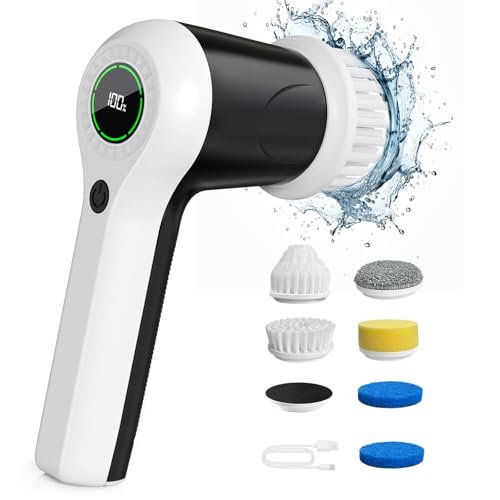
Scrubbing baked-on pasta sauce off a casserole dish, degreasing a post-holiday dinner frying pan, or tackling dried-on cereal bowls after a busy weekday morning is a chore most people dread. Manual scrubbing not only eats up time but can leave your wrists and hands aching, especially for those with arthritis, mobility limitations, or households that generate large volumes of dishes after meals or gatherings. The electric dish cleaning brush is purpose-built to eliminate that strain, using high-speed rotational power to blast away grime, grease, and stuck-on food in a fraction of the time of manual scrubbing. Updated for 2026, this guide covers exactly how these tools work, what features matter most for dish-specific cleaning, top-performing models on the market, and how to get the most out of your investment for sparkling dishes every time.
How Electric Dish Cleaning Brushes Work
Most electric dish cleaning brushes are cordless, powered by rechargeable lithium-ion batteries that drive a small, high-torque motor to rotate the brush head at consistent speeds between 200 and 400 revolutions per minute (RPM). This rotational motion creates a scrubbing action far more consistent than manual motion, lifting stuck-on food, grease, and dried stains without requiring you to apply downward pressure that causes wrist strain. While many models are marketed for all-purpose bathroom and tile cleaning, dish-specific variants prioritize food-safe, non-abrasive brush heads that won’t scratch non-stick cookware, glassware, or ceramic dishware. In practice, the consistent motion also reduces splatter compared to aggressive manual scrubbing, lowering the risk of cross-contamination during cleanup, in line with official food safety protocols for kitchen hygiene.
Key Features to Prioritize for Dish Cleaning Tasks
Not all electric spin scrubbers are built for dishwashing, so prioritizing the right features will ensure you get a tool that works for your specific needs, rather than a generic all-purpose model that may damage delicate dishware.
Food-Safe, Non-Abrasive Brush Heads
Stiff grout-specific bristles included with many all-purpose scrubbers can scratch non-stick pans, etch glassware, and dull ceramic finishes. Look for heads made of BPA-free nylon, soft silicone, or polymer labeled food-safe, per University of Minnesota Extension food safety guidance. Most dish-focused models include 3-5 specialized heads: an ultra-soft flat head for wine glasses and delicate plastic containers, a medium-bristle angled head for pots, pans, and ceramic plates, and a small crevice head for utensil tines, straws, and cup corners.
Adjustable Speed Settings
Low speed (under 200 RPM) is ideal for light messes and delicate items, while high speed (300+ RPM) powers through baked-on food and greasy cookware. Some models include a pulse setting for extra-tough stuck-on bits.
Battery Life and Charging
For most households, 60+ minutes of runtime per full charge is sufficient to tackle a full sink of post-meal dishes. USB-C charging is standard in 2026 models, so you can top up the battery from a phone adapter or power bank if you run out of charge mid-cleanup.
Waterproof Rating
Opt for an IPX7-rated model, the highest standard for consumer cleaning tools, which can be fully submerged in sink water for cleaning without motor damage. Lower IPX4-rated models only resist splashes, making them a risk near running sink water.
Ergonomics and Weight
Choose models under 1 pound with a non-slip grip to reduce wrist strain during longer cleaning sessions for large dinner parties or holiday meal cleanup.
Top Electric Dish Cleaning Brushes for 2026
We’ve evaluated the most popular models on the market, focusing on performance for dish-specific cleaning tasks, to help you find the right fit for your kitchen.
Top Picks for Dish-Specific Cleaning
Best All-Rounder: PUFTEM Electric Spin Scrubber
 The included 6 heads cover glassware, pots, pans, and crevice cleaning for all dishwashing needs.
The PUFTEM Electric Spin Scrubber is a versatile mid-range option built for both dish cleaning and full-home use. It includes 6 replaceable heads, including a soft flat head for glassware, a medium-bristle head for pots and pans, and a small crevice head for utensil corners, so you can tackle every part of your post-meal cleanup with one tool. It offers two adjustable speed settings, a clear battery level display to avoid mid-cleanup interruptions, and a lightweight 0.88-pound design that reduces hand and wrist strain during extended use. The only downsides are its shorter 45-minute battery life per charge, and its white finish, which shows food stains and grime more easily than darker models.
If this all-rounder fits your needs, you can view current pricing and availability here.
The included 6 heads cover glassware, pots, pans, and crevice cleaning for all dishwashing needs.
The PUFTEM Electric Spin Scrubber is a versatile mid-range option built for both dish cleaning and full-home use. It includes 6 replaceable heads, including a soft flat head for glassware, a medium-bristle head for pots and pans, and a small crevice head for utensil corners, so you can tackle every part of your post-meal cleanup with one tool. It offers two adjustable speed settings, a clear battery level display to avoid mid-cleanup interruptions, and a lightweight 0.88-pound design that reduces hand and wrist strain during extended use. The only downsides are its shorter 45-minute battery life per charge, and its white finish, which shows food stains and grime more easily than darker models.
If this all-rounder fits your needs, you can view current pricing and availability here.
Best Budget Option: Rubbermaid Reveal Power Scrubber 18-Piece Kit
 The full 18-piece kit includes extra heads for both kitchen and bathroom deep cleaning.
The Rubbermaid Reveal 18-Piece Kit is the best pick for casual users on a budget, offering solid performance for dish cleaning without a high price tag. It runs on standard AA batteries (no charging required, so you never have to wait for it to power up before cleanup) and includes 18 pieces, with multiple dish-specific heads for glass, pots, and crevices. Its water-resistant design makes it safe to use directly in the sink, and its 0.74-pound lightweight build reduces fatigue during longer cleaning sessions. The tradeoffs are a less powerful motor than premium models, which struggles with very heavy baked-on grime, and a slightly higher price point than basic manual dish brushes.
For a budget-friendly option that works for both dishes and full-home cleaning, check out the Rubbermaid Reveal kit here.
The full 18-piece kit includes extra heads for both kitchen and bathroom deep cleaning.
The Rubbermaid Reveal 18-Piece Kit is the best pick for casual users on a budget, offering solid performance for dish cleaning without a high price tag. It runs on standard AA batteries (no charging required, so you never have to wait for it to power up before cleanup) and includes 18 pieces, with multiple dish-specific heads for glass, pots, and crevices. Its water-resistant design makes it safe to use directly in the sink, and its 0.74-pound lightweight build reduces fatigue during longer cleaning sessions. The tradeoffs are a less powerful motor than premium models, which struggles with very heavy baked-on grime, and a slightly higher price point than basic manual dish brushes.
For a budget-friendly option that works for both dishes and full-home cleaning, check out the Rubbermaid Reveal kit here.
Best for Long Cleaning Sessions: Qimedo Electric Spin Scrubber Q4
 The high-capacity 5000mAh battery lasts through multiple rounds of dishwashing and deep kitchen cleaning.
The Qimedo Electric Spin Scrubber Q4 is ideal for large households, frequent entertainers, or anyone who hates mid-cleanup battery interruptions. Its 5000mAh lithium-ion battery delivers up to 90 minutes of runtime per charge, enough to tackle a full sink of post-dinner dishes, pots, pans, and even weekly kitchen deep cleaning without recharging. It includes 5 interchangeable heads, a built-in display that shows battery life and speed settings, and a compact, lightweight design that’s easy to maneuver around crowded sinks. The only downsides are its small head size, which can be less effective for very large baking sheets, and its yellow finish, which shows food stains over time.
If you frequently host gatherings or do large batches of dishwashing, the Qimedo Q4 is a solid pick, available here.
The high-capacity 5000mAh battery lasts through multiple rounds of dishwashing and deep kitchen cleaning.
The Qimedo Electric Spin Scrubber Q4 is ideal for large households, frequent entertainers, or anyone who hates mid-cleanup battery interruptions. Its 5000mAh lithium-ion battery delivers up to 90 minutes of runtime per charge, enough to tackle a full sink of post-dinner dishes, pots, pans, and even weekly kitchen deep cleaning without recharging. It includes 5 interchangeable heads, a built-in display that shows battery life and speed settings, and a compact, lightweight design that’s easy to maneuver around crowded sinks. The only downsides are its small head size, which can be less effective for very large baking sheets, and its yellow finish, which shows food stains over time.
If you frequently host gatherings or do large batches of dishwashing, the Qimedo Q4 is a solid pick, available here.
Best for Tough, Stuck-On Grime: HOTO Cordless Electric Spin Scrubber
 The 22 in-lb torque motor powers through baked-on food and grease without manual scrubbing.
The HOTO Cordless Electric Spin Scrubber is the top pick for anyone tired of scrubbing baked-on casserole dishes, greasy cast iron skillets, or dried-on grill pans by hand. It delivers a maximum torque of 22 in-lb, the highest of any consumer model on the market, which blasts through tough grime without requiring you to apply pressure. It has a full IPX7 waterproof rating for safe use directly in the sink, 9 interchangeable heads (including a heavy-duty bristle head for cast iron and grill pans), and a compact 7.87 x 3.82 x 1.89-inch design that’s easy to store in a kitchen drawer. The tradeoffs are a slightly heavier 1.1-pound weight that can cause fatigue during very long cleaning sessions, and a beige finish that shows food stains easily.
For tough, stuck-on kitchen messes that make manual scrubbing a chore, the HOTO model is a top choice, viewable here.
The 22 in-lb torque motor powers through baked-on food and grease without manual scrubbing.
The HOTO Cordless Electric Spin Scrubber is the top pick for anyone tired of scrubbing baked-on casserole dishes, greasy cast iron skillets, or dried-on grill pans by hand. It delivers a maximum torque of 22 in-lb, the highest of any consumer model on the market, which blasts through tough grime without requiring you to apply pressure. It has a full IPX7 waterproof rating for safe use directly in the sink, 9 interchangeable heads (including a heavy-duty bristle head for cast iron and grill pans), and a compact 7.87 x 3.82 x 1.89-inch design that’s easy to store in a kitchen drawer. The tradeoffs are a slightly heavier 1.1-pound weight that can cause fatigue during very long cleaning sessions, and a beige finish that shows food stains easily.
For tough, stuck-on kitchen messes that make manual scrubbing a chore, the HOTO model is a top choice, viewable here.
Honorable Mentions for Multi-Surface Use
The following models perform well for dish cleaning, but are better suited for users who want a single tool for both kitchen and bathroom cleaning tasks:
- CONERX Electric Spin Scrubber: Includes 5 replaceable heads, a lightweight 0.73-pound design, and a compact form factor that’s easy to store, with a focus on multi-surface use for tiles, grout, and floors in addition to dishes.
- Kecoreay IPX7 Waterproof Electric Spin Scrubber: Features a skin-friendly silicone grip, 7 replaceable heads, and a fully waterproof design for safe use in showers and sinks, with a soft brush head option for delicate dishware.
- HAUSHOF Electric Spin Scrubber: Includes 8 replaceable heads, 3 adjustable speed settings, and a built-in knife sharpener for added kitchen utility, making it a good pick for users who want a multi-functional tool.
- DAESUNG Electric Spin Scrubber: Features an LED display for easy control, 6 replaceable heads, and a compact 3 x 6 x 10-inch design that’s easy to maneuver in tight sink spaces.
- Dovety Electric Spin Scrubber with Extension Handle: Includes an adjustable extension handle to reduce back strain when cleaning large dishes or pots, plus 8 replaceable heads and 2 speed settings for versatile use.
Buying Tips for 2026
With dozens of models on the market, use these quick guidelines to find the right fit for your needs:
- For casual, occasional dish cleaning: Entry-level models ($20-$40) with 3-4 heads and 45+ minutes of battery life are more than sufficient.
- For large households or frequent entertainers: Mid-range to high-end models ($40-$80) with 5000mAh+ batteries and 6+ heads will stand up to heavy use.
- If you only need a tool for dishes: Skip all-purpose models with extra bathroom-specific heads to save money, and prioritize food-safe, non-abrasive heads instead.
- Stick to well-known brands like Rubbermaid, HOTO, and PUFTEM, which offer widely available replacement heads and customer support, so you don’t have to worry about parts becoming obsolete.
Step-by-Step: Using an Electric Dish Brush for Sparkling Dishes
Getting the most out of your electric dish brush is simple with these easy, practical steps:
- Pre-rinse all dishes: Scrape large food bits into compostable waste bags or your trash, then rinse dishes under warm running water to remove loose debris. This prevents food particles from clogging the brush head during use.
- Select the right brush head: Use the ultra-soft flat head for glassware, wine glasses, and delicate plastic containers; the medium-bristle angled head for pots, pans, ceramic plates, and stainless steel; and the small crevice head for utensil tines, straws, and cup corners.
- Apply dish soap: Add a small amount of your usual dish soap directly to the brush head, or drop a few drops into heavily soiled dishes to loosen grime before scrubbing.
- Start with low speed for light messes: For everyday dishes with minimal stuck-on food, use the low speed setting to avoid splashing soapy water around your sink.
- Switch to high speed for tough grime: For baked-on casserole dishes, greasy frying pans, or dried-on oatmeal bowls, use the high speed setting. Apply only light pressure—let the brush do the work. A common mistake is pressing down hard, which wears out brush heads faster and does not improve cleaning results. For extra-tough messes, let the dish soak in warm soapy water for 10 minutes before scrubbing to loosen grime, then follow proper glassware washing techniques for delicate items to avoid breakage.
- Rinse and dry: Rinse the brush head thoroughly under warm running water after use, wipe the handle and motor body dry with a clean cloth, and store it in a dedicated brush storage caddy to prevent water damage and bacterial growth. If you use your electric brush for sink cleaning as well, pair it with regular routine sink drain upkeep to prevent clogs from food debris.
Maintenance and Care to Extend Your Brush's Lifespan
With proper care, a quality electric dish brush will last 2-3 years, even with regular use. Follow these simple tips to keep it performing like new:
- Rinse the brush head thoroughly after each use to remove food particles and soap residue. For stuck-on bits, soak the head in warm soapy water for 5 minutes before rinsing.
- Wipe the handle and motor body dry after each use, even for IPX7-rated models. Prolonged exposure to standing water can cause corrosion or water spots over time.
- Charge the battery after each use, or when the battery indicator drops below 20%. Letting the battery drain completely before recharging reduces the overall lifespan of lithium-ion batteries over time.
- Replace brush heads every 3-6 months, depending on use. Worn-out bristles are less effective at removing grime and can harbor harmful bacteria. Most brands sell replacement heads separately for $5-$15 per pack, so you don’t need to replace the entire tool when bristles wear out.
- Sanitize brush heads monthly by soaking them in a solution of 1 tablespoon unscented bleach per 1 gallon of water for 5 minutes, then rinsing thoroughly. This eliminates bacteria that can transfer to dishes during cleaning.
Frequently Asked Questions
What Are The Benefits Of Using An Electric Dish Cleaning Brush?
Electric dish brushes cut down on scrubbing time and physical effort for even the toughest kitchen messes. The consistent rotational motion lifts baked-on food, grease, and dried stains far more effectively than manual scrubbing, without requiring you to apply pressure that can cause wrist strain or joint pain. Most models include multiple interchangeable heads, so you can switch between delicate glassware cleaning and heavy-duty pot scrubbing in seconds. For households with limited mobility, arthritis, or large families that generate a lot of dishes, these tools eliminate the physical burden of post-meal cleanup. In practice, users find they can clear a full sink of dishes 30-50% faster than with a manual brush, with less physical fatigue at the end of the session. When used correctly, they also reduce splatter that can spread foodborne bacteria, aligning with official food safety protocols for kitchen cleanup.
How Long Does The Battery Last On These Electric Scrubbers?
Battery life varies by model, battery capacity, and speed setting used. Most standard electric dish brushes deliver 45 to 90 minutes of runtime per full charge, enough for 2-3 rounds of post-meal dishwashing for average households. Higher-capacity models, like those with 5000mAh batteries, can last up to 90 minutes on a single charge, even on high speed for tough messes. Many 2026 models include USB-C charging, so you can top up the battery from a phone adapter, laptop, or power bank if you run out of charge mid-cleanup. A common mistake is letting the battery drain completely before recharging, which can reduce the overall lifespan of the lithium-ion battery over time. To extend battery life, charge the brush after each use, or when the battery indicator drops below 20%.
Are Electric Spin Scrubbers Waterproof For Bathroom Use?
Most electric spin scrubbers designed for kitchen use carry an IPX7 waterproof rating, the highest standard for water resistance in consumer cleaning tools. This means the device can be fully submerged in up to 1 meter of water for 30 minutes without damage, making it safe to use directly in the sink for dishwashing, and easy to rinse off after use. Lower IPX4-rated models only resist splashes and light water spray, so they are not recommended for direct use in the sink, as water can seep into the motor and cause permanent damage. For models you plan to use for both dishes and bathroom cleaning, always opt for IPX7 or higher to avoid water damage.
How Many Replaceable Brush Heads Come With These Products?
Most electric dish cleaning brushes come with 3 to 9 replaceable heads out of the box, depending on the model and price point. Entry-level models typically include 3-5 heads: a soft flat head for glassware and delicate plates, a medium-bristle flat head for pots, pans, and ceramic dishes, a small crevice head for utensil tines, straws, and cup corners, a scouring pad head for stuck-on food, and a heavy-duty bristle head for cast iron and grill pans. Higher-end models include up to 9 heads, adding specialized options like a polishing head for stainless steel, a tile head for bathroom use, and an extendable reach head for high surfaces. Replacement heads are sold separately by most brands, costing $5-$15 per pack, so you don’t need to replace the entire scrubber when bristles wear out.
Can Electric Scrubbers Clean Multiple Surfaces Besides Dishes?
Yes, most electric dish cleaning brushes are designed for multi-surface use, making them a versatile addition to your cleaning toolkit. Beyond dishes, they work well for scrubbing kitchen sinks, countertops, tile backsplashes, and stovetops for routine kitchen equipment upkeep. The adjustable speed settings and interchangeable heads let you switch between gentle cleaning for delicate surfaces and heavy-duty scrubbing for tough grime, so you can use the same tool for post-meal dish cleanup and weekly deep kitchen cleaning. Many users also use them for bathroom tile, shower doors, and window tracks, though for heavily soiled bathroom grout, a dedicated stiffer-bristle head (not included with most dish-focused models) may work better.
Are Electric Dish Brushes Safe For Non-Stick Cookware?
Yes, as long as you use the soft, non-abrasive brush heads included with most dish-specific models. Stiff grout or scouring heads can scratch and damage non-stick coatings over time, so always opt for the soft nylon or silicone heads when cleaning non-stick pans, griddles, or bakeware. Avoid applying excessive pressure, even with soft heads, to extend the life of your non-stick cookware.
Final Thoughts
An electric dish cleaning brush is a small, affordable investment that delivers big returns for your time, energy, and joint health. By eliminating the need for repetitive manual scrubbing, these tools cut down on post-meal cleanup time, reduce physical strain, and deliver more consistent cleaning results for even the toughest baked-on messes and greasy cookware. When choosing a model, prioritize features that match your specific dish cleaning needs: food-safe non-abrasive heads for delicate glassware and non-stick pans, adjustable speed settings for versatile use, and a high waterproof rating for safe use in the sink. With proper care, a quality electric dish brush will last 2-3 years, making it a practical, long-lasting addition to any kitchen cleaning routine. For more tips on keeping your kitchen spotless with minimal effort, check out our guides on streamlined daily kitchen cleanup and removing set-in food stains from cutting boards and other kitchen surfaces. Ready to upgrade your dishwashing routine? Pick a model that fits your budget and cleaning needs to make post-meal cleanup faster, easier, and less strenuous today.

I’m Abby Lu, a passionate home cook who loves simplifying everyday meals. At PlugChef.com, I share product reviews and cooking guides to help you find the best tools for your kitchen.
Related posts:
 Black Stainless Steel Kitchen Appliance Packages: Elevate Your Culinary Experience
 Frigidaire Gallery Kitchen Appliance Packages: Elevate Your Culinary Experience
 Whirlpool Kitchen Appliance Package Deals: Transform Your Cooking Space Today!
 Best Microwave Egg Cooker: Quick, Delicious Breakfasts Made Easy
 Best Beginner Espresso Machine: Top Picks for Perfect Home Brews
 Best Blenders Sunglasses for Men: Stylish Polarized UV Protection