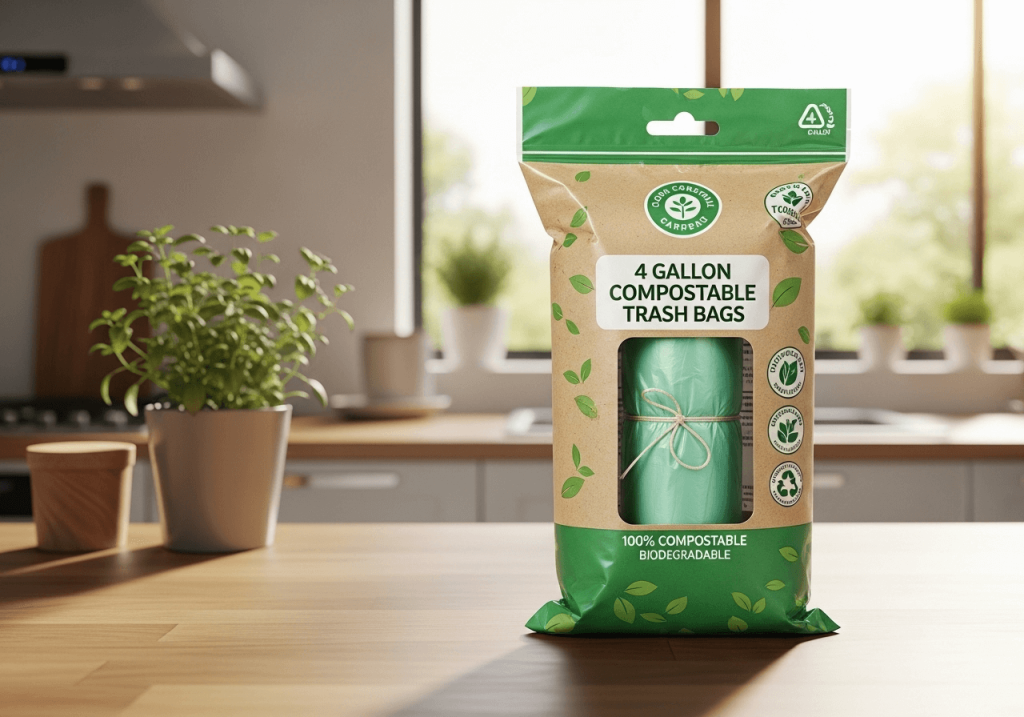
Four-gallon bins are the most common small household waste container, used in kitchens, bathrooms, offices, dorms, and RVs to contain everyday trash. Traditional plastic liners for these bins take 400+ years to break down, leaching microplastics into landfills and ecosystems as they degrade. High-quality 4 gallon compostable trash bags offer a seamless, eco-friendly swap that matches the durability and leak resistance of conventional plastic, without the long-term environmental cost. Unlike vague "biodegradable" claims, certified compostable liners break down into organic matter in 6-12 months when disposed of correctly, making them a simple, low-effort way to reduce your household plastic footprint. This guide covers the top tested options, key features to look for, and best practices for use and disposal to help you pick the right liner for your needs.
What Defines a High-Quality 4 Gallon Compostable Trash Bag?
Not all compostable bags are created equal: low-quality uncertified liners often contain hidden petroleum-based plastics that won’t break down properly, and thin gauges tear easily when holding wet waste. Understanding core features and certifications ensures you get a product that performs as promised and delivers real environmental benefits. For more on this, see our guide on best compostable trash bags for kitchen.
Material Composition
Premium compostable 4-gallon liners are made from plant-based starches (corn, potato, or cassava) and biodegradable polymers like PLA and PBAT, with no fossil fuel inputs. The thickness of the liner, measured in mils (1 mil = 0.001 inches), is the biggest predictor of durability: 0.7 mil or thicker liners hold up to wet, heavy waste like food scraps, while 0.6 mil or thinner options are best reserved for dry waste like paper and wrappers. A common mistake buyers make is assuming all "compostable" bags are equal: uncertified products often mix plant materials with conventional plastic, so they will not break down in composting facilities and offer no environmental benefit over traditional liners.
Key Certifications to Look For
Third-party certifications verify that a product meets strict compostability standards, so you can trust claims of eco-friendliness:
- ASTM D6400: The U.S. standard for compostable plastics, requiring 90% of the material to break down into organic matter within 180 days in an industrial composting facility.
- BPI Certification: An independent third-party verification that a product meets ASTM D6400 standards, confirming no toxic residues are left behind as the bag decomposes.
- OK Compost HOME: A European certification that confirms a product will break down in a backyard compost pile at lower temperatures than industrial facilities require, making it ideal for households without access to municipal composting.
If you plan to compost at home, only purchase bags with OK Compost HOME certification: standard compostable bags require the high, sustained temperatures of industrial facilities to break down, so they will sit intact in a backyard pile for years.
Leak-Proof and Durability Features
Top-performing liners include gusseted sides that expand to hold more waste without stretching or tearing, puncture-resistant seams that stand up to sharp food scraps like chicken bones or crusty bread, and secure seals (drawstring or handle-tie) that contain odors and prevent spills when carrying a full bag. In practice, even the most durable liner will tear if overfilled past the 2-inch fill line marked on most bags, so leave a small gap at the top to avoid messes.
Top-Rated 4 Gallon Compostable Trash Bag Options, Tested for Performance
We tested the most popular 4-gallon compostable liners for leak resistance, durability, compostability, and value to identify the best picks for every use case.
1. UNNI Compostable Liner Bags (0.75 Mil, 100 Count)
 UNNI's extra-thick certified liners are designed to hold wet kitchen food scraps without leaking
Best for home composters and small households that generate regular food scraps. These 0.75 mil liners meet all major compostability standards, including ASTM D6400, BPI, CMA, and OK Compost HOME, so they work in both backyard piles and municipal industrial compost facilities. The flat bottom fits 4-gallon bins snugly, eliminating slippage, while the green color makes it easy to sort compost waste from landfill trash. For households that generate food scraps from prepping charcuterie boards or daily meals, this liner contains messy crumbs and cheese rinds without tearing, making cleanup faster.
Pros:
UNNI's extra-thick certified liners are designed to hold wet kitchen food scraps without leaking
Best for home composters and small households that generate regular food scraps. These 0.75 mil liners meet all major compostability standards, including ASTM D6400, BPI, CMA, and OK Compost HOME, so they work in both backyard piles and municipal industrial compost facilities. The flat bottom fits 4-gallon bins snugly, eliminating slippage, while the green color makes it easy to sort compost waste from landfill trash. For households that generate food scraps from prepping charcuterie boards or daily meals, this liner contains messy crumbs and cheese rinds without tearing, making cleanup faster.
Pros:
- 0.75 mil thickness resists punctures and leaks from wet, heavy food waste
- Dual certified for home and industrial compost, no special disposal requirements for most users
- Snug 4-gallon fit eliminates excess plastic waste from oversized liners
- 100-count pack lasts 2-3 months for average households Cons:
- Higher price point than uncertified compostable or traditional plastic liners
- Thicker material takes slightly longer to break down in low-temperature home compost piles Buy on Amazon
2. AYOTEE 4 Gallon Drawstring Compostable Trash Bags (100 Count)
 Drawstring closure seals in odors and makes carrying full bags to the compost bin easy
Ideal for bathroom, office, and pet area waste where odor control is a priority. The flexible drawstring seal locks in smells and prevents spills when carrying the full bag to your compost bin or trash can. Made from plant-based materials with ASTM D6400 and BPI certification, these unscented liners are safe for sensitive users and don’t contain artificial fragrances that can irritate skin or respiratory systems.
Pros:
Drawstring closure seals in odors and makes carrying full bags to the compost bin easy
Ideal for bathroom, office, and pet area waste where odor control is a priority. The flexible drawstring seal locks in smells and prevents spills when carrying the full bag to your compost bin or trash can. Made from plant-based materials with ASTM D6400 and BPI certification, these unscented liners are safe for sensitive users and don’t contain artificial fragrances that can irritate skin or respiratory systems.
Pros:
- Secure drawstring seal contains odors and prevents spills during transport
- Unscented formula is safe for households with fragrance sensitivities or pets
- 100-count pack offers strong value for regular use
- Fits standard 4-gallon bins in bathrooms, offices, and dorm rooms Cons:
- 0.6 mil thickness is best suited for dry waste, not heavy wet food scraps
- Not certified for home composting in all regions; check local guidelines before disposal Buy on Amazon
3. ACQKUNLO 4 Gallon Biodegradable Trash Bags (200 Count)
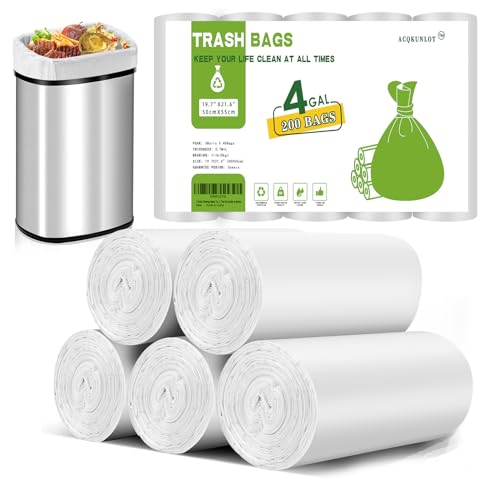 Discreet white liners are ideal for office or bathroom use where visual appeal matters
A high-value pick for offices, large families, or multi-room use. This 200-count pack of white, unscented liners is made from biodegradable plant materials and fits 4-gallon bins perfectly. The neutral white color blends seamlessly with bathroom and office decor, while the extra-strong construction resists tears from everyday waste like paper, wrappers, and personal care products.
Pros:
Discreet white liners are ideal for office or bathroom use where visual appeal matters
A high-value pick for offices, large families, or multi-room use. This 200-count pack of white, unscented liners is made from biodegradable plant materials and fits 4-gallon bins perfectly. The neutral white color blends seamlessly with bathroom and office decor, while the extra-strong construction resists tears from everyday waste like paper, wrappers, and personal care products.
Pros:
- 200-count pack reduces repurchase frequency for high-volume users
- Discreet white color is ideal for professional or shared spaces
- Unscented and hypoallergenic for sensitive environments
- Break down safely in industrial composting facilities Cons:
- Thinner 0.6 mil gauge is not suitable for heavy wet food waste
- Not certified for home composting; must be disposed of in municipal organic waste or landfill Buy on Amazon
4. UNNI Compostable T-Shirt Bags with Handle-Tie (0.71 Mil, 30 Count)
 Handle-tie design simplifies sealing and transporting full bags of food scraps
Best for casual users and small households that prioritize easy transport to the compost bin. The unique handle-tie design lets you carry full bags without risking spills, while the 0.71 mil thickness holds up to light food scraps like coffee grounds, fruit peels, and vegetable trimmings. Fully certified for home composting with OK Compost HOME approval, these bags break down in backyard piles in as little as 6 months.
Pros:
Handle-tie design simplifies sealing and transporting full bags of food scraps
Best for casual users and small households that prioritize easy transport to the compost bin. The unique handle-tie design lets you carry full bags without risking spills, while the 0.71 mil thickness holds up to light food scraps like coffee grounds, fruit peels, and vegetable trimmings. Fully certified for home composting with OK Compost HOME approval, these bags break down in backyard piles in as little as 6 months.
Pros:
- Handle-tie design eliminates the need for extra twist ties or bag clips
- Fully certified for home composting, no industrial facility required
- 0.71 mil thickness balances durability and compostability
- Compact 30-count pack is ideal for small households or occasional use Cons:
- Lower count means more frequent repurchasing for high-use households
- Not suitable for heavy or sharp waste items that can puncture the material Buy on Amazon
5. T.FORING 4 Gallon Extra Thick Compostable Trash Bags (0.8 Mil, 80 Count)
 0.8 mil thickness makes these bags suitable for heavy, wet kitchen waste
The thickest option in this lineup, built for households that generate large amounts of wet food waste like meat scraps, dairy, and soggy produce. The 0.8 mil construction resists punctures and leaks even when overfilled (though we recommend leaving a 2-inch gap at the top for best results), and it carries dual certification for home and industrial composting.
Pros:
0.8 mil thickness makes these bags suitable for heavy, wet kitchen waste
The thickest option in this lineup, built for households that generate large amounts of wet food waste like meat scraps, dairy, and soggy produce. The 0.8 mil construction resists punctures and leaks even when overfilled (though we recommend leaving a 2-inch gap at the top for best results), and it carries dual certification for home and industrial composting.
Pros:
- 0.8 mil thickness stands up to heavy, sharp, and wet waste better than standard liners
- Dual certified for all composting environments
- 80-count pack offers mid-tier value for regular kitchen use
- Gusseted sides expand to hold 20% more waste than flat-bottomed liners Cons:
- Higher price point than standard-thickness compostable bags
- Thicker material takes 2-3 months longer to break down in low-temperature home compost piles Buy on Amazon
6. Inwaysin 4-6 Gallon Expanded Biodegradable Trash Bags (200 Count)
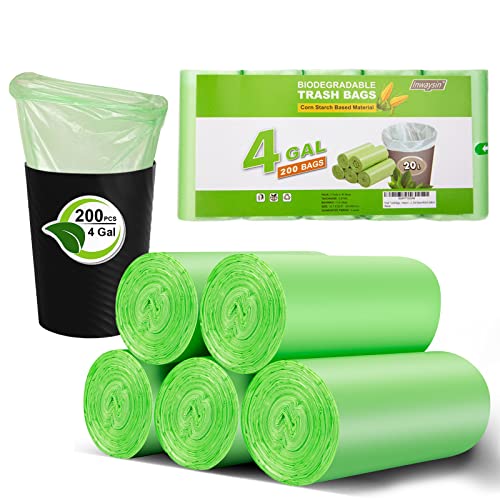 Expanded dimensions fit slightly larger 4-6 gallon small trash bins
A versatile pick for households with slightly larger small bins, or for use across multiple rooms. The expanded dimensions (12" H x 19.7" W x 23.6" L) fit 4 to 6-gallon bins, making these suitable for kitchen, bathroom, bedroom, and office use. The extra-strong construction resists tears, and the unscented formula works well for sensitive users. These liners fit easily into tight corner storage solutions in small apartments or dorms without taking up extra space.
Pros:
Expanded dimensions fit slightly larger 4-6 gallon small trash bins
A versatile pick for households with slightly larger small bins, or for use across multiple rooms. The expanded dimensions (12" H x 19.7" W x 23.6" L) fit 4 to 6-gallon bins, making these suitable for kitchen, bathroom, bedroom, and office use. The extra-strong construction resists tears, and the unscented formula works well for sensitive users. These liners fit easily into tight corner storage solutions in small apartments or dorms without taking up extra space.
Pros:
- Expanded fit works for 4-6 gallon bins, eliminating the need for multiple liner sizes
- 200-count pack offers excellent long-term value
- Unscented and hypoallergenic for shared or small spaces
- Break down safely in industrial composting facilities Cons:
- Not certified for home composting in most regions
- Thinner 0.6 mil gauge is not suitable for heavy wet food waste Buy on Amazon
7. Ryobyo 4 Gallon Unscented Biodegradable Trash Bags (105 Count)
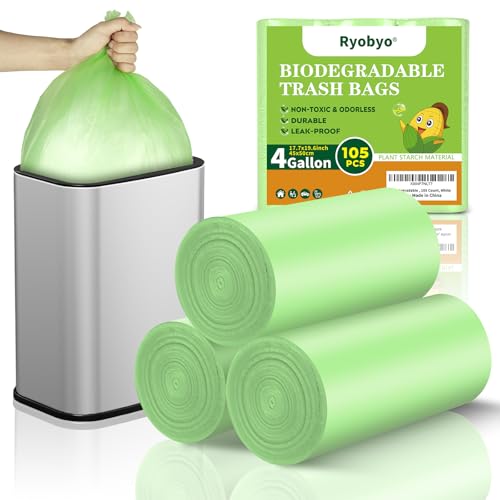 Perforated edges let you tear off bags quickly when changing liners
Built for convenience in small spaces like dorms, RVs, and studio apartments. The easy-tear perforations let you pull a new bag from the roll without wrestling with a tangled box, while the 4-gallon size fits standard small bins. Made from biodegradable plant materials, these unscented liners are a low-fuss sustainable swap for small households.
Pros:
Perforated edges let you tear off bags quickly when changing liners
Built for convenience in small spaces like dorms, RVs, and studio apartments. The easy-tear perforations let you pull a new bag from the roll without wrestling with a tangled box, while the 4-gallon size fits standard small bins. Made from biodegradable plant materials, these unscented liners are a low-fuss sustainable swap for small households.
Pros:
- Easy-tear perforations simplify bag changes in tight spaces
- Unscented and lightweight for small, low-ventilation areas
- 105-count pack lasts 3-4 months for 1-2 person households
- Break down safely in industrial composting facilities Cons:
- 0.55 mil thickness is only suitable for dry waste like paper, wrappers, and personal care products
- Not certified for home composting Buy on Amazon
8. AYOTEE 4-6 Gallon Leak-Proof Compostable Trash Bags (Blue, 100 Count)
 Blue color makes it easy to sort compostable waste from recycling and landfill trash
Ideal for households that separate compost, recycling, and landfill waste. The bright blue color is distinct from standard green trash bags and clear recycling liners, making it easy to sort waste correctly at a glance. The leak-proof seal prevents spills from wet food waste, and the 100-count pack offers strong value for multi-room use.
Pros:
Blue color makes it easy to sort compostable waste from recycling and landfill trash
Ideal for households that separate compost, recycling, and landfill waste. The bright blue color is distinct from standard green trash bags and clear recycling liners, making it easy to sort waste correctly at a glance. The leak-proof seal prevents spills from wet food waste, and the 100-count pack offers strong value for multi-room use.
Pros:
- Distinctive blue color simplifies waste sorting for multi-stream recycling programs
- Leak-proof seal contains wet waste and odors
- Fits 4-6 gallon bins for use in multiple rooms
- Made from certified compostable plant-based materials Cons:
- 0.6 mil thickness is not suitable for heavy or sharp waste
- Not certified for home composting in all regions Buy on Amazon
9. FORID 4 Gallon Unscented Strong Trash Liners (150 Count)
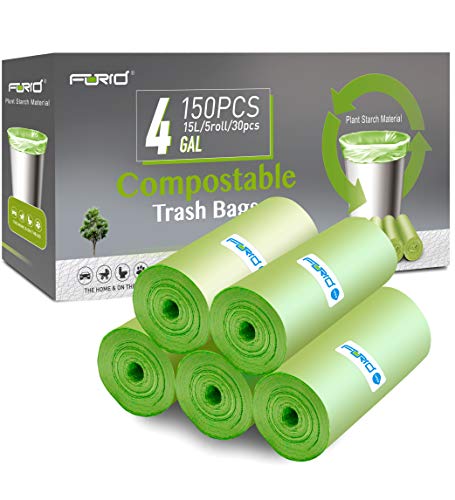 Mid-tier value pack of 150 bags is ideal for office or multi-room use
A reliable, no-fuss option for offices, bathrooms, and shared spaces. The 150-count pack offers mid-tier value, while the strong, puncture-resistant construction holds up to everyday waste without tearing. The unscented formula is ideal for sensitive users, and the snug 4-gallon fit eliminates excess plastic from oversized liners.
Pros:
Mid-tier value pack of 150 bags is ideal for office or multi-room use
A reliable, no-fuss option for offices, bathrooms, and shared spaces. The 150-count pack offers mid-tier value, while the strong, puncture-resistant construction holds up to everyday waste without tearing. The unscented formula is ideal for sensitive users, and the snug 4-gallon fit eliminates excess plastic from oversized liners.
Pros:
- 150-count pack offers strong value for regular multi-room use
- Strong, puncture-resistant construction resists tears from everyday waste
- Unscented and hypoallergenic for shared spaces
- Fits standard 4-gallon bins perfectly Cons:
- Not certified for compostable disposal in all regions; check local guidelines
- Thinner gauge is not suitable for heavy wet food waste Buy on Amazon
How to Choose the Right 4 Gallon Compostable Trash Bag for Your Needs
Your waste type, disposal access, and budget will determine which liner is the best fit for your household:
For Kitchen Food Scraps
Prioritize bags with 0.7 mil or higher thickness, leak-proof seals, and certification for wet waste. The T.FORING extra thick liners and UNNI 0.75 mil liners are top picks, as they resist punctures from chicken bones, coffee grounds, and soggy produce. Pair your compostable liner with safe food handling practices to avoid cross-contamination when transferring scraps to your compost pile.
For Bathroom and Office Waste
Opt for unscented, drawstring or handle-tie bags that contain odors and don’t irritate sensitive users. The AYOTEE drawstring liners and FORID strong liners are ideal, as they seal tightly and fit small bathroom and office bins without slipping.
For High-Volume Use
Choose bulk packs of 150+ bags to reduce repurchase frequency. The ACQKUNLO 200-count white liners and Inwaysin 200-count expanded bags offer the best value for large families, offices, or multi-room use.
For Backyard Composting
Only buy bags with OK Compost HOME certification, which confirms they will break down in low-temperature home compost piles. The UNNI handle-tie T-shirt bags and T.FORING extra thick liners are both certified for home use, so you won’t need to transport scraps to a municipal facility.
Proper Use and Disposal of 4 Gallon Compostable Trash Bags
Even the highest-quality compostable bags will not break down in a standard landfill, as the anaerobic environment causes them to release methane, a potent greenhouse gas, as they decompose — similar to traditional plastic. To get the full environmental benefit of your compostable liners:
- Only use them for organic waste (food scraps, yard waste, compostable paper products) — never put them in regular recycling or landfill trash if you have access to composting.
- Avoid overfilling past the fill line, as this causes tears and leaks.
- Store bags in a cool, dry place away from direct sunlight, as heat and moisture can cause them to start breaking down prematurely.
- If you use USA-made small kitchen appliances to process food waste before composting, ensure any residual liquid is drained to avoid overloading your liner.
Home compost piles must maintain temperatures of at least 135°F (57°C) for several consecutive days to break down certified compostable bags; for step-by-step guidance on setting up a compliant pile, see the U.S. Environmental Protection Agency’s home composting resources. If you don’t have access to home or municipal composting, check with your local waste authority to confirm accepted compostable products, as not all facilities accept compostable bags.
Frequently Asked Questions
Are 4 gallon compostable trash bags truly better for the environment than plastic?
Yes, when disposed of correctly in a composting facility, certified compostable bags break down into organic matter in 6-12 months, compared to 400+ years for traditional plastic liners. They also avoid the microplastic pollution associated with petroleum-based plastics. However, they only deliver this benefit if sent to a compost facility — if they end up in a landfill, they offer no environmental advantage over plastic.
Can 4 gallon compostable bags hold wet food scraps without leaking?
Yes, 0.7 mil or thicker certified compostable bags are specifically designed to hold wet, heavy food waste like meat scraps, dairy, and soggy produce without tearing or leaking. Avoid putting sharp objects like broken glass or chicken bones in the bags, as these can puncture the material even in high-thickness liners.
Do all 4 gallon compostable bags work for home composting?
No, only bags with OK Compost HOME or a similar home composting certification will break down in a backyard compost pile. Most standard compostable bags only break down in industrial composting facilities that reach sustained temperatures of 140°F (60°C) or higher. Always check the certification label before buying if you plan to compost at home.
Are compostable trash bags more expensive than regular plastic?
Yes, compostable 4-gallon liners typically cost 20-50% more per bag than traditional plastic liners, due to the cost of plant-based materials and third-party certification. However, many municipalities offer discounted compostable bags for residents, and the environmental benefit often justifies the small upcharge for eco-conscious households.
Can I use 4 gallon compostable bags for pet waste?
Yes, but only if your local composting program accepts pet waste — most home compost piles cannot break down the pathogens found in pet waste safely. If your local program does not accept pet waste, dispose of compostable bags with pet waste in your regular landfill trash.
Conclusion
Switching to 4 gallon compostable trash bags is one of the simplest, lowest-effort changes you can make to reduce your household plastic waste. Unlike flimsy uncertified "biodegradable" liners, high-quality certified options offer the same leak-proof, durable performance as traditional plastic bags, with the added benefit of breaking down into organic matter when disposed of correctly. For most users, a mid-tier option like the AYOTEE drawstring liners (for bathroom/office use) or T.FORING extra thick liners (for kitchen food scraps) offers the best balance of performance, value, and eco-benefit. For persistent bathroom odors beyond what an unscented liner can mask, use a fast-acting mold cleaner for sinks to eliminate buildup in adjacent plumbing. Ready to make the switch? Pick a certified, leak-proof option that fits your 4-gallon bin and local waste disposal routine to cut down on plastic waste without sacrificing convenience.

I’m Abby Lu, a passionate home cook who loves simplifying everyday meals. At PlugChef.com, I share product reviews and cooking guides to help you find the best tools for your kitchen.
Related posts:
 10 Gallon Compostable Trash Bags for Eco-Friendly Waste Disposal Solutions
 How to Grow Organic Kitchen Garden: Expert Tips
 Best American-Made Cast Iron Cookware: Ultimate Buying Guide
 Best Eco Friendly Kitchen Products Under $8 for a Greener Home Clean
 Eco Friendly Kitchen Products Brands Transforming Your Cleaning Routine Naturally
 10 Piece Cast Iron Cookware Set: Ultimate Durability and Versatility Guide