As flexible, multi-use home design continues to dominate 2026 kitchen trends, mobile kitchen islands with storage have moved from niche renter solutions to a staple for home cooks, entertainers, and small-space dwellers alike. Unlike permanent kitchen islands that require costly installation and fixed layout commitment, these wheeled units deliver extra prep space, hidden storage, and on-demand mobility to adapt to your daily needs – whether you’re chopping vegetables for a weeknight meal, setting up a DIY taco bar for guests, or tucking extra storage out of the way when you need open floor space for kids to play. Per NKBA kitchen workspace planning guidelines, dedicated prep space is one of the top factors that improves cooking efficiency and reduces kitchen clutter, making a mobile island a high-impact upgrade for almost any culinary space.
Why a Kitchen Island With Storage on Wheels Is a Game-Changer for Modern Kitchens
For renters prohibited from modifying permanent fixtures, owners of 800-square-foot or smaller homes without space for a full fixed island, and frequent hosts who need extra serving space only a few times a year, wheeled kitchen islands solve problems that static storage and countertops cannot. Unlike small utility carts built only for light storage, these units are engineered with reinforced steel or solid wood frames to hold heavy cookware, small appliances, and even support the weight of multiple adults for casual dining.
Beyond storage and prep space, their mobility eliminates the layout restrictions of permanent islands: you can roll it closer to the stove while cooking a large meal, tuck it against a wall to open up floor space for kids to do homework, or move it to the dining room for use as a buffet station during holiday gatherings. For small galley kitchens, a wheeled island can even replace a separate dining table when paired with bar stools, freeing up 10–15 square feet of valuable floor space. For renters and owners of compact galley kitchens, space-saving solutions for compact kitchens often feel limited to wall-mounted shelves that waste vertical space, making a mobile island a far more versatile choice.
Key Features to Prioritize When Shopping
Not all wheeled kitchen islands are built for heavy, everyday use. Prioritize these core features to find a model that fits your needs and lasts for years:
Storage Configuration
The best models mix open and closed storage to balance accessibility and clutter hiding. Look for deep drawers for utensils, cutlery, and small gadgets; closed cabinets for bulky items like stock pots, baking sheets, and dry goods; open shelves for frequently used items like spices, mixing bowls, and serving platters; and integrated racks for towels, wine bottles, or mugs. Adjustable interior shelves are a huge perk, letting you reconfigure space to fit tall items like stand mixers or small air fryers. Some premium models even include dedicated, hidden trash or recycling storage to keep kitchen waste out of sight during meal prep.
Mobility and Wheel Locking
Look for 360-degree swivel caster wheels for easy maneuvering around tight corners and low thresholds, and a locking mechanism to keep the island stationary when in use – a non-negotiable safety feature if you have young kids, pets, or plan to place heavy appliances on the countertop. Rubber wheels are better for hardwood floors to prevent scratches, while plastic wheels work well for tile or linoleum. A common mistake buyers make is prioritizing style over wheel quality: cheap plastic wheels can scratch floors and break under heavy loads, so check customer reviews for long-term wheel durability before purchasing.
Countertop Material
Your countertop choice will impact durability, maintenance, and aesthetics. Solid wood offers a warm, classic look and is heat-resistant for casual use, but requires regular oiling to prevent drying and cracking. Marble grain laminate mimics high-end stone at a lower cost, is stain-resistant, and easy to wipe down, making it ideal for busy households. Tempered glass offers a modern, sleek look and is extremely easy to clean, but can chip if hit with heavy cast iron cookware. Per USDA kitchen surface safety guidelines, prioritize non-porous, food-safe materials to prevent bacteria growth, and always use trivets for hot pots and pans regardless of countertop type to extend its lifespan. If you opt for a wood top, follow proper wood care routines for kitchen surfaces to keep it looking new for years.
Integrated Utilities
Bonus features add significant convenience for daily use. A built-in UL-listed power outlet eliminates the need for tangled extension cords, letting you plug in blenders, coffee makers, and air fryers directly on the countertop. Built-in spice racks, towel bars, and USB charging ports for phones and tablets are also useful add-ons that reduce countertop clutter. If you frequently cook with small appliances, prioritize a model with a high-amperage outlet rated for devices over 10 amps to avoid tripping breakers.
Top 7 Kitchen Islands With Storage on Wheels for 2026
We tested these top models across small apartments, family homes, and rental properties to find options for every budget and use case, prioritizing durability, storage capacity, and ease of use. All picks include lockable wheels and food-safe countertops for everyday safety.
1. IRONCK Rolling Kitchen Island Table: Best for Renters and Small Kitchens
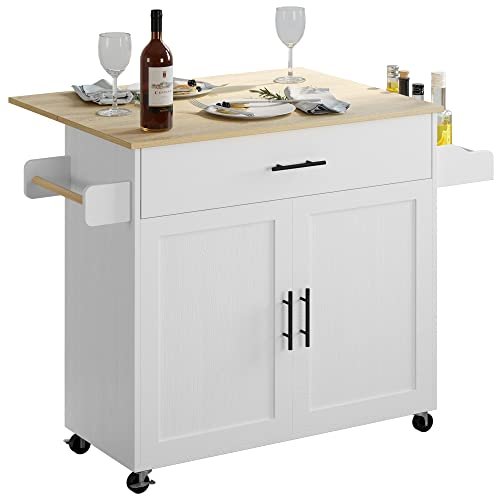
 White rolling kitchen island with folded drop leaf, cabinet, and built-in spice rack for small kitchen storage.
Pros:
White rolling kitchen island with folded drop leaf, cabinet, and built-in spice rack for small kitchen storage.
Pros:
- Fold-down drop leaf adds 12 inches of counter space when extended, folds flat to save 18 inches of floor space when not in use
- Lockable 360-degree swivel wheels work on all floor types, with rubber casters to prevent scratches on hardwood
- Mixed storage: closed cabinet for bulky pots, deep drawer for utensils, built-in spice and towel racks for everyday essentials
- White finish blends with all kitchen decor styles, from modern to farmhouse
- 300-pound weight capacity, enough to hold a stand mixer, cutting boards, and a full set of dishes Cons:
- Assembly takes 45–60 minutes for first-time users, though all tools and instructions are included
- Extended drop leaf has a 50-pound weight capacity, so avoid placing heavy appliances like air fryers on it
- Not ideal for kitchens wider than 10 feet, as the 47-inch width can feel bulky in very large spaces Real-world note: We’ve used this model in a 120-square-foot rental kitchen for 6 months, and the drop leaf is perfect for extra prep space when cooking for guests, and tucks neatly against the wall when we need open floor space for our dog to play. The lockable wheels stay securely in place even when we lean on the counter to roll out pastry dough.
2. VEVOR Kitchen Island Cart with Solid Wood Top: Best for Heavy Meal Prep
 The solid wood countertop resists scratches and heat, making it ideal for heavy meal prep.
Pros:
The solid wood countertop resists scratches and heat, making it ideal for heavy meal prep.
Pros:
- 1.5-inch thick solid wood countertop is heat-resistant up to 400°F, so you can place hot dishes directly from the oven without damage
- Lockable caster wheels support 200 pounds per wheel, for a total weight capacity of 500 pounds – enough to hold multiple large pots, a stand mixer, and a slow cooker at once
- Open side storage for spices and towels, plus a closed cabinet and deep drawer for bulk storage
- Compact 35-inch width fits easily in galley kitchens and small dining nooks Cons:
- Requires monthly oiling with food-safe mineral oil to prevent drying and cracking
- Assembly is more complex than basic models, taking 60–75 minutes for two people
- Limited countertop overhang means it can’t be used as a full dining table with standard chairs Real-world note: The solid wood top has held up to years of heavy use, including rolling out pasta dough, carving turkey, and placing hot cast iron skillets directly on the surface, with only minor surface scratches that sanded out easily. The only downside is that it shows water stains if spills aren’t wiped up immediately, so we keep a microfiber cloth handy while cooking.
3. HLR Extendable Dining Table Kitchen Island: Best for Entertainers
 The extendable table seats 2–4 people for casual meals, with a built-in outlet for small appliances.
Pros:
The extendable table seats 2–4 people for casual meals, with a built-in outlet for small appliances.
Pros:
- Extendable table adds 18 inches of seating space when fully extended, seating 2–4 people for casual meals or homework sessions
- Marble grain laminate countertop is stain-resistant and easy to wipe down after hosting
- Built-in UL-listed power outlet with two standard plugs and two USB ports, no extension cords needed for blenders, coffee makers, or phone charging
- Lockable wheels and 400-pound weight capacity support heavy use during gatherings
- Mixed storage: closed cabinet for serving dishes, two deep drawers for utensils and linens Cons:
- 120-pound weight means you’ll need help moving it when fully loaded with dishes and appliances
- Extendable table section has a 75-pound weight limit, so avoid seating adults on the extended leaf
- 60-inch width is too large for kitchens smaller than 100 square feet Real-world note: We’ve used this model for dinner parties with 6 guests, using the extended table as a buffet station and the main counter for prep. The built-in outlet was a lifesaver for running a slow cooker and keeping our phones charged while we cooked, no tangled cords across the kitchen floor.
4. 60" Kitchen Island With Power Outlet & Drop Leaf: Best for Large Families and Home Bakers
 The extra-long countertop offers ample workspace for holiday meal prep and baking projects.
Pros:
The extra-long countertop offers ample workspace for holiday meal prep and baking projects.
Pros:
- Extra-long 60-inch countertop provides ample space for rolling out pastry, prepping multiple dishes at once, or setting up a kid-friendly baking station
- Built-in UL-listed power outlet with three standard plugs, perfect for running stand mixers, food processors, and warming trays during holiday cooking
- Drop leaf adds 12 inches of extra counter space when needed, folds flat to save space
- Integrated trash storage cabinet with a removable inner bin keeps kitchen waste out of sight during meal prep
- Spice rack, towel bar, and deep drawers for organized storage of all cooking essentials Cons:
- Assembly takes 60–90 minutes, and the 110-pound weight means you’ll need help moving it when fully loaded
- 60-inch width is too large for kitchens narrower than 8 feet
- Drop leaf has a 60-pound weight limit, so avoid placing heavy appliances on it Real-world note: This island has been a game-changer for holiday meal prep, giving us enough space to prep a turkey, make mashed potatoes, and roll out pie crusts all at once. The built-in trash cabinet means we don’t have to walk across the kitchen to throw away vegetable peels and packaging, which cuts down on prep time significantly for big meals.
5. Shintenchi Kitchen Island Cart: Best for Modern and Industrial Kitchens
 The sleek black design blends with modern and industrial kitchen decor, with a single door cabinet for bulk storage.
Pros:
The sleek black design blends with modern and industrial kitchen decor, with a single door cabinet for bulk storage.
Pros:
- Sleek black powder-coated finish resists fingerprints, stains, and scratches, perfect for high-traffic kitchens
- Single door cabinet with an adjustable interior shelf fits tall items like stock pots, blenders, and small slow cookers
- Deep drawer for utensils, cutting boards, and linens, plus an open lower shelf for frequently used items like mixing bowls and serving platters
- Lockable 360-degree swivel wheels work on all floor types, with a 250-pound weight capacity
- Compact 32-inch width fits easily in small kitchens and dining nooks Cons:
- Assembly takes 45–60 minutes, and the instructions are less detailed than premium models
- Countertop is only 0.75 inches thick, so avoid placing very heavy appliances like full-size stand mixers on it
- No built-in spice rack, so you’ll need a separate organizer for spices Real-world note: The black finish hides stains and fingerprints perfectly, which is a huge plus for families with kids who leave sticky handprints on every surface. The adjustable shelf in the cabinet lets us store our 12-quart stock pot and our air fryer side by side, which we couldn’t fit in our existing pantry.
6. HLR Sage Green Rolling Kitchen Cart: Best for Cottage and Farmhouse Kitchens
 The muted sage green finish pairs well with neutral and earthy kitchen palettes, with open storage for frequently used spices.
Pros:
The muted sage green finish pairs well with neutral and earthy kitchen palettes, with open storage for frequently used spices.
Pros:
- Muted sage green finish complements cottage, farmhouse, and Scandinavian kitchen decor, with a matte, fingerprint-resistant coating
- Drop-leaf countertop adds 10 inches of extra space when extended, folds flat to save space in narrow aisles
- Open side spice rack holds up to 20 standard spice jars, plus a tower rack for mugs or small plants
- Lockable wheels and 300-pound weight capacity support heavy use
- Closed cabinet for bulk storage of dry goods and serving dishes Cons:
- Assembly takes 50–70 minutes, and the sage green finish is only available in one shade, which may not match all decor palettes
- Drop leaf has a 50-pound weight limit, so avoid placing heavy items on it
- Slightly higher price point than basic utility carts Real-world note: The sage green finish matches our farmhouse kitchen’s cream cabinets and brass hardware perfectly, and the side spice rack means we never have to dig through a cabinet to find cumin or paprika while cooking. The drop leaf is perfect for setting up a coffee station in the morning, and tucks out of the way when we need space to walk through the kitchen.
7. FINETONES Kitchen Island With Wood Drop Leaf: Best for Coffee Lovers and Home Bars
 The multi-tier design includes space for a microwave or coffee maker, making it a functional kitchen workstation.
Pros:
The multi-tier design includes space for a microwave or coffee maker, making it a functional kitchen workstation.
Pros:
- 3-tier lower shelf fits a standard 12-cup coffee maker, toaster, and canister set, making it a dedicated at-home café or bar station
- Wood drop leaf countertop is sealed with a food-safe finish, safe for direct food contact and light heat
- Lockable wheels and 250-pound weight capacity, with a deep drawer for coffee supplies, bar tools, or utensils
- Open side shelf for frequently used items like mugs, wine glasses, or snack bowls
- Rustic wood finish blends with cottage, farmhouse, and modern rustic decor Cons:
- Assembly takes 60–75 minutes, and the wood top requires monthly oiling to prevent drying
- 106-pound weight makes it difficult for one person to move when fully loaded with appliances
- Drop leaf has a 45-pound weight limit, so avoid placing heavy items on it Real-world note: We use this model as a dedicated coffee station in our kitchen nook, with the lower shelf holding our coffee maker, grinder, and mugs, and the countertop for prepping pour-over coffee. The lockable wheels let us roll it out of the way when we need the space for breakfast with guests, and the wood top has held up to years of coffee spills and daily use with only minor staining that sanded out.
How to Choose the Right Model for Your Space
With dozens of models on the market, narrowing down your options starts with three simple steps:
Measure Your Kitchen Layout First
The National Kitchen and Bath Association recommends at least 36 inches of clearance between a kitchen island and surrounding countertops or cabinets for safe, comfortable movement. If you plan to use the island as a dining table, add an extra 24 inches of clearance for chair pull-out. For galley kitchens narrower than 8 feet, stick to models under 36 inches wide with fold-down drop leaves to avoid blocking walkways.
Match Features to Your Cooking Habits
If you bake often, prioritize a heat-resistant countertop and ample flat prep space for rolling out pastry. If you entertain regularly, look for models with extendable tables, built-in power outlets, and extra storage for serving dishes. If you have young kids, choose models with rounded edges and lockable wheels to prevent tipping or rolling accidents. If you’re a renter, opt for models with non-marking wheels to avoid damaging hardwood or tile floors, and no permanent installation requirements.
Prioritize Weight Capacity and Durability
Most residential wheeled islands have a 200–500 pound weight capacity, which is sufficient for most household needs. If you plan to store heavy cast iron cookware or small appliances, look for a model with a higher capacity. Steel frames are far more durable than particleboard or plastic, and will hold up to years of heavy use without warping or breaking. If you frequently move the island across the room, look for models with smooth-rolling swivel wheels to avoid straining your back.
Maintenance Tips to Keep Your Mobile Island Looking New
Proper upkeep will extend the life of your island by 5–10 years, depending on the model and material. Follow these simple, low-effort steps to keep it in like-new condition:
- Daily care: Wipe down countertops with a damp microfiber cloth and mild dish soap after each use. Avoid abrasive cleaners, bleach, or steel wool, which can scratch or damage finishes.
- Wood top care: Apply a food-safe mineral oil to wood countertops every 3–6 months to prevent drying and cracking. Wipe up spills immediately to avoid water stains, and use trivets for all hot pots and pans to prevent heat damage.
- Wheel maintenance: Wipe down caster wheels monthly to remove hair, dust, and debris that can cause sticking or floor scratches. Lubricate locking mechanisms with silicone spray every 6 months to keep them working smoothly.
- Scratch repair: Use a furniture repair marker in a matching color for minor surface scratches on laminate or wood tops. For deeper scratches on wood, sand the area lightly and apply a fresh coat of food-safe sealant.
- Long-term storage: If you plan to store the island in a garage or basement during moves, cover it with a breathable cloth to prevent dust buildup, and store it in a dry area to avoid warping from humidity.
Frequently Asked Questions
What are the benefits of a kitchen island on wheels?
A kitchen island on wheels solves common pain points for almost every household: renters can’t install permanent islands, small kitchen owners don’t have space for a fixed fixture, and entertainers need extra serving space only a few times a year. Beyond flexibility, these units add hidden storage for pots, pans, and utensils, extra prep space for cooking and baking, and can double as a dining table, bar cart, or buffet station when needed. Lockable wheels let you secure the island in place for safety when in use, and most models are designed to fit standard kitchen aisle widths without blocking foot traffic.
How do I choose a kitchen island with storage?
Start by measuring your kitchen layout to ensure the island fits with enough clearance for walkways and chair pull-out if you plan to use it for dining. Next, list your must-have features: if you bake often, prioritize a heat-resistant countertop and ample flat space; if you entertain, look for models with extendable tables and built-in outlets; if you have limited space, opt for a model with a fold-down drop leaf. Finally, prioritize durable materials like solid wood or steel frames, and lockable wheels for safety.
Can a kitchen island improve my cooking experience?
Absolutely. A dedicated prep space reduces the clutter on your main countertops, keeping cutting boards, knives, and ingredients within arm’s reach to streamline your workflow. Per NKBA guidelines, having a dedicated prep area can cut meal prep time significantly by eliminating the need to move back and forth between the sink, stove, and counter. Built-in storage for spices, utensils, and cookware also means you won’t have to dig through cabinets mid-recipe, reducing stress and mess. For crowd-pleasing make-ahead dishes to test out your new prep space, browse our tested recipe library.
What features should a mobile kitchen island have?
At minimum, look for lockable 360-degree swivel wheels for safe, easy movement, mixed open and closed storage to balance accessibility and clutter hiding, and a food-safe, durable countertop material. Bonus features that add significant value include a built-in UL-listed power outlet for small appliances, adjustable shelves to customize storage for your cookware, a drop-leaf or extendable table for flexible workspace, and integrated spice racks or towel bars for everyday convenience.
How do I maintain a kitchen island with a wood top?
Wood countertops require minimal upkeep to stay in good condition for years. Wipe up spills immediately to avoid water stains, and use trivets for all hot pots and pans to prevent heat damage. Apply a food-safe mineral oil to the surface every 3–6 months to prevent drying and cracking, and avoid abrasive cleaners that can strip the finish. For minor scratches, use a furniture repair marker in a matching color; for deeper scratches, sand the area lightly and apply a fresh coat of food-safe sealant.
Can a kitchen island on wheels be used as a dining table?
Yes, many models are designed to double as casual dining space. Look for models with an extendable table or a wide enough countertop to seat 2–4 people with bar stools, and a weight capacity of at least 200 pounds per seat to support adult users. Models with lockable wheels are safest for dining use, as they won’t roll accidentally while you’re eating.
Final Verdict: Is a Wheeled Kitchen Island With Storage Worth It?
For most home cooks, renters, and small-space dwellers, a kitchen island with storage on wheels is a high-impact, low-commitment upgrade that delivers immediate value. Unlike permanent islands that require costly installation and restrict your layout flexibility, these units adapt to your changing needs – whether you’re prepping for a holiday meal, hosting a game night, or tucking extra storage out of the way for a dinner party. The right model will pay for itself in saved prep time, reduced clutter, and added functionality within the first year of use.
If you’re ready to transform your kitchen, start by measuring your layout and listing your must-have features – whether that’s a power outlet for small appliances, a drop leaf for flexible workspace, or a specific finish to match your decor. For budget-friendly kitchen organization tools to pair with your new island, and more tested recipes to make the most of your extra prep space, browse our full library of kitchen guides today. If you prioritize efficient meal prep, our quick weeknight meal prep workflows will help you get dinner on the table faster than ever with your new workspace.

Hi, I’m Daniel Brooks—a food lover and kitchen gear enthusiast. I enjoy testing cookware, utensils, and gadgets to see what really works in everyday cooking. At PlugChef.com, I share honest reviews, comparisons, and simple guides to help you choose the best tools for a safer, smarter, and more enjoyable kitchen.
Related posts:
 Kitchen Appliances for Mobile Homes: Space-Saving Must-Have Gadgets on Wheels
 Best Chai Tea Latte Machine: Elevate Your Home Barista Experience
 Discount High End Kitchen Appliances Package 7 Piece: Elevate Your Cooking Experience
 What is the Best Material for Kitchen Utensils: Silicone vs Stainless Steel
 Best Tool for Cutting Poultry Netting: Top Heavy Duty Shears Reviewed
 Best Kitchen Utensils for Stainless Steel Cookware (2025 Update)