
Wooden cutting boards are a staple in home kitchens for good reason: they’re gentle on knife edges, durable with proper care, and add a warm, natural touch to countertops. But their porous wood grain, while great for preserving knife sharpness, can also trap food particles, moisture, and harmful bacteria if not sanitized correctly. Unlike basic soap-and-water cleaning, which only removes visible dirt and debris, proper sanitizing kills lingering pathogens that can cause foodborne illness, keeping your family safe and your board in great shape for years. Whether you’re prepping ingredients for a week of meals or assembling a charcuterie board with fresh strawberries, following a simple, consistent sanitizing routine is one of the easiest ways to protect your household’s health.
Why Sanitizing Wooden Cutting Boards Is Critical
Wooden cutting boards have microscopic grooves in their grain that absorb moisture and food residue, even after a quick wash. If left unaddressed, these hidden pockets become breeding grounds for harmful bacteria like Salmonella, E. coli, and Listeria, which can transfer to other foods and cause serious illness. Improper cutting board sanitation is one of the most common causes of cross-contamination in home kitchens, per USDA cutting board safety guidance. This risk is especially high after prepping raw meat, poultry, or seafood, but even produce can carry pathogens that linger on board surfaces if not properly sanitized. A common mistake many home cooks make is assuming a quick soap scrub is enough, but sanitizing is a critical extra step that reduces pathogen levels to safe, regulated standards. For more on this, see our guide on how to sanitize wooden cutting board.
To avoid spreading bacteria between food groups, always use separate boards for raw animal products and produce, and follow proper post-raw meat sanitation steps after each use.
What You’ll Need
You don’t need specialized equipment to sanitize a wooden cutting board, but having the right supplies on hand will make the process faster and more effective. We’ve split the list below into daily cleaning and deep sanitizing supplies, plus items to avoid entirely to protect your board’s surface. For more on this, see our guide on how do you seal a wooden cutting board.
Daily Cleaning Supplies
- Warm running water
- Mild, fragrance-free dish soap
- Non-abrasive sponge or soft-bristled brush
- Lint-free drying cloth or paper towels
Deep Sanitizing Supplies
- White distilled vinegar
- 3% food-grade hydrogen peroxide
- Coarse kosher salt
- Fresh lemon
- Baking soda
- Food-safe mineral oil or beeswax cutting board conditioner (for monthly maintenance)
What to Avoid
- Steel wool or harsh scouring pads (they scratch the wood, creating deep grooves for bacteria to hide)
- Undiluted bleach, ammonia, or other harsh chemical cleaners (they damage the wood and leave harmful residues)
- Cooking oils like olive or vegetable oil (they go rancid over time and leave unpleasant odors that can transfer to food)
- Soaking the board in standing water (it causes warping and water absorption that harbors bacteria)
Step-by-Step Sanitizing for Every Use Case
The sanitizing process you use will depend on what the board touched: routine light use (produce, bread, cheese, charcuterie) requires a quick sanitizing step, while contact with raw animal products requires a deeper clean to kill high-risk pathogens.
Routine Sanitizing for Light Use
Follow these steps after every use, even if the board only touched plant-based foods:
- Scrape off all visible food debris with a bench scraper or dull knife, working with the wood grain to avoid scratching the surface.
- Wash the entire board, including often-forgotten edges and juice grooves, with warm soapy water and a non-abrasive sponge.
- Rinse thoroughly under cool running water to remove all soap residue.
- Sanitize by spraying the entire surface with a 1:1 mix of white vinegar and cool water, or full-strength 3% food-grade hydrogen peroxide.
- Let the sanitizer sit for 3–5 minutes to effectively kill lingering bacteria.
- Rinse with cool water (if using vinegar) or wipe with a clean damp cloth (if using hydrogen peroxide), then pat dry immediately.
Deep Sanitizing After Raw Meat, Poultry, or Seafood
For boards that have touched high-risk raw animal products, follow the routine cleaning steps above first, then use one of these deep sanitizing methods:
- Vinegar soak: Pour undiluted white vinegar over the entire board, let sit for 5 minutes, then scrub with a soft brush, rinse, and dry.
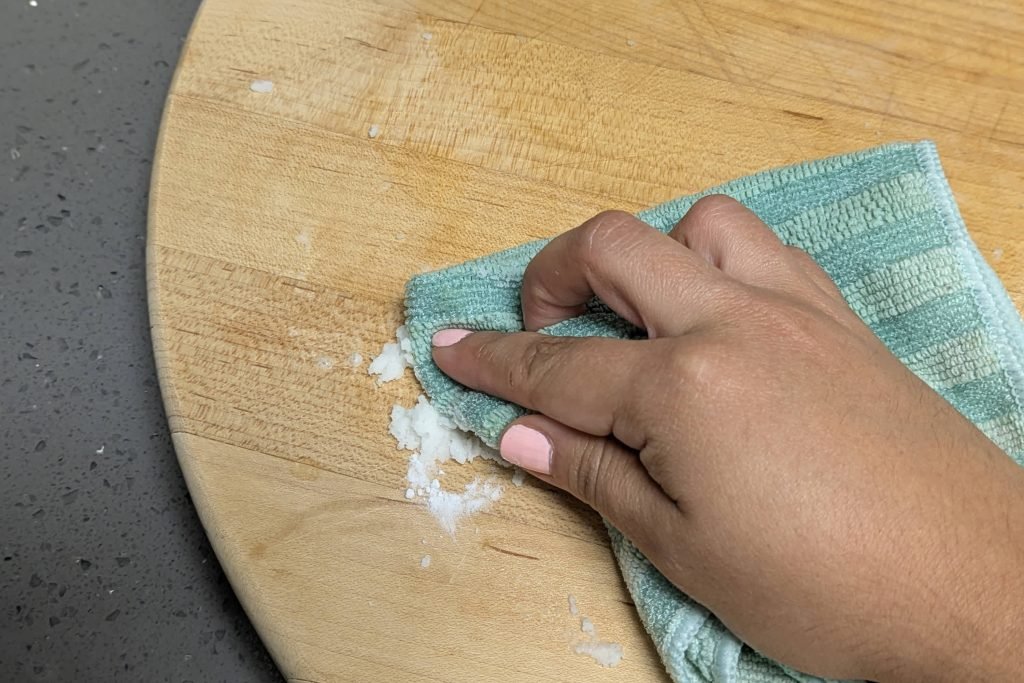
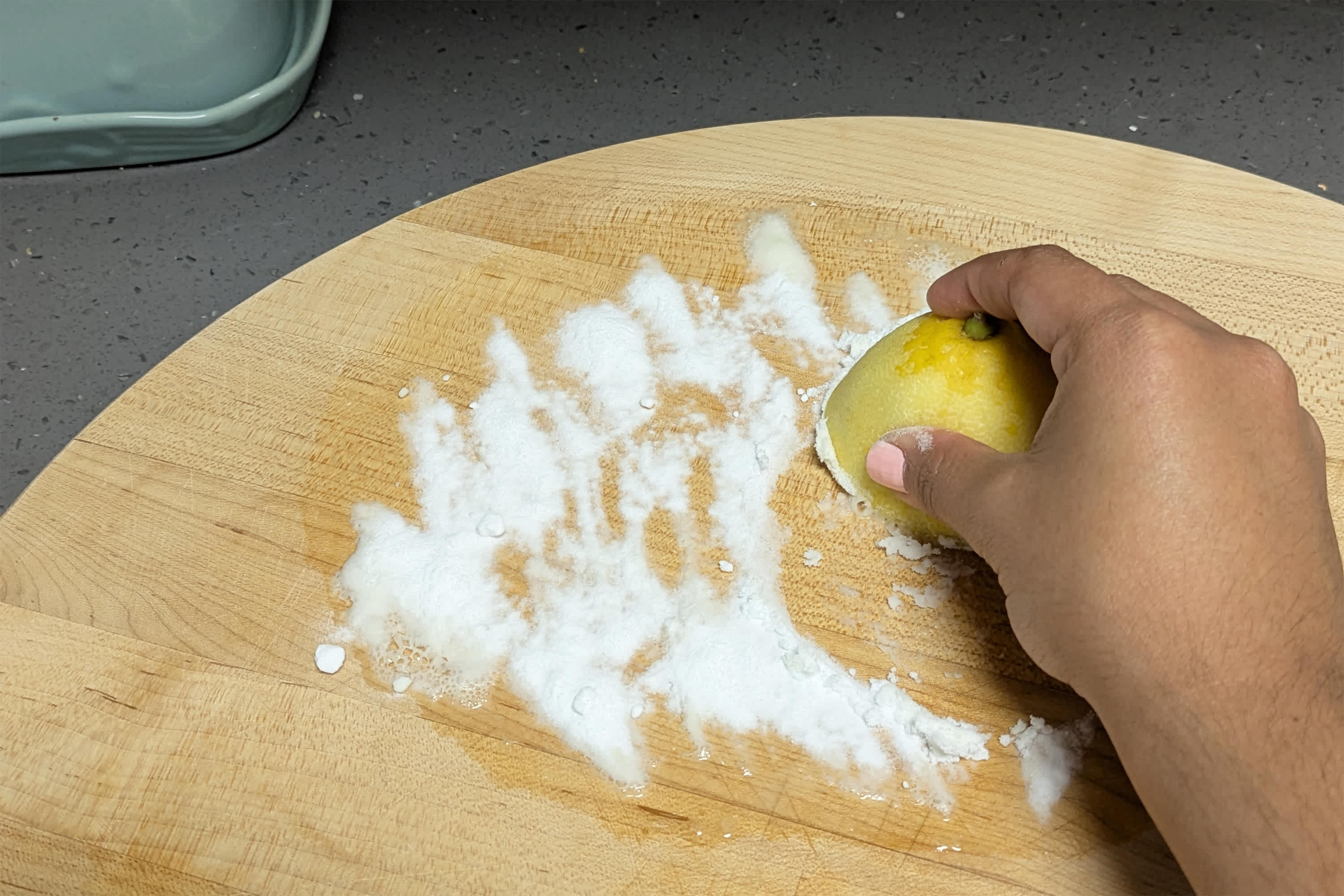
- Lemon salt scrub: Sprinkle a generous layer of coarse kosher salt over the board, cut a lemon in half and rub the cut side over the salt in circular motions, working the mixture into any stains or grooves. Let sit for 5 minutes, then scrub, rinse, and dry.
- Baking soda paste: Mix 2 parts baking soda with 1 part cool water to form a thick paste. Spread the paste over any stained or odorous areas, let sit for 10 minutes, then scrub with a soft brush, rinse thoroughly, and dry.
Note: Hydrogen peroxide is also effective for deep sanitizing; spray it on the board after washing, let sit 5 minutes, then wipe clean and dry. It is odorless, but may fade light-colored wood over time with repeated use, so test a small hidden area first if you have a pale maple or birch board.
 Lemon and baking soda scrub lifts stubborn stains and kills surface bacteria without harsh chemicals.
Credit: homewithgraceandjoy.com
Lemon and baking soda scrub lifts stubborn stains and kills surface bacteria without harsh chemicals.
Credit: homewithgraceandjoy.com
Drying and Long-Term Aftercare
Drying is the most overlooked step in cutting board care, and it’s critical for preventing warping, cracking, and bacterial growth. After sanitizing, pat the entire board dry with paper towels or a lint-free cloth, making sure to absorb all water from the juice groove and edges. Then stand the board upright on its short edge in a well-ventilated area away from direct heat (like stovetops or dishwashers) or direct sunlight, which can dry out the wood too quickly and cause splits. Let it air dry completely before storing. For more on this, see our guide on how to clean and sanitize a wooden cutting.
For long-term maintenance, oil your board once a month with food-safe mineral oil or a beeswax cutting board conditioner to replenish the wood’s natural oils and prevent it from drying out. Pour a generous amount of oil onto the board, rub it into the entire surface with a clean cloth, let it sit for 30 minutes, then wipe off any excess. If you own a bamboo cutting board, our dedicated bamboo board upkeep tips will help you extend its lifespan even longer with targeted care.
 Thorough drying immediately after sanitizing prevents moisture warping and bacterial growth.
Credit: www.thekitchn.com
Thorough drying immediately after sanitizing prevents moisture warping and bacterial growth.
Credit: www.thekitchn.com
Common Sanitizing Mistakes to Avoid
Even experienced cooks make these errors that can damage their boards or put their food at risk:
- Soaking the board in water: Even 10 minutes of standing water can cause the wood to warp, swell, and absorb bacteria into its grain.
- Putting the board in the dishwasher: High heat and harsh detergents will crack the wood, ruin its finish, and make it far more porous over time, creating more spaces for bacteria to hide.
- Using abrasive scrubbers: Steel wool or harsh scouring pads scratch the wood surface, creating deep grooves that are impossible to fully sanitize.
- Skipping sanitizing after raw meat: Soap only removes visible dirt, not the pathogens that can cause foodborne illness.
- Using cooking oils for conditioning: As mentioned earlier, these oils go rancid quickly, leaving bad flavors and potential bacterial growth on your board.
- Holding onto damaged boards: If your board has deep, unremovable grooves, cracks, or persistent odors that won’t go away after deep cleaning, it’s time to replace it. Bacteria can hide in these crevices no matter how well you sanitize.
Why Wooden Cutting Boards Are Worth the Extra Care
With proper care, a high-quality wooden cutting board can last 10 years or more, making it a far more cost-effective and eco-friendly choice than disposable plastic boards. Wood is also gentler on knife edges than plastic or glass, so your knives stay sharp longer, reducing how often you need to pay for professional sharpening. Unlike plastic boards, which develop deep, unsanitizable scratches over time, hardwood boards like maple and walnut have natural antimicrobial properties that reduce bacteria survival rates compared to plastic boards, according to University of California Agriculture and Natural Resources research. Pair your well-maintained wooden board with a sharp paring knife for precise charcuterie and produce prep. For more on this, see our guide on can you cut raw meat on a wooden.
Frequently Asked Questions
How often should I sanitize a wooden cutting board?
Sanitize your board after every single use, even if it only touched produce, bread, or cheese. For deep sanitizing, do it immediately after any contact with raw meat, poultry, seafood, or eggs to kill harmful pathogens like Salmonella and E. coli.
What common household items can sanitize wooden cutting boards?
White distilled vinegar, 3% food-grade hydrogen peroxide, lemon, coarse salt, and baking soda are all effective, food-safe sanitizers for wooden boards. Avoid harsh chemical cleaners like undiluted bleach or ammonia, as they can damage the wood and leave harmful residues. For more on this, see our guide on how do you disinfect a wooden cutting board.
Can I use bleach to sanitize a wooden cutting board?
Yes, for high-risk use cases (like after raw poultry contact), you can use a diluted bleach solution: mix 1 tablespoon of unscented household bleach with 1 gallon of cool water. Spray or wipe the solution onto the board, let it sit for 1 minute, then rinse thoroughly with warm water and dry. Do not use bleach for routine sanitizing, as it can dry out and crack the wood over time.
How long should sanitizer sit on a wooden cutting board?
For vinegar or hydrogen peroxide, let it sit for 3–5 minutes to effectively kill lingering bacteria. For lemon and salt scrubs, let the mixture sit for 5 minutes before scrubbing and rinsing. Baking soda paste can sit for up to 10 minutes to lift stubborn odors and stains.
Can I sanitize a cutting board with deep cuts or grooves?
No. If your board has deep, unremovable grooves, cracks, or splits, sanitizer cannot reach bacteria hiding in those crevices. Replace heavily damaged boards immediately to avoid cross-contamination risks.
Final Tips for a Safe, Long-Lasting Cutting Board
Sanitizing a wooden cutting board doesn’t have to be time-consuming or complicated. By distinguishing between routine light sanitizing and deep sanitizing for high-risk foods, drying your board properly after each use, and avoiding common care mistakes, you can keep your board safe, functional, and beautiful for years. Remember to oil it monthly, replace it when it shows signs of heavy damage, and always prioritize sanitizing after contact with raw animal products to protect your household’s health. For more kitchen safety guides, meal prep hacks, and cooking tutorials, browse our full kitchen maintenance library.

I’m Abby Lu, a passionate home cook who loves simplifying everyday meals. At PlugChef.com, I share product reviews and cooking guides to help you find the best tools for your kitchen.
Related posts:
 How to Make a Fruit Basket for a Gift: Easy DIY Guide
 Do You Need a Basket? Essential Guide for Air Fryers
 How to Adjust Syrup Dispenser Pressure: Expert Tips
 Kitchen Cabinets With Black Appliances: Trendy Design Tips
 White Kitchen And Stainless Steel Appliances: A Perfect Duo
 Kitchen Colors With White Cabinets And White Appliances: Vibrant Ideas

