
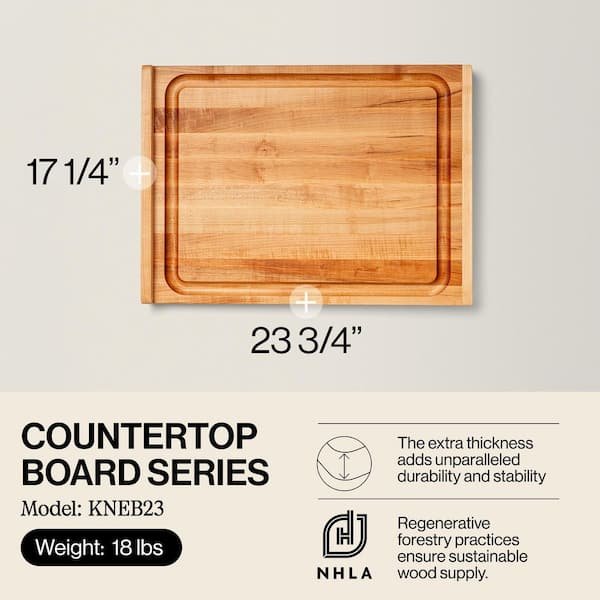
A warped, sliding cutting board is more than a nuisance—it’s a safety hazard that can lead to uneven cuts, dull knives, and even cross-contamination. Thickness is the single biggest factor determining how long your board will last, how stable it stays during use, and how well it protects your knife edges. Whether you’re a casual home cook prepping weeknight vegetables or a charcuterie enthusiast slicing through thick salami, choosing the right thickness for your needs will save you money and frustration long-term. The FDA recommends using separate cutting boards for raw meat, produce, and ready-to-eat foods to reduce cross-contamination risk selecting and using cutting boards safely, and thickness plays an underrated role in making that system work long-term.
Why Cutting Board Thickness Directly Impacts Durability
Thickness is not just a cosmetic feature—it directly determines how well your board holds up to daily use. Thin boards (under 1/2 inch) are extremely prone to warping from repeated moisture exposure (washing, wet food, high humidity), cracking from heavy impacts (chopping hard squash, bones), and splitting along glue lines for laminated boards. A common mistake home cooks make is prioritizing low cost or compact storage over thickness, leading to boards that need replacement within 12 months of regular use.
Stability is another critical benefit of thicker boards. A heavy, dense board will not slide around on your counter during chopping, reducing the risk of accidental cuts and ensuring even, clean slices every time. In practice, the extra $10–$20 you spend on a thicker board will almost always pay off in a longer lifespan and better performance.
Standard Cutting Board Thickness Ranges by Use Case
Cutting board thickness is not one-size-fits-all—your ideal measurement depends entirely on how you use your board. Below are the most common thickness ranges and their best use cases:
- 1/2 inch: Best for light, occasional use (slicing bread, prepping soft fruits, charcuterie arrangement). These ultra-thin boards are lightweight and easy to store, but they warp quickly with regular washing or heavy use.
- 3/4 inch: The sweet spot for most everyday home cooks. This thickness resists warping from regular use, is light enough to move easily, and fits most kitchen storage spaces. It’s ideal for chopping vegetables, slicing meat, and general meal prep.
- 1 inch: Perfect for heavy-duty home use, including chopping hard ingredients like butternut squash, bones, or thick cuts of meat. The extra mass prevents bowing under pressure and stays firmly in place during use.
- 1.5 inches and above: Reserved for commercial kitchens, butcher blocks, and DIY heavy-duty boards. This thickness absorbs the impact of repeated heavy chopping without cracking, and the weight eliminates slipping entirely.
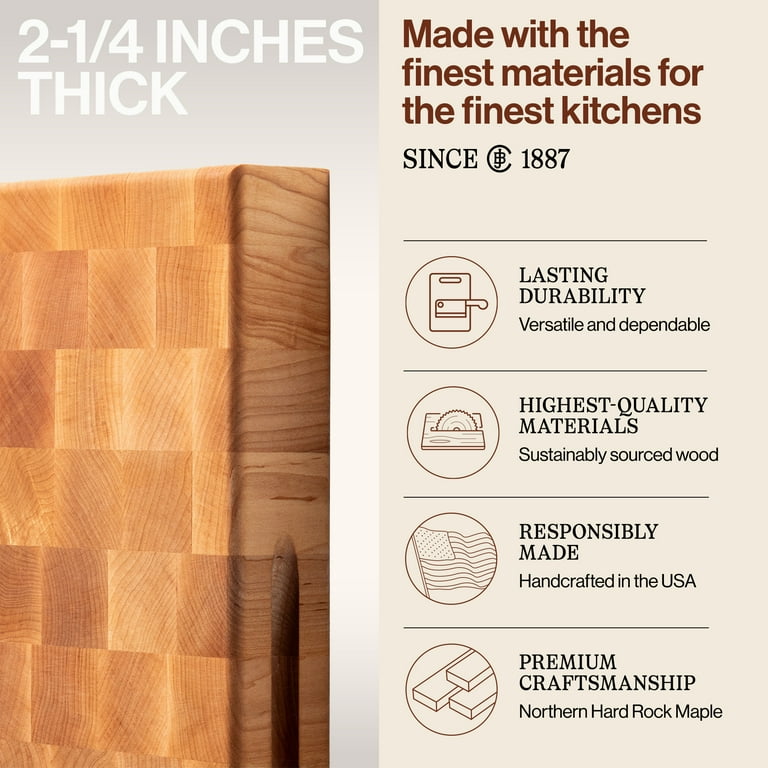 Thick boards resist warping from heavy chopping and moisture exposure far better than thin options.
Credit: www.walmart.com
Thick boards resist warping from heavy chopping and moisture exposure far better than thin options.
Credit: www.walmart.com
How Material Dictates Optimal Thickness
A board’s material changes how thickness impacts its performance. Dense, hard materials like end-grain hardwood can be slightly thinner without sacrificing durability, while porous or soft materials need extra thickness to avoid damage. Below is a breakdown of common materials and their ideal thickness ranges:
| Material | Common Thickness Range | Key Notes |
|---|---|---|
| Hardwood (maple, walnut, cherry) | 1–2 inches | End-grain boards benefit from 1.5+ inches to absorb knife impact without splintering; edge-grain works well at 3/4–1 inch for home use. |
| Plastic (polypropylene) | 1/2–1 inch | Thin plastic boards warp quickly in dishwashers; opt for 3/4 inch or thicker if you plan to sanitize regularly. |
| Bamboo | 3/4–1 inch | Highly dense and impact-resistant, but prone to splitting along the grain if cut too thin. |
| Composite (rubber, resin blends) | 1/2–1 inch | Engineered for durability, but thinner variants may bow under heavy weight over time. |
Key Factors to Consider When Choosing Thickness
Beyond your primary use case, these factors will help you narrow down the perfect thickness for your kitchen:
- Storage space: Thick boards require more cabinet or counter space. If you have limited storage, a 3/4 inch board is the best balance of durability and compactness.
- Weight tolerance: A 2-inch butcher block board can weigh 10+ pounds, which may be difficult for people with limited strength or mobility to move and clean.
- Knife maintenance: While thick boards don’t dull knives faster than thin ones, their stability prevents slipping that causes lateral knife damage. For serious home chefs who invest in high-end knives, a 1+ inch thick board is a worthwhile investment.
- Sanitation needs: If you need a board for raw meat prep that can be easily sanitized, a 1/2–3/4 inch thick plastic board works well, though you’ll need to replace it more frequently as it gets scored by knife cuts.
- Budget: Thicker boards cost more upfront, but their longer lifespan makes them more cost-effective over time. A $50 1-inch hardwood board will last 5+ years with proper care, while a $15 1/2 inch plastic board may need replacement every year.
Pros and Cons of Thick Cutting Boards (1 Inch and Above)
Thick boards are the gold standard for durability, but they’re not right for every kitchen: Pros
- Resistant to warping, cracking, and splitting even with heavy, regular use
- Stay firmly in place on countertops during chopping, reducing slip risk
- Gentler on high-end knife edges over time
- Often last 5+ years with proper care, making them more cost-effective long-term
- Can double as a serving platter for charcuterie or cheese boards
Cons
- Heavy and difficult to move, especially for users with limited strength
- Require more storage space, which is a challenge for small kitchens
- More expensive upfront than thin boards
- Many do not fit in standard dishwashers, requiring hand washing
- Overkill for users who only do light meal prep
Pros and Cons of Thin Cutting Boards (3/4 Inch and Below)
Thin boards are a convenient, affordable option for specific use cases, but they come with notable tradeoffs: Pros
- Lightweight and easy to maneuver, even for children or users with limited mobility
- Compact, making them ideal for small kitchens or RV/camper use
- Lower upfront cost, making them a good option for temporary or occasional use
- Easy to store in drawers or hang on wall racks
- Thin plastic boards are ideal for raw meat prep, as they can be easily sanitized or replaced when scored
Cons
- Prone to warping from moisture, heat, and heavy impacts, often within 6–12 months of regular use
- Less stable, increasing slip risk during chopping
- Shorter lifespan, requiring more frequent replacement
- Deep knife scores can harbor bacteria, making them less safe for raw food prep over time
- Often feel flimsy during heavy chopping, leading to uneven cuts
How to Care for Your Cutting Board to Extend Its Lifespan
No matter what thickness you choose, proper care will maximize your board’s lifespan and performance:
- Clean immediately after use: Wipe down boards after each use to remove food particles and moisture. Wooden boards should always be hand washed—never submerge them in water or put them in the dishwasher, as this causes warping and cracking. Plastic boards can be placed in the dishwasher if they’re 3/4 inch thick or thicker to avoid warping.
- Dry thoroughly: Always dry your board completely with a towel after washing, and store it flat or upright in a well-ventilated area. Leaning a board against a wall can cause it to bow over time.
- Oil wooden boards regularly: For hardwood and bamboo boards, apply a thin layer of food-grade mineral oil every 1–2 months to keep the wood from drying out and cracking. Avoid using olive oil or vegetable oil, as these can turn rancid over time.
- Prevent cross-contamination: Use separate boards for raw meat, produce, and ready-to-eat foods to avoid spreading harmful bacteria. For persistent discoloration, try these methods for removing stubborn surface stains from wooden or plastic boards.
- Address damage early: If you notice minor cuts or scratches on a plastic board, sand them smooth with fine-grit sandpaper to avoid bacteria buildup. If your wooden board retains a sour smell after repeated use, follow this guide for eliminating lingering odors without harsh chemicals. If you notice fuzzy black or white spots, addressing mold growth early will prevent you from having to replace the board entirely.
If you want a custom heavy-duty option instead of buying pre-made, you can build your own by following this guide for building a custom heavy-duty board. For a more personalized project for everyday use, this tutorial for crafting a custom cutting board walks through material selection and thickness recommendations for DIY builds.
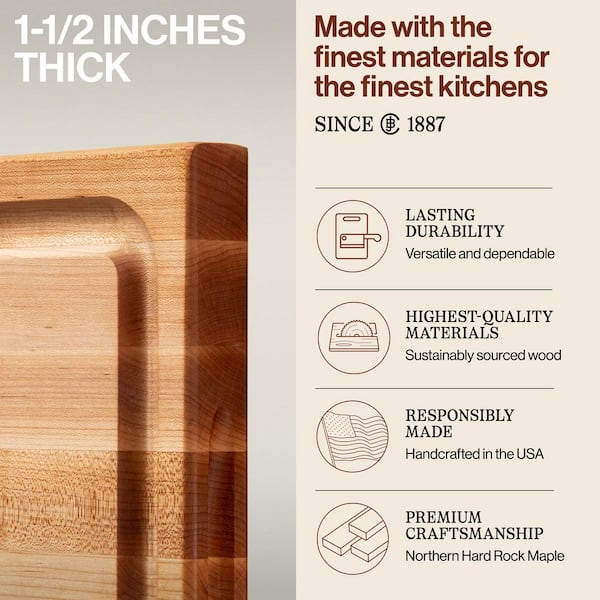 End-grain butcher block boards typically start at 1.5 inches thick for maximum durability and knife gentleness.
Credit: www.homedepot.com
End-grain butcher block boards typically start at 1.5 inches thick for maximum durability and knife gentleness.
Credit: www.homedepot.com
Frequently Asked Questions
How thick should a cutting board be for everyday home use?
For most home cooks who chop vegetables, slice bread, and prep light proteins, a 3/4 inch to 1 inch thick board hits the sweet spot. It’s thick enough to resist warping from repeated washing and heavy impacts, but not so heavy that it’s cumbersome to move or store. If you frequently chop hard ingredients like squash or bones, opt for a 1 to 1.5 inch thick board for extra stability.
Does thickness really affect cutting board durability?
Absolutely. Thin boards (under 1/2 inch) are far more prone to warping from moisture exposure, cracking from heavy impacts, and splitting along the grain over time. A board that’s at least 3/4 inch thick will typically last 3–5 years with regular use and proper care, while thin boards often need replacement within 1–2 years.
What thickness is best for a butcher block cutting board?
Butcher block boards designed for heavy-duty use, including chopping bones, slicing thick cuts of meat, and frequent commercial use, should be at least 1.5 inches thick. Extra thickness absorbs the impact of heavy strikes without cracking, and the weight keeps the board firmly in place during use. For casual home use, a 1 inch thick end-grain board is more than sufficient.
Can a thin cutting board damage your knives?
While thin boards themselves won’t dull knives as quickly as hard surfaces like glass, their lack of weight makes them far more likely to slip or shift during use. Sudden lateral movement from a slipping board can cause knives to catch, chip, or dull faster than cutting on a stable, thick board. Thin plastic boards are also more prone to deep scoring from knife strikes, which can harbor bacteria and make for an uneven cutting surface.
Can a cutting board be too thick?
Yes, for most home cooks. Boards over 2 inches thick are extremely heavy, difficult to maneuver, and often don’t fit in standard dishwashers or kitchen storage spaces. They’re also overkill for everyday use, unless you regularly chop large quantities of meat or work in a small commercial kitchen.
Conclusion
There’s no universal "perfect" cutting board thickness—the best choice depends entirely on your cooking habits, kitchen space, and budget. For most home cooks, a 3/4 to 1 inch thick hardwood or composite board offers the best balance of durability, stability, and ease of use. If you regularly chop hard ingredients or work with raw meat, opt for a thicker 1–1.5 inch board, or a separate thin plastic board for sanitation. No matter what thickness you choose, proper care will extend its lifespan by years, saving you money and reducing waste over time. For step-by-step instructions to build a heavy-duty board tailored to your exact needs, see our full guide to building a custom heavy-duty board or crafting a custom cutting board for a durable, personalized option that fits your kitchen perfectly.

I’m Abby Lu, a passionate home cook who loves simplifying everyday meals. At PlugChef.com, I share product reviews and cooking guides to help you find the best tools for your kitchen.
Related posts:
 Dried Flower Bud in a Spice Rack: Transform Your Cooking
 Coollog Waterproof under Sink Mat: Ultimate Leak Protection
 Recipe for Oven Roasted Shrimp: Easy, Quick & Delicious Delight
 Lemon Juice to Whiten Clothes: Natural Whitening Hacks That Work
 Tequila Sunrise With Cranberry Juice: Refreshing Twist to Classic Cocktail
 Can You Freeze Pudding Cups: Ultimate Guide to Safe Storage

