
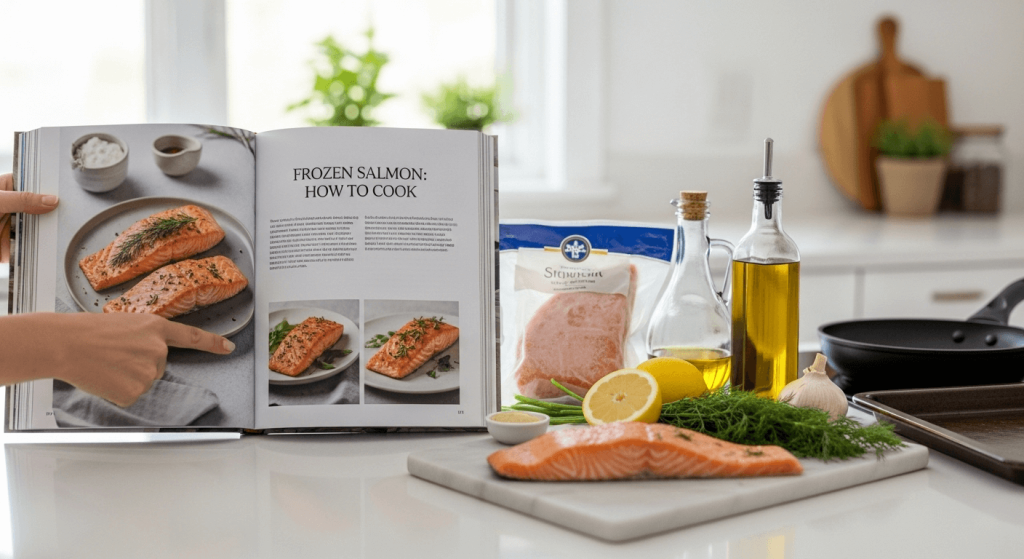
Frozen salmon is one of the most underrated staples in the modern kitchen: flash-frozen at peak freshness within hours of being caught, it locks in flavor and nutrients that often surpass “fresh” salmon that’s spent days in transit. Best of all, you don’t need to plan ahead or thaw it for hours to turn it into a moist, flavorful meal — even novice cooks can pull off restaurant-quality results in 30 minutes or less.
If you’ve ever pulled a bag of frozen salmon from the freezer last-minute and worried it would turn out dry, bland, or unevenly cooked, this guide is for you. We’ll cover how to pick the highest-quality frozen salmon, four no-thaw cooking methods, quick tested recipes, and pro tips to avoid common mistakes like overcooking or mushy texture.
 Oven-baked frozen salmon is one of the easiest, most hands-off methods for a moist, flavorful meal.
Why Frozen Salmon Is a Smart Kitchen Staple
Many home cooks assume fresh salmon is always superior, but frozen salmon is often a better choice for convenience, cost, and quality. Flash-freezing technology preserves the fish’s cell structure, so it doesn’t suffer the texture loss that fresh salmon experiences during shipping and storage. Frozen salmon is also typically 20–30% cheaper than fresh, and it lasts 6–8 months in your freezer, making it perfect for stocking up during sales or for last-minute weeknight dinners when you don’t have time to visit the grocery store.
How to Pick the Best Frozen Salmon for Any Cooking Method
Not all frozen salmon is created equal, and a low-quality cut will lead to subpar results no matter how you cook it. Here’s what to look for when shopping:
Types of Frozen Salmon
Frozen salmon comes in several cuts, each suited to different cooking methods:
- Fillets: The most versatile option, available skin-on or skinless, in portion sizes from 4 oz (single serving) to 12 oz (family-sized). Skin-on fillets are best for pan-searing and baking, as the skin crisps up nicely and protects the meat from drying out.
- Steaks: Thick, cross-section cuts cut from the center of the salmon, ideal for grilling or baking. They hold their shape well and have a richer, more substantial texture.
- Portions: Pre-cut, single-serving pieces, often breaded or pre-seasoned, perfect for quick kid-friendly meals or meal prep.
- Ground frozen salmon: A great option for burgers, meatballs, or pasta sauce, with a mild, versatile flavor.
- Smoked or cured frozen salmon: Pre-cooked during processing, so it only needs thawing before eating, no additional cooking required.
Quality Checks to Avoid Disappointing Meals
Skip any package with visible frost, ice crystals, or freezer burn (dry, discolored patches on the fish) — these are signs the fish was not properly sealed and will have a mushy, bland texture after cooking. Look for vacuum-sealed packaging with no tears or leaks, and check the label for:
- Source: Wild-caught salmon has a richer, more robust flavor, while farmed salmon is milder and higher in fat. Look for Marine Stewardship Council (MSC) or Aquaculture Stewardship Council (ASC) certification, which follows NOAA sustainable seafood standards to ensure responsible, ethical sourcing.
- Freeze date: The fresher the freeze date, the better the flavor. Avoid packages frozen more than 6 months prior.
- Additives: Choose plain frozen salmon with no added brine, sodium, or preservatives for the most control over flavor.
Prep Basics: Thawing, Seasoning & Essential Tools
While most frozen salmon cooking methods don’t require thawing, there are a few simple prep steps that make a huge difference in texture and flavor.
Thawing Methods (If Needed)
If your recipe calls for thawed salmon, or you prefer a shorter cook time, use one of these safe methods:
- Refrigerator thawing (best for meal prep): Place sealed salmon on a plate or in a container on the bottom shelf of your fridge. A 1-lb fillet will thaw in 8–12 hours (overnight is perfect). This slow thaw preserves the fish’s texture and prevents bacterial growth.
- Cold water submersion (fastest method): Keep salmon in its sealed vacuum packaging, submerge it in a bowl of cold water, and change the water every 20–30 minutes. A 1-lb fillet will thaw in 30–45 minutes.
- Never thaw salmon at room temperature: This allows bacteria to grow rapidly on the surface of the fish, and leads to uneven, mushy texture.
Simple, Flavor-Packed Seasoning Blends
Frozen salmon takes well to almost any seasoning, but these tested blends work especially well:
- Basic lemon herb: 1 tsp salt, ½ tsp black pepper, 1 tsp dried thyme, 1 tsp garlic powder, 1 tbsp olive oil, and 1 lemon sliced for topping.
- Smoky paprika rub: 1 tsp smoked paprika, 1 tsp brown sugar, ½ tsp cumin, 1 tsp salt, 1 tbsp olive oil.
- Honey soy glaze: 2 tbsp low-sodium soy sauce, 1 tbsp honey, 1 tsp rice vinegar, 1 tsp grated ginger, 1 tsp garlic powder.
- Garlic butter: 2 tbsp melted butter, 2 cloves minced garlic, 1 tsp dried parsley, pinch of salt.
Note that dry rubs work best on frozen salmon, as they adhere to the surface even when the fish is icy. Wet marinades penetrate better after thawing, so if using a wet marinade, thaw the salmon first or brush the marinade on during the last 2–3 minutes of cooking.
Tools You’ll Need
You don’t need fancy equipment to cook perfect frozen salmon, but these tools make the process easier:
- A rimmed baking sheet (lined with parchment or aluminum foil for easy cleanup)
- A non-stick or cast iron skillet for pan-searing
- An instant-read meat thermometer (to avoid overcooking)
- A thin, flexible fish spatula (for flipping without breaking the fish apart)
- A sharp fillet knife and a stable cutting board for trimming portions or removing skin
- A fish basket (optional, for grilling to prevent sticking)
 Patting frozen salmon lightly with a paper towel removes excess surface ice for a crispier sear.
4 No-Fuss Frozen Salmon Cooking Methods (No Thawing Required For Most)
All of these methods work with frozen salmon directly from the freezer, no thawing needed. Use the table below to quickly reference cook times for 1-inch thick fillets:
| Cooking Method | 1-Inch Thick Fillet Cook Time | Internal Temperature | Best For |
|---|---|---|---|
| Oven-Baked | 20–25 minutes at 425°F (220°C) | 145°F (63°C) | Hands-off cooking, meal prep batches |
| Pan-Seared | 10–12 minutes total (skin-side down 7–9 mins) | 145°F (63°C) | Crispy skin, quick weeknight meals |
| Grilled | 12–15 minutes total (indirect heat first) | 145°F (63°C) | Smoky flavor, outdoor cooking |
| Poached | 12–15 minutes in simmering liquid | 145°F (63°C) | Tender meat for salads, salmon cakes, kid-friendly meals |
Oven-Baked Frozen Salmon
Oven-baking is the most hands-off, foolproof method for frozen salmon, and it yields evenly cooked, moist fish every time. Preheat your oven to 425°F (220°C), and line a rimmed baking sheet with parchment paper or aluminum foil for easy cleanup. Pat the salmon very lightly with a paper towel to remove excess surface ice (this prevents sogginess and reduces splattering). Place the salmon skin-side down if it has skin, brush with 1 tsp of olive oil, and season generously with your chosen seasoning blend. Bake for 20–25 minutes, until the flesh flakes easily with a fork and the internal temperature reaches 145°F (63°C). For extra crispy skin, switch the oven to broil for the last 2 minutes of cooking.
Pan-Seared Frozen Salmon
Pan-searing gives frozen salmon a golden, crispy crust that’s impossible to achieve with baking. Heat 1 tbsp of neutral oil (avocado, canola, or vegetable oil work best) in a cast iron or non-stick skillet over medium-high heat. Pat the salmon lightly with a paper towel to remove excess ice, then place it skin-side down in the pan. Do not move the salmon for the first 7–9 minutes — it will release naturally from the pan when the skin is fully crispy. Flip gently with a fish spatula, and cook for 3–4 more minutes until the internal temperature reaches 145°F (63°C). For extra flavor, add 1 tbsp of butter, 2 cloves of minced garlic, and a sprig of fresh thyme to the pan in the last 2 minutes of cooking, and baste the salmon with the melted butter.
Grilled Frozen Salmon
Grilled frozen salmon has a smoky, charred flavor that’s perfect for summer cookouts. Preheat your grill to medium-high (400°F / 200°C), and oil the grates generously with a paper towel dipped in oil to prevent sticking. For best results, use a two-zone grill (one side hot, one side cool): place the frozen salmon skin-side down on the cool side of the grill first, and cook for 8–10 minutes to thaw and cook through without burning the skin. Move the salmon to the hot side of the grill for 2–3 minutes if you want defined grill marks, then flip and cook for 3–4 more minutes until the internal temperature reaches 145°F (63°C). If you only have a single-zone grill, wrap the salmon in aluminum foil with butter and herbs, and cook for 15–20 minutes over medium heat. A fish basket makes flipping much easier and prevents the salmon from sticking or breaking apart.
Poached Frozen Salmon
Poaching is the gentlest cooking method, and it produces incredibly tender, flaky salmon that’s perfect for salads, salmon cakes, or kid-friendly meals. Fill a large saucepan with 4 cups of low-sodium chicken or vegetable broth, and add aromatics like lemon slices, fresh dill, peppercorns, and a bay leaf. Bring the liquid to a gentle simmer (do not let it roll to a boil, as this will toughen the fish). Add the frozen salmon, cover the pan, and cook for 12–15 minutes until the internal temperature reaches 145°F (63°C). Remove the salmon from the liquid, let it cool slightly, and flake with a fork for use in recipes.
3 Quick, Delicious Frozen Salmon Recipes (15 Minutes or Less)
These tested recipes require minimal prep and use pantry staples you likely already have on hand:
Garlic Butter Herb Baked Salmon
Serves 4, total time 25 minutes Ingredients:
- 4 6-oz frozen salmon fillets (skin-on preferred)
- 2 tbsp melted butter
- 3 cloves garlic, minced
- 1 tsp dried thyme
- 1 tsp salt
- ½ tsp black pepper
- 1 lemon, sliced
Instructions:
- Preheat oven to 425°F (220°C), and line a rimmed baking sheet with parchment paper.
- Pat salmon lightly with a paper towel to remove excess ice, then place skin-side down on the baking sheet.
- Mix melted butter, garlic, thyme, salt, and pepper in a small bowl, then brush the mixture evenly over the salmon fillets.
- Top each fillet with a lemon slice, and bake for 22 minutes until the internal temperature reaches 145°F (63°C).
- Serve with roasted vegetables, rice, or a side of charcuterie board spread for a casual, shareable meal.
Honey Soy Glazed Pan-Seared Salmon
Serves 4, total time 15 minutes Ingredients:
- 4 6-oz frozen salmon fillets (skin-on preferred)
- 2 tbsp low-sodium soy sauce
- 1 tbsp honey
- 1 tsp rice vinegar
- 1 tsp sesame oil
- 1 tsp grated fresh ginger
- 1 tsp garlic powder
- 1 tbsp neutral oil (for the pan)
- Sesame seeds and green onions, for garnish (optional)
Instructions:
- Mix all sauce ingredients (soy sauce through garlic powder) in a small bowl and set aside.
- Heat oil in a non-stick or cast iron skillet over medium-high heat. Pat salmon lightly to remove excess ice, then place skin-side down in the pan.
- Cook for 7–9 minutes without moving, until the skin is golden and releases easily from the pan.
- Flip the salmon, brush the top and sides with the honey soy glaze, and cook for 3–4 more minutes until the glaze caramelizes and the internal temperature reaches 145°F (63°C).
- Garnish with sesame seeds and green onions, and serve with steamed broccoli or rice. This sweet-savory dish is a hit with kids, and if you have little helpers in the kitchen, childproof cabinet latches keep cleaning supplies and sharp tools out of reach while you cook.
Lemon Dill Poached Salmon Salad
Serves 2, total time 20 minutes Ingredients:
- 1 lb frozen salmon fillet
- 4 cups low-sodium chicken broth
- 1 lemon, sliced
- 2 sprigs fresh dill
- 1 tsp black peppercorns
- 4 cups mixed greens
- 1 cup cherry tomatoes, halved
- ½ cup cucumber, sliced
- 2 tbsp olive oil
- 1 tbsp lemon juice
- Salt and pepper, to taste
Instructions:
- Bring chicken broth, lemon slices, dill, and peppercorns to a gentle simmer in a large saucepan.
- Add the frozen salmon, cover, and cook for 13 minutes until the internal temperature reaches 145°F (63°C).
- Remove the salmon from the broth, let cool for 5 minutes, then flake with a fork.
- Toss mixed greens, cherry tomatoes, and cucumber with olive oil, lemon juice, salt, and pepper.
- Top the salad with flaked poached salmon, and serve immediately.
 Frozen salmon works for every cooking method, from quick weeknight pan-sears to meal prep batches.
Pro Tips For Perfect Frozen Salmon Every Time
Even with the simplest methods, these small tweaks will elevate your frozen salmon from good to great:
Avoid Overcooking
Overcooked salmon is dry, chalky, and unappealing — the #1 mistake home cooks make with frozen fish. Salmon has carryover cooking, meaning it will continue to rise 5–10°F after being removed from heat, so pull it from the heat when it reaches 140°F (60°C) for medium, or 145°F (63°C) for well-done. The USDA recommends cooking salmon to an internal temperature of 145°F (63°C) to eliminate harmful bacteria, per official food safety guidelines. Always use a meat thermometer instead of guessing by cook time, as thickness varies widely between cuts. Cooking at too low a heat is another common cause of dry salmon — always use medium-high to high heat for searing, and 425°F for baking.
Boost Flavor With Minimal Effort
Frozen salmon is flash-frozen at peak freshness, so it often has a brighter, more vibrant flavor than fresh salmon that’s spent days in transit. For frozen cuts, stick to dry rubs and glazes, as wet marinades don’t penetrate icy flesh well. Finish cooked salmon with a sprinkle of flaky sea salt and a squeeze of fresh lemon juice to brighten its natural richness. For an extra layer of flavor, add a splash of white wine or a pinch of red pepper flakes to poaching liquid.
Storage & Leftover Safety
Proper storage keeps frozen salmon fresh and safe to eat: store it in the coldest part of your freezer at 0°F (-18°C) or below, in its original vacuum-sealed packaging or a sealed freezer bag, for up to 6–8 months. Once thawed in the refrigerator, use raw salmon within 2 days, and do not refreeze raw thawed salmon, as it can develop harmful bacteria and have a poor texture when cooked a second time. Cooked leftover salmon lasts 3–4 days in an airtight container in the fridge, and can be refrozen for up to 2 months. After cooking, a heavy-duty kitchen cleaning brush makes quick work of scrubbing salmon oil and seasoning residue from pans without scratching non-stick surfaces. When washing prep tools, use a separate dishwashing brush with handle to avoid cross-contaminating other dishes.
 A sweet-savory glaze adds big flavor to pan-seared frozen salmon in under 15 minutes.
Frequently Asked Questions
Can you cook frozen salmon without thawing it first?
Absolutely. Most cooking methods (baking, pan-searing, grilling, air frying) work perfectly with frozen salmon, no thawing required. You’ll just need to add 5–10 minutes to the cook time you’d use for fresh salmon, and pat the surface lightly with a paper towel to remove excess ice before cooking to avoid splattering and ensure a good sear.
What internal temperature should frozen salmon reach to be safe?
The USDA recommends cooking salmon to an internal temperature of 145°F (63°C), measured with a meat thermometer inserted into the thickest part of the fillet or steak. If you prefer medium-rare salmon, cook to 140°F (60°C), as the fish will continue to cook slightly after being removed from heat.
Why is my frozen salmon mushy after cooking?
This is almost always caused by excess ice crystals on the surface of the fish (freezer burn) or cooking at too low a heat for too long. To avoid this, buy vacuum-sealed frozen salmon with no visible frost, pat the surface dry before cooking, and use medium-high to high heat for searing, 425°F for baking.
Can you cook frozen salmon in an air fryer?
Yes! Preheat your air fryer to 400°F (200°C), place frozen salmon skin-side down in the basket, and cook for 10–12 minutes for a 1-inch thick fillet, flipping halfway through. No need to thaw, and you’ll get a crispy skin and exterior without added oil.
Can you refreeze thawed frozen salmon?
Only if you cooked the salmon first. Raw salmon that has been thawed in the refrigerator should not be refrozen, as it can develop harmful bacteria and have a poor texture when cooked a second time. Cooked leftover salmon can be refrozen for up to 2 months.
What’s the best seasoning for frozen salmon?
Frozen salmon pairs well with almost any seasoning, but the most popular and versatile mixes are lemon pepper + garlic powder, honey soy glaze, garlic butter + fresh dill, or a simple mix of salt, black pepper, and smoked paprika. Avoid overly salty seasonings if your salmon was brined before freezing.
Conclusion
Cooking frozen salmon is one of the easiest, most reliable ways to get a healthy, delicious meal on the table in 30 minutes or less, no thawing or advanced cooking skills required. With the right cut, a simple seasoning blend, and one of the four methods outlined above, you’ll never have to settle for dry, bland frozen salmon again. It’s perfect for busy weeknights, meal prep, or last-minute dinner parties, and it’s often higher quality than fresh salmon at a lower price point.
For more quick, healthy dinner ideas to pair with your salmon, browse our collection of 30-minute meal guides for inspiration.

I’m Abby Lu, a passionate home cook who loves simplifying everyday meals. At PlugChef.com, I share product reviews and cooking guides to help you find the best tools for your kitchen.
Related posts:
 Vintage First Aid Kit Metal Box: Timeless Safety and Style
 Johnson Johnson First Aid Kit: Ultimate Guide for Quick Safety
 My First Aid Kit Silver Lining Lyrics: Unveiling Hidden Meanings
 Bullet Wound First Aid Kit: Essential Life-Saving Gear Guide
 First Aid Kit for Restaurant: Essential Safety Gear You Need Today
 When Should a First Aid Kit Be Restocked: Essential Timing Tips

