

Bo Kho is a beloved Southern Vietnamese beef stew, known for its warm, aromatic broth infused with star anise, cinnamon, and citrusy lemongrass, paired with melt-in-your-mouth tender beef and hearty root vegetables. Traditionally slow-cooked for 2 to 3 hours on the stovetop, this iconic dish gets a major speed upgrade in the Instant Pot, delivering the same deep, complex flavor in under 90 minutes total time — including prep.
This guide covers an authentic, tested Bo Kho recipe optimized for the Instant Pot, plus pro tips to avoid common pitfalls, serving ideas, storage tricks, and creative variations for every diet. Whether you’re new to Vietnamese cooking or a seasoned home chef looking for a quick weeknight dinner, this recipe delivers consistent, restaurant-quality results every time.
What Is Bo Kho?
Bo Kho originated in Southern Vietnam, where it was historically cooked low and slow over wood fires to tenderize tougher, more affordable cuts of beef. Its signature flavor comes from a balance of warm spices, savory fish sauce, and bright fresh herbs, with a subtle sweetness from coconut water or rock sugar that balances the rich, umami broth.
Unlike Western beef stews that rely heavily on thyme and rosemary, Bo Kho’s aromatic profile leans into Southeast Asian spices like star anise, cinnamon, and bruised lemongrass, plus a hit of citrus from lime and fresh herbs added at the end. The Instant Pot replicates the low-and-slow cooking environment of traditional methods in a fraction of the time, while deepening the melded flavors that make Bo Kho so comforting. For context on traditional Vietnamese cooking methods, you can explore more authentic weeknight meal ideas on our site.
Essential Ingredients For Authentic Instant Pot Bo Kho
Using high-quality, fresh ingredients is the single biggest factor in nailing Bo Kho’s signature flavor. Avoid pre-ground spice blends, as they lose potency quickly and often contain fillers that dull the dish’s complexity. All substitutions are noted for common dietary needs.
Protein & Produce
- 2 lbs beef chuck roast, cut into 1.5-inch cubes (chuck, brisket, or beef shank work best; avoid lean cuts like sirloin, which dry out under pressure)
- 3 large carrots, peeled and cut into 1-inch chunks
- 1 medium daikon radish, peeled and cut into 1-inch chunks (optional, but traditional for added subtle sweetness)
- 1 large yellow onion, thinly sliced
- 6 garlic cloves, minced
- 2 stalks fresh lemongrass, bruised and cut into 2-inch pieces (remove tough outer layers first)
- 2 tbsp tomato paste
For guidance on selecting well-marbled, food-safe beef cuts, refer to the USDA’s beef purchasing recommendations to ensure you’re using high-quality, regulated meat.
Aromatic Spices & Herbs
- 3 whole star anise
- 2 cinnamon sticks
- 1 tsp whole coriander seeds, toasted and ground (pre-ground works in a pinch)
- 2 bay leaves
- 1 tsp black peppercorns, freshly ground
- 1-2 bird’s eye chilies, sliced (optional, for heat)
Liquids & Seasonings
- 2 cups low-sodium beef broth (avoid "ready-to-serve" varieties with added salt and preservatives)
- 1 cup coconut water (adds subtle sweetness; substitute with regular water if needed)
- 2 tbsp fish sauce (Red Boat or Three Crabs are popular, authentic options)
- 1 tbsp gluten-free soy sauce or tamari (for gluten-free diets)
- 1 tsp rock sugar or brown sugar (optional, balances savory flavors)
- Garnishes: fresh cilantro, Thai basil, thinly sliced green onions, lime wedges, chili garlic sauce or hoisin sauce (for serving)
 A fragrant bowl of Instant Pot Bo Kho, ready to serve with fresh herbs and lime
Step-by-Step Instant Pot Bo Kho Recipe
Total time: 1 hour 15 minutes (15 mins prep, 10 mins active cooking, 40 mins pressure cook + release) Servings: 4-6
Prep Work (15 Minutes)
Start by scrubbing carrots and daikon thoroughly with a reliable produce scrub brush to remove dirt and wax, then cut all produce to uniform size for even cooking. Pat beef cubes completely dry with paper towels — this is critical for getting a good sear later. If you have time, marinate the beef in 1 tbsp of the fish sauce, 1 tsp of the ground coriander, and 1 tsp of black pepper for 30 minutes to 1 hour (or overnight in the fridge) for deeper flavor.
Sear Aromatics & Beef
- Set your Instant Pot to the Sauté function on high. Add 1 tbsp of neutral oil (avocado or canola work well) and heat until shimmering.
- Add the sliced onion, minced garlic, and bruised lemongrass, and sauté for 2-3 minutes until fragrant and softened. Remove and set aside.
- Add the dried beef cubes to the pot in a single layer — do not overcrowd, as this will steam the meat instead of searing it. Sear for 2-3 minutes per side until deeply browned on all sides. Work in batches if needed. Remove seared beef and set aside with the aromatics.
- Add the tomato paste to the pot and sauté for 1 minute, stirring constantly to caramelize it and deepen its flavor. This step builds the rich, reddish base of the stew.
Pressure Cook
- Return the seared beef, sautéed aromatics, all spices (star anise, cinnamon, bay leaves, remaining coriander and pepper), and any accumulated beef juices back to the Instant Pot.
- Pour in the beef broth, coconut water, remaining fish sauce, soy sauce, and rock sugar (if using). Stir gently to combine, scraping up any browned bits from the bottom of the pot — these bits, called fond, are full of concentrated flavor.
- Secure the Instant Pot lid, set the valve to Sealing, and select Pressure Cook on High for 35 minutes. For frozen beef (partially thawed), add 5 minutes to the cook time.
Natural Release & Finish
- Once the 35-minute cook time ends, let the pressure release naturally for 15 minutes. Do not quick-release, as sudden pressure changes can toughen the beef.
- After 15 minutes, carefully turn the valve to Venting to release any remaining pressure. Open the lid and discard the lemongrass pieces, star anise, and cinnamon sticks.
- Taste the broth and adjust seasoning as needed: add more fish sauce for umami, a splash of lime juice for brightness, or a pinch of sugar if it’s too salty.
- For a thicker stew, select the Sauté function again and simmer for 3-5 minutes, stirring occasionally, until the broth reaches your desired consistency.
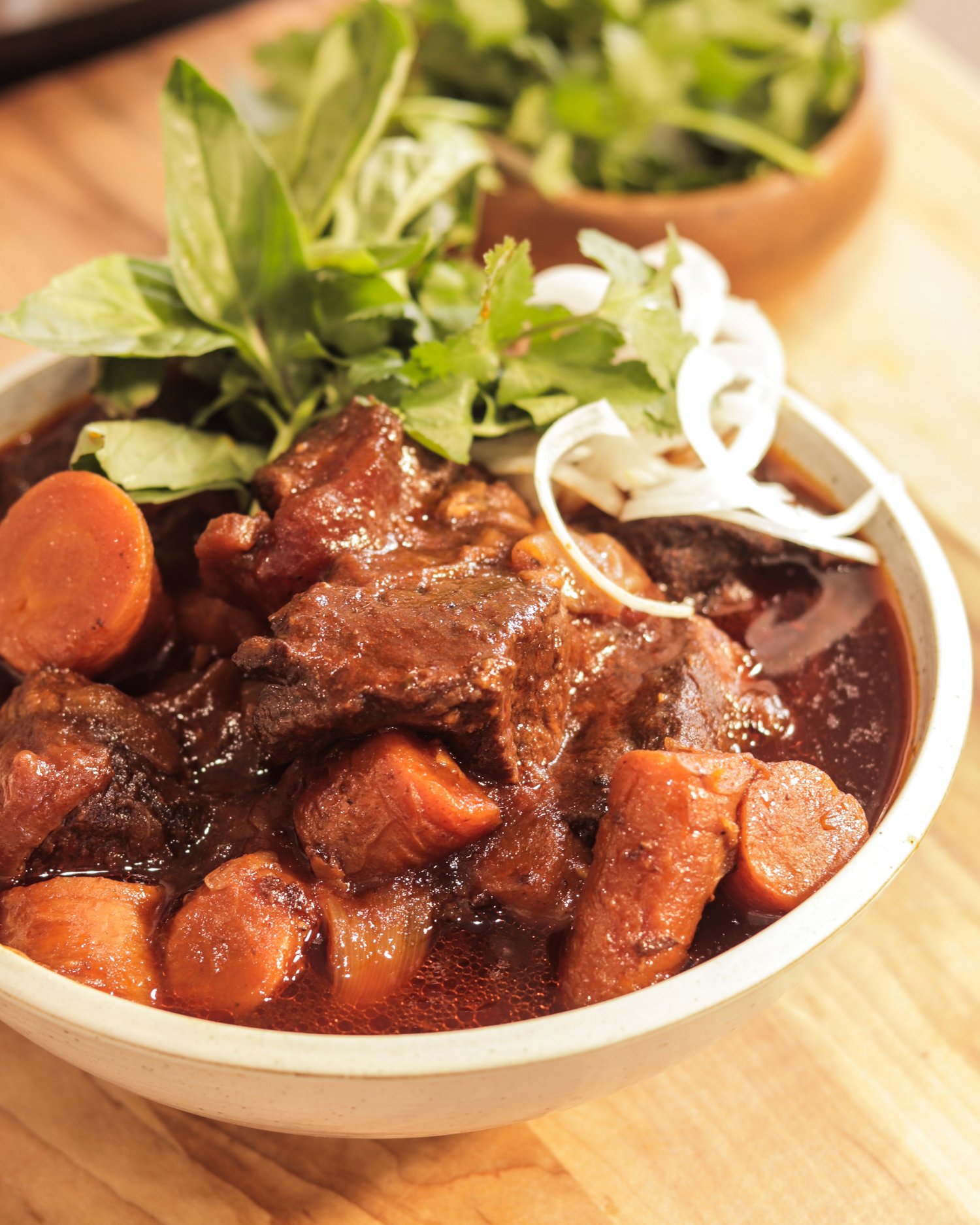 Searing beef in the Instant Pot builds a rich, caramelized base for the stew
Pro Tips For Perfect Bo Kho Every Time
Even with a straightforward recipe, small adjustments make a huge difference in the final result. These tested tips will help you avoid common mistakes and elevate your Bo Kho:
- Toast whole spices first: Before adding other ingredients, toast star anise, cinnamon sticks, and coriander seeds on the Sauté setting for 2 minutes. This releases their essential oils and adds a far deeper, more complex aroma than using them raw. In practice, skipping this step is the most common reason home-cooked Bo Kho tastes flat.
- Cut beef uniformly: 1.5-inch cubes ensure even cooking — smaller pieces will turn mushy, while larger pieces won’t tenderize fully in the pressure cook time.
- Don’t overfill the Instant Pot: For pressure cooking, never fill the inner pot above the 2/3 fill line to avoid clogging the vent and causing pressure issues.
- Adjust sodium at the end: Fish sauce and soy sauce vary widely in salt content, so wait to adjust seasoning until after pressure release, when you can taste the full developed broth.
- For extra tender beef: Add 1 tbsp of cornstarch mixed with 2 tbsp of water to the stew during the final simmer step to thicken the broth and coat the beef in a silky sauce.
Instant Pot Safety Guidelines
Pressure cookers pose unique risks if used incorrectly, so follow these evidence-based protocols to cook safely:
- Always position the steam release valve away from your face and body when releasing pressure, as escaping steam can cause severe burns.
- Never fill the Instant Pot above the maximum fill line marked on the inner pot, as liquid expansion during cooking can cause overflows.
- Regularly inspect the sealing ring for cracks or food buildup, and replace it every 12-18 months to maintain proper pressure seals. For full, up-to-date safety guidance, follow NFPA pressure cooking safety protocols to avoid common household cooking injuries.
- If you have young children in the home, keep them out of the kitchen during cooking with childproof cabinet locks to block access to hot appliances and sharp prep tools.
Serving Suggestions & Pairings
Bo Kho is a versatile dish that works for casual weeknight dinners or special gatherings. Traditional serving methods highlight its bright, bold flavors:
- Starches: Serve with crusty French baguette for dipping, steamed jasmine rice, or rice noodles (hu tieu style) to soak up the rich broth. For low-carb diets, serve with cauliflower rice or shirataki noodles.
- Garnishes: Top each bowl with fresh cilantro, Thai basil, thinly sliced green onions, bird’s eye chilies, and a squeeze of fresh lime juice. Add a drizzle of hoisin sauce or chili garlic sauce for extra depth.
- Side dishes: Pair with pickled daikon and carrots (do chua) for tangy crunch, or a simple cucumber salad dressed in rice vinegar to cut through the stew’s richness. Steamed bok choy or gai lan also make excellent light, fresh sides.
 Garnished Instant Pot Bo Kho served with baguette and pickled vegetables
Storage, Reheating & Freezing Guide
Bo Kho tastes even better the next day, as the flavors have more time to meld. Follow these guidelines to keep it fresh:
- Cooling: Let the stew cool to room temperature (no more than 2 hours) before storing. Never place hot stew directly in the refrigerator, as it raises the internal temperature and risks spoiling other food.
- Refrigerator storage: Store in airtight containers for 4 to 5 days. For households with kids, store leftovers in sealed containers placed out of reach of children to avoid accidental ingestion of spoiled food.
- Reheating: Reheat gently on low stovetop heat or in the microwave on medium power, stirring every 30 seconds to avoid burning. Add 1/4 cup of beef broth or water if the stew has thickened too much in storage. Avoid boiling, as high heat will dry out the beef and mute the flavors.
- Freezing: Portion Bo Kho into airtight freezer bags or containers, leaving 1 inch of headspace for expansion. Label with the date and freeze for up to 3 months. Thaw overnight in the refrigerator before reheating. Note that freezing may slightly soften carrots and daikon, so you can add fresh chopped veggies when reheating if desired.
Clean the Instant Pot inner pot after use with a non-scratch handled brush to avoid damaging the non-stick coating and extend the pot’s lifespan.
Creative Bo Kho Variations
Bo Kho’s flexible flavor profile makes it easy to adapt to different dietary needs and taste preferences:
- Vegetarian Bo Kho: Swap beef for 1.5 lbs of cubed portobello mushrooms, seitan, or extra-firm tofu. Use vegetable broth instead of beef broth, and add 1 extra tbsp of soy sauce or vegetarian oyster sauce for umami. Add diced sweet potato or potato for extra heartiness.
- Spice adjustments: For mild Bo Kho, omit bird’s eye chilies and use 1 tsp of sweet paprika instead of black pepper. For extra heat, add 2 sliced chilies directly to the pot during pressure cooking, or serve with chili crisp on top.
- Alternative proteins: Chicken thighs work for a lighter version, with a reduced pressure cook time of 20 minutes (plus 10 minutes natural release). Lamb shoulder adds a rich, gamey depth, while pork shoulder creates a sweeter, more tender stew. For seafood variations, use firm white fish or shrimp, and reduce pressure cook time to 5 minutes to avoid overcooking.
- Meal prep hack: If you’re batch cooking Bo Kho for the week, a heavy-duty cleaning brush set makes quick work of scrubbing all your root vegetables at once, cutting down on prep time.
Frequently Asked Questions
Is Bo Kho gluten-free?
Traditional Bo Kho is not gluten-free due to the use of soy sauce, but you can easily make a compliant version by using tamari or gluten-free soy sauce, and ensuring your beef broth and fish sauce are certified gluten-free.
Can I use frozen beef for this recipe?
Yes, but partially thaw the beef first to ensure even cooking. If using fully frozen beef, add 5 minutes to the high pressure cook time, and ensure the beef is cut into smaller 1-inch cubes to tenderize fully.
Do I need to toast the whole spices?
Toasting is highly recommended, as it unlocks the essential oils in star anise, cinnamon, and coriander, adding a depth of flavor that raw spices can’t match. It only takes 2 extra minutes on the Instant Pot’s Sauté setting, and the difference is noticeable.
Can I make Bo Kho in a slow cooker instead?
Yes, but it will take 8 to 10 hours on low heat, compared to under 90 minutes total time in the Instant Pot. The flavor will be similar, but the beef may be slightly less tender than pressure-cooked versions.
Why is my Bo Kho too salty?
Fish sauce and soy sauce vary widely in sodium content, so always taste the broth before adding extra salt. If it’s too salty, add a splash of coconut water or a pinch of rock sugar to balance the flavor, or serve with extra rice or bread to dilute the saltiness.
Can I add potatoes to Bo Kho?
Yes! Diced potatoes (1-inch cubes) add extra heartiness and work well with the traditional flavor profile. Add them to the pot at the same time as the carrots, and they will cook perfectly in the 35-minute pressure cook time.
Final Thoughts
This Instant Pot Bo Kho recipe delivers the bold, comforting flavor of traditional Southern Vietnamese stew in a fraction of the time, making it perfect for busy weeknights, meal prep, or cozy weekend meals. The balance of warm spices, tender beef, and bright fresh garnishes makes it a dish that never gets old, and the flexible variations mean you can adapt it to any dietary need or flavor preference.
For more easy, flavorful weeknight dinner ideas, check out our collection of authentic Vietnamese weeknight meals to keep your dinner rotation exciting without spending hours in the kitchen.

I’m Abby Lu, a passionate home cook who loves simplifying everyday meals. At PlugChef.com, I share product reviews and cooking guides to help you find the best tools for your kitchen.
Related posts:
 Seville Expandable Cabinet And Pantry Organizer: Space Savior
 Glideware Pull Out Cabinet Organizer for Pots & Pans: Space Saver
 Small 3-Tier Shelf Organizer: Maximize Space Effortlessly
 Trader Joe’S Spicy Lentil Wrap: Delicious, Healthy, and Quick Meal!
 Easy Way to Peel Pumpkin: Quick Tips for Effortless Prep
 How Long Do Grapes Last: Ultimate Freshness Guide Revealed

