
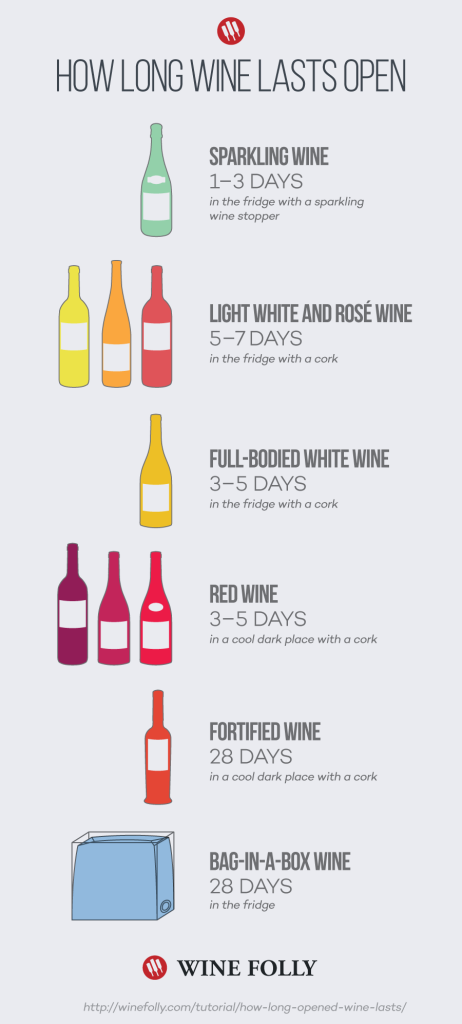
You’ve uncorked a bottle of bold Cabernet Sauvignon, poured two glasses for a quiet dinner, and set the rest aside for later. A week later, you spot the half-empty bottle on the counter and wonder: is it still good? How long can an opened bottle of red wine last, anyway? You’re not alone in this question—improper storage after opening is one of the top causes of avoidable wine waste for home drinkers. The answer isn’t a one-size-fits-all number: a light, low-tannin Pinot Noir may lose its bright fruit notes in 2 days, while a high-tannin, full-bodied Nebbiolo can stay vibrant for 5–7 days with proper care. In this guide, we’ll break down exact timelines, common storage mistakes to avoid, how to spot spoilage, and expert tips to make every last drop taste as good as the first pour.
What Impacts How Long an Opened Red Wine Lasts?
The lifespan of an opened red wine depends on three core variables: the wine’s natural structure, how you store it, and its quality before opening. Understanding how each of these factors works will help you predict how long your specific bottle will stay fresh.
Red Wine Varietal and Structure
A wine’s natural preservatives are the biggest determinant of its post-opening lifespan. Tannins (bitter, astringent compounds from grape skins, seeds, and stems), acidity, and alcohol content all act as natural barriers to oxidation and bacterial growth.
- High-tannin, high-acid, high-alcohol reds (Cabernet Sauvignon, Syrah/Shiraz, Nebbiolo, Malbec) have the most natural protection, and will stay fresh for 4–7 days with proper storage.
- Medium-bodied, moderate-structure reds (Merlot, Sangiovese, Zinfandel) have fewer preservatives, and typically last 3–5 days opened.
- Light, low-tannin, low-acid reds (Pinot Noir, Beaujolais, low-alcohol light reds) degrade fastest, and are best consumed within 2–3 days.
- Fortified reds (Ruby Port, Tawny Port, Madeira) have added brandy that boosts alcohol content to 18–20%, so they can last 2–4 weeks opened even with basic storage.
Storage Conditions
Storage is the single most controllable factor in extending opened wine’s life. Warm temperatures, direct light, and constant air exposure will degrade even the highest-quality wine in 24 hours.
- Temperature: Oxidation and chemical breakdown speed up exponentially as temperatures rise. Wine stored at 70°F (21°C) will degrade twice as fast as wine stored at 55°F (13°C).
- Light exposure: UV rays break down organic compounds in wine, causing "lightstrike"—a fault that smells like wet cardboard or rotten eggs. Never store opened wine on a windowsill or under bright overhead kitchen lights.
- Air exposure: Every time you open the bottle, pour wine, or remove the cork, you introduce oxygen. While small amounts of oxygen initially soften harsh tannins in young, tight wines, prolonged exposure will break down fruit flavors, leading to flat, sour, vinegar-like notes.
A common mistake home drinkers make is reusing the original natural cork after opening; it absorbs moisture from the wine and shrinks within 24 hours, letting in far more oxygen than a purpose-built silicone or vacuum stopper.
Wine Quality and Pre-Opening Age
Higher-quality, age-worthy wines (premium appellation-controlled bottles designed to cellar for 5+ years) have more concentrated tannins, acidity, and flavor compounds that can withstand a few days of oxidation better than cheap, bulk-produced wines. Bulk wines are often heavily filtered and lack natural preservatives, so they go flat within 24–48 hours even with perfect storage. Wines that were already stored in poor conditions (e.g., a hot retail shelf for months) before opening will also degrade much faster, as their existing structure is already compromised.
Exact Opened Red Wine Lifespan Timelines (By Storage Method)
The vague "3–5 days" rule of thumb doesn’t account for different storage setups or wine styles. Use this table to get a precise estimate for your specific bottle:
| Storage Method | Typical Opened Red Wine Lifespan | Key Notes |
|---|---|---|
| Room temperature (70°F/21°C) with original cork | 1–2 days | Warm temps accelerate oxidation; only viable for full-bodied, high-tannin wines if consumed within 24 hours |
| Refrigerated (40–50°F/4–10°C) with airtight stopper | 3–5 days (up to 7 for full-bodied high-tannin wines) | Cold slows oxidation; reds will taste slightly chilled, so let them sit 15–30 minutes before serving |
| Refrigerated with inert gas preservation system | 5–7 days (up to 10 for fortified reds) | Gas displaces oxygen in the bottle; ideal for premium wines you want to stretch over multiple days |
| Vacuum-sealed and refrigerated | 3–4 days | Works for casual, full-bodied reds, but can flatten delicate, aromatic reds like Pinot Noir by removing too much aroma |
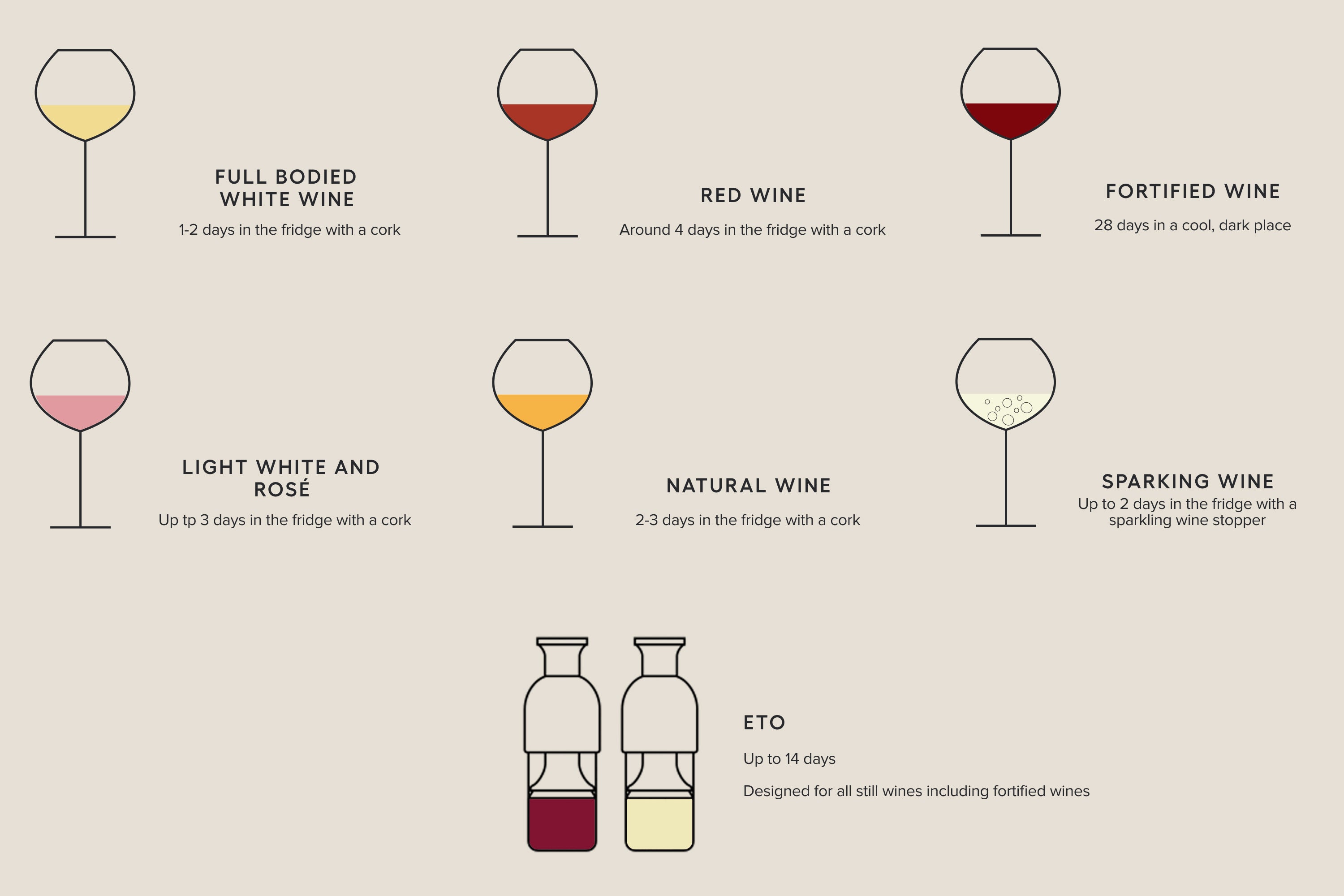 This quick-reference chart breaks down expected opened lifespans for common red wine styles based on storage method.
Image source: www.etowine.com
This quick-reference chart breaks down expected opened lifespans for common red wine styles based on storage method.
Image source: www.etowine.com
Step-by-Step Guide to Storing Opened Red Wine Correctly
Proper storage doesn’t require fancy equipment—just a few consistent habits to minimize oxygen exposure and temperature swings.
Seal the Bottle Immediately After Pouring
Don’t leave the bottle uncorked while you eat dinner or finish your glass. Every minute of air exposure adds up: recork the bottle (or, better yet, use a dedicated stopper) the second you pour your last glass. If you have less than one full glass of wine left, transfer it to a small 375ml glass bottle to reduce the amount of headspace (oxygen-filled air) in the container.
Refrigerate All Opened Red Wines
Contrary to the common myth that red wine can’t go in the fridge, refrigeration is the single most effective way to extend opened red wine’s life. Cold temperatures slow the oxidation and chemical reactions that degrade flavor. The only caveat is to let the wine warm to 60–65°F (15–18°C) for 15–30 minutes before serving, as cold temperatures mute aroma and flavor.
Store Upright to Minimize Oxygen Exposure
Lying an opened bottle on its side increases the surface area of wine exposed to oxygen in the neck of the bottle, speeding up degradation. Store opened bottles upright to keep oxygen contact to a minimum.
Avoid Temperature Fluctuations
Don’t store opened wine in the fridge door, which warms up every time you open it. Keep it on a middle shelf, where temperature stays consistent, and avoid moving it between warm and cold environments (e.g., from the fridge to a hot kitchen counter) repeatedly.
 Store opened red wine on a middle fridge shelf away from the door to avoid harmful temperature swings.
Image source: www.vinha.co.uk
Store opened red wine on a middle fridge shelf away from the door to avoid harmful temperature swings.
Image source: www.vinha.co.uk
How to Tell If Opened Red Wine Has Gone Bad
Not all opened wine that’s past its prime is spoiled, but it’s important to know the difference between flat, boring wine and wine that’s unsafe to drink.
Aroma Red Flags
The nose is the first place spoilage shows up. Fresh opened red wine should smell fruity, floral, or earthy, depending on its varietal. Off aromas include:
- Sharp, vinegar-like scent (acetic acid spoilage from excess oxidation)
- Wet cardboard, rotten egg, or sulfur smell (lightstrike from UV exposure)
- Moldy, damp basement scent (cork taint, which can worsen after opening)
- Nail polish remover or paint thinner smell (excess volatile acidity from bacterial growth)
Taste and Mouthfeel Cues
If the aroma passes, take a small sip. Spoiled wine will taste sharply sour, astringent, or metallic, with no remaining fruit flavors. Some spoiled wine will also have an unexpected fizzy or sparkling texture, a sign of unintended secondary fermentation from bacterial contamination. Wine that is simply past its prime will taste flat and lifeless, with muted or missing fruit notes, but will not have harsh off flavors.
Visual Spoilage Signs
Look for these visual cues before drinking leftover wine:
- Color fading from bright ruby to brick red or brown (a sign of oxidation)
- Cloudiness or sediment that was not present when the bottle was first opened
- A cork that is pushed out, cracked, or moldy
- Visible mold or film floating on the surface of the wine
Oxidized wine that is not contaminated will not make you sick, but spoiled wine with bacterial or mold growth can cause nausea, stomach upset, or allergic reactions. When in doubt, throw it out.
Expert Tips to Extend Opened Red Wine’s Shelf Life
With a few simple adjustments to your post-opening routine, you can extend the life of your wine by 2–3 extra days:
- Use a dedicated preservation system: Vacuum pumps remove oxygen from the bottle’s headspace, while inert gas (argon, nitrogen) systems displace oxygen without sucking out delicate aroma compounds. Vacuum pumps work best for full-bodied, tannic reds, as they can flatten lighter, aromatic wines like Pinot Noir.
- Transfer to a smaller container: If you have 1 glass of wine left, pour it into a 375ml half-bottle and seal tightly. Less headspace means less oxygen contact, which can extend its life by 1–2 days.
- Limit air exposure when pouring: Don’t leave the bottle uncorked while you drink. Recork it immediately after each pour, and if you’re serving multiple glasses, pour all glasses first before resealing the bottle.
- Keep away from strong odors: Wine is porous, so storing it next to strong-smelling foods (onions, garlic, cleaning products) in the fridge will cause it to absorb those odors and ruin its flavor.
Common Red Wine Storage Myths, Debunked
Misinformation about red wine storage leads millions of home drinkers to waste good wine every year. Let’s clear up the most common myths:
- Myth: Red wine should never be refrigerated after opening. Fact: Refrigeration is the single best thing you can do to extend opened red wine’s life, per research from the University of California, Davis Viticulture and Enology program. Cold temperatures slow oxidation and chemical breakdown, even for full-bodied reds. Just let the wine warm slightly before serving to avoid muted flavors.
- Myth: Reusing the original cork is just as good as a wine stopper. Fact: Natural corks are porous and designed to expand and contract to allow tiny amounts of oxygen to enter the bottle during aging. Once removed, they dry out and shrink within hours, letting in far more oxygen than a silicone or rubber stopper, which creates an airtight seal.
- Myth: A cork completely stops oxidation. Fact: A cork only slows oxidation, it does not stop it entirely. Even with a perfect seal, oxygen trapped in the bottle’s headspace will continue to react with the wine over time.
- Myth: Fortified reds don’t need refrigeration after opening. Fact: While fortified reds like port last much longer than table reds, refrigeration still extends their lifespan by months, preventing oxidation and flavor degradation.
The Wine Institute, the leading U.S. wine industry trade association, confirms that consistent, cool storage is the most important factor in preserving opened wine quality.
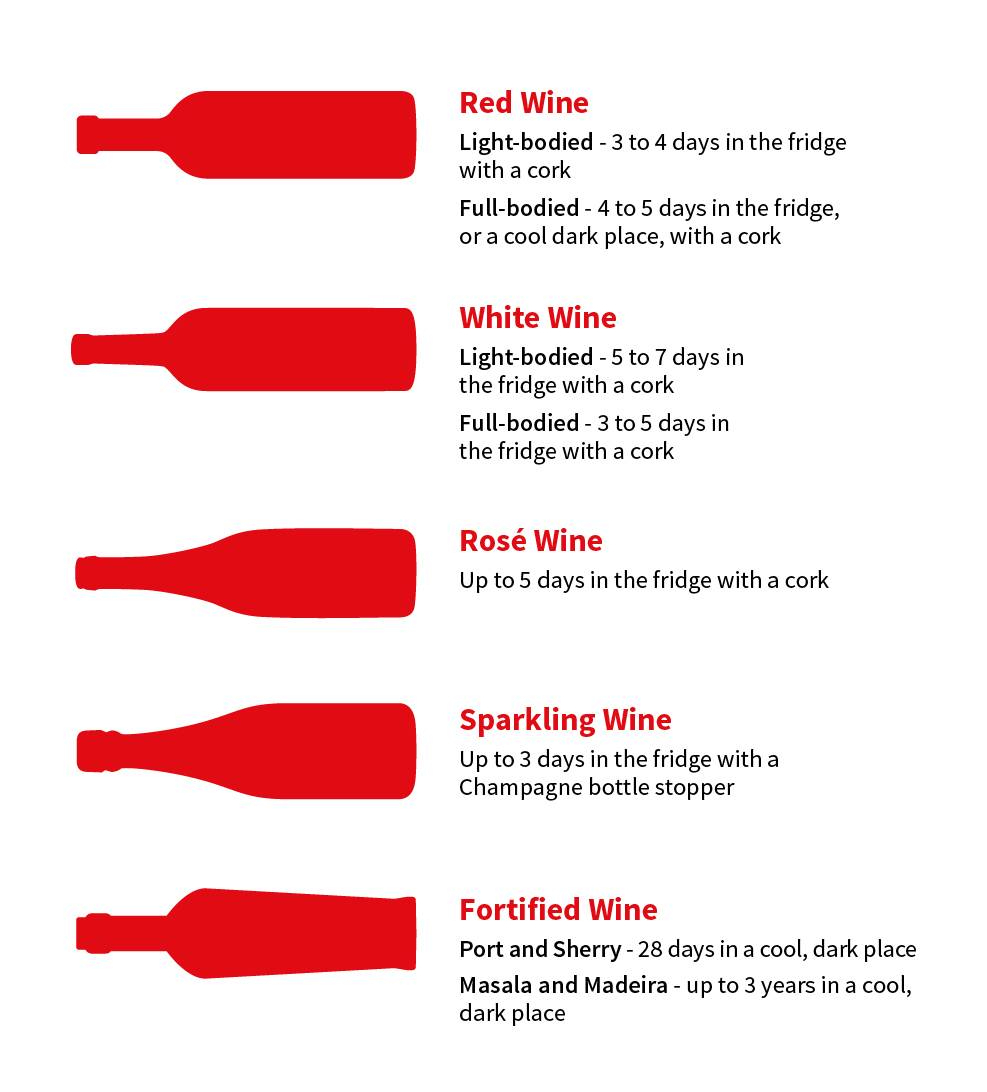 This infographic from Virgin Wines outlines how long all major wine categories stay fresh after opening.
Image source: www.virginwines.co.uk
This infographic from Virgin Wines outlines how long all major wine categories stay fresh after opening.
Image source: www.virginwines.co.uk
When to Discard Leftover Red Wine
An opened bottle of red wine won’t last forever, and knowing when to let it go will save you from unpleasant flavors and potential health risks.
Safety Risks of Spoiled Wine
Oxidized table red wine will not make you sick, but wine contaminated with bacteria or mold can cause nausea, stomach upset, or allergic reactions. If your leftover wine has visible mold, a strong rotten or sewage-like smell, or an unexpected fizzy texture, discard it immediately. For wine that simply tastes flat or has muted fruit notes, it is safe to drink but not enjoyable—use it for cooking instead of drinking.
Practical Uses for Wine Past Its Prime
Don’t pour leftover wine down the drain, even if it’s no longer good for drinking. Use it to add depth to sauces, stews, and braises, or as a marinade for red meat—its acidity will tenderize the meat and add complex flavor. You can also turn it into homemade vinegar: add a splash of unpasteurized vinegar mother to the leftover wine, cover with cheesecloth, and let it sit in a dark place for 2–4 weeks to ferment. Avoid using spoiled, moldy wine for cooking, as off flavors will transfer to your food.
Frequently Asked Questions
Can you drink red wine 7 days after opening?
Yes, if you stored it properly: refrigerated with an airtight stopper or inert gas preservation system. Full-bodied, high-tannin reds like Cabernet Sauvignon will still be drinkable at 7 days, though their bright fruit flavors will be noticeably muted. Light, low-tannin reds like Pinot Noir will likely be flat and unappetizing by day 4, so 7 days is not recommended for those varietals. Always check for off aromas or flavors before drinking.
Can you drink opened red wine after 3 months?
No. Opened table red wine will be fully oxidized and spoiled by 3 months, even with perfect storage. Fortified reds like port or sherry may last up to 2 months opened if refrigerated, but their flavor will be heavily degraded. Drinking wine stored this long will likely cause stomach upset and has an unpleasant, vinegary taste.
Is it okay to drink old opened red wine?
It depends on its age and storage. If it’s 5–7 days old, refrigerated, and has no off smells or flavors, it is safe to drink, though it will likely taste flat and lack the bright fruit notes of fresh wine. If it’s older than 7 days, or has visible spoilage signs, it’s best to discard it.
Can I drink red wine that has been in the fridge for 2 weeks?
Only if it’s a fortified red (e.g., port) stored with a preservation system. Standard table reds will be fully oxidized and spoiled by 2 weeks, with a sharp, vinegary taste and flat aroma. Always smell and taste a small sip before drinking any leftover wine to check for spoilage.
Does recorking a red wine stop oxidation?
No. Recorking only slows oxidation, it does not stop it entirely. Even with an airtight seal, tiny amounts of oxygen trapped in the bottle’s headspace will continue to react with the wine over time. For the longest possible storage, use an inert gas preservation system to displace oxygen from the bottle before sealing.
Conclusion
The exact lifespan of an opened red wine depends on its varietal, storage conditions, and the preservation tools you use, but following a few simple rules will help you avoid waste and enjoy every glass at its best. Full-bodied, tannic reds like Cabernet Sauvignon and Syrah can last 4–7 days when refrigerated and sealed properly, while light, low-tannin reds like Pinot Noir are best enjoyed within 2–3 days. The most common mistake home drinkers make is leaving opened wine uncorked at room temperature—refrigerating and sealing it immediately after each pour is the single most effective way to extend its freshness. For more expert wine storage and serving tips, check out our guide to building a budget home wine collection.

I’m Abby Lu, a passionate home cook who loves simplifying everyday meals. At PlugChef.com, I share product reviews and cooking guides to help you find the best tools for your kitchen.
Related posts:
 How to Make a Fruit Basket for a Gift: Easy DIY Guide
 Do You Need a Basket? Essential Guide for Air Fryers
 White Kitchen And White Appliances: Timeless Elegance Revealed
 Modern White Kitchen With White Appliances: Timeless Elegance
 Small Kitchen With Black Appliances: Chic Space Solutions
 How to Keep Drains Clear Naturally: Easy & Effective Tips

