
A firm, crumbly log of goat cheese can ruin a spread — or be transformed into a silky, spreadable delight with the right technique. This guide gives clear, practical methods for softening all kinds of goat cheese (fresh and aged), plus safety, troubleshooting, and recipe-ready finishing tips. Use the method that fits the cheese type, the time you have, and the texture you want.
Quick overview — which method to pick
- Room temperature: best for fresh logs and small rounds (30–60 minutes).
- Warm water bath: gentle, fast, preserves shape (10–15 minutes).
- Microwave (low power): fastest for immediate use (5–20 seconds total).
- Food processor or whisk with liquid/fat: ideal for spreads, dips, and sauces.
- Thawing: fridge overnight for frozen cheese.
Below you’ll find step-by-step instructions, exact timings, and notes on flavor and texture so you can pick the best approach.
Know your goat cheese (why type matters)
Goat cheeses vary by age, moisture, and fat content — these factors change how they respond to softening.
- Fresh chevre: high moisture, mild tang, naturally crumbly-to-creamy. Responds well to room-temp or whipping methods.
- Semi-aged: denser, tangier, needs slightly more time or mild heat.
- Aged/firm chèvre or goat Gouda-style: low moisture, strong flavor, often requires melting or blending with liquids to become spreadable.
- Whole-milk vs. low-fat: higher fat = smoother when warmed; low-fat can turn grainy if overheated or overworked.
In practice: a small fresh chevre log will be spreadable after 30 minutes at room temperature; a dense 8-ounce aged round may need a processor plus oil or a brief warm-water bath.
Method 1 — Room-temperature (best for flavor preservation)
Why use it: preserves delicate tang and texture without added ingredients.
Steps:
- Remove cheese from packaging.
- Place on a plate, cover loosely with plastic wrap or a clean bowl to prevent drying.
- Let sit at room temperature: small portions 30 minutes; larger rounds 45–60 minutes.
- Test by pressing lightly — it should yield but not melt.
Tips and trade-offs:
- Avoid direct sunlight or near ovens/heaters (uneven softening).
- This method is safest for fresh cheeses; aged pieces may stay slightly firm.
Method 2 — Warm water bath (gentle and reliable)
Why use it: fast, even softening without melting or altering flavor.
Steps:
- Fill a bowl with warm water around 100–110°F (38–43°C). Use body-warm water — not hot.
- Keep the cheese in its original sealed packaging or put it in a sealed plastic bag.
- Submerge for 10–15 minutes; rotate once for even warming.
- Remove, dry, unwrap, and test. Repeat in 5-minute increments if needed.
Practical note: this is my go-to when I need soft cheese but want to preserve shape for plating. Avoid water warmer than 120°F — fats separate and texture degrades.

Sealed goat cheese softening in a warm water bath.
Credit: www.thekitchenwhisperer.net
Method 3 — Microwave (fastest, use with care)
Why use it: quickest option when you’re short on time.
How to:
- Place cheese on a microwave-safe plate.
- Use 30%–50% power (or “defrost” setting).
- Heat in 5–10 second bursts, checking and pressing after each burst.
- Stop when just soft enough to spread — total time usually 5–20 seconds depending on portion size.
Common mistakes:
- Overheating leads to oily puddles. Short bursts and low power are essential.
- Remove from microwave sooner than you think — carryover softening occurs.
Method 4 — Whipping, blending, and adding liquid (best for spreads & dips)
Why use it: creates uniform, creamy textures ideal for crostini, dips, dressings, and fillings.
Liquid options (start small and adjust):
- Heavy cream or whole milk: 1–2 tbsp per 4 oz goat cheese.
- Olive oil: 1–2 tbsp for a silky, savory spread.
- Yogurt or buttermilk: adds tang, use sparingly.
- Honey or fruit purée: for sweet spreads, adjust to taste.
Steps:
- Break cheese into pieces.
- Add 1 tablespoon liquid per 4 ounces and pulse in a food processor or beat with a hand mixer.
- Scrape sides; add more liquid in ½-tablespoon increments until desired texture.
Rough guide for tools:
- Fork/whisk: fine for small amounts and chunky spreads.
- Food processor/blender: best for perfectly smooth results and when adding flavorings.

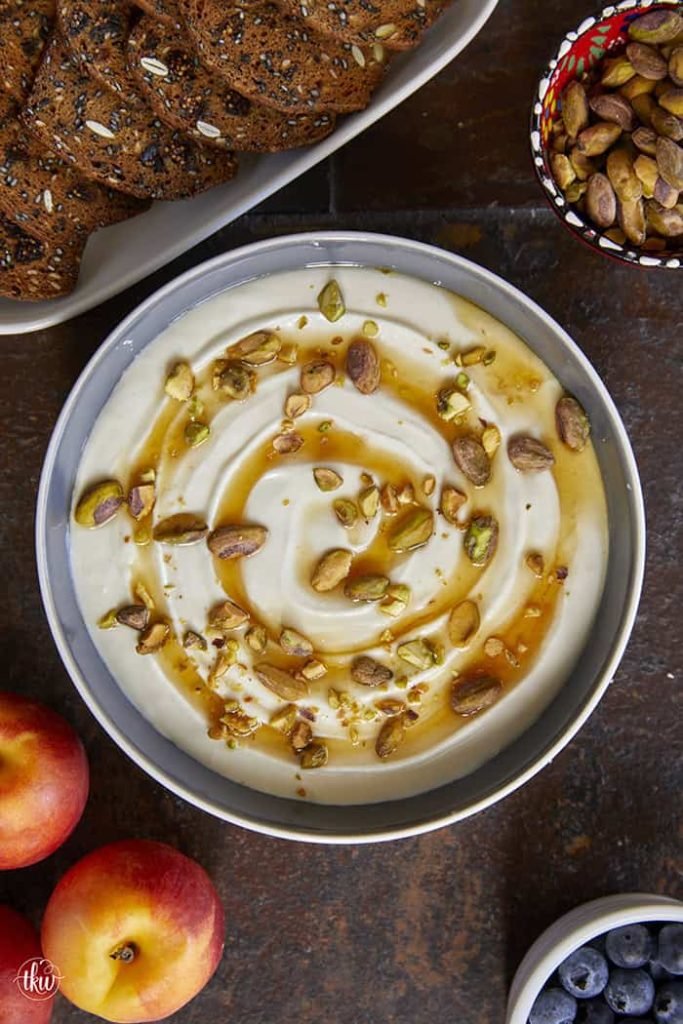
Whipped goat cheese sweetened with honey and nuts for spreading.
Credit: www.thekitchenwhisperer.net
Practical tip: olive oil yields a glossy finish for savory uses; cream preserves a lighter mouthfeel for salads and sauces.
Method 5 — Melting slightly for cooked dishes
For dishes where goat cheese will be heated (pasta, warm dips):
- Crumble directly into hot sauce or onto piping-hot crostini; residual heat will melt it.
- For smoother incorporation, whisk softened cheese into warm (not boiling) liquids to avoid graininess.
Thawing frozen goat cheese
- Best practice: thaw in the refrigerator overnight — this minimizes moisture loss and texture breakdown.
- If short on time: use the warm water bath while the cheese remains sealed. Note: frozen then thawed goat cheese can be more crumbly; plan to use it for cooking, baking, or blended spreads rather than plain slices.
Troubleshooting — texture problems and fixes
Table: common texture issues and how to fix them
| Problem | Cause | Fix |
|---|---|---|
| Grainy after mixing | Overworking low-fat cheese; too much heat | Add a small amount of cream or olive oil; stop mixing |
| Oily/runny | Overheated fat separation | Cool briefly; whisk in more cheese or cream to re-emulsify |
| Too firm after warming | Insufficient time or uneven heat | Return to warm bath or let sit longer at room temp |
| Waterlogged from soaking | Bag not sealed | Drain surface, blot with paper towel; consider blending into a spread |
A common mistake is rushing with high heat; patience and incremental adjustments win every time.
Food safety and storage (important)
- Refrigeration: keep cheese at or below 40°F (4°C). For general safe-handling guidance, see USDA recommendations on refrigeration and food safety.
- After softening: store in an airtight container; press a layer of parchment on the surface and seal to reduce odor pickup and drying.
- Use window: once opened/softened, plan to use goat cheese within about 5–7 days — if unsure, trust your senses (off smell, discoloration, or visible mold beyond the normal rind are reasons to discard).
- For more on handling and storage practices for cheeses, your local university extension pages offer practical food-safety tips — search your state extension for localized guidance.
Practical note: soft cheeses are more perishable than hard cheeses; keep them chilled until serving.
Flavor-enhancing finishes and uses
- Savory spread: blend goat cheese with olive oil, lemon zest, cracked pepper, and chopped herbs.
- Sweet spread: fold in honey and crushed pistachios (great on toast).
- Sauce/soup: whisk into warm (not boiling) liquids to thicken and add tang.
- Baking: incorporate into tart fillings or baked goat-cheese balls rolled in herbs.
A small addition (1 tbsp olive oil per 4 oz) transforms texture and mouthfeel without hiding the goat’s characteristic tang.

Stored softened goat cheese in a sealed container for freshness.
Credit: www.thekitchenwhisperer.net
Frequently asked questions (concise answers)
- How long to leave goat cheese out? Small portions: 30–60 minutes. Never leave perishable cheese out longer than 2 hours at room temperature to avoid food-safety risks.
- Can I microwave goat cheese with other ingredients? Yes — when combined with liquid or other ingredients, microwaving in short bursts can safely soften it for mixing.
- Is it OK to add milk or cream? Yes — adding 1–2 tablespoons per 4 ounces usually brings a smooth, spreadable texture.
- How long does softened cheese keep? Store refrigerated in an airtight container and use within 5–7 days; discard if it smells sour or shows mold beyond the original rind.
- Can you freeze goat cheese? You can, but expect a crumblier texture after thawing — use for cooking or blended preparations.
Conclusion and next step
Softening goat cheese is a small technique with a big payoff: the right method lets you preserve flavor while achieving the texture you want. For a quick, reliable result choose the warm water bath; for spreads, whip with cream or olive oil; for last-minute needs use the microwave in short bursts.
Try the warm water bath tonight — your next appetizer will spread like a dream.

Hi, I’m Daniel Brooks—a food lover and kitchen gear enthusiast. I enjoy testing cookware, utensils, and gadgets to see what really works in everyday cooking. At PlugChef.com, I share honest reviews, comparisons, and simple guides to help you choose the best tools for a safer, smarter, and more enjoyable kitchen.
Related posts:
 How to Make a Fruit Basket for a Gift: Easy DIY Guide
 Do You Need a Basket? Essential Guide for Air Fryers
 What Blenders Do Tropical Smoothie Use: Expert Insights
Stainless Steel Vs White Kitchen Appliances: Ultimate Showdown
What Blenders Do Tropical Smoothie Use: Expert Insights
Stainless Steel Vs White Kitchen Appliances: Ultimate Showdown
 Kitchen Appliances for Wedding Registry: Must-Have Essentials
 Top 10 Best Non-Toxic Cooking Utensils – Safe & Durable Choices for Healthy Homes

