
Eggs over medium are the unsung hero of fried egg styles: they strike the perfect balance between the messy, fully runny yolk of over easy eggs and the dry, fully firm yolk of over hard. With set, tender whites and a thick, creamy yolk that holds its shape when pierced, they’re versatile enough for sandwiches, breakfast plates, and even salad toppers, without the risk of a broken yolk coating your entire plate. If you’ve ever struggled to get the timing right, broken yolks mid-flip, or ended up with rubbery, overcooked eggs, this guide will walk you through every step to master this classic breakfast staple, no fancy skills required.
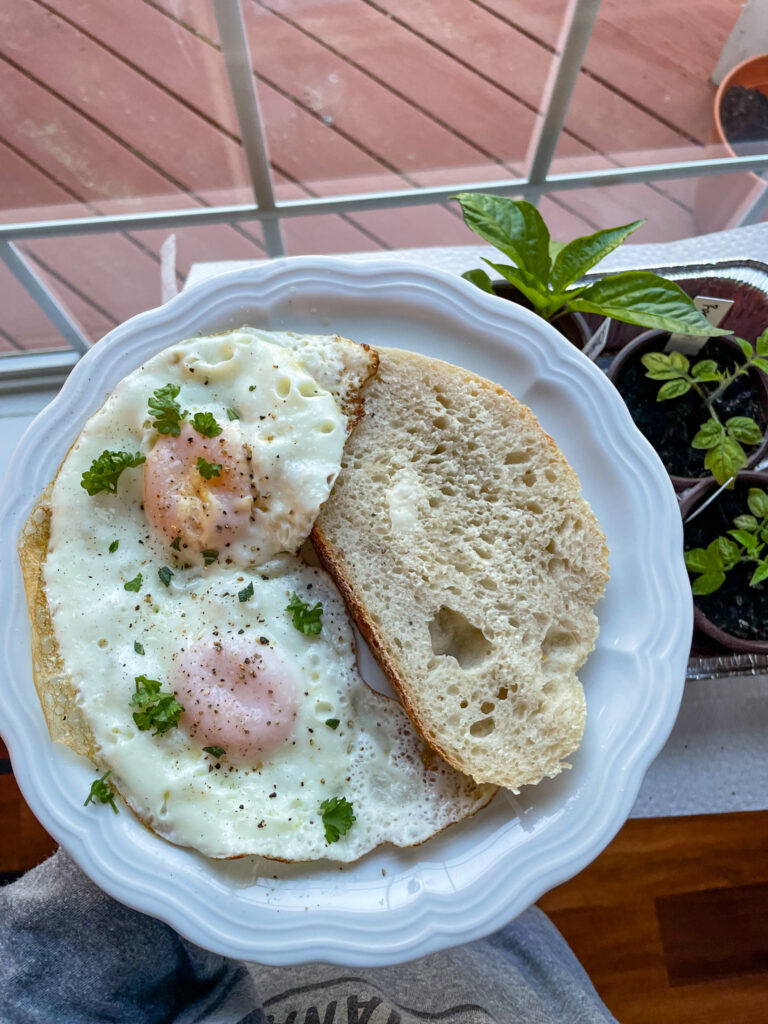 The ideal over medium egg has fully set whites and a thick, creamy yolk that doesn’t run when cut
Credit: www.ahealthysliceoflife.com
The ideal over medium egg has fully set whites and a thick, creamy yolk that doesn’t run when cut
Credit: www.ahealthysliceoflife.com
What Exactly Are Eggs Over Medium?
Eggs over medium are a fried egg style cooked on both sides, with whites that are fully set and a yolk that is partially coagulated into a thick, creamy texture — not fully runny like over easy, and not fully firm like over hard. The name refers to the doneness level of the yolk, which falls right in the middle of the fried egg spectrum.
The ideal internal temperature for an over medium yolk is 140–145°F (60–63°C), which is hot enough to thicken the yolk proteins without fully coagulating them into a firm, crumbly texture. Visually, the top of the yolk will be covered in a thin, opaque layer of cooked egg white, and the yolk will jiggle slightly when you nudge the pan, but won’t be liquid.
To compare over medium to other common fried egg styles, see the table below:
| Fried Egg Style | Yolk Doneness | Cooking Method | Best Use Case |
|---|---|---|---|
| Sunny Side Up | Fully runny, liquid | Cooked only on one side, yolk left exposed | Dipping toast, topping ramen or rice bowls |
| Over Easy | Fully runny, liquid | Flipped once, cooked 10-15 seconds on second side | Sandwiches where you want a messy, juicy yolk |
| Over Medium | Thick, creamy, holds shape | Flipped once, cooked 30-45 seconds on second side | Breakfast sandwiches, eggs Benedict, salads |
| Over Hard | Fully firm, crumbly | Flipped once, cooked 2-3 minutes on second side | Meal prep, sandwiches where you don’t want a messy yolk |
Why Choose Over Medium Eggs?
Over medium eggs solve the biggest pain points of other fried egg styles, making them a favorite for home cooks and restaurant chefs alike. Unlike over easy eggs, which leak runny yolk all over plates and sandwiches, over medium yolks are thick enough to stay put when you bite into a breakfast sandwich. Unlike over hard eggs, which can become dry and chalky when cooked for too long, over medium yolks stay rich and flavorful, with a velvety texture that pairs perfectly with savory toppings.
They’re also more forgiving than sunny side up eggs, which require precise heat control to avoid undercooked whites on top without flipping. If you’re new to frying eggs, over medium is the perfect style to practice your flip, as the slightly firmer yolk is less likely to break than a fully runny over easy yolk. They work equally well as a standalone breakfast side or as a topping for grain bowls, pizzas, and even burgers for an extra boost of protein and richness.
What You’ll Need
Mastering over medium eggs requires just a few simple tools and ingredients, no special equipment required.
Essential Cookware
A 8 or 10-inch non-stick skillet is the most important tool: its non-stick coating prevents the egg from sticking, making flipping easy and cleanup fast. Avoid cast iron skillets if you’re new to cooking over medium, as their rough surface can cause the egg white to stick even if well-seasoned. For the spatula, choose a thin, flexible silicone or metal spatula with a sloped edge — thick, rigid spatulas will tear the egg white and increase the risk of breaking the yolk. A small ramekin or bowl for cracking eggs is also helpful, as it lets you check for shell fragments before adding the egg to the pan.
Keeping your non-stick skillet well-maintained will prevent sticking and extend its lifespan, so invest in reliable cleaning supplies to scrub away grease without damaging the coating.
Ingredients
- Large fresh eggs: fresh eggs have firmer whites and yolks that hold their shape better when cooked. Avoid older eggs, which have watery whites that spread out in the pan. Store eggs in the coldest part of your refrigerator (not the door, where temperatures fluctuate) to keep them fresh longer, and if you have young children, ensure your kitchen cabinet safety latches are secure to keep cleaning supplies and raw ingredients out of reach. Organic eggs, which come from hens fed organic, non-GMO feed, have a slightly richer yolk flavor and deeper golden color than conventional eggs, but the nutritional difference between the two is minimal for most people. Choose organic if you prefer the flavor or have concerns about farming practices, but conventional eggs work equally well for over medium.
- Fat: unsalted butter adds rich, creamy flavor and helps the edges of the egg white turn golden and crisp. For a neutral flavor or higher smoke point, use avocado oil, canola oil, or light olive oil. You only need 1-2 teaspoons of fat to lightly coat the pan — too much will make the egg greasy.
- Seasonings: flaky sea salt and freshly cracked black pepper are all you need to enhance the egg’s natural flavor, but you can add herbs, spices, or hot sauce to taste.
Step-by-Step Guide to Perfect Over Medium Eggs
Follow these steps for consistent, restaurant-quality over medium eggs every time:
- Prep the pan: Heat your non-stick skillet over medium-low heat (325°F / 163°C if you have an infrared thermometer). Add 1 teaspoon of butter or oil, swirling to coat the entire surface of the pan. Wait until the butter foams but doesn’t brown, or the oil shimmers slightly — the pan should be hot enough to cook the egg quickly, but not so hot that the edges burn before the whites set.
- Crack the eggs: Crack each egg into a small bowl first to check for shell fragments, then gently slide the egg into the pan, leaving at least 1 inch of space between eggs if cooking multiple.
- Cook the first side: Cook undisturbed for 2-3 minutes, until the whites are fully set, the edges are crisp, and the yolk jiggles slightly when you nudge the pan. Don’t stir or touch the egg during this time, as it can cause the yolk to break.
- Flip the egg: Slide your thin spatula under the egg, making sure to get fully under the yolk to support it. Flip the egg quickly and gently in one smooth motion. If you’re nervous, tilt the pan slightly to let the egg slide onto the spatula before flipping, to reduce the risk of dropping it.
- Cook the second side: Cook for 30-45 seconds, until the top of the yolk is covered in a thin layer of set white, and the yolk feels firm when gently pressed with a spatula. Don’t press down on the egg, as this will burst the yolk.
- Serve immediately: Slide the egg onto a warm plate, season with salt and pepper, and serve right away to keep the yolk creamy.
For context on safe egg handling and cooking temperatures, refer to USDA egg safety guidance to ensure your eggs are prepared safely, especially if serving vulnerable groups like young children or immunocompromised people. If you’re new to flipping eggs, practice with over easy eggs first, which require a shorter second-side cook time and have a firmer yolk that’s less likely to break.
Common Mistakes to Avoid
Even experienced home cooks run into issues with over medium eggs, but these fixes will help you get perfect results every time:
- Flipping too early: If the top of the whites are still runny when you flip, the yolk will break or the egg will stick to the pan. Wait until the top of the whites are fully set, with no liquid remaining, before flipping. If you do accidentally break the yolk, cook for 10-15 seconds longer to firm it up slightly — it will still taste delicious, even if it’s not the classic presentation.
- Using too high heat: High heat will make the edges of the egg crispy and burnt while the whites stay runny. Stick to medium-low heat, and reduce the heat if the butter starts to brown too quickly.
- Overcooking the second side: 30-45 seconds is all you need for a perfect creamy yolk. If you cook longer, the yolk will firm up fully, turning it into an over hard egg. Set a timer if you’re new to the process to avoid overdoing it.
- Using cold eggs straight from the fridge: Cold eggs can cause the pan temperature to drop suddenly, leading to runny, unevenly cooked whites. For more even cooking, let eggs sit at room temperature for 10-15 minutes before cooking, or adjust your cooking time up by 30 seconds if using cold eggs.
- Pressing down on the egg after flipping: A common mistake I see home cooks make is pressing down on the egg to "cook it faster", which bursts the yolk and ruins the creamy texture. Leave the egg undisturbed on the second side for the full timing to get perfect results.
If you do end up with stuck-on egg residue in your pan, a dedicated kitchen brush set will scrub away grease and food particles without scratching your non-stick coating.
Serving and Pairing Ideas
Over medium eggs are incredibly versatile, and pair well with almost any breakfast or brunch ingredient. Here are some of our favorite ways to serve them:
- Classic pairings: crispy bacon or sausage links, buttered toast or English muffins for dipping, sliced avocado, sautéed spinach or mushrooms, grilled tomatoes, and a dash of hot sauce or jalapeños for heat.
- Meal ideas: top a breakfast sandwich or English muffin with an over medium egg for a portable, protein-packed meal. Add them to a grain bowl with roasted veggies and tahini for a savory lunch. Top a pizza or flatbread with over medium eggs for a decadent brunch option.
- Presentation tips: Serve eggs on a warm plate to keep them hot for longer. For a personal touch, serve your eggs on a custom engraved cutting board for a restaurant-quality at-home breakfast. Garnish with fresh chives, flaky sea salt, smoked paprika, or a sprinkle of grated Parmesan for extra flavor and color. If you’re building a full weekend breakfast spread, pair over medium eggs with artfully sliced cheese for a balanced charcuterie spread.
For renters or anyone who avoids drilling into cabinets, no-drill child proof locks are a simple, damage-free way to keep hazardous items stored away while you cook and prep meals.
 Serve over medium eggs as part of a larger spread for a satisfying brunch or breakfast
Credit: themodernnonna.com
Serve over medium eggs as part of a larger spread for a satisfying brunch or breakfast
Credit: themodernnonna.com
Nutrition and Dietary Considerations
Over medium eggs are a nutrient-dense, affordable protein source that fits well into almost any dietary pattern. A typical large over medium egg cooked with 1 teaspoon of butter contains approximately:
- 70 calories
- 6 grams of high-quality complete protein
- 5 grams of total fat (1.5 grams saturated fat)
- 186 mg dietary cholesterol
- 0 grams carbohydrates
- Key vitamins: A, D, B12, choline
- Key minerals: iron, phosphorus, selenium
The protein in eggs supports muscle repair and maintenance, while the choline in the yolk supports brain health and function. The moderate fat content also helps keep you full longer, making over medium eggs a great option for weight management.
For years, dietary cholesterol was a concern for people with heart disease, but recent research has shown that for most people, dietary cholesterol has minimal impact on blood cholesterol levels. According to the Harvard T.H. Chan School of Public Health, eggs are a nutrient-dense, affordable protein source that fits well into almost all dietary patterns, including Mediterranean, low-carb, and vegetarian (if paired with other protein sources). People with familial hypercholesterolemia or diagnosed heart disease may want to limit their intake to 3-4 eggs per week, but most people can safely enjoy 1-2 over medium eggs per day as part of a balanced diet.
One benefit of over medium eggs over over hard eggs is that the shorter cook time preserves more heat-sensitive nutrients, like vitamin B12 and choline, which can break down when exposed to high heat for long periods. If you’re watching your fat intake, you can cook over medium eggs in a non-stick pan with no added fat, which reduces the total fat content by 4-5 grams per egg.
Frequently Asked Questions
What does "eggs over medium" mean?
Eggs over medium are fried eggs cooked on both sides, with fully set whites and a yolk that is partially set into a thick, creamy texture — not fully runny, and not fully firm.
How do you cook eggs over medium perfectly?
Cook the first side for 2-3 minutes over medium-low heat until whites are fully set, then flip and cook the second side for 30-45 seconds until the yolk is thick and creamy but not fully firm. Use a thin spatula to flip gently to avoid breaking the yolk.
Are over medium eggs safe to eat?
Yes, as long as eggs are handled and cooked properly. The USDA recommends cooking eggs until the yolk reaches 140°F (60°C) to kill any potential salmonella. Use pasteurized eggs if you’re cooking for young children, pregnant people, or immunocompromised guests for extra safety.
Can you make over medium eggs in an air fryer or microwave?
While possible, it is very difficult to get the perfect creamy yolk with these methods, as it is hard to control cooking time precisely. A stovetop non-stick skillet is the most reliable method for consistent results.
Can you meal prep over medium eggs?
No, over medium eggs are best served immediately after cooking. The creamy yolk will firm up as it cools, and reheating will make the whites rubbery and the yolk hard. If you need to prep eggs ahead for meal prep, make over hard eggs instead, which reheat well.
What’s the difference between over medium and basted eggs?
Basted eggs are cooked sunny side up, with a small splash of water added to the pan to steam the top of the whites, so the yolk stays runny and the top of the whites are set without flipping. Over medium eggs are flipped, so the yolk is creamy and the entire white is fully set.
Conclusion
Eggs over medium are a simple, versatile fried egg style that’s easy to master with a little practice. The key to perfect results is low, even heat, a well-maintained non-stick skillet, and precise timing to get that ideal balance of set whites and creamy, thick yolk. Whether you’re serving them on a toasted English muffin for breakfast, topping a grain bowl for lunch, or adding them to a charcuterie spread for brunch, they’re a delicious, nutrient-packed addition to any meal.
Try the step-by-step guide today, and tweak the second-side cook time by 10-15 seconds to match your preferred yolk consistency — once you master over medium, you’ll never go back to dry over hard eggs or messy over easy ones. If you’re looking to expand your breakfast repertoire beyond eggs, explore our simple breakfast ideas for quick, crowd-pleasing recipes to try any day of the week.

I’m Abby Lu, a passionate home cook who loves simplifying everyday meals. At PlugChef.com, I share product reviews and cooking guides to help you find the best tools for your kitchen.
Related posts:
 Kitchen Sink Mats at Target: Enhance Your Kitchen Space
 Pinks Rose Print under Sink Mat: Elevate Your Kitchen Decor
 Oxo Good Grips Silicone Sink Mat: Ultimate Protection
 3 Shelf Hanging Closet Organizer: Maximize Your Space
 Do It Yourself Pantry Organizers: Transform Your Space
 How to Cut Printed Circuit Board: Easy Steps for Precise Results

