Commercial kitchen ventilation systems are the first line of defense against fire hazards, poor air quality, and costly code violations. According to the National Fire Protection Association (NFPA), accumulated grease in exhaust ducts is a leading cause of preventable commercial kitchen fires, making regular, thorough cleaning non-negotiable for any food service operation. The right tools cut cleaning time, improve thoroughness, and reduce downtime, helping you keep your kitchen safe, compliant, and running efficiently. Staying current on industry best practices ensures your cleaning protocol meets evolving safety standards, and aligns with broader food service operational guidelines for safe, efficient kitchen management.
Why Commercial Kitchen Ventilation Cleaning Is Non-Negotiable
Fire Safety & Code Compliance
NFPA 96, the national standard for commercial kitchen ventilation, requires exhaust systems to be cleaned every 3 to 6 months for standard-volume operations, with monthly deep cleaning mandated for high-volume kitchens (e.g., fast food, steakhouses, 24/7 diners) that generate excessive grease vapor. Local fire and health departments often enforce stricter rules for kitchens with heavy fryer or grill use, and non-compliance can result in five-figure fines, temporary shutdowns, or increased liability in the event of a fire. Grease buildup restricts airflow, forcing exhaust fans to work harder and increasing the risk of overheating and ignition.
Poor indoor air quality from un cleaned vents also violates OSHA's indoor air quality standards for food service, putting staff at risk of chronic respiratory irritation, headaches, and long-term health issues from exposure to airborne grease particles and combustion byproducts. In practice, many kitchens only address visible grease on hood filters, ignoring the 70% of grease buildup that accumulates in hard-to-see areas of ductwork between scheduled cleanings.
Operational Efficiency & Cost Savings
Regular ventilation cleaning reduces strain on exhaust fans and hoods, cutting down on costly kitchen equipment upkeep and extending the lifespan of your kitchen's core systems by 3-5 years on average. Clogged ducts increase energy consumption by forcing fans to run longer and at higher speeds, adding hundreds of dollars to monthly utility bills for large operations. Proactive cleaning also eliminates the need for expensive emergency cleanings or downtime from fire-related shutdowns, which can cost small restaurants thousands of dollars in lost revenue per day.
Core Tool Categories for Commercial Ventilation Maintenance
Effective commercial vent cleaning requires a layered toolkit tailored to each step of the process: duct access and debris removal, grease dissolution, air containment, and inspection. No single tool handles all tasks, so building a kit matched to your kitchen's duct layout, usage volume, and budget will deliver the best long-term results.
Duct Access & Debris Removal Tools
These tools remove loose grease, lint, and debris from duct walls, access points, and fan components, forming the foundation of any ventilation cleaning toolkit.
Flexible Drill-Powered Brushes
For medium to long commercial exhaust runs, flexible drill-powered brushes navigate 90-degree bends and extend up to 40 feet to reach deep into ductwork. Their synthetic or stainless steel brush heads dislodge caked-on grease without damaging duct linings, and the optional drill attachment cuts cleaning time by 50% or more compared to manual brushing. A common mistake is using a brush that's too stiff for flexible ductwork, which can tear the lining and create hidden fire hazards — opt for synthetic bristles for flexible ducts and stainless steel for rigid metal.
 Flexible 30-foot lint brush for deep commercial vent cleaning
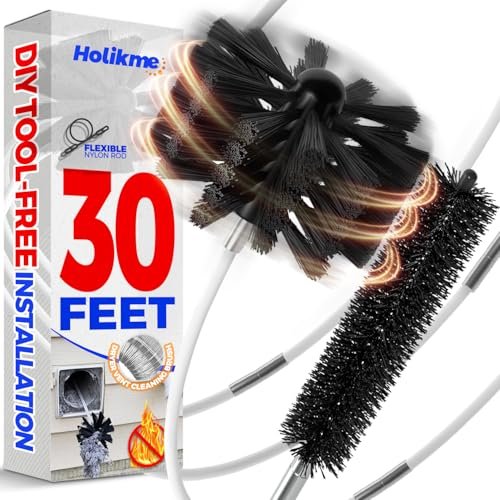
The 30-foot Holikme vent cleaning kit is a versatile option for mid-sized restaurants with exhaust runs up to 30 feet long. Its lightweight 1.72-pound design reduces user fatigue during extended cleaning sessions, and it works with or without a power drill for added flexibility.
Flexible 30-foot lint brush for deep commercial vent cleaning
The 30-foot Holikme vent cleaning kit is a versatile option for mid-sized restaurants with exhaust runs up to 30 feet long. Its lightweight 1.72-pound design reduces user fatigue during extended cleaning sessions, and it works with or without a power drill for added flexibility.
- Pros: Extends up to 30 feet for deep duct access, drill attachment included for faster cleaning, flexible rods navigate tight bends, compatible with both rigid and flexible ductwork
- Cons: Not suitable for ducts larger than 12 inches in diameter, no included storage case, may require a second staff member for very long runs
 35-foot flexible lint brush for medium-length commercial vent systems
The 35-foot Holikme kit is ideal for larger restaurants with longer exhaust runs. Its synthetic brush head effectively removes grease without scratching metal duct linings, and the optional drill attachment reduces labor time for high-volume kitchens.
35-foot flexible lint brush for medium-length commercial vent systems
The 35-foot Holikme kit is ideal for larger restaurants with longer exhaust runs. Its synthetic brush head effectively removes grease without scratching metal duct linings, and the optional drill attachment reduces labor time for high-volume kitchens.
- Pros: 35-foot reach for long duct runs, drill compatible for faster cleaning, flexible design navigates multiple bends, improves dryer efficiency and reduces fire risk
- Cons: Black brush color makes it harder to see accumulated grease during cleaning, requires practice to maneuver in tight spaces
 40-foot flexible synthetic brush for long commercial duct runs
For extra-long exhaust runs common in large banquet halls or multi-level restaurants, the 40-foot Holikme kit offers maximum reach. Its lightweight 1-pound design is easy to maneuver even for extended cleaning sessions, and the synthetic bristles are gentle enough for flexible ductwork.
40-foot flexible synthetic brush for long commercial duct runs
For extra-long exhaust runs common in large banquet halls or multi-level restaurants, the 40-foot Holikme kit offers maximum reach. Its lightweight 1-pound design is easy to maneuver even for extended cleaning sessions, and the synthetic bristles are gentle enough for flexible ductwork.
- Pros: 40-foot reach for the longest commercial duct runs, synthetic bristles safe for flexible ductwork, drill compatible for reduced labor, ultra-lightweight design
- Cons: May require two staff members to operate for runs over 30 feet, smaller brush head may not cover very large duct diameters
 Drill-powered rotary brush set for heavy grease removal
The Wohler rotary brush set is built for heavy-duty commercial use, with three interchangeable brush heads designed to tackle caked-on grease in rigid metal ducts. Its compact 3-inch width fits into standard duct access points, and the rotary action scrubs duct walls far more effectively than static brushes, cutting down on repetitive manual labor.
Drill-powered rotary brush set for heavy grease removal
The Wohler rotary brush set is built for heavy-duty commercial use, with three interchangeable brush heads designed to tackle caked-on grease in rigid metal ducts. Its compact 3-inch width fits into standard duct access points, and the rotary action scrubs duct walls far more effectively than static brushes, cutting down on repetitive manual labor.
- Pros: Drill-powered for fast, aggressive cleaning, 3 interchangeable brush heads for different duct sizes, compact design fits tight access points, durable construction for repeated commercial use
- Cons: Requires a compatible power drill (sold separately), not suitable for flexible ductwork, only available in blue
High-Reach & Precision Cleaning Tools
Commercial kitchens often have exhaust fans mounted 10 feet or higher, and narrow vent crevices that standard brushes can't reach. Extendable ceiling fan cleaners eliminate the need for ladders, a common source of maintenance-related injuries, while slim microfiber detail dusters fit into tight vent registers, makeup air intakes, and fan blade crevices to remove loose dust and grease before deep cleaning.
 Extendable ceiling fan cleaner for high exhaust fan maintenance
The Blade Maid extendable fan cleaner reaches exhaust fans mounted up to 12 feet high, removing the need for ladders or lifts during routine cleaning. Its flexible head conforms to the shape of fan blades, and reusable microfiber pads trap grease without scratching surfaces.
Extendable ceiling fan cleaner for high exhaust fan maintenance
The Blade Maid extendable fan cleaner reaches exhaust fans mounted up to 12 feet high, removing the need for ladders or lifts during routine cleaning. Its flexible head conforms to the shape of fan blades, and reusable microfiber pads trap grease without scratching surfaces.
- Pros: 3-foot extendable pole for high-reach cleaning, reusable microfiber pads trap grease without scratching, flexible head fits curved fan blades, reduces fall risk for maintenance staff
- Cons: 3-foot pole may not reach fans mounted higher than 12 feet, only one cleaning pad included per pack
 Multicolored microfiber detail dusters for vent crevice cleaning
This 12-pack of microfiber detail dusters is ideal for cleaning narrow vent registers, makeup air intakes, and fan blade crevices that larger brushes can't access. The soft bristles trap fine grease particles without scratching sensitive components, and the multicolor design lets you assign specific dusters to different tasks to avoid cross-contamination.
Multicolored microfiber detail dusters for vent crevice cleaning
This 12-pack of microfiber detail dusters is ideal for cleaning narrow vent registers, makeup air intakes, and fan blade crevices that larger brushes can't access. The soft bristles trap fine grease particles without scratching sensitive components, and the multicolor design lets you assign specific dusters to different tasks to avoid cross-contamination.
- Pros: Slim design fits tight crevices and vent registers, soft microfiber bristles won't scratch surfaces, multicolor options for task organization, versatile for use on fan blades, windows, and car interiors
- Cons: Not suitable for wet cleaning or heavy grease buildup, small head size makes it slow for large surface areas
 304 stainless steel lint brush for vent trap cleaning
The 29-inch stainless steel Holikme lint brush is perfect for cleaning dryer vent traps, makeup air filters, and small access points that larger brushes can't reach. Its durable 304 stainless steel construction resists corrosion from cleaning chemicals, making it a long-lasting addition to any maintenance toolkit.
304 stainless steel lint brush for vent trap cleaning
The 29-inch stainless steel Holikme lint brush is perfect for cleaning dryer vent traps, makeup air filters, and small access points that larger brushes can't reach. Its durable 304 stainless steel construction resists corrosion from cleaning chemicals, making it a long-lasting addition to any maintenance toolkit.
- Pros: 29-inch reach for deep access points, 304 stainless steel resists corrosion, versatile for multiple small cleaning tasks, lightweight and easy to maneuver
- Cons: Not suitable for large duct runs, requires manual effort for thorough cleaning
 Multi-tool vent cleaning kit for trap and duct maintenance
This multi-tool Holikme kit includes an omnidirectional vacuum attachment, lint trap brush, and adapters for standard shop vacs, making it easy to remove loose debris from vent access points before deep cleaning. The vacuum attachment captures loose grease and lint, reducing mess and improving air quality during maintenance.
Multi-tool vent cleaning kit for trap and duct maintenance
This multi-tool Holikme kit includes an omnidirectional vacuum attachment, lint trap brush, and adapters for standard shop vacs, making it easy to remove loose debris from vent access points before deep cleaning. The vacuum attachment captures loose grease and lint, reducing mess and improving air quality during maintenance.
- Pros: Includes vacuum attachment for debris removal, compatible with most standard shop vacs, lightweight 3.27-pound design, multiple tools for comprehensive cleaning
- Cons: Limited reach for long duct runs, requires a separate vacuum for operation
Air Filtration & Containment Tools
Ventilation cleaning loosens grease particles, dust, and debris that can recontaminate cleaned surfaces or degrade indoor air quality for staff and customers. Commercial air scrubbers capture these airborne contaminants, ensuring cleaning results are long-lasting and the kitchen remains safe to occupy during maintenance.
 2000 CFM commercial air scrubber for cleaning containment
This 3-stage HEPA air scrubber with UV-C light captures 99.97% of airborne grease particles during vent cleaning, preventing recontamination of cleaned surfaces and protecting staff from exposure to harmful particles. Its 2000 CFM airflow rate is ideal for large commercial kitchens, and the negative air pressure setting prevents grease from spreading to food prep areas, a key requirement for health code compliance.
2000 CFM commercial air scrubber for cleaning containment
This 3-stage HEPA air scrubber with UV-C light captures 99.97% of airborne grease particles during vent cleaning, preventing recontamination of cleaned surfaces and protecting staff from exposure to harmful particles. Its 2000 CFM airflow rate is ideal for large commercial kitchens, and the negative air pressure setting prevents grease from spreading to food prep areas, a key requirement for health code compliance.
- Pros: 2000 CFM airflow for large commercial spaces, 3-stage HEPA filtration captures 99.97% of airborne particles, UV-C light neutralizes bacteria and viruses, durable construction for heavy commercial use
- Cons: 130-pound weight limits portability, requires ample storage space, higher upfront cost than smaller residential air scrubbers
Grease Dissolution & Application Tools
Effective ventilation cleaning requires more than brushes — food-grade, non-corrosive degreasers are critical for breaking down caked-on grease that brushes alone can't remove. Look for EPA-approved, food-safe degreasers with a high pH rating (10-12) that cut through thick grease without damaging metal ductwork or releasing harmful fumes. For hard-to-reach areas, extendable sprayers apply degreaser evenly to duct walls, reducing the amount of scrubbing needed. A common mistake is using household degreasers not approved for food service, which can leave toxic residues that contaminate food.
Supporting Equipment for Maintenance Teams
Efficient maintenance workflows depend on having the right supplies on hand and stored safely. Commercial undercounter refrigerators are ideal for storing temperature-sensitive cleaning supplies, including food-grade degreasers, microfiber cloths, and PPE, preventing degradation of chemicals and ensuring staff have easy access to tools during cleaning shifts.
 ETL-certified undercounter refrigerator stores temperature-sensitive cleaning supplies safely during maintenance shifts
The Elite Kitchen Supply commercial undercounter refrigerator offers 12.96 cubic feet of storage, ETL certification for commercial use, and a durable stainless steel construction that resists corrosion from cleaning chemicals, making it a practical addition to any maintenance supply area. Its compact 48.4-inch width fits under standard kitchen countertops without blocking workflow.
ETL-certified undercounter refrigerator stores temperature-sensitive cleaning supplies safely during maintenance shifts
The Elite Kitchen Supply commercial undercounter refrigerator offers 12.96 cubic feet of storage, ETL certification for commercial use, and a durable stainless steel construction that resists corrosion from cleaning chemicals, making it a practical addition to any maintenance supply area. Its compact 48.4-inch width fits under standard kitchen countertops without blocking workflow.
- Pros: 12.96 cubic feet of storage for supplies, ETL-certified for commercial use, stainless steel resists chemical corrosion, compact design fits under countertops
- Cons: 203-pound weight requires professional installation, solid doors prevent visual inventory checks, no adjustable shelving included
If your maintenance team lacks dedicated supply storage, kitchen island storage solutions can double as a supply area for cleaning tools and degreasers during shifts. For compact commercial kitchens, space-maximizing storage options ensure cleaning supplies are out of the way of food prep operations while remaining easily accessible.
Optimizing Your Cleaning Schedule
Scheduling Around Service Hours
Schedule deep vent cleaning during off-peak hours (early morning, late night) to avoid disrupting meal service, and prep make-ahead team meals for staff after long cleaning shifts to boost morale. For early morning cleaning shifts before service opens, set up a fresh coffee station to keep staff energized and alert during long maintenance tasks. Align your vent cleaning schedule with your monthly maintenance schedules for drains and equipment to streamline operations and ensure no critical tasks are missed.
Staff Training & Safety
Train all maintenance staff on proper tool use, especially for drill-powered brushes and high-reach cleaning tools, to reduce injury risk and improve cleaning results. For extremely long or complex duct runs with multiple bends, professional commercial duct cleaning services may be more cost-effective than purchasing specialized long-reach tools, especially for small operations with limited in-house maintenance staff.
Best Practices for Tool Selection & Maintenance
When choosing tools, match your brush type to your duct material: rigid metal ducts can handle stiff stainless steel brushes for heavy grease removal, while flexible ducts require soft synthetic bristles to avoid tears and hidden fire hazards. For high-volume kitchens, prioritize drill-powered tools to reduce cleaning time and staff fatigue. Always clean and dry tools after each use to prevent grease buildup on brushes, which reduces their effectiveness over time. Store flexible brush rods in a dry, flat space to prevent warping, and replace brush heads when bristles become frayed to maintain consistent cleaning performance.
Pair your deep vent cleaning schedule with daily cleaning checklists for hood filters and fan blades to reduce grease buildup between professional cleanings. When selecting brushes for vent cleaning, compare options to the top kitchen cleaning brushes on the market to find durable, grease-resistant options that hold up to repeated use. For caked-on grease in rigid metal ducts, opt for heavy-duty kitchen cleaning brushes with stainless steel bristles to avoid bending or breaking during use. Invest in professional-grade vent brushes in multiple sizes to match your duct's diameter, ensuring full contact with duct walls for even cleaning.
Frequently Asked Questions
How often should commercial kitchen vents be cleaned?
Per NFPA 96 standards, commercial kitchen exhaust systems should be cleaned at least every 3 to 6 months for standard-volume operations. High-volume kitchens that operate 12+ hours a day require monthly deep cleaning to prevent hazardous grease accumulation. Many local fire departments also mandate more frequent cleaning for kitchens with heavy fryer or grill use, so check your regional code requirements to stay compliant. If your kitchen lacks in-house maintenance staff, outsourced professional hood vent cleaning services ensure compliance with NFPA 96 standards without taking up staff time.
Can I use residential dryer vent tools for commercial kitchen ducts?
Small handheld brushes and vacuum attachments designed for residential dryer vents can be used for cleaning small access points, makeup air intakes, and lint traps in commercial kitchens. However, long duct runs, heavy grease buildup, and large-diameter ducts require heavy-duty, commercial-grade tools with longer reach and stiffer bristles to avoid damage and ensure thorough cleaning.
Do I need an air scrubber for vent cleaning?
For high-volume kitchens or deep cleaning of long, complex duct runs, an air scrubber is highly recommended. It captures airborne grease particles that would otherwise recontaminate cleaned surfaces or degrade indoor air quality, and helps you comply with health codes that require containment of grease during maintenance. For smaller kitchens that don't require a full commercial air scrubber, portable air cleaners with HEPA filters can capture loose grease particles during light cleaning tasks.
What's the difference between synthetic and stainless steel vent brushes?
Synthetic bristle brushes are flexible and gentle, making them ideal for flexible ductwork, delicate fan blades, and narrow vent crevices where stiff bristles could cause damage. Stainless steel brushes are stiffer and more durable, making them better suited for rigid metal ducts with heavy, caked-on grease buildup that requires aggressive scrubbing.
How do I extend the lifespan of my vent cleaning tools?
After each use, remove all grease and debris from brushes and tool heads with warm, soapy water, then dry thoroughly before storage. Store flexible brush rods in a dry, flat space to prevent warping, and replace brush heads when bristles become frayed or worn to maintain cleaning effectiveness. For drill-powered tools, remove the brush attachment before storing to avoid accidental activation. Keep sink drain cleaning tools on hand during maintenance shifts to quickly clear any grease clogs in floor drains caused by cleaning runoff.
Conclusion
Keeping your commercial kitchen ventilation clean is essential for safety, efficiency, and regulatory compliance. Regular cleaning removes grease, dust, and debris that can cause fires, reduce airflow, and drive up energy costs, while the right tools cut labor time and improve cleaning results. From flexible drill-powered brushes for long duct runs to air scrubbers for containment during cleaning, building a toolkit tailored to your kitchen's unique needs will streamline maintenance and protect your business.
A well-maintained ventilation system works in tandem with strict sink sanitation protocols to keep your commercial kitchen compliant with health codes and safe for staff and customers. For teams completing intensive maintenance sessions, reward your staff with quick, nutritious meals like oven-baked frozen salmon and tomatoes that require minimal prep after a long cleaning shift. For more low-effort, high-yield recipes to keep your team fueled during maintenance periods, explore our prize-winning Dutch oven recipes.
If you’re ready to upgrade your commercial kitchen ventilation cleaning toolkit, start by assessing your duct layout and usage volume to select the right combination of brushes, containment tools, and degreasers for your space. For more step-by-step guidance on commercial kitchen maintenance, browse our full resource library.

I’m Abby Lu, a passionate home cook who loves simplifying everyday meals. At PlugChef.com, I share product reviews and cooking guides to help you find the best tools for your kitchen.
Related posts:
 Hisense Dehumidifier And Small Appliance Repair Near Liberty Mo: Top Reviews
 Kitchen Appliances List: Must-Have Gadgets for Every Modern Kitchen
 Bundle Packages for Kitchen Appliances: Ultimate Kitchen Upgrade Solutions
 Best Smart Coffee Mug Warmer: Discover Ultimate Temperature Control Solutions
 Best Food Sealers Vacuum Packing: Discover Top Picks for Freshness
 Best Long Lasting Mug Warmer: Top Picks to Keep Your Drinks Hot