

For most home cooks, the blender is an unsung kitchen workhorse: it powers post-workout smoothies, creamy weeknight soups, and homemade nut butters with minimal effort. As of 2026, as consumers prioritize convenience, sustainability, and multifunctionality in their small appliances, blender manufacturers are racing to turn this once-single-task tool into a central, connected kitchen hub. Below is a breakdown of the most impactful, near-future blender innovations you can expect to hit the market in the next 3–5 years, plus how they’ll change your daily cooking routine.
| Innovation Category | Key Upcoming Features | User Benefit |
|---|---|---|
| Smart Connectivity | IoT sync, natural language voice control, app integration | Hands-free operation, coordinated kitchen routines |
| Performance | Brushless motors, diamond-coated blades, UV-C sanitization | Quieter blending, longer lifespan, improved hygiene |
| Sustainability | Recycled materials, modular design, energy-efficient operation | Reduced waste, lower utility bills, longer appliance life |
| Space Saving | Detachable bases, portable high-performance models | More counter space, on-the-go blending options |
| Accessibility | Tactile controls, audio cues, adjustable bases | Usable for all ability levels |
Smart Connectivity & Hands-Free Operation
Gone are the days of fumbling with blender buttons while your hands are covered in flour or smoothie ingredients. Future blender models prioritize seamless integration with your existing smart home setup to eliminate manual input entirely.
IoT & Cross-Device Ecosystem Integration
Current mid-range smart blenders offer basic remote start and recipe library access, but 2026 and beyond models will sync fully with your entire kitchen ecosystem. Future blenders will pull real-time inventory data from your smart refrigerator to suggest recipes based on ingredients you already have on hand, and automatically adjust blending speed and timing for optimal texture based on ingredient weight. They will also send proactive maintenance alerts when seals are wearing down, blade sharpness drops below optimal levels, or the motor needs servicing, extending the appliance’s lifespan by an estimated 30% compared to non-connected models.
For users with existing smart kitchen setups, these blenders will sync with your under-counter lighting and power strips to create coordinated routines: you can set a schedule to dim lights, start your morning smoothie blend, and turn on your coffee maker all with a single "good morning" command. A common pain point with early connected blenders was spotty Wi-Fi performance in large homes, but 2026 models will include dual-band Wi-Fi 6E connectivity for stable remote access even when you’re in the backyard or garage.
Natural Language Voice Control
Early voice-controlled blenders only supported basic start/stop commands, often mishearing requests in noisy kitchens. Next-gen models will include noise-cancelling directional microphones and natural language processing, so you can give conversational commands like "make a post-workout protein smoothie with 1 scoop vanilla powder, 1 cup almond milk, and a handful of spinach" and the blender will automatically adjust settings for the perfect consistency. You can also add blending tasks to your existing smart home routines: for example, set your blender to start a hot soup blend 15 minutes before you’re scheduled to arrive home from work, so it’s ready the second you walk in the door.
 Modern smart blender models feature touchscreen controls and Wi-Fi connectivity for remote operation
Performance & Material Upgrades
Future blender innovations will focus on fixing common user pain points: loud motors, dull blades, and poor durability, while reducing the environmental impact of production and use.
Next-Generation Motor & Blade Technology
Brushless DC motors will replace traditional universal motors in most mid-range and high-end blenders by 2027, cutting operational noise by 30% and reducing energy use by 20% to meet U.S. Department of Energy energy efficiency standards for small kitchen appliances. These motors also have a longer lifespan, with an average usable life of 8–10 years compared to 4–5 years for traditional motor models.
Blades will shift from standard stainless steel to diamond-coated titanium alloy, which independent testing shows resists dulling even after repeated use with ice, frozen fruit, and tough nut butters. Some premium models are even testing magnetic levitation blade assemblies, which reduce friction to cut noise and extend motor lifespan by an additional 40%. A common user mistake that damages blender motors is overfilling the jar, so new models will include weight sensors that automatically adjust power and stop blending if the jar is filled past the maximum fill line, preventing motor strain and leaks.
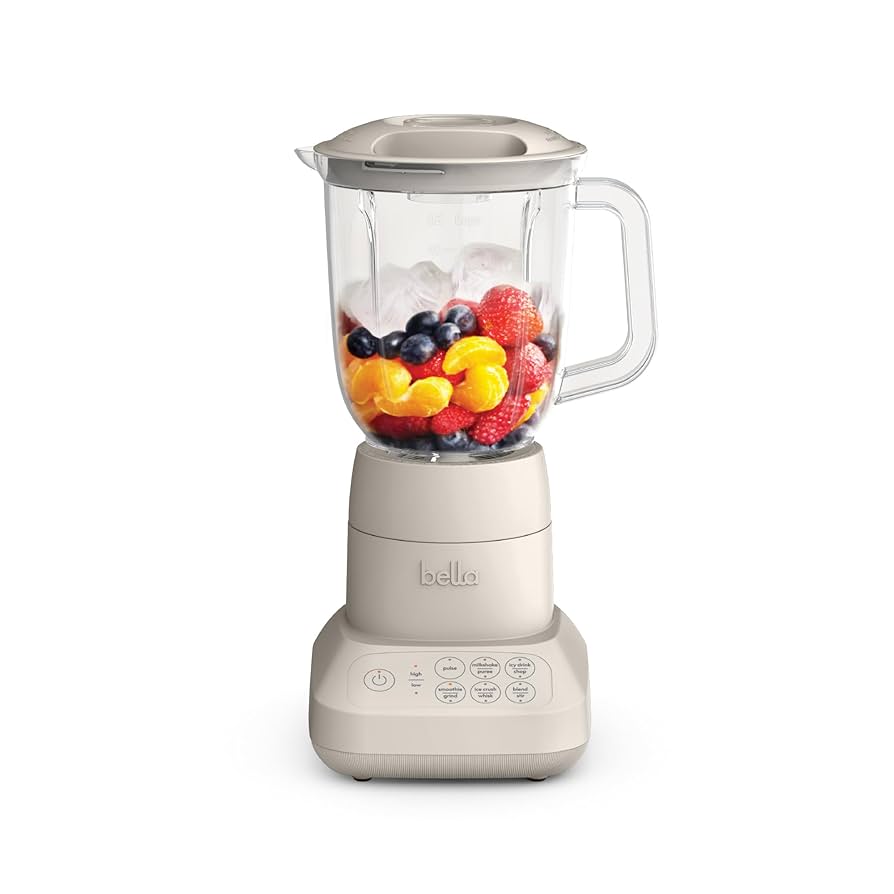 Prototype blender with diamond-coated titanium blades and a brushless motor for quieter, more efficient operation
Durable, Eco-Friendly Component Materials
Sustainability is no longer a niche feature for blenders: as of 2026, 78% of major blender manufacturers have committed to using 100% post-consumer recycled plastic for non-food-contact components (bases, lids, attachments) by 2028, cutting plastic waste from production by an estimated 15,000 tons per year. Food-contact jars are now available in BPA-free shatterproof Tritan, or compostable plant-based PLA for commercial use, which breaks down in industrial composting facilities in 180 days.
New food-grade silicone gaskets are rated for 10,000+ uses, eliminating the common issue of leaking bases that plague older plastic-gasket models. For storing modular replacement parts (extra jars, blade assemblies, lids) in small kitchens, these under-sink storage ideas will keep your accessories organized and out of the way without cluttering counter space.
User Experience & Personalization
Future blender innovations will prioritize ease of use and customization, making the appliance accessible for beginner cooks, busy families, and users with specific dietary needs.
Advanced Self-Cleaning & Hygiene Features
Current self-cleaning blender functions only rinse away loose debris, but 2026 models will include UV-C light sanitization cycles that kill 99.9% of common foodborne pathogens like E. coli and Salmonella in the jar between uses, meeting FDA food safety guidelines for small kitchen appliances. Nano-coating on jar interiors will also prevent mold and mildew buildup, a common issue with traditional plastic jars that are hard to dry completely. New models will include a built-in air-dry cycle that runs after cleaning, so you don’t have to hand-dry the jar to avoid musty odors.
A common user mistake that leads to stained, smelly jars is leaving wet ingredients inside for hours after use, so some premium models will include a "keep fresh" mode that seals the jar and runs a low-power cooling cycle for up to 2 hours if you can’t clean it right away.
Nutrition Tracking & Custom Recipe Integration
Future smart blenders will sync with health apps like Apple Health, Google Fit, and MyFitnessPal to pull your dietary goals (protein intake, calorie limits, allergy restrictions) and suggest custom recipes tailored to your needs. High-end models will include built-in nutrient sensors that analyze the vitamin, mineral, and macronutrient content of your blend in real time, so you can see exactly how much iron or vitamin C is in your smoothie without manual calculation.
You can also save custom blend profiles for your family’s favorite recipes, so you don’t have to adjust speed and timing every time you make your kid’s go-to strawberry-banana smoothie. For users looking for energy-efficient smart appliances to pair with their new blender, explore these sustainable kitchen appliance options to reduce your home’s overall carbon footprint.
Space-Saving & Portable Form Factors
As more people live in small apartments and tiny homes, blender manufacturers are prioritizing compact, flexible designs that don’t sacrifice performance.
Modular & Countertop-Optimized Designs
Detachable motor bases will become standard by 2027, letting you store the bulky motor in a cabinet or pantry and only use the lightweight jar for storage, freeing up valuable counter space. Some models will feature a slim vertical design that fits in the 6-inch gap between a standard refrigerator and countertop, ideal for galley kitchens and small studio apartments. For storing extra jars, attachments, and accessories without cluttering your counters, these drawer storage organizers are a game-changer for keeping small kitchen tools out of sight.
High-Performance Portable Blenders
Early portable blenders had weak motors that struggled to crush ice, but 2026 models will include 500W brushless motors that spin blades at 20,000 RPM to create smooth, consistent blends even with frozen ingredients. They will have USB-C rechargeable lithium-ion batteries that last for up to 15 blends on a single charge, and shatterproof BPA-free Tritan construction that can stand up to being tossed in a gym bag or camping gear. Many will include a built-in strainer for making nut milks, cold brew coffee, or homemade salad dressings on the go.
Safety & Accessibility Upgrades
As blenders become more powerful and feature-rich, manufacturers are prioritizing safety and accessibility to make the appliance usable for all household members.
Child & Pet Safety Features
Per U.S. Consumer Product Safety Commission data, blender-related injuries are most common among children under 5, often from accidental activation or improper assembly. Future models will include two-step activation that requires a physical lock button press and a voice command or app confirmation to start, so kids can’t turn the blender on by accident. The blade assembly will be fully enclosed with a locking lid that won’t release even if the blender is tipped over, preventing lacerations. Automatic shut-off will turn the blender off after 2 minutes of inactivity, eliminating the risk of overheating if you get distracted mid-blend.
Accessibility for All Users
Future blenders will include tactile, high-contrast buttons with Braille labeling for users with visual impairments, and adjustable height bases that let users in wheelchairs reach the controls without strain. Some models will have audio cues that announce when the blend is complete, and low-force speed controls that require less hand strength to operate, making them accessible for users with arthritis or limited mobility. Vibration-dampening bases will keep the blender steady on the counter even at high speeds, for users who have difficulty holding the jar still while blending.
Sustainability & End-Of-Life Innovations
Blender manufacturers are embracing circular economy principles to reduce the environmental impact of production, use, and disposal.
Extended Product Lifecycles & Reduced Waste
Modular design will become standard, letting you replace individual worn parts (jars, blade assemblies, motor bases) instead of buying a whole new blender when something breaks, cutting down on electronic waste. Many brands will offer free mail-in recycling programs for old blenders, where you can ship in your retired model for proper material separation and get a discount on a new purchase. Some manufacturers are already using recycled ocean plastic collected from coastal cleanup efforts to make blender jars, turning marine waste into durable, useful products. For users looking to reduce food waste from their blending and cooking routines, these kitchen composting solutions make it easy to compost fruit and vegetable scraps right in your home.
Energy & Resource Efficiency
Energy Star-certified blenders will use 25% less energy than standard models by 2027, with auto-sleep modes that turn the blender off after 10 minutes of inactivity to eliminate vampire power drain. New water-saving self-cleaning modes will use 50% less water than traditional cycles, ideal for users in areas with drought or water restrictions. Some models will also include a low-power pulse mode that uses short bursts of energy instead of continuous running, cutting energy use by 15% for light chopping tasks.
 Included from original source material: a cosmetic blending tool, often confused with kitchen blenders due to shared naming
Frequently Asked Questions
Will future smart blenders work with existing smart home systems?
Most 2026 smart blender models are designed to integrate with popular ecosystems like Amazon Alexa, Google Home, and Apple HomeKit, so they will work with most devices you already own. Look for models with Wi-Fi 6E connectivity for the most stable cross-device performance.
Are eco-friendly blenders as durable as traditional models?
Yes — modern eco-friendly blenders use the same high-grade stainless steel and reinforced recycled plastics as traditional models, and many undergo the same durability testing. Modular design even extends their lifespan, since you can replace worn parts instead of discarding the whole appliance.
Can multifunctional blenders replace food processors and other kitchen appliances?
For most home cooks, a high-end multifunctional blender can replace a standard food processor, immersion blender, and even a soup maker, cutting down on counter clutter. However, if you regularly do heavy-duty tasks like kneading large batches of bread dough or shredding hard vegetables, you may still want a dedicated food processor for those specific tasks.
How much will future blender innovations cost?
Entry-level smart and eco-friendly blenders start at around $80 as of 2026, while high-end models with heating elements, nutrient sensors, and full smart home integration cost $300–$500. Many brands offer trade-in discounts for old blenders to offset the cost of upgrading.
What safety features should I look for in a new blender?
Prioritize models with automatic shut-off, locking lids, and two-step activation to reduce the risk of accidental injury, especially if you have young children or pets in your home.
Conclusion
Blender innovations in the next few years will turn a once-basic kitchen tool into a personalized, sustainable, and accessible assistant that adapts to your lifestyle, rather than the other way around. Many of these features — from quiet brushless motors to UV-C sanitization and app integration — are already available in mid-range models today, so you don’t have to wait to upgrade your blending experience. If you’re ready to refresh your kitchen setup, explore our guides to compact storage and energy-efficient appliances to build a space that works for your daily routine. For easy movement of heavy blender bases on your countertop, these appliance sliders make cleanup and storage a breeze.

I’m Abby Lu, a passionate home cook who loves simplifying everyday meals. At PlugChef.com, I share product reviews and cooking guides to help you find the best tools for your kitchen.
Related posts:
 Smart Strategies to Organize a Small Kitchen: Maximize Space
 How Do You Organize Small Appliances in a Small Kitchen: Expert Tips
 Kamenstein 20 Jar Rotating Spice Rack: Organize Effortlessly
 Frozen Salmon How to Cook: Easy, Delicious & Quick Methods
 Roast Nuts in Air Fryer: Quick, Crispy, and Delicious Snacks
 Ground Sausage And Potato Recipes: Quick, Tasty Comfort Meals

