Damascus steel kitchen knives are polarizing: marketing hype hails them as legendary, razor-sharp heirlooms, while critics dismiss them as overpriced, purely decorative gimmicks. The truth falls somewhere in between. Modern Damascus knives deliver very real practical benefits for many home cooks, but they come with trade-offs that make them a poor fit for some users. We cut through the sales fluff to break down exactly what Damascus steel offers, who it’s best for, and how to pick a high-quality option that lasts.
What Modern Damascus Steel Actually Is (And What It Isn’t)
A common misconception is that kitchen Damascus knives are made from the same ancient Wootz crucible steel used to forge legendary Middle Eastern blades centuries ago. That original steelmaking technique was lost to history, and almost all modern kitchen "Damascus" is pattern-welded: alternating layers of hard, high-carbon steel (for sharpness and edge retention) and softer, corrosion-resistant stainless steel are folded, forged, and etched to create the signature wavy pattern. For more on this, see our guide on good japanese kitchen knives.
Crucially, the pattern is almost entirely aesthetic. While the layered construction combines the benefits of both steel types, the number of layers (33, 67, 100+) does not directly improve performance beyond a certain threshold. Any claims of "ancient Damascus performance" in modern kitchen knife marketing are unsubstantiated, and the pattern’s only functional benefit is that hand-hammered finishes can reduce food sticking during prep.
The Real Benefits of Damascus Kitchen Knives (No Hype)
When made with quality materials, Damascus knives offer tangible advantages over entry-level stainless steel and pure high-carbon steel options.
Superior Edge Retention for Low-Maintenance Sharpness
The hard core steel (most often VG10, 10Cr15CoMoV, or Japanese super steel) in quality Damascus knives holds an edge 2–3 times longer than standard entry-level stainless steel. For casual home cooks who don’t want to hone or sharpen their knives weekly, this is a major convenience: a good Damascus knife will only need honing every 2–3 months, and professional sharpening once a year, to stay razor-sharp.
Better Corrosion Resistance Than Pure High-Carbon Steel
Pure high-carbon steel knives deliver exceptional sharpness, but they rust almost instantly if left wet. The softer stainless steel layers in Damascus construction resist rust far better, making them far more forgiving for users who forget to dry their blades immediately after washing.
Balanced, Ergonomic Design for Reduced Fatigue
Nearly all mid-to-high tier Damascus knives feature full tang construction, where the steel extends the full length of the handle for better weight distribution and balance. Paired with G10, Pakkawood, or stabilized wood handles, they’re comfortable to use for long meal prep sessions, reducing the hand strain common with cheap, poorly balanced stainless steel knives.
Aesthetic Appeal and Gift Value
The unique, one-of-a-kind Damascus pattern makes these knives a standout in any kitchen, and most sets come in premium gift packaging, making them a popular choice for weddings, housewarmings, holidays, and birthday gifts for cooking enthusiasts.
The Honest Drawbacks You Won’t Hear in Marketing
Damascus knives are not perfect, and these trade-offs are often downplayed in product listings.
Higher Upfront Cost
As of 2026, a decent 3-piece entry-level Damascus set starts around $50, while premium sets with VG10 cores run $200 or more. That’s a 2–10x markup compared to basic stainless steel knife sets, which is hard to justify for casual users on a tight budget.
Still Requires Regular Maintenance
A common mistake new owners make is assuming Damascus is rust-proof. While more corrosion-resistant than pure carbon steel, the layered structure can trap moisture if blades are left wet, leading to rust between layers. Damascus knives still require hand washing, immediate drying, and never belong in the dishwasher, as harsh detergents and heat can damage the blade finish and handle materials.
Performance Ceiling for Advanced Users
For professional chefs or hobbyists who sharpen their knives weekly, a high-end monosteel knife (like a carbon steel gyuto) will hold an edge longer than most mid-tier Damascus. The layered construction does not improve edge performance beyond the quality of the core steel, so advanced users who prioritize maximum sharpness over aesthetics will get better value from a premium monosteel option.
Pattern Wear Over Time
The Damascus pattern can fade, scratch, or wear down with heavy use, especially if you cut on hard surfaces like glass, marble, or ceramic. If you buy a Damascus knife primarily for its decorative look, be prepared for the pattern to change and lose its crisp definition over years of regular use.
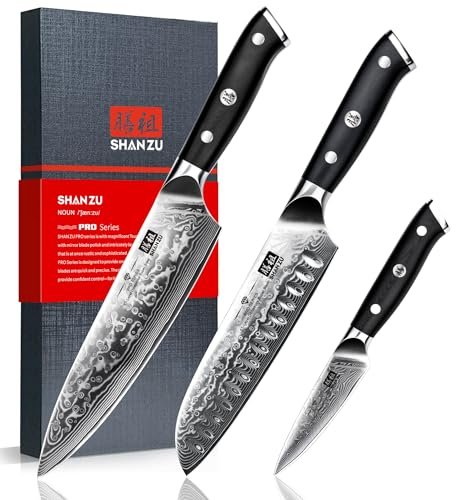
 3-piece Japanese-style Damascus knife set, ideal for home cooks and gift giving
Who Is Damascus Steel Kitchen Cutlery Actually Best For?
Damascus knives are a great fit for:
- Casual to intermediate home cooks who want low-maintenance sharpness without frequent sharpening
- People who prioritize kitchen aesthetics and want a decorative, functional tool
- Gift shoppers looking for a practical, impressive present for cooking enthusiasts
- Users who prep a mix of ingredients (produce, meat, herbs) and want a versatile all-purpose knife
They are a poor fit for:
- Professional chefs who prioritize maximum edge retention over looks
- Users on a tight budget who need a basic, functional knife set for under $50
- People who don’t want to hand wash and dry their knives after each use
- Users who primarily cut on hard surfaces (glass, stone, ceramic) that will dull and scratch the blade quickly
Key Features to Evaluate Before Buying
Not all Damascus knives are created equal. Prioritize these features to avoid low-quality, overhyped options:
Core Steel Composition
Look for knives that clearly list their core steel: VG10, 10Cr15CoMoV, AUS-10, or Japanese super steel are high-quality options that deliver reliable edge retention and corrosion resistance. Avoid generic "high carbon Damascus" labels with no specific steel type listed, as these often use low-quality core steel that dulls quickly.
Layer Count vs. Core Performance
33–67 layers is standard for mid-to-high tier knives, offering a good balance of performance and aesthetics. Anything above 67 layers is almost entirely for aesthetic purposes, with no measurable performance benefit, and often comes with a hefty markup.
Handle and Tang Construction
Full tang construction (the steel extends the full length of the handle) is non-negotiable for balance and durability. Handles made of G10, Pakkawood, or stabilized wood are moisture-resistant, durable, and provide a comfortable non-slip grip even when wet. Avoid untreated porous wood handles, which can harbor bacteria and degrade over time with repeated washing.
Food Safety Certifications
Look for knives with NSF certification, which means they meet strict global standards for food contact safety, a key plus for households that handle raw meat, poultry, and produce regularly.
Top Recommended Damascus Kitchen Knife Options (2026)
We evaluated dozens of mid-to-high tier Damascus knives for performance, durability, and value to pick the best options for different use cases.
SHAN ZU Damascus Knife Set 3 PCS
3-piece Japanese-style Damascus knife set, ideal for home cooks and gift giving
This entry-level 3-piece set is perfect for new home cooks and gift shoppers who want a complete set of sharp, attractive knives without the premium price tag of high-end Japanese brands. It includes a chef’s knife, utility knife, and paring knife, all with Japanese super steel cores and 67-layer pattern-welded blades, plus non-slip G10 handles and a premium gift box.
Who it’s best for: New home cooks, gift shoppers, small households that need a basic set of essential knives. Pros: Affordable entry point for Damascus, excellent rust resistance, comfortable ergonomic handles, ready to gift out of the box. Cons: Edge retention is lower than premium VG10 core knives, pattern is less defined than higher-end sets.
For an affordable, stylish set for daily home use, this SHAN ZU set delivers reliable performance at a mid-range price point.
Damascus Chef Knife in Japanese Steel (Emojoy)
 Hand-forged Damascus chef knife with natural olive wood handle
This single 8-inch Damascus chef knife is ideal for home cooks who already have a knife block and want a high-performance, versatile all-purpose knife for daily prep. It features a VG10 core steel, 67-layer pattern-welded blade, and a natural olive wood handle that adds a warm, decorative touch to any kitchen.
Who it’s best for: Home cooks upgrading from a cheap stainless steel chef’s knife, people who prefer a single high-quality knife over a full set. Pros: Exceptional sharpness out of the box, beautiful natural wood handle, corrosion-resistant core, perfect for slicing, dicing, and mincing. Cons: Requires more careful maintenance than synthetic handles, higher price than entry-level single chef knives.
For a single, high-performance chef knife that balances sharpness and aesthetics, this Japanese-style Damascus option is a solid pick.
SHAN ZU Chef Knife 8 Inch
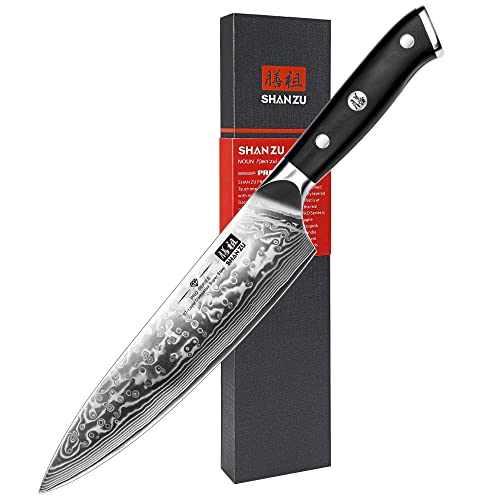 Versatile 8-inch Damascus chef knife for daily kitchen tasks
This 8-inch SHAN ZU chef knife is a workhorse option for home cooks who want a durable, sharp knife for heavy daily use. It features a high-carbon super steel core, 67-layer Damascus construction, and an ergonomic non-slip handle designed to reduce hand fatigue during long prep sessions.
Who it’s best for: Intermediate home cooks, people who chop large quantities of produce or meat regularly. Pros: Excellent edge retention for heavy use, balanced weight for reduced hand fatigue, versatile for all kitchen tasks. Cons: Pattern is less intricate than premium sets, requires regular honing to maintain edge.
If you need a reliable, heavy-duty chef knife for daily meal prep, this SHAN ZU 8-inch option delivers consistent performance.
VEROXIS Damascus Chef Knife 8 Inch
 Lightweight Damascus chef knife with moisture-resistant Pakkawood grip
The lightweight VEROXIS 8-inch chef knife is perfect for users with smaller hands or anyone who prefers a lighter knife for precision tasks. It features a high-carbon super steel core, an ergonomic Pakkawood handle that resists moisture and bacteria, and a balanced full tang build that gives you precise control for delicate cuts like deboning, trimming, and slicing herbs.
Who it’s best for: Users with small to medium hand size, people who do a lot of precision work. Pros: Extremely lightweight for reduced wrist strain, moisture-resistant Pakkawood handle, precise control for delicate cuts, attractive gift-ready packaging. Cons: Lightweight build may feel less substantial to users who prefer heavy knives, green handle color may not match all kitchen aesthetics.
For a precision-focused, lightweight Damascus chef knife that’s comfortable for long prep sessions, the VEROXIS option is a great choice.
Piklohas Knife Sets for Kitchen 17 Pieces
 Full 17-piece knife set with magnetic holder for organized storage
This 17-piece Piklohas set is ideal for households that want a complete, all-in-one knife collection with convenient storage. It includes every tool you’d need for kitchen prep, from chef’s and utility knives to steak knives, kitchen shears, and a bread knife, all with a German high-carbon stainless steel core and Damascus-pattern finish, plus a wall-mounted magnetic holder for easy access.
Who it’s best for: Large households, people who want a full set of specialty knives without buying pieces separately. Pros: Complete set covers every kitchen task, magnetic holder keeps knives organized and accessible, durable German steel core, affordable for a full set. Cons: Set includes some low-use specialty pieces that many home cooks won’t need, magnetic holder requires wall mounting.
If you want a full, organized knife set for a busy household, this Piklohas 17-piece option offers great value.
Kuisine Kitchen Knife Set 12PCS
 Luxury 12-piece Damascus set with integrated sharpener for easy maintenance
This 12-piece Kuisine set is perfect for home cooks who want a low-friction, low-maintenance Damascus set with built-in sharpening. It features Damascus steel blades, ergonomic non-slip wood handles, and a knife block with an integrated sharpener, so you don’t need to maintain a separate sharpening system to keep your knives in top shape.
Who it’s best for: Home cooks who don’t want to maintain a separate sharpening system, people who want a stylish, complete set for a modern kitchen. Pros: Integrated sharpener makes maintenance effortless, non-slip handles are safe for wet hands, elegant silver finish matches modern kitchen decor, great gift option. Cons: Built-in sharpener is less effective than professional sharpening, wood handles require more care than synthetic options.
For a low-maintenance, stylish Damascus set that’s perfect for new home cooks, this Kuisine option is a top pick.
Damascus Kitchen Knife Set 3 PCS (NSF VG10 Core)
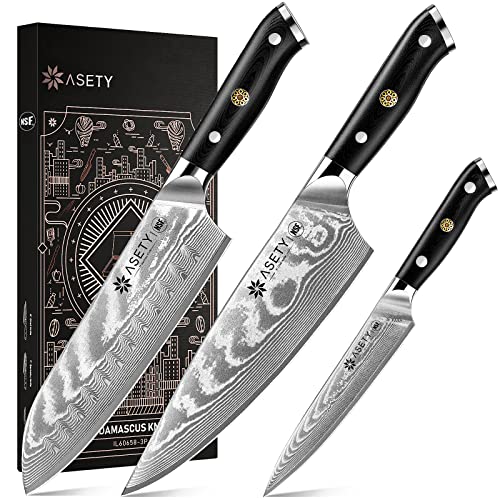 Food-safe Damascus knife set with VG10 core steel for professional use
This 3-piece NSF-certified set is built for serious home cooks and small-scale food prep enthusiasts who prioritize food safety and maximum edge retention. It features a VG10 steel core (one of the highest quality core steels available for consumer knives), full tang G10 handles, and meets strict NSF standards for food contact safety, making it ideal for households that handle raw meat and produce regularly.
Who it’s best for: People who handle raw meat and produce regularly, users who want a professional-grade set without the full price of Japanese brand knives. Pros: Meets strict food safety standards, VG10 core holds an edge for months with regular use, balanced full tang build for precision, gift-ready packaging. Cons: Higher price than entry-level Damascus sets, G10 handles may feel less warm than wood handles for some users.
If food safety and long-lasting sharpness are your top priorities, this NSF-certified VG10 core set is a professional-grade value.
imarku Damascus Chef Knife 8 Inch
 Hand-hammered Damascus chef knife designed to reduce food sticking
This hand-hammered imarku chef knife is designed to reduce food sticking, making it ideal for users who prep a lot of sticky ingredients like sushi rice, diced fruit, or minced herbs. It features a high-carbon German stainless steel core, a textured hand-hammered blade finish that minimizes food adhesion, and an ergonomic non-slip handle that stays comfortable even during long prep sessions.
Who it’s best for: Sushi lovers, people who prep a lot of fresh produce, users who struggle with food sticking to their knife blades. Pros: Hand-hammered finish significantly reduces food sticking during prep, ultra-sharp out of the box, durable German steel core, comfortable grip for long use. Cons: Textured finish may require extra care to prevent rust in crevices, higher price than standard chef knives.
If you regularly prep sticky ingredients and want a knife that minimizes waste and effort, this hand-hammered imarku option is a great fit.
SHAN ZU Damascus Chef Knife 8 Inch (Copper 33 Layer)
 33-layer hand-forged Damascus knife with warm maple wood grip
This hand-forged 8-inch SHAN ZU chef knife features a unique copper-accented Damascus pattern, making it a stylish standout for any kitchen. It has a high-carbon core steel, 33-layer pattern-welded construction, and a warm maple wood handle that provides a comfortable, secure grip for all kitchen tasks.
Who it’s best for: People who want a unique, decorative knife that still performs well, gift shoppers looking for a distinctive present. Pros: One-of-a-kind copper pattern that resists fading, warm maple wood handle for comfortable grip, excellent edge retention for daily use, elegant gift-ready packaging. Cons: Maple wood handle requires regular oiling to prevent drying out, copper pattern may show fingerprints more than standard Damascus.
For a stylish, unique Damascus knife that doubles as a kitchen decor piece, this SHAN ZU copper-accented option is a standout pick.
aisyoko Chef Knife 8 Inch
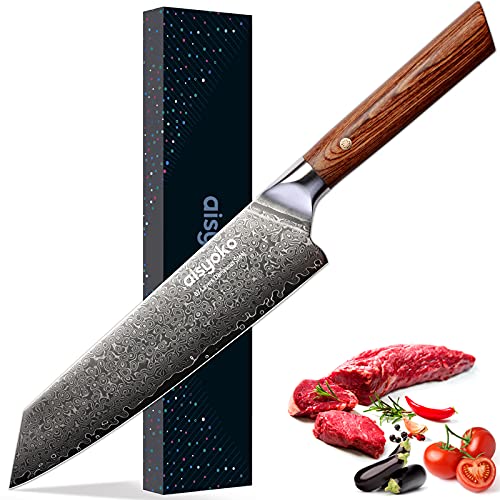 Professional-grade Damascus chef knife with VG-10 super stainless steel core
This professional-grade aisyoko chef knife is built for serious home cooks who want VG10 core performance in a single, versatile knife. It features a VG-10 super stainless steel core for exceptional edge retention and corrosion resistance, an ergonomic color wooden handle that provides a secure grip even when wet, and a perfectly balanced 8-inch blade that excels at every task from slicing vegetables to butchering meat.
Who it’s best for: Intermediate to advanced home cooks, people who want a single high-performance knife for all their prep tasks. Pros: VG10 core delivers exceptional edge retention and corrosion resistance, perfectly balanced for precision cuts, comfortable ergonomic handle for long prep sessions, ready to gift. Cons: Higher price than entry-level Damascus knives, wooden handle requires regular maintenance to prevent cracking.
If you want a single, professional-grade Damascus chef knife that will last for years with proper care, this aisyoko option is a top-tier value.
Frequently Asked Questions
What makes Damascus steel unique for kitchen knives?
Modern Damascus steel is a pattern-welded construction that layers hard, high-carbon steel (for sharpness and edge retention) with softer, corrosion-resistant stainless steel (for rust resistance and durability). The resulting blade combines the best properties of both steel types, and features a unique, one-of-a-kind wavy pattern that is purely aesthetic. Unlike ancient Wootz Damascus (a now-lost crucible steel technique), modern kitchen Damascus does not have any mystical performance properties — its benefits come directly from its layered steel construction.
Are Damascus kitchen knives worth the investment?
For most home cooks, yes. Mid-tier Damascus knives hold their edge 2–3 times longer than entry-level stainless steel knives, meaning less frequent sharpening and faster prep time. They also offer better rust resistance than pure high-carbon steel knives, a practical win for users who may forget to dry their blades immediately after washing. For professional chefs who sharpen their knives weekly, premium monosteel knives may offer better edge retention, but for casual to intermediate home cooks, Damascus delivers solid long-term value, especially when paired with proper care that can extend their lifespan to 10+ years.
How should I care for Damascus knives to keep them performing well?
Proper care is simple but critical:
- Hand wash with mild soap and warm water immediately after use, and dry thoroughly with a soft cloth to prevent moisture from seeping between the layered steel and causing rust.
- Never place Damascus knives in the dishwasher, as harsh detergents and high heat can damage the blade finish and handle materials.
- Hone the blade with a honing rod every 2–3 months to maintain the edge, and send it to a professional sharpening service once a year for a full sharpening.
- Store knives in a sheath, knife block, or magnetic strip, and keep them out of reach of children with secure cabinet latches on lower storage drawers for extra safety. For households with young kids, add drawer safety latches to any storage drawers holding knives to prevent accidental access.
Is Damascus steel suitable for everyday cooking?
Absolutely. The sharp, smooth edge of a Damascus knife makes quick work of everyday tasks, from slicing vegetables and fruit to butchering meat and mincing herbs. Its corrosion resistance means you don’t have to worry about rust forming if you dry it after washing, unlike pure high-carbon steel knives. The ergonomic, well-balanced design also reduces hand fatigue during long meal prep sessions, making it a reliable daily workhorse for most home cooks. Their smooth edges also make them ideal for slicing soft cheeses for charcuterie board prep without tearing or crumbling.
What are the key benefits of Damascus chef knives over standard stainless steel knives?
- Longer edge retention: Stays sharp 2–3x longer than entry-level stainless steel, reducing sharpening frequency.
- Better corrosion resistance: More rust-resistant than pure high-carbon steel, with less risk of rust if dried promptly.
- Improved balance: Full tang construction and layered steel distribution reduce hand fatigue during extended use.
- Reduced food sticking: Many hand-hammered Damascus finishes create a textured surface that minimizes food adhesion during prep.
- Unique aesthetic: The one-of-a-kind pattern adds a decorative touch to any kitchen, and most sets come in gift-ready packaging.
Proper storage and handling also reduce the risk of lacerations, one of the most common kitchen injuries tracked by the U.S. Consumer Product Safety Commission.
Conclusion
Damascus steel kitchen knives are a solid choice for most home cooks, but they’re not a one-size-fits-all solution. Their layered construction delivers very real benefits: longer edge retention than entry-level stainless steel, better corrosion resistance than pure high-carbon steel, and comfortable, well-balanced designs that make meal prep less tiring. The unique, eye-catching patterns also add a decorative touch to any kitchen, and their gift-ready packaging makes them a popular choice for housewarmings, holidays, and weddings.
That said, they come with real trade-offs: a higher upfront cost, the need for regular hand washing and drying, and a performance ceiling that doesn’t beat premium monosteel knives for professional users. The Damascus pattern is also mostly aesthetic, and will wear or fade over time with heavy use, so don’t buy one solely for its looks if you plan to use it heavily for tough prep tasks.
If you’re a casual to intermediate home cook who wants low-maintenance sharpness and values kitchen aesthetics, a mid-tier Damascus knife or set is a worthwhile investment that will last for years with proper care. For professional chefs, budget-focused buyers, or users who don’t want to hand wash their knives, a high-quality stainless steel monosteel knife may be a better fit. When shopping, prioritize knives with a clearly listed high-quality core steel (like VG10 or 10Cr15CoMoV), full tang construction, and a handle material that fits your maintenance preferences. For deep cleaning kitchen surfaces after heavy meal prep, a heavy-duty cleaning brush can tackle stuck-on grime without scratching countertops or knife blades.

Hi, I’m Daniel Brooks—a food lover and kitchen gear enthusiast. I enjoy testing cookware, utensils, and gadgets to see what really works in everyday cooking. At PlugChef.com, I share honest reviews, comparisons, and simple guides to help you choose the best tools for a safer, smarter, and more enjoyable kitchen.
Related posts:
 Best Microwave Egg Cooker: Quick, Delicious Breakfasts Made Easy
 Best Electric Fondue Pot for Meat: Top Picks for Delicious Dips
 Best Self Healing Cutting Mat for Precise Quilting and Crafting Projects
 Best Wine Opener for Weak Hands: Effortless and Ergonomic Choices
 Best Kitchen Scale for Accurate Cooking and Baking Precision
 Holikme 5Pack Kitchen Cleaning Brush Green: Ultimate Scrubbing Power