Sharpening your kitchen knives at the correct angle is the single most important factor in achieving clean, precise cuts, extending blade lifespan, and reducing kitchen accidents. Most home cooks default to a generic angle that doesn’t match their knife’s design, leading to dull edges, chipped blades, and frustrating food prep. For the majority of kitchen knives, the optimal sharpening angle falls between 15 and 20 degrees per side (30 to 40 degrees total edge angle), but the exact angle varies based on knife type, steel hardness, and intended use. This guide breaks down exact angle guidelines for every common kitchen knife, how to hit the right angle consistently, and the tools that make the process foolproof.
The 15–20° Per Side Sweet Spot: Balancing Sharpness And Durability
A lower sharpening angle creates a thinner, sharper edge that slices through food with minimal resistance, but it’s more fragile and prone to chipping, especially on hard ingredients like carrots or frozen meat. A higher angle creates a thicker, more durable edge that holds up to heavy use, but it will feel less sharp and require more force to cut. The 15–20° per side range hits the perfect middle for most home kitchen use, delivering enough sharpness for precise work while holding up to daily use. This guidance is aligned with recommendations from the University of Minnesota Extension, which notes this range is ideal for balancing edge retention and cutting performance for casual to frequent home cooks.
Angle Guidelines By Common Kitchen Knife Type
The right angle depends entirely on your knife’s construction and intended use. Using the wrong angle for your blade will either lead to rapid dulling or chipping, even if you sharpen it regularly.
Japanese-Style Hard-Steel Knives (14–16° Per Side)
Knives like gyutos, santokus, nakiris, and boning knives made with Japanese hard steel (HRC 60+ Rockwell hardness) require a lower 14–16° per side angle to maximize their cutting performance. These blades are thinner and harder than Western knives, so a lower angle creates an ultra-sharp edge without chipping, making them ideal for precision tasks like slicing sashimi, mincing garlic, and peeling produce. The imarku 8-inch chef knife, for example, has a factory-set 15° bevel optimized for detailed cutting work.
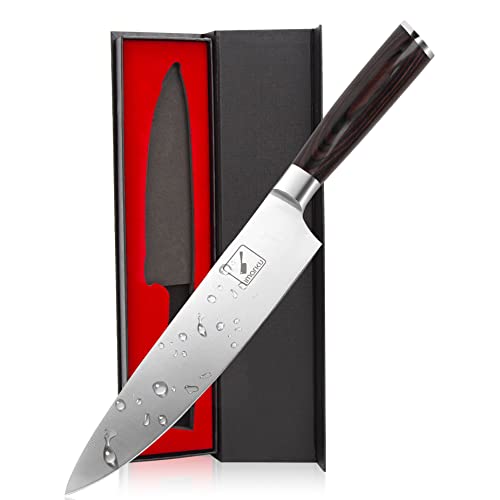 This high-carbon Japanese-style chef knife is factory-sharpened to 15° per side for maximum precision on delicate ingredients.
Western-Style All-Purpose Chef’s Knives (17–20° Per Side)
Western chef’s knives, butcher knives, and utility knives are typically made with softer steel (HRC 54–58) and thicker blades than Japanese models, so they require a slightly higher 17–20° per side angle for added durability. This angle holds up to heavy use like cutting through squash, meat bones, and dense produce without chipping, while still delivering sharp enough for everyday slicing and dicing. The Dexter-Russell 6-inch forward-angle knife is a popular Western-style option pre-set to a 20° bevel for robust, all-purpose use.
 Lightweight Western-style chef knives like this model use a 20° sharpening angle for added durability during heavy use.
Serrated Knives (15–20° Per Serration)
Serrated bread knives, tomato knives, and steak knives have a unique toothed edge that requires a different sharpening approach. Sharpen each serration at a 15–20° angle, but only sharpen the flat (non-beveled) side of the serration—never alter the factory bevel on the sloped side, as this will ruin the sawing action. Most standard pull-through sharpeners cannot sharpen serrated edges effectively, so use a dedicated ceramic sharpening rod or professional sharpening service for best results.
Paring And Utility Knives (12–15° Per Side)
Small paring knives and 4–6 inch utility knives used for intricate tasks like peeling fruit, trimming fat, and mincing herbs benefit from a lower 12–15° per side angle. This extra-sharp edge gives you maximum control for detailed work, and the thin edge slices through soft ingredients without crushing them.
Heavy-Duty Cleavers And Chopping Knives (20–25° Per Side)
Cleavers, Chinese chef’s knives, and heavy chopping blades used for cutting through bones, hard squash, and thick meat slabs require a higher 20–25° per side angle for maximum durability. This thicker edge resists chipping and bending under impact, making it safe for heavy-duty tasks that would damage a thinner, sharper edge.
How To Consistently Hit The Correct Sharpening Angle
Many home cooks struggle with holding a consistent angle when sharpening, but these simple, tested steps make it foolproof:
- Identify your knife’s factory bevel first: Hold your knife under bright light and look at the edge—most modern kitchen knives have a visible double bevel (a sloped edge on both sides). Match this existing angle when sharpening to avoid creating a weak, uneven edge that will dull quickly.
- Use a guided tool for beginners: If you’re new to sharpening, start with a tool that holds the knife at the correct angle for you. The adjustable angle guided sharpener lets you set custom angles for different blade types, eliminating guesswork and ensuring consistent results even for first-time users.
- Try the penny trick for freehand sharpening: If you prefer to sharpen freehand on a whetstone, stack 2–3 pennies under the spine of your knife on the stone to create a consistent 15–17° per side angle, a hack used by professional sharpeners worldwide.
- Test your angle with a permanent marker: Color the factory bevel of your knife with a permanent marker, then take one full stroke on your sharpening stone. If the marker is only removed at the very edge of the blade, you’re holding the correct angle. If the marker is removed all the way up the bevel, you’re holding the knife too steep (too high an angle), which will remove excess material and shorten your knife’s lifespan.
- Avoid common angle mistakes: The most common error is holding the knife too vertical (25°+ per side), which creates a fragile edge that chips after a few uses, or too flat (under 10° per side), which rounds the edge and leaves it dull.
Tools That Simplify Angle-Accurate Sharpening
The right tool makes hitting the correct angle effortless, no experience required:
Electric Sharpeners With Built-In Angle Guides
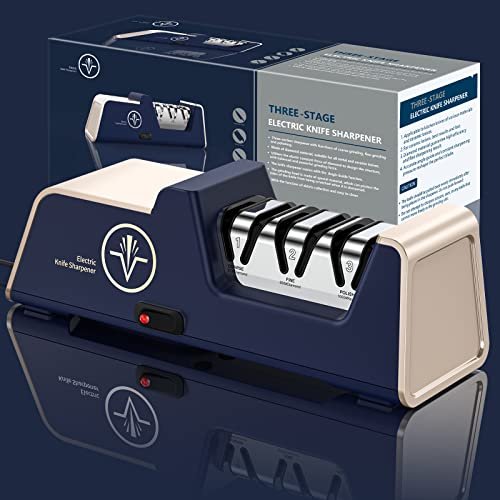
Ideal for beginners or busy home cooks who want consistent results fast, electric sharpeners with precision angle guides hold the blade at the optimal 15–20° angle automatically. The VIDOME Professional Electric Knife Sharpener uses 100% diamond abrasives in a 3-stage system with built-in guides set to the standard Western knife angle, so you can restore a dull edge to razor-sharp in minutes.
 Built-in angle guides on electric sharpeners eliminate guesswork for consistent, repeatable results every time.
Ceramic And Steel Honing Rods
For regular maintenance between full sharpenings, a honing rod held at the correct 15–20° angle realigns the knife edge without removing metal, extending the time between full sharpening sessions. The Sharpeak Total 3000-grit Ceramic Sharpening Steel and Mitsumoto Sakari 12-inch Japanese Honing Steel both have built-in angle guides to help you maintain the correct angle during honing, even if you’re a beginner.
 Ceramic honing rods with angle guides make quick edge maintenance part of your regular kitchen routine.
 A 12-inch honing steel provides enough length to maintain consistent contact with the entire blade edge for even realignment.
Manual Guided Sharpeners
Compact, electricity-free manual sharpeners are perfect for small kitchens, travel, or users who prefer a low-tech option. The Farberware Edgekeeper 3-Stage Tabletop Sharpener has pre-set 18° angle guides for Western knives, with coarse, fine, and honing slots to restore dull edges in seconds.
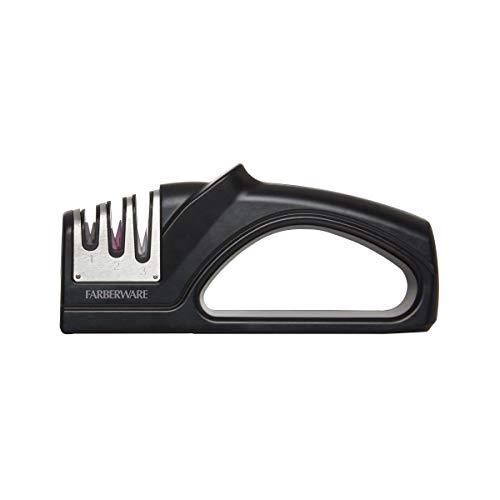 Compact manual sharpeners with fixed angle guides are a convenient pick for small kitchens and travel.
 Adjustable manual sharpeners let you set custom angles for different blade types, from 10° for paring knives to 25° for cleavers.
Honing Rods For Frequent Maintenance
For users who hone regularly, a 10-inch carbon steel sharpening rod like the 10 Inch Professional Sharpening Steel is a durable, affordable option that fits easily in a kitchen drawer. Its ergonomic handle and bright red finish make it easy to grab and use in 30 seconds flat after each cooking session.
 10-inch honing rods are long enough to realign the entire edge of even 8–10 inch chef’s knives in a few strokes.
Self-Sharpening Knives And Sets
If you don’t want to learn sharpening techniques, opt for knives with pre-set factory angles that maintain their edge with minimal effort. The Farberware Edgekeeper 8-inch Chef Knife has a self-sharpening blade cover that hones the 18° factory bevel every time you store the knife, while the Farberware 22-Piece Knife Block Set features high-carbon stainless steel blades with a permanent edge that never needs sharpening.
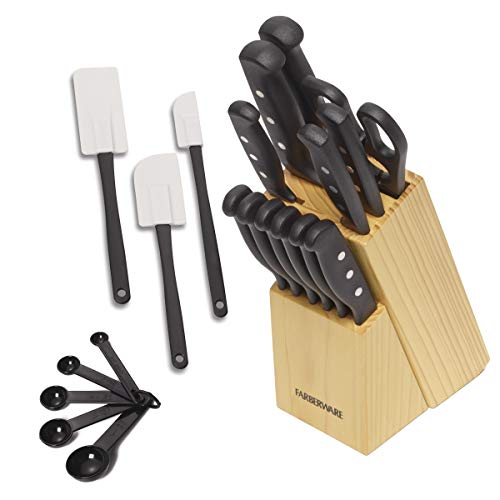 Self-sharpening knife sets are a low-maintenance pick for casual home cooks who want consistent performance without regular sharpening.
 Self-sharpening blade covers maintain the optimal factory angle with zero user effort, ideal for busy households.
Common Sharpening Angle Mistakes To Avoid
Even experienced cooks make these common errors that damage blades and reduce cutting performance:
- Using a one-size-fits-all angle: The most widespread mistake is sharpening every knife at 20° per side. Japanese boning knives will chip at this angle, while heavy cleavers will feel dull because the edge is too fragile to hold up to impact. Always match the angle to your knife’s intended use and steel hardness.
- Altering your knife’s factory bevel: If your Western chef’s knife comes with a 20° bevel, sharpening it at 15° will create a new, thinner bevel that chips easily. You’ll have to grind away excess metal to get back to the original angle, shortening your knife’s lifespan by years.
- Over-sharpening: Full sharpening grinds away metal from the blade, so doing it more than 2–3 times per year will wear down your knife prematurely. Stick to honing every 2–3 uses to maintain sharpness between full sharpenings.
- Using the wrong tool for the job: Pull-through sharpeners are designed for cheap, soft Western steel, and will chip thin Japanese blades. Serrated knives cannot be sharpened in standard pull-through sharpeners at all, as they only accommodate straight edges.
- Holding the honing rod at the wrong angle: Most users hold the honing rod too steep, which fails to realign the edge properly, or too flat, which rounds the edge. Use the built-in angle guides on your honing rod to get consistent results every time.
Honing Vs. Sharpening: The Role Of Angle In Maintenance
Many cooks confuse these two essential maintenance tasks, but they use the same angle for very different purposes:
- Honing is a low-effort, frequent maintenance task that realigns the microscopic teeth on the knife edge without removing any metal. It’s done at the same angle as your knife’s factory bevel (15–20° per side) and takes just 30 seconds per side. After sharpening, you can keep your blade clean and rust-free with a heavy-duty cleaning brush to remove metal filings and food residue. Do this every 2–3 times you use your knife to keep it sharp between full sharpenings.
- Sharpening is a more intensive process that grinds away dull, worn metal to create an entirely new sharp edge. It’s only needed when honing no longer restores cutting performance, usually 1–2 times per year for home cooks. Always use the same angle as your factory bevel when sharpening to avoid creating a weak, uneven edge. For safe storage of sharpened knives, use child-safe blade locks to keep them out of reach of children. Pair proper sharpening with other cabinet safety latches to secure all hazardous kitchen tools away from kids.
Frequently Asked Questions
What Is The Ideal Angle For Sharpening Kitchen Knives?
The ideal sharpening angle for most kitchen knives is 15–20° per side (30–40° total edge angle), but this varies by knife type: 14–16° per side for Japanese hard-steel knives, 17–20° per side for Western all-purpose chef’s knives, and 20–25° per side for heavy-duty cleavers. Always match the factory bevel angle of your existing knife for best results.
How Often Should I Sharpen My Kitchen Knives?
Home cooks who use their knives daily only need to fully sharpen their blades 1–2 times per year. Regular honing with a ceramic or steel rod every 2–3 uses will maintain sharpness between full sharpenings and extend your knife’s lifespan by years.
Can Electric Sharpeners Damage Kitchen Knives?
Yes, if they are not calibrated to your knife’s factory bevel angle. Low-quality pull-through electric sharpeners remove excess material and can chip thin Japanese blades. Always choose a sharpener with adjustable angle guides or one pre-set to match your knife’s bevel, and follow the manufacturer’s instructions to avoid over-sharpening.
What's The Difference Between Honing And Sharpening?
Honing uses a honing rod or ceramic steel to realign the microscopic teeth on the knife edge without removing any metal, making it a quick, low-effort maintenance task for regular use. Sharpening grinds away dull, worn metal to create an entirely new sharp edge, and is only needed when honing no longer restores cutting performance. Both processes use the same angle as your knife’s factory bevel for best results.
Are Ceramic Sharpeners Better Than Steel Sharpeners?
Neither is universally better: ceramic honing rods are harder than steel, so they realign edges more effectively and are ideal for frequent maintenance of high-quality knives. Steel honing rods are more forgiving for beginners and work well for softer Western steel knives. For full sharpening, ceramic or diamond abrasives are more effective than steel for removing dull metal.
Conclusion
The right sharpening angle for your kitchen knives isn’t a one-size-fits-all number—it depends on your knife’s steel type, intended use, and factory bevel. Sticking to the 15–20° per side range for most all-purpose knives, adjusting up or down for specialty blades, and pairing full annual sharpenings with regular honing will keep your blades sharp, safe, and long-lasting for decades. If you’re new to sharpening, start with a guided tool with adjustable angles to build muscle memory before trying freehand whetstones, and pair your sharpening routine with proper blade care, like using a specialized scrub brush set to remove stuck-on food after use. For even more precision when prepping food, practice techniques like effortless cheese slicing that take advantage of a properly sharpened edge. You can even customize your knife storage with engraved labels to match each blade to its intended task, reducing unnecessary wear from using the wrong knife for a job.

Hi, I’m Daniel Brooks—a food lover and kitchen gear enthusiast. I enjoy testing cookware, utensils, and gadgets to see what really works in everyday cooking. At PlugChef.com, I share honest reviews, comparisons, and simple guides to help you choose the best tools for a safer, smarter, and more enjoyable kitchen.
Related posts:
 Cheap Ice Cream Maker Under $100: Discover Delicious Homemade Treats
 Best Handheld Milk Frothers: Ultimate Tools for Perfect Coffee Creations
 Best Kitchen Utensils for Stainless Steel Pans: Top Durable Picks
 Best Tool for Grating Ginger: Top Ceramic and Stainless Steel Graters Reviewed
 Best Kitchen Utensils for Ceramic Pans: Top Silicone Sets Reviewed
 Best Kitchen Brushes for Cleaning: Durable & Effective Tools