
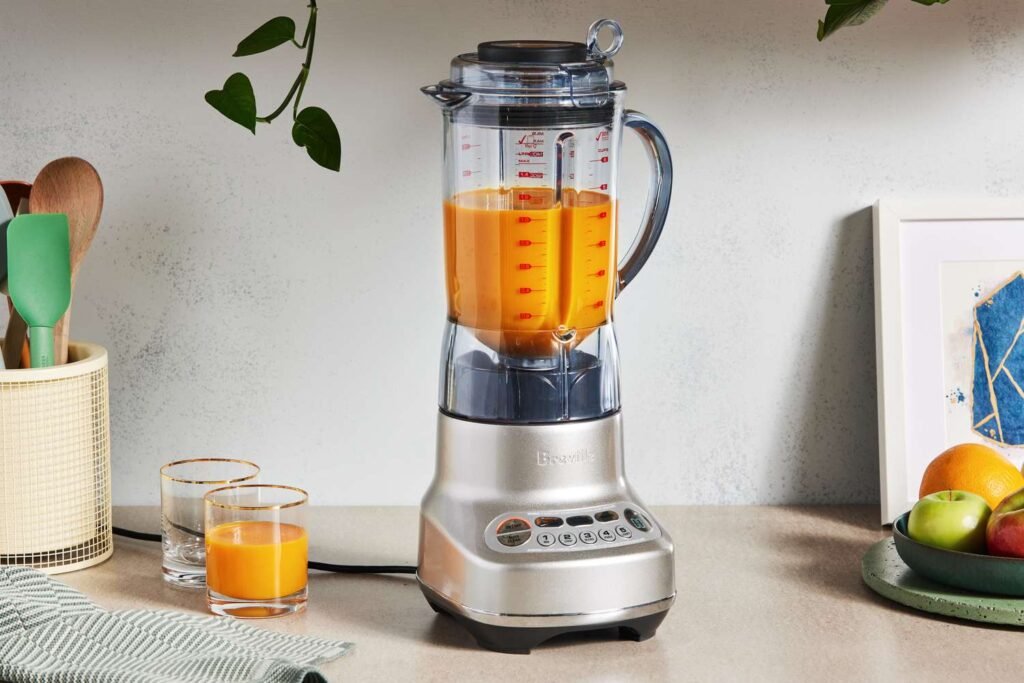
Pick a powerful, durable blender with the right capacity and sharp blades for silky smoothies.
I have tested many blenders and make smoothies every week. This guide draws on hands-on experience and clear criteria to help you know How To Choose The Right Blender For Smoothies and buy with confidence.
:max_bytes(150000):strip_icc()/sea-personal-blenders-lead-image-nutribullet-smeg-ninja-ashia-aubourg-02-2fe28ce691d047cb956a51c541330b3d.jpeg)
Why the right blender matters
Choosing the right blender affects texture, taste, and nutrition. When you learn How To Choose The Right Blender For Smoothies you save time and avoid disappointment. A poor blender leaves chunks, overheats, or wears out fast.
:max_bytes(150000):strip_icc()/alr-product-5-breville-fresh-furious-blender-rkilgore-1171-b9abe1afd3f6472fa144bff278611b9b.jpeg)
Key features to look for when choosing a blender
How To Choose The Right Blender For Smoothies starts with features. Focus on power, blades, jar, controls, and durability. These give consistent results and long life.
- Power: Aim for 600 watts or more for regular smoothies. Higher power blends frozen fruit and greens faster.
- Blade quality: Look for stainless steel, multi-tier blades that reach a vortex.
- Jar material: Glass is heavy and scratch-resistant. BPA-free plastic is light and shatterproof.
- Capacity: Choose single-serve for personal use and 48–64 ounce jars for family smoothies.
- Speeds and presets: Simple variable speed works well; presets add convenience.
- Warranty and service: A good warranty shows confidence from the maker.
:max_bytes(150000):strip_icc()/sea-detail-19-vitamix-5200-blender-wdickey-1883-0086d3c6a6724b6b9d85d4975c61fcce.jpeg)
Types of blenders and which is best for smoothies
How To Choose The Right Blender For Smoothies also depends on blender type. Match the type to your routine and goals.
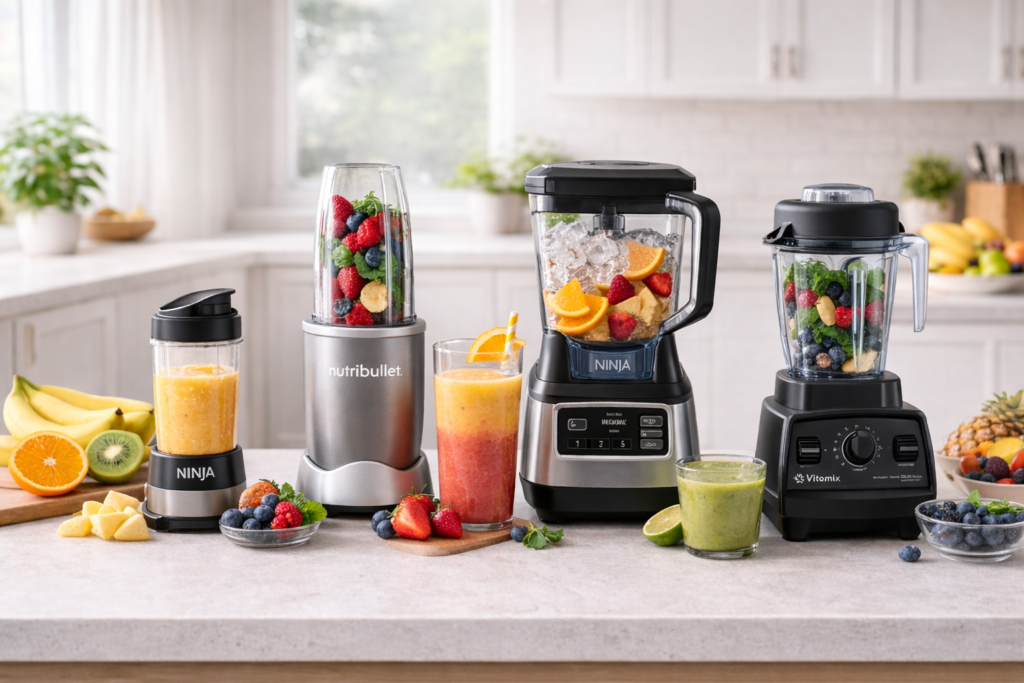
- Countertop high-performance blenders: Best for daily, heavy use and frozen blends.
- Personal (single-serve) blenders: Great for quick shakes and small portions.
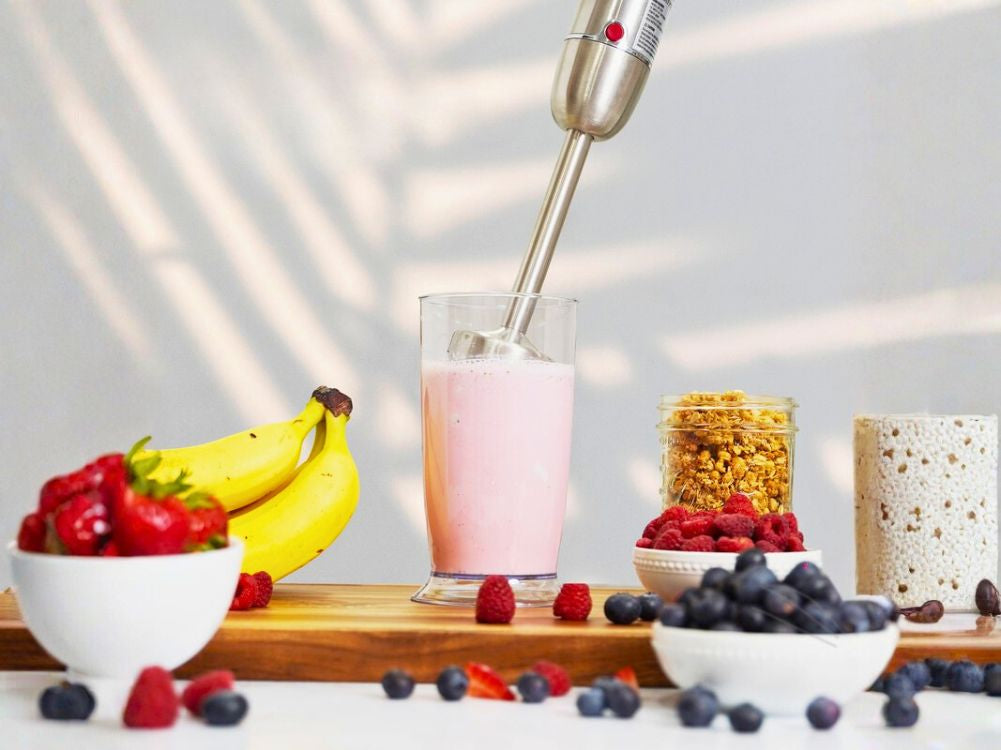
- Immersion blenders: Useful for soups and light smoothies but less power for hard ice.
- Professional/Commercial blenders: Built for heavy duty and long life in frequent use.
Power, motor, and performance
When you ask How To Choose The Right Blender For Smoothies, motor specs matter. Higher wattage and good motor design create steady torque and finish blends smoothly. For frozen fruits and fibrous greens choose 1000 watts or more. For simple fruit blends 600–900 watts can be enough. Look for motors with thermal protection and a stable base.

Capacity, jars, and blade considerations
How To Choose The Right Blender For Smoothies includes jar choice. Jar size affects batch volume and blending headspace. Use a larger jar for leafy greens so ingredients can move freely. Choose jar materials based on weight and care. Blades should be sharp, angled, and easy to remove for cleaning.
Controls, presets, and speed settings
How To Choose The Right Blender For Smoothies means thinking about how you will use it. Simple dials give fine control. Presets and pulse features help with crushing ice, blending smoothies, and cleaning. A clear control panel speeds routine use.

Noise, build quality, and warranty
How To Choose The Right Blender For Smoothies also means considering noise and durability. High-power blenders make sound, but build quality reduces vibration. Metal drive systems last longer than plastic couplings. Check warranty length and what it covers for motor and parts.
:max_bytes(150000):strip_icc()/sea-product-19-vitamix-5200-blender-wdickey-1880-6f71f3579eb84e1d96ceb4fb46598f4d.jpeg)
Cleaning, maintenance, and longevity
How To Choose The Right Blender For Smoothies includes long-term care. Clean jars right after use to prevent stains and odors. Use warm soapy water and run the blender briefly to self-clean. Replace seals and blades when you see wear to maintain performance.
How to choose the right blender for smoothies — step-by-step buying guide
Follow steps to make a smart pick for How To Choose The Right Blender For Smoothies.
- Decide use case and frequency. Pick a high-power model for daily heavy use. Pick a personal blender for quick single servings.
- Set a budget. Expect to pay more for motors above 1000 watts and metal parts.
- Compare specs. Look at watts, blade design, jar size, and warranty.
- Read real user reviews and look for hands-on tests. Pay attention to performance with ice and greens.
- Test if possible. Feel the base, try presets, and check noise and stability.
- Buy from a retailer with a good return policy. That protects you if blending is not as expected.
Common mistakes when buying a blender for smoothies
Avoid these errors when you decide How To Choose The Right Blender For Smoothies.
- Choosing low power for heavy use. Low power struggles with ice and fibrous greens.
- Ignoring jar shape. Wide bases make a vortex that blends faster.
- Skipping warranty checks. Short warranties can cost more in the long run.
- Relying on flashy presets only. Real control comes from variable speed and pulse.
- Forgetting cleaning ease. Hard-to-clean parts reduce use and increase waste.
My experience testing blenders for smoothies
I have owned and tested dozen models over years. I learned to favor torque over peak power for leafy blends. One model with a 1400-watt motor and tapered jar made the smoothest green smoothies. I also found that cheap single-serve blenders work for fruit only. My biggest mistake was buying on looks alone. Now I test with frozen berries, ice, and spinach to see real performance.
Practical tips and recipe testing
Use these tips when you practice How To Choose The Right Blender For Smoothies.
- Start with liquid at the bottom to help a vortex form.
- Add soft ingredients before hard ones to reduce blade stress.
- Use short pulse bursts for chunky ingredients.
- Test with a frozen-berry recipe and leafy greens to check real-world performance.
Frequently Asked Questions of How To Choose The Right Blender For Smoothies
What motor power is best for smoothies?
Aim for at least 600 watts for basic smoothies. For frozen fruit and greens, 1000 watts or more gives smoother results.
Can a low-cost blender make good smoothies?
Yes, for soft fruits and small batches. Low-cost models usually struggle with ice and fibrous greens.
Is glass or plastic jar better for smoothies?
Glass resists stains and smells. Plastic is lighter and shatterproof. Choose by use and care needs.
How often should I replace blender blades?
Replace blades when they dull or leak. For daily use, inspect annually and replace if performance drops.
Do presets matter for smoothie making?
Presets help for repeatable results. Variable speed and pulse are more flexible and often more useful.
Conclusion
Choosing well saves time, makes better smoothies, and keeps you blending longer. Use the checklist here to match needs and budget, and test with frozen fruit and greens before you decide. Take action now: list your priorities, compare two models, and buy the blender that fits your routine. Leave a comment with your top picks or questions so others can learn from your choice.

I’m Abby Lu, a passionate home cook who loves simplifying everyday meals. At PlugChef.com, I share product reviews and cooking guides to help you find the best tools for your kitchen.
Related posts:
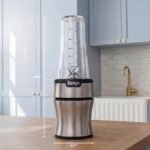 Top Blenders For Smoothies Protein Shakes: Top Picks
 What Type of Cooking Utensils are Safe: Expert Picks
 Eco-Friendly Kitchen Ideas to Reduce Waste and Save Energy
 How to Decorate With Wire Baskets: Chic and Creative Ideas
 Simple Human Dish Rack Compact: Maximize Kitchen Space
 Recipes With Whole Wheat Tortillas: Easy, Healthy, and Delicious Ideas

