
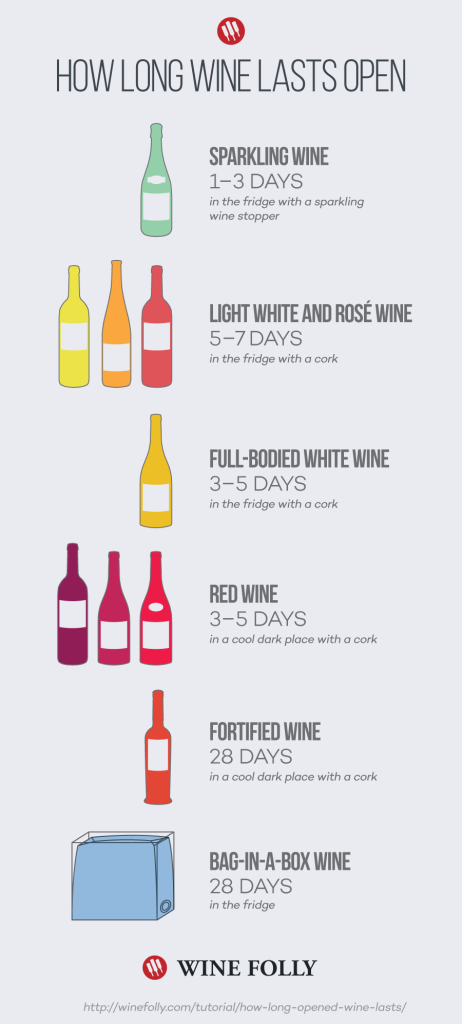
You’ve just finished a glass of your favorite red after a long week, or popped a bottle of sparkling for a small celebration, and now you’re left with a half-full bottle. The question pops up immediately: how long can you keep an open bottle of wine before it goes bad? The answer isn’t one-size-fits-all—timelines vary by wine type, storage conditions, and the preservation tools you use, and getting it right can save you from wasted wine and disappointing sips.
Unlike generic advice that tells you to “finish it in 3 days,” this guide breaks down exact, expert-backed freshness windows, the science of what causes wine to spoil, and actionable steps to extend your open bottle’s life, even for premium vintages. We’ll also cover how to spot spoilage before you take a sip, and debunk common myths that lead to unnecessary waste.
What Causes Opened Wine to Spoil?
As outlined in University of California Agriculture and Natural Resources’ wine storage guidance, the two primary drivers of post-opening spoilage are oxidation and bacterial growth. When you first open a bottle, a small amount of oxygen interacts with the wine to open up its flavors and aromas—this is why many drinkers “let the wine breathe” before serving. But once that oxygen is no longer being replenished, excess exposure triggers chemical reactions that break down flavor compounds, turn alcohol to acetic acid (the compound that gives vinegar its sharp taste), and encourage the growth of acetic acid bacteria.
Heat and light accelerate these processes: every 10°F (5.5°C) increase in storage temperature doubles the rate of oxidation, and UV light breaks down organic compounds in wine to cause “lightstrike,” a fault that tastes like wet cardboard or cooked cabbage. The good news? Simple storage and preservation steps can slow these reactions dramatically, extending your open bottle’s life by days or even weeks.
Exact Freshness Timelines for Every Wine Type
The biggest factor in how long an open bottle lasts is the wine’s variety and structural composition. Tannins (found in red grape skins) and natural acidity act as preservatives, so high-tannin, high-acid wines last far longer than low-acid, low-tannin varieties. The table below outlines standard freshness windows for common wine types, stored in a standard refrigerator (set to 35–40°F / 1.5–4°C) with a basic airtight re-cork:
| Wine Type | Unpreserved (Fridge) | With Preservation Tool (Fridge) | Room Temperature (Unpreserved) |
|---|---|---|---|
| Sparkling (Champagne, Prosecco, Cava) | 1–3 days | 3–5 days (with sparkling-specific stopper) | 1 day |
| Light whites/rosés (Sauvignon Blanc, Pinot Grigio, dry rosé) | 3–5 days | 5–7 days (with argon or vacuum sealer) | 1–2 days |
| Full-bodied whites (oaked Chardonnay, Viognier) | 5–7 days | 7–10 days | 2–3 days |
| Light reds (Pinot Noir, Beaujolais, Gamay) | 3–5 days | 5–7 days | 2–3 days |
| Full-bodied reds (Cabernet Sauvignon, Syrah, Malbec) | 5–7 days | 10–14 days (with argon system) | 3–5 days |
| Fortified wines (Port, Sherry, Vermouth) | 28+ days | 2–3 months | 1–2 weeks |
Note that these are general guidelines: lower-quality, mass-produced wines will fall on the shorter end of the range, while high-quality, age-worthy vintages with strong tannin and acid structures may stay fresh slightly longer than the upper limit. Older wines (10+ years past vintage) are more fragile post-opening, as their natural structural compounds have already broken down with age, so they will spoil faster than young, robust wines.
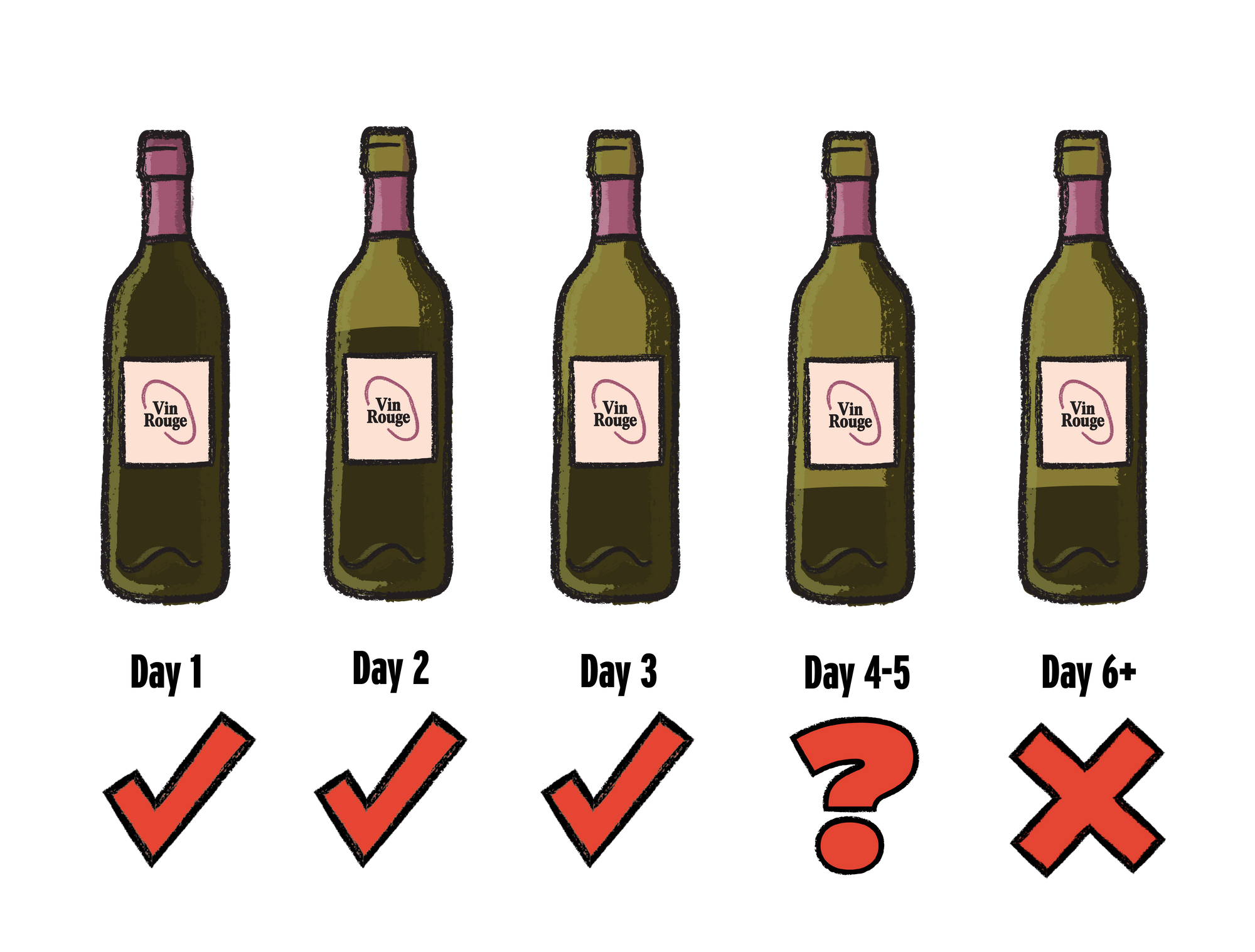 Reference chart from Good Pair Days showing how long common wine types stay fresh after opening
Credit: www.goodpairdays.com
Reference chart from Good Pair Days showing how long common wine types stay fresh after opening
Credit: www.goodpairdays.com
Key Factors That Impact Opened Wine Longevity
Beyond wine type, three core variables will make or break how long your open bottle stays fresh:
- Oxygen exposure: Every time you pour a glass, you introduce new oxygen to the bottle, resetting the spoilage clock. Re-corking tightly immediately after pouring, and using a preservation tool to remove or displace remaining oxygen, is the single most impactful step you can take to extend freshness.
- Storage temperature: As noted earlier, cooler temperatures drastically slow oxidation and bacterial growth. Even full-bodied reds benefit from refrigeration after opening—contrary to popular myth, chilling them won’t ruin their flavor, and you can let them warm to your preferred serving temperature (55–65°F / 13–18°C) by letting them sit out for 15–20 minutes before serving.
- Light exposure: Store opened wine in a dark space, away from direct sunlight or fluorescent light, to avoid lightstrike. A pantry, wine cooler, or the back of your fridge are ideal spots.
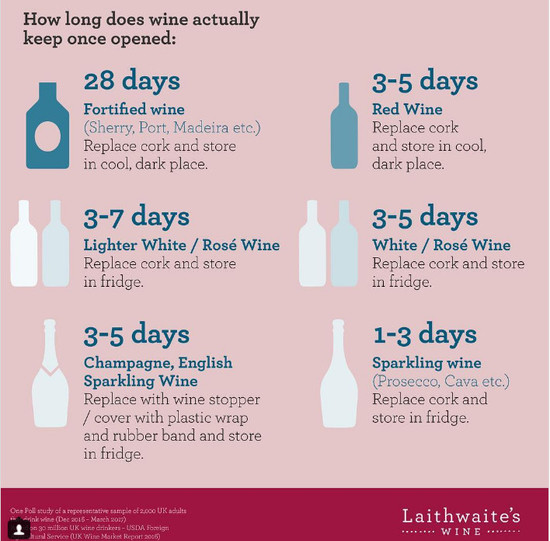 Infographic from Decanter China outlining recommended storage conditions for opened and unopened wine
Credit: www.decanterchina.com
Infographic from Decanter China outlining recommended storage conditions for opened and unopened wine
Credit: www.decanterchina.com
Step-by-Step Tips to Extend Your Open Bottle’s Life
With the right routine, you can add 2–7 days of freshness to almost any opened wine. Follow these expert-backed steps:
- Re-cork tightly immediately after pouring: A common mistake many home wine drinkers make is shoving the original cork back into the bottle loosely, which lets in excess oxygen. If the original cork is damaged or dried out, use a purpose-made airtight wine stopper that creates a tight seal in the bottle neck.
- Refrigerate every opened bottle: This applies to reds, whites, rosés, and sparkling wine alike. The cool temperature slows spoilage reactions by more than half compared to room temperature storage.
- Use a preservation tool suited to your wine:
- Vacuum pumps: Affordable, easy-to-use tools that suck 80–90% of air out of the bottle. They work well for everyday table wines, but can compress delicate fruit aromas in premium light-bodied whites and rosés, so avoid using them for high-end bottles.
- Inert gas (argon) systems: These spray a layer of heavy, inert argon gas over the wine’s surface to displace oxygen without altering the wine’s aroma or flavor. They’re ideal for premium or collectible wines you plan to sip over multiple days.
- Needle-based access systems (e.g. Coravin): For high-end or rare wines, these systems use a thin hollow needle to pierce the cork, inject argon to pour the wine, and seal the cork shut afterward to limit oxygen exposure. Coravin’s official testing confirms this method preserves wine quality for up to 3 months, making it a game-changer for wine collectors who want to sample multiple bottles without committing to finishing each one. For sparkling wines, skip vacuum pumps entirely, as they will remove the CO₂ that creates bubbles. Use a specialized sparkling wine stopper that seals the bottle and retains carbonation instead.
- Transfer leftovers to a smaller container: If you have less than half a bottle left, pour the wine into a clean 375ml half-bottle or airtight glass container to minimize headspace (the air gap at the top of the bottle). Avoid plastic containers for long-term storage, as they can leach unwanted flavors into the wine.
- Store bottles upright: Unlike unopened wine, which is stored on its side to keep the cork moist, opened bottles should be stored upright to minimize the surface area of wine exposed to oxygen in the headspace.
For a visual demo of how to use a vacuum wine preserver correctly, watch this short guide from wine experts: How to Preserve Opened Wine
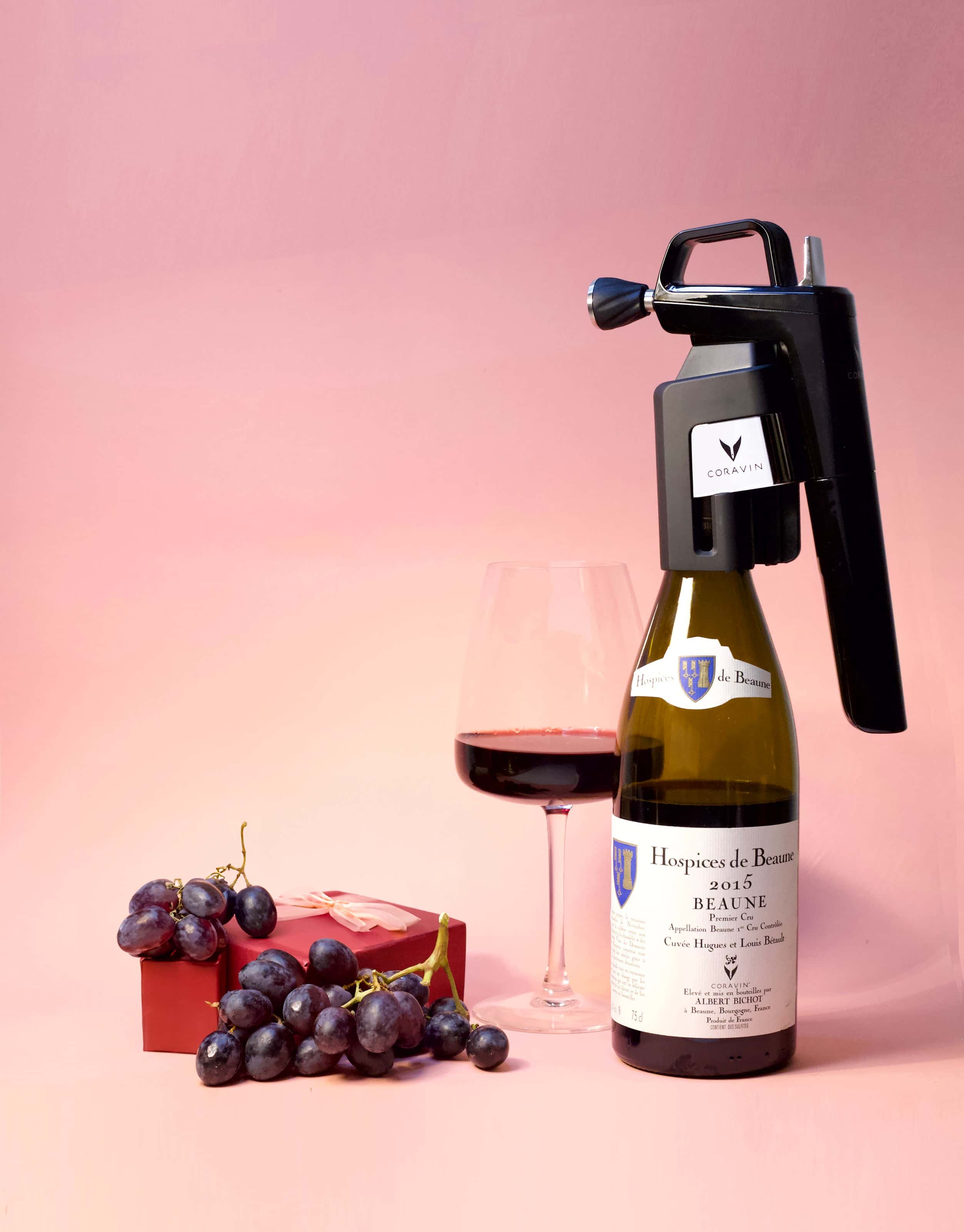 Coravin’s needle-based system lets you pour wine from an open bottle without removing the cork, limiting oxygen exposure
Credit: www.coravin.com
Coravin’s needle-based system lets you pour wine from an open bottle without removing the cork, limiting oxygen exposure
Credit: www.coravin.com
How to Tell If Your Opened Wine Has Gone Bad
Even with perfect storage, all opened wine will eventually spoil. Here’s how to spot spoilage before you take a sip:
- Aroma red flags: A sharp vinegar or nail polish remover smell indicates acetic acid bacteria have overrun the wine. Wet cardboard, mold, or cooked cabbage aromas signal cork taint (TCA) or lightstrike. If the wine’s original bright fruit aromas are completely muted or replaced with harsh, chemical-like smells, it’s heavily oxidized.
- Taste warning signs: A sour, vinegary, or bitter flavor is a clear sign of spoilage. If the wine tastes flat, lifeless, or has no discernible fruit character, it’s past its prime. If a still wine has a faint fizz, that indicates unwanted secondary fermentation from bacterial growth, and it should be discarded.
- Visual cues: Red wines that have turned brown or amber, or white wines that have taken on a murky, cloudy appearance (when they were originally clear) are spoiled. Floating particles or unexpected sediment in a wine that was originally filtered also signal spoilage.
If you’re on the fence, take a small sip and wait 10 seconds: if the aftertaste is harsh or unpleasant, pour the wine out. Note that spoiled wine is not unsafe to consume in small amounts, but it will be unenjoyable, so it’s better repurposed for cooking or poured down the drain.
Common Wine Preservation Myths, Debunked
Misinformation about opened wine storage leads to unnecessary waste and bad sips. We’re setting the record straight on the most common myths:
- Myth: Red wine doesn’t need to be refrigerated after opening. Fact: All opened wine benefits from refrigeration, regardless of type. Cool temperatures slow oxidation and bacterial growth by 50–70% compared to room temperature storage. You can warm a red to your preferred serving temperature by letting it sit out for 15–20 minutes before drinking.
- Myth: Vacuum pumps work for all wine types. Fact: Vacuum pumps can crush delicate aromas in light, aromatic wines like Albariño or Provençal rosé, and they will remove the carbon dioxide from sparkling wines, flattening their bubbles. Use vacuum pumps only for full-bodied reds and whites, and use a sparkling-specific stopper for all carbonated wines.
- Myth: If wine smells and tastes okay, it’s safe to drink even after 2 weeks. Fact: Even if no obvious spoilage signs are present, wine’s flavor compounds degrade significantly after 7–10 days, even with refrigeration. It won’t make you sick, but it will be flat and lifeless, with none of the character it had when first opened.
- Myth: You have to finish opened wine within 3 days or it’s ruined. Fact: With proper storage and preservation tools, full-bodied reds and fortified wines can stay fresh for 2 weeks or longer. The 3-day rule only applies to sparkling wines and light, low-acid whites and rosés stored at room temperature.
Frequently Asked Questions
Can you drink opened wine after 2 weeks?
Opened wine stored in the fridge with a tight seal will retain drinkable quality for 7–14 days for most still wines, and 28+ days for fortified wines like port or sherry. After 2 weeks, most still wines will be heavily oxidized with muted, unpleasant flavors, so they are not enjoyable to drink, though they are not unsafe. Always smell and taste a small amount before consuming older opened wine.
Does wine go bad after opening?
Yes, all wine will eventually spoil after opening due to oxidation and bacterial growth. Timelines vary by wine type: sparkling wines last 1–3 days, light whites and rosés 3–5 days, full-bodied whites and light reds 5–7 days, full-bodied reds 5–14 days, and fortified wines 28+ days when refrigerated with a tight seal.
Can I drink wine 3 months after opening?
Only fortified wines (port, sherry, vermouth) are likely to be drinkable 3 months after opening, if stored in the fridge with a tight seal. All still and sparkling wines will be heavily oxidized and spoiled after 1–2 weeks at most, even with preservation tools. Consuming wine open for 3 months will result in a flat, vinegary taste, so it is not recommended.
How long can I leave wine once opened at room temperature?
At standard room temperature (68–72°F / 20–22°C), opened wine spoils 2–3 times faster than when refrigerated. Sparkling wines last 1 day, light whites and rosés 1–2 days, full-bodied whites and light reds 2–3 days, and full-bodied reds 3–5 days. Fortified wines last 1–2 weeks at room temperature.
Can you freeze opened wine to extend its life?
Yes, freezing is a great option for extending the life of leftover wine, especially for cooking. Pour leftover wine into an ice cube tray, freeze fully, then transfer the cubes to a sealed freezer bag. Frozen wine will keep for 3–6 months, and you can thaw it for drinking or add the cubes directly to sauces, stews, or poaching liquid for a boost of flavor. Freezing may slightly alter the texture of delicate aromatic wines, so it’s best suited for fuller-bodied reds and whites used in cooking.
Final Thoughts
There’s no magic “forever fresh” trick for opened wine, but understanding the factors that drive spoilage and following a few simple steps can help you avoid waste and enjoy every last sip at its best. The core rules are simple: refrigerate every opened bottle, re-cork tightly immediately after pouring, and match your preservation tool to your wine type and budget.
If you only occasionally have leftover wine, a basic airtight stopper and consistent fridge storage will extend most wines’ life by 2–3 days. If you regularly sample premium or collectible wines, an argon gas system or Coravin-style access tool is a worthwhile investment that will pay for itself in saved wine over time. For more tips to cut down on kitchen waste and elevate your wine experience, check out our guide to building a beginner-friendly home wine collection that fits any budget.

I’m Abby Lu, a passionate home cook who loves simplifying everyday meals. At PlugChef.com, I share product reviews and cooking guides to help you find the best tools for your kitchen.
Related posts:
 How to Make a Fruit Basket for a Gift: Easy DIY Guide
 Do You Need a Basket? Essential Guide for Air Fryers
 How to Adjust Syrup Dispenser Pressure: Expert Tips
 Kitchen Colors With White Cabinets And Black Appliances: Bold Ideas
 How to Clean Black Kitchen Appliances: Expert Tips
 Best Color Appliances for Small Kitchen: Stylish & Space-Savvy

