

A clean wood cutting board is safe, long-lasting, and pleasant to use. Wood is porous, so crumbs, juices and bacteria can hide in scratches and pores unless you clean and sanitize it properly. This guide gives clear, practical steps to deeply clean and sterilize wood cutting boards, plus maintenance tips that extend their life. Follow the methods below for safe, kitchen-grade results.
Why and when to sterilize a wood cutting board
Sterilizing removes or kills bacteria, fungi and other pathogens that ordinary washing may miss. You should sterilize:
- After cutting raw poultry, meat, fish, or eggs.
- When the board develops an off-odor or visible stains.
- If mold or dark patches appear.
- Periodically as preventative maintenance (monthly for heavy use).
In practice, a simple hot soapy wash removes most surface food residue; sterilizing is an extra step after higher-risk tasks or when you suspect contamination.
For official food-safety guidance refer to national food-safety resources such as the USDA food-safety guidance for handling raw foods and surface sanitation.
What sterilizing can—and can’t—do
- Effective: Kills many bacteria and reduces viral load on the surface when the correct contact times and agents are used.
- Limited: Deep-set microbes living in cracks or very old damage may survive. If a board has deep gouges, persistent mold, or sloughing wood, replacement is safer than repeated heavy sanitizing.
A common mistake is relying on the dishwasher or prolonged soaking to sanitize wood; both can warp, split, or delaminate the board.
Tools and supplies you’ll need
- Dish soap and hot water
- Clean scrub brush or non-abrasive scouring pad
- Clean microfiber towels or dishcloths
- Distilled white vinegar (5% acetic acid)
- 3% hydrogen peroxide (household)
- Coarse kosher or sea salt and a fresh lemon (halved)
- Baking soda (for stains)
- Food-grade mineral oil or a mineral oil + beeswax finish for maintenance
- Fine-grit sandpaper (180–220) for minor refinishing
If you plan to oil your board after sterilizing, read about proper cutting-board oiling in our short guide on board care (see the oiling guide).
(Internal links: quick anchor text used above — "oiling guide": https://seashell-kudu-262783.hostingersite.com/how-to-oil-cutting-board-bamboo/)
Quick daily sanitizing (after each use)
- Scrape off food scraps with a bench scraper or spatula.
- Wash thoroughly with hot water and dish soap, scrubbing across the grain to dislodge particles.
- Rinse and dry with a clean towel; stand the board upright to air-dry completely.
This routine prevents buildup. Never put a hardwood board in the dishwasher—high heat and water will crack and warp the wood.
Deep sterilize: step-by-step methods
Below are three reliable methods. Use one depending on what you have at home and the board’s condition.
Method A — Vinegar + Hydrogen Peroxide (effective and wood-friendly)
- After washing and rinsing, spray or pour plain white vinegar over the surface and let sit 5–10 minutes. Vinegar is a mild disinfectant that reduces bacteria on contact.
- Wipe off excess vinegar, then apply 3% hydrogen peroxide over the surface (spray bottle or pour). Let the peroxide sit 2–5 minutes—bubbling indicates activity.
- Rinse with hot water and dry thoroughly with a clean towel. Air-dry standing up.
In practice this two-step approach is effective and safe for wood because neither agent leaves harmful residues when rinsed. Do not mix vinegar and hydrogen peroxide in a container—they should be applied sequentially with rinsing in between.
Method B — Salt + Lemon scrub (natural odor and stain control)
- Sprinkle a generous layer of coarse salt over the board.
- Use a lemon half and scrub the salt into the wood, applying pressure and rotating the lemon to act as a natural abrasive and deodorizer.
- Let sit 5–10 minutes, then wipe and rinse. Dry completely.
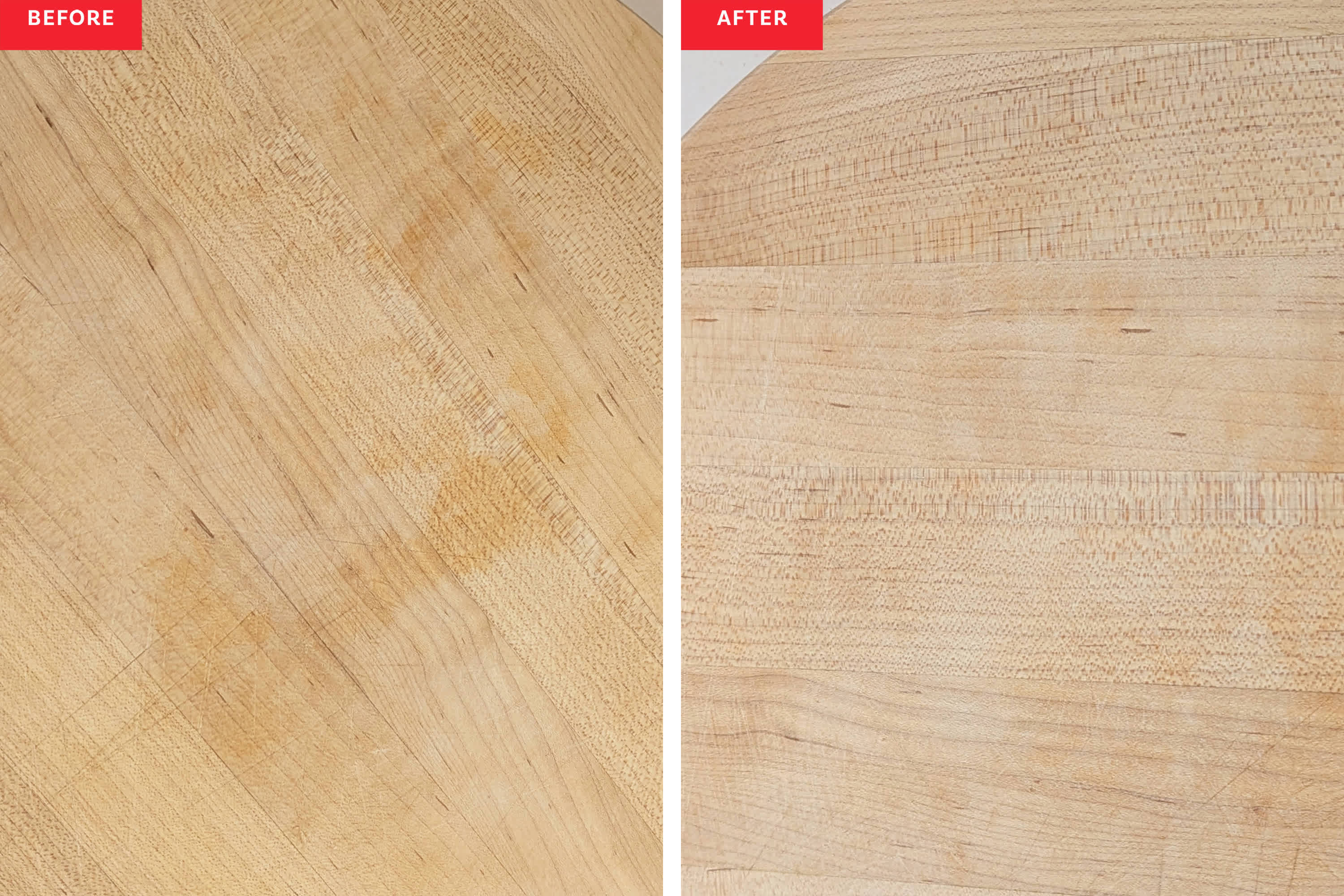
This method is excellent for surface stains and smells. It also slightly brightens the wood without chemicals.
(Place image illustrating lemon + salt scrub)
 Scrubbing a board with coarse salt and lemon to clean and deodorize.
Credit: www.thekitchn.com
Method C — Baking soda paste for stains and grease
- Make a paste of baking soda and a little water.
- Rub into stained areas and let sit 10–15 minutes. Scrub with a brush, rinse and dry.
This is good for grease or tannin stains (like from beets or berries).
Notes on bleach: While dilute chlorine bleach is used for hard non-porous food-contact surfaces, wood absorbs bleach and the chemical can degrade the fibers. Bleach solutions may still be used in emergencies but are not recommended as a regular wood treatment.
For broader official recommendations on surface sanitation and handling raw foods, consult a recognized food-safety resource such as the University extension information.
Removing mold, deep stains, and stubborn odors
- Surface mold: Sand the area lightly with fine-grit sandpaper, then clean and re-oil.
- Deep or recurring mold in cracks: Replace the board. Mold inside the wood structure can be impossible to fully eradicate.
- Persistent odors: Try the vinegar soak (apply, let sit 10 minutes, rinse) followed by lemon + salt scrub. If smell persists after sanding and oiling, replace the board.
When sanding, sand with the grain, clean dust thoroughly, and allow the board to dry fully before oiling.
(Place second image showing baking soda/salt cleaning)
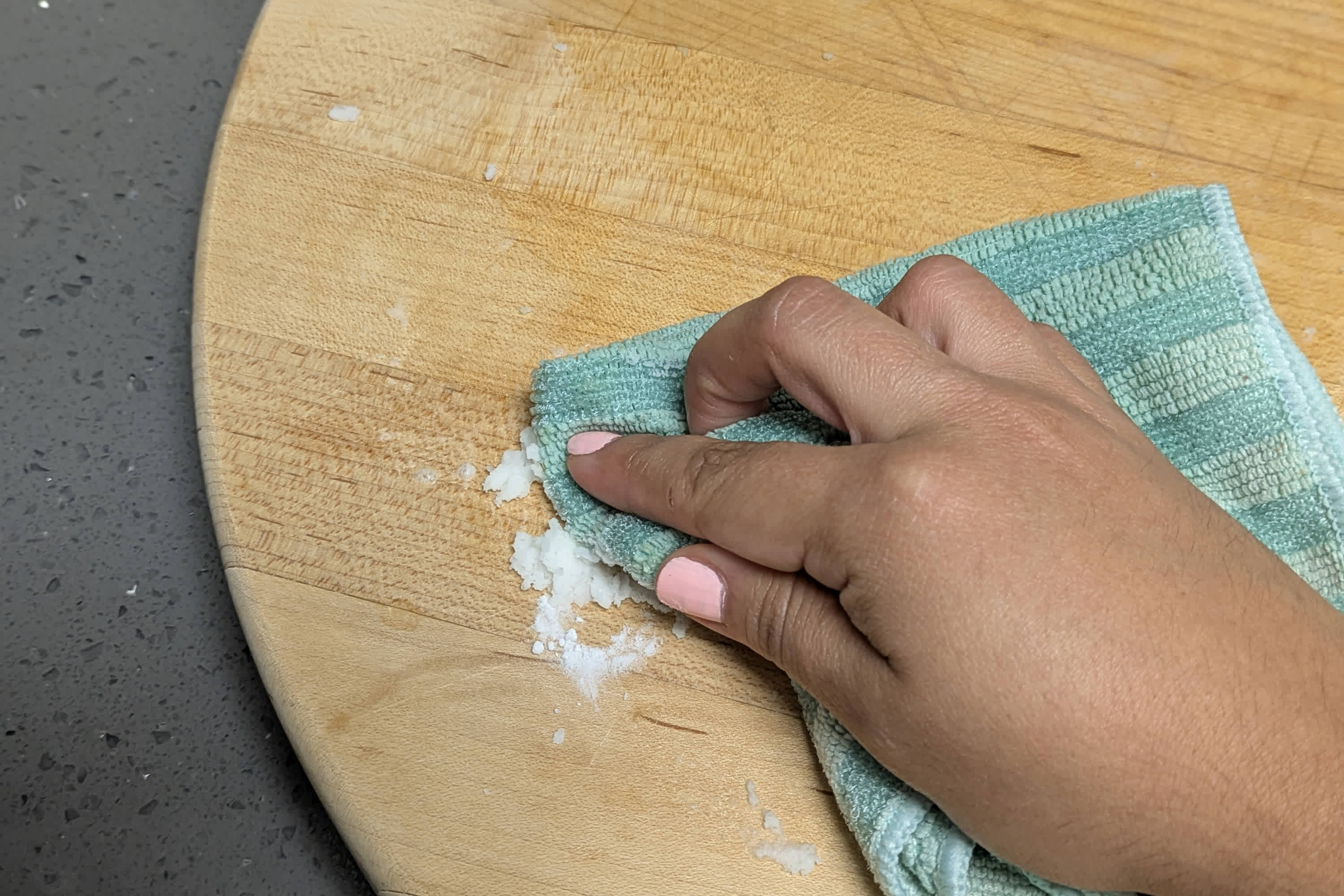 Using baking soda and salt for deeper surface cleaning.
Credit: www.thekitchn.com
Repairing and refinishing a worn board
- Sand the entire board lightly with 180–220 grit sandpaper until smooth and even.
- Wipe away all dust; let the board dry in a ventilated spot.
- Apply several coats of food-grade mineral oil, allowing oil to soak in between coats (15–30 minutes), then wipe off excess. For a more durable finish use a mineral oil + beeswax product.
- Allow the oil to cure overnight before use.
Maintenance tip: oil boards monthly or when the wood looks dry—mineral oil prevents cracking and reduces liquid absorption. Avoid cooking oils (olive, vegetable) because they go rancid and cause sticky surfaces.
For more board-care techniques and products, see our practical guide on applying oil and wax (quick reference).
(Internal link: "guide on applying oil and wax" — https://seashell-kudu-262783.hostingersite.com/how-to-oil-cutting-board-bamboo/)
Storage and everyday care to prevent contamination
- Store boards upright in a dry ventilated spot so both sides dry evenly.
- Use separate boards for raw meat and produce or clearly mark one board for raw proteins.
- Replace boards with deep grooves or knife scars that trap food; if grooves don’t sand out, it’s time for a new board.
- Clean immediately after use—dried-on food is harder to remove and raises contamination risk.
If you use your board for non-food crafts (framing mats or tile backer tasks), keep a dedicated board for those tasks to avoid cross-contamination with food prep. Helpful related instructions: mat-board cutting and tile backer handling.
(Internal links: "mat-board cutting" — https://seashell-kudu-262783.hostingersite.com/how-to-cut-mat-board-for-framing/; "tile backer handling" — https://seashell-kudu-262783.hostingersite.com/how-to-cut-tile-backer-board/)
Do’s and Don’ts (quick reference)
Do:
- Wash with hot, soapy water after each use.
- Deep-sanitize after raw meat or when board smells.
- Dry fully and store upright.
- Oil regularly with food-grade mineral oil.
Don’t:
- Put wood boards in the dishwasher.
- Soak boards for hours.
- Rely on bleach as a regular wood treatment.
- Use vegetable oils for maintenance (they can go rancid).
FAQ
Q: Can I pour boiling water over the board to sanitize?
A: Pouring boiling water briefly can reduce surface microbes, but repetitive hot-water exposure can dry and warp the wood. Use sparingly and always re-oil if the board seems dry.
Q: Is hydrogen peroxide safe on wood?
A: Household 3% hydrogen peroxide is safe for surface sanitizing when used briefly and rinsed off. It’s a good option after raw meat, used sequentially after vinegar with rinsing between steps.
Q: How often should I sanitize deeply?
A: Deep sanitizing after any raw meat or fish contact is recommended. For routine protection, aim for a monthly deep clean if you use the board frequently.
Q: When should I replace a wood cutting board?
A: Replace if the board has deep, un-sandable grooves, persistent mold inside the wood, large cracks, or if the surface repeatedly stains and smells after proper cleaning.
Conclusion
Sterilizing a wood cutting board is straightforward: clean first, choose an appropriate sanitizing method (vinegar + hydrogen peroxide, salt + lemon, or baking soda), rinse, and dry thoroughly. Combine regular maintenance—sanding, oiling with food-grade mineral oil, and correct storage—with prompt cleaning after raw protein to keep your board safe and long-lived. If a board shows deep damage or mold inside the wood, replacement is the safest choice.
Ready to refresh your board? Start with a warm soapy scrub now, then choose the deep-clean method above that fits your situation.

I’m Abby Lu, a passionate home cook who loves simplifying everyday meals. At PlugChef.com, I share product reviews and cooking guides to help you find the best tools for your kitchen.
Related posts:
 How to Fix a Leak under the Kitchen Sink: Quick Guide
Knee Space under Kitchen Island: Maximize Comfort & Style
Studor Vent under Kitchen Sink: Optimize Plumbing Efficiency
How to Fix a Leak under the Kitchen Sink: Quick Guide
Knee Space under Kitchen Island: Maximize Comfort & Style
Studor Vent under Kitchen Sink: Optimize Plumbing Efficiency
 How to Replace Shut off Valve under Kitchen Sink: Easy Steps
Where is the Water Shut off Valve under Kitchen Sink: Find It Fast
How to Replace Shut off Valve under Kitchen Sink: Easy Steps
Where is the Water Shut off Valve under Kitchen Sink: Find It Fast
 How to Steam Clean Oven: Easy Steps for a Sparkling Clean

