
Plastic cutting boards are the unsung workhorses of most home kitchens, handling everything from raw chicken prep to vegetable chopping for weeknight stir-fries. But without proper care, they can quickly become breeding grounds for harmful bacteria like E. coli and Salmonella, accumulate stubborn stains from tomato sauce or turmeric, or warp from exposure to high heat. Keeping your board clean isn’t just about aesthetics — it’s a critical step for food safety, and it pairs with other basic child safety cabinet locks to keep your whole kitchen safe for every member of the household. With the right routine, you can remove tough stains, eliminate germs, and keep your board looking like new for years, no harsh chemicals or excessive elbow grease required.
 Proper scrubbing with mild soap is the first step in daily plastic cutting board care.
Alt text: Woman scrubbing a white plastic cutting board with a non-abrasive sponge
Proper scrubbing with mild soap is the first step in daily plastic cutting board care.
Alt text: Woman scrubbing a white plastic cutting board with a non-abrasive sponge
Why Proper Plastic Cutting Board Care Is Non-Negotiable
Unlike wooden cutting boards, which have natural antimicrobial properties, plastic boards are non-porous at first but develop tiny scratches and grooves over time from knife cuts. These grooves hide food particles, bacteria, and moisture that regular rinsing can’t remove. Per guidelines from the USDA Food Safety and Inspection Service, improperly cleaned cutting boards are a common source of cross-contamination in home kitchens, leading to preventable foodborne illness. Beyond health risks, stained or warped boards can also leach microplastics into food when they become degraded, a growing concern for home cooks in 2026. A consistent cleaning routine extends your board’s lifespan, keeps your food safe, and ensures your prep space stays hygienic for every meal.
What You’ll Need for a Flawless Clean
You don’t need fancy products to get sparkling results — most supplies are already in your kitchen. For daily cleaning, gather:
- Warm (not scalding) running water
- Mild, fragrance-free dish soap
- A non-abrasive sponge or soft-bristled brush (avoid steel wool, which scratches plastic)
- Clean microfiber cloths or paper towels
- White distilled vinegar
- Baking soda
- Coarse salt (optional, for extra stain-lifting power)
Avoid harsh antibacterial soaps, which the FDA notes are no more effective at removing bacteria from food contact surfaces than regular soap, and can break down plastic over time. For deep cleaning, you may also use a small amount of unscented household bleach for occasional sanitizing, as outlined later.
Step-by-Step Daily Cleaning Routine (The Best Way to Clean Plastic Cutting Boards for Regular Use)
This routine takes 5 minutes or less and will keep your board in great shape between deep cleans.
Step 1: Rinse Immediately After Use
As soon as you finish prepping, hold the board under warm running water to flush loose food particles, especially raw meat juices, sticky sauces, or produce residue. A common mistake many home cooks make is letting food dry on the board before cleaning, which makes stains and bacteria far harder to remove later. Scrub both the top and underside of the board to catch any drips that may have seeped through.
Step 2: Scrub With Mild Dish Soap
Apply a small drop of mild dish soap to a non-abrasive sponge or brush, then scrub the entire surface of the board in circular motions for 15–20 seconds. Pay extra attention to the edges and any visible scratches, where food particles tend to accumulate. Avoid using too much soap, as excess residue can leave a bitter taste on food if not rinsed fully.
Step 3: Sanitize With a Vinegar Solution
Mix equal parts white distilled vinegar and warm water in a spray bottle, then spray or pour the solution over the entire board. Let it sit for 2–3 minutes — this is enough time for the acetic acid in vinegar to kill 99% of common foodborne bacteria like E. coli and Salmonella, and neutralize strong odors from garlic, onion, or fish. Rinse thoroughly under running water to remove any vinegar aftertaste.
Step 4: Spot-Treat Stubborn Stains
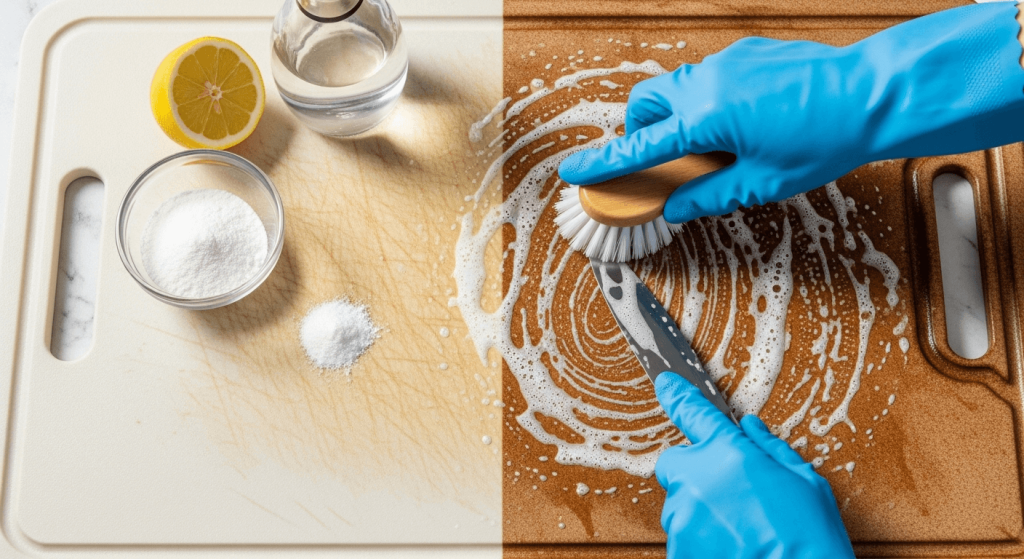
For set-in stains from tomatoes, turmeric, berries, or soy sauce, make a thick paste of 2 parts baking soda and 1 part warm water. Spread the paste over the stain, let it sit for 5–10 minutes, then scrub gently with a soft brush. For extra tough stains, add a pinch of coarse salt to the paste for gentle abrasion, or rub with a cut lemon before rinsing.
Step 5: Dry and Store Correctly
Pat the board dry with a clean microfiber cloth or paper towels, then stand it upright in a well-ventilated area to air dry fully before storing. Never stack wet boards, as trapped moisture leads to mold, mildew, and bacterial growth even if the board looks clean. If you store boards in a drawer, leave a small gap between them for air circulation.
 This step-by-step process removes stains, kills bacteria, and eliminates odors without damaging plastic.
Alt text: Step-by-step plastic cutting board cleaning with vinegar and baking soda
This step-by-step process removes stains, kills bacteria, and eliminates odors without damaging plastic.
Alt text: Step-by-step plastic cutting board cleaning with vinegar and baking soda
Weekly Deep Cleaning for Extended Board Lifespan
For boards used daily to prep raw meat, poultry, or seafood, a weekly deep clean will remove embedded grime that daily rinsing misses. For produce-only boards, a monthly deep clean is sufficient. To deep clean:
- Follow the daily cleaning steps above first.
- For extra sanitizing, mix 1 tablespoon of unscented household bleach with 1 gallon of cool water. Wipe the entire board with the solution, let it sit for 1 minute, then rinse thoroughly with warm water. Note that bleach can discolor light-colored plastic over time, so use this step sparingly.
- For boards with heavy staining, leave a thick layer of baking soda paste on the board overnight before scrubbing and rinsing.
Most high-density polyethylene (HDPE) plastic cutting boards are top-rack dishwasher safe, but always check your manufacturer’s care label first. Thin, flexible boards are prone to warping in high heat, so hand washing is recommended for those. If you do run your board through the dishwasher, place it on the top rack away from the heating element to reduce warping risk. For tough, stuck-on residue during dishwasher cycles, use a professional-grade cleaning brushes to scrub the board before loading it.
Common Mistakes to Avoid When Cleaning Plastic Cutting Boards
Even well-meaning home cooks can damage their boards or leave bacteria behind with these common errors:
- Using boiling water: Scalding temperatures warp thin plastic boards and can cause microplastic leaching into food. Stick to warm water for all cleaning steps.
- Using abrasive scrubbers: Steel wool or harsh scouring pads scratch the plastic surface, creating deep grooves where bacteria can hide and stains can set. Stick to soft sponges or non-abrasive brushes like sturdy kitchen scrub brushes to avoid damage.
- Storing while damp: Even slightly damp boards can develop mold and mildew within 24 hours if stored in a closed, dark space. Always air dry fully before putting away.
- Ignoring deep cuts: If your board has grooves deeper than 1/8 inch, bacteria can no longer be fully removed, no matter how well you clean it. Replace boards with deep, widespread scratches to avoid cross-contamination.
- Using harsh chemical cleaners: Undiluted bleach, ammonia, or oven cleaner can degrade plastic and leave toxic residues on food contact surfaces. Stick to the mild, food-safe cleaning products outlined above.
Long-Term Tips to Keep Your Board Looking Like New
With proper care, a high-quality plastic cutting board can last 5–10 years or longer:
- Use separate boards for raw proteins and ready-to-eat foods like produce, bread, and cheese for charcuterie board prep tips to reduce cross-contamination and prevent staining from strong-colored foods.
- Avoid cutting extremely hard items like frozen meat, bones, or nuts on plastic boards, as these cause deep, irreversible scratches.
- If your board develops minor surface discoloration, leave a layer of baking soda paste on it overnight before scrubbing for extra stain-lifting power.
- For boards that are still in excellent condition after years of use, extend their lifespan further with custom board engraving to mark which foods are safe to prep on each side, reducing cross-contamination risk even more.
 Store plastic cutting boards upright in a well-ventilated area to prevent moisture buildup and warping.
Alt text: Stack of colorful plastic cutting boards stored upright in a kitchen cabinet
Store plastic cutting boards upright in a well-ventilated area to prevent moisture buildup and warping.
Alt text: Stack of colorful plastic cutting boards stored upright in a kitchen cabinet
Frequently Asked Questions
How often should I clean my plastic cutting board?
Clean your board with soap and water after every single use, even if it only came into contact with produce. For boards used to prep raw meat, poultry, or seafood, follow up with a vinegar sanitizing step after each use to kill harmful pathogens. Deep clean weekly if used for raw proteins, or monthly for produce-only boards.
Can I put my plastic cutting board in the dishwasher?
Most high-density polyethylene (HDPE) plastic cutting boards are top-rack dishwasher safe, but check your manufacturer’s care label first. Thin, flexible boards are prone to warping in high heat, so hand washing is recommended for those. If you do run it through the dishwasher, place it on the top rack away from the heating element to reduce warping risk.
Is bleach safe to use on plastic cutting boards?
Yes, a properly diluted bleach solution (1 tablespoon unscented household bleach per 1 gallon of cool water) is safe for occasional sanitizing of plastic boards. Apply the solution to the entire surface, let it sit for 1 minute, then rinse thoroughly with warm water to remove all residue. Avoid using bleach regularly, as it can discolor and degrade plastic over time.
What’s the best way to remove stubborn stains from plastic cutting boards?
For set-in tomato, turmeric, or soy sauce stains, make a thick paste of baking soda and warm water, spread it over the stain, and let it sit for at least 30 minutes (overnight for very dark stains) before scrubbing with a soft brush and rinsing. For extra lifting power, add a pinch of salt to the paste or rub with a cut lemon before rinsing.
How do I get rid of lingering odors from garlic, onion, or fish?
After washing your board, rub the entire surface with half a cut lemon, sprinkle with coarse salt, and let sit for 10 minutes. Rinse thoroughly and dry. The acid in the lemon and abrasive salt neutralize odor-causing compounds trapped in the plastic’s surface.
Final Thoughts
The best way to clean plastic cutting boards doesn’t require harsh chemicals or hours of scrubbing — a consistent routine of daily soap-and-water cleaning, weekly sanitizing, and proper storage will keep your board free of stains, odors, and harmful bacteria for years. By avoiding common cleaning mistakes and following the tips above, you’ll extend your board’s lifespan, protect your family from foodborne illness, and keep your kitchen prep space sparkling with minimal effort. For more kitchen safety and maintenance tips, browse our full library of home care guides to keep every part of your kitchen sparkling and safe.

I’m Abby Lu, a passionate home cook who loves simplifying everyday meals. At PlugChef.com, I share product reviews and cooking guides to help you find the best tools for your kitchen.
Related posts:
 How to Get Stains Out of Cutting Board: Easy & Effective Tips
 How to Finish Wood Cutting Board: Expert Tips for a Perfect Seal
 Dried Flower Bud in a Spice Rack: Transform Your Cooking
 Recipe for Oven Roasted Shrimp: Easy, Quick & Delicious Delight
 Lemon Juice to Whiten Clothes: Natural Whitening Hacks That Work
 Tequila Sunrise With Cranberry Juice: Refreshing Twist to Classic Cocktail

