
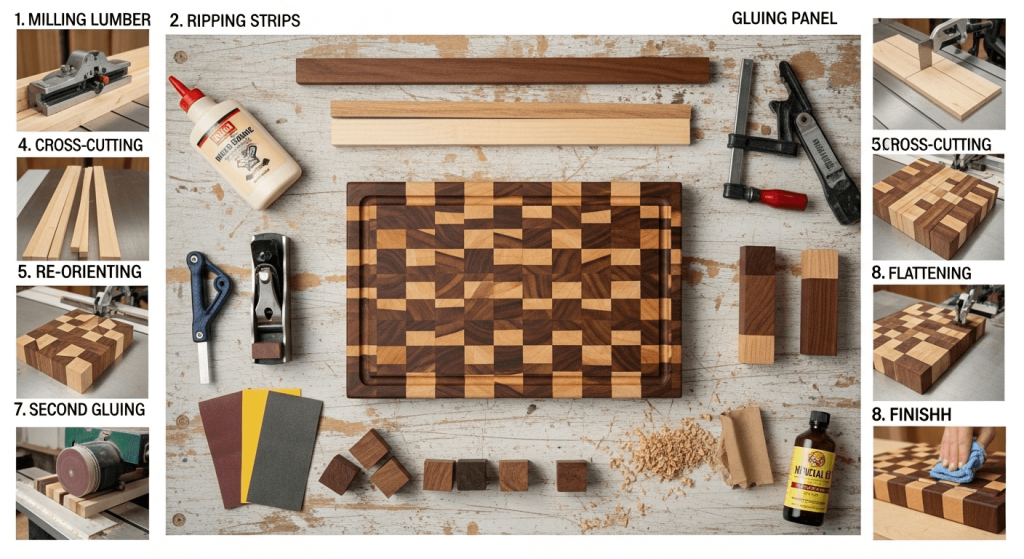
If you’re a home cook who values both knife longevity and a durable, beautiful prep surface, building your own end grain cutting board is one of the most rewarding DIY projects you can tackle. Unlike standard face grain boards, end grain cutting boards are constructed from the cut ends of wood strips, creating a surface that is gentle on knife edges, resistant to deep gouges, and even develops a rich, unique patina with years of use. This ultimate guide walks you through every step of the process, from selecting the right wood and tools to troubleshooting common build issues and maintaining your board for decades of use, no advanced woodworking experience required.
Why Build an End Grain Cutting Board?
End grain cutting boards stand apart from face grain and edge grain options for three key reasons that make them worth the extra build effort:
- Superior knife edge retention: The end grain structure is made up of thousands of individual wood fibers that separate slightly when cut, then spring back into place, so they don’t dull knife blades the way hard face grain surfaces do. In practice, home cooks report their knives stay sharp 2 to 3 times longer when using an end grain board for daily prep.
- Self-healing durability: Small knife cuts and gouges close up on their own as the wood fibers rebound, so the surface stays smooth even after years of heavy use. Face grain boards, by contrast, develop permanent deep scratches that harbor bacteria and make prep messy.
- Natural hygiene: As noted in USDA cutting board safety guidelines, properly maintained hardwood cutting boards are more hygienic than plastic alternatives, as wood’s porous structure traps and neutralizes bacteria rather than harboring them in deep, unreachable scratches.
A common trade-off to note is that end grain boards require more regular oiling than face grain boards, as the porous end fibers absorb moisture more readily. With consistent maintenance, however, a well-built end grain board will easily outlast cheaper mass-produced options, often lasting 20 years or more.
Materials: Choosing the Right Wood & Supplies
Not all materials are suitable for food-safe, durable end grain boards. Choosing the right lumber and supplies will prevent warping, cracking, and safety issues down the line.
Best Hardwoods for End Grain Boards
Softwoods like pine, fir, and cedar have loose, open fibers that dent easily under knife pressure, compress over time, and absorb excess moisture, leading to warping and cracking. Always choose closed-grain hardwoods with a Janka hardness rating above 1000 lbf for maximum durability. Top options include:
- Hard maple: The industry standard for commercial cutting boards, hard maple is lightweight, extremely durable, and has a light, neutral color that works with any kitchen decor. It resists staining and is widely available at most lumber yards.
- Black walnut: Slightly softer than hard maple but still highly durable, walnut has a rich dark brown tone that adds a premium look to any kitchen. It’s a popular choice for accent strips in patterned boards.
- Cherry: A warm, reddish hardwood that develops a deeper, richer patina with age and use, cherry is slightly softer than maple but still long-lasting for home use.
Avoid wood with knots, cracks, warping, or visible insect damage, and never use pressure-treated lumber, wood with toxic finishes, or exotic hardwoods with allergenic sap (like teak) for food-contact surfaces. For a standard 18×24 inch cutting board, you will need approximately 6 to 8 board feet of lumber, accounting for waste from cutting and trimming. For optimal durability, most woodworkers recommend an ideal board thickness of 1.5 to 2 inches, which resists warping and deep gouges over years of heavy use.
Essential Supplies
- Food-safe PVA wood glue (Titebond III is the most popular option, as it remains flexible after curing to absorb impact without cracking)
- Bar clamps or pipe clamps (minimum 24 inches long, enough to span the width of your board; you will need at least 4 for a standard size)
- Food-grade mineral oil or board butter (a mix of mineral oil and beeswax for extra water resistance)
- Sandpaper in 80, 120, and 220 grit (or higher for a smoother finish)
- Lint-free cloths or natural bristle brushes for applying oil
- Safety gear: safety glasses, hearing protection, and a dust mask
Tools: Must-Haves vs Nice-to-Haves
You don’t need a full professional woodworking shop to build a high-quality end grain cutting board, but having the right tools will make the process faster and easier.
Must-Have Tools
- Saw for straight cuts: A table saw is ideal for making consistent, square cuts, but a circular saw with a straight edge guide works well for beginners on a budget. A miter saw is useful for trimming edges to perfect 90-degree angles.
- Clamps: At least 4 bar clamps or pipe clamps, 24 inches or longer, to hold your glue-ups flat and tight during curing.
- Sander: A random orbit sander makes quick work of flattening and smoothing the board, but a hand sanding block works for smaller projects or if you don’t have power tools.
- Square: A carpenter’s square to ensure all cuts are perfectly square and the final board is rectangular.
Nice-to-Have Tools
- Planer: A benchtop planer makes flattening the glued-up panel far faster than sanding, but you can achieve a flat surface with a hand planer or careful sanding if you don’t own one.
- Router with round-over bit: Adds a smooth, splinter-free edge to the board that feels more comfortable to hold and looks more polished.
- Moisture meter: Helps you confirm your lumber is properly dried (below 8% moisture content) before cutting, to prevent warping after assembly, per University of Minnesota Extension wood drying best practices.
Pre-Build Prep: Avoid Costly Mistakes
Skipping prep work is the most common cause of warped, uneven end grain boards, so spend 10 minutes on these steps before you make your first cut:
- Acclimate your lumber: Let your lumber sit in your workshop for at least 7 days before cutting, to let it adjust to the local temperature and humidity. Building with unacclimated lumber will almost always lead to warping after assembly as the wood shrinks or expands.
- Mill to consistent thickness: Plane or sand all your lumber to the same thickness before cutting strips, usually 1.5 to 2 inches for a standard durable board. Thinner boards are prone to warping, while thicker boards are heavier and harder to handle.
- Dry fit your strips: Before applying any glue, lay out your cut strips in the pattern you want (random, striped, checkerboard, etc.) to check for gaps, color variation, and grain alignment. Mark each strip with a pencil so you can keep its orientation consistent when you flip it for the end grain assembly. This step prevents frustrating gaps and uneven surfaces after gluing.
Step-by-Step Build Guide
Step 1: Cut Initial Wood Strips
Cut your acclimated lumber into strips 1 to 1.5 inches wide, using a table saw or circular saw with a straight edge guide to ensure perfectly straight cuts. Dull saw blades will cause tear-out and rough edges, so use a sharp carbide-tipped blade designed for hardwoods. Cut enough strips to make your desired board width: for an 18-inch wide board, you will need 12 to 18 strips depending on their width. A common beginner mistake is cutting strips that are too narrow, which leads to a weak board that splits easily over time; stick to 1 to 1.5 inch widths for maximum durability.
Step 2: First Glue-Up (Face Grain Assembly)
Lay your cut strips side by side on a flat work surface, with the face grain (the wide, smooth side of the lumber) facing up in the pattern you selected during dry fitting. Apply a thin, even layer of food-safe wood glue to the edge of each strip, taking care not to overapply—excess glue will squeeze out during clamping and be difficult to sand away later. Align the strips carefully, then place cauls (flat scrap wood pieces) on the top and bottom of the assembly to keep it perfectly flat during clamping. Clamp the panel evenly, starting from the center of the board and working outwards to avoid warping, tightening each clamp just until glue starts to squeeze out. Wipe away any excess glue immediately with a damp cloth, then let the glue cure for a full 24 hours in a well-ventilated, temperature-controlled space (high humidity or cold temperatures can extend cure time and weaken the joint). Once cured, remove the clamps and trim the panel to a clean, square shape with a miter saw, scraping away any dried glue residue with a card scraper first.
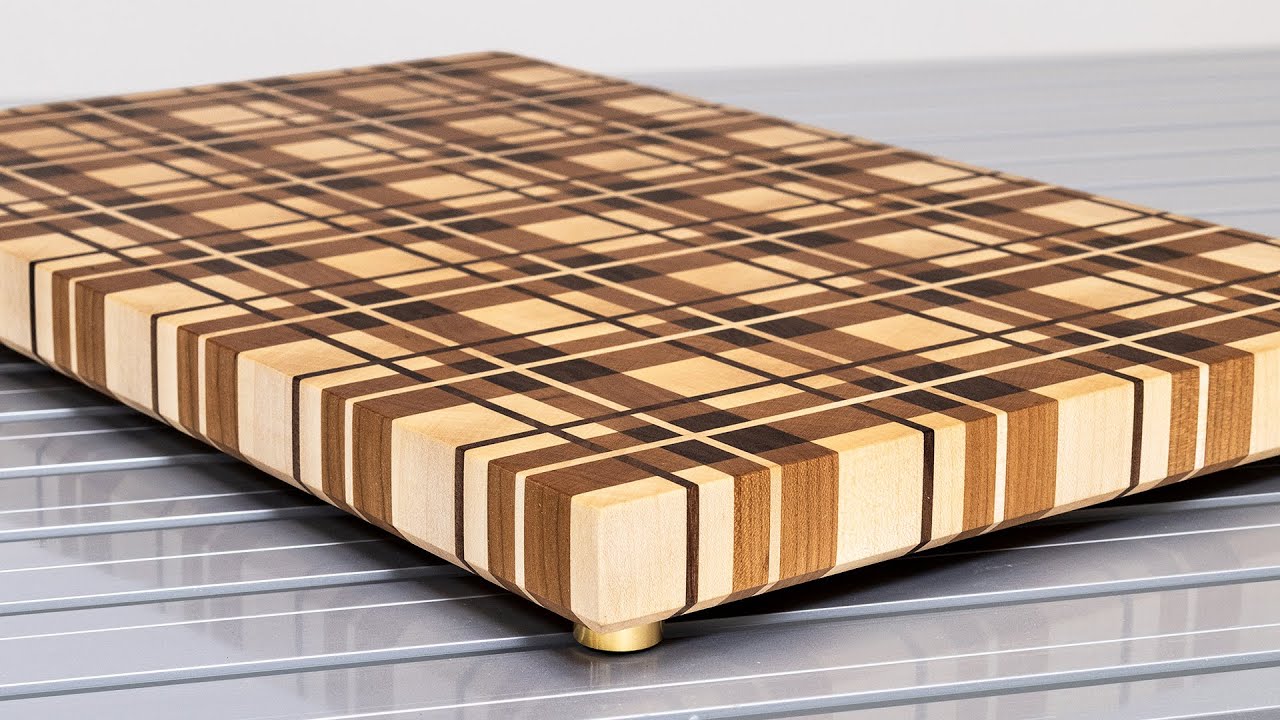 Clamped glue-up of end grain strips after initial assembly, left to cure for 24 hours.
Image source: www.youtube.com
Clamped glue-up of end grain strips after initial assembly, left to cure for 24 hours.
Image source: www.youtube.com
Step 3: Cut for End Grain Orientation
Now you have a solid face grain panel, cut it into new strips that match the width of your original strips (1 to 1.5 inches). The key step for creating an end grain board is flipping each strip 90 degrees, so the cut end of the original lumber (the end grain) is facing up. This orientation is what gives end grain boards their signature blocky look, self-healing property, and knife-friendly surface. Dry fit these flipped strips again to confirm your pattern looks as expected, and make sure all strips are oriented the same way to avoid uneven grain across the board.
Step 4: Second Glue-Up (End Grain Core Assembly)
Repeat the gluing and clamping process from Step 2 with your flipped end grain strips. End grain is more porous than face grain, so it will absorb more glue: apply a slightly thicker, even layer to each edge to ensure a strong bond. Use cauls again to keep the assembly flat, clamp evenly from the center out, and wipe away excess glue immediately. Let the glue cure for a full 24 hours before removing clamps. Unlike the first glue-up, avoid planing or sanding this panel until the glue is fully cured, as end grain is more prone to tear-out if you work it too soon.
Step 5: Flatten, Square & Sand the Board
Once the second glue-up is fully cured, remove the clamps. The board will likely have small dried glue blobs and minor unevenness:
- First, use a card scraper or putty knife to remove all large dried glue residue.
- If you have a planer, run the board through it repeatedly, taking very shallow passes (no more than 1/32 inch at a time) to avoid tear-out on the delicate end grain. If you don’t have a planer, use a hand planer or 80 grit sandpaper on a sanding block to flatten the surface, working in small sections to avoid low spots.
- Use a carpenter’s square to check that all corners are 90 degrees, then trim any uneven edges with a miter saw or circular saw to get a perfectly rectangular board. Sand the edges smooth at this stage, using the same grit progression as the surface.
- Sand the entire board surface, starting with 80 grit sandpaper to remove planer marks and glue residue, then moving to 120 grit to smooth out scratches from the 80 grit, and finishing with 220 grit for a smooth, touchable surface. Always sand with the grain, not across it, to avoid scratching the end grain. For an even smoother finish, you can step up to 320 grit, but 220 is sufficient for a functional cutting board. Wipe away all sanding dust with a tack cloth or damp rag before moving to finishing—any leftover dust will get trapped in oil and create a rough, uneven finish.
 Fully sanded end grain board with smooth, even surface prior to applying food-safe finish.
Image source: m.youtube.com
Fully sanded end grain board with smooth, even surface prior to applying food-safe finish.
Image source: m.youtube.com
Step 6: Apply the Food-Safe Finish
The final step is sealing the board with a food-safe finish to protect it from moisture, stains, and bacterial growth. Never use cooking oils like olive or vegetable oil, as they go rancid within weeks, leaving an off taste and smell on food. Stick to food-grade mineral oil, or a pre-mixed board butter (mineral oil + beeswax) for extra water resistance. For the most effective food-safe mineral oil application, apply thin, even coats and let each soak fully before wiping off excess.
- Apply a thick, even layer of oil to the entire board, including the top surface, all four edges, and the underside (skipping the underside can cause it to warp from uneven moisture absorption). Use a lint-free cloth or natural bristle brush to work the oil into the porous end grain.
- Let the oil soak in for 2 to 4 hours, then wipe off any excess with a clean, dry cloth.
- For the first few coats, repeat this process once a day for 3 to 5 days, as end grain absorbs oil very quickly when new. For ongoing maintenance, reapply a thin coat of oil every 1 to 2 months, or whenever the board looks dry or feels rough to the touch. Always use food-safe wood preparation practices for all finishing steps to avoid food contamination.
Troubleshooting Common Build Issues
Even experienced woodworkers run into occasional problems when building end grain boards; here are the most common issues and how to fix them:
- Warped board after glue-up: Caused by uneven clamping, unacclimated lumber, or over-tightening clamps. Fix: Use cauls to keep the assembly flat during clamping, tighten clamps evenly from the center out, and always acclimate lumber for at least 7 days before cutting. Minor warping can be fixed by planing or sanding the board flat after curing.
- Difficult-to-remove glue squeeze-out: Caused by overapplying glue or waiting too long to wipe excess. Fix: Apply only a thin layer of glue to each edge, and wipe away any squeeze-out immediately with a damp cloth before it dries. Dried glue can be removed with a card scraper or 80 grit sandpaper.
- End grain splintering when sanding: Caused by sanding across the grain or using too coarse grit. Fix: Always sand with the grain, and start with 120 grit instead of 80 if your end grain is particularly fragile. Use a sanding block to apply even pressure to avoid uneven spots.
- Board cracks after use: Caused by insufficient oiling, soaking in water, or extreme temperature changes. Fix: Reapply oil regularly to maintain the water-resistant seal, never soak the board in water, and avoid leaving it in direct sunlight or near heat sources.
Long-Term Care & Maintenance
End grain cutting boards are extremely low-maintenance if you follow a simple care routine, and will last for decades with proper upkeep:
- Daily care: Hand wash the board with warm, soapy water after each use, never soak it in water, and never put it in the dishwasher (the high heat and harsh detergents will crack the wood and strip the finish). Dry the board immediately with a clean towel, then stand it upright to air dry completely before storing.
- Monthly maintenance: Apply a thin, even coat of food-grade mineral oil or board butter to replenish the finish and prevent the wood from drying out. If you use the board daily, you may need to oil it every 2 weeks instead of monthly.
- Stain removal: If you notice stubborn stains from beets, berries, or other colorful foods, avoid harsh bleach or abrasive cleaners, which can damage the wood and leave toxic residue. Instead, scrub the stain with a paste of baking soda and water, then rinse thoroughly and reapply oil. If you notice stubborn fruit or vegetable stains, follow proven stain removal tips using baking soda and gentle scrubbing to avoid damaging the wood surface.
- Damage prevention: Avoid cutting very hard foods like frozen items, bones, or shellfish on your end grain board, as these can cause deep gouges that are impossible to repair. If the board does develop deep cuts, you can sand them out and re-oil the board to restore its surface.
Frequently Asked Questions
What type of wood is best for an end grain cutting board?
Hard, closed-grain hardwoods with a Janka hardness rating above 1000 lbf are the only suitable choice for end grain cutting boards, as their dense fiber structure resists moisture absorption, knife gouges, and bacterial growth. Top picks include hard maple (the industry standard for commercial boards, lightweight and extremely durable), black walnut (rich dark color, slightly softer than maple but still long-lasting, great for decorative contrast strips), and cherry (warm reddish tone that develops a deeper patina with age and use). Avoid softwoods like pine, fir, or cedar, as their loose fibers dent easily, compress under repeated cutting, and absorb excess moisture, leading to warping and cracking. Also steer clear of pressure-treated lumber, wood with toxic finishes, or exotic hardwoods with allergenic sap like teak for food-contact surfaces.
How long does it take to make an end grain cutting board?
Total build time depends on your skill level and tool access, but most beginners complete the project in 2 to 3 days, with most of that time spent waiting for glue to cure. The active work (cutting, gluing, sanding, finishing) takes 4 to 6 hours for a standard 18×24 inch board. If you have a planer and power sander, you can cut that down to 3 to 4 hours of active work. Rushing glue cure times is a common mistake that leads to weak joints and warping, so always wait the full 24 hours per glue-up before moving to the next step.
Do I need special tools to build an end grain board?
You do not need professional-grade woodworking tools to build a high-quality end grain cutting board. The only must-have tools are a saw capable of making straight, square cuts (a table saw is ideal, but a circular saw with a straight edge guide works for beginners), clamps (bar clamps or pipe clamps at least 24 inches long, enough to span the width of your board), and a sander (a random orbit sander works best, but a hand sanding block works for smaller boards). A planer is a nice-to-have for flattening the board quickly, but you can achieve a flat surface with a hand planer or careful sanding if you don’t own one. A router with a round-over bit is optional, but it adds a smooth, splinter-free edge that feels more comfortable to hold.
How should I glue the wood pieces for the board?
Always use a water-resistant, food-safe PVA wood glue like Titebond III, which is non-toxic after curing and designed for high-moisture applications like cutting boards. Apply a thin, even layer of glue to the edge of each strip, avoiding excess squeeze-out which can be difficult to sand away later. Clamp the assembly evenly, starting from the center of the board and working outwards to avoid warping, and use cauls (flat scrap wood pieces) on the top and bottom of the glued panel to keep the surface perfectly flat during clamping. Wipe away any excess glue that squeezes out immediately with a damp cloth, before it dries, to avoid rough spots. Let the glue cure for a full 24 hours in a well-ventilated, temperature-controlled space, as high humidity or cold temperatures can extend cure time and weaken the joint.
Can I use my end grain cutting board for raw meat?
Yes, as long as the board is properly maintained and finished with food-safe oil. The dense end grain structure resists bacterial absorption far better than plastic boards, which develop deep scratches that harbor harmful bacteria like Salmonella and E. coli. Always wash the board thoroughly with warm, soapy water after cutting raw meat, and reapply oil regularly to maintain the water-resistant seal. Avoid cutting raw meat on boards with deep gouges or cracks, as these can trap bacteria even in wood.
How long does a well-made end grain cutting board last?
A properly built and maintained end grain cutting board can last 20 to 30 years or more, making it a true heirloom piece. Unlike face grain boards that develop deep, irreparable gouges over time, end grain's self-healing property means small knife marks close up on their own as the wood fibers rebound. The only maintenance required is regular oiling every 1 to 2 months and hand washing, with no dishwasher use. Many vintage end grain boards from the mid-20th century are still in daily use today, a testament to their durability.
Conclusion
Building your own end grain cutting board is a satisfying, low-cost DIY project that yields a durable, knife-friendly kitchen heirloom that will last for decades with minimal maintenance. While it requires a few extra steps and a longer cure time than a face grain board, the superior durability, gentle surface for your knives, and unique custom look make it well worth the effort for home cooks of all skill levels. By following the steps in this guide, selecting high-quality hardwoods, and sticking to a simple care routine, you’ll have a beautiful, functional board that will be a staple in your kitchen for years to come.
Ready to tackle more kitchen DIY projects? Explore our guides to building custom charcuterie boards, organizing your kitchen drawers for easier meal prep, or selecting the best small appliances for your home. If you want to display your custom board when not in use, check out our guide on hanging cutting boards as kitchen decor for simple, damage-free mounting solutions.

I’m Abby Lu, a passionate home cook who loves simplifying everyday meals. At PlugChef.com, I share product reviews and cooking guides to help you find the best tools for your kitchen.
Related posts:
 Small Kitchen Pantry Organization Ideas: Maximize Space
 Saco Conscious Kitchen Organic Cocoa: Indulge Naturally
 Decorating a Basket With Ribbon: Elegant Craft Ideas
 Recipe for Butternut Squash Baked: Easy, Delicious & Healthy Delight
 Baked Wild Rice And Chicken: Easy, Delicious, and Healthy Recipe
 How to Sprout Wheat Berries: Easy Steps for Fresh, Nutritious Greens

