
You’re hosting a last-minute backyard barbecue, the burgers are on the grill, and your friends are waiting with glasses in hand—only to realize you left your corkscrew on the kitchen counter. Or you’re camping miles from the nearest store, and the only wine bottle you brought has no way to be opened. It’s 2026, and there’s no time to run to a shop or scroll through endless product listings for a quick fix.
The good news? You don’t need a corkscrew to enjoy your wine. We’ve tested and curated the most reliable, low-risk genius hacks using common household items, ranked by ease of use and success rate, plus critical safety rules and troubleshooting tips for when things go wrong. No fancy tools, no wasted wine—just simple solutions that will save your evening.
Why You Might Need a Cork-Free Opening Hack
Being caught without a corkscrew is far more common than you might think. Whether you’re traveling, hosting an outdoor gathering, or simply misplaced your go-to opener, these hacks work for nearly any standard 750ml glass wine bottle. All the methods below use items you likely already have on hand: from basic tools to kitchen utensils to even a spare shoe. We’ve also included guidance on what to avoid, so you don’t end up with broken glass, spilled wine, or a cork stuck in the bottle neck.
Best No-Corkscrew Wine Opening Methods, Ranked by Ease & Success Rate
We’ve ordered these hacks from most reliable to most experimental, so you can pick the best option for your situation and the tools you have available.
1. Screw + Pliers or Hammer Method (Most Reliable)
This is the highest-success no-corkscrew hack, working consistently for most standard wine bottles, even those with tight or aged corks. What you’ll need: A 1.5–2 inch wood screw (not a thin drywall screw, which will strip out of the cork), a screwdriver (or the tip of a small knife), and either pliers or a hammer. Step-by-step:
- Remove the foil and any capsule around the top of the bottle neck to expose the full cork.
- Center the tip of the screw in the middle of the cork, and turn it slowly with your screwdriver or knife. Stop when ¼ inch of the screw shaft is exposed—do not screw all the way through the cork, as this will push cork fragments into the wine.
- Grip the exposed screw shaft with the curved claw of a hammer, or the jaws of a pair of pliers.
- Pull straight up with steady, even pressure. The cork will slowly work its way out of the bottle. Pros: Minimal risk of breaking the bottle or cork, works on even tightly sealed aged bottles. Cons: Requires basic tools that may not be on hand in every setting (e.g. a remote campsite). Common mistake: Screwing the screw too far into the cork, which breaks it into small pieces that fall into the wine. If you feel resistance while screwing, stop and reposition the screw slightly.
2. Shoe Wall Tap Method (Best for Groups & Parties)
This viral hack is equal parts functional and entertaining, and works surprisingly well for casual gatherings. What you’ll need: A sturdy closed-toe shoe with a thick, snug heel (sneakers, work boots, or loafers work best; avoid stilettos, flip-flops, or shoes with loose heels). Step-by-step:
- Remove the foil and capsule from the bottle neck so the cork can slide out unobstructed.
- Place the base of the bottle snugly inside the heel of the shoe, holding the bottle neck firmly with one hand to keep it from slipping out mid-tap.
- Tap the heel of the shoe (the side holding the bottle) gently against a solid, flat interior wall 10–15 times, using consistent, moderate force. You will feel the cork slowly work its way out of the bottle.
- Once the cork is ¾ of the way out, pull it free by hand.
Pros: No sharp tools required, great for impressing guests, works well for young, tightly sealed wines.
Cons: Takes 1–2 minutes, higher risk of spillage if you tap too hard or hold the bottle loosely.
Common mistake: Holding the bottle loosely, so it slips out of the shoe mid-tap and shatters on the floor. Keep a firm grip on the neck at all times.
 The shoe wall tap method works best with a sturdy closed-toe shoe with a thick, snug heel to contain the bottle base.
Credit: www.youtube.com
The shoe wall tap method works best with a sturdy closed-toe shoe with a thick, snug heel to contain the bottle base.
Credit: www.youtube.com
3. Bike Pump Method (Low-Mess, Ideal for Camping)
This underrated hack works by using air pressure to push the cork out from the inside, leaving no cork debris in your wine. What you’ll need: A standard hand or floor bike pump with a needle attachment (the kind used for inflating sports balls or bike tires). Step-by-step:
- Insert the needle straight through the center of the cork, pushing it all the way through until the tip touches the wine inside. You will feel a slight pop when the needle punctures the cork fully.
- Pump air steadily into the bottle. You will see the cork start to rise after 5–10 pumps, as pressure builds between the wine and the cork.
- Stop pumping when the cork is almost fully out, then pull it free by hand to avoid spills. Important safety note: Never use a high-pressure air compressor for this method; over-pressurizing glass wine bottles can cause them to shatter, a hazard documented by the U.S. Consumer Product Safety Commission for carbonated glass containers. Pros: No sharp tools, minimal cork debris, works well on older, brittle corks that might break with lever methods. Cons: Requires a bike pump with a needle, which may not be available in all settings. Risk of over-pressurizing if you pump too hard.
4. Knife or Spoon Lever Method (Good for Tight Corks)
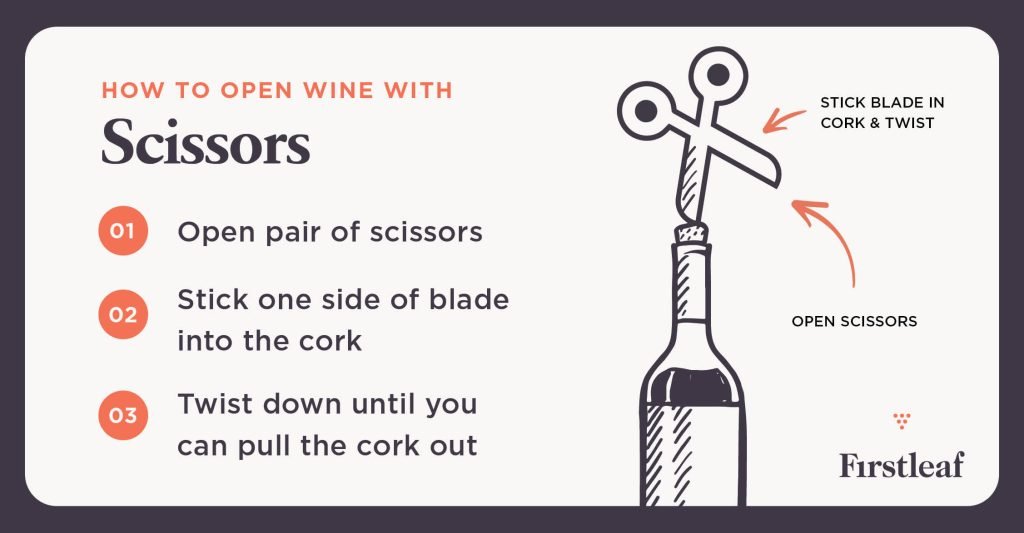
These methods use the bottle’s rim as a fulcrum to pry the cork out slowly, ideal for corks that are slightly stuck but not fully sealed. Knife method steps:
- Use a small, sharp paring knife (not a large chef’s knife, which is harder to control).
- Tilt the knife at a 45-degree angle, and insert the tip ½ inch into the center of the cork, not the side of the bottle neck.
- Twist the knife gently while pulling upward, using the bottle’s top rim as a fulcrum to lever the cork out slowly. Spoon method steps:
- Use a sturdy metal spoon with a thick handle (plastic spoons will bend under pressure).
- Insert the tip of the spoon handle between the cork and the bottle neck, wiggling it gently to create a small gap.
- Use the spoon as a lever, with the bottle’s rim as the fulcrum, to slowly pry the cork upward.
Common mistake: Jamming the knife or spoon into the side of the cork, which breaks it into small fragments. Always insert the tool into the center of the cork for the best grip.
Pros: Uses common kitchen items, no extra tools needed.
Cons: Higher risk of breaking the cork, requires steady hands.
:max_bytes(150000):strip_icc()/4-Ways-to-Open-a-Wine-Bottle-Without-a-Corkscrew-According-to-Wine-Experts-2000-331f8c5c95cd45159a9e631dfec81264.jpg) The screw and hammer method is the most reliable no-corkscrew hack for beginners, working consistently for most standard wine bottles.
Credit: www.eatingwell.com
The screw and hammer method is the most reliable no-corkscrew hack for beginners, working consistently for most standard wine bottles.
Credit: www.eatingwell.com
5. Push-Cork-In Method (Last Resort Only)
This is the fastest method, but only use it if you have a strainer on hand and are okay with a small amount of cork debris in your wine. What you’ll need: A blunt, sturdy object (the handle of a wooden spoon, a chopstick, or the end of a pen works best) and a fine-mesh strainer or cheesecloth. Step-by-step:
- Place the tip of the blunt object directly on the center of the cork.
- Push down slowly and evenly until the cork falls fully into the bottle. Do not shake or tilt the bottle, as this will cause wine to spill out.
- Pour the wine through a fine-mesh strainer or cheesecloth to catch cork fragments and any sediment that was trapped under the cork. Important notes: Avoid this method for sparkling wines, as built-up carbonation will cause the wine to spray out forcefully when the cork is displaced. It is also not recommended for aged wines, as pushing the cork in will dislodge sediment that has settled at the bottom of the bottle, altering the wine’s flavor and texture. Pros: Instant, no special tools needed. Cons: Exposes wine to extra oxygen, introduces cork fragments, not suitable for sparkling or aged premium wines.
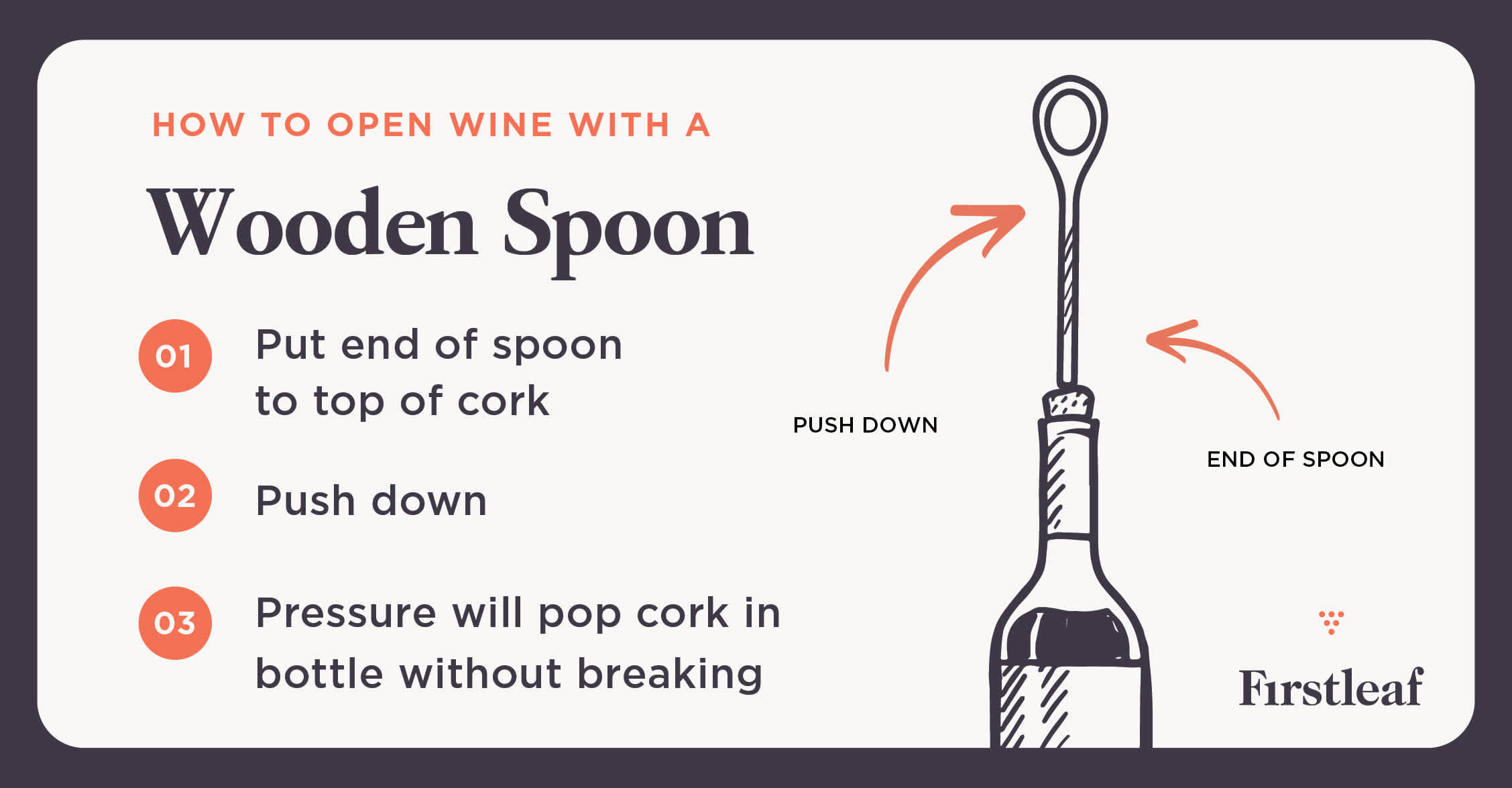 Everyday items like spoons, keys, and screwdrivers can all be used to open a bottle in a pinch, no special gear required.
Credit: www.firstleaf.com
Everyday items like spoons, keys, and screwdrivers can all be used to open a bottle in a pinch, no special gear required.
Credit: www.firstleaf.com
Critical Safety Rules for No-Corkscrew Opening
While all these hacks are low-risk when done correctly, following these safety rules will help you avoid injury, broken glass, and wasted wine:
- Avoid glass breakage: Never tap a glass wine bottle against a hard, uneven surface like concrete or stone. If you don’t have a shoe for the tap method, use a rubber mallet or the heel of a work boot against a flat interior wall instead. Always inspect the bottle for existing cracks or chips before attempting to open it; if you see damage, transfer the wine to a sealed container first if possible.
- Prevent injury from sharp tools: If using a knife, screwdriver, or other sharp implement, always cut or push away from your body, and keep your non-dominant hand behind the blade or tip (never on the side facing you). If you have small cuts on your hands, wear a rubber glove to avoid getting wine or glass shards in the wound.
- Minimize wine waste: Place a towel under the bottle neck before starting any method to catch drips or accidental spills. If a cork breaks, use tweezers or the tip of a knife to carefully remove remaining bits from the bottle neck before pouring, to avoid getting cork in your glass.
Common Mistakes That Ruin Your Wine (and Your Evening)
Even the most reliable hacks can go wrong if you make these common errors:
Using Excessive Force
Many people assume that brute strength will solve a stuck cork problem, but this almost always leads to a broken cork or shattered bottle. Aged corks are especially brittle, and yanking or pushing too hard will cause them to crumble. If you feel steady resistance after 2–3 minutes of trying a method, stop and switch to a different hack instead of forcing it.
Ignoring Wine Temperature
A bottle straight from the fridge (chilled to the standard 45°F / 7°C serving temperature for light white and sparkling wines) has a contracted cork that grips the glass neck tightly, making it far harder to remove without a corkscrew. Letting your wine sit at room temperature for 10–15 minutes before opening expands the cork slightly, reducing resistance and the risk of breakage, per guidance from the Wine Institute, the leading U.S. wine industry trade association. For sparkling wines, let them sit for 5 minutes only to avoid losing carbonation.
Using the Wrong Tool for the Job
Mismatched tools lead to failed attempts and wasted wine. Don’t use a flimsy plastic spoon for the lever method (it will bend under pressure), a thin drywall screw for the screw method (it will strip out of the cork), or a stiletto heel for the shoe tap method (it’s too narrow and can break the bottle). Match your tool to the method for the best results.
What to Do If You Break the Cork
If the cork snaps while you’re trying to open the bottle, don’t panic. Follow these steps to salvage your wine:
- First, try to grip the remaining cork stuck in the bottle neck with the jaws of pliers or the serrated edge of a knife, and pull it straight out slowly.
- If that doesn’t work, use a chopstick or the handle of a wooden spoon to push the remaining cork fully into the bottle.
- Pour the wine through a fine-mesh strainer or cheesecloth to catch all cork fragments and any sediment that was trapped under the cork. For aged wines, decant the strained wine into a separate carafe to leave any dislodged sediment behind, which will keep the wine smooth and flavorful.
- If you don’t have a strainer, let the wine sit undisturbed for 10 minutes so cork fragments sink to the bottom of the bottle, then pour carefully, leaving the last ½ inch of wine in the bottle to avoid the debris.
Frequently Asked Questions
What is the easiest no-corkscrew method for beginners?
The screw + pliers or hammer method is the most beginner-friendly, as it requires minimal skill and has the highest success rate for standard wine bottles, even for people with limited hand strength.
Will these methods damage the wine’s flavor?
Most methods will not affect the wine’s taste if done correctly. The only exception is the push-cork-in method, which exposes the wine to extra oxygen and can introduce small cork fragments, so it is best reserved for young, inexpensive wines you plan to drink within an hour of opening.
Can you open sparkling wine without a corkscrew?
Yes, but avoid methods that involve tapping, shaking, or pushing the cork in, as built-up carbonation will cause the wine to spray out forcefully. The screw + pliers method works best for sparkling wines, as it lets you remove the cork slowly without releasing excess pressure.
What if the cork is pushed fully into the bottle?
Pour the wine through a fine-mesh strainer or cheesecloth to catch cork fragments and sediment. For aged wines, decant the strained wine into a separate carafe to leave any dislodged sediment behind, which will keep the wine smooth and flavorful.
Conclusion
Opening a wine bottle without a corkscrew doesn’t have to be a stressful, messy ordeal. For most situations, the screw + pliers or hammer method is your best bet for a quick, reliable result with minimal risk of breaking the cork or bottle. For casual gatherings, the shoe tap method is a fun, tool-free option that will impress your guests, while the bike pump method is perfect for low-mess, no-sharp-tools camping trips.
Remember to prioritize safety: avoid using excessive force, match your tool to the method, and always keep a towel on hand to catch spills. If you do break the cork, don’t worry—your wine is almost always still salvageable with a quick strain.
Bookmark this guide for your next camping trip, backyard barbecue, or impromptu dinner party, so you’ll never be caught without a way to access your favorite bottle. Cheers to stress-free wine opening, no corkscrew required.

I’m Abby Lu, a passionate home cook who loves simplifying everyday meals. At PlugChef.com, I share product reviews and cooking guides to help you find the best tools for your kitchen.
Related posts:
 How to Make a Fruit Basket for a Gift: Easy DIY Guide
 Simplehuman Steel Frame Dish Rack: Ultimate Kitchen Upgrade
 How to Decorate Easter Baskets: Creative Tips
 How to Pack Small Kitchen Appliances for Moving: Expert Tips
 Where to Find Toll Blenders With On-Site Mixing: Top Spots
 What Kitchen Appliances Do I Need: Must-Have Essentials

