
There’s nothing quite like the perfect chocolate chip cookie: crisp, golden edges, a soft, chewy center, and pockets of melty chocolate balanced by the satisfying crunch of toasted almonds. Store-bought versions rarely nail this dual texture, but this tested, 2026-updated recipe delivers consistent results for bakers of every skill level, no fancy equipment required. Whether you’re baking for a weeknight treat, holiday bake sale, or homemade gift, these cookies hit that sweet spot of indulgence and ease.
The Science Behind That Perfect Crunchy-Chewy Balance
Nailing the signature texture of these cookies comes down to four small, intentional choices:
- Sugar ratio: A 2:1 mix of light brown sugar to granulated sugar is key. The molasses in brown sugar locks in moisture for a chewy center, while granulated sugar helps edges crisp up as they bake.
- Butter temperature: Room-temperature butter (70°F, soft enough to press a fingerprint into easily) whips up light and fluffy when creamed, incorporating tiny air pockets that create a tender crumb. Cold or melted butter leads to dense, flat cookies.
- Dough chilling: A minimum 30-minute chill in the fridge prevents excessive spreading and lets flavors meld. In my testing, chilling for a full 30 minutes drastically reduces spreading and delivers a much chewier center than skipping this step entirely.
- Almond prep: Toasting almonds before adding them to the dough brings out their natural nutty aroma and gives them a crisp, satisfying crunch that contrasts perfectly with the soft dough.
Exact Ingredient List (With Smart Substitutions
All ingredients are easy to find at any grocery store, with flexible swaps for common dietary needs.
Chocolate & Almonds
- 1 ½ cups semi-sweet chocolate chips (60% cacao recommended, for balanced sweetness that doesn’t overpower the nuts)
- 1 cup sliced or chopped unsalted, unroasted almonds
- Substitutions: Chopped dark or milk chocolate bars for varied melt, vegan chocolate chips for dairy-free, walnuts or pecans for a different nutty profile, sunflower seeds for nut-free batches.
Dry Ingredients
- 2 ¼ cups all-purpose flour (spooned and leveled, not scooped directly from the bag, to avoid dense cookies)
- 1 tsp baking soda
- ½ tsp fine sea salt (plus 1 tsp flaky sea salt for topping)
- Substitutions: 1:1 gluten-free all-purpose flour blend for gluten-free diets.
Wet Ingredients
- 1 cup (2 sticks) unsalted butter, room temperature
- ¾ cup packed light brown sugar
- ¼ cup granulated sugar
- 2 large eggs, room temperature
- 2 tsp pure vanilla extract
- Substitutions: Vegan butter sticks and flax eggs (1 tbsp ground flaxseed + 3 tbsp water per egg, rested 5 minutes) for vegan batches, coconut sugar for refined sugar-free options.
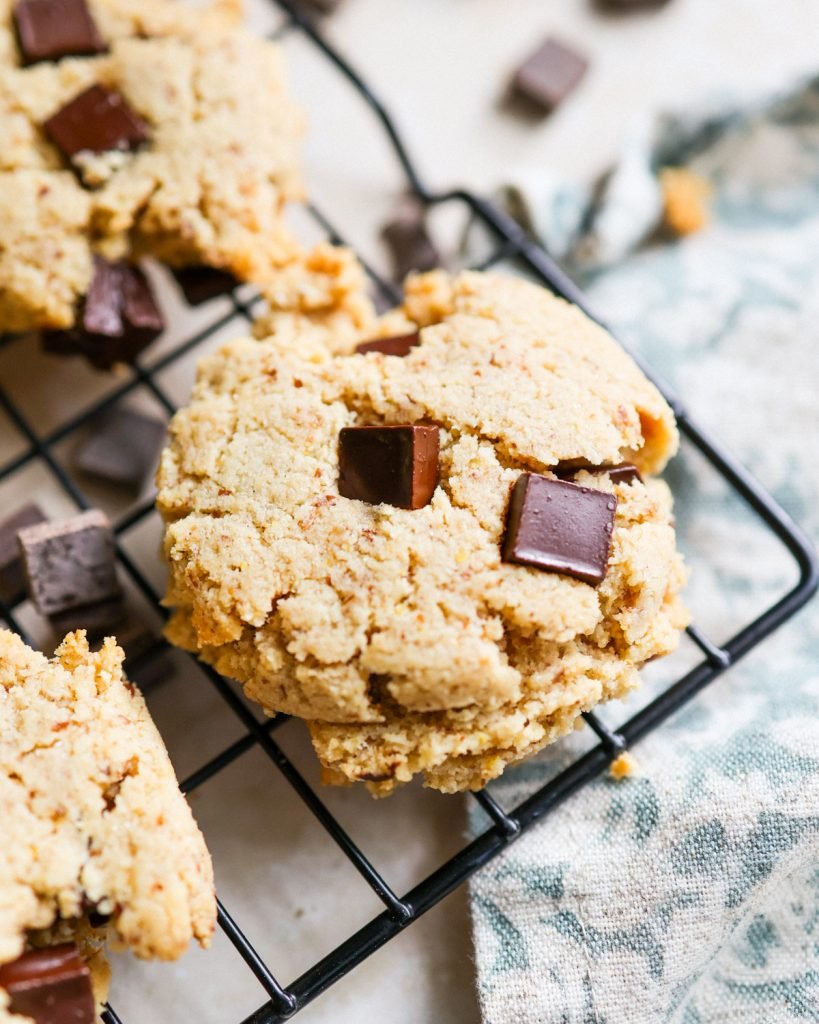
 Freshly baked cookies still warm on a wire cooling rack, with melty chocolate peeking through the crumb.
Credit: bakingguilty.com
Freshly baked cookies still warm on a wire cooling rack, with melty chocolate peeking through the crumb.
Credit: bakingguilty.com
Step-by-Step Mixing & Prep Instructions
Following these steps in order ensures no tough spots, no spreading puddles, and perfectly balanced flavor in every bite.
Cream Butter and Sugars
Beat the softened butter, brown sugar, and granulated sugar on medium speed for 2–3 minutes, until the mixture is pale yellow and fluffy. This step traps air that helps cookies rise with a tender crumb. A common mistake is rushing this process or using cold butter, which leads to dense, flat cookies. If your kitchen runs cool (below 65°F), let butter sit out for 1 hour before mixing, or microwave in 10-second bursts, stirring between each, until soft. For a deeper dive into how mixing techniques alter baked good texture, the University of Minnesota Extension’s baking science breakdown explains the role of aeration and gluten development in foolproof recipes.
Add Wet Ingredients
Mix in the eggs one at a time, scraping the bowl down halfway through to ensure even incorporation. Add the vanilla extract and mix until just combined.
Combine Dry Ingredients
Whisk the flour, baking soda, and fine sea salt in a separate bowl to avoid clumps, then add the dry mix to the wet ingredients on low speed. Mix only until no dry flour remains — overmixing develops tough gluten strands, which is the most common cause of chewy, tough cookies.
Fold in Chocolate and Almonds
Add the chocolate chips and toasted almonds, folding gently with a spatula to avoid breaking the chips. For extra crunch and visual appeal, reserve 2 tbsp of almonds to sprinkle on top of dough balls before baking.
 Chilled dough balls ready for the oven, portioned for even baking.
Credit: simplytaralynn.com
Chilled dough balls ready for the oven, portioned for even baking.
Credit: simplytaralynn.com
Shaping, Baking & Pro Tips for Perfect Results
Small adjustments during the final prep and baking stages make the difference between good cookies and great ones.
Portioning and Chilling Dough
Use a 2-tbsp cookie scoop for evenly sized balls that bake at the same rate. Roll lightly into smooth spheres, place 2 inches apart on a parchment-lined baking sheet, and chill for at least 30 minutes (up to 72 hours for deeper, more complex flavor). If you skip chilling, cookies will spread into thin, crisp puddles with no chewy center. If you’re short on counter space while prepping dough, a countertop appliance slider lets you easily move your stand mixer out of the way when you’re ready to portion dough balls.
Oven Temperature and Timing
Preheat your oven to 350°F (175°C), and use an inexpensive oven thermometer to confirm accuracy — most home ovens run 10–25°F hot or cold, which will burn edges before the centers are cooked. Bake for 10–12 minutes for a chewy center, or 13–15 minutes for crispier edges. Cookies will look underbaked in the center when you pull them out — they set fully as they cool on the baking sheet for 10 minutes before moving to a wire rack. If your oven runs consistently hot, calibrating it before baking will save you from burnt edges and undercooked centers; many bakers find energy-efficient under-counter lighting helpful for monitoring cookies without opening the door and losing heat.
Common Baking Troubles & Fixes
- Cookies spread too thin: Dough wasn’t chilled long enough, or butter was too warm when mixed. Chill for the full 30 minutes and use soft (not melted) butter.
- Cookies are too hard: Overbaked, or you scooped flour directly from the bag (adding up to ¼ cup extra flour per batch). Always spoon and level flour for accurate measurements.
- Cookies are cakey: Too many eggs, or overmixed dough. Mix only until no dry flour remains.
- Almonds burn before cookies are done: Toast almonds separately before adding to dough, or use sliced almonds which cook faster than chopped.
Pro Tips for Next-Level Flavor & Texture
These small tweaks take 5 extra minutes but elevate the cookies far beyond average recipes.
Toast Your Almonds First
Raw almonds have a mild, bitter edge that toasted almonds lack. Toast sliced or chopped almonds in a dry skillet over medium heat for 3–4 minutes, stirring frequently, until golden and fragrant. Let cool completely before adding to dough to avoid melting the chocolate. For food safety guidance when handling and toasting nuts, refer to the USDA Food Safety and Inspection Service’s nut handling recommendations.
Amp Up the Chocolate
Use a mix of semi-sweet chips and chopped 60% cacao chocolate bars for varied melt and rich, layered chocolate flavor. For an extra depth that won’t taste like coffee, add 1 tsp of instant espresso powder to the dry ingredients — it enhances chocolate flavor without altering the cookie’s profile.
Don’t Skip the Flaky Salt
A light sprinkle of flaky sea salt on top of cookies right after they come out of the oven balances sweetness and brightens both the chocolate and almond notes. It’s a tiny step that makes a massive difference in the final flavor profile.
Extend Flavor With Chilled Dough
For even more complex, caramel-like flavor, chill dough balls for up to 72 hours in the fridge before baking. You can also freeze unbaked dough balls for up to 3 months, and bake straight from frozen (add 2–3 minutes to total baking time).
Storage, Serving & Gifting Ideas
These cookies stay delicious for days with proper storage, and make excellent homemade gifts.
Storing Cookies for Maximum Freshness
Store completely cooled cookies in an airtight container at room temperature for up to 5 days. Place a piece of parchment paper between layers to prevent sticking. For longer storage, freeze baked cookies in a sealed bag for up to 3 months; thaw at room temperature for 1 hour before serving. Keep cookies separate from other pantry items with pull-out cabinet organizers to avoid them absorbing unwanted odors or getting crushed.
Serving Pairings
- Classic: Cold whole milk or oat milk to cut the sweetness
- Cozy: Hot cocoa or spiced chai for a cold day
- Bright: Lightly sweetened iced tea or cold brew coffee for a refreshing contrast
- Festive: Spiked eggnog or mulled wine for adult gatherings
Gifting Tips
These cookies travel well and hold up for 2–3 days in a sealed container. Stack 4–6 cookies in a cellophane bag or reusable container, tie with twine, and tuck in a small bag of toasted almonds. For a beautiful, photogenic presentation, arrange a stack on a round woven accent rug for a cozy, rustic display if you’re sharing on social media. After baking, keep your mixing bowls, spatulas, and cookie scoops organized with bamboo drawer organizers to keep your kitchen tidy even after a big baking session.
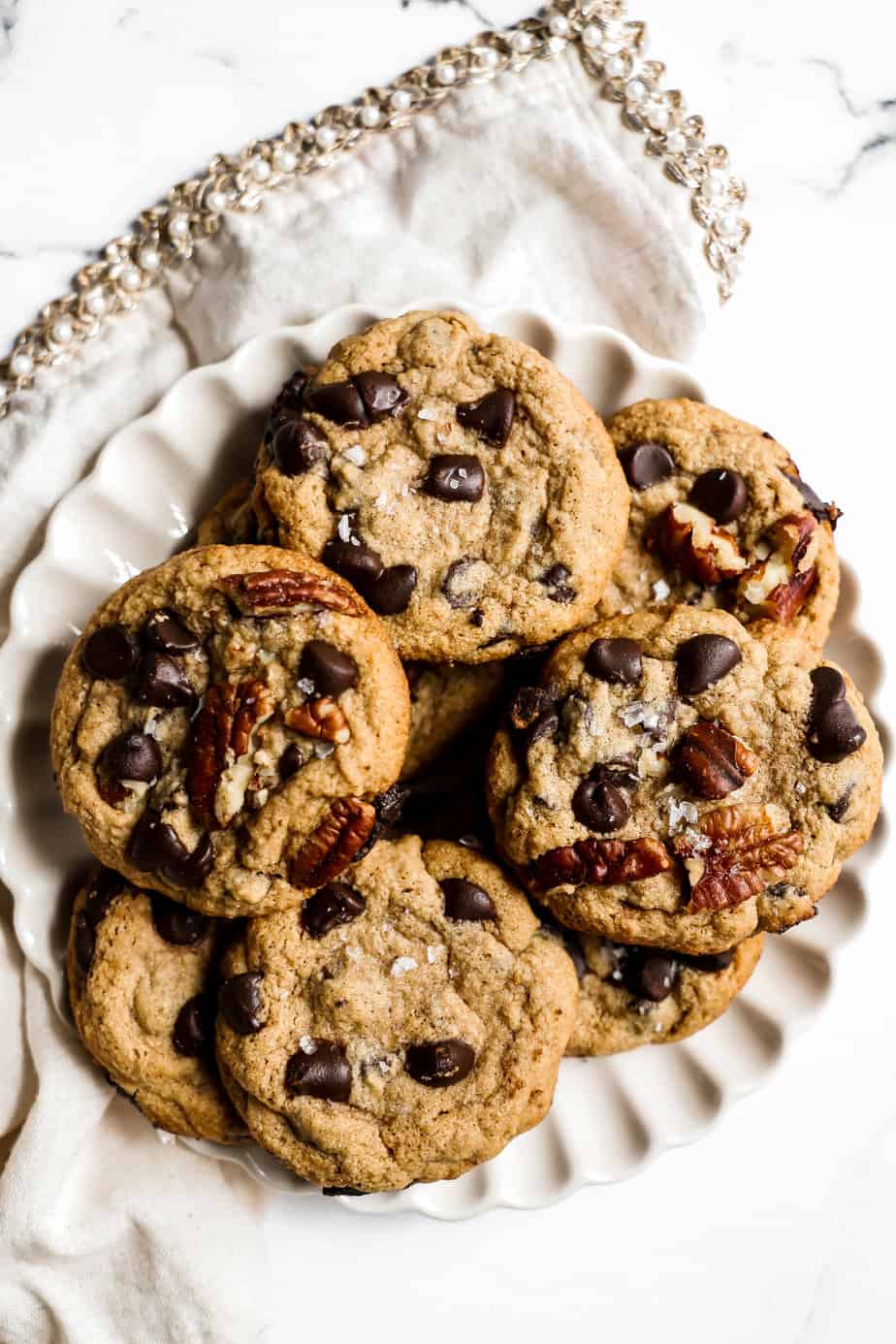
 Finished cookies topped with a sprinkle of flaky sea salt, ready to serve or gift.
Credit: namelymarly.com
Finished cookies topped with a sprinkle of flaky sea salt, ready to serve or gift.
Credit: namelymarly.com
Frequently Asked Questions
Can I use almond flour instead of all-purpose flour?
Yes, you can substitute all-purpose flour with a 1:1 gluten-free almond flour blend for a nuttier, denser cookie. Note that almond flour absorbs more moisture, so add 1 extra tbsp of melted butter to the dough to avoid a dry texture.
Can I make these cookies vegan?
Absolutely. Substitute the butter with vegan butter sticks (not spread), use flax eggs (1 tbsp ground flaxseed + 3 tbsp water per egg, rested 5 minutes to thicken), and use vegan chocolate chips. The texture will be slightly chewier than the original, but still delicious.
How long do these cookies stay fresh?
Stored in an airtight container at room temperature, they stay fresh for 4–5 days. Freeze baked cookies for up to 3 months, or freeze unbaked dough balls for up to 3 months for later use.
Can I use salted almonds?
You can, but reduce the added fine sea salt in the dough by ¼ tsp to avoid overly salty cookies. Unsalted almonds let you control the salt level precisely, which is ideal for balancing the sweetness of the chocolate and sugar.
Why are my cookies spreading too much?
The most common cause is unchilled dough, or butter that was too warm when mixed. Make sure your butter is soft but not melted, and chill dough balls for at least 30 minutes before baking. Avoid overmixing the dough, which can also cause excess spreading.
Conclusion
These chocolate chip almond cookies hit that rare, perfect balance of crispy edges, chewy center, melty chocolate, and crunchy toasted almonds that makes them impossible to eat just one. They’re quick enough for a weeknight treat, impressive enough for holiday bake sales and gifting, and easy enough for first-time bakers to pull off without hassle. The small tweaks — toasting your almonds, chilling the dough, adding a sprinkle of flaky salt — take 5 extra minutes but elevate the flavor far beyond average store-bought cookies. Give this recipe a try this week, and don’t be afraid to tweak the chocolate or nut ratios to match your taste. Have a favorite baking hack for perfect cookies? Drop a comment below to share your tips, or browse more tested baking recipes and kitchen organization guides to make your next baking session a breeze.

Hi, I’m Daniel Brooks—a food lover and kitchen gear enthusiast. I enjoy testing cookware, utensils, and gadgets to see what really works in everyday cooking. At PlugChef.com, I share honest reviews, comparisons, and simple guides to help you choose the best tools for a safer, smarter, and more enjoyable kitchen.
Related posts:
 How to Make a Fruit Basket for a Gift: Easy DIY Guide
 Do You Need a Basket? Essential Guide for Air Fryers
 Slate Kitchen Appliances With White Cabinets: Style Upgrade
 Small Electrical Appliances: Maximize Your Home Efficiency
 Blue Kitchen Cabinets With Stainless Steel Appliances: Modern Elegance
 How to Keep Drains Clear Naturally: Easy & Effective Tips

