A clean kitchen hood does more than keep your cooking space looking polished—it’s a critical safety and efficiency feature for any kitchen, whether you’re a home cook or run a commercial food service operation. Over time, grease, grime, and food particles accumulate on hood surfaces, filters, and ducts, creating serious fire hazards, reducing airflow, and degrading indoor air quality. The National Fire Protection Association (NFPA) identifies cooking equipment as the leading cause of home and commercial kitchen fires, with accumulated hood grease being a top contributing factor. Using the right specialized tools and degreasers makes deep cleaning faster, more effective, and less labor-intensive, while extending the lifespan of your ventilation system. This guide breaks down the top tools and products for professional-grade kitchen hood cleaning, plus a step-by-step process for sparkling, safe results.
Why Professional-Grade Kitchen Hood Cleaning Is Non-Negotiable
Regular surface wipe-downs only remove visible, fresh grease, but they can’t reach the hidden layers of polymerized grease that build up in hood baffles, filter media, and ductwork over time. This hardened grease is highly flammable: a single stray spark from a stovetop or cooking surface can ignite accumulated buildup, leading to fast-spreading fires that damage property and put lives at risk. Beyond fire safety, clogged hoods reduce suction power, trapping smoke, cooking odors, and volatile organic compounds (VOCs) released during cooking. This poor ventilation can cause respiratory irritation, especially for people with asthma or allergies, and forces your hood fan to work harder, increasing energy bills and reducing ventilation performance in heavily used kitchens. Grease buildup also corrodes metal hood components and wears down fan motors over time, leading to costly repairs or full system replacement. Deep cleaning with the right tools and degreasers eliminates these risks and keeps your ventilation system running at peak performance.
Essential Tools for Deep Kitchen Hood Cleaning
The right tools cut down on scrubbing time and protect your hood’s surfaces from damage. Avoid generic household scrubbers, which can scratch metal or leave bristle fragments on grease-coated surfaces. Below are the must-have tools for a professional-grade clean:
Scrapers and Pre-Treatment Tools
A stainless steel putty scraper is the first line of defense for lifting baked-on, hardened grease from hood seams, filter slots, and baffle edges without scratching metal. For painted or coated hood finishes, opt for a plastic putty scraper to avoid damaging the surface. A small detail scraper works well for tight crevices and around control panels where grease tends to accumulate. A common mistake is using a razor blade on stainless steel hoods, which leaves permanent, irreversible scratches; stick to metal or plastic scrapers rated for kitchen surfaces. The Kitchen Stove Cleaning Brush + Scraper Tool Set combines a durable stainless steel scraper with a brass wire brush for all-in-one pre-treatment and scrubbing, making it a reliable pick for home cooks.
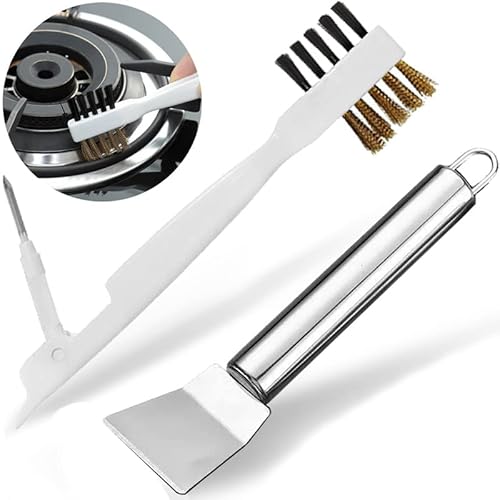 Dual brass brush and stainless steel scraper sets tackle both grease and baked-on residue on hoods and cooktops.
Scrub Brushes and Abrasive Implements
After pre-treating grease, use a stiff-bristled brush to scrub away remaining grime. Brass wire brushes are the best choice for metal hoods and filters: brass is softer than steel, so it cuts through grease without scratching stainless steel or chrome finishes. For painted hood surfaces or delicate coatings, use a polypropylene bristle brush, which is non-abrasive and won’t damage finishes. For ductwork or high hood surfaces, opt for an extendable brush with a 12-foot reach to avoid climbing ladders. The Deep Gas Stove Brass Wire Brush features a 17-inch ergonomic handle for extra leverage and reach, making it ideal for scrubbing high hood surfaces and tight crevices.
 Long-handled brass wire brushes provide extra reach for scrubbing deep into hood crevices and duct entrances.
For heavy commercial use, wire brush attachments for power drills cut scrubbing time in half for large hood surfaces. For general-purpose cleaning around the kitchen, rugged scrubbing tools built for abrasive kitchen grime hold up to repeated use without shedding bristles.
Long-handled brass wire brushes provide extra reach for scrubbing deep into hood crevices and duct entrances.
For heavy commercial use, wire brush attachments for power drills cut scrubbing time in half for large hood surfaces. For general-purpose cleaning around the kitchen, rugged scrubbing tools built for abrasive kitchen grime hold up to repeated use without shedding bristles.
Filter Maintenance Tools
Range hood filters are the first line of defense against grease entering your ductwork, so they require regular cleaning or replacement. For reusable metal filters, a dedicated soak tray lets you submerge filters in hot soapy water or degreaser without making a mess in your sink. A small brush attachment for filter frames makes it easy to scrub grease out of mesh crevices. For households looking to reduce deep clean frequency, disposable grease filter papers like the Beatifufu 10-Pack fit most standard range hoods and trap excess grease before it accumulates on hood surfaces, cutting down on deep clean time by 30-50% in most home kitchens.
 Disposable grease filter papers trap excess grease to reduce the frequency of deep hood cleanings.
Safety and Prep Gear
Skipping safety gear is a common mistake that leads to skin irritation, eye injuries, and respiratory issues from degreaser fumes and disturbed grease particles. Always wear nitrile gloves to protect your skin from harsh degreaser chemicals, safety glasses to avoid splashes, and a half-face respirator if cleaning in a small, unventilated space or dealing with heavy, years of accumulated grease. Lay down drop cloths or old towels to protect floors from degreaser runoff, and always turn off power to your hood at the circuit breaker before removing filters or scrubbing near the fan to avoid accidental startup. Store all cleaning products out of reach of children and pets; childproof cabinet latches add an extra layer of security for households with young kids.
Top Degreasers for Every Kitchen Need
Not all degreasers are created equal: the right product depends on the severity of grease buildup, your hood’s material, and how often you clean. Below are the top options categorized by use case:
Quick Wipe-Down Degreasers (Weekly Maintenance)
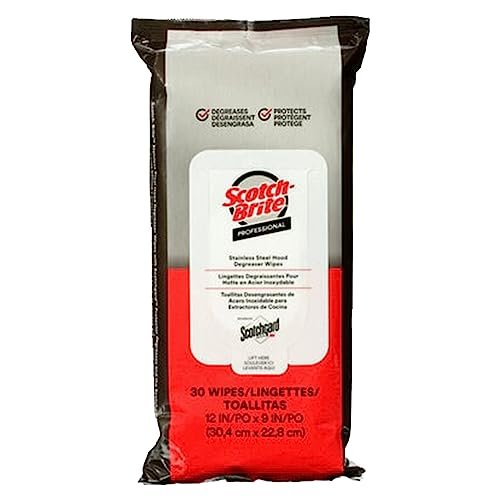
For routine weekly cleaning of hood exteriors and light surface grease, pre-moistened wipes are a no-fuss, mess-free option. The Scotch-Brite Stainless Steel Hood Degreaser Wipes come pre-treated with a powerful degreasing formula and a Scotchgard protector that repels fingerprints and new grease buildup between cleanings. The 9×12 inch size covers large hood surfaces in one pass, and they are safe for all stainless steel appliances, including fridges, dishwashers, and fryers. The only downside is they are single-use, so they create more waste than reusable cloths, and they are not effective for heavy, baked-on grease.
 Pre-moistened degreaser wipes are ideal for quick weekly maintenance of stainless steel hood surfaces.
Heavy-Duty Spray Degreasers (Medium to Heavy Buildup)
For monthly deep cleans and medium to heavy grease buildup, spray degreasers offer strong cleaning power with easy, controlled application.
The Easy-Off Heavy Duty Degreaser Cleaner Spray is a trusted pick for home and commercial use: its 32-ounce bottle provides enough product for multiple cleanings, and its fast-acting formula cuts through even months of baked-on grease with minimal scrubbing. It is safe for stainless steel, ceramic, and enamel surfaces, but it has strong fumes that require ventilation during use, and it should not be used on aluminum surfaces as it can cause discoloration. For lighter heavy-duty jobs, the Easy-Off Specialty Kitchen Degreaser Cleaner in lemon scent offers the same grease-cutting power with lower fumes and a fresh, neutral scent that masks chemical odors. It comes in a 16-ounce bottle, making it easy to store in small kitchen cabinets.
 Heavy-duty spray degreasers cut through baked-on grease with minimal scrubbing for medium to heavy buildup.
For spot-treating small areas of heavy grease or cleaning delicate surfaces like stainless steel and granite, the Heavy Duty Kitchen Oil Degreaser Cleaner is a fast-acting, surface-safe option. Its 8-ounce compact bottle is easy to handle, and its gentle formula won’t scratch or discolor sensitive finishes. The only downside is its small size, so it’s best for small kitchens or spot treatments rather than full hood cleans.
For vertical surfaces like hood backs, duct entrances, and backsplashes, foam degreasers are a better choice than traditional sprays, as their thick foam clings to surfaces for extended contact time to break down grease without dripping. The Cleanboss 2-Pack Kitchen Foam Cleaner comes in two 4-ounce bottles, making it a convenient pick for small kitchens, though you may need multiple bottles for large hood surfaces.
Heavy-duty spray degreasers cut through baked-on grease with minimal scrubbing for medium to heavy buildup.
For spot-treating small areas of heavy grease or cleaning delicate surfaces like stainless steel and granite, the Heavy Duty Kitchen Oil Degreaser Cleaner is a fast-acting, surface-safe option. Its 8-ounce compact bottle is easy to handle, and its gentle formula won’t scratch or discolor sensitive finishes. The only downside is its small size, so it’s best for small kitchens or spot treatments rather than full hood cleans.
For vertical surfaces like hood backs, duct entrances, and backsplashes, foam degreasers are a better choice than traditional sprays, as their thick foam clings to surfaces for extended contact time to break down grease without dripping. The Cleanboss 2-Pack Kitchen Foam Cleaner comes in two 4-ounce bottles, making it a convenient pick for small kitchens, though you may need multiple bottles for large hood surfaces.
 Foam degreasers cling to vertical surfaces for extended contact time to break down grease without dripping.
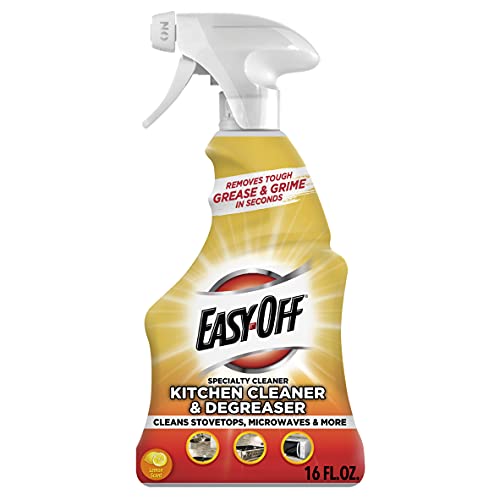 Lemon-scented degreasers cut through grease while leaving a fresh, neutral scent in your kitchen.
 Fast-acting oil degreasers are formulated to dissolve grease without damaging delicate surfaces like stainless steel or granite.
Powdered and Concentrated Degreasers (Commercial/Industrial Use)
For high-volume commercial and industrial kitchens with constant grease buildup, concentrated degreasers offer customizable strength and cost-effective, large-scale cleaning.
The Selvorian M.O.F-CHEF Kitchen Cleaner Powder is a 17.64-ounce concentrated formula that can be diluted to different strengths based on the severity of grease buildup. It is safe for use on stainless steel, enamel, tile, sinks, and cooktops, making it a versatile all-purpose option for commercial kitchens. Its powder form makes it easy to store and ship, and it is more cost-effective than ready-to-use sprays for frequent cleaning. The only downsides are that it requires mixing with water before use, and it has a strong chemical scent during application.
For industrial-scale kitchens, the EcoGen Hood Cleaner comes in a 4-gallon concentrated, biodegradable formula that meets EPA Safer Choice standards for low environmental impact without sacrificing professional-strength cleaning power. It is formulated to cut through the heaviest grease and grime buildup in restaurant and cafeteria hoods and ducts, and its large size is cost-effective for frequent, high-volume cleaning. The only consideration is its concentrated formula requires proper dilution training for new staff, and the large 4-gallon packaging can be cumbersome for small storage spaces.
 Concentrated, biodegradable commercial degreasers offer powerful cleaning power with minimal environmental impact for high-volume kitchens.
 Powdered degreasers allow for customizable dilution for commercial kitchens with heavy, consistent grease buildup.
Step-by-Step Professional Kitchen Hood Cleaning Process
Follow this process to get consistent, professional results without damaging your hood or ductwork:
- Prep and Safety: Turn off power to the hood at the circuit breaker to avoid accidental fan startup. Remove all filters, lay down drop cloths to protect floors from degreaser runoff, and put on nitrile gloves, safety glasses, and a respirator if working in a small, unventilated space.
- Pre-Treat Stubborn Grease: Spray or apply your chosen degreaser to all areas with baked-on grease, focusing on baffles, seams, and the fan housing where buildup is heaviest. Let the degreaser sit for 5-10 minutes to break down grease; do not let it dry on surfaces, as this can leave sticky residue or damage painted finishes. A common mistake many DIY cleaners make is skipping this soaking step, which leads to excessive scrubbing and potential surface damage.
- Scrape and Scrub Surfaces: Use a stainless steel putty scraper to lift hardened grease from surfaces, then follow up with a brass wire brush and degreaser to scrub away remaining grime. Pay special attention to corners, filter slots, and the area around the fan where grease accumulates most. For ductwork access points, use an extendable brush to reach as far into the duct as possible.
- Clean Filters: Soak reusable metal filters in a sink or tub filled with hot soapy water or diluted degreaser for 15-30 minutes. Scrub with a stiff-bristled brush to remove all grease, then rinse thoroughly with hot water and let dry completely before reinstalling. For disposable filter papers, simply remove the old, grease-soaked paper and replace it with a new one.
- Wipe Down Exteriors and Duct Access: Use a clean microfiber cloth and degreaser to wipe the hood exterior, control panel, light fixtures, and the opening to the ductwork. For hard-to-reach areas, use an extendable brush with a cloth attachment to avoid stretching or straining.
- Rinse and Dry: Wipe all scrubbed surfaces with a clean, damp microfiber cloth to remove any remaining degreaser residue. Dry all surfaces thoroughly with a dry microfiber cloth, wiping with the grain of stainless steel finishes to avoid water spots and scratches.
- Reassemble and Test: Reinstall clean, dry filters, turn power back on at the circuit breaker, and run the hood on high for 2-3 minutes to clear any remaining fumes and test suction power. If suction feels weak, check for remaining grease blockages in the ductwork.
How to Choose the Right Tools and Degreasers for Your Kitchen Type
The best tools and products for your hood depend on how often you cook, the size of your kitchen, and local fire safety regulations:
- Home Kitchens (1-3 meals per day): Opt for low-fume, surface-safe products to avoid strong chemical odors in your living space. Use Scotch-Brite wipes for weekly maintenance, Easy-Off Specialty Lemon spray for monthly deep cleans, and a small brass wire brush set for tough spots. Deep clean your hood every 6 months, or every 3 months if you cook 4+ times per week. Pair your deep cleaning routine with a routine cleaning schedule to minimize grease buildup between sessions.
- Small Restaurant Kitchens (high daily volume): Use heavy-duty spray degreasers like Easy-Off Heavy Duty for regular cleaning, powdered concentrated degreasers like Selvorian for filter soaking, and extendable brushes for ductwork. Per NFPA 96, the national standard for commercial kitchen ventilation cleaning, low-volume commercial kitchens require deep cleaning every 1-3 months to minimize fire risk. For more hood maintenance guidance tailored to commercial spaces, refer to our full commercial kitchen care guide.
- Industrial/Cafeteria Kitchens (all-day high-volume cooking): Use commercial-grade concentrated degreasers like EcoGen, industrial scrub brushes with 12+ foot reaches, and disposable filter papers to reduce labor costs. Per National Fire Protection Association (NFPA) 96 commercial kitchen ventilation cleaning standards, high-volume kitchens cooking with solid fuels or producing large amounts of grease require deep cleaning every 2-4 weeks to comply with fire safety codes. If you prioritize low environmental impact, look for degreasers certified by the EPA Safer Choice program, which meet strict safety and biodegradability standards without sacrificing cleaning power. These products are formulated to be safe for both users and the environment, making them a great pick for eco-conscious home and commercial kitchens.
Frequently Asked Questions
What is the best product for kitchen hood grease removal?
The best product depends on the severity of buildup and your hood’s material. For weekly maintenance on stainless steel, pre-moistened wipes like Scotch-Brite with Scotchgard work well for light grease. For baked-on, hardened grease, heavy-duty spray degreasers like Easy-Off Heavy Duty or powdered concentrates like Selvorian are more effective. Always test any degreaser on a small, hidden area of your hood first to avoid discoloration or damage. For streak-free results on stainless steel finishes, follow proven care for stainless steel surfaces.
How often should professional kitchen hood cleaning be done?
Home kitchens with light use (1-3 meals per day) need a deep clean every 6 months; medium-use home kitchens (4+ meals per week) need cleaning every 3 months. Commercial kitchens must follow NFPA 96 guidelines, which require cleaning every 1-4 weeks depending on cooking volume and fuel type.
Are eco-friendly hood cleaners effective for commercial kitchens?
Yes, concentrated biodegradable degreasers like EcoGen meet commercial strength requirements while meeting EPA Safer Choice standards for low environmental impact. They are formulated to cut through the same heavy grease as conventional degreasers without harsh fumes or toxic runoff, making them a safe, effective pick for industrial kitchens.
Can I use kitchen degreaser sprays on stainless steel hoods?
Most standard kitchen degreasers are safe for stainless steel, but always check the product label for surface compatibility. Avoid abrasive scrubbers on brushed stainless steel finishes to prevent scratching; for streak-free results, wipe with the grain of the metal after cleaning.
What tools help remove stubborn grease from range hoods?
A stainless steel putty scraper for lifting baked-on grease, brass wire brushes for scrubbing metal surfaces without scratching, and long-reach extendable brushes for cleaning ductwork are the most effective tools. For tight crevices and around control panels, a small detail brush with stiff bristles works best.
How do hood grease filter papers improve cleaning?
Disposable grease filter papers, like the Beatifufu 10-pack, trap excess grease before it accumulates on the hood and duct surfaces, reducing the frequency of deep cleans by 30-50% in most home kitchens. They are compatible with most standard range hood models and are easy to replace every 1-3 months depending on cooking frequency.
Can I use household dish soap to clean my kitchen hood?
Dish soap is effective for light, fresh grease on hood exteriors, but it cannot break down the hardened, polymerized grease that builds up on hood interiors, filters, and ducts. For deep cleaning, use a dedicated kitchen degreaser formulated to dissolve tough, baked-on grease.
Conclusion
Keeping your kitchen hood clean is one of the most impactful maintenance tasks you can do for your kitchen’s safety, efficiency, and longevity. Accumulated grease is a top fire risk, reduces ventilation performance, and degrades air quality, but with the right tools and degreasers, deep cleaning doesn’t have to be a time-consuming, labor-intensive chore. Match your products to your kitchen’s usage level and hood material to avoid damage and get the best results: quick wipes for weekly maintenance, heavy-duty sprays for monthly deep cleans, and concentrated commercial formulas for high-volume restaurant and industrial kitchens. Pair regular deep cleanings with quick weekly wipe-downs and filter maintenance to minimize grease buildup between sessions. For more step-by-step kitchen maintenance guides and product recommendations to keep your cooking space safe and efficient, browse our kitchen care blog for expert tips and trusted product picks.

Hi, I’m Daniel Brooks—a food lover and kitchen gear enthusiast. I enjoy testing cookware, utensils, and gadgets to see what really works in everyday cooking. At PlugChef.com, I share honest reviews, comparisons, and simple guides to help you choose the best tools for a safer, smarter, and more enjoyable kitchen.
Related posts:
 Cheap Ice Cream Maker Under $100: Discover Delicious Homemade Treats
 Best Handheld Milk Frothers: Ultimate Tools for Perfect Coffee Creations
 Best Wine Opener for Weak Hands: Effortless and Ergonomic Choices
 Best Kitchen Scale for Accurate Cooking and Baking Precision
 Holikme 5Pack Kitchen Cleaning Brush Green: Ultimate Scrubbing Power
 Kitchen Wall Cleaning Brush: Ultimate Tools for Effortless Deep Cleaning